How to Choose a Fabric Fragrances Manufacturer
Choose a fabric fragrances manufacturer by testing how well its fragrance performs in your finished product, then examining whether the supplier can reproduce and support that performance commercially. An appealing sample is a useful starting point, but it does not establish compatibility with a detergent base, scent retention after washing, or reliable supply at production scale.
The right partner also depends on what you are buying. A company supplying a fragrance compound for your own formulation needs different capabilities from a contract manufacturer producing a finished fabric spray or fabric softener. Define that scope first, then compare suppliers against the product’s application, target markets, required documentation, and total cost in use.
Start with the product, not the scent description
“Fresh,” “floral,” and “clean” describe a sensory direction, but they give a manufacturer little guidance on technical performance. A fragrance for a liquid laundry detergent must survive its formulation and storage environment, then deliver an acceptable scent during washing and after drying. A fabric spray is applied directly to textiles and may be judged immediately for odor character, staining, and residue. A fabric softener can have its own compatibility constraints, including interactions with the conditioning system.
Before requesting samples, prepare a brief that gives each candidate the same basis for development and quotation. Include:
- Product format and use: detergent, softener, scent booster, fabric spray, or another application; how consumers will dose or apply it; and whether the supplier is providing a fragrance compound or a finished product.
- Formulation conditions: available information on pH, surfactant system, solvent content, color, processing temperature, and any ingredients that may affect fragrance stability.
- Performance targets: desired scent character at application and after use, expected storage life, and the fabrics and washing or drying conditions relevant to the product.
- Commercial boundaries: target cost in the finished product, estimated demand, packaging needs, launch schedule, and destination markets.
Where a formula is confidential, a confidentiality agreement can allow a more useful technical exchange. At minimum, ask what information the manufacturer needs to assess compatibility and what assumptions it will make if details are withheld.
Be clear about claims as well. A request for “long-lasting fragrance” needs an agreed evaluation point and test method. For example, assess scent on a specified fabric after a defined wash and drying procedure, then again after a defined storage period. Without common conditions, two suppliers can make similar claims while presenting results that cannot be compared.
Compare performance in the finished formulation
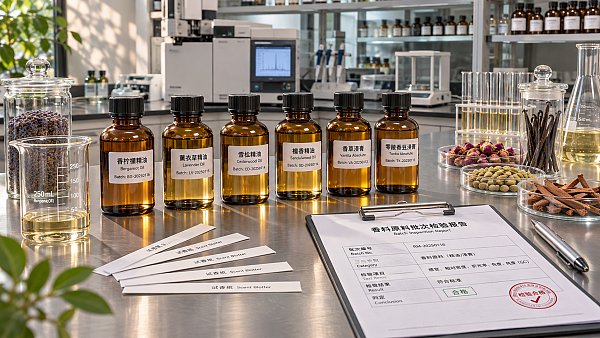
A fragrance evaluated on a scent strip or in a bottle can smell very different once dispersed in a product. The base may suppress some notes, expose others, change the appearance of the product, or alter the way fragrance reaches fabric. Ask shortlisted manufacturers to propose candidates for the actual base, not only from their general fragrance library.
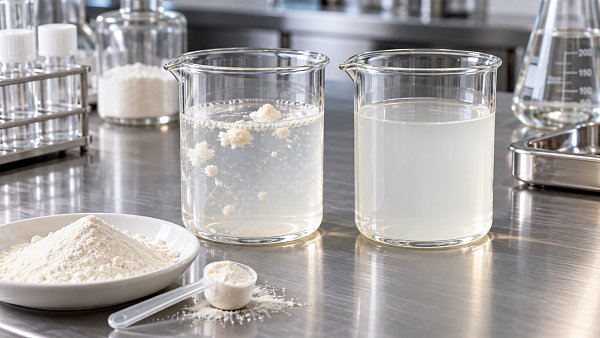
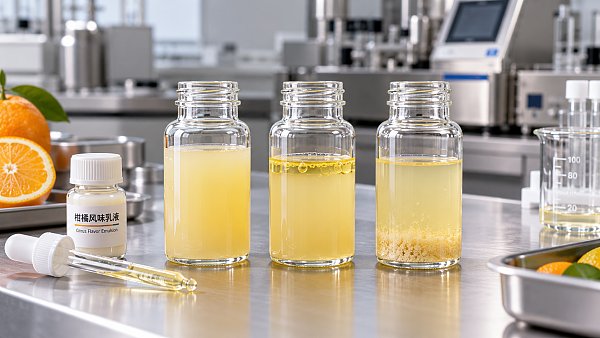
For liquid products, examine whether the fragrance incorporates consistently and whether the finished formulation remains acceptable during storage. Depending on the system, warning signs can include separation, haze, sediment, color change, viscosity drift, or an altered odor. These observations do not automatically identify the fragrance as the cause; the base, packaging, and processing conditions should be investigated too. A capable supplier should be willing to help isolate the source and suggest adjustments.
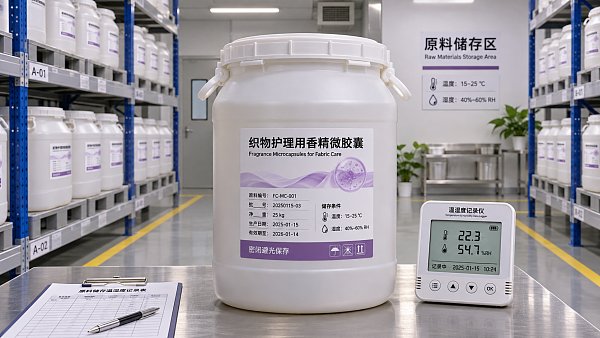
For powders, beads, or encapsulated systems, ask how the fragrance is carried or protected and what processing conditions it can tolerate. An encapsulated option may help deliver scent at a later point in use, but its value depends on the product, deposition on fabric, release mechanism, cost, and any relevant market requirements. Encapsulation by itself is not proof of better performance.
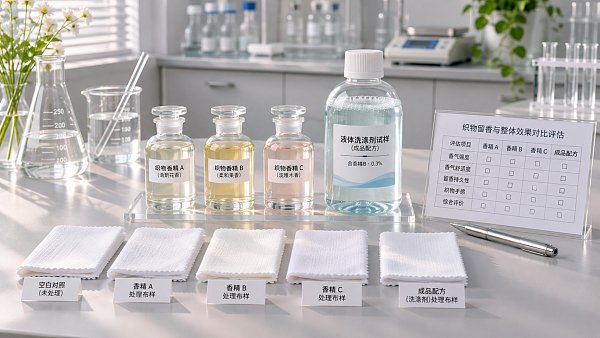
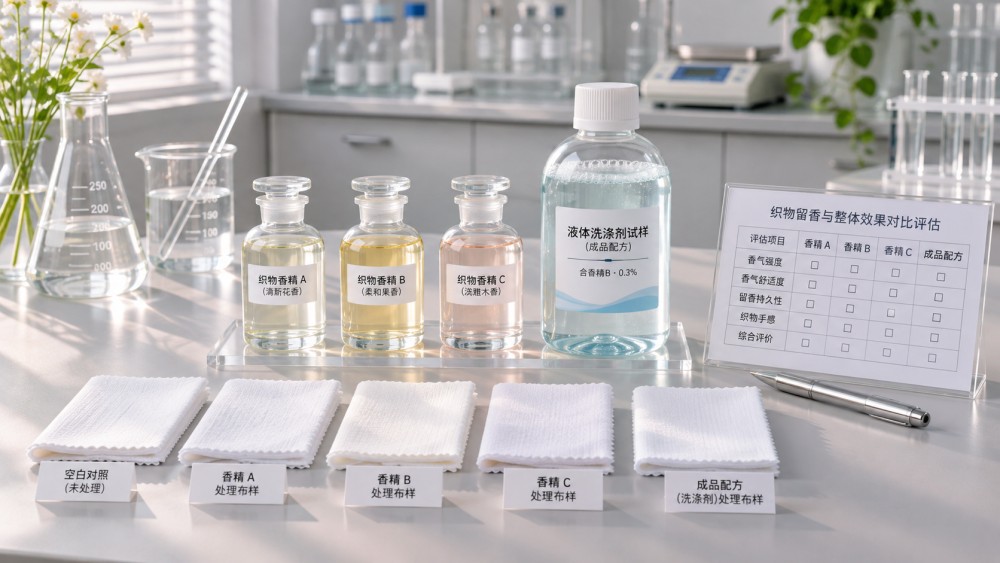
Run comparable trials with the same fragrance dosage, base, fabric types, wash conditions, and assessment times. Include an unfragranced control where practical, especially when the base has its own odor. Assess both desirable scent and unwanted effects such as discoloration, visible residue, or changes in product appearance. Use blind sensory assessments where feasible, record the criteria in advance, and agree on who makes the final acceptance decision.
Do not treat accelerated stability screening as a complete substitute for storage under expected conditions. It can help identify candidates that fail early, while longer-term testing provides evidence closer to the intended shelf life. A supplier that offers a pleasant initial sample but cannot explain its recommended test conditions leaves the buyer carrying more development risk.
Examine manufacturing control and documentation
Once a candidate performs well, the question shifts from “Can this sample work?” to “Can the supplier deliver the same agreed material repeatedly?” Ask which entity formulates or manufactures the fragrance, which entity supplies it, and where the relevant production takes place. A distributor may provide valuable service and access, but the buyer should understand who controls production, handles change notifications, and resolves quality issues.
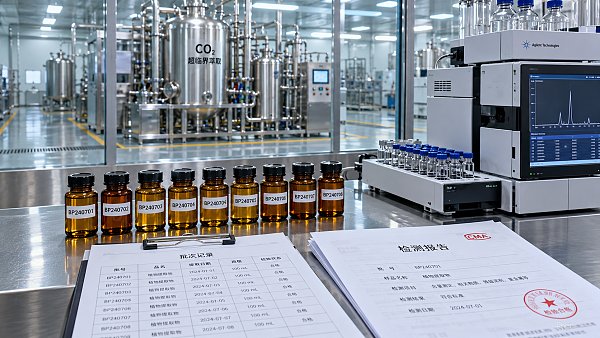
Request the proposed specification and a representative certificate of analysis. Discuss which properties are used for release, how identity and consistency are checked, and how the supplier investigates an out-of-specification batch. Sensory consistency matters alongside analytical controls: agree on the reference standard and the process for assessing an odor deviation, including how retained samples are handled.
Documentation should match the product and destination rather than a generic checklist. Depending on the project, requests may include a safety data sheet, composition or allergen information needed for labeling, and a statement addressing applicable International Fragrance Association (IFRA) Standards for the intended product category and use level. An IFRA statement is not a substitute for a safety assessment or for compliance with local laws. The finished-product company remains responsible for assessing its formulation, claims, labeling, and market-specific obligations.
Also ask how the supplier will manage ingredient substitutions, changes in raw-material origin, production-site changes, or revised specifications. Agree on advance notification and, where appropriate, buyer approval before a change is implemented. A minor adjustment to a complex fragrance can affect odor, stability, documentation, or claim support even when the commercial name stays the same.
Compare offers on cost in use and supply risk
The lowest price per kilogram of fragrance is not necessarily the lowest-cost choice. Suppliers may recommend different use levels to reach the same sensory outcome, and a cheaper candidate may require additional solubilizer, more development work, or a reformulation of the base. Compare offers using the cost of fragrance at the proposed dosage in the finished product, then account for material changes and testing needed to make each option commercially viable.
A quotation is more useful when it identifies the sample, specification, recommended dosage, order volume, packaging, delivery terms, lead time, quotation validity, and any development or tooling charges. Check whether the price assumes a volume that matches the launch plan. For smaller or uncertain demand, minimum order quantities and shelf life can matter as much as the unit price.
Supply questions should go beyond a stated lead time. Ask about production capacity relevant to your forecast, replenishment arrangements, raw-material dependencies, and the process for handling shortages. Discuss whether the supplier can support scale-up from trial quantities and whether an approved alternative fragrance or second source is feasible. A second source may require separate formulation, sensory, stability, and regulatory work; it should not be assumed interchangeable simply because the scent descriptions match.
Clarify ownership and access before commissioning custom development. The agreement should address who owns the fragrance formula or associated rights, whether the buyer receives exclusivity and under what conditions, and what happens if the relationship ends. A proprietary formula may protect the supplier’s intellectual property while limiting the buyer’s ability to transfer production. The appropriate balance depends on the importance of the scent to the brand and the buyer’s tolerance for supplier dependence.
Make the selection in stages
A practical decision process starts with a small number of suppliers that can support the intended application and markets. Screen their briefs and documents first, then compare samples in the same base. Advance only the candidates that meet essential sensory and compatibility requirements to longer stability, packaging, and production-scale evaluation.
Use a scorecard that separates mandatory requirements from preferences. Compliance support, acceptable finished-product performance, and the ability to meet required specifications may be pass-or-fail conditions. Scent preference, development speed, service, and price can then be weighted according to the project. This prevents a strong fragrance impression or an attractive quotation from concealing a gap that could delay launch.
Before placing a production order, document the approved sample, specification, dosage range, packaging, agreed documentation, delivery conditions, and change-control process. The strongest choice is the supplier whose tested fragrance and operating commitments fit the product’s commercial requirements, including the risks the buyer is prepared to manage.
Related News
 Supercritical CO2 Essential OilsWhat to Check When Buying Aroma Ingredients WholesaleBuying aroma ingredients wholesale? Discover how to assess quality, supplier reliability, documentation and landed cost before placing your order.MORE+
 Microencapsulated FragrancesHow to Choose a Fabric Fragrances ManufacturerChoose a fabric fragrances manufacturer with confidence. Learn how to compare scent performance, quality controls, documentation, costs, and supply reliability.MORE+
 Zero-Calorie Sweeteners & AcidulantsHow to Evaluate a Crystalline Polyols ManufacturerChoosing a crystalline polyols manufacturer? Learn how to compare quality, production performance, documentation, and delivered costs with confidence.MORE+
 Herbicides & Plant Growth RegulatorsHow to Choose Adjuvant Systems for Herbicide FormulationsChoose Adjuvant Systems that improve herbicide performance without sacrificing crop safety or stability. Explore practical selection and testing strategies.MORE+
 Microencapsulated FragrancesHow to Keep Encapsulated Perfumes for Fabric Care Fresh LongerKeep encapsulated perfumes for fabric care fresh longer with practical storage, handling, formulation and testing tips that help preserve lasting fragrance.MORE+
 Microencapsulated FragrancesHow to Choose Home Fragrances for Room Sprays That LastDiscover how to choose home fragrances for room sprays that last, with practical tips on scent longevity, formula compatibility, and testing.MORE+
 Antioxidants & Natural PreservativesHow Preservative Blends Help Control Spoilage in FoodsPreservative Blends can help control food spoilage and support shelf life. Discover how to select and validate the right system for your product.MORE+
 Targeted Bio-pesticides & APIsHow to Apply Microbial Pesticides to Foliage EffectivelyMicrobial pesticides for foliar application work best with proper mixing, timing, and leaf coverage. Discover practical steps to improve results and avoid common mistakes.MORE+
 Antioxidants & Natural PreservativesWhat Affects the Bulk Price of Food Preservation Ingredients?Explore what drives the food preservation ingredients bulk price, from specifications and order volume to freight, compliance, and supplier reliability.MORE+
 Supercritical CO2 Essential OilsHow to Choose Citrus Oils for Beverages Without CloudingChoose citrus oils for beverages with confidence. Compare delivery systems and stability tests to prevent clouding while preserving fresh citrus flavor.MORE+
 Polymer-Coated Water Soluble NPKGlobal Fertilizer Prices May Fall as Demand Weakens and Stocks Remain HighGlobal fertilizer prices may fall as weak demand and high stocks reshape the market. Explore what this could mean for purchasing and inventory planning.MORE+
 Polymer-Coated Water Soluble NPKWhen to Apply Potassium Sulfate Fertilizer for PotatoesLearn when to apply potassium sulfate fertilizer for potatoes, from pre-planting to tuber growth, and build a soil-test-based plan for your crop.MORE+
 Targeted Bio-pesticides & APIsHow to Use Botanical Fungicides for Fruits EffectivelyBotanical fungicides for fruits can help protect your crop when used correctly. Learn how to choose, time, and apply treatments for healthier fruit.MORE+
 Controlled-Release ThermodynamicsHow Resin Based Fertilizer Coating Polymers Control Nutrient ReleaseDiscover how resin based fertilizer coating polymers control nutrient release and learn which factors matter when choosing a coating for your crop.MORE+
 Chelated Trace Element FertilizersHow Soil pH Affects the Performance of Chelated Iron FertilizersDiscover how soil pH affects Chelated Iron Fertilizers and learn how to choose the right chelate for healthier crops and more effective applications.MORE+
 Herbicides & Plant Growth RegulatorsHow to Choose Adjuvant Systems for HerbicidesChoose adjuvant systems for herbicides with confidence. Explore label requirements, compatibility, crop safety, and field testing to make better-informed decisions.MORE+
 Antioxidants & Natural PreservativesHow to Choose Tocopherols for Food Oxidation ControlDiscover how to choose Tocopherols for food oxidation control. Compare profiles, dosage, formulation compatibility, and shelf-life testing.MORE+
 Non-ionic Surfactants & DefoamersDo Industrial Dispersants Require Special Handling During Transport?Do industrial dispersants require special handling during transport? Discover how to protect product quality, meet shipping rules, and prevent costly delays.MORE+
 Hydrocolloids & EmulsifiersHow Seaweed Extract Hydrocolloids Improve Food TextureSeaweed Extract Hydrocolloids improve food texture and stability. Discover how alginate, carrageenan, and agar perform in real formulations.MORE+
 Hydrocolloids & EmulsifiersWhat to Check Before Buying Carboxymethyl Cellulose WholesaleBuying carboxymethyl cellulose wholesale? Learn how to compare grades, supplier documents, performance and delivered costs before placing your order.MORE+
 Non-ionic Surfactants & DefoamersCalifornia OEHHA Proposes Proposition 65 Cancer Listing for PFHxA and Its SaltsPFHxA and its salts face a proposed California Proposition 65 cancer listing. Explore what the OEHHA notice could mean for suppliers and compliance.MORE+
 EPA FIFRA & FDA GRAS RegsEPA Exempts DMSO in Pesticide Formulations From Residue Tolerance RequirementsEPA exempts DMSO from pesticide residue tolerance requirements for specified uses. Explore the rule’s scope and what it means for formulators.MORE+
 Targeted Bio-pesticides & APIsHow Are Insecticide APIs Used in Public Health Programs?Insecticide APIs for public health support vector control through sprays, treated nets and larvicides. Discover how formulation, resistance and safety shape product selection.MORE+
 Polymer-Coated Water Soluble NPKHow to Evaluate a Controlled Release Fertilizer Systems SupplierChoosing a controlled release fertilizer systems supplier? Compare release performance, quality, supply reliability, and total costs with this practical guide.MORE+
 Supercritical CO2 Essential OilsWhat to Check When Choosing a CO2 Botanical Extracts ManufacturerChoosing a CO2 botanical extracts manufacturer? Discover how to assess quality, traceability, compliance and true costs before you commit.MORE+
 Hydrocolloids & EmulsifiersHow Cocamidopropyl Betaine Improves Foam in Bath ProductsDiscover how cocamidopropyl betaine for bath products can enhance foam, support a creamy lather, and help formulators improve bath and shower products.MORE+
 Microencapsulated FragrancesHow to Choose Bulk Cyclodextrins for Fragrance EncapsulationChoose bulk cyclodextrins for fragrance encapsulation with confidence. Compare formulation fit, scent retention, supplier quality, and total cost.MORE+
 Non-ionic Surfactants & DefoamersWhat Should a Quote From an Industrial Wetting Agents Exporter Include?Choosing an industrial wetting agents exporter? Learn what a complete quote should include, from product specs and active content to shipping terms, compliance, and true landed costs.MORE+
 Microencapsulated FragrancesHow to Choose Stable Synthetic Aroma Chemicals for EncapsulationChoose stable synthetic aroma chemicals for encapsulation with confidence. Learn how to assess compatibility, verify supplier quality, and protect aroma through storage and release.MORE+
 Zero-Calorie Sweeteners & AcidulantsHow to Evaluate a Sucralose Supplier Before Placing a Bulk OrderEvaluate a sucralose supplier with confidence. Learn how to verify quality, compliance, traceability, delivery reliability, and total costs before placing a bulk order.MORE+
 EPA FIFRA & FDA GRAS RegsHow Do FDA Rules Affect Synthetic Food Preservatives for Beverages?Synthetic food preservatives for beverages face specific FDA requirements. Explore permitted uses, dosage, labeling, and safety validation to make smarter compliance decisions.MORE+
 Polymer-Coated Water Soluble NPKHow to Choose Potassium Chloride Fertilizer for Bulk BlendingChoose potassium chloride fertilizer for bulk blending with confidence. Learn how particle size, durability, and moisture affect blend quality—and compare suppliers beyond price.MORE+
 Herbicides & Plant Growth RegulatorsReport Forecasts Global Agrochemical Market to Reach $387.7 Billion by 2031Global agrochemical market could reach $387.7 billion by 2031. Explore how technology, regulation and agricultural drones may shape industry decisions.MORE+
 Herbicides & Plant Growth RegulatorsWisconsin DNR Board to Vote on Drafting New Pesticide RulesWisconsin DNR pesticide rules are up for a drafting vote. See what the decision could mean for farmers, suppliers and future compliance.MORE+
 EPA FIFRA & FDA GRAS RegsWhat FDA Compliance Records Should a Synthetic Food Preservatives Supplier Provide?Choosing a synthetic food preservatives supplier? Discover key FDA compliance records, batch certificates, and traceability checks to approve suppliers with confidence.MORE+
 Hydrocolloids & EmulsifiersHow Does Low DE Maltodextrin Affect Texture in Powdered Drinks?Discover how low de maltodextrin adds body to powdered drinks with minimal sweetness. Learn how to select grades, improve mixing, and fine-tune texture for a better drinking experience.MORE+
 Hydrocolloids & EmulsifiersHow Do You Choose Flavor Emulsions for Beverages With Low Sugar?Choose flavor emulsions for beverages with low sugar. Learn how to balance taste, validate stability, compare cost per dose, and meet labeling requirements for a confident selection.MORE+
 Supercritical CO2 Essential OilsHow Can You Verify Quality Controls at a CO2 Extracts Factory?Evaluate a co2 extracts factory with confidence. Learn how to verify batch testing, traceability, and quality controls to reduce sourcing risks and choose a reliable supplier.MORE+
 Antioxidants & Natural PreservativesHow Does pH Affect the Performance of Antimicrobial Preservatives?Antimicrobial Preservatives perform differently as pH shifts. Learn how to select effective systems, avoid formulation pitfalls, and validate lasting product protection.MORE+
 Polymer-Coated Water Soluble NPKUSDA Pushes Domestic Fertilizer Capacity as Analysts Expect Further Price DeclinesUSDA fertilizer policies and expanded domestic production could push prices lower. Explore what shifting supply expectations mean for farm input costs and buying decisions.MORE+