How to Choose Adjuvant Systems for Herbicide Formulations
The right Adjuvant Systems for a herbicide formulation are those that improve biological performance under the intended use conditions without compromising product stability, crop selectivity, or application reliability. A surfactant that spreads a spray droplet quickly may still be a poor choice if it destabilizes the concentrate, increases crop injury, or offers no uptake benefit for the active ingredient.
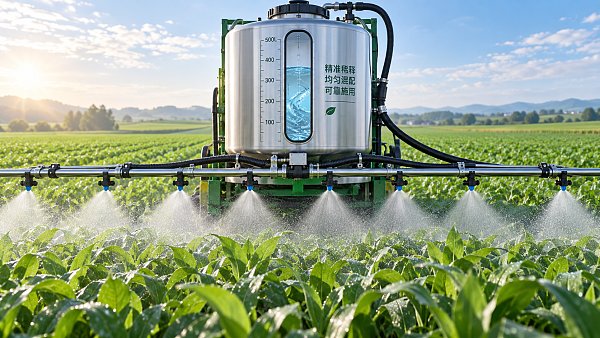
Start with the herbicide and its intended application, not with a preferred adjuvant category. Identify whether the main limitation is water quality, leaf retention, penetration, physical compatibility, or another factor. Then compare candidates as complete systems: active ingredient, formulation, spray water, tank-mix partners, crop, target weed, and application conditions.
Define what the adjuvant needs to do
A herbicide adjuvant may be built into the formulated product or added separately to the spray tank. These are related but distinct decisions. An in-can adjuvant must remain compatible with the concentrated product throughout manufacturing and storage. A tank-mix adjuvant must work after dilution and alongside the other products used in the sprayer.
The first selection question is where performance is being lost. A droplet that bounces off a waxy leaf presents a different problem from a herbicide that reaches the leaf but penetrates poorly. A hard-water antagonism problem calls for a different response from sedimentation in a suspension concentrate. Adding more surfactant to address all four can create new problems without correcting the original one.
Separate the desired functions before screening candidates:
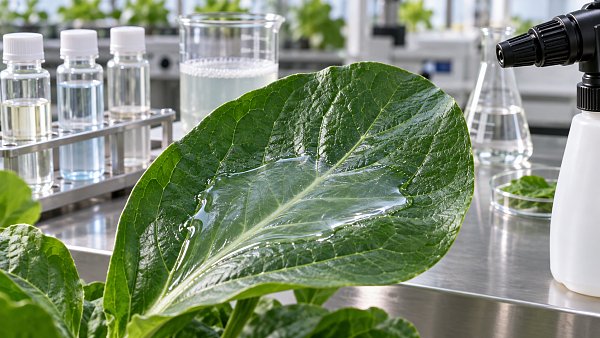
- Wetting and spreading: Help spray droplets contact the leaf surface. Excessive spreading can increase runoff and reduce the amount retained.
- Retention: Keep more of the applied spray on the target. Leaf shape, hairiness, droplet size, and spray volume all affect the result.
- Penetration: Support movement of the active ingredient through the leaf surface when uptake is limiting. Greater penetration can also increase crop injury.
- Water conditioning: Address specific spray-water issues, such as antagonism associated with hardness ions, where the herbicide and label support that approach.
- Physical stability: Maintain dispersion, emulsification, or other properties needed for consistent handling and application.
These functions can overlap, but they are not interchangeable. Define which outcome must improve and how it will be measured before comparing supplier samples.
Match the system to the herbicide and formulation
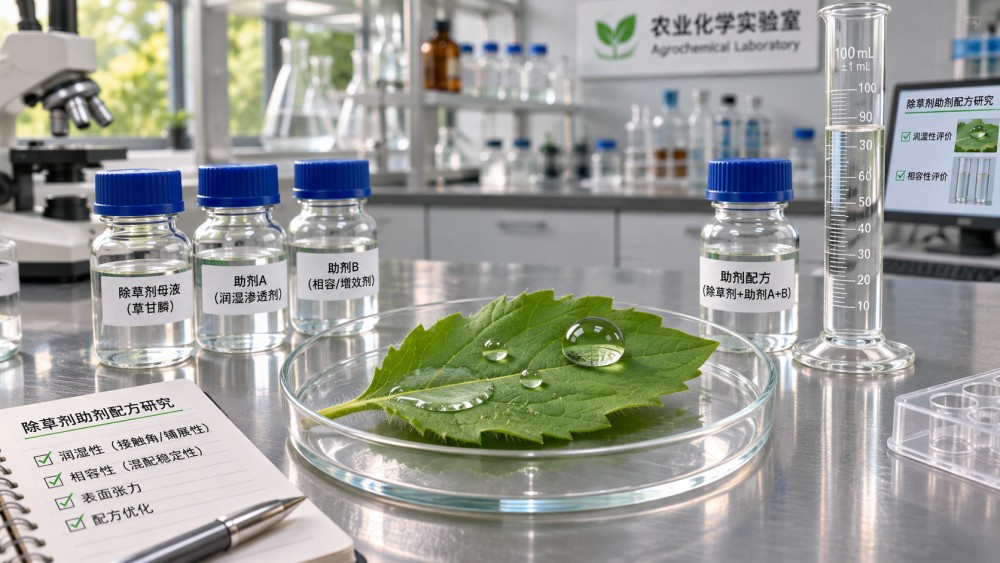
The active ingredient’s solubility, ionic character, and route of uptake shape the choice of adjuvant. So does the form in which it is supplied: a salt, acid, ester, or other derivative can behave differently from another form of the same herbicidal compound. Evaluate the commercial or developmental formulation as a whole, rather than assuming that results for the active ingredient alone will transfer.
Water-soluble herbicides may be sensitive to interactions with spray-water ions or other tank-mix components. For these products, a suitable water conditioner can sometimes matter more than additional spreading. By contrast, a poorly water-soluble active ingredient in an oil-containing formulation may depend heavily on the quality of the emulsion formed after dilution. In both cases, biological testing is needed to establish whether a proposed aid improves the intended use.
Formulation type also sets practical limits:
- Soluble concentrates: Examine clarity, phase behavior, and compatibility across the expected dilution and storage range. A surfactant that looks acceptable in water may alter the concentrate’s solubility.
- Suspension concentrates: Check dispersion stability, sedimentation, redispersibility, and spray dilution. An adjuvant that promotes wetting on a leaf can still interfere with the dispersant package that keeps particles suspended.
- Emulsifiable concentrates and oil-based systems: Assess emulsion formation and stability in representative water. The surfactant blend must accommodate the solvent and active ingredient, not simply produce a visually attractive initial emulsion.
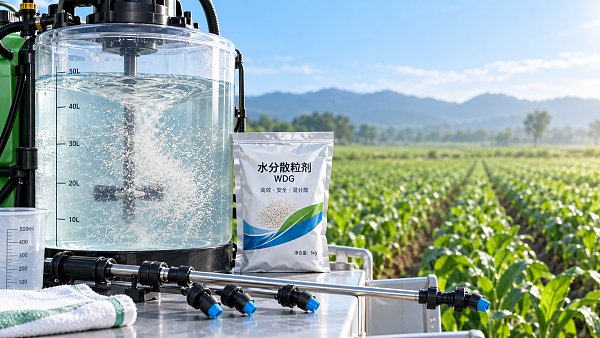
- Water-dispersible granules: Consider wetting, disintegration, and dispersion after dilution, as well as compatibility with any separately added tank adjuvant.
Check what the existing formulation already contains. Adding a second wetting agent or oil can change the balance of the system and may be unnecessary where the product is already optimized for its intended use.
Compare adjuvant options by function, not category name
Commercial descriptions such as “high-performance surfactant” or “penetrating oil” do not establish suitability for a specific herbicide. Composition, concentration, impurity profile, and blend design matter. Two products sold in the same category can behave differently in the same spray mixture.
Oil-based choices include different oil sources and emulsifier packages; they should not be treated as equivalent. Similarly, a non-ionic surfactant is not automatically compatible with every active ingredient or crop. A useful screening comparison holds the herbicide, application conditions, and relevant active adjuvant loading constant where practical, while also testing each commercial product according to its intended use.
Surface-tension measurements can help explain wetting behavior, but they are not a substitute for herbicide performance data. A lower surface tension does not necessarily mean better retention or control. On some leaf surfaces, a highly spreading droplet may move off the target before enough active ingredient is absorbed.
Account for water, tank mixes, and application conditions
Spray water is part of the formulation at the point of use. Hardness, pH, dissolved salts, and suspended material can influence different herbicides in different ways. For certain actives, calcium or magnesium ions can reduce effectiveness through chemical interactions. A conditioner selected for that mechanism should be evaluated in representative water, not only in deionized laboratory water.
Do not assume that lowering pH always improves performance. The appropriate pH depends on the active ingredient and the complete mixture; an adjustment that helps one component may affect another component’s stability or compatibility. Record water source and characteristics during testing so that changes in performance can be interpreted.
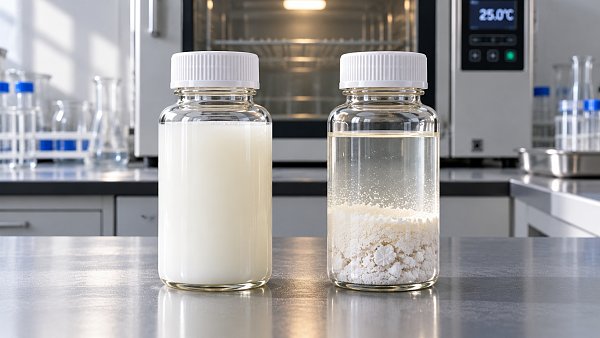
Tank-mix partners add another layer of complexity. Fertilizers, other crop protection products, drift-control agents, and adjuvants can compete for compatibility within the same spray mixture. A small-scale jar test can reveal visible separation, flocculation, precipitation, or excessive foam, but it cannot establish biological efficacy, crop safety, or stability over the full spraying period.
Mixing sequence matters because some interactions occur before the tank is fully diluted. Follow the applicable product directions, including any instructions for conditioning water or adding formulation types. Assess the mixture after the intended holding time and agitation conditions, not only immediately after preparation.
Application conditions also affect the result. Leaf surface, weed growth stage, temperature, humidity, spray volume, and droplet characteristics can change the balance between drying, retention, and uptake. Drift reduction and coverage may also compete: an adjuvant that changes droplet behavior should be assessed with the intended nozzle and operating conditions, not in isolation.
Balance weed control against crop selectivity
Improving uptake is useful only if the resulting treatment remains selective enough for the intended crop and use pattern. A more aggressive surfactant or oil system may increase herbicide entry into weeds while also increasing entry into crop foliage. Sensitivity can vary with crop growth stage, environmental stress, and the herbicide mixture.
Compare candidates at the intended application rate and at justified stress conditions within the proposed use pattern. Look beyond immediate leaf symptoms: injury observations should cover the period in which relevant effects may appear, using measures appropriate to the crop and treatment. A product that causes visible but transient effects is not automatically unacceptable, and a product with little early injury is not automatically safe.
Where the herbicide label specifies an adjuvant type, use rate, or restriction, those directions define the practical selection space. Crop selectivity cannot be inferred from a supplier’s general statement that an adjuvant is “gentle” or “crop-safe.” It must be demonstrated for the complete treatment.
Build a screening program that supports a decision
A useful evaluation moves from formulation feasibility to application performance. Early tests should remove candidates that cannot be manufactured, stored, or diluted reliably before resources are committed to larger biological trials.
- Set the use pattern. Define the active ingredient and formulation, target weeds, crop, application timing, water sources, tank partners, and relevant label constraints.
- Specify the performance gap. Identify whether the current limitation is stability, mixing, coverage, uptake, water antagonism, or crop safety. Establish a suitable control treatment.
- Screen physical compatibility. Examine concentrate appearance and stability where relevant, then test dilution, emulsion or dispersion behavior, foam, sedimentation, and redispersibility under representative conditions.
- Measure application behavior. Use relevant leaf surfaces and application settings to compare wetting, retention, and runoff. Interpret laboratory measures as indicators, not proof of weed control.
- Test biological performance. Compare weed response and crop injury with the same herbicide treatment without the candidate adjuvant, and with an appropriate reference treatment. Repeat under conditions that reflect the intended use.
- Assess robustness. Challenge leading candidates with variations in water, temperature, tank partners, storage, and application conditions. Record where performance or compatibility begins to deteriorate.
Keep controls meaningful. If a formulated herbicide already contains an adjuvant package, the comparison without an added tank adjuvant should retain that existing formulation. Otherwise, the test changes more than one factor and makes the result difficult to interpret. When comparing blends with different concentrations, distinguish the commercial product rate from the amount of functional material delivered.
A candidate that performs well in one greenhouse or field setting may not be the most dependable option across the intended use range. Give particular weight to repeatability and the consequences of failure: a modest improvement in coverage may not justify a large loss of crop tolerance or a narrow compatibility window.
What to request before selecting a supplier
Obtain enough information to reproduce the evaluation and control the finished product. Useful documentation includes the adjuvant’s composition or functional chemistry, relevant specifications, recommended use range, storage and handling information, safety data sheet, and compatibility guidance. For an in-can ingredient, discuss batch consistency, impurities that could affect the formulation, packaging compatibility, and change-notification procedures.
Regulatory suitability must be assessed for the intended market and use, including the status of the formulation components and applicable labeling. A material’s availability for one application does not establish that the same use is permitted in another jurisdiction.
Make the final choice against a defined set of acceptance criteria: reliable formulation and spray stability, adequate weed control, acceptable crop response, workable handling, and a supply profile that supports consistent production. Where two systems deliver similar biological results, the one with a broader operating window and fewer unresolved compatibility constraints may be the more practical choice.
Facing technical bottlenecks in manufacturing or looking for more efficient industrial solutions? Leave your details below and let the engineering experts at FCAS solve them for you.
We respect your privacy. Your information is strictly confidential.
Related News
 Herbicides & Plant Growth RegulatorsChina Pesticide Retail Prices Diverge as Lambda-Cyhalothrin and Glyphosate Lead GainsChina pesticide retail prices diverge as lambda-cyhalothrin and glyphosate lead gains. Explore the implications for buyers, suppliers and procurement.MORE+
 Herbicides & Plant Growth RegulatorsHow to Apply Powder Single Superphosphate for Better Root GrowthDiscover how to apply powder single superphosphate for better root growth, with practical guidance on soil testing, fertilizer rates, safe placement, and application.MORE+
 Herbicides & Plant Growth RegulatorsEnvironmental Groups Urge EPA to Release Paraquat Litigation MaterialsParaquat litigation materials are at the center of a push for EPA disclosure. Explore what environmental groups are requesting and why it matters for the herbicide review.MORE+
 Herbicides & Plant Growth RegulatorsHow to Choose a Reliable Herbicide APIs ManufacturerChoose a reliable herbicide APIs manufacturer with confidence. Discover how to assess quality, compliance, delivered costs and supply reliability.MORE+
 Herbicides & Plant Growth RegulatorsEU Pesticide Reduction Stalls as Binding Targets Are ScrappedEU pesticide reduction is stalling as binding targets are scrapped. Discover what the uncertainty means for sourcing, compliance and supply-chain planning.MORE+
 Herbicides & Plant Growth RegulatorsNAFDAC Seizes Banned Farm Chemicals Worth 200 Million Naira in KanoNAFDAC seizes banned farm chemicals worth 200 million naira in Kano. Discover what the action means for pesticide suppliers, buyers and storage operators.MORE+
 Herbicides & Plant Growth RegulatorsHow Do Herbicide Intermediates Affect Production Yield?Discover how Herbicide Intermediates influence production yield, from impurity control to product recovery, and learn how to evaluate suppliers with confidence.MORE+
 Herbicides & Plant Growth RegulatorsHow to Choose Crop Protection Chemicals for Effective Weed ControlChoose Crop Protection Chemicals with confidence. Discover how to match herbicides to weeds, crop stages, field conditions, and resistance risks for effective control.MORE+
 Herbicides & Plant Growth RegulatorsBayer Launches First Group 12 Pre-Emergence Herbicide Convintro in the USBayer's Convintro brings a Group 12 pre-emergence herbicide option to US corn and soybean growers. Explore its potential role and key purchasing considerations.MORE+
 Herbicides & Plant Growth RegulatorsCalifornia Report Shows Continued Decline in High-Risk Pesticide UseCalifornia pesticide use reportedly declined 28% for carcinogen-classified products. Explore what this could mean for suppliers, buyers and market access.MORE+
 Herbicides & Plant Growth RegulatorsHow to Choose Adjuvant Systems for Herbicide FormulationsChoose Adjuvant Systems that improve herbicide performance without sacrificing crop safety or stability. Explore practical selection and testing strategies.MORE+
 Herbicides & Plant Growth RegulatorsHow to Choose Adjuvant Systems for HerbicidesChoose adjuvant systems for herbicides with confidence. Explore label requirements, compatibility, crop safety, and field testing to make better-informed decisions.MORE+
 Herbicides & Plant Growth RegulatorsReport Forecasts Global Agrochemical Market to Reach $387.7 Billion by 2031Global agrochemical market could reach $387.7 billion by 2031. Explore how technology, regulation and agricultural drones may shape industry decisions.MORE+
 Herbicides & Plant Growth RegulatorsWisconsin DNR Board to Vote on Drafting New Pesticide RulesWisconsin DNR pesticide rules are up for a drafting vote. See what the decision could mean for farmers, suppliers and future compliance.MORE+
 Herbicides & Plant Growth RegulatorsHow Do Herbicide APIs for Formulation Affect Final Product Stability?Discover how herbicide APIs for formulation affect product stability. Learn which impurities, particle properties, and tests matter to reduce storage failures and qualify reliable suppliers.MORE+
 Herbicides & Plant Growth RegulatorsHow Do You Choose Spray Adjuvant Systems for Herbicide Applications?Choose spray adjuvant systems with confidence. Compare surfactants, oils, and water conditioners, check label requirements, and learn how to avoid costly herbicide application mistakes.MORE+
 Herbicides & Plant Growth RegulatorsHow Can Plant Growth Regulators Control Excessive Shoot Growth?Plant Growth Regulators help control excessive shoot growth. Discover how crop-specific selection, timing, and application can improve canopy management without over-suppressing plants.MORE+
 Herbicides & Plant Growth RegulatorsCanadian Coalition Calls for Removal of Bill C-31 Pesticide ProvisionBill C-31 faces calls from a Canadian coalition to remove Section 13 over pesticide oversight concerns. Explore the debate and potential implications for farmers and suppliers.MORE+
 Herbicides & Plant Growth RegulatorsUS EPA Approves Three Controversial New Pesticide Active IngredientsExplore reported US EPA approvals of epyrifenacil, diflufenican and trifludimoxazin. Understand PFAS concerns and discover key checks for pesticide buyers and agricultural suppliers.MORE+
 Herbicides & Plant Growth RegulatorsEnvironmental Groups Sue EPA to Seek Atrazine Water Quality StandardsAtrazine water quality standards are at the center of a reported EPA lawsuit. Explore potential impacts on growers and suppliers, plus practical steps to prepare for possible regulatory changes.MORE+
 Herbicides & Plant Growth RegulatorsUsing Insect Growth Regulators to Protect Stored Grain from InfestationsInsect growth regulators for stored grain: learn how lifecycle control, precise application, sanitation, and residue planning help safeguard quality and market access.MORE+
 Herbicides & Plant Growth RegulatorsSelecting Benzyl Alcohol for Stable Agrochemical FormulationsBenzyl alcohol for agrochemical formulations: discover how to improve solubility, emulsion stability, storage performance, compliance, and supplier qualification.MORE+
 Herbicides & Plant Growth RegulatorsWhat to Verify Before Choosing a Suspoemulsion Pesticides SupplierChoose a reliable suspoemulsion pesticides supplier with confidence. Verify formulation stability, dilution performance, documentation, packaging, batch control, and supply reliability.MORE+
 Herbicides & Plant Growth RegulatorsHow to Assess Quality Risks at a Pesticide Formulation Intermediates FactoryPesticide formulation intermediates factory assessment guide: identify quality risks in raw materials, processes, testing, traceability, and storage.MORE+
 Herbicides & Plant Growth RegulatorsSoluble Concentrates Explained for Reliable Field ApplicationsSoluble Concentrates explained: improve mixing, calibration, water quality, compatibility, and spray coverage for more reliable field applications.MORE+
 Herbicides & Plant Growth RegulatorsHow to Test Wetting Agents for Crop Protection FormulationsHow to test industrial wetting agents for crop protection use? Explore practical checks for leaf coverage, foam, stability, sprayability, and crop safety to select the right formulation additive.MORE+
 Herbicides & Plant Growth RegulatorsWhat Does Water-Dispersible Granules Mean in Crop Protection Formulations?Water dispersible granules meaning explained: discover how WDG crop protection formulations disperse in water, improve handling, and support reliable spray performance.MORE+
 Herbicides & Plant Growth RegulatorsHow Plant Growth Promoters Improve Crop Uniformity and YieldPlant Growth Promoters help improve crop uniformity, root development, stress recovery, and yield potential. Learn how to choose the right product, timing, and application strategy.MORE+
 Herbicides & Plant Growth RegulatorsAre Bioherbicides Ready to Replace Conventional Weed Control in 2026Bioherbicides are gaining ground in 2026, but can they replace conventional weed control? Explore where they truly perform, what limits adoption, and which markets offer the biggest opportunity.MORE+
 Herbicides & Plant Growth RegulatorsHow to Compare Herbicides for Cost, Control, and Crop SafetyHerbicides comparison made practical: learn how to assess true cost per hectare, weed control reliability, crop safety, resistance risk, and supplier quality before you buy.MORE+