What to Check Before Buying Carboxymethyl Cellulose Wholesale
The lowest quoted price for carboxymethyl cellulose wholesale is useful only when the offered grade delivers the required performance at the intended dosage. A cheaper material that needs more powder, longer mixing, additional filtration or extra quality testing can cost more per finished batch. Compare offers against the same application specification and calculate the delivered cost before choosing a supplier.
Start with the finished product and process: the desired texture or stability, the ingredients already in the formula, the mixing equipment and the required shelf life. These conditions determine which viscosity range, purity level and documentation are commercially relevant. They also provide a basis for deciding whether two quotations describe interchangeable materials.
Define the grade before comparing quotations
Commercial carboxymethyl cellulose, commonly supplied as sodium carboxymethyl cellulose or CMC, is sold in grades with different properties. State the intended application and identify whether the material is for food or an industrial use. A detergent formulation, for example, may use CMC for soil suspension, while a sauce may rely on it for thickening and texture. A grade that works in one system should not be assumed suitable for the other.
Request a technical data sheet and a proposed specification that covers the characteristics relevant to the application. Viscosity, degree of substitution, moisture, purity or assay, and particle size are common points of comparison. The specification should also identify the test methods behind the limits. A number without a method may be difficult to compare across suppliers.
Record the existing formulation conditions when requesting samples: CMC concentration, water quality, processing temperature, order of addition, mixing time, pH and other ingredients. If this information is commercially sensitive, provide enough detail for the supplier to recommend a grade without disclosing the full recipe. Ask which properties of the recommended material are expected to address the stated conditions.
Read viscosity figures in context
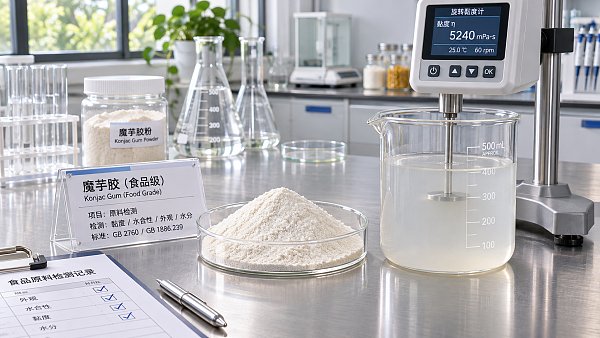
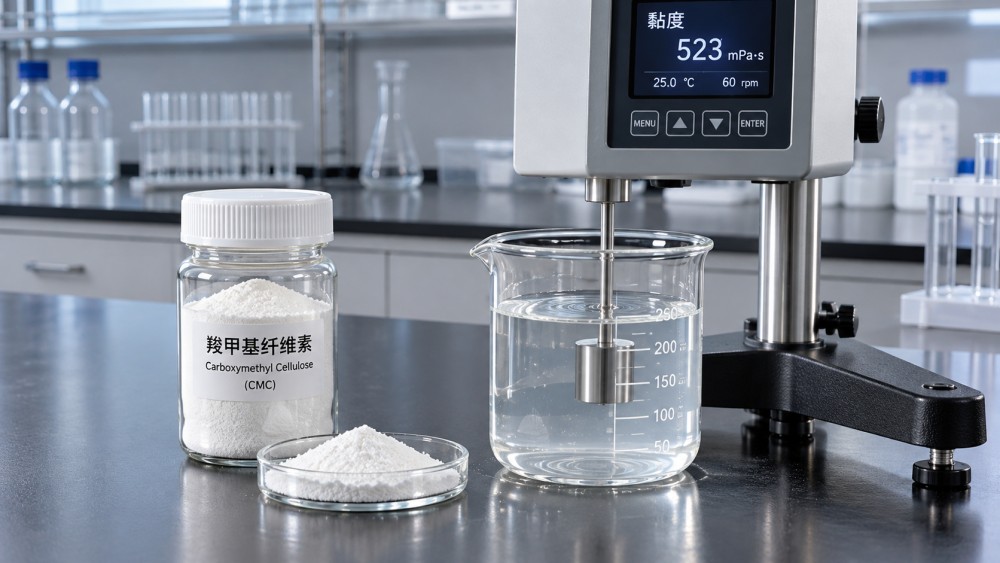
Viscosity is often the first number used to distinguish CMC grades, but it is meaningful only alongside the measurement conditions. Solution concentration, temperature, instrument, spindle or geometry, rotational speed, hydration procedure and test timing can all affect the reported result. Two materials with the same stated viscosity are not necessarily equivalent if their test methods differ.
Ask for the viscosity range rather than a single typical value, and distinguish a guaranteed specification from a representative result. A certificate of analysis records a particular batch; a data sheet may describe a typical grade. Comparing one supplier's batch result with another supplier's broad catalogue value gives a weak basis for acceptance.
Application testing should also look beyond the initial reading. A formulation that reaches the target viscosity after mixing may behave differently after heating, salt addition or storage. Test at the intended concentration and under the actual processing sequence. Where texture or suspension matters, assess those outcomes directly instead of treating viscosity as a complete performance measure.
Degree of substitution, purity and dissolution
Degree of substitution describes the extent of chemical substitution on the cellulose backbone. It affects CMC's behavior in water and its interaction with other ingredients, but it is not a standalone quality score. A grade with a higher value is not automatically the better purchase; suitability depends on the formulation and the other properties specified. Ask for the range and method used when this parameter is important to performance.
Purity and assay also need a defined basis. Residual salts and other impurities influence the composition of the powder, and moisture affects the amount of active material delivered per kilogram. A reported assay on a dry basis should not be compared directly with an as-supplied value without understanding the calculation. For applications sensitive to salts or contaminants, obtain limits for the relevant substances rather than relying on a broad description such as “high purity.”
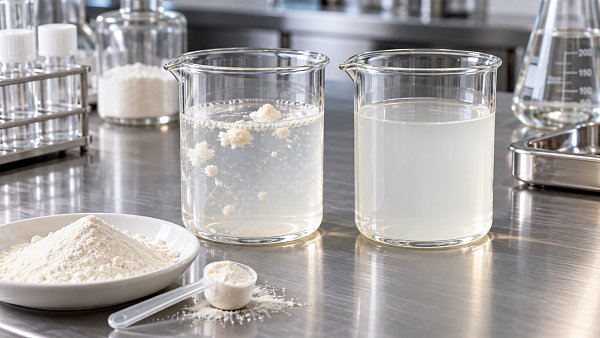
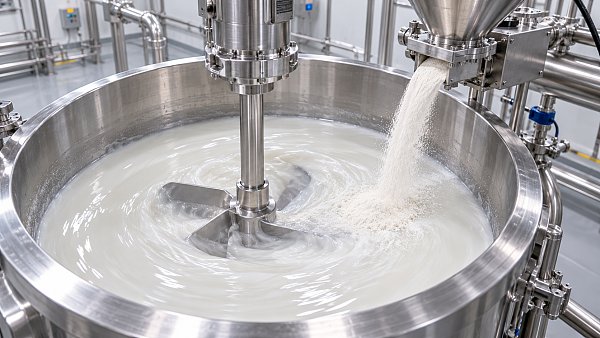
Dissolution is a separate purchasing consideration. Powder that forms surface lumps can leave an undispersed center even when the apparent viscosity rises. Particle size, powder dispersion, addition rate, water temperature and agitation all affect hydration. A material that performs well in a laboratory beaker may still cause processing delays when added to a larger vessel through a different feeding system.
During a trial, reproduce the intended addition method and observe wetting, lump formation, time to reach a consistent solution and any undissolved residue. If a sample performs poorly, separate material behavior from process effects before rejecting it: repeat the test with a controlled addition rate or an agreed dispersion method. Conversely, do not approve a grade solely because it dissolves under laboratory conditions that cannot be maintained in production.
Match documentation to the intended use
For a food application, request documentation that identifies the supplied grade and supports its suitability for the intended market and product category. This can include a food-grade statement, specification, batch certificate of analysis and information on relevant contaminants. Ask for declarations needed for the finished product's labeling and customer requirements, and confirm that each document refers to the actual manufacturing site and material offered.
For industrial uses, the required evidence follows the process. A coating or cleaning formulation may need particular viscosity, impurity or compatibility limits; a high-purity application may require additional contaminant data. “Industrial grade” alone does not define an acceptable composition. Conversely, paying for a food-grade package of controls may add cost without improving an industrial formulation, provided the selected material meets its actual requirements.
Obtain a current safety data sheet and confirm the identity and traceability of the material across the quotation, specification, certificate and packaging label. Certificates supplied for a sample should be clearly distinguished from those that will accompany commercial batches. Where regulatory or customer requirements apply, confirm the applicable rules for the destination and use rather than assuming a general supplier statement settles the question.
Compare the cost of a usable formulation
Normalize quotations to the same delivery point, currency, quantity and payment terms. Include freight, insurance where applicable, duties, handling and any required testing in the comparison. State whether the quoted weight is net product weight and whether packaging or pallet charges are included. An attractive unit price can change substantially once delivery and order conditions are aligned.
Then compare the cost at the dosage needed to achieve the target result. For each approved candidate, multiply the amount used per finished batch by its delivered cost per unit. Add material-specific processing or testing costs when they are significant. This calculation is more useful than ranking grades by price per kilogram, particularly when viscosity development or purity differs.
Keep the comparison anchored to a defined result. A lower dosage is valuable only if the finished product still meets requirements for texture, stability and processing. Likewise, a faster-hydrating grade is worth a premium only when the time saved has value in the relevant production schedule. Include the cost of rejected material or rework in the decision where trial evidence indicates a recurring problem, but do not assign an assumed saving without supporting data.
Minimum order quantity and price breaks deserve the same scrutiny. A larger order can reduce the quoted unit price while tying up storage space and working capital. Compare the price break with the expected consumption rate, agreed shelf life and ability to keep bags dry and intact. Confirm whether staggered deliveries are available and whether they change the price or freight terms.
Qualify the supply, not just the sample
A representative sample establishes an initial performance baseline; it does not prove that every future batch will behave identically. Ask how batches are identified, which characteristics are tested for release and how results are reported. Review more than one batch certificate when available, focusing on the properties that affect the application and on whether results remain within the proposed commercial limits.
Clarify the relationship between the party issuing the quotation and the manufacturing site. A distributor can be a valid source, but the order should identify the material's origin and establish who handles technical questions, documentation and complaints. Ask how changes to the manufacturing site, process, specification or raw material source are communicated before subsequent shipments.
Set acceptance terms before placing a substantial order. These should identify the agreed specification and test methods, the documents required with each lot, the procedure for resolving disputed results and the remedy for material found outside specification. Retain a reference sample under suitable conditions when the quality agreement calls for it. Without an agreed method, a viscosity disagreement can become a dispute about sample preparation rather than a clear quality decision.
A production-scale or appropriately representative trial is especially useful when a change in grade affects mixing time, formulation stability or finished-product texture. Define the acceptance criteria in advance and record any adjustments needed to reach them. If the trial requires a higher dosage or different addition sequence, carry those conditions into the cost comparison and operating instructions.
Packaging, storage and delivery terms
Confirm bag size, inner liner or other moisture protection, pallet configuration and label details before shipment. CMC powder should be protected from moisture and packaging damage; compromised bags can create handling problems and undermine traceability. Agree on how damaged or wet packages will be documented and handled at receipt.
Review the stated shelf life, storage conditions and the remaining shelf life required on arrival. The relevant date might be manufacture, retest or expiry, so the quotation and label should use terms that are clearly understood. Storage capacity matters as much as the nominal shelf life: bags need a dry, protected area and an inventory system that preserves lot identity.
Finally, put the commercial details in the purchase order: grade and revision of the agreed specification, quantity, packaging, delivery point, lead time, required documents and notification arrangements for substitutions or delays. A substitution should be evaluated against the approved formulation and quality criteria before shipment, even when its catalogue description appears similar.
Facing technical bottlenecks in manufacturing or looking for more efficient industrial solutions? Leave your details below and let the engineering experts at FCAS solve them for you.
We respect your privacy. Your information is strictly confidential.
Related News
 Hydrocolloids & EmulsifiersHow Does Agar Work as a Gelling Agent in Food?Discover how agar transforms liquids into firm gels, what affects texture and setting, and how to troubleshoot common problems in food formulations.MORE+
 Hydrocolloids & EmulsifiersHow Do Hydrocolloid Gums Improve Texture and Stability in Foods?Discover how hydrocolloid gums improve food texture and stability, and learn how to choose the right gum for your formulation.MORE+
 Hydrocolloids & EmulsifiersHow to Use Hydrocolloid Stabilizer Blends for SaucesDiscover how to use hydrocolloid stabilizer blends for sauces to improve texture, prevent separation, and achieve consistent results from trial to production.MORE+
 Hydrocolloids & EmulsifiersWhat to Look for in a Konjac Gum ManufacturerChoosing a konjac gum manufacturer? Learn how to assess quality, consistency, food safety, pricing, and supply reliability before you buy.MORE+
 Hydrocolloids & EmulsifiersHow to Choose Flavor Carriers for Spray Dried FlavorsChoose flavor carriers for spray dried flavors with confidence. Compare maltodextrin, gum arabic and modified starch for retention, stability and release.MORE+
 Hydrocolloids & EmulsifiersHow to Use Tara Gum for Dessert Toppings With Better StabilityDiscover how to use tara gum for dessert toppings to improve texture and stability, with practical hydration, formulation, and testing tips.MORE+
 Hydrocolloids & EmulsifiersHow Seaweed Extract Hydrocolloids Improve Food TextureSeaweed Extract Hydrocolloids improve food texture and stability. Discover how alginate, carrageenan, and agar perform in real formulations.MORE+
 Hydrocolloids & EmulsifiersWhat to Check Before Buying Carboxymethyl Cellulose WholesaleBuying carboxymethyl cellulose wholesale? Learn how to compare grades, supplier documents, performance and delivered costs before placing your order.MORE+
 Hydrocolloids & EmulsifiersHow Cocamidopropyl Betaine Improves Foam in Bath ProductsDiscover how cocamidopropyl betaine for bath products can enhance foam, support a creamy lather, and help formulators improve bath and shower products.MORE+
 Hydrocolloids & EmulsifiersHow Does Low DE Maltodextrin Affect Texture in Powdered Drinks?Discover how low de maltodextrin adds body to powdered drinks with minimal sweetness. Learn how to select grades, improve mixing, and fine-tune texture for a better drinking experience.MORE+
 Hydrocolloids & EmulsifiersHow Do You Choose Flavor Emulsions for Beverages With Low Sugar?Choose flavor emulsions for beverages with low sugar. Learn how to balance taste, validate stability, compare cost per dose, and meet labeling requirements for a confident selection.MORE+
 Hydrocolloids & EmulsifiersNutrition Experts Urge White House to Define Ultra-Processed FoodsUltra-processed foods face a push for an official White House definition. Explore what the proposed criteria could mean for ingredient suppliers and food product development.MORE+
 Hydrocolloids & EmulsifiersHow Can Flavor Emulsions for Beverages Stay Stable During Storage?Keep flavor emulsions for beverages stable during storage. Discover practical ways to control droplet size, prevent oil rings, protect aroma, and validate shelf life.MORE+
 Hydrocolloids & EmulsifiersHow Does Locust Bean Gum Compare With Guar Gum as a Thickener?Compare locust bean gum thickener with guar gum for hydration, texture, stability, and cost. Discover which option fits your process and delivers better product performance.MORE+
 Hydrocolloids & EmulsifiersHow Can You Verify Quality at a Microcrystalline Cellulose Factory?Verify quality at a microcrystalline cellulose factory with practical audit tips on traceability, testing, and batch consistency. Explore the guide to make confident sourcing decisions.MORE+
 Hydrocolloids & EmulsifiersHow Do Clean Label Stabilizer Blends Prevent Separation in Drinks?Discover how clean label stabilizer blends help reduce drink separation while preserving texture. Learn how to choose and validate the right blend for your beverage.MORE+
 Hydrocolloids & EmulsifiersHow to Choose Food Thickeners That Keep Sauces Stable After FreezingChoose Food Thickeners that keep frozen sauces smooth and stable. Compare starches, gums, and freeze–thaw tests to reduce water separation and find the right fit for your formulation.MORE+
 Hydrocolloids & EmulsifiersHow to Prevent Lumps When Mixing Powder Hydrocolloid Stabilizer BlendsPrevent lumps in powder hydrocolloid stabilizer blends with practical tips on feeding, dispersion, temperature, and hydration. Learn how to achieve smoother, more consistent batches.MORE+
 Hydrocolloids & EmulsifiersHow Can You Use Carboxymethyl Cellulose for Food Thickening Without Clumps?Use carboxymethyl cellulose for food thickening without clumps. Discover practical dispersion, mixing, and hydration tips for smoother textures and fewer wasted batches.MORE+
 Hydrocolloids & EmulsifiersWhich Encapsulation Wall Materials for Flavors Work Best in Baking?Compare encapsulation wall materials for flavors in baking. Explore starch, gum arabic, protein and lipid options to improve aroma retention and find the right fit for your products.MORE+
 Hydrocolloids & EmulsifiersHow Locust Bean Gum Improves Texture and Stability in Dairy ProductsLocust bean gum for dairy products improves creaminess, reduces whey separation, and supports stable yogurt, ice cream, spreads, and dairy drinks.MORE+
 Hydrocolloids & EmulsifiersWhy Clean Label Food Emulsifiers Matter in Modern FormulationClean label food emulsifiers shape stability, texture, processing, and shelf life. Explore practical formulation insights for beverages, sauces, bakery, and more.MORE+
 Hydrocolloids & EmulsifiersHow Natural Food Emulsifiers Improve Plant-Based Product TextureNatural food emulsifiers for plant based products improve creaminess, stability, and texture. Explore practical formulation strategies for beverages, dressings, desserts, and more.MORE+
 Hydrocolloids & EmulsifiersHow Konjac Gum Powder Improves Texture in Low-Calorie FoodsKonjac gum powder improves body, stability, and mouthfeel in low-calorie foods. Discover practical tips for smoother sauces, beverages, and reduced-fat formulations.MORE+
 Hydrocolloids & EmulsifiersHow Bulk Price Factors Affect Hydrocolloid Stabilizer Blend SourcingHydrocolloid stabilizer blends bulk price: compare dosage efficiency, quality consistency, logistics, and documentation to reduce total sourcing costs.MORE+
 Hydrocolloids & EmulsifiersHow Hydrocolloid Systems for Meat Products Improve Texture and YieldHydrocolloid systems for meat products improve yield, texture, water retention, and slicing quality. Explore practical formulation strategies for stable, high-performing meat products.MORE+
 Hydrocolloids & EmulsifiersHow Locust Bean Gum Thickener Improves Texture and StabilityLocust bean gum thickener improves texture, water retention, suspension, and stability. Learn practical hydration and blending tips for better product performance.MORE+
 Hydrocolloids & EmulsifiersChoosing Maltodextrin for Flavor Carriers in Dry Food BlendsMaltodextrin for flavor carriers: discover how to optimize aroma protection, powder flow, moisture control, compliance, and supply reliability in dry food blends.MORE+
 Hydrocolloids & EmulsifiersHow Guar Gum Derivatives Solve Texture and Stability IssuesGuar Gum Derivatives help solve texture, settling, separation, and viscosity loss. Discover practical formulation strategies for stable, high-performing products.MORE+
 Hydrocolloids & EmulsifiersHow Non-GMO Food Emulsifiers Improve Label-Friendly FormulationsNon-GMO food emulsifiers help create stable, label-friendly sauces, beverages, bakery products, and frozen foods. Explore sourcing, processing, and formulation insights.MORE+
 Hydrocolloids & EmulsifiersWhat to Evaluate When Choosing a Hydrocolloid Systems ManufacturerHydrocolloid systems manufacturer selection made easier: evaluate performance, documentation, supply reliability, and total cost for dependable results.MORE+
 Hydrocolloids & EmulsifiersWhat to Check Before Buying Natural Food Emulsifiers WholesaleNatural food emulsifiers wholesale: learn how to evaluate label fit, formula performance, documentation, supplier reliability, and total landed cost before buying.MORE+
 Hydrocolloids & EmulsifiersPreventing Melt-Down With Ice Cream Stabilizer Blend SelectionHydrocolloid stabilizer blends for ice cream: diagnose melt-down, improve creamy melt quality, and select formulas for stable texture and cold-chain resilience.MORE+
 Hydrocolloids & EmulsifiersWhen Cold Soluble Tara Gum Is the Right Choice for Beverage FormulasCold soluble tara gum helps beverage formulators achieve rapid hydration, smooth texture, and reliable stability. Explore when it delivers the right processing advantage.MORE+
 Hydrocolloids & EmulsifiersHow High Viscosity Locust Bean Gum Improves Texture StabilityHigh viscosity locust bean gum improves texture stability, water control, and mouthfeel in dairy, sauces, fillings, and frozen foods. Explore practical selection insights.MORE+
 Hydrocolloids & EmulsifiersFood Texturants: How to Match Hydrocolloids to Beverage and Sauce SystemsFood texturants guide: match hydrocolloids to beverage and sauce systems for stable texture, smooth processing, and better sensory performance.MORE+
 Hydrocolloids & EmulsifiersChoosing Cold Soluble Hydrocolloid Systems for Instant Beverage TextureCold soluble hydrocolloid systems for instant beverages: compare dispersion, texture, stability, process fit, and cost to select the right solution for scalable production.MORE+
 Hydrocolloids & EmulsifiersWhy Spray Dried Gum Arabic Is Used to Improve Powder StabilitySpray dried gum arabic improves powder stability by protecting sensitive ingredients, supporting flow, and enhancing water dispersibility. Discover its key benefits.MORE+
 Hydrocolloids & EmulsifiersHow to Select Flavor Emulsions That Keep Juice Drinks Smooth and StableFlavor emulsions for juice drinks: learn how to select stable systems that prevent oil rings, maintain cloud, protect aroma, and support smooth shelf-life performance.MORE+
 Hydrocolloids & EmulsifiersWhy Gellan Gum Is Used to Control Texture in Modern FoodsGellan Gum gives modern foods precise texture control, from light beverage suspension to clean gels and creamy body. Explore uses, processing factors, and formulation tips.MORE+