Wisconsin DNR Board to Vote on Drafting New Pesticide Rules
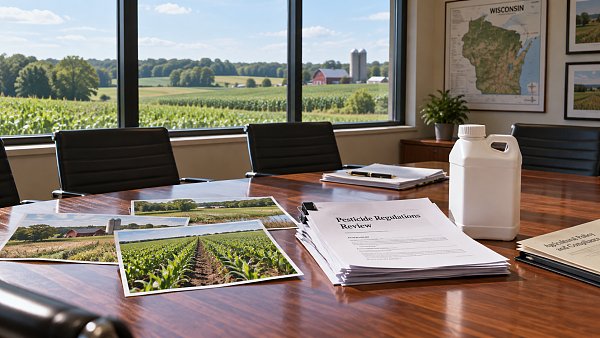
Wisconsin's Department of Natural Resources (DNR) policy-making board is set to vote on whether to draft new pesticide rules. The timing of the event is not specified in the information provided. The decision warrants attention from agricultural operators and businesses involved in pesticide supply because it could shape a future rulemaking process, although no new requirements are confirmed in the information provided.
Questions Raised Ahead of the Vote
The DNR policy-making board is preparing to vote on whether to draft new pesticide regulations. Local industry and agricultural groups have questioned the scientific basis and the process for developing the proposed rules. Their objections highlight tension between environmental regulation and agricultural operating needs in Wisconsin.
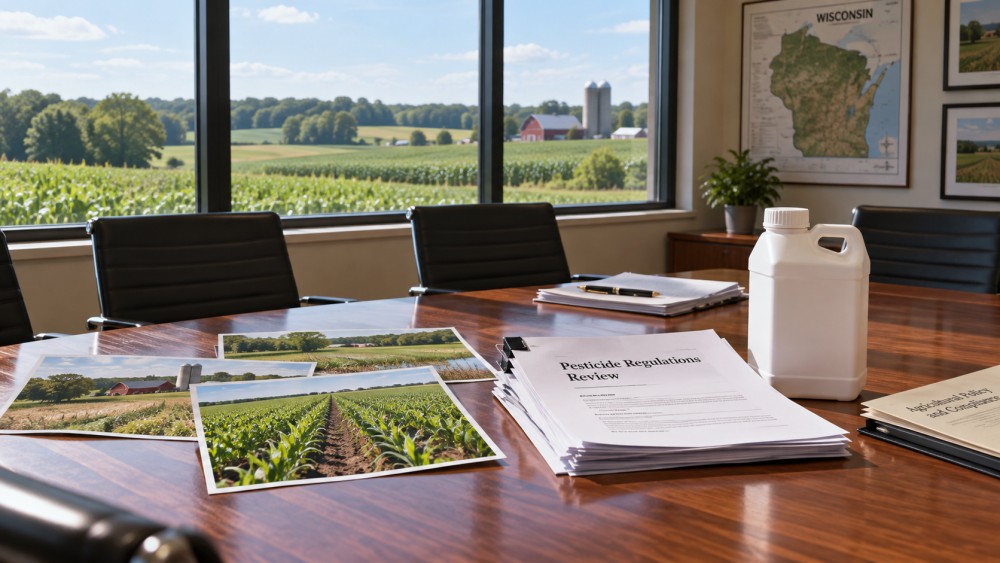
Where a Rulemaking Process Could Reach the Supply Chain
Agricultural Operations and Pesticide Use
From an industry perspective, agricultural operators may need to assess how any eventual proposal relates to their pesticide use and operating practices. The scope and content of potential rules are not specified in the information provided, so the effect on individual operations cannot yet be determined.
Pesticide Suppliers and Purchasing Decisions
Suppliers and purchasers may need to review product information and procurement plans if a draft identifies affected products or activities. Any implications for availability, documentation or delivery remain uncertain until the board's decision and further rulemaking details are available.
Services Supporting Compliance
Businesses that advise agricultural operators or support compliance may need to interpret any subsequent proposal for their customers. Whether additional documentation, testing or other services would be relevant depends on provisions that have not been specified in the information provided.
What Businesses Can Check After the Vote
Follow the Board's Decision
Businesses may wish to verify the outcome of the vote and monitor subsequent DNR communications. A decision to begin drafting would not, by itself, establish what final requirements would apply or when they would take effect.
Review the Scope and Supporting Basis
If draft provisions are issued, affected businesses can assess which products and activities they cover and examine the stated scientific basis and rulemaking process. The concerns raised by local groups make these points particularly relevant to evaluating the proposal.
Assess Operational and Procurement Exposure
Agricultural operators and suppliers can identify the pesticide-related activities and purchasing arrangements that might need review if a proposal advances. Any changes to product documentation, supplier information or delivery plans should be assessed against the actual text and subsequent guidance, rather than assumed in advance.
Drafting Decision, Not a Confirmed Rule Change
At this stage, the event is best understood as a rulemaking development to monitor, not confirmation that new pesticide requirements are in force. Analysis suggests that the vote outcome, any draft text and further feedback from industry and agricultural groups could all affect how businesses assess the potential operational consequences.
A Measured Response for the Sector
The prospective vote brings the relationship between environmental regulation and agricultural operating needs into focus. For now, a proportionate response is to follow the decision and evaluate any later proposal against actual business activities, without treating an unspecified outcome as an established compliance obligation.
Basis for This Report and Further Verification
This article is based on the user-provided news title, event-time information and event summary. No specific official source link was provided in the input, so the board's decision and subsequent developments still require verification. Relevant materials to monitor may include official DNR communications and information from industry or agricultural groups, particularly any draft rule details, explanations of the scientific basis and process, and further industry feedback.
Facing technical bottlenecks in manufacturing or looking for more efficient industrial solutions? Leave your details below and let the engineering experts at FCAS solve them for you.
We respect your privacy. Your information is strictly confidential.
Related News
 Herbicides & Plant Growth RegulatorsChina Pesticide Retail Prices Diverge as Lambda-Cyhalothrin and Glyphosate Lead GainsChina pesticide retail prices diverge as lambda-cyhalothrin and glyphosate lead gains. Explore the implications for buyers, suppliers and procurement.MORE+
 Herbicides & Plant Growth RegulatorsHow to Apply Powder Single Superphosphate for Better Root GrowthDiscover how to apply powder single superphosphate for better root growth, with practical guidance on soil testing, fertilizer rates, safe placement, and application.MORE+
 Herbicides & Plant Growth RegulatorsEnvironmental Groups Urge EPA to Release Paraquat Litigation MaterialsParaquat litigation materials are at the center of a push for EPA disclosure. Explore what environmental groups are requesting and why it matters for the herbicide review.MORE+
 Herbicides & Plant Growth RegulatorsHow to Choose a Reliable Herbicide APIs ManufacturerChoose a reliable herbicide APIs manufacturer with confidence. Discover how to assess quality, compliance, delivered costs and supply reliability.MORE+
 Herbicides & Plant Growth RegulatorsEU Pesticide Reduction Stalls as Binding Targets Are ScrappedEU pesticide reduction is stalling as binding targets are scrapped. Discover what the uncertainty means for sourcing, compliance and supply-chain planning.MORE+
 Herbicides & Plant Growth RegulatorsNAFDAC Seizes Banned Farm Chemicals Worth 200 Million Naira in KanoNAFDAC seizes banned farm chemicals worth 200 million naira in Kano. Discover what the action means for pesticide suppliers, buyers and storage operators.MORE+
 Herbicides & Plant Growth RegulatorsHow Do Herbicide Intermediates Affect Production Yield?Discover how Herbicide Intermediates influence production yield, from impurity control to product recovery, and learn how to evaluate suppliers with confidence.MORE+
 Herbicides & Plant Growth RegulatorsHow to Choose Crop Protection Chemicals for Effective Weed ControlChoose Crop Protection Chemicals with confidence. Discover how to match herbicides to weeds, crop stages, field conditions, and resistance risks for effective control.MORE+
 Herbicides & Plant Growth RegulatorsBayer Launches First Group 12 Pre-Emergence Herbicide Convintro in the USBayer's Convintro brings a Group 12 pre-emergence herbicide option to US corn and soybean growers. Explore its potential role and key purchasing considerations.MORE+
 Herbicides & Plant Growth RegulatorsCalifornia Report Shows Continued Decline in High-Risk Pesticide UseCalifornia pesticide use reportedly declined 28% for carcinogen-classified products. Explore what this could mean for suppliers, buyers and market access.MORE+
 Herbicides & Plant Growth RegulatorsHow to Choose Adjuvant Systems for Herbicide FormulationsChoose Adjuvant Systems that improve herbicide performance without sacrificing crop safety or stability. Explore practical selection and testing strategies.MORE+
 Herbicides & Plant Growth RegulatorsHow to Choose Adjuvant Systems for HerbicidesChoose adjuvant systems for herbicides with confidence. Explore label requirements, compatibility, crop safety, and field testing to make better-informed decisions.MORE+
 Herbicides & Plant Growth RegulatorsReport Forecasts Global Agrochemical Market to Reach $387.7 Billion by 2031Global agrochemical market could reach $387.7 billion by 2031. Explore how technology, regulation and agricultural drones may shape industry decisions.MORE+
 Herbicides & Plant Growth RegulatorsWisconsin DNR Board to Vote on Drafting New Pesticide RulesWisconsin DNR pesticide rules are up for a drafting vote. See what the decision could mean for farmers, suppliers and future compliance.MORE+
 Herbicides & Plant Growth RegulatorsHow Do Herbicide APIs for Formulation Affect Final Product Stability?Discover how herbicide APIs for formulation affect product stability. Learn which impurities, particle properties, and tests matter to reduce storage failures and qualify reliable suppliers.MORE+
 Herbicides & Plant Growth RegulatorsHow Do You Choose Spray Adjuvant Systems for Herbicide Applications?Choose spray adjuvant systems with confidence. Compare surfactants, oils, and water conditioners, check label requirements, and learn how to avoid costly herbicide application mistakes.MORE+
 Herbicides & Plant Growth RegulatorsHow Can Plant Growth Regulators Control Excessive Shoot Growth?Plant Growth Regulators help control excessive shoot growth. Discover how crop-specific selection, timing, and application can improve canopy management without over-suppressing plants.MORE+
 Herbicides & Plant Growth RegulatorsCanadian Coalition Calls for Removal of Bill C-31 Pesticide ProvisionBill C-31 faces calls from a Canadian coalition to remove Section 13 over pesticide oversight concerns. Explore the debate and potential implications for farmers and suppliers.MORE+
 Herbicides & Plant Growth RegulatorsUS EPA Approves Three Controversial New Pesticide Active IngredientsExplore reported US EPA approvals of epyrifenacil, diflufenican and trifludimoxazin. Understand PFAS concerns and discover key checks for pesticide buyers and agricultural suppliers.MORE+
 Herbicides & Plant Growth RegulatorsEnvironmental Groups Sue EPA to Seek Atrazine Water Quality StandardsAtrazine water quality standards are at the center of a reported EPA lawsuit. Explore potential impacts on growers and suppliers, plus practical steps to prepare for possible regulatory changes.MORE+
 Herbicides & Plant Growth RegulatorsUsing Insect Growth Regulators to Protect Stored Grain from InfestationsInsect growth regulators for stored grain: learn how lifecycle control, precise application, sanitation, and residue planning help safeguard quality and market access.MORE+
 Herbicides & Plant Growth RegulatorsSelecting Benzyl Alcohol for Stable Agrochemical FormulationsBenzyl alcohol for agrochemical formulations: discover how to improve solubility, emulsion stability, storage performance, compliance, and supplier qualification.MORE+
 Herbicides & Plant Growth RegulatorsWhat to Verify Before Choosing a Suspoemulsion Pesticides SupplierChoose a reliable suspoemulsion pesticides supplier with confidence. Verify formulation stability, dilution performance, documentation, packaging, batch control, and supply reliability.MORE+
 Herbicides & Plant Growth RegulatorsHow to Assess Quality Risks at a Pesticide Formulation Intermediates FactoryPesticide formulation intermediates factory assessment guide: identify quality risks in raw materials, processes, testing, traceability, and storage.MORE+
 Herbicides & Plant Growth RegulatorsSoluble Concentrates Explained for Reliable Field ApplicationsSoluble Concentrates explained: improve mixing, calibration, water quality, compatibility, and spray coverage for more reliable field applications.MORE+
 Herbicides & Plant Growth RegulatorsHow to Test Wetting Agents for Crop Protection FormulationsHow to test industrial wetting agents for crop protection use? Explore practical checks for leaf coverage, foam, stability, sprayability, and crop safety to select the right formulation additive.MORE+
 Herbicides & Plant Growth RegulatorsWhat Does Water-Dispersible Granules Mean in Crop Protection Formulations?Water dispersible granules meaning explained: discover how WDG crop protection formulations disperse in water, improve handling, and support reliable spray performance.MORE+
 Herbicides & Plant Growth RegulatorsHow Plant Growth Promoters Improve Crop Uniformity and YieldPlant Growth Promoters help improve crop uniformity, root development, stress recovery, and yield potential. Learn how to choose the right product, timing, and application strategy.MORE+
 Herbicides & Plant Growth RegulatorsAre Bioherbicides Ready to Replace Conventional Weed Control in 2026Bioherbicides are gaining ground in 2026, but can they replace conventional weed control? Explore where they truly perform, what limits adoption, and which markets offer the biggest opportunity.MORE+
 Herbicides & Plant Growth RegulatorsHow to Compare Herbicides for Cost, Control, and Crop SafetyHerbicides comparison made practical: learn how to assess true cost per hectare, weed control reliability, crop safety, resistance risk, and supplier quality before you buy.MORE+