How to Keep Encapsulated Perfumes for Fabric Care Fresh Longer
Encapsulated perfumes for fabric care help deliver lasting fragrance by protecting scent ingredients and releasing them gradually during use. However, storage and handling conditions can affect their performance.
Whether you handle fragrance capsules as a raw material or use them in a fabric care formulation, following supplier instructions is the safest starting point.
Keep the product within its specified temperature range, protect the original packaging, minimize contamination, and check performance throughout storage. No single storage condition suits every capsule system.
What Is the Best Way to Store Encapsulated Perfumes for Fabric Care?
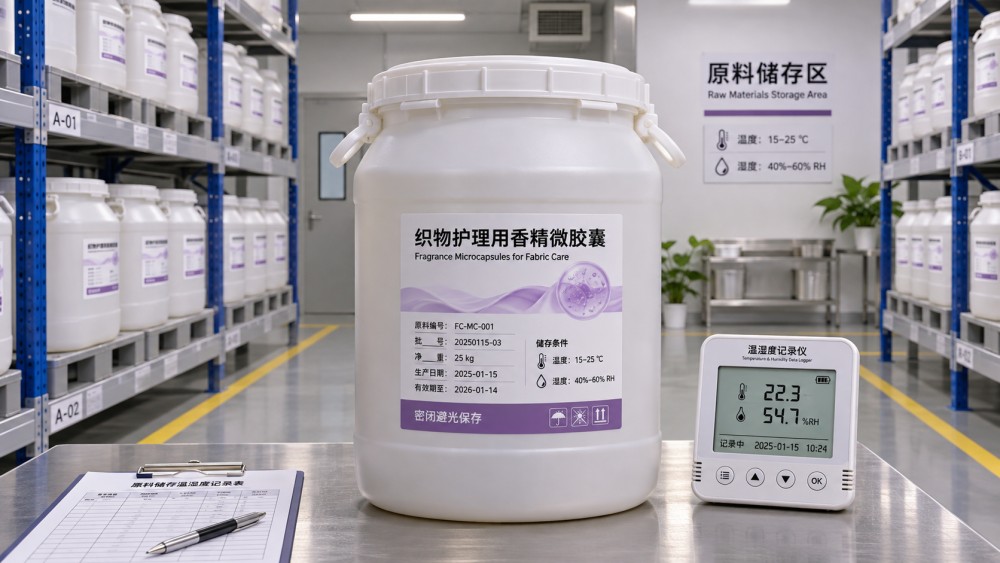
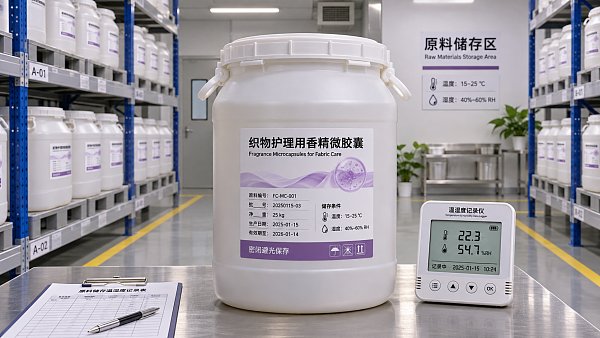
Store fragrance capsules in their original, tightly closed containers in a clean area that meets the supplier’s temperature, humidity, and light exposure requirements.
Check the technical data sheet and safety data sheet before receiving the material. The product label may also specify restrictions on freezing, stacking, or container orientation.
For aqueous capsule slurries, prevent freezing unless the supplier explicitly permits it. Ice formation can damage capsules or change the dispersion, even after the product thaws.
For dry powders, moisture control is particularly important. Humidity can cause clumping, reduce flowability, or interfere with later dispersion, depending on the carrier and capsule design.
Record the batch number, receipt date, recommended storage conditions, and expiry or retest date. This makes it easier to identify batches that need attention.
Do not assume that a pleasant smell alone confirms quality. Capsule integrity, particle distribution, and fragrance release can change before a problem becomes obvious.
Which Storage Conditions Matter Most?
Temperature and Temperature Changes
Heat can accelerate fragrance oxidation, evaporation, and changes in capsule walls. It may also destabilize a slurry or finished formulation, depending on its composition.
Place containers away from radiators, steam lines, direct sunlight, and hot warehouse roofs. Monitor actual storage conditions rather than relying only on a room thermostat.
Avoid frequent temperature swings during transport and storage. Where excursions occur, document their duration and maximum or minimum temperature, then consult the supplier about suitability.
Refrigeration is not automatically beneficial. Some products become difficult to redisperse or suffer irreversible damage at low temperatures, so use only the recommended range.
Moisture, Air, and Light
Keep dry encapsulated fragrances sealed when not in use, and avoid opening them in humid production areas. Reseal inner liners and outer containers promptly.
For liquid dispersions, close containers between transfers to limit contamination and evaporation. Avoid leaving hoses, pumps, or open vessels exposed longer than necessary.
Light and oxygen can affect sensitive fragrance ingredients. Opaque, well-sealed original packaging provides protection where specified, but it cannot compensate for unsuitable temperatures.
Use clean, dry tools compatible with the product. Do not return unused material from a production vessel to the original container without an approved procedure.
How Should Operators Handle Capsules During Production?
Fragrance capsules are designed to release scent under particular conditions, but excessive mechanical stress during processing can cause premature rupture or change product performance.
Follow the supplier’s instructions for mixing speed, pump selection, transfer, and addition point. The appropriate limits depend on capsule chemistry, particle size, and the surrounding formulation.
Before opening a container, check its label, batch status, packaging condition, and storage history. Quarantine damaged, leaking, or unexpectedly swollen containers for assessment.
Wear the protective equipment specified in the safety data sheet and site procedures. Fragrance materials can cause sensitization, so avoid unnecessary skin contact and airborne exposure.
For a settled slurry, use the supplier’s recommended method to restore uniformity. Gentle, controlled mixing may be appropriate, but vigorous agitation can damage some capsules.
Inspect the material after mixing for persistent lumps, unusual separation, or discoloration. Record observations and compare them with the approved appearance specification.
When transferring material, keep lines and receiving vessels clean. Select equipment according to supplier guidance, and avoid unnecessary recirculation or restrictive transfer conditions.
Do not dilute a concentrate unless the supplier confirms the diluent and procedure. Water quality, preservatives, and dilution ratios can affect microbial and physical stability.
Once opened, use the product within the supplier’s stated period and site procedures. An unopened shelf life should not be assumed to apply after opening.
How Can You Protect Fragrance Capsules in a Fabric Care Formula?
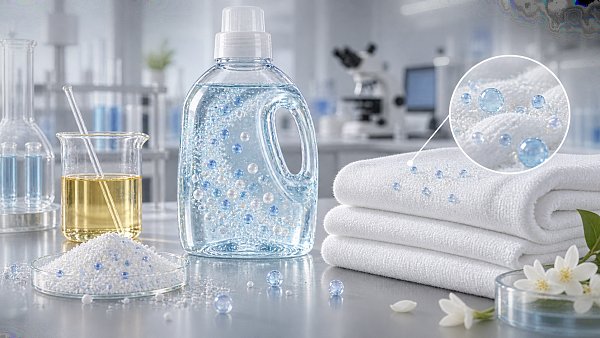
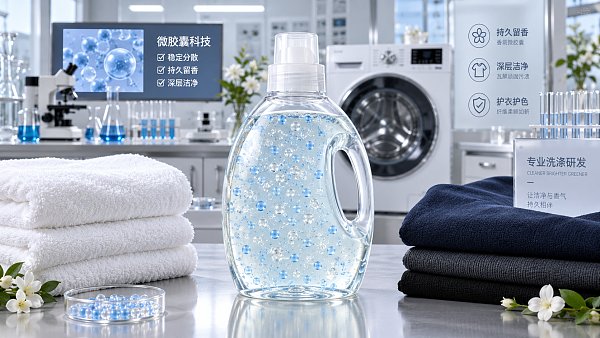
Storage alone cannot preserve performance if the finished formula is incompatible with the capsules. Detergents, fabric softeners, scent boosters, and sprays present different challenges.
Ask the capsule supplier which product formats have been tested and which formulation conditions are supported. A capsule suitable for softener may not suit concentrated detergent.
Check the combined effects of pH, surfactants, solvents, salts, enzymes, preservatives, and fragrance oils. Compatibility depends on the complete formula, not one ingredient alone.
Add capsules at the processing stage recommended by the supplier. Late addition after high-shear mixing and cooling may reduce exposure to stress, where technically appropriate.
Confirm that the batch temperature is within the permitted range before addition. Continue mixing only as long as needed to achieve the required distribution.
Balance suspension with flow and dispensing performance. Capsules that settle or cream may deliver inconsistent fragrance unless the formulation can maintain or restore uniformity.
Avoid assuming that stronger initial fragrance means better capsule retention. Premature leakage can increase the smell of the liquid while reducing fragrance available after washing.
Test representative batches in the intended packaging. Container materials, headspace, closures, and dispensing mechanisms can influence stability and user experience.
For commercial production, repeat checks after process scale-up. Mixing patterns and pump conditions in a large vessel can differ substantially from laboratory conditions.
How Do You Check Whether Encapsulated Fragrance Is Still Effective?
Start with a documented baseline for each approved product or formulation. Compare stored samples against that baseline using the supplier’s specifications and your internal methods.
Inspect appearance, odor, color, viscosity, and separation where relevant. These checks are useful screening tools, but they cannot independently establish capsule integrity or shelf life.
For slurries, examine whether settling reverses under the approved mixing procedure. Irreversible sediment, unexpected thickening, or persistent clumps warrant further investigation.
For dry products, check for caking, moisture uptake, and changes in flow. Do not break up hardened material aggressively without confirming that the capsules will tolerate it.
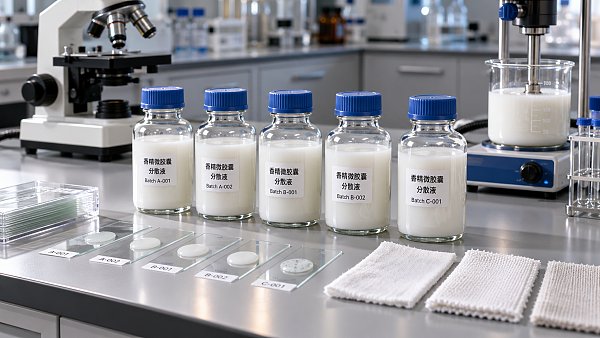
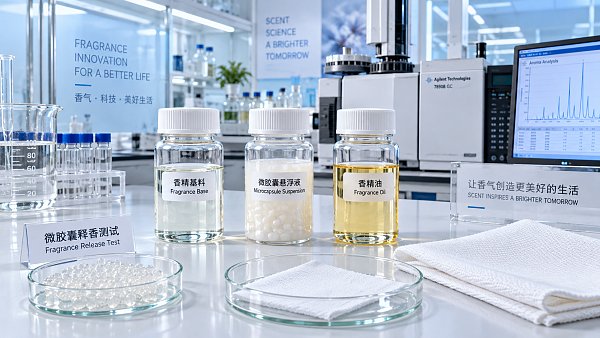
Where available, use microscopy or a validated particle-size method to investigate changes in capsule population. Interpret results with the supplier because methods differ by product.
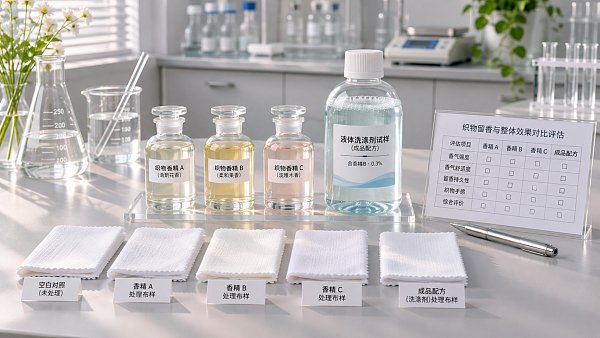
Assess fragrance in the intended application, not only in the container. A controlled wash-and-dry test can compare stored and fresh samples under the same conditions.
Include relevant scent checkpoints, such as wet fabric, dry fabric, and fabric after standardized rubbing. Use consistent fabric, dosage, wash settings, drying, and assessment timing.
Trained panel assessments and analytical measurements can complement each other. Neither should be treated as interchangeable with a validated end-use performance test.
Quarantine material that fails specifications or shows unexplained changes. Ask the supplier and your quality team to assess it before release, rework, or disposal.
How Long Do Fragrance Capsules Last After Opening?
There is no universal shelf life for encapsulated fragrance. It varies with capsule technology, fragrance composition, carrier, packaging, storage conditions, and whether the container is open.
Use the manufacturer’s unopened expiry or retest date as directed. A retest date is not necessarily an expiry date; follow the supplier’s release criteria.
For opened containers, record the opening date and reseal them immediately after each use. Apply a shorter in-use period when the supplier or site procedure requires one.
Do not extend use solely because the material looks or smells acceptable. Any extension should follow documented quality procedures, relevant test results, and supplier advice.
For finished products, establish shelf life through stability and performance testing in the final formula and packaging. Raw material shelf life does not automatically transfer.
What Should You Do After a Storage or Handling Problem?
If a container freezes, overheats, leaks, or remains open unexpectedly, identify the affected batch and prevent its use until the deviation has been reviewed.
Record the event, estimated exposure conditions, container status, and any visible changes. Include transport records or temperature logger data when available.
Contact the supplier with those details and ask which checks are meaningful. Do not assume that returning the material to normal temperature restores capsule performance.
Quality staff can compare the batch against specifications and decide whether testing, rejection, or another documented action is appropriate. Follow site procedures for disposal.
If a finished product loses fragrance too quickly, investigate storage history alongside formulation compatibility, processing conditions, packaging, and the actual wash or drying conditions.
Questions to Ask Your Fragrance Capsule Supplier
Request the current technical data sheet, safety data sheet, product specification, and recommended storage range. Confirm whether the guidance applies to opened and unopened containers.
Ask about freezing sensitivity, permitted temperature excursions, shelf life, retest requirements, and the recommended procedure for redistributing settled material.
For production planning, confirm suitable addition temperature, mixing conditions, pump considerations, and any known restrictions involving your surfactants, solvents, or preservative system.
Request application-specific test methods and guidance on evaluating fragrance release. Agree on acceptance criteria before comparing batches or investigating a performance complaint.
Finally, check packaging sizes and delivery conditions against actual consumption. Smaller containers may reduce repeated opening and handling when usage is intermittent.
Conclusion
To keep encapsulated perfumes for fabric care fresh longer, control storage conditions, preserve packaging integrity, avoid unnecessary processing stress, and verify compatibility in the finished formula.
Use supplier specifications as the operating baseline and investigate deviations promptly. Regular application testing provides the clearest evidence that stored capsules still deliver the intended fragrance.
Facing technical bottlenecks in manufacturing or looking for more efficient industrial solutions? Leave your details below and let the engineering experts at FCAS solve them for you.
We respect your privacy. Your information is strictly confidential.
Related News
 Microencapsulated FragrancesHow Can Citrus Terpene Fragrances Stay Fresh in Formulations?Keep citrus terpene fragrances fresh for longer. Explore practical formulation, packaging, and testing strategies to protect their vibrant scent.MORE+
 Microencapsulated FragrancesHow Fragrance Encapsulation Systems for Detergents WorkDiscover how fragrance encapsulation systems for detergents protect perfume, deposit on fabric, and release scent—and learn how to choose the right system.MORE+
 Microencapsulated FragrancesHow to Choose a Reliable Fragrance Carriers SupplierChoose a reliable fragrance carriers supplier with confidence. Compare formulation fit, quality controls, documentation, supply risks, and total cost.MORE+
 Microencapsulated FragrancesHow Can Microencapsulation Help Essential Oil Blends Last Longer?Essential Oil Blends can retain their aroma longer with the right microencapsulation strategy. Explore carrier choices, release mechanisms, and stability testing.MORE+
 Microencapsulated FragrancesHow to Choose a Fragrance Capsules Manufacturer for Your ProductChoose the right fragrance capsules manufacturer with practical tips on formulation testing, quality specifications, compliance, and supply reliability.MORE+
 Microencapsulated FragrancesHow to Choose Fragrance Bases for Consistent Product ScentFragrance Bases can make or break scent consistency. Learn how to compare performance, stability, supplier controls and true cost before you buy.MORE+
 Microencapsulated FragrancesHow to Choose an Encapsulated Perfumes ManufacturerChoose an encapsulated perfumes manufacturer with confidence. Compare fragrance performance, true costs, quality, compliance, and supply reliability.MORE+
 Microencapsulated FragrancesHow to Choose a Fabric Fragrances ManufacturerChoose a fabric fragrances manufacturer with confidence. Learn how to compare scent performance, quality controls, documentation, costs, and supply reliability.MORE+
 Microencapsulated FragrancesHow to Keep Encapsulated Perfumes for Fabric Care Fresh LongerKeep encapsulated perfumes for fabric care fresh longer with practical storage, handling, formulation and testing tips that help preserve lasting fragrance.MORE+
 Microencapsulated FragrancesHow to Choose Home Fragrances for Room Sprays That LastDiscover how to choose home fragrances for room sprays that last, with practical tips on scent longevity, formula compatibility, and testing.MORE+
 Microencapsulated FragrancesHow to Choose Bulk Cyclodextrins for Fragrance EncapsulationChoose bulk cyclodextrins for fragrance encapsulation with confidence. Compare formulation fit, scent retention, supplier quality, and total cost.MORE+
 Microencapsulated FragrancesHow to Choose Stable Synthetic Aroma Chemicals for EncapsulationChoose stable synthetic aroma chemicals for encapsulation with confidence. Learn how to assess compatibility, verify supplier quality, and protect aroma through storage and release.MORE+
 Microencapsulated FragrancesHow Do You Evaluate a Fragrance Encapsulation Systems Manufacturer?Evaluate a fragrance encapsulation systems manufacturer for compatibility, scent retention, quality, and compliance. Discover key checks to reduce risk and choose the right supplier.MORE+
 Microencapsulated FragrancesHow Does Microencapsulation Affect the Release of Fine Fragrances?Fine Fragrances meet controlled release: discover how microencapsulation shapes scent longevity, aroma balance, and performance—and what to test before choosing a system.MORE+
 Microencapsulated FragrancesHow Do Fragrance Bases Affect Scent Release After Encapsulation?Discover how Fragrance Bases shape scent release after encapsulation. Explore volatility, shell compatibility, and testing strategies to improve lasting aroma and product performance.MORE+
 Microencapsulated FragrancesHow Microencapsulation Helps Personal Care Fragrances Last LongerPersonal Care Fragrances can last longer with microencapsulation. Discover how controlled release, formula compatibility, and testing help deliver a lasting scent experience.MORE+
 Microencapsulated FragrancesHow to Select Air Freshener Fragrances That Last in Car FreshenersDiscover how to select air freshener fragrances for car fresheners with lasting appeal, balancing scent performance, carrier compatibility, heat stability, and packaging.MORE+
 Microencapsulated FragrancesHow Encapsulated Perfumes for Fabric Care Improve Scent LongevityEncapsulated perfumes for fabric care extend scent longevity through controlled release, fiber deposition, and smarter formulation—discover how to create lasting fragrance experiences.MORE+
 Microencapsulated FragrancesHow Fragrance Carriers for Detergents Improve Scent PerformanceFragrance carriers for detergents improve stability, fabric deposition, and long-lasting scent. Explore practical solutions for better wash-to-wear fragrance performance.MORE+
 Microencapsulated FragrancesHow to Add Encapsulated Laundry Fragrances Without Weakening Wash ResultsEncapsulated laundry fragrances: learn how to boost long-lasting scent while protecting cleaning power, stability, foam control, and fabric care.MORE+
 Microencapsulated FragrancesHow Laundry Fragrances for Liquid Detergents Improve Scent LongevityLaundry fragrances for liquid detergents: discover how fragrance design, deposition, and encapsulation create lasting fabric freshness and stronger product appeal.MORE+
 Microencapsulated FragrancesHow Fragrance Delivery Systems Improve Fabric Softener LongevityFragrance delivery systems for fabric softeners improve scent longevity through smart protection, reliable deposition, and controlled release for lasting freshness.MORE+
 Microencapsulated FragrancesEssential Oil Extracts Compared for Fragrance and Wellness UsesEssential Oil Extracts compared for fragrance and wellness: explore scent profiles, extraction methods, stability, safety, and sourcing insights for smarter formulation choices.MORE+
 Microencapsulated FragrancesHow Aroma Chemicals Shape Lasting Fine Fragrance PerformanceAroma chemicals for fine fragrance enhance longevity, diffusion, and signature retention. Discover how smart material selection creates stable, premium scent performance.MORE+
 Microencapsulated FragrancesHow Encapsulated Laundry Fragrances Improve Scent LongevityEncapsulated laundry fragrances deliver controlled scent release for longer-lasting freshness on fabrics. Discover how they improve deposition, durability, and re-bloom.MORE+
 Microencapsulated FragrancesHow to Select Perfume Ingredients for Long-Lasting FragrancePerfume Ingredients guide: learn how to select balanced, long-lasting fragrance materials for fine fragrance, personal care, laundry, and home care products.MORE+
 Microencapsulated FragrancesHow Fragrance Encapsulates Extend Scent Performance in Household ProductsFragrance encapsulates for household products deliver longer-lasting scent in laundry, fabric care, and cleaners. Discover release triggers, formula compatibility, and practical selection tips.MORE+
 Microencapsulated FragrancesWater Soluble Air Freshener Fragrances That Prevent CloudinessWater soluble air freshener fragrances: learn how to prevent cloudiness with smarter fragrance selection, solubilizers, water quality, and stability testing.MORE+
 Microencapsulated FragrancesHow Cyclodextrin Inclusion Complexes for Fragrances Improve Scent LongevityCyclodextrin inclusion complexes for fragrances enhance scent longevity through controlled release, improved stability, and application-specific performance. Discover how to optimize lasting aroma.MORE+
 Microencapsulated FragrancesHow Microencapsulated Fragrance Systems Improve Long-Lasting ScentMicroencapsulated fragrance systems protect scent, control release triggers, and deliver longer-lasting fragrance across laundry, personal care, and cleaning products.MORE+
 Microencapsulated FragrancesHow Aroma Chemicals Shape Consistent Fragrance PerformanceAroma Chemicals shape fragrance stability, diffusion, solubility, and lasting sensory appeal. Explore practical strategies for reliable performance across product formulas.MORE+
 Microencapsulated FragrancesWhat to Look for in a Scratch and Sniff Fragrances ManufacturerScratch and sniff fragrances manufacturer guide: evaluate encapsulation, print compatibility, compliance documents, quality control, and total sourcing cost for reliable sensory campaigns.MORE+
 Microencapsulated FragrancesWhat a Reliable Perfume Compounds Manufacturer Should Offer in 2026Perfume compounds manufacturer selection in 2026 demands more than scent creativity. Learn how to assess consistency, compliance, scalability, and supply reliability before you buy.MORE+
 Microencapsulated FragrancesHow Fragrance Capsules for Detergents Improve Scent LongevityFragrance capsules for detergents help protect perfume during washing and release scent gradually, keeping clothes fresher longer. Learn how they work and why they’re worth choosing.MORE+
 Microencapsulated FragrancesWhy Terpene Fragrances Supplier Options Matter in Premium Scent DevelopmentTerpene fragrances supplier selection shapes premium scent quality, stability, compliance, and scale. Discover how to choose the right partner for safer, more consistent fragrance development.MORE+