How to Evaluate a Crystalline Polyols Manufacturer
A crystalline polyols manufacturer is worth shortlisting when its material meets the application specification, performs consistently in production, and can be supplied with the documentation and delivery terms your business needs. Price matters, but a lower quote can become expensive if the powder flows poorly, requires reformulation, or arrives too late to support production.
Start by defining the exact polyol, grade, application, and expected purchase volume. Then compare suppliers on a common specification and a common delivered-cost basis. A successful sample is an important step, but approval should also cover how the manufacturer controls routine production and communicates changes.
Define the product before requesting quotes
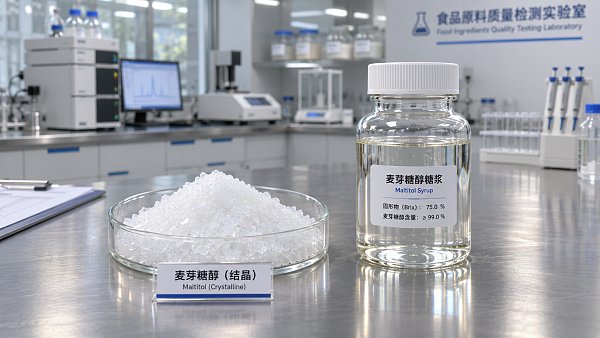
“Crystalline polyols” describes a group of solid sugar alcohols, not a single interchangeable ingredient. Erythritol, xylitol, sorbitol, maltitol, and other crystalline polyols can differ in sweetness, solubility, cooling effect, hygroscopic behavior, and processing characteristics. The right choice depends on the formulation and the market in which the finished product will be sold.
For example, a crystalline ingredient used in a compressed tablet must work with the intended blending and compression process. A confectionery producer may be more concerned with dissolution, texture, and the way crystals behave during storage. An ingredient that meets a general food-grade description may still be unsuitable for either process if its particle size or handling properties differ from the current material.
Give potential suppliers a brief that includes:
- The polyol name, intended grade, and intended use.
- Required analytical limits and any applicable customer or finished-product requirements.
- Preferred particle-size distribution, powder form, and relevant handling characteristics.
- Expected order volumes, delivery locations, packaging, and shelf-life requirements on receipt.
- The destination markets and any dietary, allergen, or other declarations needed for the product.
Share enough process information to explain what matters without disclosing a proprietary formulation. A supplier can provide more useful sample recommendations when it knows whether the material will be dissolved, dry blended, compressed, or used as a surface coating.
Compare specifications that affect the process
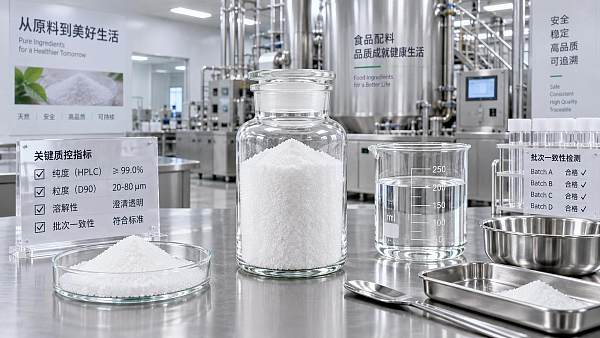
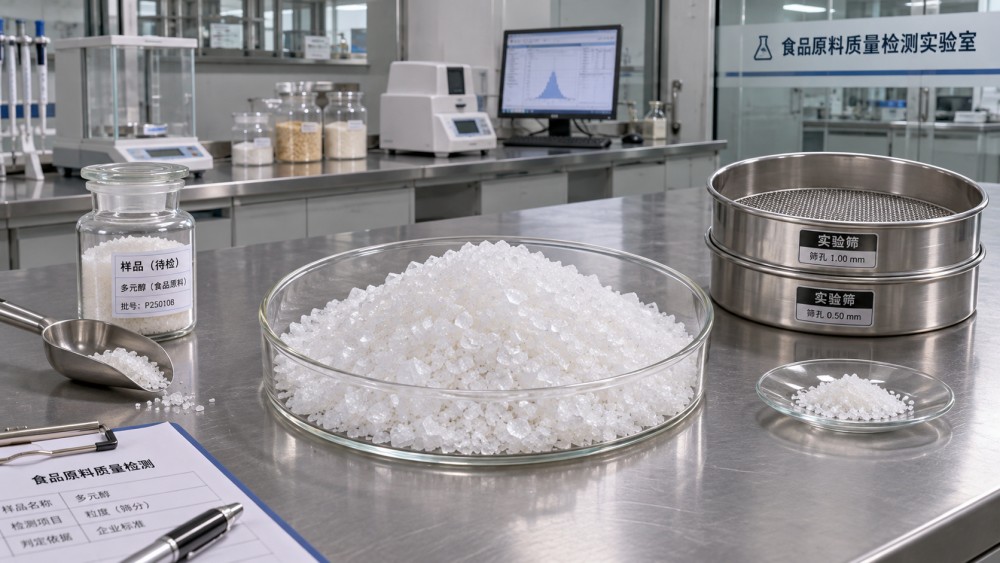
Purity or assay is only one part of a crystalline polyol specification. Two materials with similar assay values can behave differently because of particle size, moisture, bulk density, or the presence of fine particles. The specification should describe the material your operation can use consistently, rather than merely repeat the supplier’s standard sales sheet.
Do not assume that a smaller particle size is always better. Finer powder may dissolve or blend differently, but it can also create more dust or flow less reliably in some equipment. Likewise, a tight specification can reduce variability where the process is sensitive, but unnecessary limits may restrict supply or increase cost.
Ask for representative batch data as well as the standard specification. A specification shows the permitted range; batch results help reveal how material typically performs within that range. Make sure the results relate to the proposed manufacturing site and grade, and compare like-for-like test methods before drawing conclusions.
Establish who actually makes the material
A supplier may be a manufacturer, a distributor, or a trading company using several production sites. Each model can work, but the supply risks and communication routes are different. Identify the production site for the quoted grade and clarify who owns the specification, investigates complaints, and authorizes changes.
A direct manufacturing relationship may make technical discussions and change notifications more straightforward. A distributor may offer local stock, smaller order quantities, or support across several origins. The practical question is whether the seller can trace each lot to its manufacturing site and obtain timely technical answers when a problem occurs.
For a critical ingredient, ask about production continuity as well as nominal capacity. A statement that a plant has sufficient capacity does not establish that your required volume will be available during a disruption or a demand increase. Discuss lead times, allocation arrangements, planned maintenance, alternative sites, and how the supplier would communicate a delay.
If an alternative site is offered, treat its material as a potential change to the approved supply, even when the product name is the same. Different processes, equipment, or packaging lines can affect characteristics that matter to your application.
Review documentation against the intended market
For food applications, request documentation that supports both supplier approval and finished-product compliance. The exact package depends on the ingredient, use, destination market, and customer requirements. A certificate or declaration should be current, relevant to the proposed product and site, and clear about what it covers.
A practical document review may include the product specification, a sample certificate of analysis, a safety data sheet where applicable, manufacturing-site details, traceability information, shelf-life and storage guidance, and relevant food safety system evidence. Depending on the sale, additional declarations may be needed for allergens, dietary suitability, origin, or other customer requirements.
Ask how the certificate of analysis relates to the lot delivered: which attributes are tested for each batch, which are monitored on another basis, and which methods are used. A certificate with many entries is not automatically more useful than one that covers the attributes agreed in the purchase specification.
Regulatory suitability is application-specific. An ingredient sold for industrial use should not be treated as suitable for food simply because its chemical name matches. Similarly, a food-grade material is not automatically appropriate for pharmaceutical or other tightly controlled uses. Define the intended grade before comparing prices.
Qualify the material under production conditions
Laboratory samples are useful for screening, but they may not expose problems caused by bulk handling, normal equipment settings, or storage. A staged qualification reduces the chance of approving material that looks acceptable in a small container but causes trouble on the production line.
- Screen the paperwork and sample. Check identity, specification, appearance, and the properties that matter to the application.
- Run an application trial. Evaluate the material in the relevant formulation and process, including feeding, mixing, dissolution, or compression where applicable.
- Assess a production-scale lot. Review the material in the agreed commercial packaging and observe handling, yield, quality, and cleaning requirements.
- Confirm ongoing controls. Agree on release documents, change notification, complaint handling, and conditions for continued approval.
Set acceptance criteria before the trial. A production team might track feed interruptions, blending uniformity, dust, finished-product appearance, or processing time, depending on the application. Record equipment settings and any adjustments needed so that the purchasing comparison includes the operational consequences of switching.
Where continuity is important, consider qualifying more than one source. This takes technical and administrative effort, and a second supplier is not useful as an immediate backup unless its material, documentation, and delivery route are already approved. The additional work is most justified when an interruption would have a substantial effect on production.
Compare delivered cost, not just the quoted price
Before ranking quotations, align the product grade, order quantity, currency, delivery location, and commercial terms. A price for a full-container order at the origin is not directly comparable with a quote for smaller deliveries to your warehouse. Make freight, insurance, customs-related charges, and responsibility for unloading visible in the comparison, as applicable.
The purchase calculation should also account for costs that occur after arrival. Different bag sizes may change handling time or waste. A supplier with a longer lead time may require more inventory. A material that creates additional dust, slower feeding, or higher rejection rates can consume the apparent savings from a lower unit price.
For a working comparison, use:
Expected cost of use = delivered material cost + handling and inventory costs + foreseeable qualification and process costs.
This is a decision tool, not a substitute for a formal financial model. Use estimates your operation can support, and keep one-time qualification expenses separate from recurring costs. If a lower-priced supplier requires an untested process adjustment, treat the potential saving as conditional until the trial shows what that adjustment involves.
Put supply and change controls into the agreement
Once a source is selected, attach or reference the agreed product specification and define the approved manufacturing site. The agreement should also address packaging, minimum remaining shelf life on delivery, labeling, lot identification, delivery windows, and the documents that accompany each shipment.
Change control deserves particular attention. Request advance notification of changes that could affect the approved material, such as a different production site, manufacturing process, raw material source, specification, test method, or packaging. Define which changes require review, additional documentation, or a new trial before the material is shipped.
Agree on a clear process for nonconforming lots: how to isolate material, whom to contact, what records to provide, and how disposition or replacement will be handled. This is easier to settle during supplier approval than during a production interruption.
The strongest purchasing decision is not necessarily the supplier with the most detailed brochure or the lowest initial quote. It is the supplier whose material has passed a relevant trial, whose commercial terms reflect the full cost of supply, and whose controls make it possible to maintain that performance across future deliveries.
Facing technical bottlenecks in manufacturing or looking for more efficient industrial solutions? Leave your details below and let the engineering experts at FCAS solve them for you.
We respect your privacy. Your information is strictly confidential.
Related News
 Zero-Calorie Sweeteners & AcidulantsHow to Choose Plant Based Natural Sweeteners for BeveragesChoose plant based natural sweeteners for beverages with confidence. Compare stevia, monk fruit and blends for taste, processing, labeling and cost.MORE+
 Zero-Calorie Sweeteners & AcidulantsChina’s New Food Labeling Standard to Prohibit “Zero Addition” ClaimsChina’s new food labeling standard targets “zero addition” and “no added” claims. Discover what the change means for food brands and ingredient suppliers.MORE+
 Zero-Calorie Sweeteners & AcidulantsHow to Use High Sweetness Sucralose in Reduced-Sugar DrinksDiscover how to use high sweetness sucralose in reduced-sugar drinks, with practical tips for balancing taste, mouthfeel, stability, and compliance.MORE+
 Zero-Calorie Sweeteners & AcidulantsChoosing High Intensity Sweeteners for Tabletop UseHigh intensity sweeteners for tabletop use: compare taste, formats, stability and compliance to create a consistent product consumers will enjoy.MORE+
 Zero-Calorie Sweeteners & AcidulantsHow to Evaluate a Maltitol Manufacturer for Consistent QualityEvaluate a maltitol manufacturer with confidence. Discover how to assess batch consistency, food safety, traceability, and trial performance before you buy.MORE+
 Zero-Calorie Sweeteners & AcidulantsChattogram Customs Seizes 4.2 Tonnes of Banned SweetenerChattogram Customs seized 4.2 tonnes of banned sodium cyclamate. Explore what the seizure means for sweetener sourcing and food compliance in Bangladesh.MORE+
 Zero-Calorie Sweeteners & AcidulantsHow to Evaluate a Crystalline Polyols ManufacturerChoosing a crystalline polyols manufacturer? Learn how to compare quality, production performance, documentation, and delivered costs with confidence.MORE+
 Zero-Calorie Sweeteners & AcidulantsHow to Evaluate a Sucralose Supplier Before Placing a Bulk OrderEvaluate a sucralose supplier with confidence. Learn how to verify quality, compliance, traceability, delivery reliability, and total costs before placing a bulk order.MORE+
 Zero-Calorie Sweeteners & AcidulantsHow to Choose Low Calorie Bulk Sweeteners for Reduced-Sugar FoodsChoose low calorie bulk sweeteners with confidence. Compare options for taste, texture, shelf life, and compliance to create better reduced-sugar foods.MORE+
 Zero-Calorie Sweeteners & AcidulantsWhich Quality Documents Should a Liquid Sorbitol Supplier Provide?Choosing a liquid sorbitol supplier? Learn which quality documents to request, how to verify CoAs and traceability, and what gaps should block release before you buy.MORE+
 Zero-Calorie Sweeteners & AcidulantsWhat Should You Check Before Choosing an Acidulants Supplier?Choosing an acidulants supplier? Learn how to verify specifications, batch quality, compliance, and delivery reliability to reduce risks and compare true usable costs.MORE+
 Zero-Calorie Sweeteners & AcidulantsHow Can You Reduce Bitterness When Using Natural Stevia Powder?Reduce bitterness in natural stevia sweetener powder with smarter dosing, glycoside selection, and sweetener blends. Discover practical tips for cleaner sweetness and a better finish.MORE+
 Zero-Calorie Sweeteners & AcidulantsHow Food Grade Stevia Sweetener Affects Taste and Label ClaimsFood grade stevia sweetener: learn how glycoside profiles, taste control, processing stability, and label claims shape successful lower-sugar products.MORE+
 Zero-Calorie Sweeteners & AcidulantsHow to Choose a Natural Sweeteners Supplier for Clean-Label ProductsNatural sweeteners supplier selection guide for clean-label products: compare formulation fit, traceability, documentation, and supply reliability.MORE+
 Zero-Calorie Sweeteners & AcidulantsWhat Drives Zero Calorie Sweeteners Bulk Price in 2026Zero calorie sweeteners bulk price in 2026: compare specifications, dosage, quality, freight, and supply risk to make smarter sourcing decisions.MORE+
 Zero-Calorie Sweeteners & AcidulantsHow to Choose Zero Calorie Sweeteners for Sugar Free ProductsZero calorie sweeteners for sugar free products: compare taste, stability, labeling, and cost to choose the right system for beverages, bakery, and functional foods.MORE+
 Zero-Calorie Sweeteners & AcidulantsChoosing Sucralose for Dairy Products Without Compromising TasteSucralose for dairy products: learn how to protect clean sweetness, optimize sensory performance, verify quality, and source reliably for reduced-sugar dairy.MORE+
 Zero-Calorie Sweeteners & AcidulantsHow to Choose Artificial Sweeteners for Beverages That Taste BetterArtificial sweeteners for beverages: learn how to choose solutions with better taste, stability, labeling fit, and cost efficiency for successful reduced-sugar drinks.MORE+
 Zero-Calorie Sweeteners & AcidulantsHow Acidity Regulators Improve Beverage Flavor and Shelf LifeAcidity Regulators help beverage brands balance flavor, pH control, microbial stability, and shelf life. Explore practical formulation insights for safer, more consistent drinks.MORE+
 Zero-Calorie Sweeteners & AcidulantsKey Quality Checks for High Purity Aspartame in Food FormulationHigh purity aspartame quality checks for food formulation: evaluate assay, impurities, particle consistency, stability, documentation, and total cost.MORE+
 Zero-Calorie Sweeteners & AcidulantsHow Liquid Flavors for Soft Drinks Improve Taste Consistency at ScaleLiquid flavors for soft drinks help manufacturers achieve reliable taste consistency at scale through accurate dosing, controlled mixing, stability management, and sensory quality control.MORE+
 Zero-Calorie Sweeteners & AcidulantsWhat to Check When Choosing a Saccharin Sodium Supplier for Global OrdersChoose a reliable saccharin sodium supplier for global orders. Learn how to assess quality, documentation, packaging, export readiness, and total landed reliability.MORE+
 Zero-Calorie Sweeteners & AcidulantsAre High Intensity Sweeteners for Tabletop Use Right for Your ProductExplore high intensity sweeteners for tabletop use: compare taste, carriers, serving cost, stability, packaging, and compliance to build a successful product.MORE+
 Zero-Calorie Sweeteners & AcidulantsSaccharin Sodium Selection Factors for Zero-Calorie FormulasSaccharin Sodium selection factors for zero-calorie formulas: optimize taste, purity, solubility, compliance, and batch consistency for reliable production.MORE+
 Zero-Calorie Sweeteners & AcidulantsHow High Purity Aspartame Supports Consistent Zero-Calorie FormulasHigh purity aspartame supports consistent zero-calorie formulas with reliable sweetness, process stability, traceability, and quality control across every batch.MORE+
 Zero-Calorie Sweeteners & AcidulantsHow Acesulfame Potassium for Soft Drinks Affects Taste and CostAcesulfame potassium for soft drinks can improve sweetness efficiency and lower formulation cost, but only with the right blend, taste control, and sourcing strategy. Learn what drives the best ROI.MORE+