What to Check When Choosing a CO2 Botanical Extracts Manufacturer
The lowest-priced CO2 botanical extract is not necessarily the lowest-cost option. Differences in botanical identity, concentration, sensory profile, contaminant limits and delivery terms can make two quotations unsuitable for direct comparison. A supplier is worth shortlisting only when it can consistently deliver the required specification and provide evidence for its claims.
The right choice also depends on the intended use and destination market. An extract suitable for a fragrance blend is not automatically suitable for a food ingredient or an agricultural formulation, even when it comes from the same plant. Establishing those requirements before requesting prices reduces the risk of buying material that cannot be used, approved or reordered reliably.
Define the extract before comparing manufacturers
“CO2 botanical extract” describes a production approach, not a single standardized ingredient. Extraction conditions and subsequent processing influence which constituents are recovered. One product may be rich in volatile aromatic compounds, while another contains more waxes, resins or other heavier components. Both can be described as CO2 extracts but behave differently in the finished formulation.
A useful request for quotation should identify the botanical by its scientific name and, where relevant, the plant part, origin and desired constituent profile. Specify whether the material must be a pure extract or whether a carrier or diluent is acceptable. If it is standardized, ask how the target concentration is achieved and what is used to adjust it.
The physical form also matters. A viscous extract or a material that solidifies at room temperature may require heating before transfer. That can affect handling time, equipment choice and sensitivity to oxidation or heat. An extract that performs well in an oil-based fragrance may need an emulsifier or other formulation work before it can be incorporated into a water-based agricultural product.
Ask each supplier to quote against the same requirements, including target analytes and ranges, sensory characteristics, permitted carriers, packaging size and expected order volume. A precise brief makes it easier to distinguish a genuinely competitive offer from a product that is simply less concentrated or less demanding to produce.
Check botanical sourcing and traceability
Plant chemistry is influenced by species, plant part, growing conditions, harvest timing and post-harvest handling. Even when the extraction process is well controlled, incoming botanical material can introduce variation in aroma, active constituents and contaminants.
Ask the manufacturer how it verifies botanical identity and whether it can trace each extract batch back to its raw-material lots and suppliers. Traceability should work in both directions: from the finished batch to the source material, and from a raw-material lot to the batches made from it. This becomes important if a contaminant is discovered or an identity concern arises after delivery.
Origin claims deserve particular attention when they are part of the specification or commercial value. Request supporting documentation rather than relying on a country name in a brochure. If the supplier uses material from multiple regions, determine whether blending is permitted and how changes in origin are communicated.
Raw-material availability can also affect price and continuity. A manufacturer may have extraction equipment available but still depend on a seasonal crop or a limited number of botanical suppliers. Ask about harvest cycles, inventory practices and the options available if a crop is delayed or a source no longer meets specification. A low quotation based on a small spot purchase is different from a price that can be supported across repeated orders.
Review manufacturing capability, not just the extraction claim
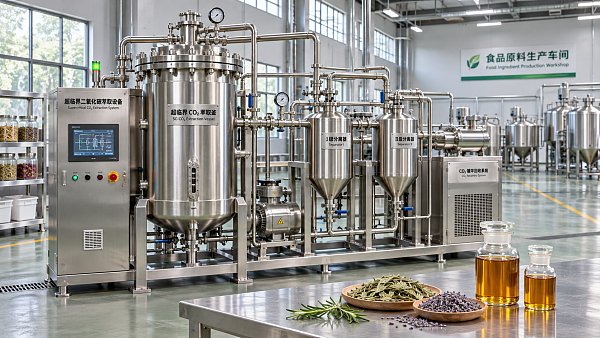
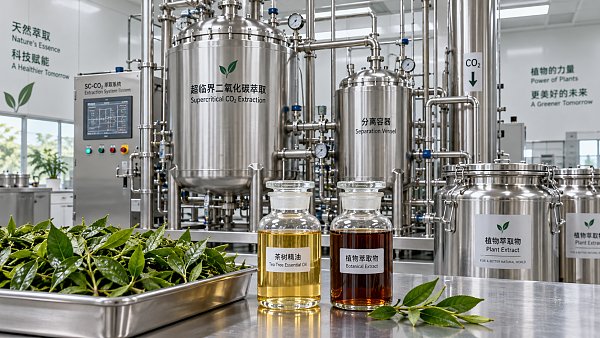
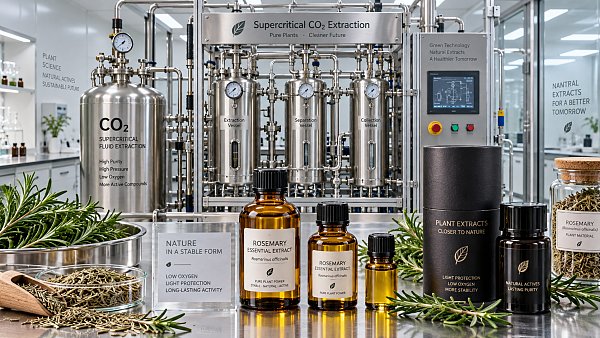
CO2 extraction can be carried out under different pressure and temperature conditions, including supercritical conditions. These settings, along with fraction collection and any post-processing, affect the composition of the extract. The label “supercritical CO2” alone does not establish that the product has the required aroma, concentration, purity or performance.
Confirm whether the company operates the extraction facility itself, uses a contract processor or acts as a distributor. Any of these arrangements can work, but the responsibilities should be clear. Identify who approves raw materials, controls production, releases batches, investigates complaints and holds the records needed for a recall.
Questions about capacity should be tied to the specific extract rather than the facility’s total installed capacity. A site may process many botanicals, but the usable output for one product depends on raw-material availability, extraction yield, equipment scheduling and downstream handling. Ask what volume can be committed, the normal lead time, and how urgent or larger orders would be accommodated.
Also ask whether processing aids or co-solvents are used and whether any further concentration, blending or deodorization takes place. CO2 as the principal extraction medium does not by itself prove that no other substances were involved. Where residual solvents or processing aids are relevant to the application, they should be addressed in the specification and supporting documentation.
Examine batch evidence and analytical methods
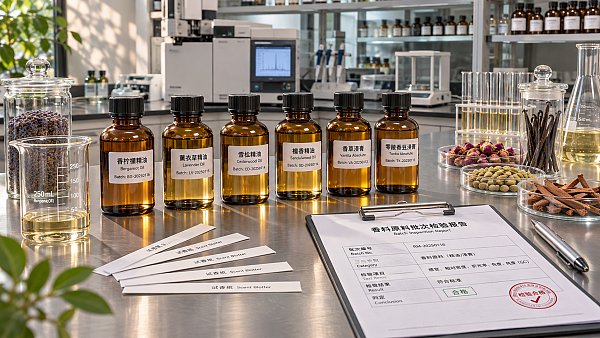
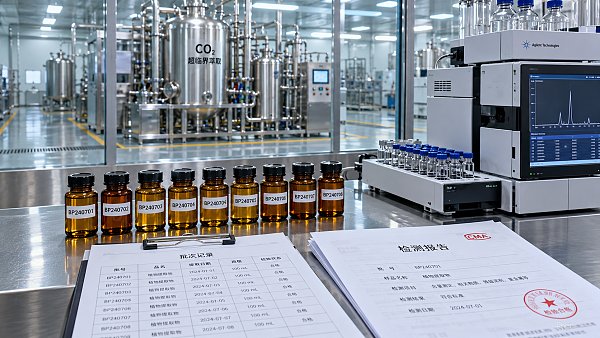
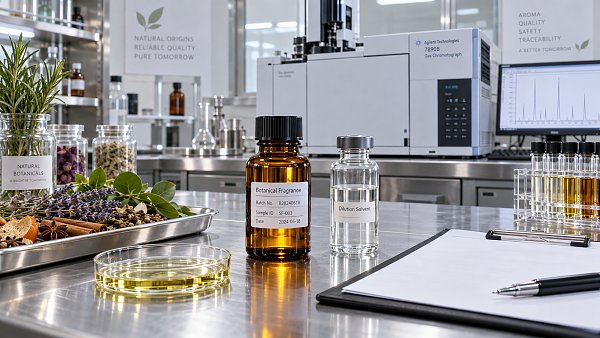
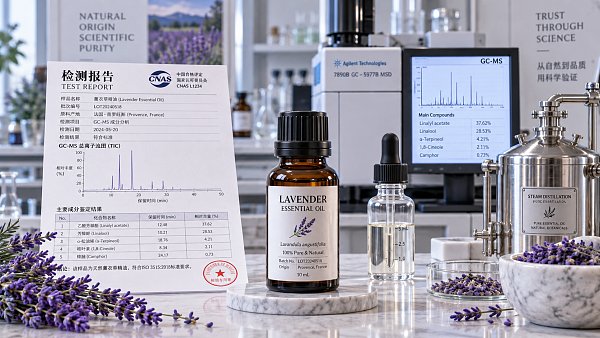
A certificate of analysis should do more than list a product name and a pass result. It should identify the batch, the tests performed, the applicable specifications and the results. Request representative batch certificates before approval, then confirm that the same information will accompany commercial deliveries.
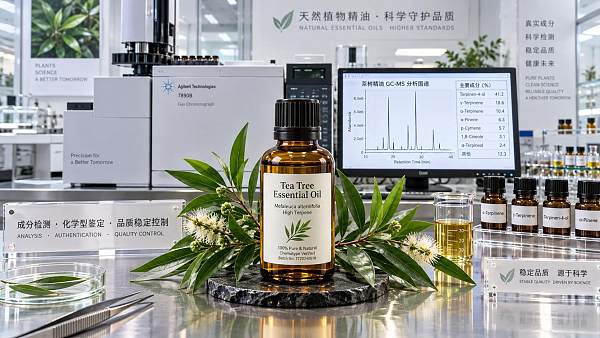
For an extract sold on the basis of a marker compound, the stated percentage needs context. Check the analytical method, the reporting basis and whether the specification applies to the supplied material as delivered. A high marker level does not necessarily reproduce the full chemical or sensory profile required in the finished product. Conversely, a specification based only on appearance and odor may not adequately control a material purchased for a defined constituent.
Contaminant testing should reflect the botanical, source, extraction process and intended use. Depending on the risk assessment, relevant tests may include pesticide residues, heavy metals, microbiological contamination, mycotoxins or residual solvents. An extract can concentrate undesirable substances along with desirable constituents; a clean claim should therefore be supported by appropriate testing rather than inferred from the extraction method.
Clarify which tests are performed on every batch and which are conducted periodically, on raw materials or through a risk-based program. Ask whether testing is performed in-house or by an independent laboratory, and request the relevant methods and detection limits when the limits are important to acceptance. A result reported as “not detected” is only meaningful in relation to the method’s detection capability.
Before committing to a long-term contract, compare results from more than one production batch where available. A single sample establishes whether that sample meets requirements; it does not demonstrate the range of normal variation. Agree in advance on how out-of-specification results, retesting and disputes between laboratories will be handled.
Match documentation to the application and destination
CO2 extraction does not automatically make an ingredient acceptable for every use. Regulatory status can depend on the plant species, plant part, composition, intended function, use level and importing jurisdiction. An extract used as a food flavoring, for example, is evaluated under a different set of requirements from a botanical ingredient intended for crop protection.
Ask for a current technical data sheet, safety data sheet where applicable, batch certificate and a clear statement of composition. Additional information may be needed on allergens, contaminants, country of origin, processing aids or substances subject to restrictions. The necessary documents should be identified against the specific product and destination, not assumed from a general supplier profile.
Facility certifications and quality-system certificates can support an assessment, but they are not substitutes for product-specific compliance evidence. Check the scope, site and validity of any certificate, and determine whether it covers the operation responsible for the supplied material. Likewise, terms such as “natural,” “food grade” or “pesticide free” should be supported by definitions and evidence relevant to the intended market.
For agricultural uses, distinguish between purchasing an ingredient and obtaining authorization for a formulated product or its claims. A botanical extract’s origin or production method does not by itself establish that it can be marketed for a particular crop-protection use. Confirm the applicable requirements with the responsible regulatory function before treating a supplier’s commercial description as an approval.
Calculate the cost of usable material
A price per kilogram is useful only after the offers have been normalized. Compare the concentration of the relevant constituent, the presence of carrier, the expected dosage and the amount lost during handling or formulation. If the product is purchased for a marker compound, a simple preliminary measure is:
Cost per kilogram of specified constituent = delivered price per kilogram of extract ÷ constituent mass fraction.
This calculation assumes the marker is the basis of value and does not replace an application trial. Two extracts with the same marker content can differ in aroma, solubility or other constituents that determine whether the formulation works. For a fragrance material, sensory equivalence may be more important than the concentration of one analytical marker.
Include freight, insurance where relevant, import charges, testing, storage and any special handling in the comparison. Clarify the quoted Incoterms rule and named place, payment currency, minimum order quantity, packaging charges and payment terms. A low unit price can be offset by an oversized minimum order, short remaining shelf life or expensive temperature-controlled transport.
Ask how prices are set for repeat orders and what circumstances allow a revision. Where raw botanical prices are variable, a workable agreement can define quotation validity, review periods and the process for communicating changes. Avoid assuming that a sample price or introductory quote applies to future commercial volumes.
Test the material under actual handling and formulation conditions
Supplier samples should be assessed against the approved specification and the conditions in which the extract will be used. Record the sample batch number and ask whether it was made by the same process and to the same specification as commercial material. If a sample is specially selected or laboratory-produced, its performance may not represent routine production.
Application trials should address the properties that affect the purchasing decision. For a food ingredient, that can include flavor impact, dispersion and stability in the intended matrix. For fragrance use, odor character and behavior in the final base are central. For an agricultural formulation, physical compatibility, dispersion and stability may be relevant alongside the required regulatory assessment.
Storage and packaging should be evaluated at the same time. Determine the recommended temperature, protection from light and oxygen, shelf life, and conditions after opening. Ask whether shelf life is supported by stability data and how much remaining shelf life will be guaranteed on arrival. Packaging must be compatible with the extract and practical for the quantities actually consumed; repeatedly opening a large container can expose unused material to air and contamination.
Agree on change control and delivery protection
Once a manufacturer is approved, the supply agreement should preserve the basis of that approval. Define the product specification, test methods or accepted equivalents, release documents, packaging, delivery conditions and procedures for nonconforming material. State which changes require prior notification or approval, such as a change in botanical species, plant part, origin, extraction site, processing aids or carrier.
Set expectations for lead time, order confirmation, allocation during shortages and communication of delays. Where continuity is critical, assess whether an alternative source can meet the same specification and pass the same application tests. A second supplier is not an effective backup if its extract requires a reformulation or lacks the documents needed for the destination market.
The strongest purchasing decision is the one that connects price to verifiable performance: a clearly defined extract, traceable raw materials, suitable batch controls, usable documentation and a delivery commitment the manufacturer can support. If those conditions are not comparable, the quotations are not yet comparable either.
Facing technical bottlenecks in manufacturing or looking for more efficient industrial solutions? Leave your details below and let the engineering experts at FCAS solve them for you.
We respect your privacy. Your information is strictly confidential.
Related News
 Supercritical CO2 Essential OilsWhat Should You Check When Choosing a CO2 Essential Oils Supplier?Choosing a CO2 essential oils supplier? Learn how to assess sourcing, batch testing, documentation, and delivery to secure quality and reliable supply.MORE+
 Supercritical CO2 Essential OilsWhat Affects the Botanical Oleoresins Bulk Price?Botanical oleoresins bulk price depends on sourcing, strength, extraction and freight. Learn how to compare supplier quotes and reduce total costs.MORE+
 Supercritical CO2 Essential OilsHow Are Food Grade Essential Oil Extracts Made with CO2?Discover how food grade essential oil extracts are made with CO2, what shapes their flavor, and how to assess safety and suitability for food applications.MORE+
 Supercritical CO2 Essential OilsWhat to Check When Buying Aroma Ingredients WholesaleBuying aroma ingredients wholesale? Discover how to assess quality, supplier reliability, documentation and landed cost before placing your order.MORE+
 Supercritical CO2 Essential OilsHow to Choose Citrus Oils for Beverages Without CloudingChoose citrus oils for beverages with confidence. Compare delivery systems and stability tests to prevent clouding while preserving fresh citrus flavor.MORE+
 Supercritical CO2 Essential OilsWhat to Check When Choosing a CO2 Botanical Extracts ManufacturerChoosing a CO2 botanical extracts manufacturer? Discover how to assess quality, traceability, compliance and true costs before you commit.MORE+
 Supercritical CO2 Essential OilsHow Can You Verify Quality Controls at a CO2 Extracts Factory?Evaluate a co2 extracts factory with confidence. Learn how to verify batch testing, traceability, and quality controls to reduce sourcing risks and choose a reliable supplier.MORE+
 Supercritical CO2 Essential OilsWhat Determines Essential Oil Blend Bulk Prices Beyond Order Size?Explore essential oil blends bulk price factors beyond volume, from botanical quality to testing and freight. Learn how to compare suppliers and uncover the true cost before buying.MORE+
 Supercritical CO2 Essential OilsHow Do Extraction Methods and Grades Affect Oleoresin Bulk Prices?Compare oleoresins bulk price by extraction method, grade, and potency. Discover how to evaluate supplier quotes, verify quality, and lower costs at the right application dose.MORE+
 Supercritical CO2 Essential OilsWhat Should You Ask a Citrus Oils Supplier About CO2 Extraction?Choosing a citrus oils supplier? Discover what to ask about CO2 extraction, purity, testing, and cost to verify quality, avoid costly mistakes, and buy with confidence.MORE+
 Supercritical CO2 Essential OilsWhat Determines the Bulk Price of CO2 Botanical Extracts Before Shipping?Compare co2 botanical extracts bulk price drivers before shipping, from yield and potency to testing and packaging. Learn how to assess supplier quotes and buy with confidence.MORE+
 Supercritical CO2 Essential OilsHow to Verify the Purity of High Cineole Eucalyptus Oil With GC-MSVerify high cineole eucalyptus oil with GC-MS. Learn how to confirm identity, measure cineole accurately, and spot quality risks before approving your next batch.MORE+
 Supercritical CO2 Essential OilsHow Does Supercritical CO2 Extraction Affect Bulk Tea Tree Oil?Discover how supercritical CO2 extraction affects bulk tea tree oil composition, stability, and formulation performance—and what to check before approving a bulk replacement.MORE+
 Supercritical CO2 Essential OilsHow Do CO2 Botanical Extract Certifications Affect Sourcing Costs?CO2 botanical extracts supplier certifications can raise prices but lower sourcing costs. Learn how to verify coverage, compare total costs, and pay only for credentials that add value.MORE+
 Supercritical CO2 Essential OilsHow to Evaluate a Natural Aroma Chemicals Supplier for QualityNatural aroma chemicals supplier evaluation made practical: assess quality, traceability, odor consistency, documentation, packaging, and total delivered cost before you buy.MORE+
 Supercritical CO2 Essential OilsHow to Verify CO2 Botanical Extract Supplier CertificationsCO2 botanical extracts supplier certifications: learn how to verify certificates, site scope, batch traceability, and process controls before approving suppliers.MORE+
 Supercritical CO2 Essential OilsHow Oleoresins Bulk Price Changes with Crop Quality and SupplyOleoresins bulk price insights: learn how crop quality, extraction yield, grade availability and supply risks shape costs—compare supplier offers with confidence.MORE+
 Supercritical CO2 Essential OilsHow Natural Essential Oil Blends Improve Consistent Product FragranceNatural essential oil blends help brands achieve consistent, appealing fragrance across batches. Explore smart blend design, stability testing, and product compatibility strategies.MORE+
 Supercritical CO2 Essential OilsWhat to Check Before Choosing a Botanical Essential Oils ManufacturerChoose a botanical essential oils manufacturer with confidence. Explore key checks for purity, traceability, compliance, batch consistency, and reliable supply.MORE+
 Supercritical CO2 Essential OilsHow Aroma Ingredients Shape Lasting and Skin-Safe Personal Care ProductsAroma ingredients for personal care: discover how to achieve lasting scent, formulation stability, skin safety, and confident product performance.MORE+
 Supercritical CO2 Essential OilsHow to Evaluate a Natural Cardamom Oil Supplier for Reliable SupplyNatural cardamom oil supplier evaluation guide: verify botanical origin, purity, batch consistency, documentation, packaging, and delivery reliability for confident sourcing.MORE+
 Supercritical CO2 Essential OilsHow to Choose Eucalyptus Oil Grades for Clean, Consistent ProductsChoose the right Eucalyptus Oil grade with confidence. Compare cineole content, purity, origin, processing, documentation, and application fit for consistent products.MORE+
 Supercritical CO2 Essential OilsHow Food Grade Citrus Oils Improve Flavor in Beverage FormulationsFood grade citrus oils help beverage formulators create brighter, more authentic flavor. Learn how to select, stabilize, dose, and protect citrus oils for lasting appeal.MORE+
 Supercritical CO2 Essential OilsWhy Citrus Terpene Fragrances Are Growing in Home Care ProductsCitrus terpene fragrances are transforming home care products with fresh, trusted cleaning cues. Explore performance, stability, compliance, sourcing, and cost factors for smarter fragrance selection.MORE+
 Supercritical CO2 Essential OilsHow to Choose Ginger Oil for Beverages With a Clean Flavor ProfileGinger oil for beverages: learn how to select a clean, bright, stable profile that performs through processing, shelf life, and every sip.MORE+
 Supercritical CO2 Essential OilsCO2 Essential Oil Extracts for Functional Foods and Clean LabelsDiscover CO2 essential oil extracts for functional foods: clean-label potential, botanical flavor innovation, formulation insights, and smarter sourcing strategies.MORE+
 Supercritical CO2 Essential OilsHow to Use Cardamom Oil for Flavoring Without Overpowering FoodsCardamom oil for flavoring: learn dilution, dispersion, blending, and process tips to create balanced beverages, bakery, and desserts without overpowering taste.MORE+
 Supercritical CO2 Essential OilsWhat to Evaluate When Sourcing Custom Essential Oil BlendsCustom essential oil blends: discover how to evaluate formulation fit, quality consistency, compliance, total cost, and supply reliability for confident sourcing decisions.MORE+
 Supercritical CO2 Essential OilsHow to Verify Purity and Sourcing of Cosmetic Grade Lavender OilCosmetic grade lavender oil: learn how to verify botanical origin, batch-specific purity, GC-MS reports, sourcing, storage, and safe cosmetic use before you buy.MORE+
 Supercritical CO2 Essential OilsWhat to Evaluate Before Choosing an Aromatic Extracts FactoryChoose the right aromatic extracts factory with expert guidance on traceability, extraction methods, batch consistency, documentation, and reliable supply.MORE+
 Supercritical CO2 Essential OilsAre CO2 Botanical Extracts More Stable Than Solvent Extracts?Are CO2 botanical extracts more stable than solvent extracts? Compare oxidation risk, packaging, and formulation factors to make smarter sourcing decisions.MORE+
 Supercritical CO2 Essential OilsWhy High Terpinen Tea Tree Oil Quality Depends on Chemotype and TestingHigh terpinen tea tree oil quality starts with verified chemotype, full GC/MS testing, oxidation control, and traceable storage—learn how to choose reliable oil.MORE+
 Supercritical CO2 Essential OilsHow Mint Oils for Oral Care Improve Flavor and Fresh BreathMint oils for oral care create cooling flavor, lasting freshness, and a better daily brushing experience. Explore peppermint, spearmint, and smart product choices.MORE+
 Supercritical CO2 Essential OilsWhat to Evaluate Before Choosing an Essential Oil Blends ManufacturerEssential oil blends manufacturer selection guide: evaluate quality, traceability, compliance, formula performance, and supply reliability to source with confidence.MORE+
 Supercritical CO2 Essential OilsHow to Evaluate a Natural Aroma Chemicals Manufacturer for Reliable SupplyNatural aroma chemicals manufacturer evaluation guide: verify traceability, batch consistency, compliance, application support, capacity, and total cost to secure reliable supply.MORE+
 Supercritical CO2 Essential OilsWhat Should You Know About Natural Aroma Chemicals and Their UsesNatural Aroma Chemicals: explore how to select, test, and formulate natural aroma ingredients for fragrances, food, personal care, and home care products.MORE+
 Supercritical CO2 Essential OilsWhen Oil Soluble Essential Oil Extracts Work Best in FormulationsOil soluble essential oil extracts work best in anhydrous beauty, fragrance, food, and cleaning formulas. Explore compatibility, stability, and application tips.MORE+
 Supercritical CO2 Essential OilsWhy Solvent Free Aromatic Extracts Matter for Clean Label Fragrance FormulasSolvent free aromatic extracts are reshaping clean label fragrance formulas by improving transparency, sensory appeal, and sourcing credibility. Learn why they matter now.MORE+
 Supercritical CO2 Essential OilsWhy Citrus Oils Matter in Clean Label Food and Wellness TrendsCitrus Oils drive clean label food and wellness innovation with fresh flavor, natural appeal, and versatile formulation value. Explore why buyers and brands are paying closer attention.MORE+
 Supercritical CO2 Essential OilsWhy Steam Distilled Clove Oil Is Gaining Ground in Natural FormulationsSteam distilled clove oil is gaining attention for its natural appeal, eugenol profile, and formulation versatility. Discover why buyers value it across personal care, fragrance, and home care.MORE+