How Cocamidopropyl Betaine Improves Foam in Bath Products
A rich, lasting lather can make a bath feel more enjoyable, but foam performance depends on more than the amount of surfactant in the bottle. Cocamidopropyl betaine for bath products is often combined with other cleansing agents to help create and stabilize foam while contributing to a milder-feeling wash. For users and production operators alike, understanding how it interacts with the rest of a formula makes it easier to judge why one body wash produces soft, persistent bubbles while another loses its lather almost immediately.
That difference is not always obvious from an ingredient list. Water hardness, fragrance, oils, mixing conditions and even the way a product is used can influence the final experience. Cocamidopropyl betaine is useful because it gives formulators another way to adjust that experience, rather than relying solely on a stronger primary cleanser.
What cocamidopropyl betaine does in a bath formula
Cocamidopropyl betaine, often shortened to CAPB, is an amphoteric surfactant commonly supplied as an aqueous solution. Surfactants gather at interfaces between water, air and oils. In a bath product, they support cleansing and help form the thin liquid films surrounding bubbles.
CAPB is frequently used as a secondary surfactant alongside anionic cleansers such as sodium laureth sulfate or other primary surfactants. The combination can produce a different foam character from either material used alone: bubbles may feel creamier, and the lather may remain noticeable for longer during washing. The exact result depends on the complete surfactant blend and the rest of the formulation.
It is worth separating three related ideas. Foam generation describes how readily bubbles appear; foam stability describes how long they persist; and foam texture describes how the lather feels and looks. A product can create a large initial foam yet collapse quickly, or produce a modest but dense lather that remains on the skin. CAPB may influence all three, but it is not a guarantee of a particular result.
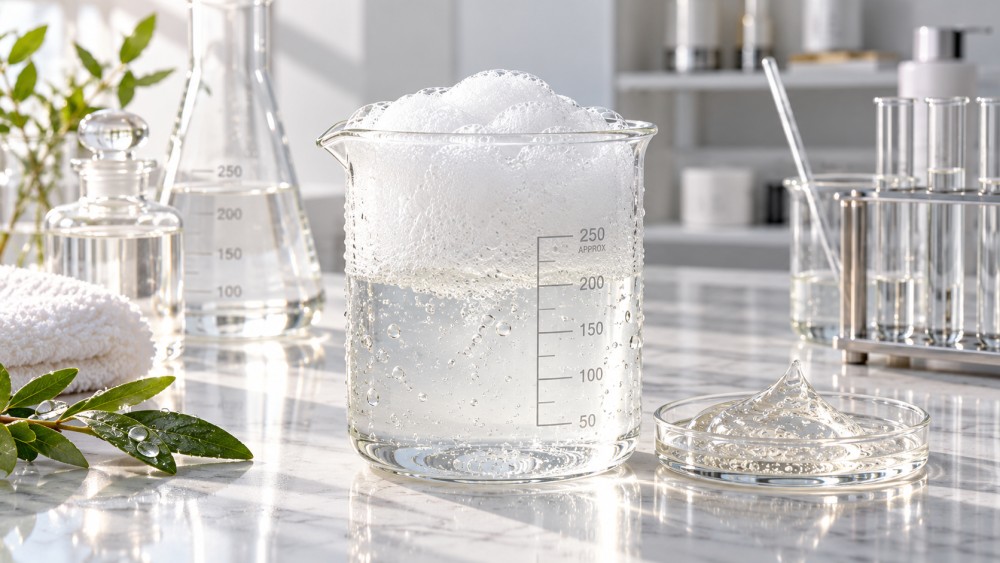
Why CAPB can make bubbles last longer
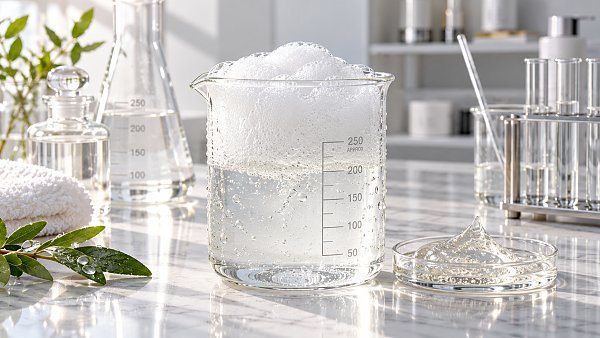
When a bath product is agitated in water, air becomes trapped inside surfactant-containing liquid films. Those films gradually thin as liquid drains away. Eventually, bubbles merge or burst. In mixed surfactant systems, CAPB can interact with the primary surfactant at the air–water interface, changing how the film behaves and, in suitable formulations, improving its resistance to collapse.
The practical effect is often most noticeable when CAPB is paired with an anionic surfactant. The combination may provide a more satisfying lather than increasing the anionic surfactant alone. It can also change the feel of cleansing: some mixed systems are perceived as less harsh than an otherwise comparable formula based heavily on a single anionic cleanser. This is a formulation-dependent outcome, not proof that every CAPB-containing product is gentle for every person.
More CAPB is not automatically better. At some point, adding more may bring little foam improvement, change viscosity unexpectedly or upset the balance with fragrance, salt and other ingredients. A useful starting question is therefore not “How much CAPB can be added?” but “What foam problem needs to be solved?”
Choosing cocamidopropyl betaine for different bath products
The same ingredient can serve different purposes depending on where and how the finished product is used. A body wash is rubbed over wet skin and rinsed relatively quickly; a bubble bath is diluted into a much larger volume of water and expected to hold visible foam at the surface.
Body washes and shower gels
In a shower gel, CAPB is commonly used to complement the primary cleanser and improve the perceived quality of lather. Operators should assess the product under realistic conditions: a small amount applied by hand, on a washcloth or on a shower sponge may behave quite differently. The desired result might be a dense, creamy foam rather than the greatest possible foam height.
Viscosity also matters to the user. A product that pours too quickly may be overused, while one that is excessively thick can be difficult to dispense. CAPB can contribute to the viscosity response of some surfactant systems, particularly when salt is used, but it should not be treated as a universal thickener.
Bubble baths
For bubble baths, dilution and agitation are central to performance. CAPB may support a mixed surfactant system designed to generate and maintain bubbles, but oils, bath additives and hard water can reduce the result. A promising laboratory foam test should be followed by a practical bath-dilution test, using a consistent fill level and water flow.
Evaluate both the amount of foam initially formed and what remains after a defined period. A tall foam layer that disappears before the bath is ready may disappoint users more than a slightly lower layer that lasts.
Gentle-positioned cleansers
CAPB is often selected for formulas intended to offer a milder cleansing feel. However, mildness depends on the entire product, including surfactant concentration, pH, fragrance, preservatives and individual skin sensitivity. Anyone developing a product for sensitive skin should substantiate that positioning with appropriate safety assessment and testing rather than relying on the presence of CAPB alone.
A practical way to evaluate foam performance
Whether the task is comparing raw materials, checking a production batch or assessing a finished bath product, repeatability is more valuable than an impressive one-off result. Keep the sample amount, water volume, temperature and agitation method consistent between comparisons.
- Define the intended use. Decide whether the product should foam mainly in the hands, on a sponge or in a filled bath. Test under that condition as well as in a controlled comparison.
- Record the water conditions. Compare representative water sources where relevant. Hard water can change lather and cleansing behavior, so note hardness if it is known.
- Observe foam over time. Look at initial volume, bubble size, texture and visible collapse. Use the same observation intervals for every sample.
- Include realistic interference. For development work, assess the effect of intended oils, fragrance and other additives. For use testing, consider normal levels of skin oils or bath additives where appropriate.
- Check the product as a whole. Note appearance, odor, viscosity, rinsing and any separation. Better foam is not a useful improvement if the finished product becomes unstable or unpleasant to use.
A simple side-by-side comparison can be revealing: test the existing formula against a version with an adjusted surfactant blend, changing as few variables as practical. Small-scale trials are preferable before any production change. For formal quality control, use the site’s approved method and acceptance criteria rather than substituting an informal foam test.
When lather falls short: where to look before adding more CAPB
A weak or inconsistent foam does not necessarily mean the CAPB is ineffective. It may point to another part of the system, a change in water or a process variation.
Oil-rich ingredients deserve particular attention. They may be included for skin feel or fragrance, yet some can interfere with bubble films. Solubilizers and other formulation choices can change that interaction, so the effect should be tested in the finished system rather than predicted from the oil level alone.
Salt adjustment is another common source of confusion. In some surfactant blends, viscosity rises as salt is added and then falls if too much is introduced. The shape of that response varies by formula. Additions should therefore follow a validated process, with sufficient mixing and time for the batch to equilibrate before the next measurement.
Handling, quality and skin-sensitivity considerations
Commercial CAPB is not simply a neat chemical added identically by every supplier. It is commonly delivered as a diluted solution, and grades may differ in active surfactant content, salt content, appearance and impurity profile. When comparing materials, review the technical data sheet and calculate additions on a consistent active-matter basis. Equal weights of two supplied solutions do not necessarily provide equal amounts of active surfactant.
Operators should follow the supplier’s safety data sheet and site procedures for storage, transfer, protective equipment and spill response. Avoid unnecessary aeration during production: excessive mixing can trap foam in the batch, complicate filling and make level readings less reliable. The appropriate addition order, mixing speed and temperature should be established for the specific formula and equipment.
Some people experience contact allergy to CAPB-containing products. Residual impurities associated with its manufacture, including amidoamine and dimethylaminopropylamine, can be relevant to sensitization. This does not mean everyone will react, but it is a reason to consider raw-material quality and individual history carefully. Users who develop persistent itching, redness or a rash should stop using the product and seek advice from a healthcare professional; those with a diagnosed allergy should check ingredient labels and follow their clinician’s guidance.
For manufacturers, supplier discussions should cover specifications, batch consistency, impurity controls, relevant documentation and suitability for the intended market. A raw material that produces attractive foam in one trial still needs to perform consistently in the complete formulation and through normal storage.
What good performance looks like in practice
The best use of cocamidopropyl betaine for bath products is not necessarily the formula with the highest foam column. It is the one that delivers the expected lather in real water, feels appropriate for the application, rinses acceptably and remains consistent from batch to batch.
For a shower gel, that may mean creamy foam with a comfortable after-feel. For a bubble bath, it may mean visible bubbles that remain long enough to enjoy. By testing CAPB as part of the complete surfactant system—and checking the effects of water, additives and processing—operators can make more useful decisions than they could by judging the ingredient in isolation.
Facing technical bottlenecks in manufacturing or looking for more efficient industrial solutions? Leave your details below and let the engineering experts at FCAS solve them for you.
We respect your privacy. Your information is strictly confidential.
Related News
 Hydrocolloids & EmulsifiersHow Does Agar Work as a Gelling Agent in Food?Discover how agar transforms liquids into firm gels, what affects texture and setting, and how to troubleshoot common problems in food formulations.MORE+
 Hydrocolloids & EmulsifiersHow Do Hydrocolloid Gums Improve Texture and Stability in Foods?Discover how hydrocolloid gums improve food texture and stability, and learn how to choose the right gum for your formulation.MORE+
 Hydrocolloids & EmulsifiersHow to Use Hydrocolloid Stabilizer Blends for SaucesDiscover how to use hydrocolloid stabilizer blends for sauces to improve texture, prevent separation, and achieve consistent results from trial to production.MORE+
 Hydrocolloids & EmulsifiersWhat to Look for in a Konjac Gum ManufacturerChoosing a konjac gum manufacturer? Learn how to assess quality, consistency, food safety, pricing, and supply reliability before you buy.MORE+
 Hydrocolloids & EmulsifiersHow to Choose Flavor Carriers for Spray Dried FlavorsChoose flavor carriers for spray dried flavors with confidence. Compare maltodextrin, gum arabic and modified starch for retention, stability and release.MORE+
 Hydrocolloids & EmulsifiersHow to Use Tara Gum for Dessert Toppings With Better StabilityDiscover how to use tara gum for dessert toppings to improve texture and stability, with practical hydration, formulation, and testing tips.MORE+
 Hydrocolloids & EmulsifiersHow Seaweed Extract Hydrocolloids Improve Food TextureSeaweed Extract Hydrocolloids improve food texture and stability. Discover how alginate, carrageenan, and agar perform in real formulations.MORE+
 Hydrocolloids & EmulsifiersWhat to Check Before Buying Carboxymethyl Cellulose WholesaleBuying carboxymethyl cellulose wholesale? Learn how to compare grades, supplier documents, performance and delivered costs before placing your order.MORE+
 Hydrocolloids & EmulsifiersHow Cocamidopropyl Betaine Improves Foam in Bath ProductsDiscover how cocamidopropyl betaine for bath products can enhance foam, support a creamy lather, and help formulators improve bath and shower products.MORE+
 Hydrocolloids & EmulsifiersHow Does Low DE Maltodextrin Affect Texture in Powdered Drinks?Discover how low de maltodextrin adds body to powdered drinks with minimal sweetness. Learn how to select grades, improve mixing, and fine-tune texture for a better drinking experience.MORE+
 Hydrocolloids & EmulsifiersHow Do You Choose Flavor Emulsions for Beverages With Low Sugar?Choose flavor emulsions for beverages with low sugar. Learn how to balance taste, validate stability, compare cost per dose, and meet labeling requirements for a confident selection.MORE+
 Hydrocolloids & EmulsifiersNutrition Experts Urge White House to Define Ultra-Processed FoodsUltra-processed foods face a push for an official White House definition. Explore what the proposed criteria could mean for ingredient suppliers and food product development.MORE+
 Hydrocolloids & EmulsifiersHow Can Flavor Emulsions for Beverages Stay Stable During Storage?Keep flavor emulsions for beverages stable during storage. Discover practical ways to control droplet size, prevent oil rings, protect aroma, and validate shelf life.MORE+
 Hydrocolloids & EmulsifiersHow Does Locust Bean Gum Compare With Guar Gum as a Thickener?Compare locust bean gum thickener with guar gum for hydration, texture, stability, and cost. Discover which option fits your process and delivers better product performance.MORE+
 Hydrocolloids & EmulsifiersHow Can You Verify Quality at a Microcrystalline Cellulose Factory?Verify quality at a microcrystalline cellulose factory with practical audit tips on traceability, testing, and batch consistency. Explore the guide to make confident sourcing decisions.MORE+
 Hydrocolloids & EmulsifiersHow Do Clean Label Stabilizer Blends Prevent Separation in Drinks?Discover how clean label stabilizer blends help reduce drink separation while preserving texture. Learn how to choose and validate the right blend for your beverage.MORE+
 Hydrocolloids & EmulsifiersHow to Choose Food Thickeners That Keep Sauces Stable After FreezingChoose Food Thickeners that keep frozen sauces smooth and stable. Compare starches, gums, and freeze–thaw tests to reduce water separation and find the right fit for your formulation.MORE+
 Hydrocolloids & EmulsifiersHow to Prevent Lumps When Mixing Powder Hydrocolloid Stabilizer BlendsPrevent lumps in powder hydrocolloid stabilizer blends with practical tips on feeding, dispersion, temperature, and hydration. Learn how to achieve smoother, more consistent batches.MORE+
 Hydrocolloids & EmulsifiersHow Can You Use Carboxymethyl Cellulose for Food Thickening Without Clumps?Use carboxymethyl cellulose for food thickening without clumps. Discover practical dispersion, mixing, and hydration tips for smoother textures and fewer wasted batches.MORE+
 Hydrocolloids & EmulsifiersWhich Encapsulation Wall Materials for Flavors Work Best in Baking?Compare encapsulation wall materials for flavors in baking. Explore starch, gum arabic, protein and lipid options to improve aroma retention and find the right fit for your products.MORE+
 Hydrocolloids & EmulsifiersHow Locust Bean Gum Improves Texture and Stability in Dairy ProductsLocust bean gum for dairy products improves creaminess, reduces whey separation, and supports stable yogurt, ice cream, spreads, and dairy drinks.MORE+
 Hydrocolloids & EmulsifiersWhy Clean Label Food Emulsifiers Matter in Modern FormulationClean label food emulsifiers shape stability, texture, processing, and shelf life. Explore practical formulation insights for beverages, sauces, bakery, and more.MORE+
 Hydrocolloids & EmulsifiersHow Natural Food Emulsifiers Improve Plant-Based Product TextureNatural food emulsifiers for plant based products improve creaminess, stability, and texture. Explore practical formulation strategies for beverages, dressings, desserts, and more.MORE+
 Hydrocolloids & EmulsifiersHow Konjac Gum Powder Improves Texture in Low-Calorie FoodsKonjac gum powder improves body, stability, and mouthfeel in low-calorie foods. Discover practical tips for smoother sauces, beverages, and reduced-fat formulations.MORE+
 Hydrocolloids & EmulsifiersHow Bulk Price Factors Affect Hydrocolloid Stabilizer Blend SourcingHydrocolloid stabilizer blends bulk price: compare dosage efficiency, quality consistency, logistics, and documentation to reduce total sourcing costs.MORE+
 Hydrocolloids & EmulsifiersHow Hydrocolloid Systems for Meat Products Improve Texture and YieldHydrocolloid systems for meat products improve yield, texture, water retention, and slicing quality. Explore practical formulation strategies for stable, high-performing meat products.MORE+
 Hydrocolloids & EmulsifiersHow Locust Bean Gum Thickener Improves Texture and StabilityLocust bean gum thickener improves texture, water retention, suspension, and stability. Learn practical hydration and blending tips for better product performance.MORE+
 Hydrocolloids & EmulsifiersChoosing Maltodextrin for Flavor Carriers in Dry Food BlendsMaltodextrin for flavor carriers: discover how to optimize aroma protection, powder flow, moisture control, compliance, and supply reliability in dry food blends.MORE+
 Hydrocolloids & EmulsifiersHow Guar Gum Derivatives Solve Texture and Stability IssuesGuar Gum Derivatives help solve texture, settling, separation, and viscosity loss. Discover practical formulation strategies for stable, high-performing products.MORE+
 Hydrocolloids & EmulsifiersHow Non-GMO Food Emulsifiers Improve Label-Friendly FormulationsNon-GMO food emulsifiers help create stable, label-friendly sauces, beverages, bakery products, and frozen foods. Explore sourcing, processing, and formulation insights.MORE+
 Hydrocolloids & EmulsifiersWhat to Evaluate When Choosing a Hydrocolloid Systems ManufacturerHydrocolloid systems manufacturer selection made easier: evaluate performance, documentation, supply reliability, and total cost for dependable results.MORE+
 Hydrocolloids & EmulsifiersWhat to Check Before Buying Natural Food Emulsifiers WholesaleNatural food emulsifiers wholesale: learn how to evaluate label fit, formula performance, documentation, supplier reliability, and total landed cost before buying.MORE+
 Hydrocolloids & EmulsifiersPreventing Melt-Down With Ice Cream Stabilizer Blend SelectionHydrocolloid stabilizer blends for ice cream: diagnose melt-down, improve creamy melt quality, and select formulas for stable texture and cold-chain resilience.MORE+
 Hydrocolloids & EmulsifiersWhen Cold Soluble Tara Gum Is the Right Choice for Beverage FormulasCold soluble tara gum helps beverage formulators achieve rapid hydration, smooth texture, and reliable stability. Explore when it delivers the right processing advantage.MORE+
 Hydrocolloids & EmulsifiersHow High Viscosity Locust Bean Gum Improves Texture StabilityHigh viscosity locust bean gum improves texture stability, water control, and mouthfeel in dairy, sauces, fillings, and frozen foods. Explore practical selection insights.MORE+
 Hydrocolloids & EmulsifiersFood Texturants: How to Match Hydrocolloids to Beverage and Sauce SystemsFood texturants guide: match hydrocolloids to beverage and sauce systems for stable texture, smooth processing, and better sensory performance.MORE+
 Hydrocolloids & EmulsifiersChoosing Cold Soluble Hydrocolloid Systems for Instant Beverage TextureCold soluble hydrocolloid systems for instant beverages: compare dispersion, texture, stability, process fit, and cost to select the right solution for scalable production.MORE+
 Hydrocolloids & EmulsifiersWhy Spray Dried Gum Arabic Is Used to Improve Powder StabilitySpray dried gum arabic improves powder stability by protecting sensitive ingredients, supporting flow, and enhancing water dispersibility. Discover its key benefits.MORE+
 Hydrocolloids & EmulsifiersHow to Select Flavor Emulsions That Keep Juice Drinks Smooth and StableFlavor emulsions for juice drinks: learn how to select stable systems that prevent oil rings, maintain cloud, protect aroma, and support smooth shelf-life performance.MORE+
 Hydrocolloids & EmulsifiersWhy Gellan Gum Is Used to Control Texture in Modern FoodsGellan Gum gives modern foods precise texture control, from light beverage suspension to clean gels and creamy body. Explore uses, processing factors, and formulation tips.MORE+