How to Choose Bulk Cyclodextrins for Fragrance Encapsulation
Choosing bulk cyclodextrins for fragrance encapsulation requires more than comparing price and purity. Technical evaluators must consider how cyclodextrin type and cavity size interact with fragrance molecules, as well as the effects on solubility, retention, stability, and release behavior. Processing conditions, batch consistency, and documentation also influence whether a material is suitable for commercial use. This guide outlines the key formulation and sourcing criteria for selecting a cyclodextrin grade suited to the application.
Start with the release you actually need
A fragrance carrier that protects volatile notes during powder storage may not deliver the best scent when that powder is dissolved in water. Likewise, a clear liquid formulation and a dry detergent can impose very different demands on the same cyclodextrin grade. Before comparing suppliers, define where the fragrance needs to remain stable, when it should become perceptible, and what conditions will trigger release.
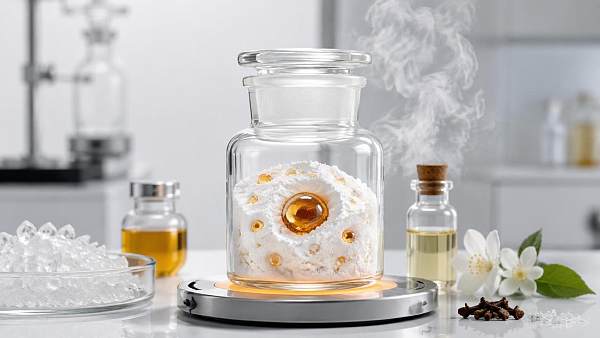
Cyclodextrins are cyclic carbohydrates with a relatively hydrophobic internal cavity. Some fragrance molecules can associate with that cavity to form inclusion complexes. This association is reversible, however, and not every component of a fragrance blend will bind equally. The result is not automatically a sealed microcapsule or a predictable slow-release system.
For a dry air-freshener powder, the practical question might be whether enough fragrance survives processing and storage without losing the desired opening note. In a water-based personal care product, the more pressing issues may be clarity, fragrance availability, and compatibility with surfactants. Those are different selection problems, even if the fragrance concentrate is identical.
Match cyclodextrin type to the fragrance system
Alpha-, beta-, and gamma-cyclodextrins differ in ring size and cavity dimensions. As a starting point, alpha-cyclodextrin has the smaller cavity, beta is intermediate, and gamma is larger. Molecular fit matters, but it is not simply a matter of choosing the largest cavity for a complex perfume. Molecular shape, competing ingredients, concentration, temperature, and the surrounding medium all affect the interaction.
A fragrance is usually a mixture rather than a single guest molecule. One component may associate readily while another remains largely outside the cavity. Selective retention can therefore change the perceived scent profile, particularly if lighter notes and heavier notes behave differently. Test the complete fragrance concentrate, not just a convenient marker compound.
Native beta-cyclodextrin is often a candidate for screening, but its relatively limited water solubility can be a constraint in clear aqueous products. More water-soluble derivatives, such as hydroxypropyl-beta-cyclodextrin, may be worth considering when clarity or higher dissolved concentrations are needed. They are not interchangeable with the native material: substitution characteristics, cost, regulatory status, and performance can differ by grade.
Ask suppliers to identify the exact cyclodextrin and, for a derivative, provide the relevant substitution specification and analytical method. A product name alone is not enough to establish equivalence. Even where two grades meet the same broad description, their behavior in a particular fragrance blend should be confirmed experimentally.
Distinguish loading, retention, and release
These terms are related, but they answer different questions. Loading describes how much fragrance is present in the prepared material. Retention describes what remains after a defined process or storage period. Release describes what becomes available under specified conditions. A grade with high initial loading is not necessarily the one that gives the best scent after storage or during use.
Be especially careful with supplier claims stated as “fragrance loading.” Some fragrance may be adsorbed on particle surfaces or trapped in the dried matrix rather than included in cyclodextrin cavities. That material can still contribute to the product, but it may evaporate, oxidize, or release differently. Ask how loading was measured, whether unbound fragrance was separated, and what the result is expressed against: the carrier, the finished complex, or another basis.
A useful screening plan combines an analytical measure with sensory evaluation. Headspace analysis can help compare volatile profiles, while extraction followed by a suitable chromatographic method can quantify selected components. The method should be validated or otherwise demonstrated fit for the intended comparison. A sensory panel can then check whether the retained and released fragrance still smells like the intended composition. Neither an instrumental total nor a single odor assessment tells the whole story.
Compare samples at the same fragrance dose and under the same preparation and storage conditions. Include a relevant control, such as the fragrance without cyclodextrin or the carrier currently used. Record losses during drying separately from changes during storage; otherwise, a promising carrier may be rejected because of an unsuitable process rather than poor complexation.
Check performance in the finished formulation
A complex that looks stable in water can behave differently once added to a commercial formula. Surfactants, solvents, salts, and other hydrophobic ingredients can compete for fragrance molecules or alter their distribution between phases. Dilution during consumer use can also change the association. Test the cyclodextrin in the full formulation at the intended concentration, not only in a laboratory solution.
Powders and granules
For dry products, examine flow, dusting, caking, particle-size distribution, and odor before and after packaging. Moisture uptake matters because it can affect physical stability and fragrance release. A material that performs well in a small sealed vial may behave differently in a partially filled production bag exposed to warehouse humidity. Evaluate representative packaging and the expected storage environment.
Liquids and surfactant-rich systems
In a clear liquid, check for haze, precipitation, and changes after temperature cycling or storage at relevant temperatures. In detergents and cleaners, surfactant micelles may also solubilize fragrance; the balance between micelles, cyclodextrin, and the surrounding liquid can affect both clarity and odor. A more soluble cyclodextrin is useful only if the finished product remains stable and smells right.
For leave-on personal care or fragrance applications involving direct exposure, material suitability requires a separate safety and regulatory assessment. Fragrance encapsulation performance does not establish that a cyclodextrin grade is appropriate for a particular route of exposure or market.
Design the process before approving the grade
Common preparation approaches include mixing or kneading with limited water, forming a solution or slurry, and drying the resulting material. The choice depends on the carrier, fragrance, equipment, and desired physical form. A lab method that produces an attractive powder may be difficult to reproduce at plant scale if it requires tight control of temperature, mixing, or drying time.
Watch the points where volatile material can escape: fragrance addition, mixing, transfer, and drying. Higher drying temperatures may shorten processing time but can also increase losses or alter sensitive components. On the other hand, insufficient drying can leave a powder prone to caking or instability. The right balance has to be established with the actual equipment and fragrance, not inferred from a carrier specification.
At pilot scale, review mass balance as well as the appearance of the finished powder. Measure fragrance in the incoming blend, the recovered product, and, where practical, process losses. Check whether the material disperses or dissolves as expected downstream. If the final product requires milling or granulation, include that step in the evaluation: mechanical processing can change particle properties and expose retained fragrance.
Turn supplier documents into a usable specification
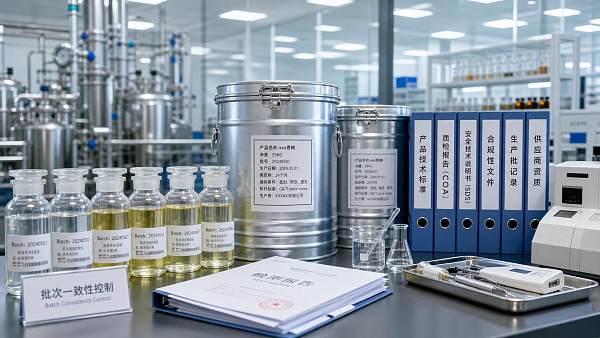
When sourcing bulk cyclodextrins, request a current technical data sheet, safety data sheet, and representative certificate of analysis. Then compare the supplier’s routine release limits with the properties that actually control your process. Depending on the grade and application, these may include identity, assay, moisture, residual solvents, impurity profile, microbiological attributes, particle size, and derivative substitution characteristics.
Do not assume that a tighter purity number will solve a formulation problem. A powder can meet its chemical assay and still cause handling trouble if its particle-size distribution changes between lots. Conversely, a specification should not include limits that have no demonstrated relevance and unnecessarily restrict supply. Agree on test methods, units, sampling arrangements, and change-notification expectations before placing a commercial order.
Ask for information on manufacturing consistency and traceability, including how lots are identified and whether significant process or source changes are communicated. For a sensitive application, assess more than one representative lot when feasible. A single successful sample is a useful start, not evidence that every future delivery will behave identically.
Documentation should also match the intended market and use. Food, cosmetics, household products, and industrial applications can have different requirements; a supplier’s general statement of suitability should not replace a review of the applicable jurisdiction, grade, impurities, labeling, and exposure. Where a fragrance is intended for a regulated consumer product, review the complete formulation and relevant fragrance restrictions as well as the carrier.
Compare delivered cost against usable performance
The lowest price per kilogram is rarely the whole comparison. A grade may require more carrier to reach the desired fragrance retention, need a different drying route, or introduce losses that increase the effective cost of the finished material. Compare cost at the same functional target: acceptable scent profile and strength after the defined process and storage period.
Include packaging size, moisture protection, freight, lead time, minimum order quantity, and shelf-life commitments in the assessment. Confirm storage conditions with the supplier and establish how opened packages will be handled at the plant. If a substitute source is needed, qualify it against both the material specification and the fragrance application; matching names on certificates do not guarantee matching performance.
FCAS approaches fine-chemical sourcing through this combination of application performance, documentation, and supply-chain practicality. For a final decision, shortlist the grades that meet the exposure and market requirements, run them through the same pilot process, and compare retained fragrance, sensory profile, physical stability, and delivered cost. Keep the test conditions with the approval record: without them, a later batch comparison is much harder to interpret.
Facing technical bottlenecks in manufacturing or looking for more efficient industrial solutions? Leave your details below and let the engineering experts at FCAS solve them for you.
We respect your privacy. Your information is strictly confidential.
Related News
 Microencapsulated FragrancesHow Can Citrus Terpene Fragrances Stay Fresh in Formulations?Keep citrus terpene fragrances fresh for longer. Explore practical formulation, packaging, and testing strategies to protect their vibrant scent.MORE+
 Microencapsulated FragrancesHow Fragrance Encapsulation Systems for Detergents WorkDiscover how fragrance encapsulation systems for detergents protect perfume, deposit on fabric, and release scent—and learn how to choose the right system.MORE+
 Microencapsulated FragrancesHow to Choose a Reliable Fragrance Carriers SupplierChoose a reliable fragrance carriers supplier with confidence. Compare formulation fit, quality controls, documentation, supply risks, and total cost.MORE+
 Microencapsulated FragrancesHow Can Microencapsulation Help Essential Oil Blends Last Longer?Essential Oil Blends can retain their aroma longer with the right microencapsulation strategy. Explore carrier choices, release mechanisms, and stability testing.MORE+
 Microencapsulated FragrancesHow to Choose a Fragrance Capsules Manufacturer for Your ProductChoose the right fragrance capsules manufacturer with practical tips on formulation testing, quality specifications, compliance, and supply reliability.MORE+
 Microencapsulated FragrancesHow to Choose Fragrance Bases for Consistent Product ScentFragrance Bases can make or break scent consistency. Learn how to compare performance, stability, supplier controls and true cost before you buy.MORE+
 Microencapsulated FragrancesHow to Choose an Encapsulated Perfumes ManufacturerChoose an encapsulated perfumes manufacturer with confidence. Compare fragrance performance, true costs, quality, compliance, and supply reliability.MORE+
 Microencapsulated FragrancesHow to Choose a Fabric Fragrances ManufacturerChoose a fabric fragrances manufacturer with confidence. Learn how to compare scent performance, quality controls, documentation, costs, and supply reliability.MORE+
 Microencapsulated FragrancesHow to Keep Encapsulated Perfumes for Fabric Care Fresh LongerKeep encapsulated perfumes for fabric care fresh longer with practical storage, handling, formulation and testing tips that help preserve lasting fragrance.MORE+
 Microencapsulated FragrancesHow to Choose Home Fragrances for Room Sprays That LastDiscover how to choose home fragrances for room sprays that last, with practical tips on scent longevity, formula compatibility, and testing.MORE+
 Microencapsulated FragrancesHow to Choose Bulk Cyclodextrins for Fragrance EncapsulationChoose bulk cyclodextrins for fragrance encapsulation with confidence. Compare formulation fit, scent retention, supplier quality, and total cost.MORE+
 Microencapsulated FragrancesHow to Choose Stable Synthetic Aroma Chemicals for EncapsulationChoose stable synthetic aroma chemicals for encapsulation with confidence. Learn how to assess compatibility, verify supplier quality, and protect aroma through storage and release.MORE+
 Microencapsulated FragrancesHow Do You Evaluate a Fragrance Encapsulation Systems Manufacturer?Evaluate a fragrance encapsulation systems manufacturer for compatibility, scent retention, quality, and compliance. Discover key checks to reduce risk and choose the right supplier.MORE+
 Microencapsulated FragrancesHow Does Microencapsulation Affect the Release of Fine Fragrances?Fine Fragrances meet controlled release: discover how microencapsulation shapes scent longevity, aroma balance, and performance—and what to test before choosing a system.MORE+
 Microencapsulated FragrancesHow Do Fragrance Bases Affect Scent Release After Encapsulation?Discover how Fragrance Bases shape scent release after encapsulation. Explore volatility, shell compatibility, and testing strategies to improve lasting aroma and product performance.MORE+
 Microencapsulated FragrancesHow Microencapsulation Helps Personal Care Fragrances Last LongerPersonal Care Fragrances can last longer with microencapsulation. Discover how controlled release, formula compatibility, and testing help deliver a lasting scent experience.MORE+
 Microencapsulated FragrancesHow to Select Air Freshener Fragrances That Last in Car FreshenersDiscover how to select air freshener fragrances for car fresheners with lasting appeal, balancing scent performance, carrier compatibility, heat stability, and packaging.MORE+
 Microencapsulated FragrancesHow Encapsulated Perfumes for Fabric Care Improve Scent LongevityEncapsulated perfumes for fabric care extend scent longevity through controlled release, fiber deposition, and smarter formulation—discover how to create lasting fragrance experiences.MORE+
 Microencapsulated FragrancesHow Fragrance Carriers for Detergents Improve Scent PerformanceFragrance carriers for detergents improve stability, fabric deposition, and long-lasting scent. Explore practical solutions for better wash-to-wear fragrance performance.MORE+
 Microencapsulated FragrancesHow to Add Encapsulated Laundry Fragrances Without Weakening Wash ResultsEncapsulated laundry fragrances: learn how to boost long-lasting scent while protecting cleaning power, stability, foam control, and fabric care.MORE+
 Microencapsulated FragrancesHow Laundry Fragrances for Liquid Detergents Improve Scent LongevityLaundry fragrances for liquid detergents: discover how fragrance design, deposition, and encapsulation create lasting fabric freshness and stronger product appeal.MORE+
 Microencapsulated FragrancesHow Fragrance Delivery Systems Improve Fabric Softener LongevityFragrance delivery systems for fabric softeners improve scent longevity through smart protection, reliable deposition, and controlled release for lasting freshness.MORE+
 Microencapsulated FragrancesEssential Oil Extracts Compared for Fragrance and Wellness UsesEssential Oil Extracts compared for fragrance and wellness: explore scent profiles, extraction methods, stability, safety, and sourcing insights for smarter formulation choices.MORE+
 Microencapsulated FragrancesHow Aroma Chemicals Shape Lasting Fine Fragrance PerformanceAroma chemicals for fine fragrance enhance longevity, diffusion, and signature retention. Discover how smart material selection creates stable, premium scent performance.MORE+
 Microencapsulated FragrancesHow Encapsulated Laundry Fragrances Improve Scent LongevityEncapsulated laundry fragrances deliver controlled scent release for longer-lasting freshness on fabrics. Discover how they improve deposition, durability, and re-bloom.MORE+
 Microencapsulated FragrancesHow to Select Perfume Ingredients for Long-Lasting FragrancePerfume Ingredients guide: learn how to select balanced, long-lasting fragrance materials for fine fragrance, personal care, laundry, and home care products.MORE+
 Microencapsulated FragrancesHow Fragrance Encapsulates Extend Scent Performance in Household ProductsFragrance encapsulates for household products deliver longer-lasting scent in laundry, fabric care, and cleaners. Discover release triggers, formula compatibility, and practical selection tips.MORE+
 Microencapsulated FragrancesWater Soluble Air Freshener Fragrances That Prevent CloudinessWater soluble air freshener fragrances: learn how to prevent cloudiness with smarter fragrance selection, solubilizers, water quality, and stability testing.MORE+
 Microencapsulated FragrancesHow Cyclodextrin Inclusion Complexes for Fragrances Improve Scent LongevityCyclodextrin inclusion complexes for fragrances enhance scent longevity through controlled release, improved stability, and application-specific performance. Discover how to optimize lasting aroma.MORE+
 Microencapsulated FragrancesHow Microencapsulated Fragrance Systems Improve Long-Lasting ScentMicroencapsulated fragrance systems protect scent, control release triggers, and deliver longer-lasting fragrance across laundry, personal care, and cleaning products.MORE+
 Microencapsulated FragrancesHow Aroma Chemicals Shape Consistent Fragrance PerformanceAroma Chemicals shape fragrance stability, diffusion, solubility, and lasting sensory appeal. Explore practical strategies for reliable performance across product formulas.MORE+
 Microencapsulated FragrancesWhat to Look for in a Scratch and Sniff Fragrances ManufacturerScratch and sniff fragrances manufacturer guide: evaluate encapsulation, print compatibility, compliance documents, quality control, and total sourcing cost for reliable sensory campaigns.MORE+
 Microencapsulated FragrancesWhat a Reliable Perfume Compounds Manufacturer Should Offer in 2026Perfume compounds manufacturer selection in 2026 demands more than scent creativity. Learn how to assess consistency, compliance, scalability, and supply reliability before you buy.MORE+
 Microencapsulated FragrancesHow Fragrance Capsules for Detergents Improve Scent LongevityFragrance capsules for detergents help protect perfume during washing and release scent gradually, keeping clothes fresher longer. Learn how they work and why they’re worth choosing.MORE+
 Microencapsulated FragrancesWhy Terpene Fragrances Supplier Options Matter in Premium Scent DevelopmentTerpene fragrances supplier selection shapes premium scent quality, stability, compliance, and scale. Discover how to choose the right partner for safer, more consistent fragrance development.MORE+