How Does pH Affect the Performance of Antimicrobial Preservatives?
pH can determine whether an antimicrobial preservative provides useful protection or leaves a formulation vulnerable, even when its concentration remains unchanged. For weak-acid preservatives such as benzoates and sorbates, increasing pH reduces the proportion present as undissociated acid, often weakening antimicrobial activity. Other preservative chemistries respond differently: pH may affect their chemical stability, interactions with formulation ingredients, or activity against particular microorganisms.
For technical evaluation, the practical question is whether a preservation system remains effective across the product’s actual pH range, including manufacturing variation and changes during storage. A supplier’s recommended pH range provides a starting point. Demonstrated performance in the finished formulation, under relevant test conditions, provides the evidence needed for a selection decision.
Why weak-acid preservatives lose activity as pH rises
Weak-acid preservatives exist in equilibrium between an undissociated acid and its dissociated form. The balance depends on the formulation’s pH relative to the acid’s pKa. Below the pKa, the undissociated form predominates; above it, the dissociated form becomes increasingly dominant.
The undissociated molecule generally crosses microbial cell membranes more readily. After entering a cell, it can dissociate in the higher-pH intracellular environment, disturbing pH regulation and metabolic processes. Maintaining internal conditions then places additional demands on the organism. This mechanism helps explain why an organic-acid preservative may perform well in an acidic beverage or sauce yet provide inadequate protection in a near-neutral formulation.
For a simple monoprotic weak acid, the relationship can be expressed as:
Undissociated fraction = 1 / [1 + 10(pH − pKa)]
At a pH equal to the pKa, approximately half of the acid is undissociated. One pH unit below the pKa, the fraction is approximately 91%; one unit above it, approximately 9%. These values describe acid–base equilibrium under simplified conditions. They do not represent microbial kill rates or predict whether a product will pass a preservation test.
The formulation consequence can nevertheless be substantial. Moving from one pH unit below the pKa to one unit above it produces roughly a tenfold reduction in the undissociated fraction. Increasing the total preservative concentration may only partly compensate, while creating solubility, sensory, compatibility, or regulatory constraints.
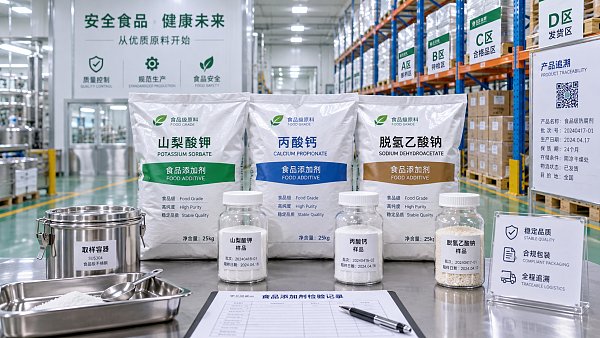
Using a preservative salt does not remove this dependence. Sodium benzoate and potassium sorbate can offer practical handling and solubility advantages, but after dissolution, the formulation’s pH determines the equilibrium between the acid and its dissociated form. The material added to the mixing vessel and the antimicrobial species available in the finished product are distinct considerations.
The undissociated fraction is a useful screening calculation, especially when comparing candidate pH specifications. However, dissociated species may also contribute to antimicrobial effects, and different organisms respond differently. A calculated fraction should guide formulation trials rather than serve as an acceptance criterion.
Why lowering pH does not improve every preservative system
The weak-acid model should not be applied indiscriminately to all antimicrobial preservatives. Some systems depend less strongly on acid–base equilibrium within their intended application range. Others experience pH-dependent degradation or changes in compatibility that become more important than ionization.
Different chemistries have different limits
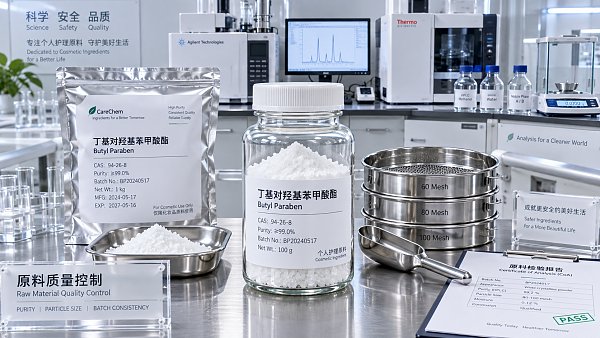
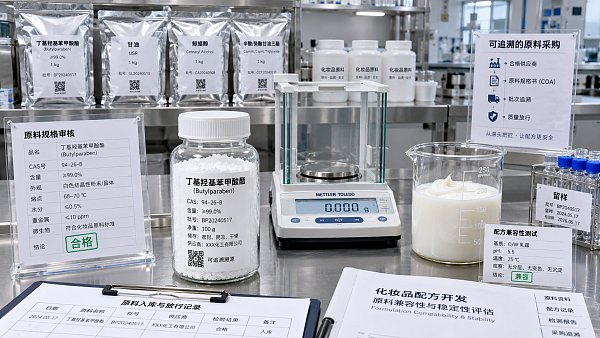
Parabens are weakly acidic compounds whose antimicrobial performance also depends on solubility, partitioning, and formulation interactions. Alkaline conditions can increase ionization and promote ester hydrolysis. Their behavior therefore cannot be assessed using the same practical assumptions as benzoate or sorbate systems.
Phenoxyethanol does not follow the same weak-acid mechanism over common formulation pH ranges. Its effectiveness still depends on concentration, microbial spectrum, and distribution within the formulation. A comparatively broad usable pH range does not establish that it will provide sufficient protection by itself.
For reactive preservatives, including some isothiazolinone systems, pH-related chemical stability and reactions with other ingredients may constrain performance. The relevant limits depend on the specific active substance, blend, and application. Treating an entire preservative family as having one universal pH window can obscure important differences.
Cationic antimicrobials introduce another consideration: incompatibility with anionic formulation components may reduce available activity. Altering pH can change the charge state of those components and therefore their interaction with the antimicrobial. Selecting a suitable pH cannot compensate for a fundamentally incompatible ingredient combination.
Acidity changes microbial susceptibility as well
Lower pH can itself inhibit many bacteria, adding a preservation hurdle alongside the chemical preservative. However, acid-tolerant yeasts and molds can remain relevant spoilage organisms in acidic products. A pH adjustment that reduces bacterial growth may leave a significant fungal challenge.
The result is a combined effect: pH changes the preservative, the formulation environment, and the organisms capable of surviving in it. Technical comparisons should therefore identify which organisms a system must control. A broad statement such as “more effective at low pH” gives too little information to establish adequate protection.
The finished formulation can overturn a promising pH calculation
A favorable pH does not guarantee that enough preservative reaches the microorganisms. In an emulsion, part of the preservative may partition into the oil phase. In a surfactant-rich cleaner, micellar association can alter its distribution. Proteins, polymers, suspended solids, and packaging materials may also bind or absorb particular preservatives.
These effects matter because the total amount added is not necessarily the amount available in the aqueous environment where microbial growth can occur. Even a measured total preservative concentration may give an incomplete picture if the analytical method does not distinguish between differently available fractions.
Acidifying a formulation can also create a physical stability problem. Converting a soluble preservative salt toward its less-soluble acid form may cause precipitation if the formulation exceeds that acid’s solubility under the relevant conditions. A lower pH may improve the theoretical undissociated fraction while reducing the amount remaining dissolved. Temperature changes can further alter this balance.
Evaluation should therefore connect antimicrobial performance with physical observations and chemical measurements. Crystallization, haze, separation, or changes in viscosity may signal that an adjustment has affected more than microbial susceptibility. Where preservation depends on a dispersed or multiphase system, sampling must also represent the product adequately.
A release measurement does not establish lifetime pH control
Two formulations can have the same initial pH and different resistance to change. Buffering capacity determines how strongly a formulation resists acid or alkali introduced through ingredients, dilution water, packaging interactions, or chemical changes during storage.
A lightly buffered concentrate may move outside its intended preservation range when diluted. Conversely, a heavily buffered formulation may require enough acid to create compatibility or sensory problems before reaching the target pH. Buffer ingredients also need compatibility assessment; they cannot be assumed to have no effect on the preservation system.
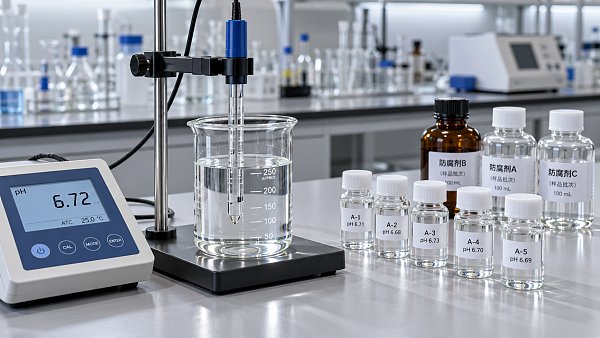
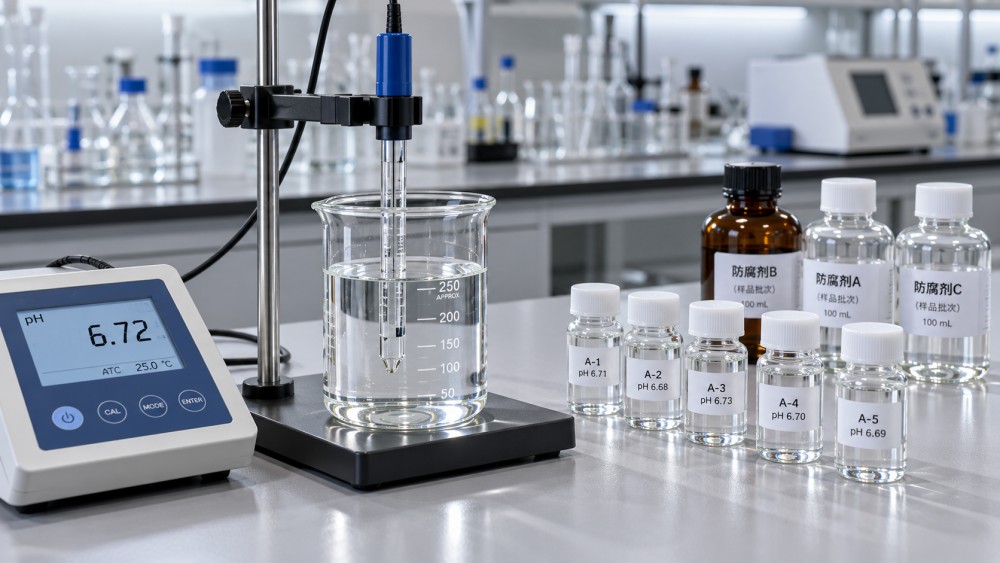
The measurement method matters. Temperature, electrode suitability, equilibration time, and sample preparation can affect the result, particularly in viscous, heterogeneous, or low-water products. A reading obtained after laboratory dilution may differ from the conditions in the product as sold. Specifications should define the method clearly enough for development, production, and stability laboratories to make meaningful comparisons.
For products diluted before use, evaluate the concentrate and the relevant use dilution separately. Dilution can change preservative concentration, pH, buffering capacity, and exposure to contamination simultaneously. Protection demonstrated in the concentrate does not establish protection during storage or handling after dilution.
How to validate performance across a pH range
A useful validation program starts with a realistic operating range. This includes the proposed release specification, expected storage drift, and any preparation or use conditions that affect pH. Testing only the nominal target can miss a failure at a specification boundary.
For a weak-acid system, the upper pH boundary is often a logical concern because less undissociated acid is available. It should not automatically be treated as the only worst case. Lower pH could increase precipitation, destabilize another ingredient, or reduce the stability of a component in a preservative blend.
A focused assessment should address four connected questions:
- Does the system control the relevant organisms? Use a preservation or challenge-testing approach appropriate to the product category, with organisms and acceptance criteria suited to its intended application.
- Does performance hold at the pH boundaries? Compare representative formulations at the target and justified limits, controlling other variables as closely as practical.
- Does protection survive storage? Include appropriately aged samples where chemical degradation, pH drift, partitioning, or packaging interactions could change performance.
- Can the test recover surviving organisms reliably? Demonstrate suitable neutralization and recovery so residual preservative carried into the assay does not create a falsely favorable result.
When adjusting samples for a pH study, record the acid or base used and its addition level. Adjustment can change ionic strength, introduce antimicrobial effects of its own, or alter ingredient interactions. Comparing results without accounting for these changes can overstate the contribution of pH alone.
Microbiological testing and chemical analysis answer different questions. A preservative assay can reveal loss of an active ingredient during storage. Challenge testing evaluates the performance of the complete formulation against the selected organisms. Neither result fully substitutes for the other when chemical stability and biological availability are both in doubt.
Choose standards according to the product category
There is no single preservation test that establishes suitability across foods, cosmetics, pharmaceuticals, and industrial formulations. ISO 11930 provides an approach to evaluating antimicrobial protection in cosmetics, while USP <51> addresses antimicrobial effectiveness testing within its pharmaceutical scope. Their application, organism requirements, and acceptance criteria must be assessed in the context of the product being evaluated.
Food preservation may require a different combination of challenge studies, shelf-life assessment, and evaluation of processing and storage controls. Passing a cosmetic or pharmaceutical preservative test would not establish food safety. Likewise, microbial limits testing measures contamination at a sampling point; it does not demonstrate resistance to contamination throughout storage and use.
Regulatory suitability is a separate decision. An effective preservative at a favorable pH may still be unsuitable for a particular product category, market, or concentration. Technical assessment should establish both application eligibility and performance without treating either as evidence of the other.
Set the pH specification around demonstrated protection
A defensible pH specification connects antimicrobial results with chemical stability, physical compatibility, manufacturing capability, and product function. If a preservative works only within a narrow acidic range, production and shelf-life data need to show that the product can remain inside that range with adequate margin.
Where that margin is too small, options include changing the preservative chemistry, improving formulation compatibility, or combining preservation with other suitable controls such as reduced water activity, protective packaging, and better contamination control. Increasing dosage alone may leave the underlying limitation unresolved.
The strongest basis for selection is a defined formulation that passes an appropriate preservation assessment at justified pH limits and retains protection after relevant storage. That evidence turns pH from a number on a release certificate into a controlled condition of product performance.
Facing technical bottlenecks in manufacturing or looking for more efficient industrial solutions? Leave your details below and let the engineering experts at FCAS solve them for you.
We respect your privacy. Your information is strictly confidential.
Related News
 Antioxidants & Natural PreservativesHow Do Food Preservative Blends for Dairy Beverages Work?Food preservative blends for dairy beverages work differently across formulations. Discover how pH, processing and testing shape shelf-life performance.MORE+
 Antioxidants & Natural PreservativesIndexBox Forecasts Moderate BHT Market Growth Through 2035BHT market growth is forecast at 2.5% annually through 2035. Explore the demand drivers and what the outlook means for suppliers and buyers.MORE+
 Antioxidants & Natural PreservativesHow Do Food Preservation Ingredients Extend Shelf Life?Food Preservation Ingredients extend shelf life by slowing microbial growth and oxidation. Discover how to select and validate the right solution for your product.MORE+
 Antioxidants & Natural PreservativesWhat Drives Antioxidant Blends Bulk Price Changes?Discover what drives antioxidant blends bulk price changes, from ingredient costs to delivery terms, and learn how to compare quotes for better value.MORE+
 Antioxidants & Natural PreservativesWhat Affects Benzyl Alcohol Wholesale Pricing and Quality?Benzyl alcohol wholesale prices vary by purity, packaging, and delivery terms. Learn how to compare quality and total costs before you buy.MORE+
 Antioxidants & Natural PreservativesHow Preservative Blends Help Control Spoilage in FoodsPreservative Blends can help control food spoilage and support shelf life. Discover how to select and validate the right system for your product.MORE+
 Antioxidants & Natural PreservativesWhat Affects the Bulk Price of Food Preservation Ingredients?Explore what drives the food preservation ingredients bulk price, from specifications and order volume to freight, compliance, and supplier reliability.MORE+
 Antioxidants & Natural PreservativesHow to Choose Tocopherols for Food Oxidation ControlDiscover how to choose Tocopherols for food oxidation control. Compare profiles, dosage, formulation compatibility, and shelf-life testing.MORE+
 Antioxidants & Natural PreservativesHow Does pH Affect the Performance of Antimicrobial Preservatives?Antimicrobial Preservatives perform differently as pH shifts. Learn how to select effective systems, avoid formulation pitfalls, and validate lasting product protection.MORE+
 Antioxidants & Natural PreservativesHow to Select Natural Food Preservatives for Chilled Ready MealsSelect natural food preservatives for ready meals with confidence. Compare options, assess pH and packaging, and validate shelf life while protecting taste. Explore the guide.MORE+
 Antioxidants & Natural PreservativesWhat Affects the Bulk Price of Antioxidant Blends for Food Use?Compare antioxidant blends bulk price factors, from active concentration to dosage and delivery costs. Learn how to assess quotes and choose better value for food applications.MORE+
 Antioxidants & Natural PreservativesHow Do Propionates Prevent Mold Without Slowing Yeast in Bread?Propionates help delay mold in bread while allowing effective proofing. Discover how pH, dosage, and process control balance longer shelf life with yeast performance.MORE+
 Antioxidants & Natural PreservativesWhat Makes Stable Synthetic Aroma Chemicals Resist Degradation?Learn why stable synthetic aroma chemicals resist degradation, how formulation and packaging affect performance, and what to test when choosing ingredients for lasting fragrance quality.MORE+
 Antioxidants & Natural PreservativesHow Do You Choose a Natural Food Preservatives Supplier You Can Trust?Choose a natural food preservatives supplier you can trust. Learn how to verify compliance, validate performance, and assess supply reliability before you buy.MORE+
 Antioxidants & Natural PreservativesWhat Determines TBHQ Bulk Price and How Can You Compare Quotes?Compare tbhq bulk price with confidence. Discover key cost drivers, specification checks, and landed-cost essentials to evaluate supplier quotes and avoid hidden costs.MORE+
 Antioxidants & Natural PreservativesHow to Choose Food Preservation Ingredients for Beverages That LastChoose food preservation ingredients for beverages with confidence. Explore pH, microbial control, compliance, and testing to protect flavor and achieve reliable shelf life.MORE+
 Antioxidants & Natural PreservativesWhat Purity Tests Are Needed for Cosmetic Grade Butylparaben?Cosmetic grade butylparaben needs more than a high assay. Discover essential purity tests, impurity controls, and supplier checks to make confident sourcing decisions.MORE+
 Antioxidants & Natural PreservativesTBHQ Antioxidant Performance, Limits, and Food Safety ComplianceTBHQ antioxidant performance, legal limits, and food safety compliance explained. Learn practical controls for oils, frying, packaging, shelf life, and documentation.MORE+
 Antioxidants & Natural PreservativesNatural Food Preservatives for Sauces That Protect Shelf LifeNatural food preservatives for sauces: discover practical strategies for safer shelf life, clean-label formulation, pH control, packaging, and validation.MORE+
 Antioxidants & Natural PreservativesHow Herbal Extracts for Functional Foods Support Product DevelopmentHerbal extracts for functional foods: explore smarter selection, sensory balance, processing stability, documentation, and scalable supply for successful product development.MORE+
 Antioxidants & Natural PreservativesWhat Quality Checks Matter When Sourcing Butylparaben for Personal CareButylparaben for personal care sourcing guide: compare assay, impurities, physical performance, documentation, traceability, and supplier quality to reduce formulation risk.MORE+
 Antioxidants & Natural PreservativesWhen Propyl Gallate Antioxidant Is the Right Choice for Oil StabilityPropyl gallate antioxidant: learn when it is the right choice for oil stability, shelf-life protection, processing compatibility, and smarter formulation decisions.MORE+
 Antioxidants & Natural PreservativesHow Potassium Sorbate Extends Shelf Life in Food and Beverage ProductsPotassium Sorbate helps food and beverage brands control yeast and mold spoilage. Explore pH, dosage, processing, and packaging strategies for reliable shelf life.MORE+
 Antioxidants & Natural PreservativesHow to Source Bulk Herbal Extracts With Reliable Quality ControlBulk herbal extracts sourcing guide: compare suppliers, verify traceability, review CoAs, and build reliable quality controls for safer, consistent purchasing.MORE+
 Antioxidants & Natural PreservativesWhat to Check Before Sourcing Butylparaben for Personal Care FormulasButylparaben for personal care sourcing guide: check market eligibility, purity, supplier controls, formula compatibility, packaging, and total risk before buying.MORE+
 Antioxidants & Natural PreservativesNatural Food Antioxidants That Help Extend Shelf Life in Clean LabelsNatural Food Antioxidants: learn how tocopherols, rosemary extracts, and ascorbic systems help protect flavor, color, and shelf life in clean-label foods.MORE+
 Antioxidants & Natural PreservativesWhat to Check Before Choosing a Butylparaben Wholesale SupplierButylparaben wholesale buyers: learn how to assess quality, documentation, market fit, packaging, supply reliability, and total landed cost before choosing a supplier.MORE+
 Antioxidants & Natural PreservativesWhat to Check Before Choosing a Synthetic Food Preservatives SupplierSynthetic food preservatives supplier selection: check regulatory fit, batch consistency, documentation, logistics, and support to reduce risks and hidden costs.MORE+
 Antioxidants & Natural PreservativesWhat to Verify Before Choosing a Synthetic Food Preservatives FactorySynthetic food preservatives factory checklist: verify food-grade quality, impurity control, traceability, packaging, and regulatory fit before supplier approval.MORE+
 Antioxidants & Natural PreservativesHow to Compare Food Preservative Blends Wholesale QuotesFood preservative blends wholesale: compare quotes by true cost, dosage, compliance, quality consistency, and supply reliability to choose the best-value solution.MORE+
 Antioxidants & Natural PreservativesHow Natural Food Preservatives Keep Sauces Fresh Without Sacrificing FlavorNatural food preservatives for sauces help balance microbial control, shelf life, and authentic flavor. Explore practical formulation, processing, and packaging strategies.MORE+
 Antioxidants & Natural PreservativesHow Propionates Extend Shelf Life While Meeting Food Safety RequirementsPropionates extend shelf life by controlling mold in bakery and moisture-sensitive foods. Explore smart dosage, compliance, supplier quality, and safer distribution strategies.MORE+
 Antioxidants & Natural PreservativesHow Oxidation Resistant Flavor Encapsulates Protect Taste During ProcessingOxidation resistant flavor encapsulates help protect delicate taste through heat, oxygen, and storage. Discover how to improve flavor retention, release, and processing consistency.MORE+
 Antioxidants & Natural PreservativesHow to Choose Green Tea Extract for Stable, Consistent FormulationsGreen Tea Extract selection guide for stable, consistent formulations—compare standardization, solubility, carriers, stability, and batch quality with confidence.MORE+
 Antioxidants & Natural PreservativesIs TBHQ for Shortening Safe and Effective for Longer Shelf Life?TBHQ for shortening: discover how safe, compliant antioxidant use can reduce rancidity, protect quality, and support longer shelf life through validated controls.MORE+
 Antioxidants & Natural PreservativesWhy Ferulic Acid Matters in Modern Antioxidant FormulationsFerulic Acid helps modern formulations enhance oxidative stability, protect sensitive ingredients, and support differentiated product performance across key applications.MORE+
 Antioxidants & Natural PreservativesHow Natural Food Preservatives Extend Shelf Life Without CompromiseNatural Food Preservatives extend shelf life through smart hurdle systems, balancing safety, clean-label appeal, sensory quality, and regulatory compliance.MORE+
 Antioxidants & Natural PreservativesHow to Choose a Food Preservation Ingredients Manufacturer with ConfidenceFood preservation ingredients manufacturer selection starts with risk control. Learn how to compare quality, documentation, supply stability, and technical support with confidence.MORE+
 Antioxidants & Natural PreservativesIs Cosmetic Grade Butylparaben Still a Smart Choice for FormulatorsCosmetic grade butylparaben remains a key consideration for formulators. Explore when it still makes sense, when to replace it, and how to balance performance, compliance, and market demands.MORE+
 Antioxidants & Natural PreservativesHow to Choose a Reliable Gum Arabic Powder Supplier for Consistent QualityGum arabic powder supplier selection starts with quality, traceability, and supply stability. Learn how to compare specs, compliance, and continuity to reduce sourcing risk.MORE+