How to Choose Citrus Oils for Beverages Without Clouding
Choosing citrus oils for beverages requires more than finding a bright lemon note or a convincing orange aroma. Citrus oils are poorly soluble in water, so an ingredient that smells excellent in the lab can create haze, an oil ring, or visible separation in the finished drink. For technical evaluators, the decision is not simply which oil tastes best, but which oil and delivery system will remain compatible with the complete beverage.
A clear sparkling water, an acidified still drink, and a concentrated flavor base place different demands on the same citrus ingredient. Oil composition, flavor loading, solubilization technology, processing conditions, and storage all influence the result. The most reliable selection process starts with the finished beverage and works backward to the oil specification.
Why citrus oil clouds a beverage
Citrus peel oils contain hydrophobic aroma compounds, including substantial amounts of terpenes such as limonene. When untreated oil is added to water, it tends to form droplets rather than dissolve. Those droplets can scatter light and create a cloudy appearance; larger droplets may rise and collect at the surface or around the package neck.
Not every visual defect is caused by the citrus oil. Minerals, proteins, plant extracts, sweetener impurities, or interactions between beverage ingredients can also produce haze or sediment. Before changing the flavor system, compare samples with and without the citrus ingredient and inspect the base on its own. This simple control helps distinguish an oil-dispersion problem from instability elsewhere in the recipe.
Clarity should also be defined before screening begins. A drink that looks clear in a small glass vial may appear noticeably hazy in a large bottle or against a dark background. Agree on the package format, lighting, measurement method, and acceptable appearance with the relevant technical and quality teams.
Choose the oil and delivery system together
There is no universal “clear citrus oil” that will stay clear at every dosage in every beverage. Instead, evaluators typically compare forms of the oil with the delivery systems designed to make it usable in water.
Processing terms deserve attention. A folded oil is typically concentrated through removal of some volatile components, often including terpenes; “terpeneless” indicates a different degree or approach to terpene reduction. Neither term defines a single composition across suppliers. Ask for a description of the process and evaluate the sensory profile rather than assuming that two ingredients with similar names behave alike.
Removing part of the terpene fraction can reduce the amount of poorly water-compatible material carried into a drink. It can also alter the fresh peel character, sweetness perception, and balance of the flavor. The best choice is therefore a trade-off between sensory authenticity, required dose, and physical stability—not simply the oil with the lowest apparent terpene content.

Solubilized or emulsified: an important distinction
A solubilized system uses suitable food-grade ingredients to incorporate hydrophobic flavor components into a water-compatible system. Depending on composition and concentration, the resulting solution may appear transparent. Its clarity is still conditional: adding more oil, changing temperature, or introducing salts can push the system beyond its capacity.
An emulsion, by contrast, contains dispersed oil droplets. Smaller droplets can reduce visible light scattering, and a well-designed fine emulsion may be sufficiently clear for an application. It is not automatically a true solution, however, and its appearance can change if droplets aggregate or grow during storage.
Ask suppliers how their delivery system is intended to function, but judge it in the finished beverage. A clear concentrate is not proof that the diluted product will remain clear. Conversely, a slightly opalescent concentrate may produce an acceptable drink at its intended use level. The important observations are made after dilution, processing, packaging, and storage.
Match citrus oils for beverages to the actual formulation
Flavor load and sensory target
Start with the lowest practical flavor dosage that delivers the desired profile. A stronger citrus impact may require more oil, more solubilizer, or a different combination of aroma ingredients. Any of these changes can affect taste, mouthfeel, cost, and clarity.
Evaluate aroma immediately after preparation and again during storage. Citrus top notes can change through volatilization or oxidation, while the delivery system itself may contribute taste. A physically clear sample is not a successful choice if it loses the fresh character the product needs.
Acidity, minerals, and other ingredients
Test at the target pH and with the intended acid system. Citric acid, other acidulants, sweeteners, preservatives, colors, and functional ingredients can change the environment in which a flavor system must perform. Mineral-fortified beverages deserve particular attention because dissolved salts can affect some solubilizers and emulsion stabilizers.
Do not rely on a flavor supplier’s test in plain water as a substitute for a full-formula trial. A useful screening sequence is to add ingredients in stages, observing appearance after each addition. If clouding appears only after a mineral premix or botanical extract is added, the interaction may be more informative than the final result alone.
Processing and order of addition
Mixing intensity, dilution rate, pasteurization, carbonation, and filling temperature can all influence performance. Follow the supplier’s recommended addition procedure as a starting point, then verify it under representative production conditions. A flavor that disperses readily in a bench beaker may respond differently when added to a large, cold tank or a concentrated syrup.
Check the beverage at key process stages rather than only after filling. If instability first appears after heat treatment or rapid dilution, that observation can guide a more targeted adjustment to the process or delivery system.
A practical stability test plan
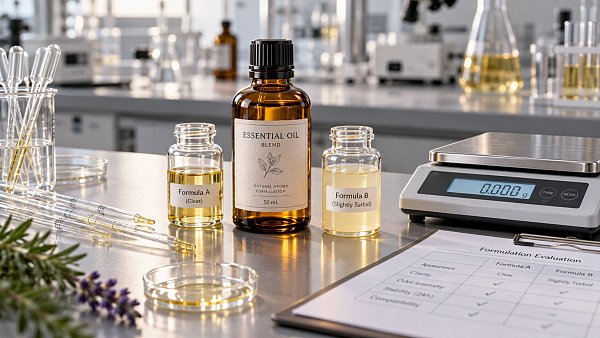
Shortlist candidates using the same beverage base, target flavor intensity, and preparation procedure. Include an unflavored base control and, where useful, a reference flavor system with known performance. Record the formulation and mixing conditions carefully so that a promising result can be repeated.
- Inspect initial appearance. Look for haze, droplets, sediment, surface oil, or a ring at the liquid line. Measure turbidity or another agreed clarity parameter using a consistent method.
- Check sensory performance. Compare citrus character, off-notes, and any contribution from carriers or emulsifiers. Use an appropriate tasting protocol and retain samples for later comparison.
- Challenge temperature stability. Store samples under relevant cold, ambient, and elevated conditions. Use temperature cycling when it reflects distribution risks, while recognizing that accelerated tests do not replace real-time storage data.
- Assess the packaged product. Use the intended container and closure where possible. Observe the beverage in its normal orientation and inspect the headspace, neck, and contact surfaces.
- Reassess over the intended shelf life. Track appearance, aroma, and any phase separation at planned intervals. Compare changes against predefined acceptance criteria rather than relying on a single pass-or-fail observation.
Where equipment is available, droplet-size analysis can help diagnose emulsion instability before separation becomes visible. Turbidity measurements are useful for trend tracking, but they should be interpreted alongside visual inspection: a numerical change may matter differently in a clear glass bottle than in an opaque package.
Questions to ask a citrus flavor supplier
Technical discussions are more productive when suppliers receive the intended beverage category, target dosage, pH, processing conditions, and shelf-life expectations. In return, request information that supports a meaningful comparison:
- Is the ingredient a whole oil, modified oil, solubilized flavor, emulsion, or encapsulated system?
- What is the recommended use range, and under what conditions was clarity assessed?
- Which carriers, emulsifiers, or other formulation components are present, and how should the ingredient be declared in the target market?
- Are there known limitations involving temperature, acidity, mineral content, or order of addition?
- What storage conditions, packaging, and handling practices are recommended for the ingredient?
- What specification, allergen information, and relevant food-safety documentation are available?
Regulatory status and labeling depend on the ingredient composition, use level, beverage category, and destination market. Confirm these requirements with the supplier and the responsible regulatory team before approving a formulation; terms such as “natural” or “water-soluble” do not by themselves settle labeling or permitted-use questions.
When a clear result starts to fail
An oil ring often points toward separation or droplet growth, but the cause may be an excessive oil load, inadequate mixing, an incompatible ingredient, or storage stress. Haze without a ring may reflect fine droplets, precipitation, or another component of the base. Examine the control and the timing of the change before deciding which explanation fits.
If a candidate fails, change one variable at a time: reduce the flavor dose, adjust the addition procedure, compare an alternative delivery system, or test the flavor in a simplified base. Increasing emulsifier or solubilizer indiscriminately can introduce sensory or regulatory complications without resolving the underlying problem.
The strongest choice is the citrus system that meets the agreed appearance and flavor targets in the actual beverage, through realistic processing and storage. For evaluators comparing citrus oils for beverages, that evidence is more useful than a promising label claim or a clear sample observed only on the day it was made.
Facing technical bottlenecks in manufacturing or looking for more efficient industrial solutions? Leave your details below and let the engineering experts at FCAS solve them for you.
We respect your privacy. Your information is strictly confidential.
Related News
 Supercritical CO2 Essential OilsWhat Should You Check When Choosing a CO2 Essential Oils Supplier?Choosing a CO2 essential oils supplier? Learn how to assess sourcing, batch testing, documentation, and delivery to secure quality and reliable supply.MORE+
 Supercritical CO2 Essential OilsWhat Affects the Botanical Oleoresins Bulk Price?Botanical oleoresins bulk price depends on sourcing, strength, extraction and freight. Learn how to compare supplier quotes and reduce total costs.MORE+
 Supercritical CO2 Essential OilsHow Are Food Grade Essential Oil Extracts Made with CO2?Discover how food grade essential oil extracts are made with CO2, what shapes their flavor, and how to assess safety and suitability for food applications.MORE+
 Supercritical CO2 Essential OilsWhat to Check When Buying Aroma Ingredients WholesaleBuying aroma ingredients wholesale? Discover how to assess quality, supplier reliability, documentation and landed cost before placing your order.MORE+
 Supercritical CO2 Essential OilsHow to Choose Citrus Oils for Beverages Without CloudingChoose citrus oils for beverages with confidence. Compare delivery systems and stability tests to prevent clouding while preserving fresh citrus flavor.MORE+
 Supercritical CO2 Essential OilsWhat to Check When Choosing a CO2 Botanical Extracts ManufacturerChoosing a CO2 botanical extracts manufacturer? Discover how to assess quality, traceability, compliance and true costs before you commit.MORE+
 Supercritical CO2 Essential OilsHow Can You Verify Quality Controls at a CO2 Extracts Factory?Evaluate a co2 extracts factory with confidence. Learn how to verify batch testing, traceability, and quality controls to reduce sourcing risks and choose a reliable supplier.MORE+
 Supercritical CO2 Essential OilsWhat Determines Essential Oil Blend Bulk Prices Beyond Order Size?Explore essential oil blends bulk price factors beyond volume, from botanical quality to testing and freight. Learn how to compare suppliers and uncover the true cost before buying.MORE+
 Supercritical CO2 Essential OilsHow Do Extraction Methods and Grades Affect Oleoresin Bulk Prices?Compare oleoresins bulk price by extraction method, grade, and potency. Discover how to evaluate supplier quotes, verify quality, and lower costs at the right application dose.MORE+
 Supercritical CO2 Essential OilsWhat Should You Ask a Citrus Oils Supplier About CO2 Extraction?Choosing a citrus oils supplier? Discover what to ask about CO2 extraction, purity, testing, and cost to verify quality, avoid costly mistakes, and buy with confidence.MORE+
 Supercritical CO2 Essential OilsWhat Determines the Bulk Price of CO2 Botanical Extracts Before Shipping?Compare co2 botanical extracts bulk price drivers before shipping, from yield and potency to testing and packaging. Learn how to assess supplier quotes and buy with confidence.MORE+
 Supercritical CO2 Essential OilsHow to Verify the Purity of High Cineole Eucalyptus Oil With GC-MSVerify high cineole eucalyptus oil with GC-MS. Learn how to confirm identity, measure cineole accurately, and spot quality risks before approving your next batch.MORE+
 Supercritical CO2 Essential OilsHow Does Supercritical CO2 Extraction Affect Bulk Tea Tree Oil?Discover how supercritical CO2 extraction affects bulk tea tree oil composition, stability, and formulation performance—and what to check before approving a bulk replacement.MORE+
 Supercritical CO2 Essential OilsHow Do CO2 Botanical Extract Certifications Affect Sourcing Costs?CO2 botanical extracts supplier certifications can raise prices but lower sourcing costs. Learn how to verify coverage, compare total costs, and pay only for credentials that add value.MORE+
 Supercritical CO2 Essential OilsHow to Evaluate a Natural Aroma Chemicals Supplier for QualityNatural aroma chemicals supplier evaluation made practical: assess quality, traceability, odor consistency, documentation, packaging, and total delivered cost before you buy.MORE+
 Supercritical CO2 Essential OilsHow to Verify CO2 Botanical Extract Supplier CertificationsCO2 botanical extracts supplier certifications: learn how to verify certificates, site scope, batch traceability, and process controls before approving suppliers.MORE+
 Supercritical CO2 Essential OilsHow Oleoresins Bulk Price Changes with Crop Quality and SupplyOleoresins bulk price insights: learn how crop quality, extraction yield, grade availability and supply risks shape costs—compare supplier offers with confidence.MORE+
 Supercritical CO2 Essential OilsHow Natural Essential Oil Blends Improve Consistent Product FragranceNatural essential oil blends help brands achieve consistent, appealing fragrance across batches. Explore smart blend design, stability testing, and product compatibility strategies.MORE+
 Supercritical CO2 Essential OilsWhat to Check Before Choosing a Botanical Essential Oils ManufacturerChoose a botanical essential oils manufacturer with confidence. Explore key checks for purity, traceability, compliance, batch consistency, and reliable supply.MORE+
 Supercritical CO2 Essential OilsHow Aroma Ingredients Shape Lasting and Skin-Safe Personal Care ProductsAroma ingredients for personal care: discover how to achieve lasting scent, formulation stability, skin safety, and confident product performance.MORE+
 Supercritical CO2 Essential OilsHow to Evaluate a Natural Cardamom Oil Supplier for Reliable SupplyNatural cardamom oil supplier evaluation guide: verify botanical origin, purity, batch consistency, documentation, packaging, and delivery reliability for confident sourcing.MORE+
 Supercritical CO2 Essential OilsHow to Choose Eucalyptus Oil Grades for Clean, Consistent ProductsChoose the right Eucalyptus Oil grade with confidence. Compare cineole content, purity, origin, processing, documentation, and application fit for consistent products.MORE+
 Supercritical CO2 Essential OilsHow Food Grade Citrus Oils Improve Flavor in Beverage FormulationsFood grade citrus oils help beverage formulators create brighter, more authentic flavor. Learn how to select, stabilize, dose, and protect citrus oils for lasting appeal.MORE+
 Supercritical CO2 Essential OilsWhy Citrus Terpene Fragrances Are Growing in Home Care ProductsCitrus terpene fragrances are transforming home care products with fresh, trusted cleaning cues. Explore performance, stability, compliance, sourcing, and cost factors for smarter fragrance selection.MORE+
 Supercritical CO2 Essential OilsHow to Choose Ginger Oil for Beverages With a Clean Flavor ProfileGinger oil for beverages: learn how to select a clean, bright, stable profile that performs through processing, shelf life, and every sip.MORE+
 Supercritical CO2 Essential OilsCO2 Essential Oil Extracts for Functional Foods and Clean LabelsDiscover CO2 essential oil extracts for functional foods: clean-label potential, botanical flavor innovation, formulation insights, and smarter sourcing strategies.MORE+
 Supercritical CO2 Essential OilsHow to Use Cardamom Oil for Flavoring Without Overpowering FoodsCardamom oil for flavoring: learn dilution, dispersion, blending, and process tips to create balanced beverages, bakery, and desserts without overpowering taste.MORE+
 Supercritical CO2 Essential OilsWhat to Evaluate When Sourcing Custom Essential Oil BlendsCustom essential oil blends: discover how to evaluate formulation fit, quality consistency, compliance, total cost, and supply reliability for confident sourcing decisions.MORE+
 Supercritical CO2 Essential OilsHow to Verify Purity and Sourcing of Cosmetic Grade Lavender OilCosmetic grade lavender oil: learn how to verify botanical origin, batch-specific purity, GC-MS reports, sourcing, storage, and safe cosmetic use before you buy.MORE+
 Supercritical CO2 Essential OilsWhat to Evaluate Before Choosing an Aromatic Extracts FactoryChoose the right aromatic extracts factory with expert guidance on traceability, extraction methods, batch consistency, documentation, and reliable supply.MORE+
 Supercritical CO2 Essential OilsAre CO2 Botanical Extracts More Stable Than Solvent Extracts?Are CO2 botanical extracts more stable than solvent extracts? Compare oxidation risk, packaging, and formulation factors to make smarter sourcing decisions.MORE+
 Supercritical CO2 Essential OilsWhy High Terpinen Tea Tree Oil Quality Depends on Chemotype and TestingHigh terpinen tea tree oil quality starts with verified chemotype, full GC/MS testing, oxidation control, and traceable storage—learn how to choose reliable oil.MORE+
 Supercritical CO2 Essential OilsHow Mint Oils for Oral Care Improve Flavor and Fresh BreathMint oils for oral care create cooling flavor, lasting freshness, and a better daily brushing experience. Explore peppermint, spearmint, and smart product choices.MORE+
 Supercritical CO2 Essential OilsWhat to Evaluate Before Choosing an Essential Oil Blends ManufacturerEssential oil blends manufacturer selection guide: evaluate quality, traceability, compliance, formula performance, and supply reliability to source with confidence.MORE+
 Supercritical CO2 Essential OilsHow to Evaluate a Natural Aroma Chemicals Manufacturer for Reliable SupplyNatural aroma chemicals manufacturer evaluation guide: verify traceability, batch consistency, compliance, application support, capacity, and total cost to secure reliable supply.MORE+
 Supercritical CO2 Essential OilsWhat Should You Know About Natural Aroma Chemicals and Their UsesNatural Aroma Chemicals: explore how to select, test, and formulate natural aroma ingredients for fragrances, food, personal care, and home care products.MORE+
 Supercritical CO2 Essential OilsWhen Oil Soluble Essential Oil Extracts Work Best in FormulationsOil soluble essential oil extracts work best in anhydrous beauty, fragrance, food, and cleaning formulas. Explore compatibility, stability, and application tips.MORE+
 Supercritical CO2 Essential OilsWhy Solvent Free Aromatic Extracts Matter for Clean Label Fragrance FormulasSolvent free aromatic extracts are reshaping clean label fragrance formulas by improving transparency, sensory appeal, and sourcing credibility. Learn why they matter now.MORE+
 Supercritical CO2 Essential OilsWhy Citrus Oils Matter in Clean Label Food and Wellness TrendsCitrus Oils drive clean label food and wellness innovation with fresh flavor, natural appeal, and versatile formulation value. Explore why buyers and brands are paying closer attention.MORE+
 Supercritical CO2 Essential OilsWhy Steam Distilled Clove Oil Is Gaining Ground in Natural FormulationsSteam distilled clove oil is gaining attention for its natural appeal, eugenol profile, and formulation versatility. Discover why buyers value it across personal care, fragrance, and home care.MORE+