How Seaweed Extract Hydrocolloids Improve Food Texture
Seaweed extract hydrocolloids help shape the texture and stability of foods, from dairy alternatives and desserts to sauces and processed meats. Ingredients such as alginate, carrageenan, and agar can thicken, gel, or help control water separation, depending on their chemistry and formulation conditions. Understanding how they respond to pH, temperature, and mineral content is essential when selecting an ingredient for consistent processing performance and the desired eating experience.
The distinction matters because a product that looks right in a laboratory cup may behave differently after homogenization, filling, chilled storage, or reheating. A hydrocolloid is not simply a viscosity adjustment. It becomes part of a system that includes water, proteins, salts, fat, processing equipment, and the time between manufacture and consumption.
Three Seaweed Hydrocolloids, Three Different Textures
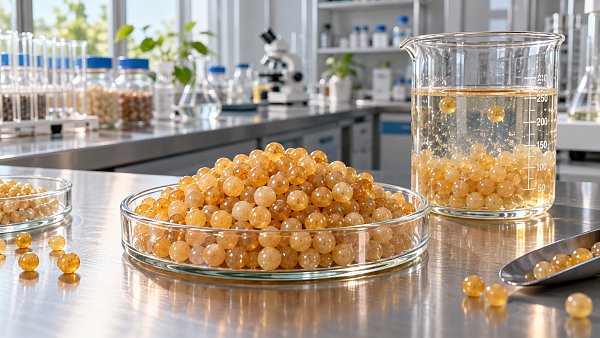
Alginate is extracted primarily from brown seaweed. Sodium alginate can build viscosity when properly dispersed and hydrated, but its more distinctive behavior is its ability to form gels in the presence of calcium. The gel can form without a cooling step, which makes alginate useful where a manufacturer wants to structure a product at relatively low temperatures. The trade-off is that uncontrolled calcium can cause local gelation before the powder has fully hydrated.
Carrageenan comes from red seaweed and is available in several functional types. Kappa carrageenan generally forms firmer, more brittle gels, particularly in the presence of potassium. Iota carrageenan tends to produce softer, more elastic gels and responds strongly to calcium. Lambda carrageenan is generally used as a thickener rather than a gel former. Commercial ingredients may be blends, so the name “carrageenan” alone does not predict how a specific grade will perform.
Agar, also derived from red seaweed, is known for forming relatively firm, brittle gels as a hot solution cools. Its gelation and melting temperatures differ: a set agar gel can remain intact above the temperature at which it originally formed. That thermal behavior can be useful in structured desserts, confectionery, and fillings, although the firmness and fracture may not suit a product intended to feel creamy or elastic.
These descriptions are starting points, not specifications. Extraction conditions, molecular composition, particle size, and blending all influence performance. Comparing two ingredients only by their seaweed origin—or by price per kilogram—can miss the properties that determine whether a formulation runs reliably.

What Changes When the Hydrocolloid Enters a Food System?
Hydrocolloids influence texture by interacting with water and, in many formulations, by forming networks with other molecules or ions. Thickening slows the movement of particles or droplets through a liquid; gelation creates a more connected structure that can resist deformation. Neither effect guarantees stability on its own. A beverage can have enough viscosity to slow sedimentation and still separate during storage if its particles aggregate or its protein system is unstable.
Minerals Can Help—or Trigger Trouble
Calcium is central to many alginate gels, but the rate at which it becomes available matters as much as the amount present. Rapid calcium release can create lumps or uneven gel regions; slower release can give the polymer time to hydrate and distribute before the network develops. Formulators may use calcium sources with different solubilities or sequestrants to manage that timing. The appropriate approach depends on the product, the other ingredients, and the permitted use of each processing aid or additive.
Minerals may already be present in processing water, milk, plant proteins, or fortification blends. That is why a successful trial with purified water should not be treated as proof that the production recipe will work. An unplanned change in water hardness or mineral premix can alter hydration, viscosity, and gel formation.
Heat and Acidity Change the Operating Window
Each hydrocolloid grade has its own hydration requirements. Agar generally needs substantial heating to dissolve fully; many carrageenan grades also require heat, although processing requirements vary by type and formulation. Alginate can hydrate without the same high-temperature dissolution step, but it still needs good dispersion and enough time to develop viscosity. Supplier guidance should be checked against the actual process rather than copied into a recipe unchanged.
Acidity adds another constraint. Prolonged heating at low pH can reduce the molecular weight and functionality of some hydrocolloids, including carrageenan and agar. In an acidified dessert or sauce, the order of addition may therefore affect the final gel. Hydrating the hydrocolloid before acidification can be worth testing, provided that the sequence also meets the product’s food safety and processing requirements.
A lower viscosity after heat treatment is not automatically evidence of a bad ingredient. It may indicate that the combination of pH, temperature, and holding time is outside the useful range for that grade.
Texture Choices in Real Formulations
Plant-Based Drinks and Dairy Products
In a plant-based drink, the desired outcome is often a delicate balance: enough structure to slow settling, but not so much that the beverage pours like a sauce. Carrageenan may be used in some beverage systems to support suspension, while its interactions depend on the protein source, mineral content, and processing conditions. A system designed around milk proteins should not be assumed to transfer directly to oat, soy, or pea formulations.
For chilled desserts and cultured products, the issue may be water separation rather than visible settling. A small amount of separated liquid can make a product look old even when it is within its intended shelf life. A stronger gel is not always the answer: excessive structure can make a spoonable product fracture or feel pasty. Evaluation should include both the undisturbed surface and the texture after stirring.
Sauces, Fillings, and Prepared Foods
A sauce must often behave differently at rest and during use. It may need to remain stable in the package, flow through a pump, coat food after dispensing, and retain an acceptable texture after heating. Hydrocolloid blends can be useful here, but blending introduces another variable: one component may control flow while another changes gel strength or water retention.
For an agar-set filling, a clean cut and resistance to warm handling may be attractive. The same firm fracture may be undesirable in a soft cream filling. Similarly, an alginate network may provide structure where a cooling-set gel is impractical, but the calcium system must be controlled across mixing and filling. The right choice depends on the behavior the finished food needs, not on which ingredient produces the highest measured gel strength.
Processed Meat and Alternatives
Carrageenan is used in some processed meat formulations to help manage texture and water retention. Performance depends on salt, protein extraction, heating, and the rest of the formulation. In meat alternatives, the protein network and fat system may be quite different, so a direct replacement at the same use level is a poor assumption.
Measure what matters to the product: slice integrity, purge in the package, bite, reheating behavior, or cooking loss. A formulation can retain more water yet deliver an unpleasant rubbery bite. Sensory assessment should accompany instrumental measurements rather than follow them as an afterthought.
Why a Bench Trial Can Pass and a Production Run Can Fail
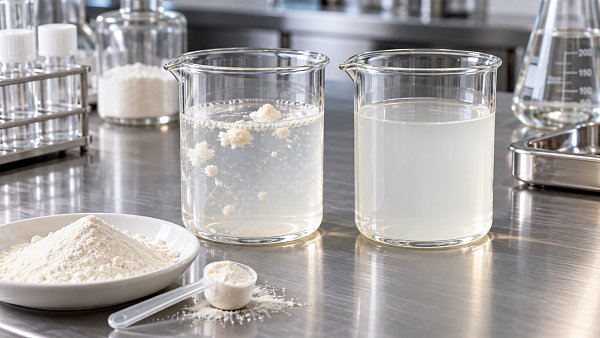
Powder dispersion is a frequent starting point for investigation. If the outside of a hydrocolloid particle hydrates too quickly, it can form a barrier around dry material, leaving persistent lumps. Premixing the powder with another dry ingredient, adjusting the addition rate, or changing the mixing setup may help. The appropriate method depends on the grade and the equipment; more shear is not a universal cure.
Scale also changes thermal history. A small batch may heat and cool quickly, while a production batch can spend longer in a hot holding tank. Pumping and homogenization may alter the structure, especially if a gel has already begun to form. For a cooling-set product, filling temperature and cooling rate can influence the texture that develops in the package.
A useful troubleshooting record therefore includes more than the recipe. Capture water source, ingredient addition order, mixing conditions, pH, temperature profile, holding time, and the point at which samples were taken. If possible, compare viscosity or gel properties at the same temperature and elapsed time. Otherwise, normal structure development can be mistaken for batch variation.
Storage testing deserves the same attention. Check for syneresis, sedimentation, texture drift, and changes after transport or temperature cycling where those conditions are relevant. Freeze–thaw performance is especially formulation-dependent; a gel that looks stable under refrigeration may release water after freezing.
From Ingredient Specification to a Defensible Choice
A technical data sheet is useful, but its viscosity or gel-strength value may be measured in a model solution that differs substantially from the intended food. Ask for the test method and conditions, including concentration, temperature, and any salts used. For alginate, information about the calcium response is often more useful than a viscosity figure alone. For carrageenan, the functional type and whether it is a blend are important. For agar, gel strength and thermal behavior should be considered alongside the desired eating texture.
The commercial review should also cover food-grade status, relevant purity and contaminant specifications, batch documentation, storage conditions, and change-control practices. Seaweed source and processing can influence ingredient characteristics; a specification that captures only appearance and moisture may not be enough for a texture-critical application.
Regulatory acceptance and labeling depend on the ingredient, food category, use conditions, and destination market. Confirm these details against current local requirements and supplier documentation before finalizing a formula. The fact that two materials come from seaweed does not make them interchangeable as food ingredients, and agricultural seaweed extracts should not be assumed suitable for food use.
FCAS examines food ingredients in this wider application and supply context: performance in the recipe is only one part of the decision, alongside documentation and consistency. For a practical next step, select a small number of candidate grades, test them in the complete formulation, and reproduce the intended heat, mixing, filling, and storage conditions. The ingredient that performs best in a simple gel test may not be the one that gives the most reliable finished food.
Related News
 Antioxidants & Natural PreservativesHow to Choose Tocopherols for Food Oxidation ControlDiscover how to choose Tocopherols for food oxidation control. Compare profiles, dosage, formulation compatibility, and shelf-life testing.MORE+
 Non-ionic Surfactants & DefoamersDo Industrial Dispersants Require Special Handling During Transport?Do industrial dispersants require special handling during transport? Discover how to protect product quality, meet shipping rules, and prevent costly delays.MORE+
 Hydrocolloids & EmulsifiersHow Seaweed Extract Hydrocolloids Improve Food TextureSeaweed Extract Hydrocolloids improve food texture and stability. Discover how alginate, carrageenan, and agar perform in real formulations.MORE+
 Hydrocolloids & EmulsifiersWhat to Check Before Buying Carboxymethyl Cellulose WholesaleBuying carboxymethyl cellulose wholesale? Learn how to compare grades, supplier documents, performance and delivered costs before placing your order.MORE+
 Non-ionic Surfactants & DefoamersCalifornia OEHHA Proposes Proposition 65 Cancer Listing for PFHxA and Its SaltsPFHxA and its salts face a proposed California Proposition 65 cancer listing. Explore what the OEHHA notice could mean for suppliers and compliance.MORE+
 EPA FIFRA & FDA GRAS RegsEPA Exempts DMSO in Pesticide Formulations From Residue Tolerance RequirementsEPA exempts DMSO from pesticide residue tolerance requirements for specified uses. Explore the rule’s scope and what it means for formulators.MORE+
 Targeted Bio-pesticides & APIsHow Are Insecticide APIs Used in Public Health Programs?Insecticide APIs for public health support vector control through sprays, treated nets and larvicides. Discover how formulation, resistance and safety shape product selection.MORE+
 Polymer-Coated Water Soluble NPKHow to Evaluate a Controlled Release Fertilizer Systems SupplierChoosing a controlled release fertilizer systems supplier? Compare release performance, quality, supply reliability, and total costs with this practical guide.MORE+
 Supercritical CO2 Essential OilsWhat to Check When Choosing a CO2 Botanical Extracts ManufacturerChoosing a CO2 botanical extracts manufacturer? Discover how to assess quality, traceability, compliance and true costs before you commit.MORE+
 Hydrocolloids & EmulsifiersHow Cocamidopropyl Betaine Improves Foam in Bath ProductsDiscover how cocamidopropyl betaine for bath products can enhance foam, support a creamy lather, and help formulators improve bath and shower products.MORE+
 Microencapsulated FragrancesHow to Choose Bulk Cyclodextrins for Fragrance EncapsulationChoose bulk cyclodextrins for fragrance encapsulation with confidence. Compare formulation fit, scent retention, supplier quality, and total cost.MORE+
 Non-ionic Surfactants & DefoamersWhat Should a Quote From an Industrial Wetting Agents Exporter Include?Choosing an industrial wetting agents exporter? Learn what a complete quote should include, from product specs and active content to shipping terms, compliance, and true landed costs.MORE+
 Microencapsulated FragrancesHow to Choose Stable Synthetic Aroma Chemicals for EncapsulationChoose stable synthetic aroma chemicals for encapsulation with confidence. Learn how to assess compatibility, verify supplier quality, and protect aroma through storage and release.MORE+
 Zero-Calorie Sweeteners & AcidulantsHow to Evaluate a Sucralose Supplier Before Placing a Bulk OrderEvaluate a sucralose supplier with confidence. Learn how to verify quality, compliance, traceability, delivery reliability, and total costs before placing a bulk order.MORE+
 EPA FIFRA & FDA GRAS RegsHow Do FDA Rules Affect Synthetic Food Preservatives for Beverages?Synthetic food preservatives for beverages face specific FDA requirements. Explore permitted uses, dosage, labeling, and safety validation to make smarter compliance decisions.MORE+
 Polymer-Coated Water Soluble NPKHow to Choose Potassium Chloride Fertilizer for Bulk BlendingChoose potassium chloride fertilizer for bulk blending with confidence. Learn how particle size, durability, and moisture affect blend quality—and compare suppliers beyond price.MORE+
 Herbicides & Plant Growth RegulatorsReport Forecasts Global Agrochemical Market to Reach $387.7 Billion by 2031Global agrochemical market could reach $387.7 billion by 2031. Explore how technology, regulation and agricultural drones may shape industry decisions.MORE+
 Herbicides & Plant Growth RegulatorsWisconsin DNR Board to Vote on Drafting New Pesticide RulesWisconsin DNR pesticide rules are up for a drafting vote. See what the decision could mean for farmers, suppliers and future compliance.MORE+
 EPA FIFRA & FDA GRAS RegsWhat FDA Compliance Records Should a Synthetic Food Preservatives Supplier Provide?Choosing a synthetic food preservatives supplier? Discover key FDA compliance records, batch certificates, and traceability checks to approve suppliers with confidence.MORE+
 Hydrocolloids & EmulsifiersHow Does Low DE Maltodextrin Affect Texture in Powdered Drinks?Discover how low de maltodextrin adds body to powdered drinks with minimal sweetness. Learn how to select grades, improve mixing, and fine-tune texture for a better drinking experience.MORE+
 Hydrocolloids & EmulsifiersHow Do You Choose Flavor Emulsions for Beverages With Low Sugar?Choose flavor emulsions for beverages with low sugar. Learn how to balance taste, validate stability, compare cost per dose, and meet labeling requirements for a confident selection.MORE+
 Supercritical CO2 Essential OilsHow Can You Verify Quality Controls at a CO2 Extracts Factory?Evaluate a co2 extracts factory with confidence. Learn how to verify batch testing, traceability, and quality controls to reduce sourcing risks and choose a reliable supplier.MORE+
 Antioxidants & Natural PreservativesHow Does pH Affect the Performance of Antimicrobial Preservatives?Antimicrobial Preservatives perform differently as pH shifts. Learn how to select effective systems, avoid formulation pitfalls, and validate lasting product protection.MORE+
 Polymer-Coated Water Soluble NPKUSDA Pushes Domestic Fertilizer Capacity as Analysts Expect Further Price DeclinesUSDA fertilizer policies and expanded domestic production could push prices lower. Explore what shifting supply expectations mean for farm input costs and buying decisions.MORE+
 Non-ionic Surfactants & DefoamersBASF Starts Up Expanded APG Production in Cincinnati to Serve North American DemandBASF expands APG production in Cincinnati to meet North American demand. Explore how added capacity supports local supply of bio-based, biodegradable surfactants.MORE+
 Zero-Calorie Sweeteners & AcidulantsHow to Choose Low Calorie Bulk Sweeteners for Reduced-Sugar FoodsChoose low calorie bulk sweeteners with confidence. Compare options for taste, texture, shelf life, and compliance to create better reduced-sugar foods.MORE+
 Micelle Fluidics & ChelationHow Does Cocamidopropyl Betaine Affect Foam and Skin Mildness?Discover how Cocamidopropyl Betaine can enhance foam and support skin mildness. Explore formulation tips, impurity controls, and testing strategies for better cleansers.MORE+
 Micelle Fluidics & ChelationWhich Detergent Builders for Hard Water Prevent Mineral Buildup?Compare detergent builders for hard water, including MGDA, GLDA, citrate and zeolites. Discover how to prevent mineral buildup, reduce residue and choose the right formulation.MORE+
 Polymer-Coated Water Soluble NPKHow to Choose Fertilizer Coating Resins for Controlled ReleaseChoose fertilizer coating resins for controlled release with confidence. Compare release profiles, processing needs, durability, and total costs in this practical selection guide.MORE+
 Heavy-duty Industrial DegreasersHow to Compare Cleaner Concentrates Wholesale by Cost per UseCompare cleaner concentrates wholesale by true cost per use—not drum price. Learn how dilution, labor, and waste affect savings so you can choose the best-value supplier.MORE+
 Targeted Bio-pesticides & APIsGerman Research Reinforces Pesticide Risks to Aquatic EcosystemsPesticide risks to aquatic ecosystems gain new support from German research. Explore the findings and why holistic approaches matter for agriculture and environmental protection.MORE+
 Targeted Bio-pesticides & APIsSulfonium Modification Offers a Potential Route Around Antifungal ResistanceSulfonium modification shows potential against antifungal resistance in wax moth larvae. Explore what this early finding could mean for future antifungal drug development.MORE+
 Polymer-Coated Water Soluble NPKShould You Use Potassium Chloride or Coated NPK as Basal Fertilizer?Compare potassium chloride fertilizer for basal application with coated NPK. Discover how soil needs, chloride sensitivity, nutrient timing, and costs guide your best choice.MORE+
 Microencapsulated FragrancesHow Do You Evaluate a Fragrance Encapsulation Systems Manufacturer?Evaluate a fragrance encapsulation systems manufacturer for compatibility, scent retention, quality, and compliance. Discover key checks to reduce risk and choose the right supplier.MORE+
 Non-ionic Surfactants & DefoamersWhat Should You Check When Buying Low-Residue Surfactants in Bulk?Buying low residue surfactants wholesale? Learn how to verify residue claims, assess batch consistency, and compare total costs before your next bulk order.MORE+
 Antioxidants & Natural PreservativesHow to Select Natural Food Preservatives for Chilled Ready MealsSelect natural food preservatives for ready meals with confidence. Compare options, assess pH and packaging, and validate shelf life while protecting taste. Explore the guide.MORE+
 Chelated Trace Element FertilizersWhen Should You Apply Chelated Magnesium Fertilizers to Crops?When should you apply Chelated Magnesium Fertilizers? Discover test-based timing tips, key growth stages, and foliar or fertigation options to support crop nutrition.MORE+
 EPA FIFRA & FDA GRAS RegsU.S. Health Aide’s Exit Raises Deregulation Hopes for Korean Food ExportersKorean food exporters eye U.S. deregulation after a health aide’s exit. Explore what uncertain ultra-processed food rules and additive policies mean for export planning.MORE+
 Polymer-Coated Water Soluble NPKUSDA Selects Eight Fertilizer Projects for $573M Under FIELDS ProgramUSDA selects eight fertilizer projects for $573M under the FIELDS Program. Explore plans to add over 1 million tons of U.S. capacity and the potential impact on supply chains.MORE+
 Zero-Calorie Sweeteners & AcidulantsWhich Quality Documents Should a Liquid Sorbitol Supplier Provide?Choosing a liquid sorbitol supplier? Learn which quality documents to request, how to verify CoAs and traceability, and what gaps should block release before you buy.MORE+