Choosing fertilizer coating resins for controlled release starts with one question: can the complete coating system deliver your required nutrient-release profile consistently under relevant conditions?
Polymer chemistry matters, but selection also depends on granule quality, film integrity, processing conditions, handling resistance, environmental requirements, and the cost of producing acceptable fertilizer.
For technical evaluators, the strongest evidence combines comparable release curves, representative production trials, and supplier documentation that explains formulation limits rather than simply promoting nominal longevity.
This guide provides a practical framework for defining requirements, comparing resin systems, interpreting test results, and deciding which candidates deserve further development or commercial qualification.
Define the Release Profile Before Comparing Resin Chemistry
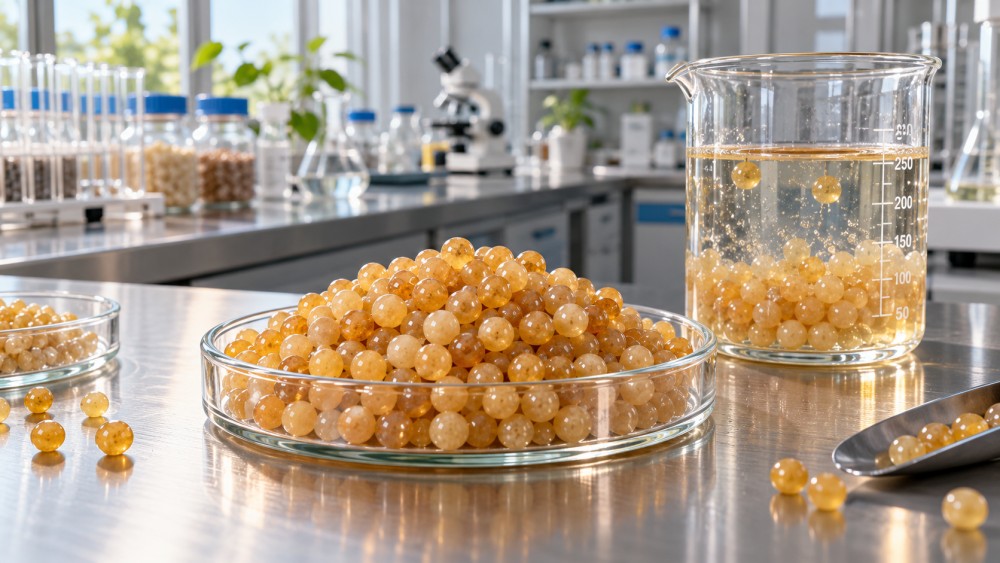
Begin with the intended crop, application timing, growing medium, and nutrient program. A resin suitable for container ornamentals may perform differently in field-applied nitrogen fertilizers.
Translate those conditions into measurable requirements: acceptable initial release, nutrient delivery during peak demand, desired service duration, and the maximum nutrient fraction remaining after harvest.
Specify the temperature range and moisture conditions relevant to use. Laboratory longevity measured at one temperature cannot automatically represent performance across seasons, regions, or production systems.
Also identify the fertilizer core, particle-size distribution, target coating loading, available equipment, and expected handling route. These variables establish whether a promising resin is manufacturable.
Use a written specification to separate mandatory acceptance criteria from preferences. Without this distinction, suppliers may optimize different properties and return samples that cannot be compared meaningfully.
For example, a nursery formulation requiring early nutrient availability needs a different release curve from a product intended to limit nutrient delivery immediately after planting.
Which Resin Systems Merit Technical Screening?
Compare commercial coating formulations rather than assuming that a polymer family guarantees performance. Crosslinking, additives, layer structure, and application quality can outweigh the chemistry label.
Waterborne describes the delivery medium, while biobased describes feedstock origin. Neither term independently establishes controlled-release performance, biodegradability, or suitability for agricultural use in a particular market.
Likewise, a biodegradable formulation must retain its barrier function during nutrient delivery. Premature breakdown can undermine release control, even when eventual degradation meets environmental objectives.
Where multilayer coatings are proposed, evaluate the complete structure. Primers, sealants, waxes, and outer layers may contribute substantially to release behavior and resistance to damage.
Ask suppliers which formulation variables remain adjustable after screening. A promising laboratory sample offers limited development value if its working viscosity or curing conditions cannot be adapted.
Will the Resin Form a Continuous Barrier on Your Granules?
Controlled release commonly depends on water entering the coating, dissolving nutrients, and dissolved species moving outward. Defects can introduce much faster pathways through the barrier.
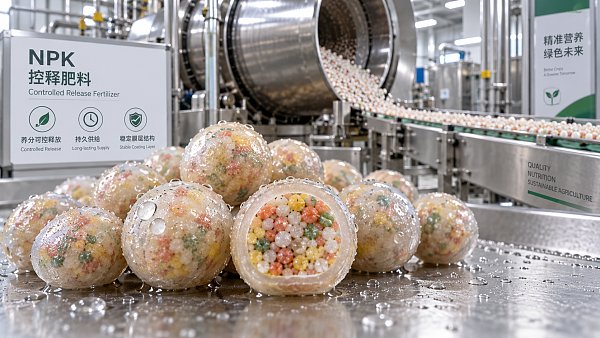
Consequently, average coating thickness is insufficient evidence of quality. Thin spots, pores, incomplete coverage, and cracks may dominate early release despite an acceptable average coating loading.
Evaluate the actual fertilizer substrate because surface roughness, porosity, dust, moisture, and granule strength affect wetting and coverage. Results from smooth model particles may mislead.
Request microscopy of representative coated granules, including cross-sections where useful. Examine thickness distribution and defects across multiple particles instead of selecting only visually attractive examples.
Adhesion and flexibility should be assessed together. Strong adhesion cannot compensate for a brittle film that cracks during bagging, transport, blending, or mechanical fertilizer application.
Coat matched granules at several practical loadings. This reveals whether performance improves predictably or depends on excessive material use that compromises nutrient concentration and economics.
Distinguish coating percentage expressed against core mass from percentage expressed against finished product mass. Confusing these denominators can distort both technical comparisons and purchasing calculations.
How Should You Read Nutrient-Release Test Data?
Never compare release-duration claims without the underlying methods. Temperature, extraction medium, sampling schedule, agitation, and calculation basis can materially change the reported release curve and endpoint.
Ask for cumulative nutrient release against time, including early measurements and the final sampling period. A single longevity value hides release spikes, delays, and incomplete delivery.
Where appropriate, compare times to defined release fractions, such as 10%, 50%, and 80%. Select thresholds that support your specification and any applicable test standard.
Define initial burst explicitly, including its measurement interval. Nutrient detected during the first day has a different practical meaning from nutrient released over the first week.
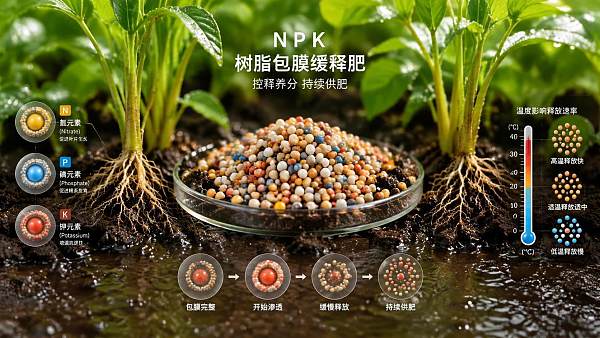
Test at more than one relevant temperature because polymer permeability and nutrient transport often change with temperature. Do not assume the response is linear or universal.
Water immersion tests provide useful screening data, but they do not fully reproduce soil or growing media. Moisture availability, placement, and temperature fluctuations influence practical performance.
Use a recognized method where appropriate, such as EN 13266 for coated fertilizers, while confirming the current edition, scope, and relevance to your product and market.
Require replicates, batch identification, and a clear nutrient mass balance. Where testing permits, assess residual nutrient so incomplete recovery is not mistaken for successful retention.
Advance shortlisted systems into soil or growing-medium trials under representative conditions. Agronomic validation should establish whether nutrient delivery supports the intended application program and crop response.
Can Your Coating Line Reproduce the Laboratory Result?
A resin should fit the operating window of the available process. Review viscosity at application temperature, solids content, wetting behavior, pot life, and curing requirements.
For reactive systems, component ratio and mixing uniformity require particular attention. Small deviations may change network formation, adhesion, permeability, or the presence of unreacted constituents.
For waterborne systems, quantify drying requirements and the effect of water contact on the core. Inadequate drying can cause sticking, poor film formation, or variable performance.
For solvent-containing systems, assess solvent recovery, emissions controls, fire precautions, and residual solvent requirements. These obligations belong in process feasibility and cost calculations from the outset.
Measure bed temperature rather than relying solely on inlet-air settings. Granules experience the actual thermal history, which determines drying, curing, and possible changes to fertilizer quality.
During pilot trials, record agglomerates, fines, wall buildup, throughput, and saleable yield. These indicators reveal manufacturing penalties that small laboratory batches may fail to expose.
Repeat release testing after defined storage and handling conditions. A coating that performs immediately after production may change during aging, abrasion, thermal cycling, or moisture exposure.
Which Supplier Documents Reduce Qualification Risk?
Request technical and safety data sheets, representative certificates of analysis, storage conditions, shelf life, and application guidance. Confirm that each document identifies the exact supplied grade.
Agree specifications for properties that affect processing and performance, such as solids content, viscosity, reactive functionality where relevant, and allowable variation between supplied production batches.
Ask how the supplier controls raw-material changes and communicates formulation changes. A technically successful qualification loses value if later deliveries differ without adequate notice or review.
Environmental claims require evidence matched to the claim. Biobased content, biodegradation, disintegration, and ecotoxicity describe different attributes and should not be treated as interchangeable proof.
For biodegradable claims, review the test environment, duration, temperature, measured endpoint, and tested material. Evidence for one ingredient may not establish behavior of the finished coating.
Check requirements in each destination market, including applicable rules for fertilizer products and polymer coatings. Regulatory assessment should address the commercial formulation and intended use conditions.
Prefer suppliers that can explain failed trials and operating limits. Transparent technical support is more useful during qualification than broad claims of universal substrate compatibility.
Compare Cost per Tonne of Acceptable Fertilizer
Resin price per kilogram is only one input. Compare candidates at coating loadings that achieve equivalent release performance, mechanical durability, and manufacturing acceptance criteria consistently.
Calculate resin consumption per tonne of finished fertilizer, then add other coating ingredients, energy, labor, solvent management where relevant, maintenance, quality control, and production losses.
For illustration, 30 kilograms of coating at $4 per kilogram costs $120 per finished tonne. At 20 kilograms and $5, the material cost becomes $100.
That comparison remains incomplete until both systems meet the same specification. Lower material cost can disappear through slower processing, higher rejection rates, or insufficient handling durability.
Also account for nutrient dilution: increasing coating mass reduces the nutrient concentration of the finished product. Compare economics against nutrient delivered where that supports purchasing decisions.
Build sensitivity estimates around coating loading, resin price, throughput, and rejection rate. These variables often reveal which candidate is commercially robust and which depends on optimistic assumptions.
Make the Final Decision with a Staged Qualification
Begin with document review and substrate compatibility screening, then compare release behavior at realistic coating loadings. Eliminate candidates that fail mandatory requirements before investing in scale-up.
Next, conduct pilot production, storage, and handling assessments, followed by release testing and representative agronomic validation. Confirm repeatability using more than one relevant production batch.
Use a scorecard covering release accuracy, manufacturing consistency, mechanical durability, environmental evidence, supplier reliability, and total cost. Apply mandatory pass criteria before weighting commercial preferences.
The best fertilizer coating resins for controlled release are those that meet the specified nutrient-delivery profile within a repeatable manufacturing process and a defensible documentation package.
Select on demonstrated system performance, then define incoming checks and production controls. This turns a promising resin sample into a coating technology your team can qualify confidently.