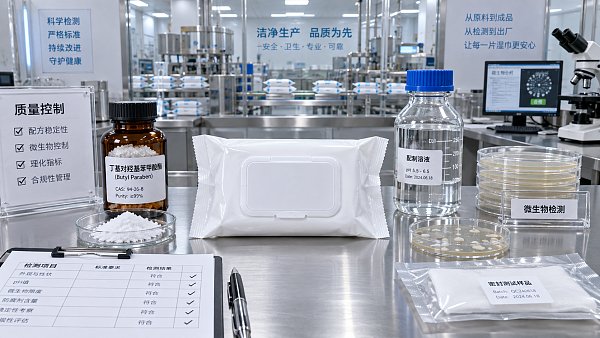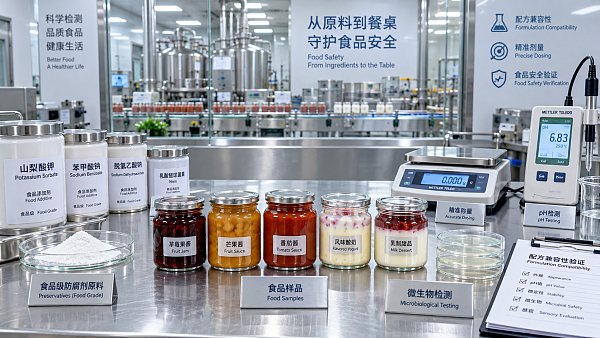
A supplier’s claim of “FDA compliance” is useful only when supported by records relevant to the preservative, its manufacturing controls, and your intended food application.
For quality control and safety teams, evaluating a synthetic food preservatives supplier means checking legal use, ingredient specifications, batch evidence, food safety controls, and traceability.
Before approval, request a documented regulatory basis, agreed specifications, representative and shipment-specific certificates of analysis, and evidence that the manufacturing site controls relevant food safety hazards.
What should the supplier’s compliance package actually prove?
The package should connect four facts: what the ingredient is, why its intended use is lawful, whether each batch meets specifications, and how hazards are controlled.
No single document proves all four. A certificate of analysis cannot establish permitted use, while a regulatory statement cannot demonstrate that a delivered batch passed testing.
Distinguish legally required records from documents requested through your supplier approval program. Suppliers may provide summaries or controlled access rather than unrestricted copies of confidential records.
Which records establish that the preservative is permitted?
Ask for a signed, dated regulatory statement identifying the chemical name, commercial grade, composition, manufacturer, and specific legal basis supporting the proposed United States use.
Depending on the substance and use, that basis may involve a food additive regulation, generally recognized as safe status, or another applicable statutory or regulatory exemption.
A useful statement cites the relevant provision and explains its scope. “FDA compliant,” “food grade,” or a CAS number alone does not establish lawful use.
For blends, request the composition information needed to evaluate every component, including carriers and processing aids where relevant. Confidential disclosure arrangements can protect proprietary formulation details.
Match the authorization to your food and dosage
Check the intended food category, technical function, use level, and any special limitations. Permission in one application does not establish permission in every finished food.
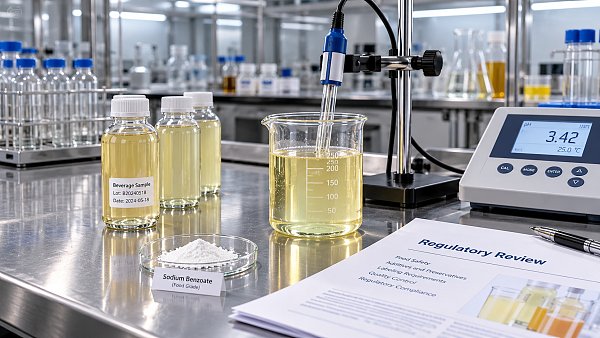
For example, sodium benzoate and potassium sorbate have separate regulatory entries. Review each ingredient’s applicable conditions instead of treating synthetic preservatives as one interchangeable regulatory category.
Request dosage calculations showing the preservative concentration in the finished food. Account for active concentration, blending ratios, carryover sources, and any limits expressed on another basis.
Also check applicable standards of identity and product-specific rules. Meat and poultry applications may require USDA FSIS review alongside the relevant FDA regulatory assessment for ingredients.
Evaluate GRAS evidence beyond a reference number
If the supplier relies on GRAS status, request the supporting conclusion and its scope: substance identity, manufacturing process, specifications, intended uses, exposure assumptions, and safety rationale.
An FDA “no questions” response to a GRAS notice addresses the notifier’s conclusion under stated conditions. It is not blanket FDA approval of every commercial grade.
A GRAS conclusion can exist without an FDA notification. In that case, obtain sufficient supporting information for qualified regulatory review before accepting the supplier’s compliance claim.
What should specifications and batch certificates contain?
The approved specification defines what your business accepts. It should match the purchased grade and provide measurable limits, suitable methods, and clear rules for batch release.
Include identity and assay, plus relevant moisture, physical properties, impurities, and microbiological criteria. Select requirements according to the manufacturing route, application, and documented hazard assessment.
Do not apply every conceivable test to every preservative. Residual solvents, elemental contaminants, or particular reaction byproducts matter when the process or risk assessment makes them relevant.
If a supplier claims conformity with Food Chemicals Codex specifications, identify the applicable monograph and edition. Confirm separately whether any binding regulation incorporates particular specifications or methods.
Make the certificate useful for release decisions
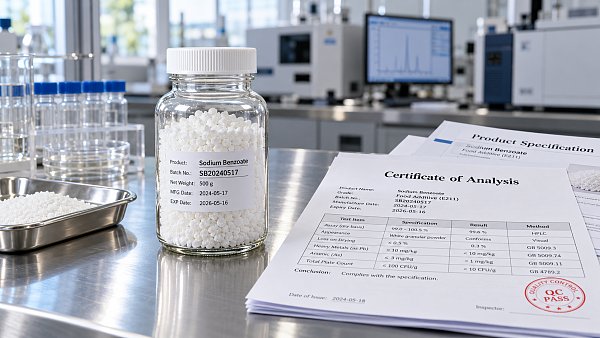
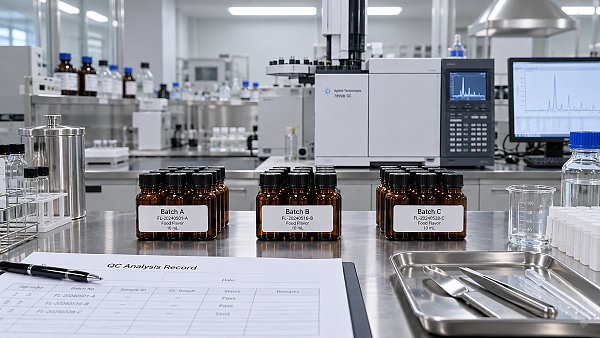
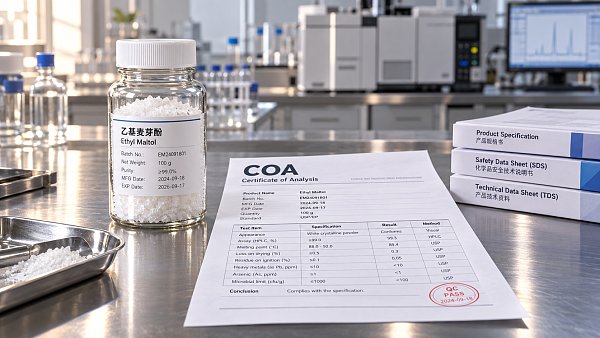
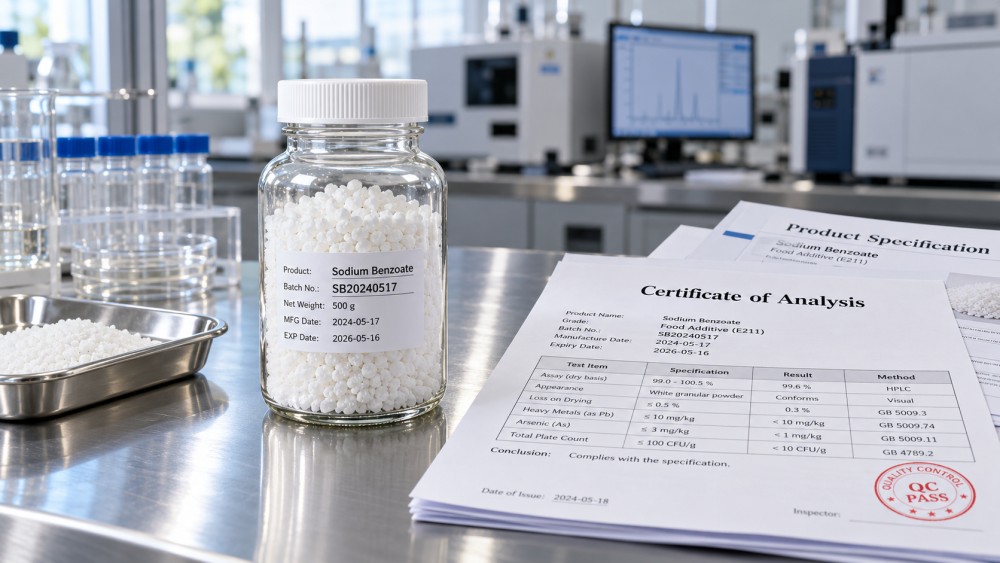
A batch certificate should identify the product, grade, manufacturer or traceable manufacturing source, lot number, applicable specification, test results, units, and authorized quality release information clearly.
Prefer numerical results for quantitative tests. “Pass” can be appropriate for qualitative identification, but unexplained “conforms” entries make assay variation and impurity trends difficult to assess.
Ask which results come from direct batch testing and which rely on periodic testing or other controls. Require a documented justification for the selected testing frequency.
Verify that analytical methods are suitable for the material and limits. For critical low-level impurities, detection or quantitation capability must support the acceptance decision being made.
Set an incoming verification plan based on risk and supplier performance. Independent identity checks and targeted confirmatory testing can help establish confidence in supplier certificates initially.
A safety data sheet supports workplace handling and hazard communication. It does not replace a food specification, batch certificate, or evidence supporting the ingredient’s intended use.
Which manufacturing and food safety records deserve review?
Ask the supplier to explain which requirements of 21 CFR Part 117 apply to its operations, including current good manufacturing practice and preventive controls where applicable.
Request an appropriate assurance package: food safety plan summaries, relevant hazard controls, audit findings, and evidence of corrective action. Full confidential plans need not circulate routinely.
Where preventive control requirements apply, assess whether relevant hazards are addressed through documented controls, monitoring, corrective actions, and verification. A generic policy provides limited assurance alone.
For preservative manufacturers, useful review topics include raw material qualification, contamination prevention, equipment suitability, rework controls, packaging integrity, and management of deviations affecting released product quality.
Request allergen and cross-contact information appropriate to the site and product. Do not assume that a chemically synthesized ingredient automatically eliminates risks introduced through shared facilities.
Read audit certificates within their actual scope
A recognized third-party certification can strengthen supplier assessment, but review the site address, product scope, expiration date, exclusions, and unresolved findings before relying on it alone.
Certification does not establish that your application is legally permitted. Likewise, facility registration does not mean FDA has approved the facility, ingredient, or supplier’s compliance claims.
If registration applies, request confirmation of current status and relevant site identity. FDA does not issue food facility registration certificates; commercial certificates cannot substitute for verification.
Ask about relevant recalls, warning letters, import alerts, and significant regulatory findings. Evaluate the affected products and sites, corrective actions, and evidence that problems were resolved.
Can the supplier trace your shipment and manage changes?
Traceability should connect the delivered container to the manufacturer’s batch and supporting quality records. Distributor paperwork must preserve that connection through repacking, relabeling, or consolidation activities.
Request a description of lot coding, shipment records, complaint handling, and recall procedures. A mock recall summary can demonstrate whether records retrieve affected shipments promptly enough.
Agree on record retention periods that support applicable obligations and your investigation needs. Consider ingredient shelf life, finished product shelf life, distribution time, and contractual requirements.
Require advance notification of changes affecting manufacturing location, synthesis route, raw material sources, specifications, analytical methods, packaging, or regulatory status when these could affect your approval.
Obtain documented storage conditions and shelf life or retest justification. Clarify whether a retest date permits continued use after reassessment under your agreed quality procedures only.
Clarify responsibilities for imported preservatives
For imported ingredients, establish who acts as the FSVP importer and whether the Foreign Supplier Verification Programs requirements apply, including any relevant exemptions or modified requirements.
A supplier questionnaire or certificate does not replace an importer’s applicable obligations. Verification activities should reflect the hazards, supplier performance, and requirements relevant to that import.
Which documentation gaps should delay supplier approval?
Prioritize gaps by their effect on legality, safety, and batch reliability. Some require a purchasing hold; others can be addressed through documented conditions and deadlines.
- Unclear legal basis: The supplier cannot connect the exact ingredient and proposed use to a relevant regulation or adequately supported GRAS conclusion.
- Unreliable batch evidence: Certificates contain mismatched lot numbers, contradictory units, unexplained identical results, or acceptance limits that differ from the agreed specification.
- Broken manufacturing traceability: A distributor cannot identify the manufacturing source or demonstrate a reliable link between the shipment and original batch records.
- Unresolved safety concerns: Significant audit findings, contamination events, or regulatory actions lack documented corrective actions and credible evidence of effectiveness.
- Uncontrolled changes: The supplier changes the site, process, composition, or critical specification without notifying customers and supporting reassessment.
Distinguish suspicious consistency from proof of falsification. Repeated values warrant questions about rounding, reporting conventions, and testing practices before drawing conclusions about certificate authenticity or reliability.
When evidence is incomplete, define the missing record, acceptance criterion, responsible reviewer, and deadline. Escalate unresolved safety or legality questions before authorizing production use of affected material.
How should quality teams turn these records into an approval decision?
Start by documenting your intended food, preservative function, dosage, and market. Then assess regulatory suitability, specification adequacy, manufacturing controls, and traceability against those defined purchasing requirements.
Approve the specific product, manufacturing site, and conditions reviewed. Record any restrictions, incoming testing requirements, notification obligations, and triggers for reassessment in the supplier approval file.
A dependable synthetic food preservatives supplier provides evidence that supports decisions across regulatory, quality, and safety teams. The strongest package connects permitted use with verified batch quality.
The final question is practical: can your team explain why this ingredient, from this site and lot, is acceptable for this food at this use level?