How Do You Evaluate a Fragrance Encapsulation Systems Manufacturer?
A fragrance capsule can smell convincing in a supplier’s demonstration yet lose its benefit after mixing, storage, washing, or application. The practical way to evaluate a fragrance encapsulation systems manufacturer is to require evidence across five areas: compatibility with your formulation, fragrance retention, release under intended use, production consistency, and documentation for the target market. A strong initial scent is not enough to qualify a supplier.
Start with a written application brief and an agreed test protocol, then compare laboratory samples, representative production batches, and pilot-line results against the same acceptance criteria. This approach helps separate capsule failures from fragrance selection, processing damage, and testing artifacts before a purchasing decision creates reformulation or scale-up costs.
Define the application before comparing capsule technologies
“Long-lasting fragrance” is too broad to serve as a specification. A fabric conditioner may require deposition on textiles followed by release during handling. A hard-surface cleaner may need fragrance delivery during wiping without persistent visible residue. Personal care products introduce different skin-contact, sensory, and preservation requirements. A system that succeeds in one application may be unsuitable for another.
Give each candidate manufacturer the same brief. Include:
- Formulation conditions: pH range, surfactant types, electrolyte content, solvents, preservatives, and any oxidizing or reducing ingredients.
- Manufacturing exposure: addition sequence, mixing equipment, pumping, filtration, temperature, holding time, and filling conditions.
- Use conditions: dilution, substrate, rinsing, drying, friction, moisture, and the intended timing of fragrance perception.
- Commercial boundaries: target markets, packaging, shelf-life objective, appearance requirements, and allowable formulation changes.
Where composition is confidential, use a nondisclosure agreement or disclose functional ranges sufficient for screening. Without relevant formulation information, a supplier’s compatibility recommendation remains provisional.
Ask what is being supplied—and what each number means
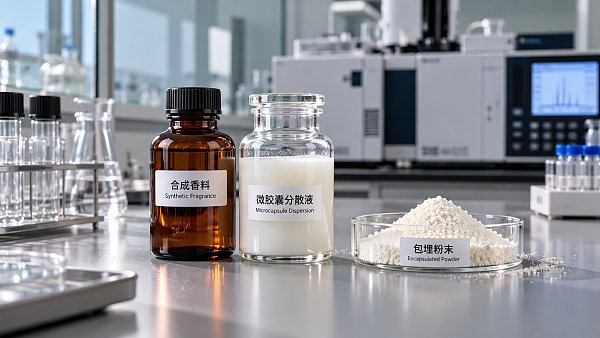
Before evaluating performance, establish whether the sample is an aqueous capsule slurry, a dry powder, or a formulated delivery blend. Request specifications for capsule solids, fragrance content, free fragrance, particle-size distribution, viscosity, pH, and storage conditions as applicable. Clarify whether percentages refer to the supplied product, dry capsule mass, or fragrance charged during manufacture.
Encapsulation efficiency is not the same as fragrance loading. A high proportion of the fragrance feed may be encapsulated while the supplied slurry still contains relatively little fragrance. Likewise, total fragrance analysis does not reveal how much remains inside intact capsules. Comparisons based only on product dosage or slurry price can therefore be misleading.
Match shell properties to the intended release mechanism
Ask the manufacturer to explain the shell material family, relevant surface treatment, and intended release mechanism. Polymer-based, inorganic, and hybrid shells can differ in permeability, mechanical strength, surface charge, and environmental behavior. Broad chemistry labels alone do not predict application performance; shell construction and the fragrance core also matter.
A friction-triggered capsule must survive production and storage but release under realistic handling. A diffusion-based system needs a suitable release rate rather than simply maximum shell strength. Require evidence that the proposed mechanism operates on the intended substrate, not only when concentrated capsules are crushed between fingers.
Fragrance composition also affects shell formation and migration. Ask whether changing the perfume requires requalification, which ingredients create compatibility limits, and whether the sample fragrance is representative of your intended composition.
Build a test sequence that exposes failure modes
Use staged testing rather than a single finished-product sniff assessment. Establish an incoming baseline, test immediately after incorporation, repeat after relevant processing, and assess stored product before evaluating use-stage release. This sequence helps identify where performance is being lost.
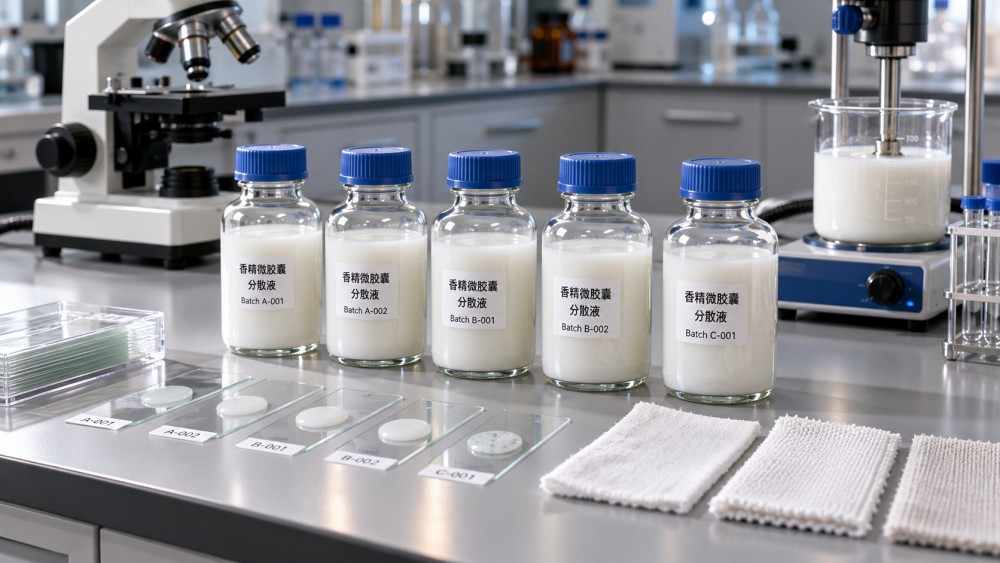
Include an unfragranced base, a suitable free-fragrance control, and an existing benchmark where available. For delivery-system comparisons, account for actual fragrance content rather than adding equal masses of different slurries. Where a product combines free and encapsulated fragrance, assess their contributions separately so immediate scent does not mask weak capsule performance.
Check whether the analytical method answers the question
Microscopy can reveal broken capsules or aggregation, but intact-looking shells do not prove fragrance retention. Chemical extraction can quantify fragrance, but an extraction that ruptures every capsule cannot independently measure leakage. Ask how the method separates free and encapsulated fragrance, whether sample preparation damages capsules, and how recovery and repeatability were established.
Headspace measurements can support release comparisons when temperature, equilibration time, agitation, and sample geometry are controlled. They do not replace sensory evaluation: instrument response and perceived odor are not interchangeable. Use blinded, randomized sensory comparisons with defined substrate preparation and release conditions, and distinguish intensity from changes in fragrance character.
Stress the formulation without creating irrelevant failures
A capsule dispersion may remain stable in water but aggregate in a concentrated surfactant base. Electrolytes can alter dispersion behavior; solvents and surfactants may encourage fragrance migration; pH can affect shell stability. These effects need testing in the complete formulation because isolated ingredient screens cannot capture every interaction.
Track both capsule performance and finished-product quality. Separation, sedimentation, viscosity drift, color change, residue, or loss of pourability may disqualify a system even when fragrance retention is acceptable. Sedimentation is not necessarily irreversible failure, but redispersibility must be demonstrated under realistic storage and handling conditions.
For processing trials, reproduce meaningful exposure rather than matching mixer speed alone. Equipment geometry, shear history, pump type, recirculation passes, and addition point can change capsule damage. Ask the manufacturer for supported processing limits and test the most demanding credible conditions on your line.
Accelerated storage is useful for screening, but elevated temperature may create failure mechanisms that differ from normal storage. Combine relevant stress testing with real-time stability work. Evaluate the intended package where fragrance migration, sorption, closure compatibility, or appearance could affect acceptance.
Verify that the manufacturer can reproduce the sample
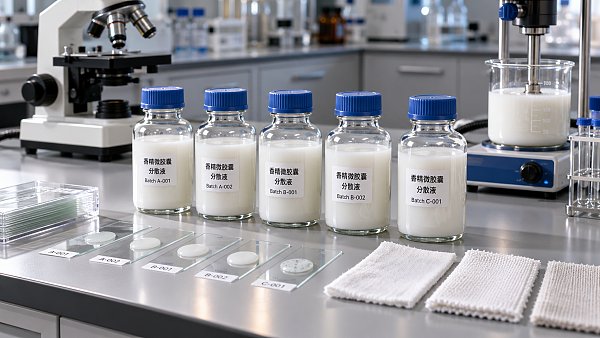
A successful development sample demonstrates feasibility, not manufacturing capability. Request results from multiple representative batches and establish whether samples came from laboratory, pilot, or commercial equipment. Compare distributions and variability, not just average values.
Particle-size tails deserve attention. Oversized material can contribute to visible defects or equipment problems, while small particles may behave differently during deposition and release. Ask whether the method reports a number-based or volume-based distribution and whether sample preparation breaks aggregates or changes the measured population.
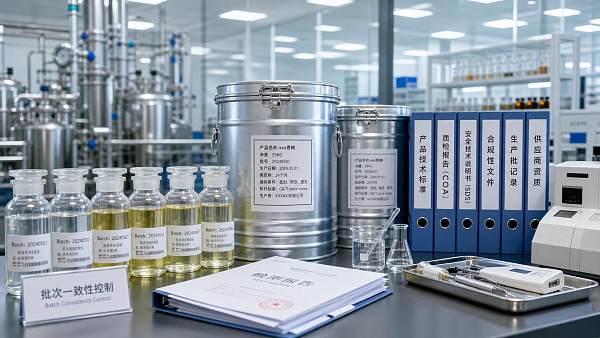
The supplier’s control plan should identify critical raw materials, in-process checks, release specifications, and actions taken when a batch approaches a limit. A certificate of analysis is more useful when it reports measured values for meaningful attributes than when it simply states “passes.”
Confirm traceability from fragrance and shell raw materials to finished lots, retention-sample practices, and change-notification procedures. Changes to fragrance composition, shell materials, manufacturing site, or processing conditions may require requalification. Define notification and approval expectations before commercial supply begins.
Treat regulatory and safety evidence as qualification gates
Documentation must address the actual composition, intended use, and destination market. Request a current safety data sheet, technical data sheet, relevant substance-status information, and application-specific supporting statements. Distinguish the obligations associated with the capsule system from those of the fragrance and the finished product.
Where relevant, investigate residual monomers, crosslinkers, solvents, preservatives, sensitizing constituents, and other substances of concern. A safety data sheet alone may not provide enough detail for product safety assessment. Confidential composition information may need to pass directly to the responsible safety assessor under appropriate protections.
Do not accept “biodegradable,” “natural,” or “microplastic-free” as self-explanatory specifications. Ask what material was tested, which method and conditions were used, and what the result supports. Shell degradation, complete-system degradation, and environmental fate are different questions. Applicability of polymer-particle restrictions or exemptions requires assessment against the relevant market’s definitions and use conditions.
For aqueous systems, request preservation and microbiological quality information appropriate to the material and application. For powders, assess dust exposure and handling information. These are qualification issues, not documents to collect after the formulation has been finalized.
Use technical support and economics to make the final selection
Evaluate support through a real technical question. Provide the conditions behind a failure—such as reduced release after pumping—and assess whether the supplier requests useful evidence, proposes controlled comparisons, and explains uncertainty. A recommendation to increase dosage without investigating leakage, deposition, or mechanical damage is a warning sign.
Before approval, agree on the following responsibilities:
- Who conducts compatibility, stability, analytical, and sensory testing, and which methods govern acceptance.
- Which formulation and process limits are supported, including storage and redispersion requirements.
- How deviations, complaints, retained samples, and corrective actions will be handled.
- What changes trigger notification, additional testing, or renewed approval.
Compare economics only after technical and documentation gates are passed. Calculate cost at the validated use level, including delivered fragrance content, processing changes, handling losses, testing, packaging, and any shelf-life constraints. A cheaper slurry can cost more in use if it requires higher dosage or introduces production losses.
The final decision should identify approved conditions, unresolved risks, and the evidence needed to close them. A supplier that performs well in laboratory screening but lacks representative production data may justify a controlled pilot, not unrestricted approval. Commercial qualification is strongest when the capsule system has passed through the intended formulation, process, package, storage conditions, and use-stage evaluation with documented acceptance criteria.
Facing technical bottlenecks in manufacturing or looking for more efficient industrial solutions? Leave your details below and let the engineering experts at FCAS solve them for you.
We respect your privacy. Your information is strictly confidential.
Related News
 Microencapsulated FragrancesHow Can Citrus Terpene Fragrances Stay Fresh in Formulations?Keep citrus terpene fragrances fresh for longer. Explore practical formulation, packaging, and testing strategies to protect their vibrant scent.MORE+
 Microencapsulated FragrancesHow Fragrance Encapsulation Systems for Detergents WorkDiscover how fragrance encapsulation systems for detergents protect perfume, deposit on fabric, and release scent—and learn how to choose the right system.MORE+
 Microencapsulated FragrancesHow to Choose a Reliable Fragrance Carriers SupplierChoose a reliable fragrance carriers supplier with confidence. Compare formulation fit, quality controls, documentation, supply risks, and total cost.MORE+
 Microencapsulated FragrancesHow Can Microencapsulation Help Essential Oil Blends Last Longer?Essential Oil Blends can retain their aroma longer with the right microencapsulation strategy. Explore carrier choices, release mechanisms, and stability testing.MORE+
 Microencapsulated FragrancesHow to Choose a Fragrance Capsules Manufacturer for Your ProductChoose the right fragrance capsules manufacturer with practical tips on formulation testing, quality specifications, compliance, and supply reliability.MORE+
 Microencapsulated FragrancesHow to Choose Fragrance Bases for Consistent Product ScentFragrance Bases can make or break scent consistency. Learn how to compare performance, stability, supplier controls and true cost before you buy.MORE+
 Microencapsulated FragrancesHow to Choose an Encapsulated Perfumes ManufacturerChoose an encapsulated perfumes manufacturer with confidence. Compare fragrance performance, true costs, quality, compliance, and supply reliability.MORE+
 Microencapsulated FragrancesHow to Choose a Fabric Fragrances ManufacturerChoose a fabric fragrances manufacturer with confidence. Learn how to compare scent performance, quality controls, documentation, costs, and supply reliability.MORE+
 Microencapsulated FragrancesHow to Keep Encapsulated Perfumes for Fabric Care Fresh LongerKeep encapsulated perfumes for fabric care fresh longer with practical storage, handling, formulation and testing tips that help preserve lasting fragrance.MORE+
 Microencapsulated FragrancesHow to Choose Home Fragrances for Room Sprays That LastDiscover how to choose home fragrances for room sprays that last, with practical tips on scent longevity, formula compatibility, and testing.MORE+
 Microencapsulated FragrancesHow to Choose Bulk Cyclodextrins for Fragrance EncapsulationChoose bulk cyclodextrins for fragrance encapsulation with confidence. Compare formulation fit, scent retention, supplier quality, and total cost.MORE+
 Microencapsulated FragrancesHow to Choose Stable Synthetic Aroma Chemicals for EncapsulationChoose stable synthetic aroma chemicals for encapsulation with confidence. Learn how to assess compatibility, verify supplier quality, and protect aroma through storage and release.MORE+
 Microencapsulated FragrancesHow Do You Evaluate a Fragrance Encapsulation Systems Manufacturer?Evaluate a fragrance encapsulation systems manufacturer for compatibility, scent retention, quality, and compliance. Discover key checks to reduce risk and choose the right supplier.MORE+
 Microencapsulated FragrancesHow Does Microencapsulation Affect the Release of Fine Fragrances?Fine Fragrances meet controlled release: discover how microencapsulation shapes scent longevity, aroma balance, and performance—and what to test before choosing a system.MORE+
 Microencapsulated FragrancesHow Do Fragrance Bases Affect Scent Release After Encapsulation?Discover how Fragrance Bases shape scent release after encapsulation. Explore volatility, shell compatibility, and testing strategies to improve lasting aroma and product performance.MORE+
 Microencapsulated FragrancesHow Microencapsulation Helps Personal Care Fragrances Last LongerPersonal Care Fragrances can last longer with microencapsulation. Discover how controlled release, formula compatibility, and testing help deliver a lasting scent experience.MORE+
 Microencapsulated FragrancesHow to Select Air Freshener Fragrances That Last in Car FreshenersDiscover how to select air freshener fragrances for car fresheners with lasting appeal, balancing scent performance, carrier compatibility, heat stability, and packaging.MORE+
 Microencapsulated FragrancesHow Encapsulated Perfumes for Fabric Care Improve Scent LongevityEncapsulated perfumes for fabric care extend scent longevity through controlled release, fiber deposition, and smarter formulation—discover how to create lasting fragrance experiences.MORE+
 Microencapsulated FragrancesHow Fragrance Carriers for Detergents Improve Scent PerformanceFragrance carriers for detergents improve stability, fabric deposition, and long-lasting scent. Explore practical solutions for better wash-to-wear fragrance performance.MORE+
 Microencapsulated FragrancesHow to Add Encapsulated Laundry Fragrances Without Weakening Wash ResultsEncapsulated laundry fragrances: learn how to boost long-lasting scent while protecting cleaning power, stability, foam control, and fabric care.MORE+
 Microencapsulated FragrancesHow Laundry Fragrances for Liquid Detergents Improve Scent LongevityLaundry fragrances for liquid detergents: discover how fragrance design, deposition, and encapsulation create lasting fabric freshness and stronger product appeal.MORE+
 Microencapsulated FragrancesHow Fragrance Delivery Systems Improve Fabric Softener LongevityFragrance delivery systems for fabric softeners improve scent longevity through smart protection, reliable deposition, and controlled release for lasting freshness.MORE+
 Microencapsulated FragrancesEssential Oil Extracts Compared for Fragrance and Wellness UsesEssential Oil Extracts compared for fragrance and wellness: explore scent profiles, extraction methods, stability, safety, and sourcing insights for smarter formulation choices.MORE+
 Microencapsulated FragrancesHow Aroma Chemicals Shape Lasting Fine Fragrance PerformanceAroma chemicals for fine fragrance enhance longevity, diffusion, and signature retention. Discover how smart material selection creates stable, premium scent performance.MORE+
 Microencapsulated FragrancesHow Encapsulated Laundry Fragrances Improve Scent LongevityEncapsulated laundry fragrances deliver controlled scent release for longer-lasting freshness on fabrics. Discover how they improve deposition, durability, and re-bloom.MORE+
 Microencapsulated FragrancesHow to Select Perfume Ingredients for Long-Lasting FragrancePerfume Ingredients guide: learn how to select balanced, long-lasting fragrance materials for fine fragrance, personal care, laundry, and home care products.MORE+
 Microencapsulated FragrancesHow Fragrance Encapsulates Extend Scent Performance in Household ProductsFragrance encapsulates for household products deliver longer-lasting scent in laundry, fabric care, and cleaners. Discover release triggers, formula compatibility, and practical selection tips.MORE+
 Microencapsulated FragrancesWater Soluble Air Freshener Fragrances That Prevent CloudinessWater soluble air freshener fragrances: learn how to prevent cloudiness with smarter fragrance selection, solubilizers, water quality, and stability testing.MORE+
 Microencapsulated FragrancesHow Cyclodextrin Inclusion Complexes for Fragrances Improve Scent LongevityCyclodextrin inclusion complexes for fragrances enhance scent longevity through controlled release, improved stability, and application-specific performance. Discover how to optimize lasting aroma.MORE+
 Microencapsulated FragrancesHow Microencapsulated Fragrance Systems Improve Long-Lasting ScentMicroencapsulated fragrance systems protect scent, control release triggers, and deliver longer-lasting fragrance across laundry, personal care, and cleaning products.MORE+
 Microencapsulated FragrancesHow Aroma Chemicals Shape Consistent Fragrance PerformanceAroma Chemicals shape fragrance stability, diffusion, solubility, and lasting sensory appeal. Explore practical strategies for reliable performance across product formulas.MORE+
 Microencapsulated FragrancesWhat to Look for in a Scratch and Sniff Fragrances ManufacturerScratch and sniff fragrances manufacturer guide: evaluate encapsulation, print compatibility, compliance documents, quality control, and total sourcing cost for reliable sensory campaigns.MORE+
 Microencapsulated FragrancesWhat a Reliable Perfume Compounds Manufacturer Should Offer in 2026Perfume compounds manufacturer selection in 2026 demands more than scent creativity. Learn how to assess consistency, compliance, scalability, and supply reliability before you buy.MORE+
 Microencapsulated FragrancesHow Fragrance Capsules for Detergents Improve Scent LongevityFragrance capsules for detergents help protect perfume during washing and release scent gradually, keeping clothes fresher longer. Learn how they work and why they’re worth choosing.MORE+
 Microencapsulated FragrancesWhy Terpene Fragrances Supplier Options Matter in Premium Scent DevelopmentTerpene fragrances supplier selection shapes premium scent quality, stability, compliance, and scale. Discover how to choose the right partner for safer, more consistent fragrance development.MORE+