What Should You Check When Buying Low-Residue Surfactants in Bulk?
What Should You Check When Buying Low-Residue Surfactants in Bulk?
Buying low residue surfactants wholesale involves more than comparing prices and minimum order quantities. The real challenge is verifying that a supplier’s “low-residue” claim translates into reliable cleaning and rinsing under your process conditions. A material that performs well on a flat laboratory coupon may behave differently inside a machined component, a recirculating wash system, or a formulation containing salts and solvents.
Before committing to bulk volumes, establish what residue means for your application, how it will be measured, and what happens when a batch falls outside expectations. Packaging, storage, and supply continuity matter too. The cheapest drum is not necessarily the lowest-cost material once rinsing, rejected parts, and production interruptions enter the calculation.
Turn “low residue” into a purchasing specification
Treat low residue as a performance claim, not a universally defined chemical grade. Depending on the supplier, it may refer to easy rinsing, low inorganic ash, reduced visible streaking, or low contamination after a specified cleaning cycle. Those properties are related, but they are not interchangeable.
For a metal component awaiting adhesive bonding, the concern may be an organic film that interferes with adhesion. In electronics cleaning, ionic contamination may require separate attention. On a polished surface, visible spotting could be the immediate acceptance criterion, although appearance alone cannot establish chemical cleanliness.
Ask the supplier to identify exactly what its claim covers: residue on the cleaned surface, contamination in the final rinse, or impurities in the supplied ingredient. Then define the substrate, working concentration, wash temperature, rinse sequence, drying conditions, and acceptance limit. Without these details, two apparently comparable quotations may describe very different performance.
Also distinguish a surfactant ingredient from a formulated cleaner. Builders, corrosion inhibitors, solvents, preservatives, and defoamers can change the residue profile. Qualifying one raw material does not automatically qualify the finished cleaning formulation.
Ask what the test actually measures
A useful supplier report explains the method, sample preparation, detection capability, and test conditions—not just a pass result. “Not detected” means little if the method cannot detect contamination below your acceptance limit.
For demanding applications, combine a relevant analytical measurement with the downstream operation that matters. A surface may look clean yet bond poorly. Conversely, a detectable trace may be acceptable if it remains within an established process limit. Do not impose an arbitrary “zero residue” requirement that neither side can meaningfully verify.
Qualify the rinse process—not just the sample bottle
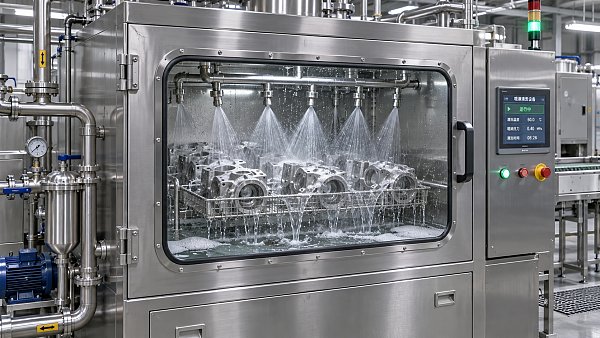
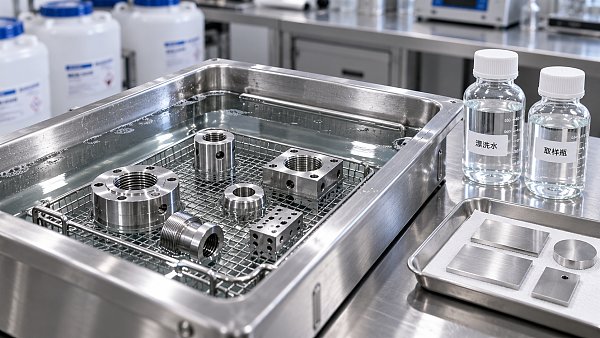
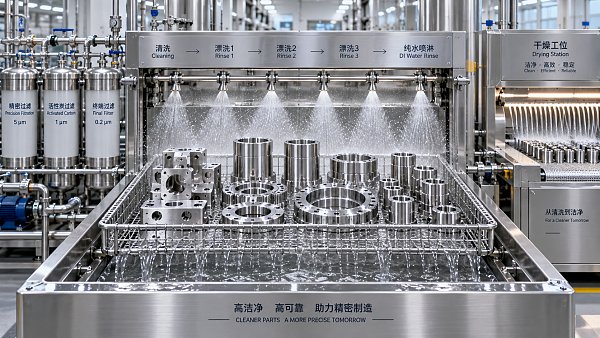
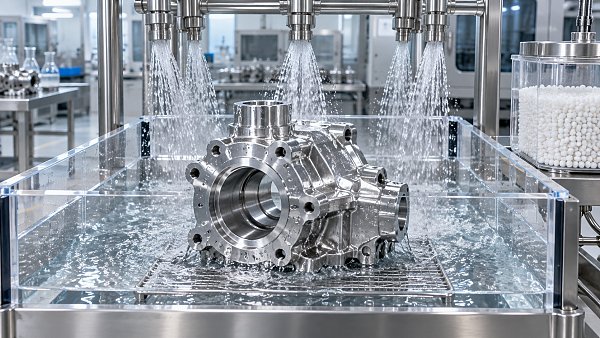
Start with representative soils and production materials. Include difficult geometries such as blind holes, threads, and narrow channels where liquid can remain trapped. Use your actual water quality: results obtained with laboratory deionized water may not transfer to a plant using harder incoming water.
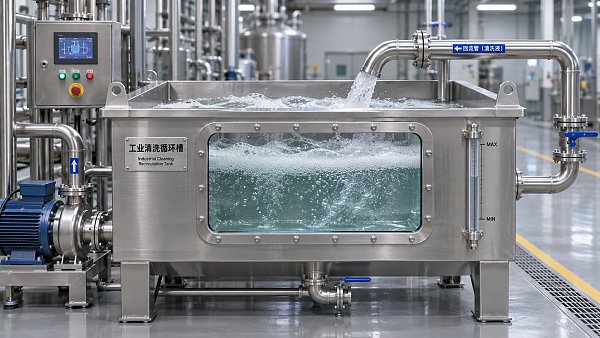
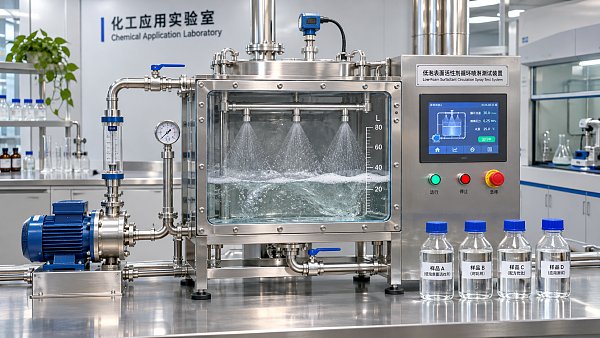
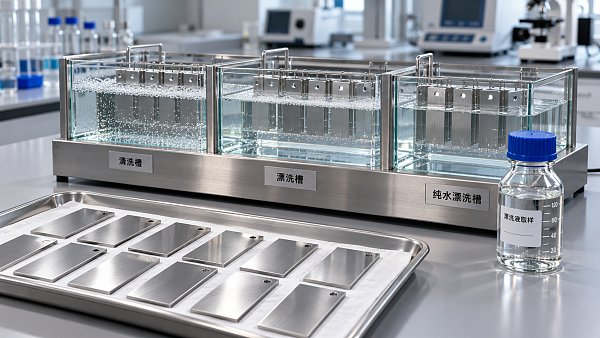
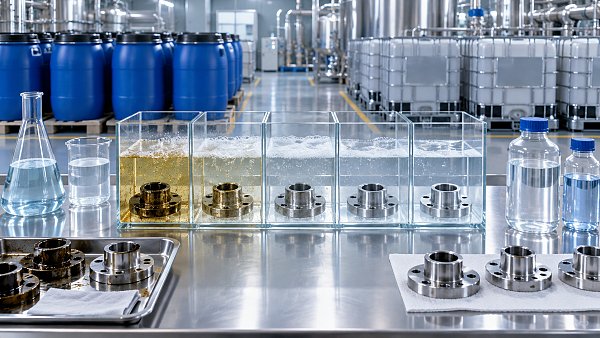
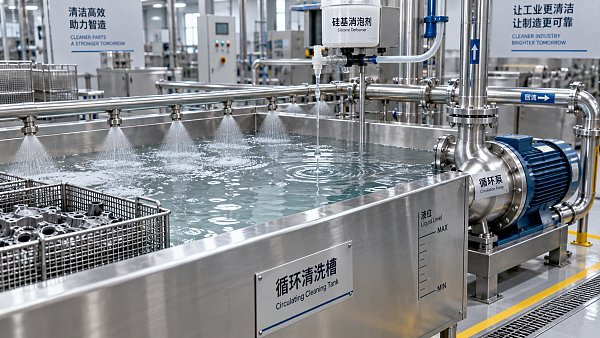
Run the candidate against the current material under matched conditions. Record soil removal, rinse demand, foam behavior, drying marks, and downstream acceptance. Then challenge it within the operating window, including cooler rinses, elevated soil loading, and the longest normal bath age. A fresh-bath demonstration is not enough for a recirculating production line.
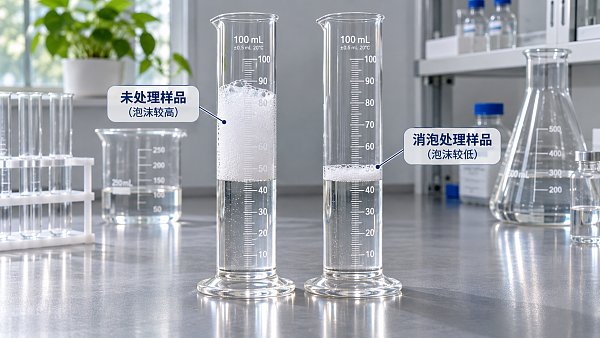
For ethoxylated non-ionic surfactants, ask for cloud-point information with the measurement conditions stated. Temperature, salts, and formulation ingredients can affect phase behavior. Low foam is valuable in spray equipment, but it is not evidence of low surface residue.
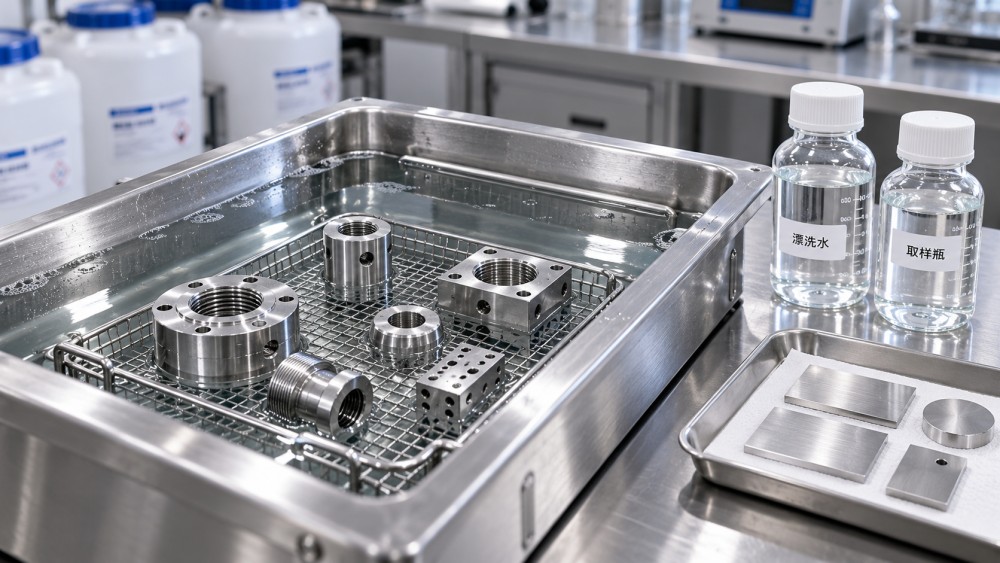
Check material compatibility during the same trial. Aluminum, copper alloys, elastomer seals, plastics, and coated surfaces may respond differently to the complete formulation. Evaluate discoloration, swelling, stress cracking, or corrosion where relevant. Better rinsing does not compensate for damaged parts.
Find out whether bulk deliveries will match the approved sample
A qualification sample proves little if its production source is unclear. Ask whether it came from a commercial batch made at the proposed supply site. Review certificates of analysis from multiple recent lots and distinguish typical values from contractual release limits.
The relevant controls depend on the chemistry. Active content, water content, pH at a defined dilution, viscosity at a stated temperature, and cloud point may affect dosing or performance. For sensitive processes, trace metals, inorganic salts, or specific manufacturing by-products may need separate limits. An SDS is not an impurity specification.
Ask whether the same commercial grade can come from different manufacturing sites or feedstock routes. A shared product name does not establish identical process behavior. Set written notification requirements for changes to composition, production location, critical raw materials, and packaging. Retain an approved reference sample and an incoming sample from each delivery, with storage conditions and retention periods defined.
Separate safety documents from application approval
Request a current safety data sheet, technical data sheet, agreed specification, and batch certificate of analysis. These documents serve different purposes. None independently proves that a surfactant is suitable for a food-processing environment, a crop-protection formulation, or a high-purity cleaning operation.
For regulated applications, obtain statements tied to the exact grade, intended use, and destination market. Food-contact suitability, chemical inventory status, restricted substances, and wastewater obligations require application-specific review. “Biodegradable” does not mean residue-free, and “low residue” does not establish low toxicity or unrestricted discharge.
This distinction matters across the sectors covered by Global Fine Chemicals & Agrochemical Intelligence Network (FCAS). Rinsability may be central to an industrial cleaner, while an agricultural adjuvant may be selected partly for deposition or retention. The same marketing phrase should not replace different application requirements.
Compare offers on usable performance and delivered cost
Price per kilogram is only a starting point. Where products are technically comparable, normalize quotations by active content:
Delivered cost per kilogram of active material = delivered product cost per kilogram ÷ active-content mass fraction.
That calculation corrects for dilution, not performance. Different surfactant chemistries may require different working concentrations, so purchasing should ultimately compare cost per accepted production output.
Include chemical consumption, rinse water, heating, wastewater handling, bath replacement, inspection, and rework. Count freight and container charges too. A higher-priced candidate may be economical if a trial demonstrates reduced rinsing or fewer rejects. Without that evidence, those savings remain assumptions.
Concentration also creates trade-offs. A high-active grade can reduce freight and storage volume but may require heated transfer or more careful dilution. A lower-active product may suit an existing dosing system better. Check pumpability at the lowest expected handling temperature rather than relying only on room-temperature viscosity.
Inspect the container and the supply arrangement
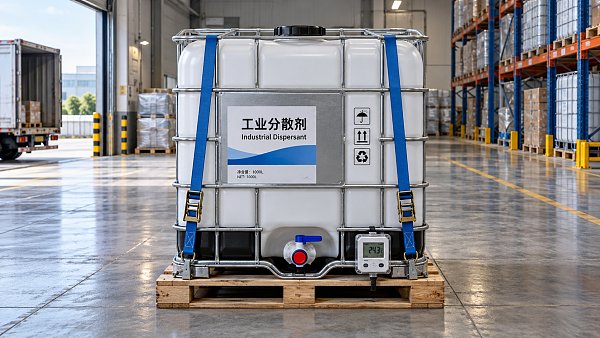
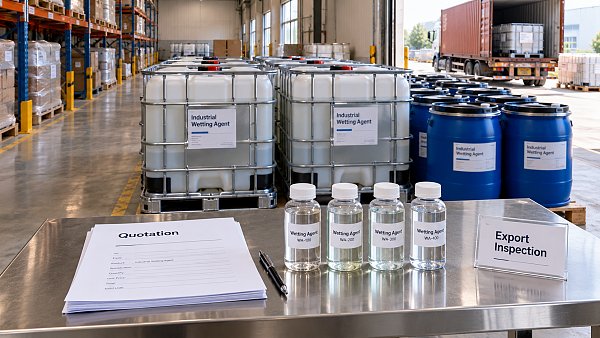
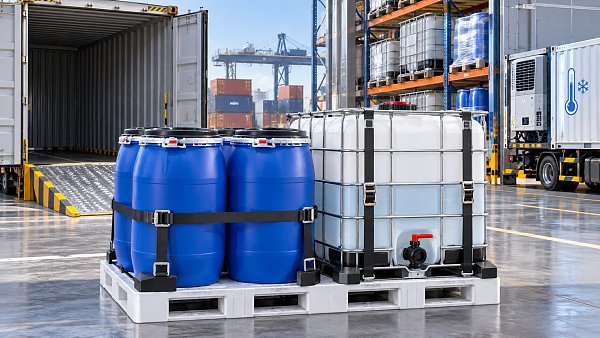
Bulk packaging can compromise an otherwise suitable grade. Establish container compatibility, closure integrity, tamper evidence, and cleanliness requirements. Reconditioned intermediate bulk containers are not automatically unacceptable, but previous contents and cleaning controls require scrutiny when contamination limits are tight.
For tanker deliveries, review previous-cargo restrictions, cleaning records, hoses, unloading connections, and dedicated-equipment requirements where justified. At your own site, confirm that transfer lines and storage tanks will not introduce contaminants. Supplier purity cannot compensate for a dirty receiving system.
Obtain written storage guidance, shelf life, and instructions for any permitted recovery after cold exposure or separation. Ask whether gentle warming or mixing is acceptable; do not assume it will restore a product without affecting quality. Agree on minimum remaining shelf life at delivery, especially when bulk discounts encourage larger orders.
Supply continuity deserves equally specific questions: normal and extended lead times, production-site concentration, distributor stock arrangements, and the process for handling a rejected lot. An alternative source is useful only if its grade has been qualified. Emergency substitution under the same generic chemical name can create expensive process surprises.
Make the first bulk order conditional on clear acceptance terms
Before issuing the purchase order, align procurement, production, quality, and the supplier on the approved grade, manufacturing source, test methods, release limits, and required documents. Define how disputed results will be investigated, who authorizes release, and what replacement or return arrangements apply.
Where practical, move from a representative sample to a controlled production trial before taking a large inventory position. Release the first bulk delivery only after agreed incoming checks. The strongest purchasing decision is not the offer carrying the boldest low-residue claim; it is the one whose performance, batch controls, and delivered operating cost you can verify.
Facing technical bottlenecks in manufacturing or looking for more efficient industrial solutions? Leave your details below and let the engineering experts at FCAS solve them for you.
We respect your privacy. Your information is strictly confidential.
Related News
 Non-ionic Surfactants & DefoamersHow Do Low Foam Ethoxylated Surfactants Perform in Cleaning?Discover how low foam ethoxylated surfactants balance cleaning power and foam control, and learn what to test before selecting one for your process.MORE+
 Non-ionic Surfactants & DefoamersChoosing Low Residue Surfactants for Hard Surface CleaningLow residue surfactants for hard surface cleaning: discover how to compare cleaning performance, rinseability, residue testing, and total cost.MORE+
 Non-ionic Surfactants & DefoamersEPA Adopts Human Airway Tissue Method for Surfactant Inhalation Risk AssessmentEPA surfactant inhalation risk assessment may use human airway tissue. Explore potential impacts for industrial cleaners and the details still to verify.MORE+
 Non-ionic Surfactants & DefoamersWhy Do Low Foam Linear Alcohol Ethoxylates Still Cause Foam?Why do low foam linear alcohol ethoxylates still foam? Discover common causes and practical troubleshooting tips to restore consistent performance.MORE+
 Non-ionic Surfactants & DefoamersHow to Measure Foam Control Efficiency in Cleaning DefoamersMeasure cleaning defoamers foam control efficiency with practical tests, dose-response analysis, and plant trials to find the right solution for your process.MORE+
 Non-ionic Surfactants & DefoamersWhat to Check Before Choosing a Low Foaming Surfactants FactoryChoosing a low foaming surfactants factory? Discover how to assess foam performance, quality controls, documentation, supply reliability, and true working costs.MORE+
 Non-ionic Surfactants & DefoamersHow Non Ionic Wetting Agents Improve Surface CoverageDiscover how non ionic wetting agents improve surface coverage in coatings, cleaning, and sprays, and learn how to select and test the right formulation.MORE+
 Non-ionic Surfactants & DefoamersDo Industrial Dispersants Require Special Handling During Transport?Do industrial dispersants require special handling during transport? Discover how to protect product quality, meet shipping rules, and prevent costly delays.MORE+
 Non-ionic Surfactants & DefoamersCalifornia OEHHA Proposes Proposition 65 Cancer Listing for PFHxA and Its SaltsPFHxA and its salts face a proposed California Proposition 65 cancer listing. Explore what the OEHHA notice could mean for suppliers and compliance.MORE+
 Non-ionic Surfactants & DefoamersWhat Should a Quote From an Industrial Wetting Agents Exporter Include?Choosing an industrial wetting agents exporter? Learn what a complete quote should include, from product specs and active content to shipping terms, compliance, and true landed costs.MORE+
 Non-ionic Surfactants & DefoamersBASF Starts Up Expanded APG Production in Cincinnati to Serve North American DemandBASF expands APG production in Cincinnati to meet North American demand. Explore how added capacity supports local supply of bio-based, biodegradable surfactants.MORE+
 Non-ionic Surfactants & DefoamersWhat Should You Check When Buying Low-Residue Surfactants in Bulk?Buying low residue surfactants wholesale? Learn how to verify residue claims, assess batch consistency, and compare total costs before your next bulk order.MORE+
 Non-ionic Surfactants & DefoamersBASF Raises Bid for Evonik to €24 a ShareBASF raises its Evonik takeover bid to €24 a share, valuing the offer above €11 billion. Explore the revised terms, German plant pledges and employment guarantees.MORE+
 Non-ionic Surfactants & DefoamersWhen Do High Spreading Adjuvant Systems Improve Leaf Coverage?Discover when high spreading adjuvant systems improve leaf coverage on waxy foliage, and learn how to balance wetting, retention, compatibility, and crop safety for better spray performance.MORE+
 Non-ionic Surfactants & DefoamersHow Do You Evaluate a Low Residue Surfactants Supplier for Cleaning?Evaluate a low residue surfactants supplier with proven residue tests, batch consistency, and rinse performance. Learn how to reduce cleaning risks and choose with confidence.MORE+
 Non-ionic Surfactants & DefoamersHow Do Tank Mix Adjuvant Systems Affect Herbicide Spray Performance?Explore how tank mix adjuvant systems affect herbicide coverage, drift, and uptake. Get practical tips to check compatibility, choose additives, and improve spray performance.MORE+
 Non-ionic Surfactants & DefoamersHow Does Ethoxylation Affect Octylphenol Ethoxylates as Emulsifiers?Choosing an octylphenol ethoxylates emulsifier? Discover how ethoxylation affects HLB, cloud point, and stability to select the right grade for your formulation.MORE+
 Non-ionic Surfactants & DefoamersWhen Do Industrial Wetting Agents Improve Pesticide Spray Coverage?Do industrial wetting agents improve pesticide spray coverage? Discover when they help, how to test retention and compatibility, and what to check for crop safety before selecting an adjuvant.MORE+
 Non-ionic Surfactants & DefoamersHow Do Amine Oxides Affect Foam Stability in Cleaning Formulations?Amine Oxides can enhance foam stability in cleaning formulations. Discover how surfactant blends, pH, and soil affect performance—and learn to balance lasting foam with easy rinsing.MORE+
 Non-ionic Surfactants & DefoamersHow to Choose Linear Alcohol Ethoxylates for Textile WettingChoose linear alcohol ethoxylates for textile wetting with confidence. Compare penetration, foam, and bath compatibility to improve uniformity and find the right grade for your process.MORE+
 Non-ionic Surfactants & DefoamersHow Do You Choose Low Foam Linear Alcohol Ethoxylates for Cleaning?Choose low foam linear alcohol ethoxylates with confidence. Discover how cloud point, foam testing, and rinseability help you achieve reliable cleaning and stable equipment performance.MORE+
 Non-ionic Surfactants & DefoamersHow to Choose Non Ionic Low Foaming Surfactants for CIP CleaningNon ionic low foaming surfactants for CIP cleaning: learn how to balance wetting, foam control, compatibility, and rinseability for reliable cleaning performance.MORE+
 Non-ionic Surfactants & DefoamersWhat Cationic Surfactants Do and Where They Are UsedCationic Surfactants deliver antimicrobial action, conditioning, antistatic control, and surface treatment benefits. Explore key uses, compatibility, and safe selection tips.MORE+
 Non-ionic Surfactants & DefoamersChoosing Defoamers for Agrochemical Formulations Without Reducing EfficacyDefoamers for agrochemical formulations: learn how to control foam while protecting stability, spray performance, and active ingredient efficacy.MORE+
 Non-ionic Surfactants & DefoamersWhy Mild Cocamidopropyl Betaine Matters in Gentle Cleansing FormulasMild cocamidopropyl betaine helps create gentler cleansers with creamy foam, balanced viscosity, and improved surfactant compatibility. Explore its formulation benefits.MORE+
 Non-ionic Surfactants & DefoamersHow to Compare Alkyl Polyglucosides for High-Performance CleanersAlkyl Polyglucosides guide: compare APG grades for wetting, grease removal, foam control, stability, and substrate safety in high-performance cleaners.MORE+
 Non-ionic Surfactants & DefoamersHow Low Residue Wet Cleaning Agents Improve Precision Cleaning ResultsLow residue wet cleaning agents improve precision cleaning with better wetting, efficient rinsing, reduced films, and reliable results for sensitive surfaces.MORE+
 Non-ionic Surfactants & DefoamersHow to Compare Degreasing Surfactants Bulk Price and PerformanceCompare degreasing surfactants bulk price beyond cost per kg. Evaluate dosage, foam, rinse quality, compatibility, and supplier reliability to choose the best-value cleaner.MORE+
 Non-ionic Surfactants & DefoamersWhy Silicone Cleaning Defoamers Prevent Foam-Related Production DelaysSilicone cleaning defoamers prevent foam-related production delays by stabilizing cleaning systems, improving pump performance, and protecting process efficiency.MORE+
 Non-ionic Surfactants & DefoamersHow Non Ionic Intermediates Improve Pesticide Formulation StabilityDiscover how non ionic pesticide formulation intermediates enhance emulsion stability, wetting, hard-water tolerance, and storage performance in crop protection products.MORE+
 Non-ionic Surfactants & DefoamersHow to Choose Low Foam Cleaning Auxiliaries for CIP SystemsLow foam cleaning auxiliaries for CIP systems: learn how to balance foam control, wetting, soil removal, compatibility, and rinseability for reliable cleaning results.MORE+
 Non-ionic Surfactants & DefoamersWhen Silicone Free Industrial Defoaming Agents Solve Process FoamSilicone free industrial defoaming agents control persistent process foam while protecting coating quality, cleaning performance, and downstream compatibility. Explore smarter selection.MORE+
 Non-ionic Surfactants & DefoamersDo Industrial Dispersants Require Special Transport Handling?Do industrial dispersants require special handling during transport? Learn how SDS classification, packaging, temperature control, and freight modes determine safe, compliant delivery.MORE+
 Non-ionic Surfactants & DefoamersAre Cleaning Defoamers Compatible With Acidic Cleaning Solutions?Are cleaning defoamers compatible with acidic cleaning solutions? Discover how to select acid-stable, low-residue defoamers for reliable foam control, cleaner rinsing, and safer industrial performance.MORE+
 Non-ionic Surfactants & DefoamersDo Detergent Builders Improve Cleaning Efficiency in Cold Water?Do detergent builders increase cleaning efficiency in cold water? Discover how they control hardness, reduce redeposition, and optimize cold-water detergent performance.MORE+
 Non-ionic Surfactants & DefoamersHow to Choose Industrial Dispersants for Water-Based CoatingsHow to choose industrial dispersants for water-based coatings? Explore pigment, binder, milling, rheology, VOC, and stability factors for smarter formulation decisions.MORE+
 Non-ionic Surfactants & DefoamersLow-Foaming Nonionic Surfactants for CIP Cleaning: Selection by Soil LoadLow foaming nonionic surfactants for CIP cleaning: learn how to match wetting, emulsification, temperature stability, and rinseability to light, heavy, protein, and mixed soil loads.MORE+
 Non-ionic Surfactants & DefoamersWhat Are Octylphenol Ethoxylates and Where Are They RestrictedOctylphenol Ethoxylates explained: explore their uses, environmental risks, global restrictions, compliance challenges, and practical replacement strategies.MORE+
 Non-ionic Surfactants & DefoamersAre Octylphenol Ethoxylates Still Suitable for Industrial CleanersExplore whether octylphenol ethoxylates for industrial cleaners still deliver reliable performance amid evolving regulations, wastewater demands, and safer formulation alternatives.MORE+
 Non-ionic Surfactants & DefoamersHow Ethoxylated Surfactants Improve Wetting and Cleaning in Textile ProcessingDiscover how ethoxylated surfactants for textile processing enhance wetting, oil removal, foam control, and rinse performance for reliable fabric quality.MORE+