Which Detergent Builders for Hard Water Prevent Mineral Buildup?
Which Detergent Builders for Hard Water Prevent Mineral Buildup?
Hard water can undermine cleaning performance long before visible scale appears. Calcium and magnesium interfere with some surfactants, consume formulation capacity, and contribute to deposits on equipment and surfaces. Adding more detergent may hide the problem temporarily while increasing rinse demand and operating cost.
The most useful detergent builders for hard water include soluble chelants such as MGDA and GLDA, citrate, zeolites, and phosphates where permitted. They are not interchangeable. Some keep hardness ions dissolved; others exchange ions or encourage precipitation that must then be controlled. The right choice depends on whether the application can tolerate suspended solids, how quickly cleaning must occur, and what remains after rinsing.
Start with the deposit, not the ingredient list
A white film is not automatically calcium carbonate. It may contain magnesium compounds, calcium soaps, silicates, dried detergent, or a mixture of minerals and soil. That distinction matters: increasing a hardness-binding ingredient will not necessarily correct poor rinsing or excessive silicate deposition.
For a recurring problem, compare incoming-water analysis with deposit analysis and operating records. Total hardness is useful, but calcium-to-magnesium balance, alkalinity, pH, temperature, and evaporation also influence buildup. A heated spray washer and a cool laundry cycle can behave very differently with the same supply water.
Separate prevention from removal, too. A builder package that prevents fresh precipitation may not remove established scale within a normal wash cycle. Existing deposits can require a separate, material-compatible descaling procedure. Trying to solve both jobs by increasing alkaline detergent dosage often makes troubleshooting harder.
What each builder actually does
MGDA and GLDA: soluble hardness control
Methylglycinediacetic acid (MGDA) and glutamic acid diacetic acid (GLDA), commonly supplied as salts, bind metal ions into soluble complexes. This makes them useful candidates when precipitation or particulate residue is unacceptable, including institutional dishwashing, liquid detergents, and industrial cleaning systems.
Their practical performance depends on use-solution pH, temperature, competing metals, and contact time. Supplier binding-capacity figures are helpful only when their test conditions and reporting basis are clear. A capacity expressed per gram of active chelant cannot be compared directly with one expressed per gram of commercial solution.
Neither name guarantees a deposit-free process. An undersized dose can leave enough free calcium to precipitate at a hot surface. Chelants can also affect metal dissolution in some systems, so corrosion and substrate compatibility need testing alongside cleaning performance.
Citrate: useful, but not an unlimited hardness reserve
Sodium citrate offers water solubility, hardness complexation, and buffering contributions. It can suit moderate hardness conditions or work alongside a stronger chelant in a blended formulation.
The trade-off appears when hardness loading rises, temperature increases, or detergent dosage falls. Citrate alone may not provide enough control, and calcium citrate precipitation can become relevant under some conditions. A clear concentrate therefore proves little about performance after dilution. Test it with the intended water and full heating cycle.
Zeolites: effective ion exchange, with solids to manage
Detergent-grade zeolites exchange sodium ions for hardness ions and are established builders in powder laundry formulations. Their insolubility is part of the design, not a product defect. However, calcium and magnesium exchange behavior differs, and short cycles can expose limitations in exchange kinetics.
Zeolites usually need support from dispersants and other builders. They are less attractive where optical clarity, low particulate carryover, or very clean final surfaces are essential. A powder laundry formulation can accommodate insoluble builder particles in ways that a precision-parts final wash generally cannot.
Phosphates: technically capable, but application-dependent
Sodium tripolyphosphate provides hardness sequestration together with buffering and soil-dispersion benefits. Where permitted, it remains a useful technical reference when evaluating alternative builder systems.
Permission must be checked for the specific product category and destination market. Household detergent requirements, professional-use provisions, and wastewater discharge conditions are not necessarily identical. Phosphate chemistry can also change during storage or use, so compatibility and aged-product performance deserve attention rather than relying solely on fresh laboratory blends.
Carbonate and silicate need a different interpretation. They support alkalinity and other cleaning functions, but they are not substitutes for soluble sequestration. Carbonate can remove dissolved calcium by precipitation; without adequate dispersion and solids management, that can move the problem from the water onto the equipment.
Why a builder blend often works better
Hardness binding and deposit control are related, but they are not the same task. A chelant reduces available dissolved metal ions. A dispersant helps keep particles separated and suspended. A threshold scale inhibitor can interfere with crystal growth at concentrations below those required to bind all hardness ions.
That is why practical systems often combine a builder with a polycarboxylate dispersant or another application-appropriate scale-control additive. The blend may be more forgiving when hardness fluctuates or soils introduce additional minerals. It still needs a route for removing suspended material through draining, rinsing, or filtration.
Avoid treating threshold inhibition as unlimited capacity. Long residence times, concentrated recirculating baths, and hot surfaces can overwhelm a package that performs well in a short beaker test. Adding a dispersant also does not make residual solids acceptable in a high-purity process.
Calculate hardness demand at the working dilution
The useful comparison is not builder percentage in the drum. It is available hardness-control capacity in the wash bath at the minimum intended detergent dose.
Consider an illustrative water hardness of 250 mg/L as calcium carbonate and a detergent dose of 5 g/L. Dividing hardness by detergent concentration gives a starting demand of 50 mg calcium carbonate equivalent per gram of detergent. This is a screening calculation, not a finished formulation recommendation.
The formulation must still account for the builder’s active content, binding behavior at operating pH, metals introduced by soil, and changes during bath reuse. For soluble chelants, theoretical stoichiometry provides an initial estimate; supplier application data and use-condition testing establish whether that estimate is adequate.
Check the units carefully. Hardness reported as calcium carbonate equivalent is not the same as calcium concentration. Likewise, commercial chelant solutions and solid salts may differ in active content and molecular-weight basis. These differences can distort both dosage calculations and apparent ingredient economics.
Match the package to the cleaning process
In automatic dishwashing, short cycles and heated surfaces favor rapid hardness control. Soluble chelants are sensible candidates, but glass appearance also depends on rinse-water quality, drying, and alkalinity. A builder cannot correct every source of spotting, and stronger alkalinity is not a harmless adjustment for glass or aluminum.
Powder laundry offers more scope for zeolite-based systems, provided dispersion and rinsing are adequate. Evaluate fabric ash and repeated-cycle residue rather than judging only immediate stain removal. For liquid laundry products, concentrate stability and solubility often shift the balance toward soluble builders.
Recirculating industrial washers introduce another problem: the bath changes over time. Evaporation, makeup water, drag-in, and soil loading alter demand. Test aged bath conditions, not only a fresh charge. In high-purity cleaning, upstream water treatment may be preferable to carrying more builders, counterions, and organic material into the process.
A validation plan that exposes hidden residue
Run comparisons at equal detergent dose and relevant operating conditions. If builder candidates change pH, either control it for the comparison or record it as a separate variable. Otherwise, improved cleaning may be wrongly attributed to better hardness control.
- Challenge the operating window: include normal and upper-end hardness, minimum dosage, actual temperatures, and realistic contact times.
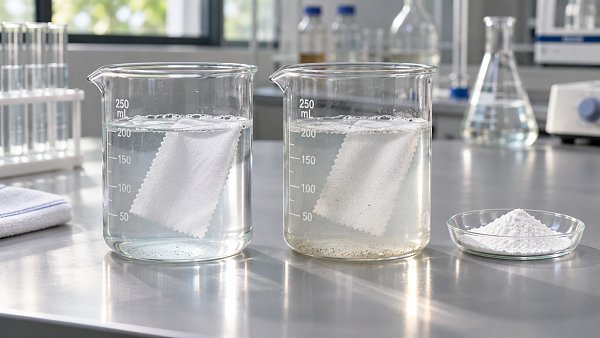
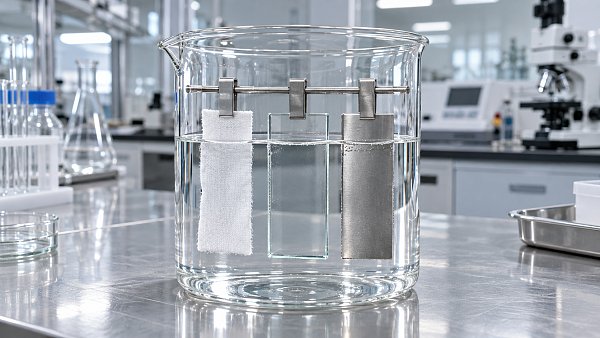
- Use representative surfaces: check heated surfaces, seals, glass, and relevant metals rather than relying on solution clarity alone.
- Measure repeated-cycle effects: inspect deposit mass or coverage, rinse residue, and changes in cleaning performance as the bath ages.
- Separate failure modes: distinguish mineral scale from corrosion products, dried detergent, and redeposited soil before changing the formula.
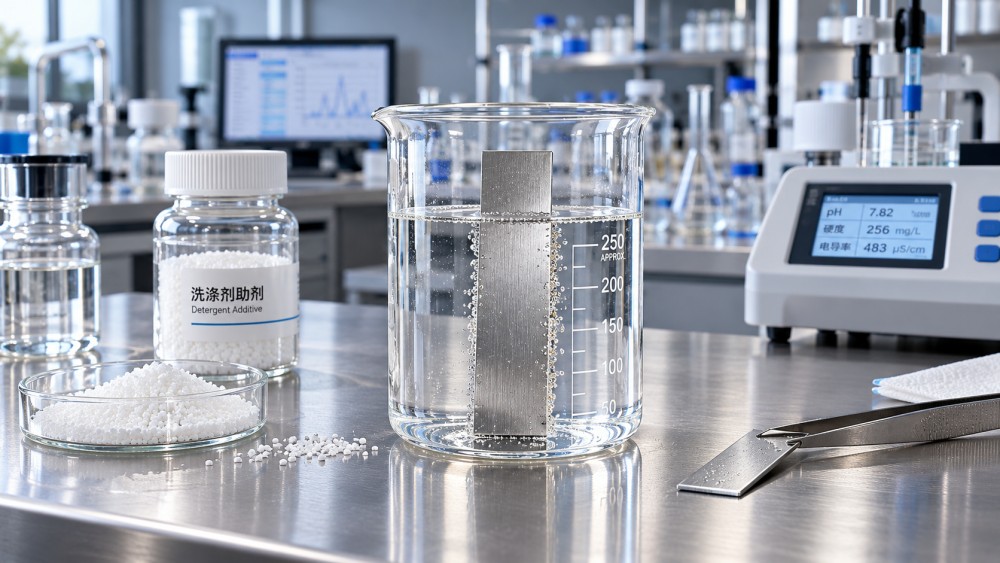
Residual-hardness testing needs care in chelant-containing solutions. Some methods measure free ions, while others respond differently to complexed metals. Confirm what the analytical method actually measures. Pair solution measurements with surface inspection; an apparently favorable water result is not proof of a clean surface.
For supplier evaluation, request active-content specifications, application-relevant binding data, impurity information, storage guidance, and documentation supporting environmental or regulatory claims. “Biodegradable” is not a substitute for knowing the test method, tested substance, and applicable conditions.
The application-led approach used by Global Fine Chemicals & Agrochemical Intelligence Network (FCAS) connects these technical questions with formulation stability, residue requirements, and supply consistency. Ingredient price matters, but the more useful comparison is cost at a validated working dose.
For a residue-sensitive liquid cleaner, begin by screening soluble chelants such as MGDA or GLDA. Consider citrate where the hardness load allows it, and zeolites where insoluble builders suit the process. Keep phosphates in consideration only where permitted. Then prove the package on the hottest, hardest-water, lowest-dose condition the process is expected to encounter—not just in a clear bottle on the laboratory bench.
Facing technical bottlenecks in manufacturing or looking for more efficient industrial solutions? Leave your details below and let the engineering experts at FCAS solve them for you.
We respect your privacy. Your information is strictly confidential.
Related News
 Micelle Fluidics & ChelationHow Venturi Fertigation Systems Control Fertilizer InjectionDiscover how venturi fertigation systems control fertilizer injection, and learn how pressure, sizing, and calibration affect dosing accuracy.MORE+
 Micelle Fluidics & ChelationHow to Use Cocamidopropyl Betaine for Hand Soap FormulasDiscover how to use cocamidopropyl betaine for hand soap, balance surfactants, adjust pH and viscosity, and troubleshoot common formulation issues.MORE+
 Micelle Fluidics & ChelationHow to Evaluate an Industrial Dispersants ManufacturerEvaluate an industrial dispersants manufacturer with confidence. Learn how to assess formulation performance, batch consistency, quality controls and supply risk.MORE+
 Micelle Fluidics & ChelationHow Cationic Surfactants Affect Emulsion StabilityCationic Surfactants can improve emulsion stability—but formulation matters. Discover key risks, compatibility checks, and practical troubleshooting tips.MORE+
 Micelle Fluidics & ChelationHow Eco Friendly Detergent Builders Perform in Hard WaterExplore how eco friendly detergent builders tackle hard water, compare citrate, zeolite and chelants, and find the right approach for cleaner results.MORE+
 Micelle Fluidics & ChelationHow Does Cocamidopropyl Betaine Affect Foam and Skin Mildness?Discover how Cocamidopropyl Betaine can enhance foam and support skin mildness. Explore formulation tips, impurity controls, and testing strategies for better cleansers.MORE+
 Micelle Fluidics & ChelationWhich Detergent Builders for Hard Water Prevent Mineral Buildup?Compare detergent builders for hard water, including MGDA, GLDA, citrate and zeolites. Discover how to prevent mineral buildup, reduce residue and choose the right formulation.MORE+
 Micelle Fluidics & ChelationHow Anionic Industrial Dispersants Improve Coating StabilityAnionic industrial dispersants improve coating stability, pigment wetting, viscosity control, gloss, and storage performance. Learn how to select and test the right solution.MORE+
 Micelle Fluidics & ChelationWhat Are Cationic Surfactants and Where Are They Commonly Used?Cationic Surfactants deliver powerful surface affinity for disinfection, fabric softening, hair conditioning, antistatic control, and industrial treatments. Explore key uses and selection factors.MORE+
 Micelle Fluidics & ChelationHow Cationic Surfactants Improve Formulation Performance and StabilityCationic Surfactants improve deposition, conditioning, anti-static control, and formulation stability. Explore compatibility, dispersion, and selection insights for better-performing products.MORE+
 Micelle Fluidics & ChelationIndustrial Dispersants for Pigments and Fillers: How to Improve Stability and FlowIndustrial Dispersants help improve pigment and filler stability, boost flow, and reduce defects in production. Discover how the right choice can cut rework and improve results.MORE+