How to Choose Tocopherols for Food Oxidation Control
Tocopherols can help food manufacturers slow lipid oxidation, but their performance depends on more than antioxidant concentration. The tocopherol profile, fat composition, processing conditions, and packaging environment can all influence oxidative stability and sensory quality. For technical evaluators, choosing the right ingredient means comparing these factors alongside dosage, formulation compatibility, and applicable labeling requirements. This guide examines the practical criteria for selecting tocopherols for food oxidation control and designing relevant shelf-life tests.
Start With the Oxidation Problem, Not the Ingredient
A food that develops a stale aroma after distribution presents a different problem from an oil that deteriorates during repeated heating. Both involve oxidation, but the conditions driving the reactions—and the opportunity for an antioxidant to intervene—are not the same.
Tocopherols are fat-soluble antioxidants that can interrupt free-radical chain reactions in lipids. They work best as part of a preventive strategy: they cannot reliably restore the flavor of an already oxidized oil, compensate for poor raw-material quality, or replace oxygen and light control. They also do not control microbial spoilage.
Before comparing ingredients, define the failure mode. Is the concern rancid flavor, loss of a delicate aroma, discoloration, or an analytical change in the fat? Establish when the issue appears and whether it begins in an incoming oil, during processing, or after packaging. A baseline sample without added antioxidant is valuable here: it helps distinguish a real formulation benefit from normal variation between batches.
Understand What the Tocopherol Profile Tells You
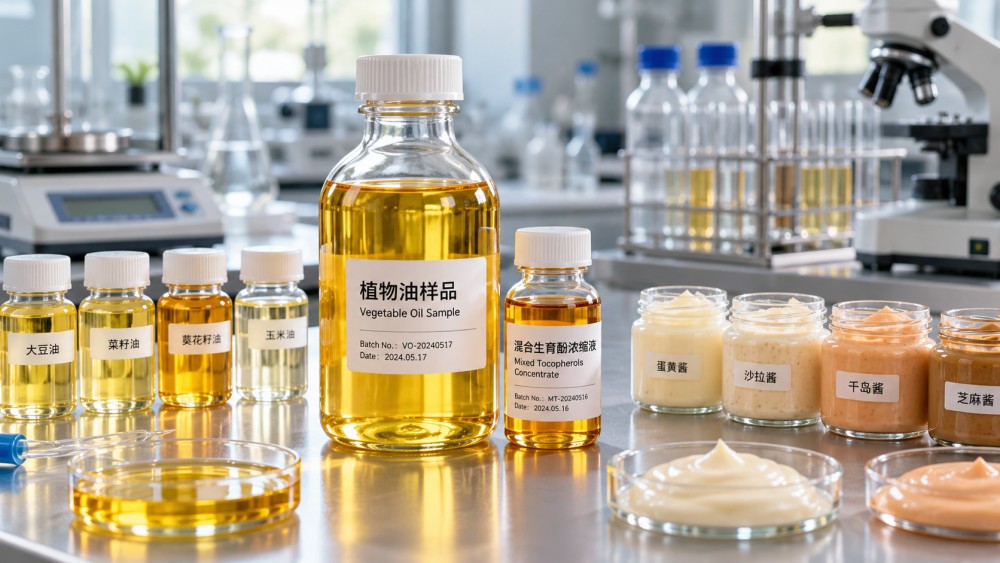
Commercial tocopherol ingredients may contain different proportions of alpha-, beta-, gamma-, and delta-tocopherol. A mixed-tocopherol concentrate is therefore not a single, uniform material. Two products with similar total tocopherol content can behave differently because their individual profiles, carrier oils, and sensory characteristics differ.
Alpha-tocopherol is commonly associated with vitamin E nutritional activity, but the profile selected for nutritional fortification is not automatically the strongest choice for oxidation control. Gamma- and delta-rich mixtures are often considered for antioxidant applications, although their relative effectiveness depends on the oil, concentration, and test conditions. Ask for the individual tocopherol breakdown rather than relying on a total-content figure alone.
Also distinguish free tocopherols from tocopherol esters used in some vitamin E applications. Esters should not be assumed to provide the same direct antioxidant performance in a food system. The ingredient’s intended function and chemical form need to be clear before samples enter a trial.
A more concentrated ingredient is not necessarily more economical in use. Compare the cost of the amount needed to reach a validated endpoint, not just the price per kilogram of concentrate. Include any differences in dosing equipment, handling losses, and sensory impact.
Match the Antioxidant to the Food System
The fat phase is the starting point. Oils rich in polyunsaturated fatty acids can be especially susceptible to oxidation, but susceptibility also depends on existing antioxidants, prior processing, trace metals, and exposure to oxygen and light. An ingredient that protects one refined oil well may not perform identically in another oil or in a finished food made from it.
Bulk oils, snacks, and baked goods
For bulk oil, adding a compatible tocopherol concentrate early enough to protect the oil through subsequent handling may be useful. Verify mixing and the initial oxidation status of the oil: uneven distribution or an already compromised starting material can obscure the result.
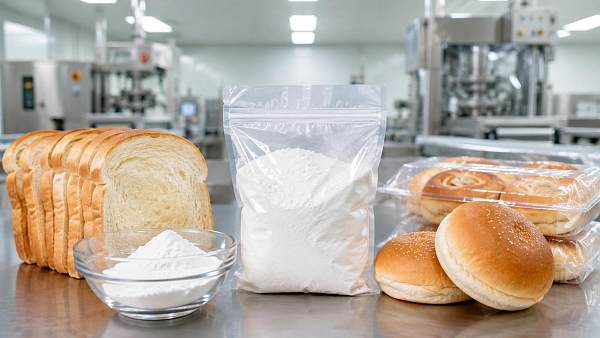
In snacks and baked goods, oxidation may occur in oil applied to a surface as well as in fat inside the product. A trial on the raw oil alone will not capture exposure during baking, frying, cooling, seasoning, or packaging. Test the finished product, particularly when heat and a large exposed surface area are involved. Tocopherols can be consumed during processing, so the dose entering the mixer is not necessarily representative of protection remaining throughout shelf life.
Emulsions and complex formulations
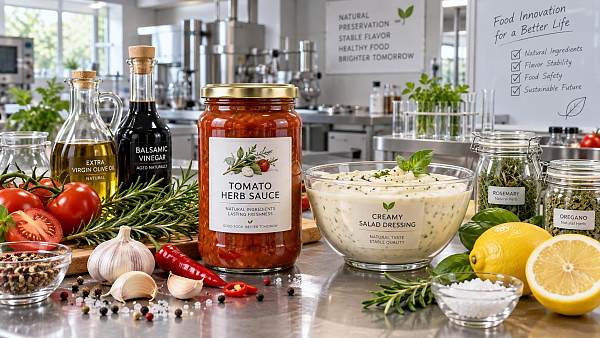
In dressings, sauces, and other emulsions, the location of the antioxidant matters. Oxidation can occur at or near the oil–water interface, where emulsifiers, metals, and other ingredients influence the local environment. Premixing tocopherols into the oil phase is often a practical starting point, but it does not guarantee effective distribution or performance after homogenization.
Check the complete formula, including acidulants, colors, flavors, emulsifiers, and any other antioxidants. A blend with ascorbyl palmitate, rosemary extract, or a metal-binding component may perform better in some systems, but synergy is formulation-specific. It should be demonstrated rather than assumed.
Set the Dose on a Comparable Basis
Dose comparisons often fail because one result is expressed on the weight of the finished food and another on the weight of its fat. Record both where useful, and distinguish the amount of commercial ingredient from the amount of active tocopherols. A concentrate diluted in carrier oil requires a different addition rate from a more concentrated product to deliver the same active dose.
For an initial screening, select several practical dose levels around a supplier’s application guidance, alongside an untreated control and, where relevant, the current antioxidant system. Keep the incoming fat, processing conditions, and packaging consistent. More is not always better: at some concentrations or under particular conditions, additional tocopherol can provide little benefit or even contribute to pro-oxidant behavior. Establish the useful range experimentally rather than choosing the highest feasible addition.
Account for tocopherols already present in the oil. Refining and storage history can change the background profile, and incoming batches may differ. If results vary unexpectedly, investigate the starting fat and trace metal exposure before attributing the difference solely to the antioxidant supplier.
Design a Shelf-Life Test That Supports a Decision
A useful trial answers a commercial question: will this formulation remain acceptable through the intended distribution period in its intended pack? Define the endpoint before testing. It may be a sensory rejection threshold, a product-specific analytical limit, or both. Use a representative production process and include normal variation wherever practical.
Peroxide value can indicate primary oxidation products, but it should not be treated as a complete measure of rancidity. Hydroperoxides can break down as oxidation progresses, meaning a lower value is not always evidence of a fresher product. Depending on the matrix, secondary oxidation measurements, volatile analysis, or other validated methods can add context. Sensory assessment remains important because an analytical change does not always translate directly into the flavor defect that determines acceptance.
Accelerated tests are useful for screening candidates, especially when waiting for a full shelf-life study would slow development. Elevated temperature or increased oxygen exposure, however, can change reaction pathways and may not preserve the ranking observed under normal storage. Confirm promising results under representative conditions before setting a shelf-life claim.
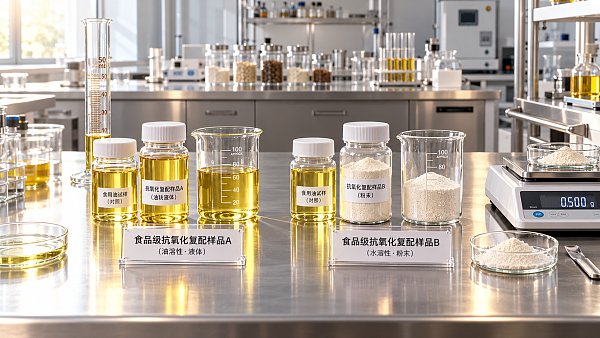
Packaging is part of that confirmation. Compare candidates in the intended material and pack format, with realistic headspace and sealing conditions. A concentrate that looks effective in an open laboratory vessel may deliver a different benefit in a low-oxygen, light-protective package. Conversely, a poor seal can overwhelm differences between otherwise promising antioxidants.
Review Documentation Alongside Performance
Once a candidate performs well, request a current specification and a representative certificate of analysis. Review the test methods, identification, total and individual tocopherol content, carrier composition, relevant impurity controls, storage instructions, and shelf life. The acceptance criteria should reflect the characteristics that matter to the application, not only a broad purity statement.
For global distribution, confirm the ingredient’s permitted use, applicable conditions, and labeling treatment in each destination market. Source material, carrier, processing aids, and any claims about natural origin may require separate review. Allergen declarations and dietary or certification claims should be supported by supplier documentation where relevant; they should not be inferred solely from the ingredient name.
Supply reliability also affects technical approval. Ask how profile variation is controlled between batches, whether the source or carrier can change, and how such changes are communicated. Packaging integrity, transport temperature, and the time a container remains open at the plant can affect an antioxidant ingredient before it reaches the food.
Make the Final Comparison on the Finished Product
The strongest candidate is the one that meets the defined sensory and analytical endpoint at a workable dose, survives the process, and can be sourced to an agreed specification. If two blends perform similarly, practical factors such as dosing accuracy, carrier compatibility, documentation, and batch consistency may decide between them.
FCAS approaches food ingredients in this application context: ingredient chemistry matters, but so do formulation, processing, packaging, and supply-chain evidence. Before approving a tocopherol, bring those records together in a single comparison and confirm which results still need validation at production scale.
Facing technical bottlenecks in manufacturing or looking for more efficient industrial solutions? Leave your details below and let the engineering experts at FCAS solve them for you.
We respect your privacy. Your information is strictly confidential.
Related News
 Antioxidants & Natural PreservativesHow Do Food Preservative Blends for Dairy Beverages Work?Food preservative blends for dairy beverages work differently across formulations. Discover how pH, processing and testing shape shelf-life performance.MORE+
 Antioxidants & Natural PreservativesIndexBox Forecasts Moderate BHT Market Growth Through 2035BHT market growth is forecast at 2.5% annually through 2035. Explore the demand drivers and what the outlook means for suppliers and buyers.MORE+
 Antioxidants & Natural PreservativesHow Do Food Preservation Ingredients Extend Shelf Life?Food Preservation Ingredients extend shelf life by slowing microbial growth and oxidation. Discover how to select and validate the right solution for your product.MORE+
 Antioxidants & Natural PreservativesWhat Drives Antioxidant Blends Bulk Price Changes?Discover what drives antioxidant blends bulk price changes, from ingredient costs to delivery terms, and learn how to compare quotes for better value.MORE+
 Antioxidants & Natural PreservativesWhat Affects Benzyl Alcohol Wholesale Pricing and Quality?Benzyl alcohol wholesale prices vary by purity, packaging, and delivery terms. Learn how to compare quality and total costs before you buy.MORE+
 Antioxidants & Natural PreservativesHow Preservative Blends Help Control Spoilage in FoodsPreservative Blends can help control food spoilage and support shelf life. Discover how to select and validate the right system for your product.MORE+
 Antioxidants & Natural PreservativesWhat Affects the Bulk Price of Food Preservation Ingredients?Explore what drives the food preservation ingredients bulk price, from specifications and order volume to freight, compliance, and supplier reliability.MORE+
 Antioxidants & Natural PreservativesHow to Choose Tocopherols for Food Oxidation ControlDiscover how to choose Tocopherols for food oxidation control. Compare profiles, dosage, formulation compatibility, and shelf-life testing.MORE+
 Antioxidants & Natural PreservativesHow Does pH Affect the Performance of Antimicrobial Preservatives?Antimicrobial Preservatives perform differently as pH shifts. Learn how to select effective systems, avoid formulation pitfalls, and validate lasting product protection.MORE+
 Antioxidants & Natural PreservativesHow to Select Natural Food Preservatives for Chilled Ready MealsSelect natural food preservatives for ready meals with confidence. Compare options, assess pH and packaging, and validate shelf life while protecting taste. Explore the guide.MORE+
 Antioxidants & Natural PreservativesWhat Affects the Bulk Price of Antioxidant Blends for Food Use?Compare antioxidant blends bulk price factors, from active concentration to dosage and delivery costs. Learn how to assess quotes and choose better value for food applications.MORE+
 Antioxidants & Natural PreservativesHow Do Propionates Prevent Mold Without Slowing Yeast in Bread?Propionates help delay mold in bread while allowing effective proofing. Discover how pH, dosage, and process control balance longer shelf life with yeast performance.MORE+
 Antioxidants & Natural PreservativesWhat Makes Stable Synthetic Aroma Chemicals Resist Degradation?Learn why stable synthetic aroma chemicals resist degradation, how formulation and packaging affect performance, and what to test when choosing ingredients for lasting fragrance quality.MORE+
 Antioxidants & Natural PreservativesHow Do You Choose a Natural Food Preservatives Supplier You Can Trust?Choose a natural food preservatives supplier you can trust. Learn how to verify compliance, validate performance, and assess supply reliability before you buy.MORE+
 Antioxidants & Natural PreservativesWhat Determines TBHQ Bulk Price and How Can You Compare Quotes?Compare tbhq bulk price with confidence. Discover key cost drivers, specification checks, and landed-cost essentials to evaluate supplier quotes and avoid hidden costs.MORE+
 Antioxidants & Natural PreservativesHow to Choose Food Preservation Ingredients for Beverages That LastChoose food preservation ingredients for beverages with confidence. Explore pH, microbial control, compliance, and testing to protect flavor and achieve reliable shelf life.MORE+
 Antioxidants & Natural PreservativesWhat Purity Tests Are Needed for Cosmetic Grade Butylparaben?Cosmetic grade butylparaben needs more than a high assay. Discover essential purity tests, impurity controls, and supplier checks to make confident sourcing decisions.MORE+
 Antioxidants & Natural PreservativesTBHQ Antioxidant Performance, Limits, and Food Safety ComplianceTBHQ antioxidant performance, legal limits, and food safety compliance explained. Learn practical controls for oils, frying, packaging, shelf life, and documentation.MORE+
 Antioxidants & Natural PreservativesNatural Food Preservatives for Sauces That Protect Shelf LifeNatural food preservatives for sauces: discover practical strategies for safer shelf life, clean-label formulation, pH control, packaging, and validation.MORE+
 Antioxidants & Natural PreservativesHow Herbal Extracts for Functional Foods Support Product DevelopmentHerbal extracts for functional foods: explore smarter selection, sensory balance, processing stability, documentation, and scalable supply for successful product development.MORE+
 Antioxidants & Natural PreservativesWhat Quality Checks Matter When Sourcing Butylparaben for Personal CareButylparaben for personal care sourcing guide: compare assay, impurities, physical performance, documentation, traceability, and supplier quality to reduce formulation risk.MORE+
 Antioxidants & Natural PreservativesWhen Propyl Gallate Antioxidant Is the Right Choice for Oil StabilityPropyl gallate antioxidant: learn when it is the right choice for oil stability, shelf-life protection, processing compatibility, and smarter formulation decisions.MORE+
 Antioxidants & Natural PreservativesHow Potassium Sorbate Extends Shelf Life in Food and Beverage ProductsPotassium Sorbate helps food and beverage brands control yeast and mold spoilage. Explore pH, dosage, processing, and packaging strategies for reliable shelf life.MORE+
 Antioxidants & Natural PreservativesHow to Source Bulk Herbal Extracts With Reliable Quality ControlBulk herbal extracts sourcing guide: compare suppliers, verify traceability, review CoAs, and build reliable quality controls for safer, consistent purchasing.MORE+
 Antioxidants & Natural PreservativesWhat to Check Before Sourcing Butylparaben for Personal Care FormulasButylparaben for personal care sourcing guide: check market eligibility, purity, supplier controls, formula compatibility, packaging, and total risk before buying.MORE+
 Antioxidants & Natural PreservativesNatural Food Antioxidants That Help Extend Shelf Life in Clean LabelsNatural Food Antioxidants: learn how tocopherols, rosemary extracts, and ascorbic systems help protect flavor, color, and shelf life in clean-label foods.MORE+
 Antioxidants & Natural PreservativesWhat to Check Before Choosing a Butylparaben Wholesale SupplierButylparaben wholesale buyers: learn how to assess quality, documentation, market fit, packaging, supply reliability, and total landed cost before choosing a supplier.MORE+
 Antioxidants & Natural PreservativesWhat to Check Before Choosing a Synthetic Food Preservatives SupplierSynthetic food preservatives supplier selection: check regulatory fit, batch consistency, documentation, logistics, and support to reduce risks and hidden costs.MORE+
 Antioxidants & Natural PreservativesWhat to Verify Before Choosing a Synthetic Food Preservatives FactorySynthetic food preservatives factory checklist: verify food-grade quality, impurity control, traceability, packaging, and regulatory fit before supplier approval.MORE+
 Antioxidants & Natural PreservativesHow to Compare Food Preservative Blends Wholesale QuotesFood preservative blends wholesale: compare quotes by true cost, dosage, compliance, quality consistency, and supply reliability to choose the best-value solution.MORE+
 Antioxidants & Natural PreservativesHow Natural Food Preservatives Keep Sauces Fresh Without Sacrificing FlavorNatural food preservatives for sauces help balance microbial control, shelf life, and authentic flavor. Explore practical formulation, processing, and packaging strategies.MORE+
 Antioxidants & Natural PreservativesHow Propionates Extend Shelf Life While Meeting Food Safety RequirementsPropionates extend shelf life by controlling mold in bakery and moisture-sensitive foods. Explore smart dosage, compliance, supplier quality, and safer distribution strategies.MORE+
 Antioxidants & Natural PreservativesHow Oxidation Resistant Flavor Encapsulates Protect Taste During ProcessingOxidation resistant flavor encapsulates help protect delicate taste through heat, oxygen, and storage. Discover how to improve flavor retention, release, and processing consistency.MORE+
 Antioxidants & Natural PreservativesHow to Choose Green Tea Extract for Stable, Consistent FormulationsGreen Tea Extract selection guide for stable, consistent formulations—compare standardization, solubility, carriers, stability, and batch quality with confidence.MORE+
 Antioxidants & Natural PreservativesIs TBHQ for Shortening Safe and Effective for Longer Shelf Life?TBHQ for shortening: discover how safe, compliant antioxidant use can reduce rancidity, protect quality, and support longer shelf life through validated controls.MORE+
 Antioxidants & Natural PreservativesWhy Ferulic Acid Matters in Modern Antioxidant FormulationsFerulic Acid helps modern formulations enhance oxidative stability, protect sensitive ingredients, and support differentiated product performance across key applications.MORE+
 Antioxidants & Natural PreservativesHow Natural Food Preservatives Extend Shelf Life Without CompromiseNatural Food Preservatives extend shelf life through smart hurdle systems, balancing safety, clean-label appeal, sensory quality, and regulatory compliance.MORE+
 Antioxidants & Natural PreservativesHow to Choose a Food Preservation Ingredients Manufacturer with ConfidenceFood preservation ingredients manufacturer selection starts with risk control. Learn how to compare quality, documentation, supply stability, and technical support with confidence.MORE+
 Antioxidants & Natural PreservativesIs Cosmetic Grade Butylparaben Still a Smart Choice for FormulatorsCosmetic grade butylparaben remains a key consideration for formulators. Explore when it still makes sense, when to replace it, and how to balance performance, compliance, and market demands.MORE+
 Antioxidants & Natural PreservativesHow to Choose a Reliable Gum Arabic Powder Supplier for Consistent QualityGum arabic powder supplier selection starts with quality, traceability, and supply stability. Learn how to compare specs, compliance, and continuity to reduce sourcing risk.MORE+