How to Evaluate a Sucralose Supplier Before Placing a Bulk Order
A competitive quote is useful only when it covers sucralose that your business can legally use, consistently process, and receive on time. Before placing a bulk order, establish three things: whether the material meets an agreed specification, whether the supplier can demonstrate control over routine production, and whether the delivered cost remains attractive after testing, logistics, and inventory requirements are included.
The lowest quoted price may still be the best offer—but only after those conditions are verified. A polished sample, a generic certificate of analysis, or a food safety certificate cannot establish them on its own. Supplier approval should connect the exact product, manufacturing site, production batch, and destination-market requirements to evidence that can be checked.
Define the material before comparing quotations
Confirm whether the offer is for high-purity sucralose, a standardized blend, or a preparation containing carriers. Products sold under the same ingredient name can have different concentrations and handling properties. A blend intended for convenient dosing is not commercially comparable with high-purity powder on a price-per-kilogram basis.
Issue a written purchasing specification rather than asking suppliers simply to quote “food-grade sucralose.” It should identify the applicable food-additive specification, required analytical limits, physical form, packaging, and minimum remaining shelf life at delivery. Where a compendial specification is referenced, identify the relevant edition or version and resolve any differences with your internal requirements before ordering.
The specification should distinguish between chemical conformity and manufacturing suitability:
- Chemical requirements: identity, assay, relevant related substances, moisture, residual solvents, and elemental contaminants, as applicable to the governing specification and risk assessment.
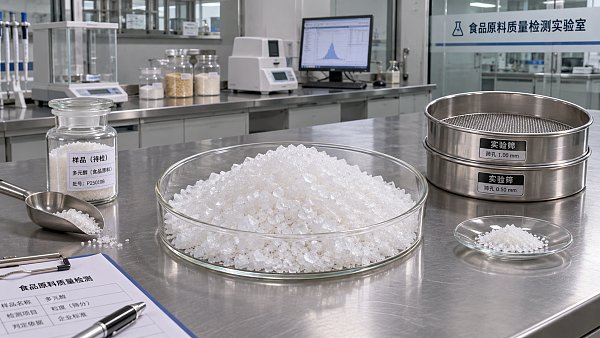
- Physical requirements: particle-size distribution, bulk density, flow behavior, and dissolution characteristics where these affect production.
- Food safety requirements: microbiological criteria and declarations concerning allergens, cross-contact, or other customer requirements where relevant.
- Commercial requirements: net weight, pack construction, labeling, storage conditions, and shelf-life commitments.
Do not impose every available test without considering its purpose. The objective is a specification that detects meaningful risk and supports the application, not a long document that neither party can consistently implement.
Read the certificate of analysis as evidence, not reassurance
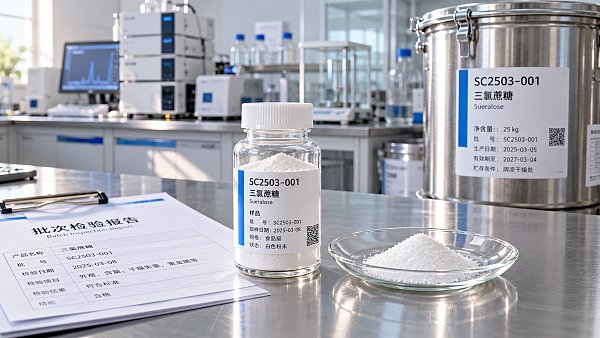
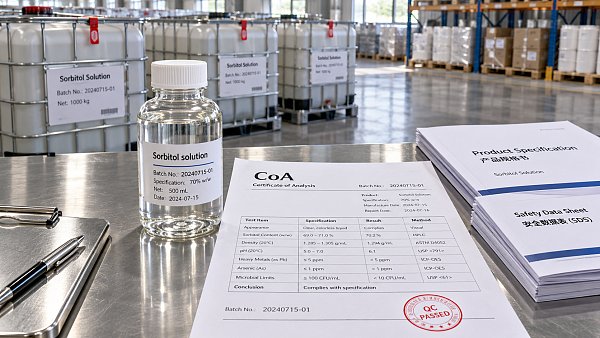
A certificate of analysis (CoA) should identify the manufacturer or responsible issuing entity, product, batch number, relevant dates, specifications, results, and authorization. The lot number must connect to the supplied material. A typical CoA is useful during initial screening, but it does not prove the quality of an order that has not yet been produced.
Ask for CoAs from several recent production lots, with confidential commercial information removed if necessary. Compare the results and reporting practices. Variable numerical results are not inherently a concern; unexplained shifts, missing methods, or changes in acceptance limits deserve investigation.
Clarify which parameters are tested for every batch and which are managed through periodic verification or process controls. Periodic testing is not automatically unacceptable, but its justification and frequency should fit the hazard and your approval requirements. For initial qualification, independent testing by a competent laboratory can verify selected critical attributes. Agree on methods beforehand so that differences between laboratories do not become an avoidable acceptance dispute.
Establish who manufactures the product—and who controls changes
A trader or distributor can be a reliable sucralose supplier. The important distinction is not simply manufacturer versus intermediary; it is whether the supply chain is transparent and controlled. Establish the legal seller, actual manufacturing site, any repacking location, and the party responsible for quality complaints.
Confirm whether the supplier may source from multiple factories under one commercial product code. If so, each source should be evaluated appropriately. An approved sample from one factory should not silently authorize material from another.
Review food safety certification for the actual site and activity. Check validity and scope through the issuing certification body or scheme directory where available. A certificate covering warehousing does not establish controls over ingredient manufacture, and a corporate certificate may not cover every facility.
An audit should examine the controls most relevant to the ingredient: raw-material qualification, process consistency, contamination prevention, laboratory capability, nonconforming-product handling, traceability, and corrective action. Where intermediaries or repackers are involved, include stock segregation and lot-identity controls.
Require notification of changes to manufacturing site, specification, process, analytical methods, or packaging that could affect quality or compliance. The agreement should define when advance approval is necessary. Otherwise, a successful qualification can lose its value after an undisclosed supply-chain change.
Check destination-market compliance separately from supplier certification
Food safety certification and legal suitability answer different questions. Sucralose must be permitted for the intended food category and use level in the destination market, and the material must meet applicable identity and purity requirements. Requirements can differ across jurisdictions and applications.
For example, European Union checks may involve the conditions of use for E 955 and applicable additive specifications. For the United States, review the relevant FDA food-additive provisions and any applicable import obligations. Verify the current requirements against official sources rather than relying solely on a supplier statement.
Claims such as “FDA registered” should be interpreted narrowly: facility registration is not FDA approval of an ingredient, shipment, or supplier. Likewise, compliance with one specification does not automatically demonstrate conformity with all destination-market requirements.
Request declarations that identify the product, manufacturing site, jurisdiction, and basis of compliance. Halal, kosher, allergen, or other customer-specific documents should match the exact material and relevant activities. If a distributor repacks the product, establish whether that operation affects the required certification coverage.
Make the sample represent what you will actually receive
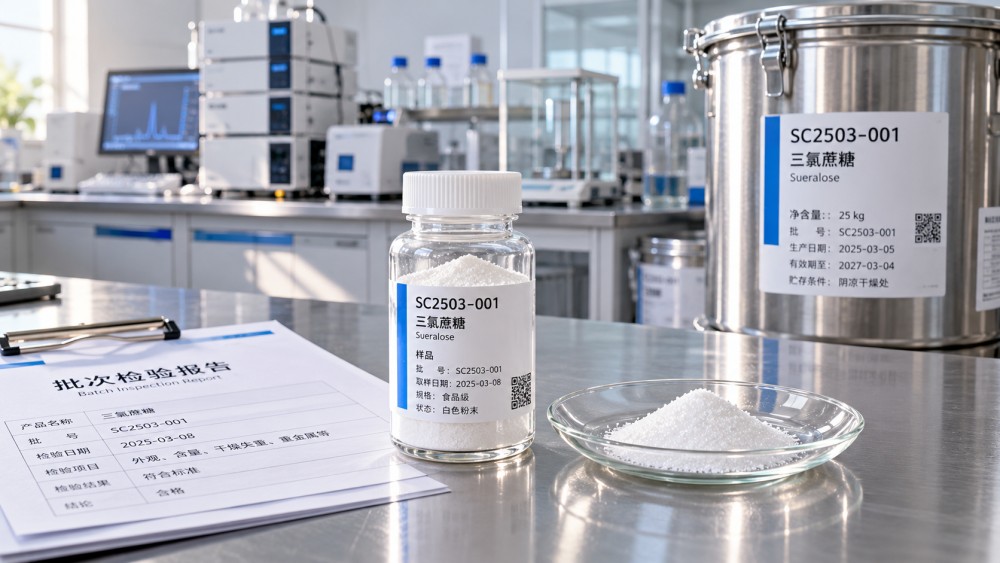
A sample demonstrates only the material tested unless it is connected to a controlled production source. Ask whether it came from routine commercial production, a development batch, or specially prepared stock. Record its batch number and retain its CoA.
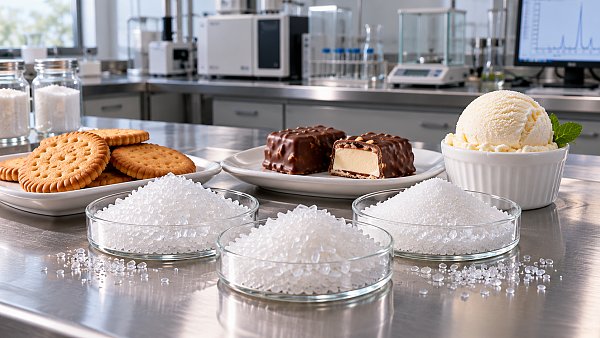
Qualification should include the intended application, not just laboratory identity and assay. In dry blends, particle-size and density differences can affect distribution, segregation, and dosing repeatability. In liquid production, test dissolution under the actual water temperature, mixing conditions, and addition sequence. Where the process includes heat exposure or extended storage, evaluate the finished formulation under those conditions rather than relying on a general stability claim.
Sensory assessment can identify differences in sweetness balance or aftertaste, but it cannot replace analytical conformity testing. Conversely, a passing CoA does not establish that the ingredient performs acceptably in a particular formulation.
For a new source, a controlled initial commercial lot can provide a stronger basis for approval than moving directly from a small sample to a large annual commitment. Define release criteria before it arrives and retain reference samples under suitable conditions.
Evaluate delivery reliability beyond the promised lead time
A lead-time quotation should state its starting point and endpoint. “Two weeks” might mean production time after payment, readiness for collection, or dispatch from a warehouse. None necessarily means arrival at your receiving site.
Separate production scheduling, quality release, export preparation, transport, customs clearance, and incoming inspection. Ask which stages are covered by the commitment and what evidence supports available stock. If inventory already exists, confirm its batch numbers, remaining shelf life, storage location, and reservation terms.
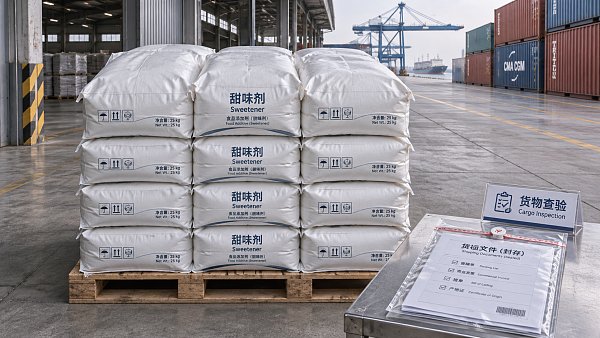
Packaging also deserves qualification. Sucralose powder needs protection against moisture ingress, contamination, and damage during handling. Review the food-contact suitability of direct-contact packaging, liner closure, tamper evidence, outer-pack strength, and label durability. Labels should preserve lot identity through receiving and storage.
Agree on storage and transport conditions supported by the supplier’s product documentation. Do not assume that refrigeration, desiccants, or a particular container arrangement are necessary without justification. For long routes, assess humidity exposure, condensation risk, and intermediate warehousing conditions.
Ask how the supplier would manage a delayed release, rejected batch, or interrupted shipment. A contingency plan is credible only when replacement stock, alternative sources, or expedited transport can be identified—and alternative manufacturing sources still require appropriate approval.
Compare landed, released cost—not only the invoice price
Normalize offers to the same product definition, quantity, packaging, currency, payment basis, and named Incoterms rule and place. Check whether freight, insurance, clearance charges, duties, and destination handling are included, and determine who carries the relevant obligations.
A practical comparison is total acquisition cost divided by the quantity accepted for use. Include testing and inspection charges, financing costs, and any additional inventory required by long or uncertain replenishment times. Keep recoverable taxes separate from true costs, while recognizing their cash-flow effect.
Where concentrations differ, calculate active-content cost before comparing offers. That calculation still does not make different preparations interchangeable: carriers can change formulation composition, labeling, and processing. Likewise, small assay differences within an approved high-purity specification should not outweigh evidence of consistency and reliable delivery.
Avoid assigning invented financial values to supply risk. Use scenarios grounded in your operation instead. Compare an on-time shipment with a delayed shipment requiring expedited freight, or an accepted lot with one held for investigation. This shows whether a modest discount survives realistic additional costs.
Put acceptance and remedies in writing before committing volume
The purchase contract or quality agreement should identify the approved specification, manufacturing source, required documents, packaging, and minimum remaining shelf life. It should also define sampling and testing arrangements, the process for disputed results, and whether material remains on hold pending investigation.
Agree who pays for confirmed nonconformity, replacement freight, return or disposal, and justified third-party testing. Define complaint response expectations and recall responsibilities. Payment terms should be considered alongside the practical ability to obtain a remedy, especially for a first cross-border order.
Legal compliance, traceability, and critical specification conformity should be approval gates—not weaknesses that a low price can offset. Once those gates are passed, compare delivery capability, application performance, technical responsiveness, and total cost. Where evidence remains incomplete, limit the initial commitment rather than treating a large discount as compensation for an unqualified source.
A bulk order is justified when the approved sample, routine production records, contractual specification, and shipment controls describe the same material from the same controlled supply chain. That alignment—not the quotation alone—is what makes the purchase defensible.
Facing technical bottlenecks in manufacturing or looking for more efficient industrial solutions? Leave your details below and let the engineering experts at FCAS solve them for you.
We respect your privacy. Your information is strictly confidential.
Related News
 Zero-Calorie Sweeteners & AcidulantsHow to Choose Plant Based Natural Sweeteners for BeveragesChoose plant based natural sweeteners for beverages with confidence. Compare stevia, monk fruit and blends for taste, processing, labeling and cost.MORE+
 Zero-Calorie Sweeteners & AcidulantsChina’s New Food Labeling Standard to Prohibit “Zero Addition” ClaimsChina’s new food labeling standard targets “zero addition” and “no added” claims. Discover what the change means for food brands and ingredient suppliers.MORE+
 Zero-Calorie Sweeteners & AcidulantsHow to Use High Sweetness Sucralose in Reduced-Sugar DrinksDiscover how to use high sweetness sucralose in reduced-sugar drinks, with practical tips for balancing taste, mouthfeel, stability, and compliance.MORE+
 Zero-Calorie Sweeteners & AcidulantsChoosing High Intensity Sweeteners for Tabletop UseHigh intensity sweeteners for tabletop use: compare taste, formats, stability and compliance to create a consistent product consumers will enjoy.MORE+
 Zero-Calorie Sweeteners & AcidulantsHow to Evaluate a Maltitol Manufacturer for Consistent QualityEvaluate a maltitol manufacturer with confidence. Discover how to assess batch consistency, food safety, traceability, and trial performance before you buy.MORE+
 Zero-Calorie Sweeteners & AcidulantsChattogram Customs Seizes 4.2 Tonnes of Banned SweetenerChattogram Customs seized 4.2 tonnes of banned sodium cyclamate. Explore what the seizure means for sweetener sourcing and food compliance in Bangladesh.MORE+
 Zero-Calorie Sweeteners & AcidulantsHow to Evaluate a Crystalline Polyols ManufacturerChoosing a crystalline polyols manufacturer? Learn how to compare quality, production performance, documentation, and delivered costs with confidence.MORE+
 Zero-Calorie Sweeteners & AcidulantsHow to Evaluate a Sucralose Supplier Before Placing a Bulk OrderEvaluate a sucralose supplier with confidence. Learn how to verify quality, compliance, traceability, delivery reliability, and total costs before placing a bulk order.MORE+
 Zero-Calorie Sweeteners & AcidulantsHow to Choose Low Calorie Bulk Sweeteners for Reduced-Sugar FoodsChoose low calorie bulk sweeteners with confidence. Compare options for taste, texture, shelf life, and compliance to create better reduced-sugar foods.MORE+
 Zero-Calorie Sweeteners & AcidulantsWhich Quality Documents Should a Liquid Sorbitol Supplier Provide?Choosing a liquid sorbitol supplier? Learn which quality documents to request, how to verify CoAs and traceability, and what gaps should block release before you buy.MORE+
 Zero-Calorie Sweeteners & AcidulantsWhat Should You Check Before Choosing an Acidulants Supplier?Choosing an acidulants supplier? Learn how to verify specifications, batch quality, compliance, and delivery reliability to reduce risks and compare true usable costs.MORE+
 Zero-Calorie Sweeteners & AcidulantsHow Can You Reduce Bitterness When Using Natural Stevia Powder?Reduce bitterness in natural stevia sweetener powder with smarter dosing, glycoside selection, and sweetener blends. Discover practical tips for cleaner sweetness and a better finish.MORE+
 Zero-Calorie Sweeteners & AcidulantsHow Food Grade Stevia Sweetener Affects Taste and Label ClaimsFood grade stevia sweetener: learn how glycoside profiles, taste control, processing stability, and label claims shape successful lower-sugar products.MORE+
 Zero-Calorie Sweeteners & AcidulantsHow to Choose a Natural Sweeteners Supplier for Clean-Label ProductsNatural sweeteners supplier selection guide for clean-label products: compare formulation fit, traceability, documentation, and supply reliability.MORE+
 Zero-Calorie Sweeteners & AcidulantsWhat Drives Zero Calorie Sweeteners Bulk Price in 2026Zero calorie sweeteners bulk price in 2026: compare specifications, dosage, quality, freight, and supply risk to make smarter sourcing decisions.MORE+
 Zero-Calorie Sweeteners & AcidulantsHow to Choose Zero Calorie Sweeteners for Sugar Free ProductsZero calorie sweeteners for sugar free products: compare taste, stability, labeling, and cost to choose the right system for beverages, bakery, and functional foods.MORE+
 Zero-Calorie Sweeteners & AcidulantsChoosing Sucralose for Dairy Products Without Compromising TasteSucralose for dairy products: learn how to protect clean sweetness, optimize sensory performance, verify quality, and source reliably for reduced-sugar dairy.MORE+
 Zero-Calorie Sweeteners & AcidulantsHow to Choose Artificial Sweeteners for Beverages That Taste BetterArtificial sweeteners for beverages: learn how to choose solutions with better taste, stability, labeling fit, and cost efficiency for successful reduced-sugar drinks.MORE+
 Zero-Calorie Sweeteners & AcidulantsHow Acidity Regulators Improve Beverage Flavor and Shelf LifeAcidity Regulators help beverage brands balance flavor, pH control, microbial stability, and shelf life. Explore practical formulation insights for safer, more consistent drinks.MORE+
 Zero-Calorie Sweeteners & AcidulantsKey Quality Checks for High Purity Aspartame in Food FormulationHigh purity aspartame quality checks for food formulation: evaluate assay, impurities, particle consistency, stability, documentation, and total cost.MORE+
 Zero-Calorie Sweeteners & AcidulantsHow Liquid Flavors for Soft Drinks Improve Taste Consistency at ScaleLiquid flavors for soft drinks help manufacturers achieve reliable taste consistency at scale through accurate dosing, controlled mixing, stability management, and sensory quality control.MORE+
 Zero-Calorie Sweeteners & AcidulantsWhat to Check When Choosing a Saccharin Sodium Supplier for Global OrdersChoose a reliable saccharin sodium supplier for global orders. Learn how to assess quality, documentation, packaging, export readiness, and total landed reliability.MORE+
 Zero-Calorie Sweeteners & AcidulantsAre High Intensity Sweeteners for Tabletop Use Right for Your ProductExplore high intensity sweeteners for tabletop use: compare taste, carriers, serving cost, stability, packaging, and compliance to build a successful product.MORE+
 Zero-Calorie Sweeteners & AcidulantsSaccharin Sodium Selection Factors for Zero-Calorie FormulasSaccharin Sodium selection factors for zero-calorie formulas: optimize taste, purity, solubility, compliance, and batch consistency for reliable production.MORE+
 Zero-Calorie Sweeteners & AcidulantsHow High Purity Aspartame Supports Consistent Zero-Calorie FormulasHigh purity aspartame supports consistent zero-calorie formulas with reliable sweetness, process stability, traceability, and quality control across every batch.MORE+
 Zero-Calorie Sweeteners & AcidulantsHow Acesulfame Potassium for Soft Drinks Affects Taste and CostAcesulfame potassium for soft drinks can improve sweetness efficiency and lower formulation cost, but only with the right blend, taste control, and sourcing strategy. Learn what drives the best ROI.MORE+