Do Industrial Dispersants Require Special Handling During Transport?
Do industrial dispersants require special handling during transport? The answer depends on the formulation, hazard classification, packaging, and destination. Some are regulated as dangerous goods; others are not, but still need protection from temperature extremes, leaks, moisture, or incompatible materials. For quality control and safety managers, the practical starting point is the current safety data sheet, supported by supplier instructions and shipment-specific checks.
That distinction matters because a shipment can arrive legally compliant and still be unsuitable for use. A container may be intact while its contents have separated, thickened, absorbed moisture, or picked up contamination. Transport planning therefore has two jobs: control safety risks and preserve the properties the receiving process relies on.
Start with the exact formulation, not the product category
“Dispersant” describes a function, not a single chemistry. Industrial products may be supplied as aqueous polymer solutions, solvent-containing liquids, emulsions, pastes, or powders. Two materials used for the same pigment or cleaning application can have different transport classifications and different sensitivities to cold or heat.
Check the safety data sheet for the specific grade and concentration being shipped. Section 14 normally gives transport information, while Sections 2, 7, 9, and 10 help explain hazards, handling requirements, physical properties, and stability or incompatibility concerns. The technical data sheet and written supplier instructions may contain quality-related temperature limits that are not obvious from the transport classification alone.
Do not assume that a diluted product inherits the classification of its concentrate, or that a product described as water-based is automatically non-hazardous. Classification depends on the complete mixture and the rules applicable to the shipment. If the composition, concentration, or supplier has changed, confirm that the documentation still matches the material in the container.
Determine whether dangerous goods rules apply
Where a dispersant is classified for transport, the applicable entry can determine packaging, marking, labeling, documentation, segregation, and carrier requirements. Section 14 should identify relevant information such as the UN number, proper shipping name, hazard class, packing group where assigned, and environmental hazards where applicable. It may also distinguish between transport modes.
The rules are mode- and route-dependent. Road shipments may fall under ADR in participating jurisdictions; sea shipments are subject to the IMDG Code; air shipments follow applicable ICAO Technical Instructions and airline requirements. National rules, carrier restrictions, and the current edition of the relevant regulations also need checking. A route that begins by truck and continues by sea requires the shipment to be assessed for both legs.
A safety data sheet is a starting point, not a substitute for a competent transport classification review. If Section 14 is incomplete, differs from the supplier’s shipping documents, or does not cover a planned mode, resolve the discrepancy before dispatch. Do not invent a UN number or copy one from a similar product.
“Not regulated as dangerous goods” also does not mean “no special handling.” It only addresses the relevant transport classification. The product may still be irritating, harmful if released, difficult to clean up, or sensitive to conditions in transit.
Temperature control is often a quality decision
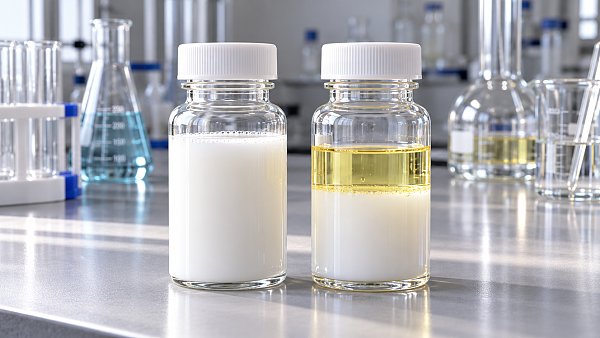
For many liquid dispersants, the most expensive transport problem is not a dramatic spill. It is a batch that looks acceptable on arrival but performs differently in the customer’s formulation. Freezing, prolonged heat, or repeated temperature cycling can cause separation, changes in viscosity, crystallization, or other instability, depending on the chemistry.
A winter shipment of an aqueous dispersant illustrates the decision. The safety data sheet may not classify it as dangerous goods, yet the supplier may specify “protect from freezing.” A standard truck could be adequate on one route and unsuitable on another if the load waits overnight in an unheated terminal. The relevant question is not just the forecast at departure; it is the likely exposure during loading, transfer, delays, and delivery.
Ask the supplier for the permitted transport temperature range, the duration for which excursions are acceptable if known, and whether recovery after freezing is supported by test data. Some products can be carefully thawed and mixed; others may not regain their original performance. Do not authorize rewarming or high-shear mixing simply because the material looks separated. Follow the supplier’s procedure and requalification criteria.
If the product is sensitive and the route is uncertain, insulated or temperature-controlled transport may be justified. A temperature logger can help establish what happened, but it does not prevent exposure. Agree in advance on sensor placement, review responsibility, and the action to take if a reading falls outside the agreed range.
Packaging must survive the journey and suit the chemistry
Select the package for the actual product, fill quantity, handling method, and transport mode. Where dangerous goods regulations apply, the packaging must meet the applicable requirements, including UN specification performance packaging when required. For non-regulated materials, packaging still needs documented compatibility and sufficient strength for stacking, vibration, and routine handling.
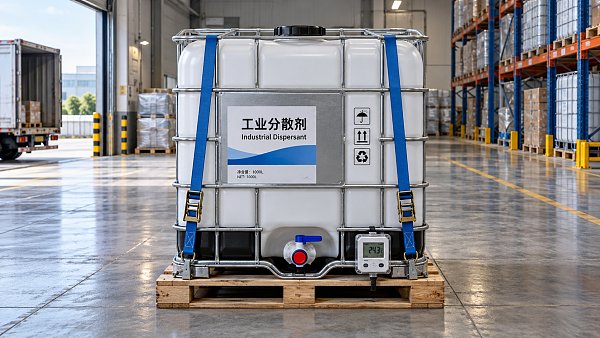
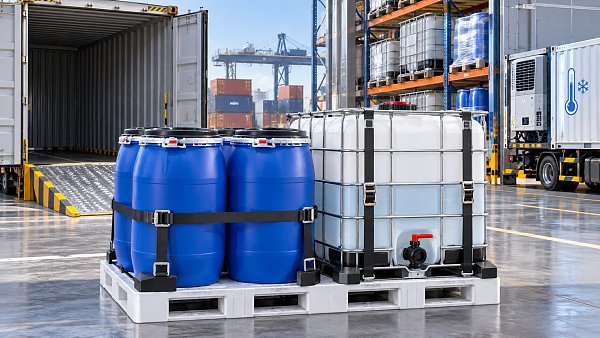
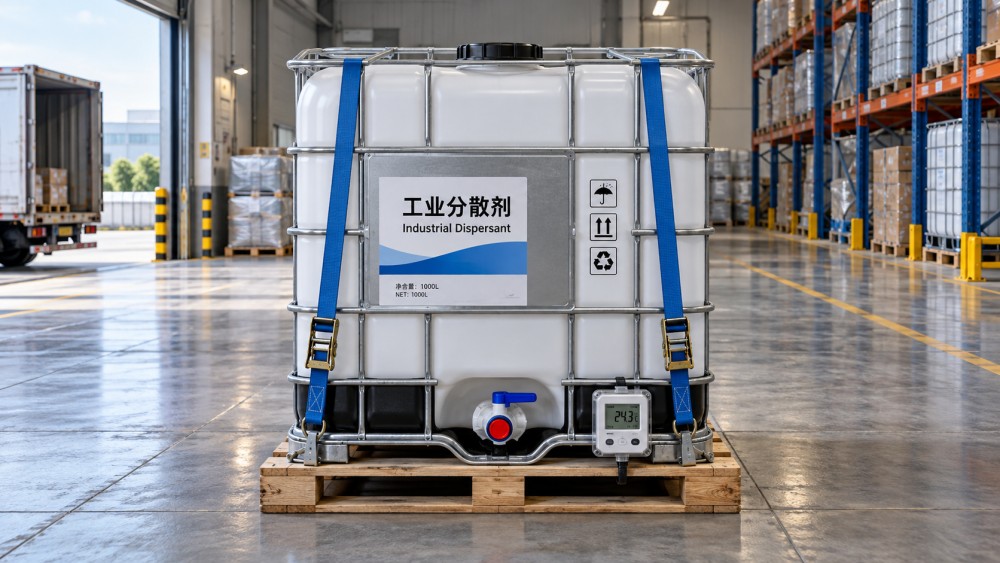
For drums and intermediate bulk containers, check the condition of closures, gaskets, valves, and seals before loading. Compatibility is not limited to the main container wall: a gasket or valve component may be the weak point. Avoid filling or closing practices that conflict with the packaging manufacturer’s and supplier’s instructions, including any allowances for thermal expansion.
Secure the load so containers cannot shift, rub against each other, or concentrate weight on a vulnerable valve. A clean pallet and intact stretch wrap are useful, but neither replaces proper load restraint. If an IBC valve faces an exposed edge, consider the risk of impact during forklift handling and agree on protection or orientation with the logistics provider.
Powder dispersants present a different set of problems. Moisture ingress can cause caking or poor flow, while damaged bags can create dust and contamination. Keep bags dry, protect them from puncture, and verify whether the product’s dust hazard assessment calls for additional precautions. Not every powder is a combustible dust hazard, but that possibility should be assessed rather than dismissed.
Segregation and spill planning need product-specific answers
Use the safety data sheet’s incompatibility and accidental-release information to plan the load. Segregation of regulated dangerous goods must follow the applicable modal rules; additional separation may be sensible for products that are not regulated but could react with, contaminate, or damage neighboring cargo. Do not rely on a generic assumption that all surfactants or dispersants are compatible with each other.
Leaking dispersant can make loading areas slippery, and some products may be difficult to remove once they reach drains or porous surfaces. The carrier and receiving site should know whom to contact, what protective equipment is appropriate, and what containment materials are suitable. Keep spill response instructions accessible to the people who may actually discover a leak.
If a container is leaking or damaged, isolate the area and follow site procedures and the product’s safety instructions. Do not transfer the contents into an unverified container, wash material into a drain, or return a damaged package to service without assessment. Emergency response and disposal requirements depend on the product and local rules.
What to confirm before the vehicle leaves
A useful release check connects the product record to the physical shipment. The following points are worth resolving before the carrier arrives, particularly when a new grade, route, or packaging format is involved:
- Match the product name, grade, concentration, batch number, and quantity against the order, container labels, and current documentation.
- Confirm transport classification for every mode and jurisdiction involved, including any transshipment or carrier-specific requirements.
- Check packaging condition, closure integrity, load restraint, and any required marks, labels, or transport documents.
- Communicate temperature limits, moisture protection, orientation, and any handling restrictions to the carrier in writing.
- Record the condition of the load at dispatch and identify who will review temperature data or delivery exceptions.
- Make sure emergency contact and spill-response information are available through the appropriate shipping and site channels.
The handoff is a common weak point. A purchase order may contain a temperature requirement that never reaches the carrier’s booking instructions. Equally, a carrier may accept a booking without agreeing to maintain a controlled temperature during a terminal stop. Clarify who is responsible for each part of the route and what happens if protection cannot be maintained.
Receiving checks: appearance is useful, but not enough
At receipt, inspect packages for leakage, broken seals, punctures, water damage, and signs of impact before moving them into normal storage. Compare batch identification and quantities with the documents. Where temperature monitoring was agreed, review the record before releasing the material for production.
An excursion or unusual appearance should trigger a hold, not an automatic rejection or acceptance. Photograph and document the condition, retain the relevant transport records, and consult the supplier about sampling and testing. Depending on the product and agreed specification, useful checks may include appearance, viscosity, pH, solids content, or an application-specific dispersion test. Sampling itself must follow the site’s safety procedure and avoid introducing contamination.
This is especially important when a dispersant is used in coatings, crop protection formulations, industrial cleaning, or high-purity processing. A material can meet a basic visual check yet behave differently when incorporated into the intended system. Release decisions should be tied to the agreed specification and the intended application, not appearance alone.
FCAS approaches specialty chemical sourcing with that broader view: transport documentation, packaging, batch consistency, and application performance are connected. For the next shipment, the most useful action is to compare the supplier’s written limits with the real route and receiving checks. If either side is unclear, resolve it before loading rather than after a questionable batch reaches production.
Facing technical bottlenecks in manufacturing or looking for more efficient industrial solutions? Leave your details below and let the engineering experts at FCAS solve them for you.
We respect your privacy. Your information is strictly confidential.
Related News
 Non-ionic Surfactants & DefoamersHow Do Low Foam Ethoxylated Surfactants Perform in Cleaning?Discover how low foam ethoxylated surfactants balance cleaning power and foam control, and learn what to test before selecting one for your process.MORE+
 Non-ionic Surfactants & DefoamersChoosing Low Residue Surfactants for Hard Surface CleaningLow residue surfactants for hard surface cleaning: discover how to compare cleaning performance, rinseability, residue testing, and total cost.MORE+
 Non-ionic Surfactants & DefoamersEPA Adopts Human Airway Tissue Method for Surfactant Inhalation Risk AssessmentEPA surfactant inhalation risk assessment may use human airway tissue. Explore potential impacts for industrial cleaners and the details still to verify.MORE+
 Non-ionic Surfactants & DefoamersWhy Do Low Foam Linear Alcohol Ethoxylates Still Cause Foam?Why do low foam linear alcohol ethoxylates still foam? Discover common causes and practical troubleshooting tips to restore consistent performance.MORE+
 Non-ionic Surfactants & DefoamersHow to Measure Foam Control Efficiency in Cleaning DefoamersMeasure cleaning defoamers foam control efficiency with practical tests, dose-response analysis, and plant trials to find the right solution for your process.MORE+
 Non-ionic Surfactants & DefoamersWhat to Check Before Choosing a Low Foaming Surfactants FactoryChoosing a low foaming surfactants factory? Discover how to assess foam performance, quality controls, documentation, supply reliability, and true working costs.MORE+
 Non-ionic Surfactants & DefoamersHow Non Ionic Wetting Agents Improve Surface CoverageDiscover how non ionic wetting agents improve surface coverage in coatings, cleaning, and sprays, and learn how to select and test the right formulation.MORE+
 Non-ionic Surfactants & DefoamersDo Industrial Dispersants Require Special Handling During Transport?Do industrial dispersants require special handling during transport? Discover how to protect product quality, meet shipping rules, and prevent costly delays.MORE+
 Non-ionic Surfactants & DefoamersCalifornia OEHHA Proposes Proposition 65 Cancer Listing for PFHxA and Its SaltsPFHxA and its salts face a proposed California Proposition 65 cancer listing. Explore what the OEHHA notice could mean for suppliers and compliance.MORE+
 Non-ionic Surfactants & DefoamersWhat Should a Quote From an Industrial Wetting Agents Exporter Include?Choosing an industrial wetting agents exporter? Learn what a complete quote should include, from product specs and active content to shipping terms, compliance, and true landed costs.MORE+
 Non-ionic Surfactants & DefoamersBASF Starts Up Expanded APG Production in Cincinnati to Serve North American DemandBASF expands APG production in Cincinnati to meet North American demand. Explore how added capacity supports local supply of bio-based, biodegradable surfactants.MORE+
 Non-ionic Surfactants & DefoamersWhat Should You Check When Buying Low-Residue Surfactants in Bulk?Buying low residue surfactants wholesale? Learn how to verify residue claims, assess batch consistency, and compare total costs before your next bulk order.MORE+
 Non-ionic Surfactants & DefoamersBASF Raises Bid for Evonik to €24 a ShareBASF raises its Evonik takeover bid to €24 a share, valuing the offer above €11 billion. Explore the revised terms, German plant pledges and employment guarantees.MORE+
 Non-ionic Surfactants & DefoamersWhen Do High Spreading Adjuvant Systems Improve Leaf Coverage?Discover when high spreading adjuvant systems improve leaf coverage on waxy foliage, and learn how to balance wetting, retention, compatibility, and crop safety for better spray performance.MORE+
 Non-ionic Surfactants & DefoamersHow Do You Evaluate a Low Residue Surfactants Supplier for Cleaning?Evaluate a low residue surfactants supplier with proven residue tests, batch consistency, and rinse performance. Learn how to reduce cleaning risks and choose with confidence.MORE+
 Non-ionic Surfactants & DefoamersHow Do Tank Mix Adjuvant Systems Affect Herbicide Spray Performance?Explore how tank mix adjuvant systems affect herbicide coverage, drift, and uptake. Get practical tips to check compatibility, choose additives, and improve spray performance.MORE+
 Non-ionic Surfactants & DefoamersHow Does Ethoxylation Affect Octylphenol Ethoxylates as Emulsifiers?Choosing an octylphenol ethoxylates emulsifier? Discover how ethoxylation affects HLB, cloud point, and stability to select the right grade for your formulation.MORE+
 Non-ionic Surfactants & DefoamersWhen Do Industrial Wetting Agents Improve Pesticide Spray Coverage?Do industrial wetting agents improve pesticide spray coverage? Discover when they help, how to test retention and compatibility, and what to check for crop safety before selecting an adjuvant.MORE+
 Non-ionic Surfactants & DefoamersHow Do Amine Oxides Affect Foam Stability in Cleaning Formulations?Amine Oxides can enhance foam stability in cleaning formulations. Discover how surfactant blends, pH, and soil affect performance—and learn to balance lasting foam with easy rinsing.MORE+
 Non-ionic Surfactants & DefoamersHow to Choose Linear Alcohol Ethoxylates for Textile WettingChoose linear alcohol ethoxylates for textile wetting with confidence. Compare penetration, foam, and bath compatibility to improve uniformity and find the right grade for your process.MORE+
 Non-ionic Surfactants & DefoamersHow Do You Choose Low Foam Linear Alcohol Ethoxylates for Cleaning?Choose low foam linear alcohol ethoxylates with confidence. Discover how cloud point, foam testing, and rinseability help you achieve reliable cleaning and stable equipment performance.MORE+
 Non-ionic Surfactants & DefoamersHow to Choose Non Ionic Low Foaming Surfactants for CIP CleaningNon ionic low foaming surfactants for CIP cleaning: learn how to balance wetting, foam control, compatibility, and rinseability for reliable cleaning performance.MORE+
 Non-ionic Surfactants & DefoamersWhat Cationic Surfactants Do and Where They Are UsedCationic Surfactants deliver antimicrobial action, conditioning, antistatic control, and surface treatment benefits. Explore key uses, compatibility, and safe selection tips.MORE+
 Non-ionic Surfactants & DefoamersChoosing Defoamers for Agrochemical Formulations Without Reducing EfficacyDefoamers for agrochemical formulations: learn how to control foam while protecting stability, spray performance, and active ingredient efficacy.MORE+
 Non-ionic Surfactants & DefoamersWhy Mild Cocamidopropyl Betaine Matters in Gentle Cleansing FormulasMild cocamidopropyl betaine helps create gentler cleansers with creamy foam, balanced viscosity, and improved surfactant compatibility. Explore its formulation benefits.MORE+
 Non-ionic Surfactants & DefoamersHow to Compare Alkyl Polyglucosides for High-Performance CleanersAlkyl Polyglucosides guide: compare APG grades for wetting, grease removal, foam control, stability, and substrate safety in high-performance cleaners.MORE+
 Non-ionic Surfactants & DefoamersHow Low Residue Wet Cleaning Agents Improve Precision Cleaning ResultsLow residue wet cleaning agents improve precision cleaning with better wetting, efficient rinsing, reduced films, and reliable results for sensitive surfaces.MORE+
 Non-ionic Surfactants & DefoamersHow to Compare Degreasing Surfactants Bulk Price and PerformanceCompare degreasing surfactants bulk price beyond cost per kg. Evaluate dosage, foam, rinse quality, compatibility, and supplier reliability to choose the best-value cleaner.MORE+
 Non-ionic Surfactants & DefoamersWhy Silicone Cleaning Defoamers Prevent Foam-Related Production DelaysSilicone cleaning defoamers prevent foam-related production delays by stabilizing cleaning systems, improving pump performance, and protecting process efficiency.MORE+
 Non-ionic Surfactants & DefoamersHow Non Ionic Intermediates Improve Pesticide Formulation StabilityDiscover how non ionic pesticide formulation intermediates enhance emulsion stability, wetting, hard-water tolerance, and storage performance in crop protection products.MORE+
 Non-ionic Surfactants & DefoamersHow to Choose Low Foam Cleaning Auxiliaries for CIP SystemsLow foam cleaning auxiliaries for CIP systems: learn how to balance foam control, wetting, soil removal, compatibility, and rinseability for reliable cleaning results.MORE+
 Non-ionic Surfactants & DefoamersWhen Silicone Free Industrial Defoaming Agents Solve Process FoamSilicone free industrial defoaming agents control persistent process foam while protecting coating quality, cleaning performance, and downstream compatibility. Explore smarter selection.MORE+
 Non-ionic Surfactants & DefoamersDo Industrial Dispersants Require Special Transport Handling?Do industrial dispersants require special handling during transport? Learn how SDS classification, packaging, temperature control, and freight modes determine safe, compliant delivery.MORE+
 Non-ionic Surfactants & DefoamersAre Cleaning Defoamers Compatible With Acidic Cleaning Solutions?Are cleaning defoamers compatible with acidic cleaning solutions? Discover how to select acid-stable, low-residue defoamers for reliable foam control, cleaner rinsing, and safer industrial performance.MORE+
 Non-ionic Surfactants & DefoamersDo Detergent Builders Improve Cleaning Efficiency in Cold Water?Do detergent builders increase cleaning efficiency in cold water? Discover how they control hardness, reduce redeposition, and optimize cold-water detergent performance.MORE+
 Non-ionic Surfactants & DefoamersHow to Choose Industrial Dispersants for Water-Based CoatingsHow to choose industrial dispersants for water-based coatings? Explore pigment, binder, milling, rheology, VOC, and stability factors for smarter formulation decisions.MORE+
 Non-ionic Surfactants & DefoamersLow-Foaming Nonionic Surfactants for CIP Cleaning: Selection by Soil LoadLow foaming nonionic surfactants for CIP cleaning: learn how to match wetting, emulsification, temperature stability, and rinseability to light, heavy, protein, and mixed soil loads.MORE+
 Non-ionic Surfactants & DefoamersWhat Are Octylphenol Ethoxylates and Where Are They RestrictedOctylphenol Ethoxylates explained: explore their uses, environmental risks, global restrictions, compliance challenges, and practical replacement strategies.MORE+
 Non-ionic Surfactants & DefoamersAre Octylphenol Ethoxylates Still Suitable for Industrial CleanersExplore whether octylphenol ethoxylates for industrial cleaners still deliver reliable performance amid evolving regulations, wastewater demands, and safer formulation alternatives.MORE+
 Non-ionic Surfactants & DefoamersHow Ethoxylated Surfactants Improve Wetting and Cleaning in Textile ProcessingDiscover how ethoxylated surfactants for textile processing enhance wetting, oil removal, foam control, and rinse performance for reliable fabric quality.MORE+