How to Choose Home Fragrances for Room Sprays That Last
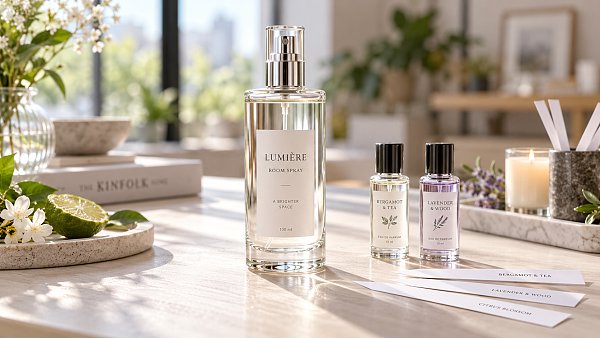
Choose home fragrances for room sprays by comparing how they perform in the finished formula, not by judging the fragrance oil alone. A useful candidate combines an acceptable scent profile with sustained perception after spraying, compatibility with the chosen carrier, and documentation that supports the intended use. A fragrance that smells powerful from a bottle may disperse quickly in a room or cause haze in a water-based spray.
Start by defining the desired effect: a brief burst that makes a room feel fresh, or a scent that remains noticeable after the initial spray has settled. Then screen fragrance concentrates in the intended solvent system and package, using the same dose and evaluation conditions. Longevity matters, but a longer-lasting candidate is not a practical choice if it clogs the sprayer, stains surfaces, or cannot be used at the required concentration.
Define what “lasts” means before comparing fragrances
Room-spray longevity has at least two components: the scent perceived in the air immediately after application and the scent that remains detectable later, potentially including material deposited on nearby surfaces. These are not interchangeable. A formula can produce a strong initial cloud but lose its character quickly; another may have a quieter opening and a more persistent background.
Set an evaluation endpoint that reflects the intended product positioning. For a quick bathroom refresh, immediate impact may carry more weight than a long dry-down. For a living area, a balanced transition and a pleasant residual scent may be more important. Avoid promising a specific duration until the finished product has been tested under conditions relevant to its intended use.
Room size, ventilation, temperature, humidity, spray quantity, and the presence of soft furnishings all affect perception. So does sensory adaptation: an evaluator who remains in the room may stop noticing a fragrance even while another person entering can detect it. Use fresh assessors where possible, or leave the room between observations, and record the method alongside the results.
Read the fragrance profile as a release pattern
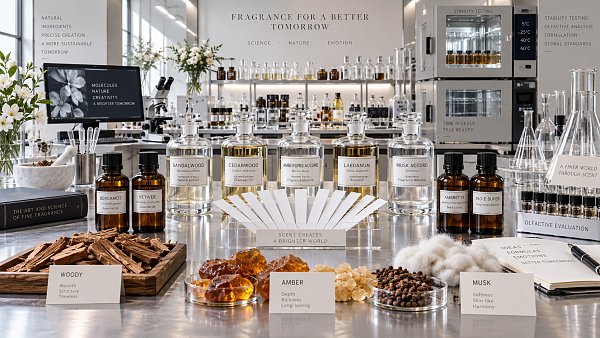
Top, middle, and base notes describe a fragrance’s perceived development rather than a precise measure of its lifetime. Top notes often create the first impression; middle notes provide the main character as the opening changes; base notes can contribute to a lingering dry-down. Individual ingredients differ in volatility, and their behavior also depends on the surrounding formulation.
A citrus-led fragrance may deliver the crisp opening expected of a freshening spray but become less distinctive later. A composition with more persistent floral, woody, amber, or musky facets may retain a recognizable character for longer. These are screening cues, not guarantees: two fragrances with similar descriptions can perform differently because their ingredient compositions and concentrations differ.
Ask suppliers for a sensory description that includes the dry-down, not just the opening. Check whether the later profile still fits the product concept. A base that extends perceived duration but turns a light linen scent heavy or sweet may be the wrong choice, even if it remains detectable longer.
Increasing fragrance concentration is not the only—or necessarily the best—way to improve persistence. It can change the scent balance, increase residue or compatibility problems, and affect safety limits. Compare several concentrations within the supplier’s permitted range before deciding whether the fragrance itself or the formula needs adjustment.
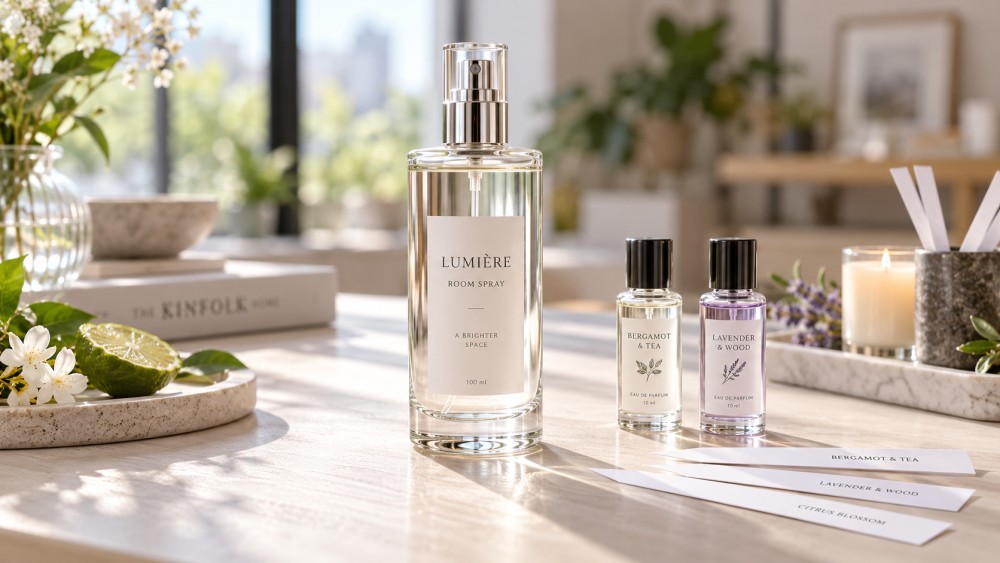
Match the concentrate to the carrier
The fragrance concentrate must remain compatible with the complete formulation, including solvents, water, solubilizers, preservatives, and any other functional ingredients. A clear concentrate added to a clear base can still become cloudy, separate, or change odor after mixing or storage.
Alcohol-based sprays
Alcohol-containing systems can provide rapid evaporation and an immediate scent release, but fragrance solubility still needs to be checked at the actual alcohol and water levels. A fragrance that dissolves in a high-alcohol laboratory blend may become hazy when the water content is increased or when the product is exposed to cooler conditions.
Alcohol content also affects flammability, packaging, transport, and labeling. Evaluate the finished formula against the requirements in its destination markets; do not assume that a fragrance supplier’s documentation covers the hazards of the complete product.
Water-based sprays
Water-based systems often need a suitable solubilizer or emulsification approach to distribute fragrance material. The required system depends on the fragrance composition and loading, not just the nominal amount of fragrance oil. A change from one scent to another can therefore require a new compatibility screen, even when the rest of the base is unchanged.
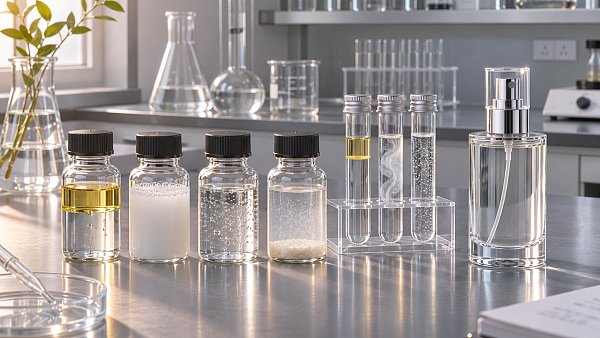
Look beyond appearance immediately after mixing. Observe whether the product develops haze, an oil layer, sediment, or an altered odor during storage. Solubilizer selection may also influence foam, spray behavior, residue, and the way the fragrance is released. A visually clear sample is a useful starting point, not proof that the system will remain stable or smell right in use.
For water-containing products, preservation also needs evaluation in the complete formula and package. Fragrance ingredients should not be assumed to provide adequate preservation. Use an appropriate microbiological risk assessment and preservation effectiveness testing where applicable.
Compare candidates under controlled spray conditions
A blotter or bottle evaluation is useful for initial odor screening, but it cannot substitute for a room test. The finished formulation, pump output, droplet distribution, and environment can change both the initial impression and the dry-down.
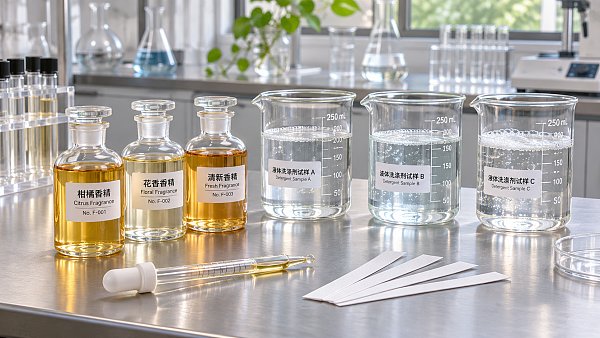
- Prepare comparable samples. Use the same base, fragrance loading, mixing procedure, fill volume, and sprayer where feasible. Record any changes needed to make a candidate stable; those changes may affect performance.
- Establish a baseline. Assess the unscented base for solvent odor and check the test room before each application. Strong background odors and residues from previous samples can distort comparisons.
- Standardize application. Use a defined number of sprays, the same spray direction and position, and a consistent room and ventilation setting. Confirm that pump output is reasonably consistent.
- Assess at predetermined intervals. Record initial intensity, character, any harsh or off notes, and the point at which the scent is no longer readily distinguishable from the background. Use the same intervals for each candidate.
- Repeat and compare. Rotate sample order and, where practical, use more than one assessor. Record room conditions and unusual observations rather than treating a single ranking as conclusive.
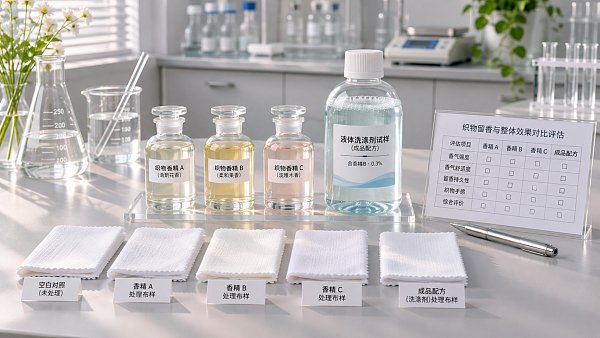
A simple scoring sheet can separate intensity from preference and character. For example, an evaluator can record whether the scent is detectable, whether it still resembles the intended profile, and whether the late-stage odor is acceptable. Do not equate the strongest sample with the best one: an overpowering opening followed by an unpleasant residue may fail the product brief.
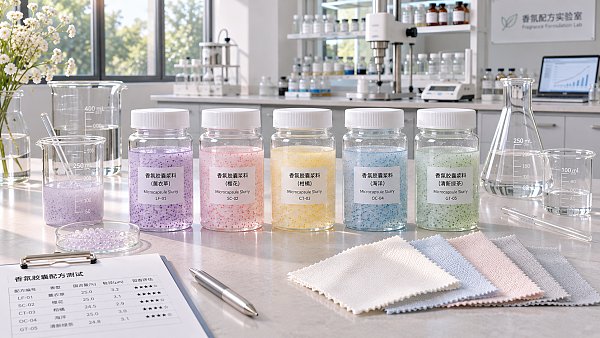
Keep any surface or fabric assessment separate from airborne longevity. Spray deposition can leave a scent after the air has cleared, but it can also leave visible marks. Unless the product is specifically intended and assessed for direct application to a surface, do not use a fabric test as evidence that direct spraying is suitable.
Check the bottle, pump, and treated environment
The chosen fragrance and carrier should be tested in the proposed container and dispensing system, not only in glass laboratory bottles. Inspect samples during storage for leakage, discoloration, deformation, seal changes, and changes in odor. Exercise the pump after storage and check for inconsistent output, drips, clogging, or changes in the spray pattern.
Some fragrance materials and solvents can interact with plastics, elastomers, coatings, or pump components. Packaging compatibility is formulation-specific: a component that works with one fragrance may behave differently with another. Obtain material compatibility information from suppliers, then verify it with the finished formula and actual components.
Spray pattern matters to the user’s experience. Large droplets may settle quickly and increase the chance of visible deposits, while a fine mist can improve distribution but also changes the exposure pattern. Assess spray quality alongside inhalation exposure, surface contact, and intended use instructions; do not optimize droplet size solely for stronger initial impact.
Evaluate accidental overspray on representative materials that users may reasonably have nearby, such as sealed hard surfaces or selected textiles, using an appropriate test procedure. Look for spotting, discoloration, tackiness, or persistent odor. Results depend on the surface and formula, so limited screening should not be presented as universal surface compatibility.
Use documentation to narrow the shortlist
Request current information for the exact fragrance version and intended application. Documentation helps determine whether the desired loading is feasible before substantial development work begins.
- Safety data sheet: Review hazards, handling, storage, and transport information for the concentrate, while recognizing that the finished mixture needs its own assessment.
- Applicable fragrance-use guidance: Request the supplier’s current IFRA conformity information, including the relevant product category and maximum use level where applicable. Confirm that the proposed room-spray use matches the category assessed.
- Composition and disclosure information: Obtain the ingredient and allergen information needed to assess labeling and other obligations in each destination market. Confidential formulations may require structured supplier support.
- Technical specifications: Review appearance, recommended storage, shelf life, and other agreed specifications. Ask how the supplier manages changes that could affect odor, stability, or regulatory status.
Conformity information for a fragrance compound does not replace a safety assessment of the finished spray. Consider the complete formula, likely exposure, package, directions, and local requirements together. In particular, an air-care application involves inhalation exposure, while incidental contact with skin or surfaces may also be relevant.
Deciding between the final candidates
Give priority to the candidate that meets the required sensory endpoint without forcing an unstable or impractical formula. A moderately persistent fragrance that stays clear, sprays consistently, and retains an acceptable dry-down may be a better development choice than a longer-lasting concentrate that requires extensive reformulation or leaves deposits.
Before approval, repeat the comparison with representative production materials and the intended packaging. Retain the test conditions and acceptance criteria with the formulation record. If the fragrance composition, carrier ratio, solubilizer, or pump changes later, reassess the properties that change could affect rather than assuming the original room test still applies.
Facing technical bottlenecks in manufacturing or looking for more efficient industrial solutions? Leave your details below and let the engineering experts at FCAS solve them for you.
We respect your privacy. Your information is strictly confidential.
Related News
 Microencapsulated FragrancesHow Can Citrus Terpene Fragrances Stay Fresh in Formulations?Keep citrus terpene fragrances fresh for longer. Explore practical formulation, packaging, and testing strategies to protect their vibrant scent.MORE+
 Microencapsulated FragrancesHow Fragrance Encapsulation Systems for Detergents WorkDiscover how fragrance encapsulation systems for detergents protect perfume, deposit on fabric, and release scent—and learn how to choose the right system.MORE+
 Microencapsulated FragrancesHow to Choose a Reliable Fragrance Carriers SupplierChoose a reliable fragrance carriers supplier with confidence. Compare formulation fit, quality controls, documentation, supply risks, and total cost.MORE+
 Microencapsulated FragrancesHow Can Microencapsulation Help Essential Oil Blends Last Longer?Essential Oil Blends can retain their aroma longer with the right microencapsulation strategy. Explore carrier choices, release mechanisms, and stability testing.MORE+
 Microencapsulated FragrancesHow to Choose a Fragrance Capsules Manufacturer for Your ProductChoose the right fragrance capsules manufacturer with practical tips on formulation testing, quality specifications, compliance, and supply reliability.MORE+
 Microencapsulated FragrancesHow to Choose Fragrance Bases for Consistent Product ScentFragrance Bases can make or break scent consistency. Learn how to compare performance, stability, supplier controls and true cost before you buy.MORE+
 Microencapsulated FragrancesHow to Choose an Encapsulated Perfumes ManufacturerChoose an encapsulated perfumes manufacturer with confidence. Compare fragrance performance, true costs, quality, compliance, and supply reliability.MORE+
 Microencapsulated FragrancesHow to Choose a Fabric Fragrances ManufacturerChoose a fabric fragrances manufacturer with confidence. Learn how to compare scent performance, quality controls, documentation, costs, and supply reliability.MORE+
 Microencapsulated FragrancesHow to Keep Encapsulated Perfumes for Fabric Care Fresh LongerKeep encapsulated perfumes for fabric care fresh longer with practical storage, handling, formulation and testing tips that help preserve lasting fragrance.MORE+
 Microencapsulated FragrancesHow to Choose Home Fragrances for Room Sprays That LastDiscover how to choose home fragrances for room sprays that last, with practical tips on scent longevity, formula compatibility, and testing.MORE+
 Microencapsulated FragrancesHow to Choose Bulk Cyclodextrins for Fragrance EncapsulationChoose bulk cyclodextrins for fragrance encapsulation with confidence. Compare formulation fit, scent retention, supplier quality, and total cost.MORE+
 Microencapsulated FragrancesHow to Choose Stable Synthetic Aroma Chemicals for EncapsulationChoose stable synthetic aroma chemicals for encapsulation with confidence. Learn how to assess compatibility, verify supplier quality, and protect aroma through storage and release.MORE+
 Microencapsulated FragrancesHow Do You Evaluate a Fragrance Encapsulation Systems Manufacturer?Evaluate a fragrance encapsulation systems manufacturer for compatibility, scent retention, quality, and compliance. Discover key checks to reduce risk and choose the right supplier.MORE+
 Microencapsulated FragrancesHow Does Microencapsulation Affect the Release of Fine Fragrances?Fine Fragrances meet controlled release: discover how microencapsulation shapes scent longevity, aroma balance, and performance—and what to test before choosing a system.MORE+
 Microencapsulated FragrancesHow Do Fragrance Bases Affect Scent Release After Encapsulation?Discover how Fragrance Bases shape scent release after encapsulation. Explore volatility, shell compatibility, and testing strategies to improve lasting aroma and product performance.MORE+
 Microencapsulated FragrancesHow Microencapsulation Helps Personal Care Fragrances Last LongerPersonal Care Fragrances can last longer with microencapsulation. Discover how controlled release, formula compatibility, and testing help deliver a lasting scent experience.MORE+
 Microencapsulated FragrancesHow to Select Air Freshener Fragrances That Last in Car FreshenersDiscover how to select air freshener fragrances for car fresheners with lasting appeal, balancing scent performance, carrier compatibility, heat stability, and packaging.MORE+
 Microencapsulated FragrancesHow Encapsulated Perfumes for Fabric Care Improve Scent LongevityEncapsulated perfumes for fabric care extend scent longevity through controlled release, fiber deposition, and smarter formulation—discover how to create lasting fragrance experiences.MORE+
 Microencapsulated FragrancesHow Fragrance Carriers for Detergents Improve Scent PerformanceFragrance carriers for detergents improve stability, fabric deposition, and long-lasting scent. Explore practical solutions for better wash-to-wear fragrance performance.MORE+
 Microencapsulated FragrancesHow to Add Encapsulated Laundry Fragrances Without Weakening Wash ResultsEncapsulated laundry fragrances: learn how to boost long-lasting scent while protecting cleaning power, stability, foam control, and fabric care.MORE+
 Microencapsulated FragrancesHow Laundry Fragrances for Liquid Detergents Improve Scent LongevityLaundry fragrances for liquid detergents: discover how fragrance design, deposition, and encapsulation create lasting fabric freshness and stronger product appeal.MORE+
 Microencapsulated FragrancesHow Fragrance Delivery Systems Improve Fabric Softener LongevityFragrance delivery systems for fabric softeners improve scent longevity through smart protection, reliable deposition, and controlled release for lasting freshness.MORE+
 Microencapsulated FragrancesEssential Oil Extracts Compared for Fragrance and Wellness UsesEssential Oil Extracts compared for fragrance and wellness: explore scent profiles, extraction methods, stability, safety, and sourcing insights for smarter formulation choices.MORE+
 Microencapsulated FragrancesHow Aroma Chemicals Shape Lasting Fine Fragrance PerformanceAroma chemicals for fine fragrance enhance longevity, diffusion, and signature retention. Discover how smart material selection creates stable, premium scent performance.MORE+
 Microencapsulated FragrancesHow Encapsulated Laundry Fragrances Improve Scent LongevityEncapsulated laundry fragrances deliver controlled scent release for longer-lasting freshness on fabrics. Discover how they improve deposition, durability, and re-bloom.MORE+
 Microencapsulated FragrancesHow to Select Perfume Ingredients for Long-Lasting FragrancePerfume Ingredients guide: learn how to select balanced, long-lasting fragrance materials for fine fragrance, personal care, laundry, and home care products.MORE+
 Microencapsulated FragrancesHow Fragrance Encapsulates Extend Scent Performance in Household ProductsFragrance encapsulates for household products deliver longer-lasting scent in laundry, fabric care, and cleaners. Discover release triggers, formula compatibility, and practical selection tips.MORE+
 Microencapsulated FragrancesWater Soluble Air Freshener Fragrances That Prevent CloudinessWater soluble air freshener fragrances: learn how to prevent cloudiness with smarter fragrance selection, solubilizers, water quality, and stability testing.MORE+
 Microencapsulated FragrancesHow Cyclodextrin Inclusion Complexes for Fragrances Improve Scent LongevityCyclodextrin inclusion complexes for fragrances enhance scent longevity through controlled release, improved stability, and application-specific performance. Discover how to optimize lasting aroma.MORE+
 Microencapsulated FragrancesHow Microencapsulated Fragrance Systems Improve Long-Lasting ScentMicroencapsulated fragrance systems protect scent, control release triggers, and deliver longer-lasting fragrance across laundry, personal care, and cleaning products.MORE+
 Microencapsulated FragrancesHow Aroma Chemicals Shape Consistent Fragrance PerformanceAroma Chemicals shape fragrance stability, diffusion, solubility, and lasting sensory appeal. Explore practical strategies for reliable performance across product formulas.MORE+
 Microencapsulated FragrancesWhat to Look for in a Scratch and Sniff Fragrances ManufacturerScratch and sniff fragrances manufacturer guide: evaluate encapsulation, print compatibility, compliance documents, quality control, and total sourcing cost for reliable sensory campaigns.MORE+
 Microencapsulated FragrancesWhat a Reliable Perfume Compounds Manufacturer Should Offer in 2026Perfume compounds manufacturer selection in 2026 demands more than scent creativity. Learn how to assess consistency, compliance, scalability, and supply reliability before you buy.MORE+
 Microencapsulated FragrancesHow Fragrance Capsules for Detergents Improve Scent LongevityFragrance capsules for detergents help protect perfume during washing and release scent gradually, keeping clothes fresher longer. Learn how they work and why they’re worth choosing.MORE+
 Microencapsulated FragrancesWhy Terpene Fragrances Supplier Options Matter in Premium Scent DevelopmentTerpene fragrances supplier selection shapes premium scent quality, stability, compliance, and scale. Discover how to choose the right partner for safer, more consistent fragrance development.MORE+