How to Apply Microbial Pesticides to Foliage Effectively
When a foliar spray reaches the tops of leaves but misses the undersides, pests or disease can continue developing even though the crop looks well treated. Microbial products can also lose effectiveness when mixed with incompatible materials, left too long in the tank, or applied under unsuitable conditions.
To apply microbial pesticides for foliar application effectively, first match the registered product to the crop and target, then protect the formulation during mixing and deliver an even deposit to the surfaces where it needs to work. Timing, water quality, equipment calibration, and follow-up scouting are just as important as the product itself. Always follow the local product label; its directions take priority over general guidance.
Start with the target, not the spray tank
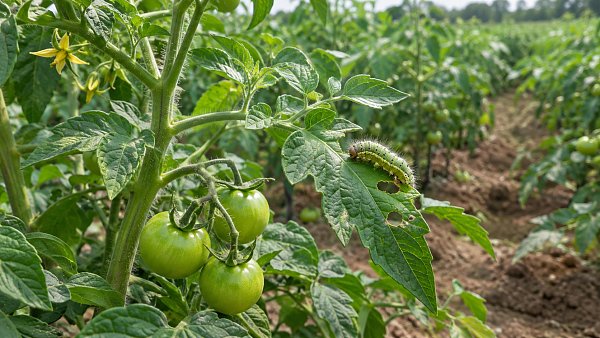
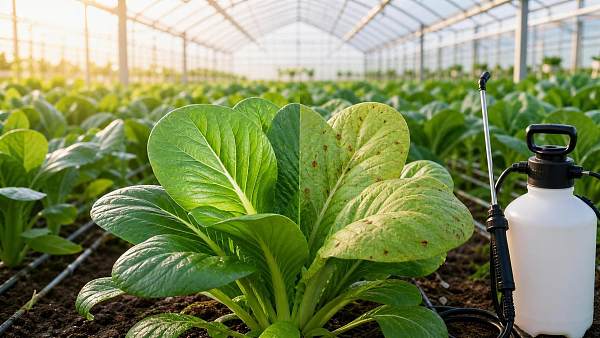
Inspect the crop before choosing an application date. Identify the pest or disease, check where it is present, and note its stage of development. A product intended for one target will not necessarily control another, even when both cause similar leaf damage. Feeding marks, discoloration, and leaf spots can have several causes, so confirm uncertain symptoms before treating.
Microbial pesticides contain microorganisms or their components, and their modes of action differ. Some insect-control products need to be eaten by susceptible larvae; others act through contact or infection. A foliar disease product may work mainly by establishing itself on the plant surface or by limiting pathogen development. Check the label for the target organism, crop, application timing, and any restrictions on use.
For a product that must be ingested, fresh spray deposits need to be on the foliage the target is eating. With a contact-acting product, the spray must reach the pest itself or the site specified on the label. For preventive disease applications, waiting until symptoms are widespread may leave too little healthy tissue protected. Do not assume that a microbial treatment will reverse existing damage.
Assess pressure across the field or growing area rather than at a single convenient spot. Look inside the canopy, at leaf undersides, and at new growth. These observations help determine whether the product is appropriate now and whether coverage will be difficult. Where pressure is already high, follow the label and the established integrated pest management plan for selecting an appropriate response.
Check the product before opening it
Read the current label for the exact formulation in hand. Products containing similar microbial species can have different handling requirements, rates, mixing directions, and permitted uses. Confirm that the intended crop, target, equipment, and application method are allowed in the place of use.
Inspect the container and storage history. Microbial formulations may be sensitive to excessive heat, freezing, moisture, or prolonged storage, depending on the product. Check the expiration or use-by information where provided, and do not use material that has been stored outside the stated conditions without confirmation from the manufacturer. A normal-looking powder or liquid is not proof that the organism remains viable.
Put on the personal protective equipment specified on the label before measuring or mixing. Pay attention to inhalation protection and dust control where required, particularly when handling dry formulations. Keep unprotected people and animals away from the mixing area, and observe all label restrictions for entry after application.
Prepare water and equipment before mixing
A clean sprayer matters for microbial treatments. Residues from disinfectants, strongly alkaline cleaners, or previous pesticide applications may affect a formulation or damage the crop. Clean the tank, lines, filters, and nozzles according to the previous product’s label and equipment instructions, then rinse as directed. Dispose of rinsate lawfully; do not empty it into drains, waterways, or other unapproved areas.
Use water that meets the microbial product’s specifications. Mud, suspended particles, extreme pH, or water treatment chemicals can interfere with some formulations. Requirements vary: do not assume that every microorganism needs the same pH or that a particular water source is unsuitable. If the label specifies limits or treatment procedures, check them before filling. When water quality is unknown and the label makes it important, test the supply or obtain guidance from the product manufacturer.
Inspect screens and nozzles for wear or blockage. Choose equipment that can provide the coverage described on the label without creating excessive drift. Some formulations have particle-size or filtration requirements, so check the label before installing very fine screens. Replace worn nozzles rather than trying to compensate for uneven output by increasing pressure.
Calibrate for the actual canopy
Set the sprayer to deliver the labeled product rate and a spray volume suitable for the crop and application method. Ground speed, nozzle output, pressure, and boom or nozzle position all affect the amount deposited. Measure output with clean water, check that nozzles deliver consistently, and confirm that the planned travel speed can be maintained.
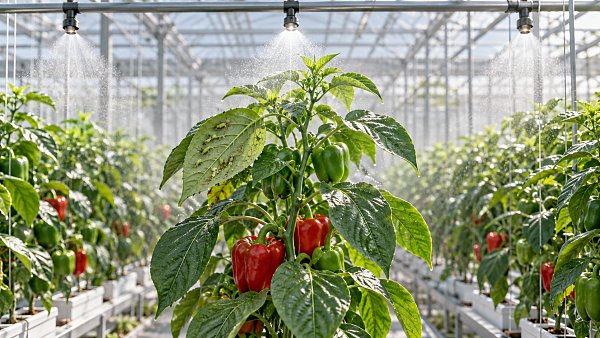
A dense canopy often needs a different spray volume or nozzle arrangement from a small, open crop. More water is not automatically better: excessive runoff wastes product and may move it off the intended surface. Conversely, too little carrier can leave untreated areas. Stay within label directions and adjust the setup to achieve an even deposit, especially on lower leaves and undersides when those are the relevant targets.
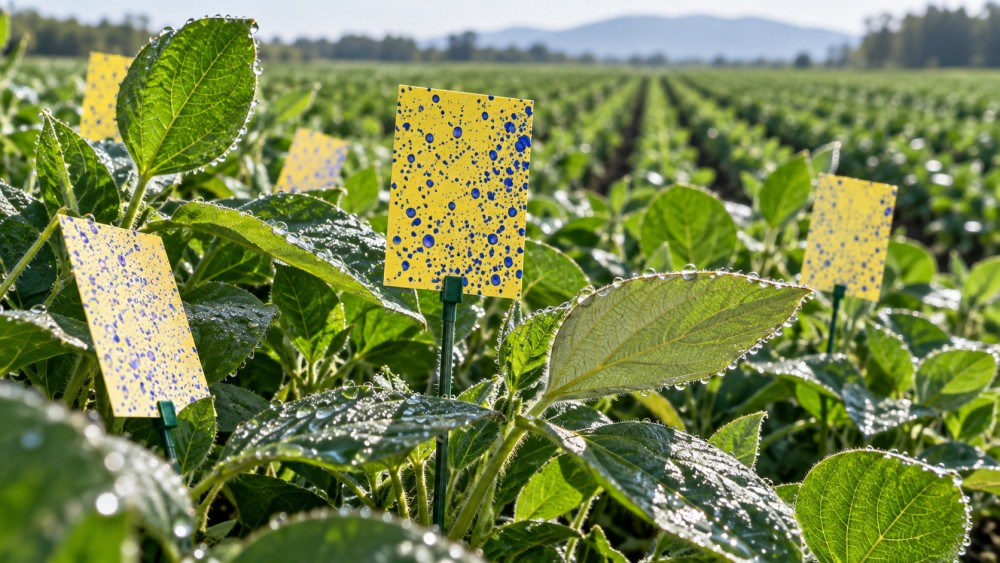
Water-sensitive spray cards placed at different heights and orientations can help reveal gaps in coverage. Include protected locations within the canopy, not just exposed upper leaves. Read the cards as a coverage check, not as proof that the microbial product is viable or that the treatment will control the target.
Mix only what can be applied promptly
Follow the label’s mixing sequence. A typical approach is to start with a partially filled tank, begin the agitation specified for the product, add the measured formulation as directed, and then add the remaining water. Some powders or granules require premixing; others should be added directly. Use the product-specific instructions rather than assuming one procedure fits every formulation.
Maintain the recommended agitation during application so that the dose remains uniform. Avoid unnecessary delays after mixing, and observe any stated limit on how long the spray mixture may remain in the tank. Do not leave a prepared mixture overnight unless the label explicitly permits it. Prepare an amount that can be used on the intended area at the calibrated rate.
Tank mixing needs separate confirmation. A fertilizer, fungicide, insecticide, disinfectant, or adjuvant may be physically mixable but still interfere with a living microorganism or increase crop injury risk. A jar test can reveal obvious settling, separation, or clumping, but it cannot establish biological compatibility or crop safety. Use only combinations permitted by the relevant labels and supported by the microbial product manufacturer’s compatibility guidance. Where permission or compatibility is uncertain, apply separately according to label directions.
Choose a workable application window
Weather affects both spray placement and the conditions a microorganism encounters after application. Avoid spraying when wind is likely to cause drift or prevent the spray from reaching the intended canopy. Follow label requirements and local restrictions on wind, buffer zones, and application near sensitive areas.
Intense sunlight, high temperatures, and rapid drying can reduce the persistence or activity of some microbial formulations. Other products need particular humidity or leaf-wetness conditions to perform as intended. An evening or early-morning application may be suitable for some products, but it is not a universal rule: use the product’s instructions and consider whether foliage will remain wet long enough for disease risks or interfere with application.
Rain and overhead irrigation can remove deposits before they have had time to act. Check the label for any required rainfast period and plan around the forecast. Do not assume a treatment must be repeated after every shower; assess the timing, label instructions, and field conditions before deciding. Irrigation scheduling should also account for any product-specific directions.
Protect pollinators and other non-target organisms by following all label precautions, including restrictions related to flowering crops, application timing, and nearby habitats. Biological origin does not remove the need to manage exposure or drift.
Apply to the surfaces that matter
During spraying, keep the calibrated speed and pressure steady. Check that the boom height or hand-held nozzle position remains appropriate as terrain and canopy height change. Watch for blocked nozzles, changes in spray pattern, leaks, and areas that are missed at row ends or around obstacles. Stop and correct a problem rather than continuing with an uneven pattern.
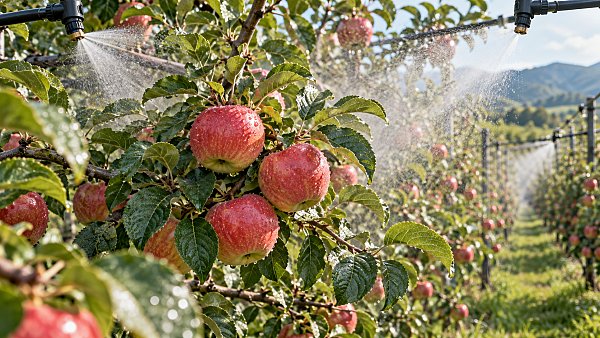
Direct the spray according to the pest’s location and the equipment’s design. A treatment aimed only at the top of a leaf canopy may not reach insects feeding underneath or disease-prone foliage inside the crop. Air assistance, nozzle orientation, and travel direction can influence penetration, but each must be adjusted to the crop and label; stronger air or higher pressure may increase drift without improving useful deposition.
Do not exceed the labeled rate to compensate for poor coverage. A heavier dose cannot reliably reach a surface that the spray misses, and it may breach use restrictions or increase the chance of crop injury. Correct the delivery problem first. If foliage is so dense that the equipment cannot reach the target, reassess the application method rather than assuming that another pass with the same setup will solve it.
Judge performance after the application
Record the product and batch details, rate, treated area, spray volume, application time, weather, crop stage, and observed target pressure, along with any records required locally. These details make it easier to investigate an uneven result or compare conditions at the next application.
Return to representative locations and inspect the same parts of the canopy that informed the first decision. The appropriate assessment interval depends on the product and target. Some microbial insecticides do not produce immediate visible mortality, and feeding damage already present will not disappear. Look for changes in live pest numbers, feeding activity, new disease symptoms, or other label-relevant indicators rather than judging solely by old damage.
When control is disappointing, review the sequence before repeating the treatment:
- Target and timing: Was the pest correctly identified and at a susceptible stage? Was a preventive product applied before the disease became established?
- Coverage: Did the spray reach lower leaves, undersides, and protected growth, or were deposits concentrated on exposed foliage?
- Product condition: Was the formulation within its stated storage life and kept under the required conditions?
- Mixing and weather: Were water, tank partners, holding time, rainfall, and drying conditions consistent with label directions?
- Pressure and reinfestation: Was the initial infestation beyond the product’s suitable use conditions, or did new pests arrive after treatment?
Use the findings to decide whether a further application is permitted and justified. Respect the labeled interval, maximum number of applications, and any preharvest or re-entry restrictions. If the cause remains unclear, retain the application record and product details for a discussion with the manufacturer or a qualified local crop adviser before changing the program.
Facing technical bottlenecks in manufacturing or looking for more efficient industrial solutions? Leave your details below and let the engineering experts at FCAS solve them for you.
We respect your privacy. Your information is strictly confidential.
Related News
 Targeted Bio-pesticides & APIsWhen Should You Apply Botanical Insecticides for Fruit Trees?When should you apply botanical insecticides for fruit trees? Discover how to time treatments for vulnerable pests while protecting pollinators and your harvest.MORE+
 Targeted Bio-pesticides & APIsHow to Use Microbial Fungicides for Soil Borne DiseasesDiscover how to use microbial fungicides for soil borne diseases, from product selection to root-zone application, and build a more effective crop protection program.MORE+
 Targeted Bio-pesticides & APIsHow to Choose Insecticides Based on the Pest and CropChoose insecticides with confidence. Learn how to match treatments to pests and crops while protecting beneficial insects and meeting harvest requirements.MORE+
 Targeted Bio-pesticides & APIsHow Are Fungicide APIs Used in Crop Protection Products?Fungicide APIs for crop protection power disease control products. Discover how formulation, application and resistance management affect results.MORE+
 Targeted Bio-pesticides & APIsHow to Evaluate Quality Control at a Botanical Insecticides FactoryEvaluate a botanical insecticides factory with practical checks for sourcing, testing, batch traceability and stability. Learn how to identify quality risks before choosing a supplier.MORE+
 Targeted Bio-pesticides & APIsHow Microbial Insecticides for Public Health Control MosquitoesDiscover how microbial insecticides for public health control mosquito larvae, and learn how to choose formulations and improve field results.MORE+
 Targeted Bio-pesticides & APIsHow Effective Are Botanical Fungicides for Anthracnose?Botanical fungicides for anthracnose can help suppress disease, but results vary. Discover what affects performance and how to choose and use them effectively.MORE+
 Targeted Bio-pesticides & APIsHow to Select Insecticide APIs for Ultra Low Volume FormulationsExplore how to select insecticide APIs for ultra low volume formulations, from stability and droplet performance to regulatory compliance and supply.MORE+
 Targeted Bio-pesticides & APIsEFSA Publishes Peer Review of Trichoderma asperellum ICC012EFSA’s peer review of Trichoderma asperellum ICC012 finds no safety concerns for its assessed EU uses. Explore the implications for biopesticide compliance.MORE+
 Targeted Bio-pesticides & APIsHow to Apply Microbial Pesticides to Foliage EffectivelyMicrobial pesticides for foliar application work best with proper mixing, timing, and leaf coverage. Discover practical steps to improve results and avoid common mistakes.MORE+
 Targeted Bio-pesticides & APIsHow to Use Botanical Fungicides for Fruits EffectivelyBotanical fungicides for fruits can help protect your crop when used correctly. Learn how to choose, time, and apply treatments for healthier fruit.MORE+
 Targeted Bio-pesticides & APIsHow Are Insecticide APIs Used in Public Health Programs?Insecticide APIs for public health support vector control through sprays, treated nets and larvicides. Discover how formulation, resistance and safety shape product selection.MORE+
 Targeted Bio-pesticides & APIsGerman Research Reinforces Pesticide Risks to Aquatic EcosystemsPesticide risks to aquatic ecosystems gain new support from German research. Explore the findings and why holistic approaches matter for agriculture and environmental protection.MORE+
 Targeted Bio-pesticides & APIsSulfonium Modification Offers a Potential Route Around Antifungal ResistanceSulfonium modification shows potential against antifungal resistance in wax moth larvae. Explore what this early finding could mean for future antifungal drug development.MORE+
 Targeted Bio-pesticides & APIsHow Do Microbial Fungicides for Seed Treatment Reduce Damping-Off?Discover how microbial fungicides for seed treatment help reduce damping-off. Learn what to check in strains, coatings, and efficacy data to protect seedlings.MORE+
 Targeted Bio-pesticides & APIsHow to Evaluate a Microbial Insecticides Supplier Before OrderingEvaluate a microbial insecticides supplier with confidence. Learn to verify potency, shelf life, compliance, and delivery quality before ordering to reduce risk and protect your budget.MORE+
 Targeted Bio-pesticides & APIsWhich Quality Specifications Matter When Sourcing Bioherbicide APIs?Sourcing Bioherbicide APIs? Discover the quality specs that matter—from identity and potency to impurities and stability—to compare suppliers and buy with confidence.MORE+
 Targeted Bio-pesticides & APIsHow to Select Residue-Compliant Insect Growth Regulators for CropsSelect residue compliant insect growth regulators with confidence. Discover key checks for crop approvals, export MRLs, harvest intervals, and testing to make informed treatment decisions.MORE+
 Targeted Bio-pesticides & APIsHow to Choose a Reliable Supplier of Insect Growth RegulatorsChoose a reliable insect growth regulators supplier with confidence. Learn how to verify quality, regulatory fit, traceability, and delivery before committing to your next order.MORE+
 Targeted Bio-pesticides & APIsHow Botanical Insecticides Protect Vegetable Crops EffectivelyBotanical insecticides for vegetables help growers improve pest control, spray coverage, IPM compatibility, and crop protection results. Explore practical application insights.MORE+
 Targeted Bio-pesticides & APIsChoosing Microbial Fungicides for Foliar Diseases in Integrated Crop ProgramsMicrobial fungicides for foliar diseases: learn how to match biology, formulation, tank compatibility, and timing for stronger integrated crop protection.MORE+
 Targeted Bio-pesticides & APIsHow Microbial Insecticides Control Caterpillars With Lower Crop Residue RiskMicrobial insecticides for caterpillars help protect crops with targeted early-larval control and lower residue-management pressure. Learn timing, coverage, compliance, and scouting essentials.MORE+
 Targeted Bio-pesticides & APIsInsecticides Explained Through Labels, Active Ingredients, and SafetyInsecticides explained through labels, active ingredients, formulations, and safety. Learn how to compare products, manage risk, and make informed crop protection decisions.MORE+
 Targeted Bio-pesticides & APIsHow to Evaluate Pesticide Suspension Concentrates for Field StabilityPesticide Suspension Concentrates: learn how to evaluate field stability, redispersibility, dilution, tank-mix compatibility, and spray safety for reliable performance.MORE+
 Targeted Bio-pesticides & APIsHow Microbial Inoculants for Seed Treatment Improve Early Crop VigorDiscover how microbial inoculants for seed treatment support early crop vigor through viable microbes, precise application, compatibility, storage, and stronger root establishment.MORE+
 Targeted Bio-pesticides & APIsSelecting Fungicide APIs for Soluble Liquid FormulationsFungicide APIs for soluble liquid formulations: explore solubility, stability, solvent selection, compliance, and sourcing factors for scalable product development.MORE+
 Targeted Bio-pesticides & APIsHow to Qualify a Pesticide Formulation Intermediates SupplierChoose a reliable pesticide formulation intermediates supplier with proven quality control, traceability, formulation testing, and change management expertise.MORE+
 Targeted Bio-pesticides & APIsHow to Evaluate a Microbial Insecticides Factory Before You Place an OrderEvaluate a microbial insecticides factory with confidence. Compare strain control, formulation stability, batch consistency, documents, logistics, and real cost before ordering.MORE+
 Targeted Bio-pesticides & APIsHow to Select Insecticide APIs for Reliable Stored Grain ProtectionInsecticide APIs for stored grain: learn how to select compliant, reliable actives for pest control, residue limits, formulation fit, and supplier quality.MORE+
 Targeted Bio-pesticides & APIsHow Botanical Insecticides Support Greenhouse Pest ControlBotanical insecticides for greenhouse use: learn practical IPM strategies for pest control, spray coverage, crop safety, and beneficial insect protection.MORE+
 Targeted Bio-pesticides & APIsChoosing Fungicide APIs for Stable Water Dispersible GranulesFungicide APIs for water dispersible granules: learn how particle behavior, wettability, carrier compatibility, and stability drive reliable WDG performance.MORE+
 Targeted Bio-pesticides & APIsHow Botanical Fungicides Protect Vegetables Without Residue RisksBotanical fungicides for vegetables help reduce residue risks while supporting effective disease control, compliance, and market-ready crop quality.MORE+
 Targeted Bio-pesticides & APIsHow to Select Intermediates for Stable Emulsifiable ConcentratesPesticide formulation intermediates for emulsifiable concentrate: learn how to select solvents and emulsifiers for robust solubility, dilution stability, hard-water performance, and scalable EC products.MORE+
 Targeted Bio-pesticides & APIsHow Organic Botanical Insecticides Can Improve Integrated Pest ManagementOrganic botanical insecticides can strengthen IPM through targeted pest control, smarter monitoring, safer application, and better protection of crops and beneficial insects.MORE+
 Targeted Bio-pesticides & APIsWhat to Evaluate Before Choosing a Botanical Insecticides ManufacturerBotanical insecticides manufacturer selection guide: evaluate raw material traceability, formulation stability, regulatory documents, supply continuity, and cost per hectare.MORE+
 Targeted Bio-pesticides & APIsHow Chitin Synthesis Inhibitors Control Insects Without ResistanceChitin synthesis inhibitor insect growth regulators disrupt pest development. Learn timing, coverage, monitoring, and resistance-management strategies for smarter control.MORE+
 Targeted Bio-pesticides & APIsIs Microbial Inoculants Wholesale the Right Move for Cost ControlMicrobial inoculants wholesale can cut costs—but only when storage, shelf life, logistics, and supplier consistency protect product performance. Learn what distributors must check before buying.MORE+
 Targeted Bio-pesticides & APIsWhen Microbial Fungicides Work Best for Greenhouse CropsMicrobial fungicides for greenhouse crops work best when applied early under balanced humidity, clean sanitation, and strong scouting. Learn the best timing, crop stages, and use tips for better disease control.MORE+
 Targeted Bio-pesticides & APIsBiocontrol Agents for Fruit Crops That Help Cut Residue and Pest PressureBiocontrol agents for fruit crops help reduce residue risk, ease pest pressure, and support resistance management. Learn where they fit best for orchards and vineyards.MORE+
 Targeted Bio-pesticides & APIsWhen Microbial Fungicides for Foliar Diseases Work Better Than ChemicalsMicrobial fungicides for foliar diseases can outperform chemicals when timing, coverage, and residue control matter most. See where they deliver stronger field results.MORE+