What Affects the Bulk Price of Food Preservation Ingredients?
Understanding the food preservation ingredients bulk price is essential for procurement teams balancing cost, product performance, and supply reliability. Prices can vary with ingredient type, purity, order volume, regulatory requirements, packaging, and transportation conditions. Supplier consistency and documentation also affect the total cost of sourcing. A useful comparison starts with a question: what will the ingredient cost once it is qualified, delivered, stored, and used in the finished food?
The ingredient category sets the starting point
“Food preservation ingredients” covers materials with different functions and manufacturing routes. Antimicrobial preservatives, antioxidants, acidity regulators, and preservation blends do not solve the same problem. Comparing their prices by weight alone can therefore produce a misleading shortlist.
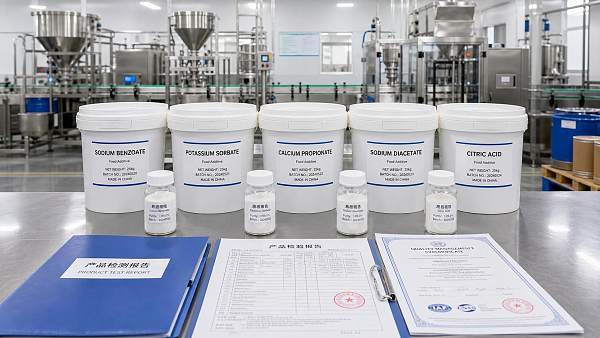
For example, potassium sorbate may be considered where control of yeasts and molds is relevant, while an antioxidant may be selected to slow oxidative deterioration in a fat-containing product. Neither is a direct substitute for the other. The appropriate choice depends on the food matrix, the organisms or degradation mechanisms of concern, processing conditions, packaging, and the intended shelf life.
Even ingredients serving a similar purpose can differ in solubility, sensory impact, and behavior at a given pH. Acidulants can support preservation by changing the conditions in a food, but their effect depends on formulation and should not be treated as a stand-alone safety guarantee. Before requesting prices, procurement should establish which materials are technically acceptable with the product development and food safety teams.
Specification differences can explain a large price gap
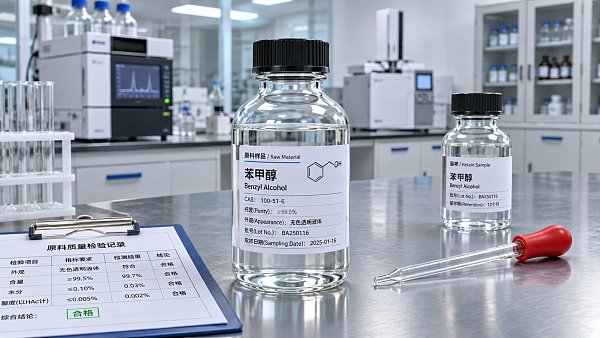
Two quotes carrying the same ingredient name may cover materially different products. Food-grade status is a starting point, not a complete specification. Buyers should compare identity, assay, moisture, relevant impurities, microbiological limits, physical form, and any application-specific requirements.
Particle size can affect dust generation, handling, and dispersion. A liquid preparation may be easier to dose but contain less active material per kilogram than a dry ingredient. A blend may include carriers or other components that influence both performance and labeling. If the quotation does not state the composition and basis of the quoted weight, the apparent discount may disappear when the products are normalized.
Tighter specifications can require additional processing, testing, or segregation and may therefore cost more. That premium is justified only when the requirement serves a real need. Conversely, relaxing a specification without reviewing its effect on shelf life or production can shift costs from purchasing to quality control, waste, or reformulation.
Compare cost at the point of use
A practical comparison uses the delivered cost of each ingredient and the validated quantity needed per unit of finished food. For a straightforward single-ingredient comparison, multiply the landed price per kilogram by the kilograms used per tonne of finished product. Keep the units consistent and include expected handling losses where relevant.
For products with different active concentrations, buyers can also calculate the cost per kilogram of active material by dividing the delivered price per kilogram by the active fraction. This is a screening tool, not proof of equivalent performance. Different formulations can behave differently in the same food, and the usable dosage must be established through technical assessment and applicable regulatory review.
A lower-cost preservative that dissolves poorly, affects flavor, or requires an additional processing step may not be cheaper in practice. Likewise, a higher-priced blend is not automatically more economical simply because a supplier recommends a lower dose. Ask for the basis of the recommendation and confirm it in the intended application.
Volume matters, but so does the ordering pattern
Larger orders can spread production, handling, and freight costs across more material. Suppliers may also offer better terms when demand is predictable enough to support production planning. However, a price break is not free if it requires the buyer to hold stock longer than is operationally sensible.
Check the remaining shelf life on arrival, storage conditions, consumption rate, and warehouse capacity before committing to a larger quantity. Ingredients sensitive to moisture, heat, or oxygen may need more careful storage. A damaged package or material that expires before use erodes the saving from a lower unit price.
It is also worth separating annual volume from shipment size. A supplier may be willing to discuss scheduled deliveries against a forecast or contract, but the commercial terms should make clear who owns the inventory, whether releases are binding, and what happens if demand changes. For variable production schedules, flexibility may be worth more than the lowest full-container quote.
Raw materials, manufacturing, and source availability
Bulk prices reflect more than the final processing step. Feedstock availability, energy costs, packaging materials, plant utilization, and the location of production can all influence supplier quotations. Agricultural or fermentation-derived ingredients may also be exposed to variability in biological inputs and processing yields. The significance of each factor depends on the ingredient and its supply chain.
Ask whether a quotation is fixed for a defined period or subject to adjustment, and what notice applies to changes. A low introductory price with an undefined adjustment mechanism can be difficult to budget. For recurring purchases, procurement may prefer a transparent review process tied to mutually agreed inputs rather than an open-ended promise of stability.
Source concentration deserves attention too. Multiple distributors are not necessarily multiple supply sources if they purchase from the same manufacturing site. Where continuity is critical, request the manufacturer and production location, subject to commercial confidentiality, and understand whether an alternate site or qualified ingredient is available.
Regulatory fit and documentation have commercial value
An ingredient that is acceptable for one food or destination may not be acceptable in another. Permitted uses, conditions of use, labeling, and purity requirements can vary by jurisdiction and product category. The relevant regulatory team should verify the intended application and each destination market before a purchase decision is finalized; a supplier’s general food-grade claim does not replace that review.
Documentation also affects how quickly material can be approved and released. Depending on company policy and the application, a buyer may need a current specification, batch certificate of analysis, safety data sheet, traceability information, allergen information, origin details, or statements supporting particular customer requirements. The list should be agreed before quotations are compared, including the language and format needed.
A cheaper offer may become expensive if documentation arrives late, analytical methods do not match the agreed specification, or a batch cannot be traced. Buyers should establish how out-of-specification results, changes to manufacturing sites, and deviations from the approved product will be communicated. Certification claims, where required, should be checked for relevance, validity, scope, and the actual production site rather than assumed from a logo on a brochure.
Freight and packaging change the landed price
The price printed on a quotation is only comparable when the delivery basis is clear. Confirm the named location and applicable Incoterms rule, then identify which party pays for freight, insurance, customs clearance, duties, taxes, and delivery to the receiving warehouse. The responsibilities associated with a term should not be inferred from an abbreviation alone; the named place and contract details matter.
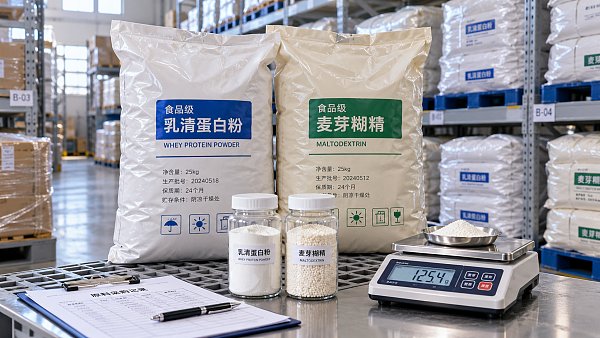
Packaging affects both logistics and factory handling. Small bags may suit controlled dispensing but add handling time and packaging waste. Larger packs can reduce handling per kilogram, provided the site has suitable equipment and can protect the contents after opening. For liquids, drum or intermediate bulk container selection affects unloading, storage, and residual material.
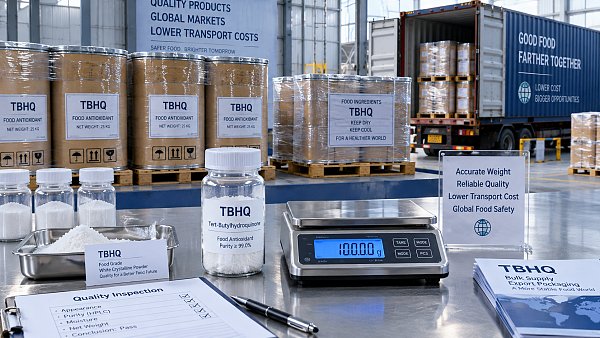
Ask whether pallets, liners, tamper evidence, protective wrapping, and any required temperature controls are included. Confirm the net weight per package and the supplier’s response to damaged or contaminated shipments. These details are easy to overlook until an apparently competitive shipment arrives in a form the receiving site cannot use efficiently.
How to make quotations genuinely comparable
A useful request for quotation gives suppliers the same technical and commercial baseline. It should identify the intended food application and destination markets where appropriate, the required specification, estimated annual demand, shipment size, delivery location, packaging, and document requirements. State whether substitutes or alternative grades may be proposed separately.
When the offers arrive, normalize them on these points:
- Product basis: identity, active content, physical form, specification, and any carriers or additional ingredients.
- Commercial basis: currency, unit, minimum order quantity, price validity, payment terms, and any volume commitments.
- Delivery basis: named delivery point, freight and import responsibilities, lead time, packaging, and remaining shelf life on arrival.
- Qualification basis: required documents, sample availability, batch consistency, change notification, and complaint handling.
The lowest compliant bid still needs a supply-risk check. A long lead time may require more safety stock; a short quote-validity period may expose the buyer to repricing before approval is complete. Payment terms affect working capital, and minimum order quantities can limit the advantage of a lower price. Where the numbers are uncertain, record the assumptions rather than presenting the landed-cost calculation as a precise forecast.
Treat supplier qualification as part of the purchasing decision
For a preservation ingredient, a change of source is not always a simple substitution. A sample can meet a paper specification and still behave differently during mixing, heating, storage, or sensory evaluation. The qualification plan should reflect the risk: document review and incoming tests may be sufficient in some cases, while others warrant production trials and shelf-life studies.
Agree on the cost and timing of those activities internally before counting a proposed saving. Ask suppliers how they maintain batch consistency, how far back material can be traced, and how much notice they give before a formulation, process, or site change. A second source is useful only if it has been qualified for the relevant product and can supply when needed.
FCAS approaches food ingredients through their applications as well as their specifications, a useful perspective when purchasing decisions cross technical, regulatory, and supply-chain boundaries. Before awarding a contract, bring those functions together around one comparison: the cost per unit of finished food, the evidence supporting performance, and the conditions under which the material will actually arrive and be used.
Facing technical bottlenecks in manufacturing or looking for more efficient industrial solutions? Leave your details below and let the engineering experts at FCAS solve them for you.
We respect your privacy. Your information is strictly confidential.
Related News
 Antioxidants & Natural PreservativesHow Do Food Preservative Blends for Dairy Beverages Work?Food preservative blends for dairy beverages work differently across formulations. Discover how pH, processing and testing shape shelf-life performance.MORE+
 Antioxidants & Natural PreservativesIndexBox Forecasts Moderate BHT Market Growth Through 2035BHT market growth is forecast at 2.5% annually through 2035. Explore the demand drivers and what the outlook means for suppliers and buyers.MORE+
 Antioxidants & Natural PreservativesHow Do Food Preservation Ingredients Extend Shelf Life?Food Preservation Ingredients extend shelf life by slowing microbial growth and oxidation. Discover how to select and validate the right solution for your product.MORE+
 Antioxidants & Natural PreservativesWhat Drives Antioxidant Blends Bulk Price Changes?Discover what drives antioxidant blends bulk price changes, from ingredient costs to delivery terms, and learn how to compare quotes for better value.MORE+
 Antioxidants & Natural PreservativesWhat Affects Benzyl Alcohol Wholesale Pricing and Quality?Benzyl alcohol wholesale prices vary by purity, packaging, and delivery terms. Learn how to compare quality and total costs before you buy.MORE+
 Antioxidants & Natural PreservativesHow Preservative Blends Help Control Spoilage in FoodsPreservative Blends can help control food spoilage and support shelf life. Discover how to select and validate the right system for your product.MORE+
 Antioxidants & Natural PreservativesWhat Affects the Bulk Price of Food Preservation Ingredients?Explore what drives the food preservation ingredients bulk price, from specifications and order volume to freight, compliance, and supplier reliability.MORE+
 Antioxidants & Natural PreservativesHow to Choose Tocopherols for Food Oxidation ControlDiscover how to choose Tocopherols for food oxidation control. Compare profiles, dosage, formulation compatibility, and shelf-life testing.MORE+
 Antioxidants & Natural PreservativesHow Does pH Affect the Performance of Antimicrobial Preservatives?Antimicrobial Preservatives perform differently as pH shifts. Learn how to select effective systems, avoid formulation pitfalls, and validate lasting product protection.MORE+
 Antioxidants & Natural PreservativesHow to Select Natural Food Preservatives for Chilled Ready MealsSelect natural food preservatives for ready meals with confidence. Compare options, assess pH and packaging, and validate shelf life while protecting taste. Explore the guide.MORE+
 Antioxidants & Natural PreservativesWhat Affects the Bulk Price of Antioxidant Blends for Food Use?Compare antioxidant blends bulk price factors, from active concentration to dosage and delivery costs. Learn how to assess quotes and choose better value for food applications.MORE+
 Antioxidants & Natural PreservativesHow Do Propionates Prevent Mold Without Slowing Yeast in Bread?Propionates help delay mold in bread while allowing effective proofing. Discover how pH, dosage, and process control balance longer shelf life with yeast performance.MORE+
 Antioxidants & Natural PreservativesWhat Makes Stable Synthetic Aroma Chemicals Resist Degradation?Learn why stable synthetic aroma chemicals resist degradation, how formulation and packaging affect performance, and what to test when choosing ingredients for lasting fragrance quality.MORE+
 Antioxidants & Natural PreservativesHow Do You Choose a Natural Food Preservatives Supplier You Can Trust?Choose a natural food preservatives supplier you can trust. Learn how to verify compliance, validate performance, and assess supply reliability before you buy.MORE+
 Antioxidants & Natural PreservativesWhat Determines TBHQ Bulk Price and How Can You Compare Quotes?Compare tbhq bulk price with confidence. Discover key cost drivers, specification checks, and landed-cost essentials to evaluate supplier quotes and avoid hidden costs.MORE+
 Antioxidants & Natural PreservativesHow to Choose Food Preservation Ingredients for Beverages That LastChoose food preservation ingredients for beverages with confidence. Explore pH, microbial control, compliance, and testing to protect flavor and achieve reliable shelf life.MORE+
 Antioxidants & Natural PreservativesWhat Purity Tests Are Needed for Cosmetic Grade Butylparaben?Cosmetic grade butylparaben needs more than a high assay. Discover essential purity tests, impurity controls, and supplier checks to make confident sourcing decisions.MORE+
 Antioxidants & Natural PreservativesTBHQ Antioxidant Performance, Limits, and Food Safety ComplianceTBHQ antioxidant performance, legal limits, and food safety compliance explained. Learn practical controls for oils, frying, packaging, shelf life, and documentation.MORE+
 Antioxidants & Natural PreservativesNatural Food Preservatives for Sauces That Protect Shelf LifeNatural food preservatives for sauces: discover practical strategies for safer shelf life, clean-label formulation, pH control, packaging, and validation.MORE+
 Antioxidants & Natural PreservativesHow Herbal Extracts for Functional Foods Support Product DevelopmentHerbal extracts for functional foods: explore smarter selection, sensory balance, processing stability, documentation, and scalable supply for successful product development.MORE+
 Antioxidants & Natural PreservativesWhat Quality Checks Matter When Sourcing Butylparaben for Personal CareButylparaben for personal care sourcing guide: compare assay, impurities, physical performance, documentation, traceability, and supplier quality to reduce formulation risk.MORE+
 Antioxidants & Natural PreservativesWhen Propyl Gallate Antioxidant Is the Right Choice for Oil StabilityPropyl gallate antioxidant: learn when it is the right choice for oil stability, shelf-life protection, processing compatibility, and smarter formulation decisions.MORE+
 Antioxidants & Natural PreservativesHow Potassium Sorbate Extends Shelf Life in Food and Beverage ProductsPotassium Sorbate helps food and beverage brands control yeast and mold spoilage. Explore pH, dosage, processing, and packaging strategies for reliable shelf life.MORE+
 Antioxidants & Natural PreservativesHow to Source Bulk Herbal Extracts With Reliable Quality ControlBulk herbal extracts sourcing guide: compare suppliers, verify traceability, review CoAs, and build reliable quality controls for safer, consistent purchasing.MORE+
 Antioxidants & Natural PreservativesWhat to Check Before Sourcing Butylparaben for Personal Care FormulasButylparaben for personal care sourcing guide: check market eligibility, purity, supplier controls, formula compatibility, packaging, and total risk before buying.MORE+
 Antioxidants & Natural PreservativesNatural Food Antioxidants That Help Extend Shelf Life in Clean LabelsNatural Food Antioxidants: learn how tocopherols, rosemary extracts, and ascorbic systems help protect flavor, color, and shelf life in clean-label foods.MORE+
 Antioxidants & Natural PreservativesWhat to Check Before Choosing a Butylparaben Wholesale SupplierButylparaben wholesale buyers: learn how to assess quality, documentation, market fit, packaging, supply reliability, and total landed cost before choosing a supplier.MORE+
 Antioxidants & Natural PreservativesWhat to Check Before Choosing a Synthetic Food Preservatives SupplierSynthetic food preservatives supplier selection: check regulatory fit, batch consistency, documentation, logistics, and support to reduce risks and hidden costs.MORE+
 Antioxidants & Natural PreservativesWhat to Verify Before Choosing a Synthetic Food Preservatives FactorySynthetic food preservatives factory checklist: verify food-grade quality, impurity control, traceability, packaging, and regulatory fit before supplier approval.MORE+
 Antioxidants & Natural PreservativesHow to Compare Food Preservative Blends Wholesale QuotesFood preservative blends wholesale: compare quotes by true cost, dosage, compliance, quality consistency, and supply reliability to choose the best-value solution.MORE+
 Antioxidants & Natural PreservativesHow Natural Food Preservatives Keep Sauces Fresh Without Sacrificing FlavorNatural food preservatives for sauces help balance microbial control, shelf life, and authentic flavor. Explore practical formulation, processing, and packaging strategies.MORE+
 Antioxidants & Natural PreservativesHow Propionates Extend Shelf Life While Meeting Food Safety RequirementsPropionates extend shelf life by controlling mold in bakery and moisture-sensitive foods. Explore smart dosage, compliance, supplier quality, and safer distribution strategies.MORE+
 Antioxidants & Natural PreservativesHow Oxidation Resistant Flavor Encapsulates Protect Taste During ProcessingOxidation resistant flavor encapsulates help protect delicate taste through heat, oxygen, and storage. Discover how to improve flavor retention, release, and processing consistency.MORE+
 Antioxidants & Natural PreservativesHow to Choose Green Tea Extract for Stable, Consistent FormulationsGreen Tea Extract selection guide for stable, consistent formulations—compare standardization, solubility, carriers, stability, and batch quality with confidence.MORE+
 Antioxidants & Natural PreservativesIs TBHQ for Shortening Safe and Effective for Longer Shelf Life?TBHQ for shortening: discover how safe, compliant antioxidant use can reduce rancidity, protect quality, and support longer shelf life through validated controls.MORE+
 Antioxidants & Natural PreservativesWhy Ferulic Acid Matters in Modern Antioxidant FormulationsFerulic Acid helps modern formulations enhance oxidative stability, protect sensitive ingredients, and support differentiated product performance across key applications.MORE+
 Antioxidants & Natural PreservativesHow Natural Food Preservatives Extend Shelf Life Without CompromiseNatural Food Preservatives extend shelf life through smart hurdle systems, balancing safety, clean-label appeal, sensory quality, and regulatory compliance.MORE+
 Antioxidants & Natural PreservativesHow to Choose a Food Preservation Ingredients Manufacturer with ConfidenceFood preservation ingredients manufacturer selection starts with risk control. Learn how to compare quality, documentation, supply stability, and technical support with confidence.MORE+
 Antioxidants & Natural PreservativesIs Cosmetic Grade Butylparaben Still a Smart Choice for FormulatorsCosmetic grade butylparaben remains a key consideration for formulators. Explore when it still makes sense, when to replace it, and how to balance performance, compliance, and market demands.MORE+
 Antioxidants & Natural PreservativesHow to Choose a Reliable Gum Arabic Powder Supplier for Consistent QualityGum arabic powder supplier selection starts with quality, traceability, and supply stability. Learn how to compare specs, compliance, and continuity to reduce sourcing risk.MORE+