What Drives Antioxidant Blends Bulk Price Changes?
Antioxidant blends bulk prices change when ingredient costs, blend composition, production scale and delivery conditions move. A rise in the cost of one concentrated active ingredient can affect the finished blend even when carriers are stable. Conversely, a lower price per kilogram may reflect a more dilute formulation, a different packaging basis or a shorter remaining shelf life rather than a genuine reduction in the cost of equivalent performance.
The most useful comparison starts with a defined application and a consistent quotation basis. Food and industrial formulations use different ingredients, specifications and documentation; even within one application, two blends described as antioxidants can have different active contents, recommended dosages and handling requirements.
Ingredient composition sets the starting point
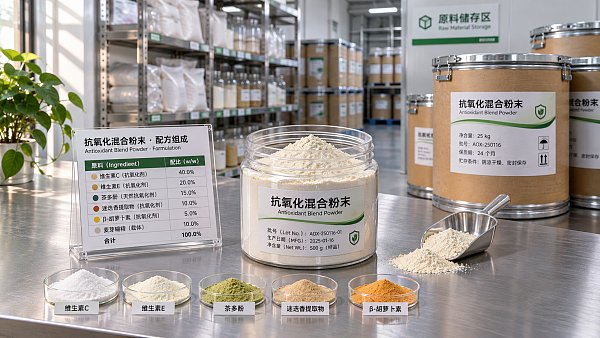
A blend’s price follows the cost and proportion of its components. Common food-oriented formulations include tocopherols, ascorbyl palmitate, rosemary extract or permitted synthetic antioxidants, often combined with carriers or emulsifiers. Industrial products may use different antioxidant chemistries selected for polymers, lubricants or other materials. Their prices do not necessarily move together because feedstocks, production routes and demand differ.
Natural-source ingredients introduce an additional distinction between the price of the source material and the price of a standardized extract. Agricultural supply, extraction yield and processing expenses can all affect the cost of a consistent finished ingredient. A stable price for the underlying crop therefore does not guarantee a stable price for a blend containing its extract.
Concentration matters just as much as the name on the specification sheet. A blend with a higher declared active content can carry a higher price per kilogram while requiring a lower addition rate. The comparison becomes less straightforward when products contain different active substances: equal declared concentration does not establish equal protection in the finished application.
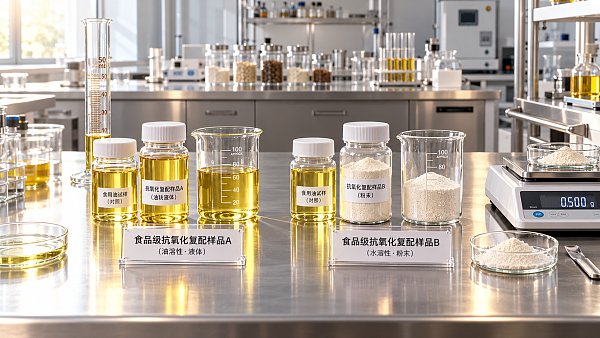
Carriers also influence the quoted price. An oil-based blend, a water-dispersible preparation and a dry powder can contain similar antioxidant components yet require different processing and packaging. If one quote uses a carrier to improve dispersion and another supplies a more concentrated material, the lower-priced option may transfer extra mixing work or solubility problems to production.
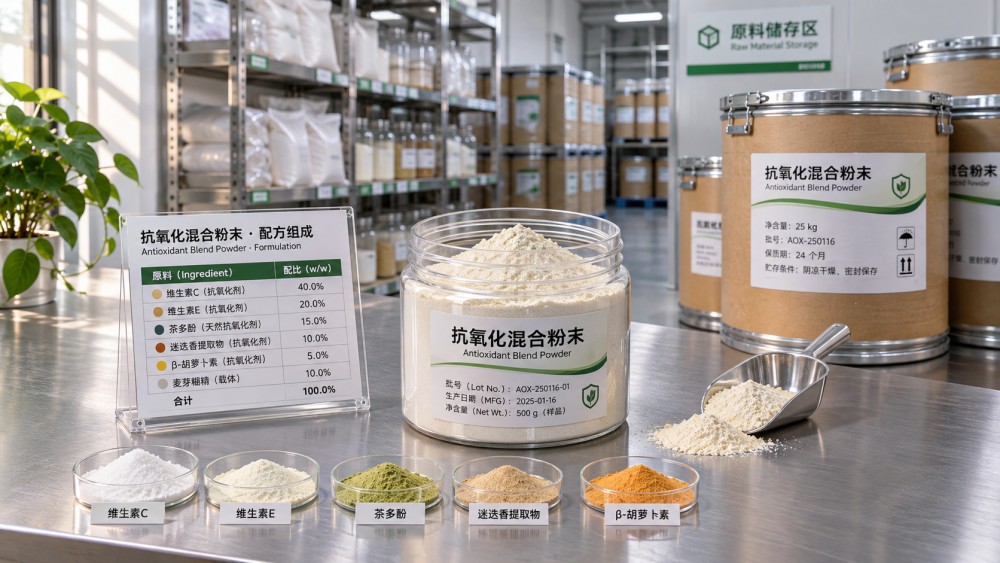
Raw material movements reach finished prices at different speeds
Suppliers do not all purchase ingredients under the same terms. Existing inventories, contract periods, order commitments and manufacturing schedules affect when a change in an ingredient market appears in a blend quotation. One supplier may hold a price while another revises it because their inventory was acquired at different costs or because their formulas use different proportions of the affected ingredient.
That timing also works in reverse. A drop in a raw material price does not automatically lower the next delivered quote if higher-cost stock remains in use, packaging expenses have increased, or the revised order is smaller. Ask for the quotation validity period and the basis for any price adjustment rather than treating a single raw material indicator as a direct forecast of finished blend prices.
Exchange rates introduce a separate source of movement when ingredients, processing and invoicing occur in different currencies. A local-currency quote can rise even if the supplier’s underlying purchase price is unchanged. Freight, insurance and import charges may move independently again, so the quoted product price and the landed cost should be tracked as separate figures.
Processing and specifications change the cost base
Blending is not always a simple mixing operation. A uniform dry preparation may require controlled particle size and measures to limit segregation during handling. A liquid blend may need heating, controlled addition or emulsification to keep its ingredients evenly distributed. These operations add time and processing cost, especially when the formulation is sensitive to oxygen, heat or moisture.
Specification limits affect production economics as well. Tighter requirements for identity, composition, impurities or physical properties can increase testing and reduce the amount of material accepted from a batch. The commercial effect depends on the actual specification: a requirement that matters for a sensitive food application may be unnecessary for a different use, while removing it from a demanding application could make the material unsuitable.
Documentation has a cost, but its value lies in whether it supports the intended market and application. A certificate of analysis for each batch, traceability information, an ingredient statement and storage guidance may be part of a standard supply package or quoted separately. Claims about food use, permitted ingredients and labeling need to be assessed against the applicable destination and formulation; a generic product description alone does not establish regulatory suitability.
Changes to a blend can also carry costs beyond the purchase order. A replacement formulation may need laboratory screening, production trials or shelf-life assessment before it can be introduced. Those costs matter most when a proposed price reduction depends on changing the active system, carrier or physical form rather than sourcing the same specification from a different supplier.
Volume discounts have limits
Larger orders can reduce the cost per kilogram by spreading setup, testing, administration and packaging over more material. The saving is often more pronounced when an order moves from small packages to a full production batch or a larger shipping configuration. The relevant comparison is the quantity that can be used within the material’s remaining shelf life and storage constraints.
A bulk purchase can become expensive if it creates losses through oxidation, moisture exposure, damaged packaging or stock that cannot be used before its required date. Opening a large container repeatedly can also increase exposure during storage. Smaller sealed units may therefore have a higher purchase price but a lower cost of usable material when consumption is slow or conditions are difficult to control.
Volume alone does not explain every discount. A supplier offering a lower rate for a large order may require a fixed delivery schedule, limited cancellation rights or a commitment to a particular formulation. These conditions have value to the supplier because they make production and inventory easier to plan. They also shift some demand and storage risk into the purchasing arrangement.
Compare quotes on the same delivered and usable basis
The headline unit price is meaningful only after the commercial terms match. A quote collected from the production site excludes costs that may already be included in a delivered quote. Packaging format, minimum order, lead time, currency, payment terms and the point at which transport responsibility transfers all affect the final comparison.
Remaining shelf life at delivery deserves particular attention. Two batches can meet the same specification and still have different commercial value if one will be stored for a long period before use. The relevant date is the shelf life remaining when the material arrives, together with the stated storage conditions, rather than the shelf life originally assigned at manufacture.
For comparable formulations, a practical calculation starts with the landed cost of each option and relates it to the amount used per batch of finished product. Include separately priced freight, duties, handling and expected material losses where applicable. If a quote excludes tax that is recoverable, keep that treatment consistent across all offers. Costs that are uncertain can be shown as a range instead of being hidden inside a single assumed figure.
When the formulations differ, calculate the cost at their evaluated use rates. A lower price per kilogram does not necessarily reduce the cost of protecting the finished product if more blend is required or if the alternative changes flavor, color or process behavior. Equally, a more expensive concentrate is not automatically better value if it is difficult to dose accurately or disperse in the available equipment.
Performance changes the meaning of a price difference
Antioxidant performance depends on the material being protected. An oil-rich product, an emulsion and a dry mix expose antioxidants to different environments. The ingredients present, processing temperature, oxygen exposure and packaging all influence how an antioxidant system performs. A blend that works well in one formulation should not be assumed to deliver the same protection in another.
For example, a formulation designed for an oil phase may be easy to incorporate into a fat-containing product but less suitable for a water-based process without additional dispersion work. In a dry mix, uneven distribution can produce inconsistent protection even when the calculated dosage is correct. These differences affect the real cost of use because extra mixing, reformulation or rejected material can outweigh a lower ingredient quote.
Evaluation conditions should resemble the intended production process. A small-scale oxidation test can help screen alternatives, but the result has limits if it omits the heat exposure, packaging or storage conditions that determine performance in the finished product. When changing suppliers, a batch comparison under the same conditions is more informative than comparing separate claims made using different test methods.
Reading a quotation change over time
Keep a record of the formulation or specification reference alongside each quoted price. If the active content, carrier, package size or delivery term changes, mark the quotation as a different basis before interpreting the movement as a market trend. A seemingly sharp price fall can be a formulation change; an apparent increase can include a new delivery or testing requirement.
Where the specification and commercial terms remain stable, ask which cost components prompted a revision and whether the change is temporary or tied to a contract mechanism. A clear explanation does not guarantee future pricing, but it makes it easier to distinguish an ingredient-driven adjustment from a change in freight, currency exposure or order size.
Price discussions are most useful when the expected purchase period, delivery pattern and acceptable specification are visible together. That gives a quotation enough context to represent the cost of a usable, consistent antioxidant blend rather than an isolated price for a kilogram of material.
Facing technical bottlenecks in manufacturing or looking for more efficient industrial solutions? Leave your details below and let the engineering experts at FCAS solve them for you.
We respect your privacy. Your information is strictly confidential.
Related News
 Antioxidants & Natural PreservativesHow Do Food Preservative Blends for Dairy Beverages Work?Food preservative blends for dairy beverages work differently across formulations. Discover how pH, processing and testing shape shelf-life performance.MORE+
 Antioxidants & Natural PreservativesIndexBox Forecasts Moderate BHT Market Growth Through 2035BHT market growth is forecast at 2.5% annually through 2035. Explore the demand drivers and what the outlook means for suppliers and buyers.MORE+
 Antioxidants & Natural PreservativesHow Do Food Preservation Ingredients Extend Shelf Life?Food Preservation Ingredients extend shelf life by slowing microbial growth and oxidation. Discover how to select and validate the right solution for your product.MORE+
 Antioxidants & Natural PreservativesWhat Drives Antioxidant Blends Bulk Price Changes?Discover what drives antioxidant blends bulk price changes, from ingredient costs to delivery terms, and learn how to compare quotes for better value.MORE+
 Antioxidants & Natural PreservativesWhat Affects Benzyl Alcohol Wholesale Pricing and Quality?Benzyl alcohol wholesale prices vary by purity, packaging, and delivery terms. Learn how to compare quality and total costs before you buy.MORE+
 Antioxidants & Natural PreservativesHow Preservative Blends Help Control Spoilage in FoodsPreservative Blends can help control food spoilage and support shelf life. Discover how to select and validate the right system for your product.MORE+
 Antioxidants & Natural PreservativesWhat Affects the Bulk Price of Food Preservation Ingredients?Explore what drives the food preservation ingredients bulk price, from specifications and order volume to freight, compliance, and supplier reliability.MORE+
 Antioxidants & Natural PreservativesHow to Choose Tocopherols for Food Oxidation ControlDiscover how to choose Tocopherols for food oxidation control. Compare profiles, dosage, formulation compatibility, and shelf-life testing.MORE+
 Antioxidants & Natural PreservativesHow Does pH Affect the Performance of Antimicrobial Preservatives?Antimicrobial Preservatives perform differently as pH shifts. Learn how to select effective systems, avoid formulation pitfalls, and validate lasting product protection.MORE+
 Antioxidants & Natural PreservativesHow to Select Natural Food Preservatives for Chilled Ready MealsSelect natural food preservatives for ready meals with confidence. Compare options, assess pH and packaging, and validate shelf life while protecting taste. Explore the guide.MORE+
 Antioxidants & Natural PreservativesWhat Affects the Bulk Price of Antioxidant Blends for Food Use?Compare antioxidant blends bulk price factors, from active concentration to dosage and delivery costs. Learn how to assess quotes and choose better value for food applications.MORE+
 Antioxidants & Natural PreservativesHow Do Propionates Prevent Mold Without Slowing Yeast in Bread?Propionates help delay mold in bread while allowing effective proofing. Discover how pH, dosage, and process control balance longer shelf life with yeast performance.MORE+
 Antioxidants & Natural PreservativesWhat Makes Stable Synthetic Aroma Chemicals Resist Degradation?Learn why stable synthetic aroma chemicals resist degradation, how formulation and packaging affect performance, and what to test when choosing ingredients for lasting fragrance quality.MORE+
 Antioxidants & Natural PreservativesHow Do You Choose a Natural Food Preservatives Supplier You Can Trust?Choose a natural food preservatives supplier you can trust. Learn how to verify compliance, validate performance, and assess supply reliability before you buy.MORE+
 Antioxidants & Natural PreservativesWhat Determines TBHQ Bulk Price and How Can You Compare Quotes?Compare tbhq bulk price with confidence. Discover key cost drivers, specification checks, and landed-cost essentials to evaluate supplier quotes and avoid hidden costs.MORE+
 Antioxidants & Natural PreservativesHow to Choose Food Preservation Ingredients for Beverages That LastChoose food preservation ingredients for beverages with confidence. Explore pH, microbial control, compliance, and testing to protect flavor and achieve reliable shelf life.MORE+
 Antioxidants & Natural PreservativesWhat Purity Tests Are Needed for Cosmetic Grade Butylparaben?Cosmetic grade butylparaben needs more than a high assay. Discover essential purity tests, impurity controls, and supplier checks to make confident sourcing decisions.MORE+
 Antioxidants & Natural PreservativesTBHQ Antioxidant Performance, Limits, and Food Safety ComplianceTBHQ antioxidant performance, legal limits, and food safety compliance explained. Learn practical controls for oils, frying, packaging, shelf life, and documentation.MORE+
 Antioxidants & Natural PreservativesNatural Food Preservatives for Sauces That Protect Shelf LifeNatural food preservatives for sauces: discover practical strategies for safer shelf life, clean-label formulation, pH control, packaging, and validation.MORE+
 Antioxidants & Natural PreservativesHow Herbal Extracts for Functional Foods Support Product DevelopmentHerbal extracts for functional foods: explore smarter selection, sensory balance, processing stability, documentation, and scalable supply for successful product development.MORE+
 Antioxidants & Natural PreservativesWhat Quality Checks Matter When Sourcing Butylparaben for Personal CareButylparaben for personal care sourcing guide: compare assay, impurities, physical performance, documentation, traceability, and supplier quality to reduce formulation risk.MORE+
 Antioxidants & Natural PreservativesWhen Propyl Gallate Antioxidant Is the Right Choice for Oil StabilityPropyl gallate antioxidant: learn when it is the right choice for oil stability, shelf-life protection, processing compatibility, and smarter formulation decisions.MORE+
 Antioxidants & Natural PreservativesHow Potassium Sorbate Extends Shelf Life in Food and Beverage ProductsPotassium Sorbate helps food and beverage brands control yeast and mold spoilage. Explore pH, dosage, processing, and packaging strategies for reliable shelf life.MORE+
 Antioxidants & Natural PreservativesHow to Source Bulk Herbal Extracts With Reliable Quality ControlBulk herbal extracts sourcing guide: compare suppliers, verify traceability, review CoAs, and build reliable quality controls for safer, consistent purchasing.MORE+
 Antioxidants & Natural PreservativesWhat to Check Before Sourcing Butylparaben for Personal Care FormulasButylparaben for personal care sourcing guide: check market eligibility, purity, supplier controls, formula compatibility, packaging, and total risk before buying.MORE+
 Antioxidants & Natural PreservativesNatural Food Antioxidants That Help Extend Shelf Life in Clean LabelsNatural Food Antioxidants: learn how tocopherols, rosemary extracts, and ascorbic systems help protect flavor, color, and shelf life in clean-label foods.MORE+
 Antioxidants & Natural PreservativesWhat to Check Before Choosing a Butylparaben Wholesale SupplierButylparaben wholesale buyers: learn how to assess quality, documentation, market fit, packaging, supply reliability, and total landed cost before choosing a supplier.MORE+
 Antioxidants & Natural PreservativesWhat to Check Before Choosing a Synthetic Food Preservatives SupplierSynthetic food preservatives supplier selection: check regulatory fit, batch consistency, documentation, logistics, and support to reduce risks and hidden costs.MORE+
 Antioxidants & Natural PreservativesWhat to Verify Before Choosing a Synthetic Food Preservatives FactorySynthetic food preservatives factory checklist: verify food-grade quality, impurity control, traceability, packaging, and regulatory fit before supplier approval.MORE+
 Antioxidants & Natural PreservativesHow to Compare Food Preservative Blends Wholesale QuotesFood preservative blends wholesale: compare quotes by true cost, dosage, compliance, quality consistency, and supply reliability to choose the best-value solution.MORE+
 Antioxidants & Natural PreservativesHow Natural Food Preservatives Keep Sauces Fresh Without Sacrificing FlavorNatural food preservatives for sauces help balance microbial control, shelf life, and authentic flavor. Explore practical formulation, processing, and packaging strategies.MORE+
 Antioxidants & Natural PreservativesHow Propionates Extend Shelf Life While Meeting Food Safety RequirementsPropionates extend shelf life by controlling mold in bakery and moisture-sensitive foods. Explore smart dosage, compliance, supplier quality, and safer distribution strategies.MORE+
 Antioxidants & Natural PreservativesHow Oxidation Resistant Flavor Encapsulates Protect Taste During ProcessingOxidation resistant flavor encapsulates help protect delicate taste through heat, oxygen, and storage. Discover how to improve flavor retention, release, and processing consistency.MORE+
 Antioxidants & Natural PreservativesHow to Choose Green Tea Extract for Stable, Consistent FormulationsGreen Tea Extract selection guide for stable, consistent formulations—compare standardization, solubility, carriers, stability, and batch quality with confidence.MORE+
 Antioxidants & Natural PreservativesIs TBHQ for Shortening Safe and Effective for Longer Shelf Life?TBHQ for shortening: discover how safe, compliant antioxidant use can reduce rancidity, protect quality, and support longer shelf life through validated controls.MORE+
 Antioxidants & Natural PreservativesWhy Ferulic Acid Matters in Modern Antioxidant FormulationsFerulic Acid helps modern formulations enhance oxidative stability, protect sensitive ingredients, and support differentiated product performance across key applications.MORE+
 Antioxidants & Natural PreservativesHow Natural Food Preservatives Extend Shelf Life Without CompromiseNatural Food Preservatives extend shelf life through smart hurdle systems, balancing safety, clean-label appeal, sensory quality, and regulatory compliance.MORE+
 Antioxidants & Natural PreservativesHow to Choose a Food Preservation Ingredients Manufacturer with ConfidenceFood preservation ingredients manufacturer selection starts with risk control. Learn how to compare quality, documentation, supply stability, and technical support with confidence.MORE+
 Antioxidants & Natural PreservativesIs Cosmetic Grade Butylparaben Still a Smart Choice for FormulatorsCosmetic grade butylparaben remains a key consideration for formulators. Explore when it still makes sense, when to replace it, and how to balance performance, compliance, and market demands.MORE+
 Antioxidants & Natural PreservativesHow to Choose a Reliable Gum Arabic Powder Supplier for Consistent QualityGum arabic powder supplier selection starts with quality, traceability, and supply stability. Learn how to compare specs, compliance, and continuity to reduce sourcing risk.MORE+