Natural Food Preservatives for Sauces That Protect Shelf Life
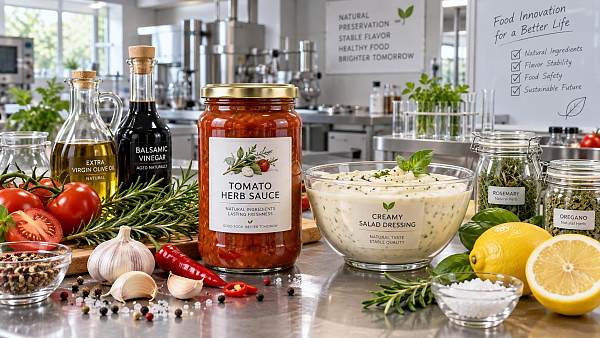
Natural preservation in sauces is not achieved by replacing one conventional preservative with one “natural” ingredient. Shelf life depends on whether the full product system controls the organisms most likely to survive processing, grow during distribution, or enter after opening. A botanical extract, cultured ingredient, organic acid, or fermentation-derived antimicrobial can contribute to that control, but its effect is shaped by pH, salt, sugar, water activity, thermal process, oxygen exposure, packaging, and the sauce’s own flavor profile.
For quality and food-safety decisions, the central question is therefore not which natural preservative is strongest in isolation. It is whether a preservation system can deliver a defined shelf-life target under the product’s actual formulation, manufacturing conditions, package format, and intended storage conditions—without creating unacceptable sensory, labeling, or regulatory risk.
Start with the microbial hazard, not the ingredient claim
Sauces differ widely in their preservation burden. An acidic hot sauce, a refrigerated fresh herb dressing, a high-solids barbecue sauce, and a neutral-pH cream sauce cannot be evaluated using the same preservative logic.
Acidified products are often exposed to yeast and mold spoilage risks, especially after filling or once the package has been opened. Products with a higher pH may also require control of vegetative bacterial growth, while low-acid, shelf-stable sauces require particular scrutiny of process validation and the hazards associated with anaerobic storage. In these products, a “natural preservative” should never be treated as a substitute for a properly designed thermal process, hygienic filling operation, or validated acidification program.
The first useful decision is to define the actual spoilage and safety challenge:
- Is the product shelf-stable before opening, refrigerated, or distributed under variable temperature conditions?
- What is the equilibrium pH after all ingredients are hydrated and dispersed?
- Does the formulation contain particulates, protein, starch, oil droplets, or herbs that can protect microorganisms or create localized variation?
- Which organisms have caused historical spoilage, customer complaints, package swelling, gas formation, surface mold, or flavor deterioration?
- Is the key risk microbial growth before opening, contamination after opening, or both?
Without this profile, ingredient selection often becomes label-led rather than risk-led. That can result in a sauce that appears to have a cleaner ingredient deck but performs inconsistently in real distribution.
Acidity remains the foundation of many sauce preservation systems
For many sauces, acidification is the most influential preservation lever because pH determines which microorganisms can grow and affects the performance of several antimicrobial ingredients. Vinegar, lemon juice concentrate, lime juice, and fermentation-derived acids may support a natural positioning, but their function must be assessed on chemistry rather than consumer familiarity.
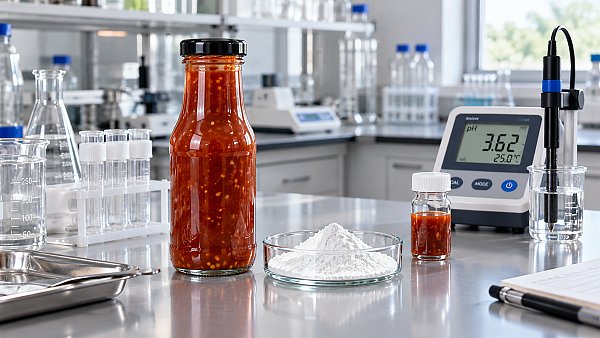
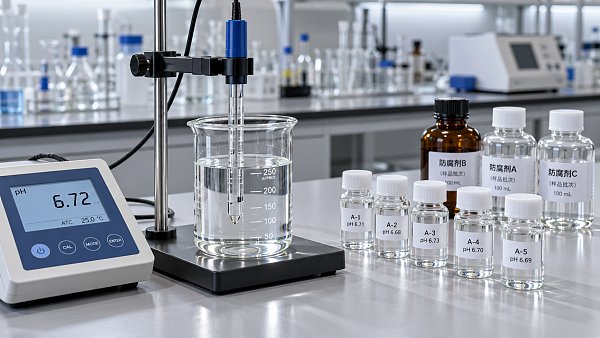
The relevant measure is not simply how much acid is added. It is the final equilibrium pH, its variability between batches, and the buffering capacity of the food matrix. Tomato solids, dairy ingredients, proteins, vegetable purees, spices, and hydrocolloids can alter the relationship between added acid and final pH. A pH result taken too early in production, before hydration and equilibration, may not represent the packaged product.
Weak organic acids are particularly important because the undissociated portion can enter microbial cells and interfere with their internal metabolic balance. Their effectiveness changes substantially with pH. This is why a vinegar-based approach that performs adequately in a sharp, acidic condiment may be insufficient in a milder sauce formulated at a higher pH for sensory reasons.
Acidification also has practical limits. Increasing acid can damage flavor balance, alter emulsion stability, thin certain starch-thickened systems, or create a harsh finish that masks spices and aromatics. The correct decision is not to push acidity until a laboratory target is reached; it is to establish a pH range that is safely controlled and then build complementary hurdles around it.
Natural preservation options have different roles
“Natural food preservatives for sauces” covers materials with very different mechanisms and limitations. Treating them as interchangeable is a common formulation error.
Cultured or fermentation-derived ingredients may contain organic acids or other metabolites that inhibit selected spoilage organisms. Their appeal is often connected to familiar source descriptions, but composition can vary by supplier and product grade. Their use requires attention to dose, sensory contribution, batch consistency, allergen status where relevant, and the legal status of the ingredient name in the destination market. A cultured ingredient that works in a dairy-based dressing may not provide the same benefit in a highly seasoned tomato sauce.
Vinegar and fruit-derived acids can provide both flavor and microbial control. They are usually most effective when the product is already designed around an acidic sensory profile. Their limitation is obvious but important: the acid dose required for preservation may exceed what the intended flavor can tolerate. Product teams should also assess lot-to-lot acid strength and verify the impact of fruit ingredients on sugar content, color, and oxidation.
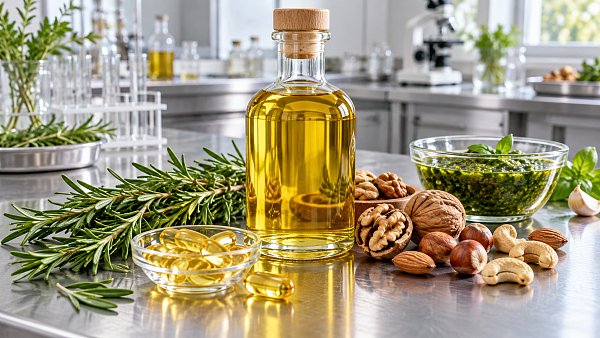
Rosemary extract and other antioxidant systems are frequently relevant for sauces containing oils, nuts, cheese, meat-derived ingredients, or flavor components vulnerable to oxidation. Their main role is delaying rancidity and oxidative flavor change, not replacing an antimicrobial preservation system. This distinction matters because a sauce can remain free from visible mold while developing unacceptable stale, cardboard-like, or bitter notes during storage.
Plant extracts and essential-oil-derived materials may show antimicrobial activity in screening tests, but food-matrix performance is often less dramatic. Oil droplets, proteins, and suspended solids can bind or partition active compounds, reducing availability against target organisms. Many extracts also have low sensory tolerance: the level needed for meaningful antimicrobial action may introduce bitterness, medicinal notes, or excessive herbal character. Their use is most credible when the flavor profile naturally accommodates the ingredient and the finished product has been challenge-tested.
Fermentation-based antimicrobials such as natamycin or bacteriocin systems require careful, product-specific regulatory and technical assessment. Their antimicrobial spectrum can be narrow, and permissions, food-category restrictions, and labeling treatment differ by jurisdiction. A material’s natural origin does not establish its suitability for a particular sauce category or export destination.
Salt, sugar, and humectant effects are sometimes described as traditional natural preservation. They can reduce water activity and slow microbial growth, but they bring nutritional, sensory, and formulation constraints. In many contemporary sauces, the concentration required to function as a primary preservation control would conflict with sodium or sugar targets. Their contribution is better considered part of a combined hurdle system.
Processing and packaging can determine whether the selected system works
A preservative decision made only from bench-top formula data is incomplete. Thermal processing reduces microbial load, but its value depends on the cold spot, heating profile, viscosity, particle size, fill temperature, and hold time. A thick sauce with vegetable pieces cannot be assumed to receive the same effective treatment as a smooth, low-viscosity sauce processed under similar nominal conditions.
Post-process contamination is equally important. Natural antimicrobials are sometimes added to compensate for filling-room weaknesses that should be addressed through sanitation and process control. Sources may include caps, fillers, transfer hoses, cooling water, spice additions, and environmental yeast or mold in high-moisture areas. If contamination enters after heating, a formulation that passed an unopened-package shelf-life test may still fail in production.
Packaging affects both contamination risk and oxidative stability. Hot-fill glass, retortable pouches, aseptic formats, squeeze bottles, and jars have different closure, oxygen, heat-transfer, and consumer-use characteristics. Headspace oxygen and oxygen transmission are particularly relevant where oils, pigments, or delicate flavor compounds are present. Transparent packaging can also accelerate light-related degradation in sensitive formulations.
Once-opened performance should be treated as a separate claim. A sauce may be commercially sterile or stable when sealed yet develop mold after repeated consumer use, exposure to kitchen temperatures, or contact with contaminated utensils. If the label carries a refrigerated-after-opening instruction, its feasibility must be tested against the expected distribution channel and consumer handling assumptions.
Validation should challenge the whole formulation
Supplier data, literature references, and antimicrobial screening tests can support preliminary selection, but they do not validate a sauce. The finished formulation may have different pH, fat content, salt level, spice load, viscosity, and packaging environment from the system used to generate those data.
A defensible validation program normally combines several controls:
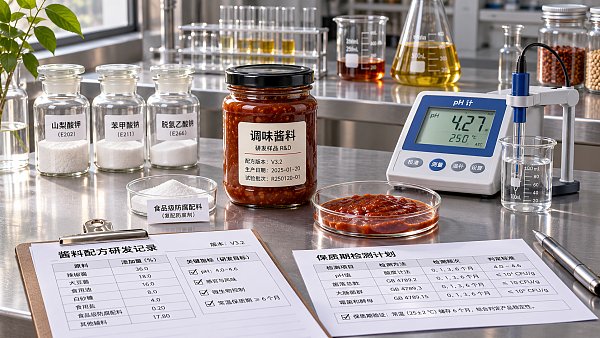
- Formula verification: confirm pH, water activity where relevant, titratable acidity, salt, viscosity, and key compositional specifications at the finished-product stage.
- Process verification: confirm that heating, filling, closure, and cooling conditions remain within validated operating limits.
- Microbiological shelf-life testing: test representative batches under intended and reasonably foreseeable temperature conditions, using methods appropriate to the product and market.
- Challenge testing where warranted: assess the ability of the finished product to prevent growth or survive inoculation by relevant spoilage organisms and, where required by the hazard assessment, relevant pathogens.
- Sensory and physical stability review: check flavor, aroma, color, emulsion stability, phase separation, viscosity, and package integrity over the claimed shelf life.
Challenge studies should be designed by qualified microbiological specialists using target organisms relevant to the formulation and process. An overly generic test panel can create false confidence. For example, a formulation intended to control osmophilic yeast and acid-tolerant mold requires a different evaluation emphasis from a refrigerated, higher-pH sauce where psychrotrophic bacteria are a concern.
Testing must also reflect production variability. A single pilot batch made with fresh raw materials and ideal processing conditions is not enough to set a robust shelf-life claim. Boundary conditions matter: highest permitted pH, lowest acid level, maximum particulate load, expected variation in raw-material microbiology, and realistic storage excursions.
Clean-label language does not remove regulatory obligations
Terms such as “natural,” “clean label,” and “no artificial preservatives” are commercial descriptions, not universal technical or legal categories. Their acceptability depends on the market, product category, ingredient identity, processing method, and the claims made on pack or in sales materials.
Before selecting a system for export, the ingredient should be reviewed against the requirements of each intended destination. This review should cover permitted use in the relevant food category, maximum-use conditions if applicable, additive versus ingredient classification, required declaration name, allergen implications, compositional standards, and any restrictions associated with organic or non-GMO claims. Regulatory treatment can differ even where the ingredient is chemically similar or derived from a similar source.
Documentation should be part of the selection process rather than an administrative check after formulation approval. Useful supplier documentation may include a detailed specification, certificate of analysis, microbiological limits, origin statement, allergen statement, processing-aid information where applicable, stability guidance, contaminant controls, and traceability information. For botanical materials, identity, extraction solvent, active-marker range, pesticide-residue controls, and adulteration risk deserve particular attention.
Frequent selection mistakes
The most damaging mistake is equating “natural” with “safer” or “more effective.” Safety depends on the finished product, the manufacturing controls, and the evidence supporting the shelf-life decision. A natural-origin material can be poorly suited to a sauce, while a conventional preservative may provide predictable control within an approved use framework. The evaluation should focus on the required control outcome, not on the ingredient’s marketing category.
Another error is using antioxidant and antimicrobial terminology as if they describe the same function. Oxidative deterioration and microbial spoilage can occur independently. A sauce containing rosemary extract may retain color and oil quality while still requiring control of yeast and mold; an acidic sauce with strong antimicrobial hurdles may remain microbiologically stable while losing fresh flavor through oxidation.
It is also risky to extrapolate from one sauce format to another. A preservative system validated in a vinegar-forward hot sauce cannot automatically be transferred to a mayonnaise-style dressing, pesto, creamy dip, or reduced-sugar barbecue sauce. Changes in pH, oil phase, solids, protein, herbs, filling method, and intended use can all alter performance.
A practical basis for approval
The most reliable natural preservation strategy for sauces is usually a deliberately balanced system: controlled acidity, an appropriate heat process, hygienic manufacturing, packaging suited to the product, and selected ingredients that address the remaining microbial or oxidative risk. No single natural ingredient should be expected to compensate for weak control of the other variables.
Approval should be based on a written product-specific rationale that links the identified hazards to formulation limits, process controls, packaging conditions, shelf-life evidence, and labeling requirements. When that rationale is in place, natural food preservatives for sauces can be assessed as functional parts of a validated preservation system rather than as stand-alone clean-label claims.
Facing technical bottlenecks in manufacturing or looking for more efficient industrial solutions? Leave your details below and let the engineering experts at FCAS solve them for you.
We respect your privacy. Your information is strictly confidential.
Related News
 Antioxidants & Natural PreservativesHow Do Food Preservative Blends for Dairy Beverages Work?Food preservative blends for dairy beverages work differently across formulations. Discover how pH, processing and testing shape shelf-life performance.MORE+
 Antioxidants & Natural PreservativesIndexBox Forecasts Moderate BHT Market Growth Through 2035BHT market growth is forecast at 2.5% annually through 2035. Explore the demand drivers and what the outlook means for suppliers and buyers.MORE+
 Antioxidants & Natural PreservativesHow Do Food Preservation Ingredients Extend Shelf Life?Food Preservation Ingredients extend shelf life by slowing microbial growth and oxidation. Discover how to select and validate the right solution for your product.MORE+
 Antioxidants & Natural PreservativesWhat Drives Antioxidant Blends Bulk Price Changes?Discover what drives antioxidant blends bulk price changes, from ingredient costs to delivery terms, and learn how to compare quotes for better value.MORE+
 Antioxidants & Natural PreservativesWhat Affects Benzyl Alcohol Wholesale Pricing and Quality?Benzyl alcohol wholesale prices vary by purity, packaging, and delivery terms. Learn how to compare quality and total costs before you buy.MORE+
 Antioxidants & Natural PreservativesHow Preservative Blends Help Control Spoilage in FoodsPreservative Blends can help control food spoilage and support shelf life. Discover how to select and validate the right system for your product.MORE+
 Antioxidants & Natural PreservativesWhat Affects the Bulk Price of Food Preservation Ingredients?Explore what drives the food preservation ingredients bulk price, from specifications and order volume to freight, compliance, and supplier reliability.MORE+
 Antioxidants & Natural PreservativesHow to Choose Tocopherols for Food Oxidation ControlDiscover how to choose Tocopherols for food oxidation control. Compare profiles, dosage, formulation compatibility, and shelf-life testing.MORE+
 Antioxidants & Natural PreservativesHow Does pH Affect the Performance of Antimicrobial Preservatives?Antimicrobial Preservatives perform differently as pH shifts. Learn how to select effective systems, avoid formulation pitfalls, and validate lasting product protection.MORE+
 Antioxidants & Natural PreservativesHow to Select Natural Food Preservatives for Chilled Ready MealsSelect natural food preservatives for ready meals with confidence. Compare options, assess pH and packaging, and validate shelf life while protecting taste. Explore the guide.MORE+
 Antioxidants & Natural PreservativesWhat Affects the Bulk Price of Antioxidant Blends for Food Use?Compare antioxidant blends bulk price factors, from active concentration to dosage and delivery costs. Learn how to assess quotes and choose better value for food applications.MORE+
 Antioxidants & Natural PreservativesHow Do Propionates Prevent Mold Without Slowing Yeast in Bread?Propionates help delay mold in bread while allowing effective proofing. Discover how pH, dosage, and process control balance longer shelf life with yeast performance.MORE+
 Antioxidants & Natural PreservativesWhat Makes Stable Synthetic Aroma Chemicals Resist Degradation?Learn why stable synthetic aroma chemicals resist degradation, how formulation and packaging affect performance, and what to test when choosing ingredients for lasting fragrance quality.MORE+
 Antioxidants & Natural PreservativesHow Do You Choose a Natural Food Preservatives Supplier You Can Trust?Choose a natural food preservatives supplier you can trust. Learn how to verify compliance, validate performance, and assess supply reliability before you buy.MORE+
 Antioxidants & Natural PreservativesWhat Determines TBHQ Bulk Price and How Can You Compare Quotes?Compare tbhq bulk price with confidence. Discover key cost drivers, specification checks, and landed-cost essentials to evaluate supplier quotes and avoid hidden costs.MORE+
 Antioxidants & Natural PreservativesHow to Choose Food Preservation Ingredients for Beverages That LastChoose food preservation ingredients for beverages with confidence. Explore pH, microbial control, compliance, and testing to protect flavor and achieve reliable shelf life.MORE+
 Antioxidants & Natural PreservativesWhat Purity Tests Are Needed for Cosmetic Grade Butylparaben?Cosmetic grade butylparaben needs more than a high assay. Discover essential purity tests, impurity controls, and supplier checks to make confident sourcing decisions.MORE+
 Antioxidants & Natural PreservativesTBHQ Antioxidant Performance, Limits, and Food Safety ComplianceTBHQ antioxidant performance, legal limits, and food safety compliance explained. Learn practical controls for oils, frying, packaging, shelf life, and documentation.MORE+
 Antioxidants & Natural PreservativesNatural Food Preservatives for Sauces That Protect Shelf LifeNatural food preservatives for sauces: discover practical strategies for safer shelf life, clean-label formulation, pH control, packaging, and validation.MORE+
 Antioxidants & Natural PreservativesHow Herbal Extracts for Functional Foods Support Product DevelopmentHerbal extracts for functional foods: explore smarter selection, sensory balance, processing stability, documentation, and scalable supply for successful product development.MORE+
 Antioxidants & Natural PreservativesWhat Quality Checks Matter When Sourcing Butylparaben for Personal CareButylparaben for personal care sourcing guide: compare assay, impurities, physical performance, documentation, traceability, and supplier quality to reduce formulation risk.MORE+
 Antioxidants & Natural PreservativesWhen Propyl Gallate Antioxidant Is the Right Choice for Oil StabilityPropyl gallate antioxidant: learn when it is the right choice for oil stability, shelf-life protection, processing compatibility, and smarter formulation decisions.MORE+
 Antioxidants & Natural PreservativesHow Potassium Sorbate Extends Shelf Life in Food and Beverage ProductsPotassium Sorbate helps food and beverage brands control yeast and mold spoilage. Explore pH, dosage, processing, and packaging strategies for reliable shelf life.MORE+
 Antioxidants & Natural PreservativesHow to Source Bulk Herbal Extracts With Reliable Quality ControlBulk herbal extracts sourcing guide: compare suppliers, verify traceability, review CoAs, and build reliable quality controls for safer, consistent purchasing.MORE+
 Antioxidants & Natural PreservativesWhat to Check Before Sourcing Butylparaben for Personal Care FormulasButylparaben for personal care sourcing guide: check market eligibility, purity, supplier controls, formula compatibility, packaging, and total risk before buying.MORE+
 Antioxidants & Natural PreservativesNatural Food Antioxidants That Help Extend Shelf Life in Clean LabelsNatural Food Antioxidants: learn how tocopherols, rosemary extracts, and ascorbic systems help protect flavor, color, and shelf life in clean-label foods.MORE+
 Antioxidants & Natural PreservativesWhat to Check Before Choosing a Butylparaben Wholesale SupplierButylparaben wholesale buyers: learn how to assess quality, documentation, market fit, packaging, supply reliability, and total landed cost before choosing a supplier.MORE+
 Antioxidants & Natural PreservativesWhat to Check Before Choosing a Synthetic Food Preservatives SupplierSynthetic food preservatives supplier selection: check regulatory fit, batch consistency, documentation, logistics, and support to reduce risks and hidden costs.MORE+
 Antioxidants & Natural PreservativesWhat to Verify Before Choosing a Synthetic Food Preservatives FactorySynthetic food preservatives factory checklist: verify food-grade quality, impurity control, traceability, packaging, and regulatory fit before supplier approval.MORE+
 Antioxidants & Natural PreservativesHow to Compare Food Preservative Blends Wholesale QuotesFood preservative blends wholesale: compare quotes by true cost, dosage, compliance, quality consistency, and supply reliability to choose the best-value solution.MORE+
 Antioxidants & Natural PreservativesHow Natural Food Preservatives Keep Sauces Fresh Without Sacrificing FlavorNatural food preservatives for sauces help balance microbial control, shelf life, and authentic flavor. Explore practical formulation, processing, and packaging strategies.MORE+
 Antioxidants & Natural PreservativesHow Propionates Extend Shelf Life While Meeting Food Safety RequirementsPropionates extend shelf life by controlling mold in bakery and moisture-sensitive foods. Explore smart dosage, compliance, supplier quality, and safer distribution strategies.MORE+
 Antioxidants & Natural PreservativesHow Oxidation Resistant Flavor Encapsulates Protect Taste During ProcessingOxidation resistant flavor encapsulates help protect delicate taste through heat, oxygen, and storage. Discover how to improve flavor retention, release, and processing consistency.MORE+
 Antioxidants & Natural PreservativesHow to Choose Green Tea Extract for Stable, Consistent FormulationsGreen Tea Extract selection guide for stable, consistent formulations—compare standardization, solubility, carriers, stability, and batch quality with confidence.MORE+
 Antioxidants & Natural PreservativesIs TBHQ for Shortening Safe and Effective for Longer Shelf Life?TBHQ for shortening: discover how safe, compliant antioxidant use can reduce rancidity, protect quality, and support longer shelf life through validated controls.MORE+
 Antioxidants & Natural PreservativesWhy Ferulic Acid Matters in Modern Antioxidant FormulationsFerulic Acid helps modern formulations enhance oxidative stability, protect sensitive ingredients, and support differentiated product performance across key applications.MORE+
 Antioxidants & Natural PreservativesHow Natural Food Preservatives Extend Shelf Life Without CompromiseNatural Food Preservatives extend shelf life through smart hurdle systems, balancing safety, clean-label appeal, sensory quality, and regulatory compliance.MORE+
 Antioxidants & Natural PreservativesHow to Choose a Food Preservation Ingredients Manufacturer with ConfidenceFood preservation ingredients manufacturer selection starts with risk control. Learn how to compare quality, documentation, supply stability, and technical support with confidence.MORE+
 Antioxidants & Natural PreservativesIs Cosmetic Grade Butylparaben Still a Smart Choice for FormulatorsCosmetic grade butylparaben remains a key consideration for formulators. Explore when it still makes sense, when to replace it, and how to balance performance, compliance, and market demands.MORE+
 Antioxidants & Natural PreservativesHow to Choose a Reliable Gum Arabic Powder Supplier for Consistent QualityGum arabic powder supplier selection starts with quality, traceability, and supply stability. Learn how to compare specs, compliance, and continuity to reduce sourcing risk.MORE+