What Determines TBHQ Bulk Price and How Can You Compare Quotes?
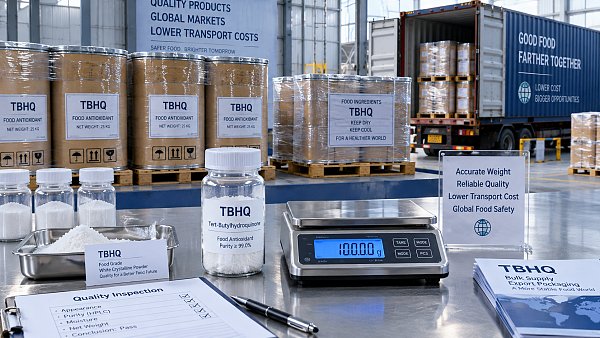
A low TBHQ bulk price can look attractive until freight, specification gaps, or missing compliance documents change the total purchasing cost. For procurement teams sourcing tert-butylhydroquinone (TBHQ), a food antioxidant, meaningful quote comparisons start with matching product specifications, order quantities, packaging, delivery terms, and destination-market requirements.
The challenge is rarely finding a supplier willing to quote. It is deciding whether two offers actually cover the same material and the same responsibilities. One may include export-ready packaging and shipment documentation; another may leave those costs—and the associated work—to the buyer. This guide explains what drives TBHQ pricing and how to separate genuine savings from costs that appear only after the purchase order is issued.
Before comparing prices, define what you are buying
TBHQ, also identified by CAS number 1948-33-0, is used to help slow oxidative deterioration in suitable food applications, including certain fats, oils, and fat-containing products. Its suitability depends on the formulation, processing conditions, and applicable food regulations. A competitively priced shipment has little value if your quality team cannot approve it.
Start with a purchasing specification agreed upon by procurement, quality assurance, regulatory affairs, and the production team. “Food-grade TBHQ” is a useful description, but it is not a complete acceptance standard.
The specification should establish product identity, assay requirements, relevant impurity limits, physical characteristics, test methods, packaging, and documentation. Where a recognized food-additive specification or compendium applies, state the required standard and edition rather than relying on a supplier’s general claim of compliance.
Also distinguish neat TBHQ from antioxidant blends or formulated products. A blend containing TBHQ, a carrier, and other ingredients cannot be compared directly with neat TBHQ on a price-per-kilogram basis. Even after adjusting for active content, formulation performance may differ.
What determines TBHQ bulk price?
Feedstock costs and manufacturing economics
TBHQ pricing is influenced by the cost and availability of feedstocks, including hydroquinone and the tert-butylating inputs used in the manufacturer’s production route. Energy, process chemicals, purification, waste treatment, and plant utilization also affect production cost.
These inputs do not move in perfect step with finished-product prices. A manufacturer may have feedstock inventory purchased earlier, while a distributor may be selling from existing stock. Another supplier may be quoting against a future production campaign. That explains why quotations issued in the same week can differ without either necessarily being unreasonable.
When a supplier attributes a price increase to raw materials, ask which cost category changed, whether the increase affects current inventory or new production, and how long the quotation remains valid. A clear explanation is more useful than a vague reference to “market pressure.”
Specification, purification, and quality control
Tighter specifications can require additional purification, testing, or batch selection. Assay alone does not capture those differences: two products with similar declared TBHQ content may have different impurity profiles, appearance limits, or testing requirements.
For food applications, buyers should examine the complete specification and relevant contaminant controls. Depending on the production route and applicable standard, this may include related substances, residual solvents, and limits for specified elements. Ask for actual batch results where available, not just a specification sheet showing permitted limits.
However, a higher-priced product is not automatically better. The relevant question is whether its controls meet your approved requirements consistently. Paying for specifications your application does not need can be as inefficient as accepting insufficient controls.
Order size, packaging, and delivery schedule
A larger order may reduce packaging, handling, and administrative costs per kilogram. But the discount only makes commercial sense if the material can be consumed within its accepted shelf life and stored under suitable conditions.
Request price breaks against realistic purchase volumes, not an optimistic annual forecast that production may never use. Confirm whether discounts apply to a single shipment, a binding annual commitment, or scheduled releases under a supply agreement.
Packaging can also change the quotation. Pack size, liner construction, palletization, moisture protection, and labeling affect both cost and handling. Smaller packs may suit a low-volume dosing operation, while larger packs may reduce unit cost but create more opened material and internal handling work.
Supplier role and supply conditions
A manufacturer-direct offer and a distributor offer may serve different purchasing needs. A distributor can carry local inventory, offer smaller releases, or simplify import handling. A manufacturer may offer stronger economics at larger volumes but require longer lead times or less flexible ordering.
Supply disruptions, limited production capacity, freight availability, and exchange-rate movements can widen price differences. Rather than assuming that every intermediary adds unnecessary cost, identify what each supplier includes and whether those services reduce your own operating burden.
Build a quote comparison that survives approval
The most useful comparison sheet makes assumptions visible. Put every supplier against the same purchase requirement, then highlight exceptions instead of allowing them to disappear into email attachments.
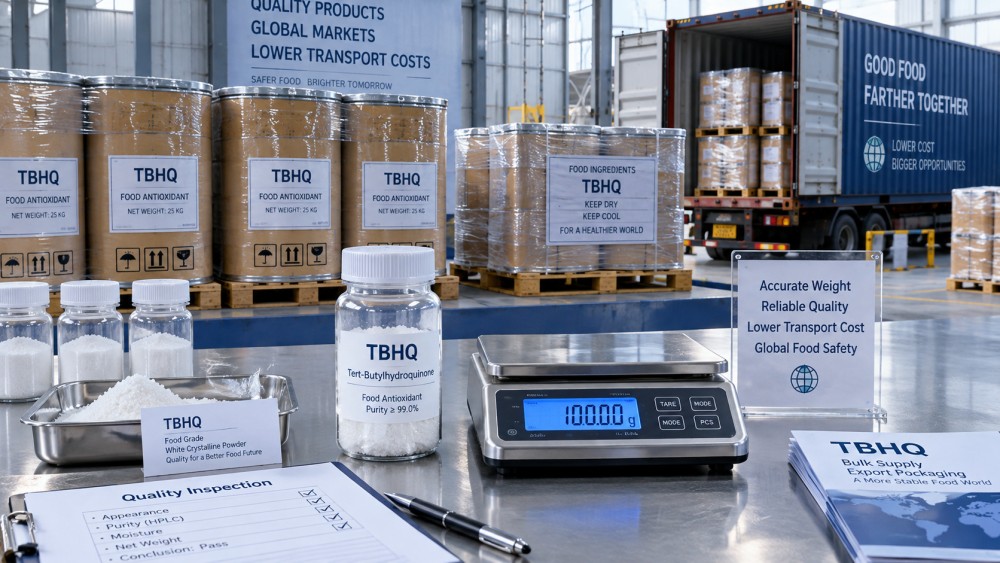
Make sure the quoted unit is based on net product weight, not gross packed weight. Confirm whether pallets, export packing, inspection charges, and documentation fees are included. Small omissions become significant when repeated across regular purchases.
Delivery terminology deserves particular attention. “Delivered price” is incomplete without a named destination and a clear allocation of responsibilities. Under Incoterms®, cost allocation and risk transfer are related but not identical; a seller paying freight does not necessarily retain risk until the shipment reaches your warehouse.
Normalize the offers to landed cost—not just invoice price
Choose a common comparison point, such as delivery to your receiving warehouse. Then calculate all offers on that basis.
Landed cost per net kilogram = total attributable acquisition cost ÷ net kilograms received.
Attributable costs may include the material, origin transport, export handling, international freight, insurance, destination handling, customs brokerage, duties, nonrecoverable taxes, and inland delivery. Do not add charges already included in the supplier’s quotation.
Keep recoverable taxes separate from permanent purchasing costs, while still accounting for their cash-flow effect. Customs classification, origin, and destination rules can materially affect duties; verify them with a qualified customs specialist rather than copying a tariff assumption from an earlier purchase.
For unfamiliar suppliers, show qualification and testing costs as separate lines. This helps distinguish a one-time onboarding expense from the recurring cost of future orders. Payment terms also matter: a prepaid order and an approved credit arrangement can have different working-capital implications.
Why the apparent cheapest offer can lose
Consider two offers for the same approved specification and order quantity. Supplier A quotes a lower ex-works price. Supplier B quotes a higher price with transport to a named destination included.
Supplier A may still be cheaper—but only after adding collection, export handling, freight, insurance where appropriate, and destination costs. If its shipment also requires an extra inspection or causes additional warehouse handling, the difference can narrow further.
This is a comparison exercise, not an argument for always buying delivered. Buyers with strong freight contracts may achieve better economics by controlling transportation themselves. What matters is calculating both options consistently.
Treat compliance and application fit as approval gates
TBHQ’s permitted uses, maximum use levels, labeling requirements, and relevant product categories vary by jurisdiction. A supplier’s statement that material is “food grade” does not establish that your intended application is permitted in the destination market.
Ask regulatory colleagues to verify the intended food category, conditions of use, and calculation basis for any applicable limit. Do not assume that a limit expressed relative to fat or oil content can be applied directly to the weight of the finished food.
For supplier evaluation, request:
- A current product specification and a representative certificate of analysis, followed by the shipment-specific COA.
- A current safety data sheet and clear storage and handling guidance.
- The manufacturer’s identity, manufacturing location, and batch traceability arrangements.
- Evidence supporting claimed food-safety certifications or other required approvals, with the relevant site and scope identified.
- Statements needed for your market and customer requirements, such as allergen or origin information where relevant.
- Shelf-life information, manufacture date, and agreed minimum remaining shelf life at receipt.
Documentation should be consistent across product name, grade, manufacturer, and batch identification. A mismatch may be an administrative error, but it deserves resolution before dispatch.
Technical approval also needs more than paperwork. Where supplier or grade changes could affect production, evaluate a representative sample in the actual formulation. Assess dissolution or dispersion, processing compatibility, and oxidative stability using an appropriate validation protocol. A satisfactory assay result does not guarantee identical performance in every food matrix.
Negotiate the conditions that protect the saving
Once suppliers meet technical and regulatory requirements, negotiation can focus on commercially useful trade-offs. Request alternatives for pack size, shipment frequency, payment terms, and volume commitments. Sometimes a flexible release schedule is worth more than a small unit-price reduction.
Agree on how specification changes, manufacturing-site changes, delayed shipments, and nonconforming batches will be communicated and handled. Define the sampling method, acceptance criteria, claims period, and remedy in the purchase agreement. For important supply arrangements, consider retaining samples according to your quality procedures.
Be cautious about buying substantially more inventory merely to secure a lower TBHQ bulk price. Storage costs, financing, demand uncertainty, and remaining shelf life can erase the discount. Equally, emergency purchases can make an otherwise economical sourcing strategy expensive; dependable replenishment has measurable value.
A purchasing decision you can explain
Before awarding the order, ask whether the decision would still make sense if someone removed the headline price from the comparison sheet. Are the specification and documents acceptable? Is the landed cost complete? Can the supplier deliver within the required window? Are the remaining risks visible and manageable?
FCAS approaches fine-chemical procurement through this combination of product quality, application fit, compliance, and supply-chain economics. For TBHQ, the strongest offer is not necessarily the lowest quotation or the most elaborate quality claim. It is the offer that meets an approved requirement at a defensible total cost.
A well-prepared comparison leaves fewer surprises for everyone involved: procurement knows what it is paying for, quality knows what it will receive, and production can plan without depending on assumptions hidden in a supplier’s quote.
Facing technical bottlenecks in manufacturing or looking for more efficient industrial solutions? Leave your details below and let the engineering experts at FCAS solve them for you.
We respect your privacy. Your information is strictly confidential.
Related News
 Antioxidants & Natural PreservativesHow Do Food Preservative Blends for Dairy Beverages Work?Food preservative blends for dairy beverages work differently across formulations. Discover how pH, processing and testing shape shelf-life performance.MORE+
 Antioxidants & Natural PreservativesIndexBox Forecasts Moderate BHT Market Growth Through 2035BHT market growth is forecast at 2.5% annually through 2035. Explore the demand drivers and what the outlook means for suppliers and buyers.MORE+
 Antioxidants & Natural PreservativesHow Do Food Preservation Ingredients Extend Shelf Life?Food Preservation Ingredients extend shelf life by slowing microbial growth and oxidation. Discover how to select and validate the right solution for your product.MORE+
 Antioxidants & Natural PreservativesWhat Drives Antioxidant Blends Bulk Price Changes?Discover what drives antioxidant blends bulk price changes, from ingredient costs to delivery terms, and learn how to compare quotes for better value.MORE+
 Antioxidants & Natural PreservativesWhat Affects Benzyl Alcohol Wholesale Pricing and Quality?Benzyl alcohol wholesale prices vary by purity, packaging, and delivery terms. Learn how to compare quality and total costs before you buy.MORE+
 Antioxidants & Natural PreservativesHow Preservative Blends Help Control Spoilage in FoodsPreservative Blends can help control food spoilage and support shelf life. Discover how to select and validate the right system for your product.MORE+
 Antioxidants & Natural PreservativesWhat Affects the Bulk Price of Food Preservation Ingredients?Explore what drives the food preservation ingredients bulk price, from specifications and order volume to freight, compliance, and supplier reliability.MORE+
 Antioxidants & Natural PreservativesHow to Choose Tocopherols for Food Oxidation ControlDiscover how to choose Tocopherols for food oxidation control. Compare profiles, dosage, formulation compatibility, and shelf-life testing.MORE+
 Antioxidants & Natural PreservativesHow Does pH Affect the Performance of Antimicrobial Preservatives?Antimicrobial Preservatives perform differently as pH shifts. Learn how to select effective systems, avoid formulation pitfalls, and validate lasting product protection.MORE+
 Antioxidants & Natural PreservativesHow to Select Natural Food Preservatives for Chilled Ready MealsSelect natural food preservatives for ready meals with confidence. Compare options, assess pH and packaging, and validate shelf life while protecting taste. Explore the guide.MORE+
 Antioxidants & Natural PreservativesWhat Affects the Bulk Price of Antioxidant Blends for Food Use?Compare antioxidant blends bulk price factors, from active concentration to dosage and delivery costs. Learn how to assess quotes and choose better value for food applications.MORE+
 Antioxidants & Natural PreservativesHow Do Propionates Prevent Mold Without Slowing Yeast in Bread?Propionates help delay mold in bread while allowing effective proofing. Discover how pH, dosage, and process control balance longer shelf life with yeast performance.MORE+
 Antioxidants & Natural PreservativesWhat Makes Stable Synthetic Aroma Chemicals Resist Degradation?Learn why stable synthetic aroma chemicals resist degradation, how formulation and packaging affect performance, and what to test when choosing ingredients for lasting fragrance quality.MORE+
 Antioxidants & Natural PreservativesHow Do You Choose a Natural Food Preservatives Supplier You Can Trust?Choose a natural food preservatives supplier you can trust. Learn how to verify compliance, validate performance, and assess supply reliability before you buy.MORE+
 Antioxidants & Natural PreservativesWhat Determines TBHQ Bulk Price and How Can You Compare Quotes?Compare tbhq bulk price with confidence. Discover key cost drivers, specification checks, and landed-cost essentials to evaluate supplier quotes and avoid hidden costs.MORE+
 Antioxidants & Natural PreservativesHow to Choose Food Preservation Ingredients for Beverages That LastChoose food preservation ingredients for beverages with confidence. Explore pH, microbial control, compliance, and testing to protect flavor and achieve reliable shelf life.MORE+
 Antioxidants & Natural PreservativesWhat Purity Tests Are Needed for Cosmetic Grade Butylparaben?Cosmetic grade butylparaben needs more than a high assay. Discover essential purity tests, impurity controls, and supplier checks to make confident sourcing decisions.MORE+
 Antioxidants & Natural PreservativesTBHQ Antioxidant Performance, Limits, and Food Safety ComplianceTBHQ antioxidant performance, legal limits, and food safety compliance explained. Learn practical controls for oils, frying, packaging, shelf life, and documentation.MORE+
 Antioxidants & Natural PreservativesNatural Food Preservatives for Sauces That Protect Shelf LifeNatural food preservatives for sauces: discover practical strategies for safer shelf life, clean-label formulation, pH control, packaging, and validation.MORE+
 Antioxidants & Natural PreservativesHow Herbal Extracts for Functional Foods Support Product DevelopmentHerbal extracts for functional foods: explore smarter selection, sensory balance, processing stability, documentation, and scalable supply for successful product development.MORE+
 Antioxidants & Natural PreservativesWhat Quality Checks Matter When Sourcing Butylparaben for Personal CareButylparaben for personal care sourcing guide: compare assay, impurities, physical performance, documentation, traceability, and supplier quality to reduce formulation risk.MORE+
 Antioxidants & Natural PreservativesWhen Propyl Gallate Antioxidant Is the Right Choice for Oil StabilityPropyl gallate antioxidant: learn when it is the right choice for oil stability, shelf-life protection, processing compatibility, and smarter formulation decisions.MORE+
 Antioxidants & Natural PreservativesHow Potassium Sorbate Extends Shelf Life in Food and Beverage ProductsPotassium Sorbate helps food and beverage brands control yeast and mold spoilage. Explore pH, dosage, processing, and packaging strategies for reliable shelf life.MORE+
 Antioxidants & Natural PreservativesHow to Source Bulk Herbal Extracts With Reliable Quality ControlBulk herbal extracts sourcing guide: compare suppliers, verify traceability, review CoAs, and build reliable quality controls for safer, consistent purchasing.MORE+
 Antioxidants & Natural PreservativesWhat to Check Before Sourcing Butylparaben for Personal Care FormulasButylparaben for personal care sourcing guide: check market eligibility, purity, supplier controls, formula compatibility, packaging, and total risk before buying.MORE+
 Antioxidants & Natural PreservativesNatural Food Antioxidants That Help Extend Shelf Life in Clean LabelsNatural Food Antioxidants: learn how tocopherols, rosemary extracts, and ascorbic systems help protect flavor, color, and shelf life in clean-label foods.MORE+
 Antioxidants & Natural PreservativesWhat to Check Before Choosing a Butylparaben Wholesale SupplierButylparaben wholesale buyers: learn how to assess quality, documentation, market fit, packaging, supply reliability, and total landed cost before choosing a supplier.MORE+
 Antioxidants & Natural PreservativesWhat to Check Before Choosing a Synthetic Food Preservatives SupplierSynthetic food preservatives supplier selection: check regulatory fit, batch consistency, documentation, logistics, and support to reduce risks and hidden costs.MORE+
 Antioxidants & Natural PreservativesWhat to Verify Before Choosing a Synthetic Food Preservatives FactorySynthetic food preservatives factory checklist: verify food-grade quality, impurity control, traceability, packaging, and regulatory fit before supplier approval.MORE+
 Antioxidants & Natural PreservativesHow to Compare Food Preservative Blends Wholesale QuotesFood preservative blends wholesale: compare quotes by true cost, dosage, compliance, quality consistency, and supply reliability to choose the best-value solution.MORE+
 Antioxidants & Natural PreservativesHow Natural Food Preservatives Keep Sauces Fresh Without Sacrificing FlavorNatural food preservatives for sauces help balance microbial control, shelf life, and authentic flavor. Explore practical formulation, processing, and packaging strategies.MORE+
 Antioxidants & Natural PreservativesHow Propionates Extend Shelf Life While Meeting Food Safety RequirementsPropionates extend shelf life by controlling mold in bakery and moisture-sensitive foods. Explore smart dosage, compliance, supplier quality, and safer distribution strategies.MORE+
 Antioxidants & Natural PreservativesHow Oxidation Resistant Flavor Encapsulates Protect Taste During ProcessingOxidation resistant flavor encapsulates help protect delicate taste through heat, oxygen, and storage. Discover how to improve flavor retention, release, and processing consistency.MORE+
 Antioxidants & Natural PreservativesHow to Choose Green Tea Extract for Stable, Consistent FormulationsGreen Tea Extract selection guide for stable, consistent formulations—compare standardization, solubility, carriers, stability, and batch quality with confidence.MORE+
 Antioxidants & Natural PreservativesIs TBHQ for Shortening Safe and Effective for Longer Shelf Life?TBHQ for shortening: discover how safe, compliant antioxidant use can reduce rancidity, protect quality, and support longer shelf life through validated controls.MORE+
 Antioxidants & Natural PreservativesWhy Ferulic Acid Matters in Modern Antioxidant FormulationsFerulic Acid helps modern formulations enhance oxidative stability, protect sensitive ingredients, and support differentiated product performance across key applications.MORE+
 Antioxidants & Natural PreservativesHow Natural Food Preservatives Extend Shelf Life Without CompromiseNatural Food Preservatives extend shelf life through smart hurdle systems, balancing safety, clean-label appeal, sensory quality, and regulatory compliance.MORE+
 Antioxidants & Natural PreservativesHow to Choose a Food Preservation Ingredients Manufacturer with ConfidenceFood preservation ingredients manufacturer selection starts with risk control. Learn how to compare quality, documentation, supply stability, and technical support with confidence.MORE+
 Antioxidants & Natural PreservativesIs Cosmetic Grade Butylparaben Still a Smart Choice for FormulatorsCosmetic grade butylparaben remains a key consideration for formulators. Explore when it still makes sense, when to replace it, and how to balance performance, compliance, and market demands.MORE+
 Antioxidants & Natural PreservativesHow to Choose a Reliable Gum Arabic Powder Supplier for Consistent QualityGum arabic powder supplier selection starts with quality, traceability, and supply stability. Learn how to compare specs, compliance, and continuity to reduce sourcing risk.MORE+