How Herbal Extracts for Functional Foods Support Product Development
A functional food project can look straightforward on a planning slide: identify a consumer need, choose a recognizable botanical, develop a pleasant format, and prepare for launch. In practice, the moment an herbal extract enters the formulation brief, the project becomes more interconnected. A green tea extract may bring bitterness to a beverage. Turmeric-derived ingredients may create color variability. A water-insoluble botanical may perform well in capsules but fail in a clear drink. Even a well-known extract can slow a launch if its specification, documentation, or supply continuity is not ready for the markets being considered.
This is why herbal extracts for functional foods should be assessed as development systems rather than as isolated ingredients. For project managers and technical leads, the important question is not simply, “Which herb is trending?” It is, “Can this extract deliver the intended consumer experience, survive our process, fit our claims strategy, and remain commercially manageable at scale?”
When those questions are addressed early, botanical ingredients can support meaningful product differentiation. When they are left until late-stage formulation or procurement, they often create reformulation loops, sensory compromises, unexpected labeling challenges, and delays between pilot production and commercialization.
From botanical story to a workable product brief
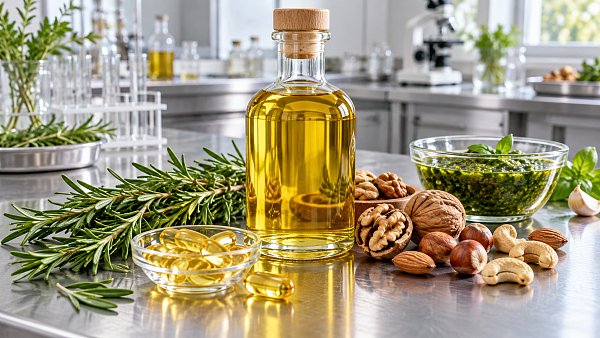
Consumers often respond positively to familiar plant-based language: ginger, elderberry, chamomile, ginseng, rosemary, hibiscus, ashwagandha, milk thistle, and many other botanicals carry associations with tradition, wellness, energy, relaxation, digestion, or daily balance. That familiarity can be valuable, but it is not a formulation strategy by itself.
A useful product brief separates the consumer-facing story from the technical requirements behind it. For example, a team developing a “daily vitality” powdered beverage may want a botanical profile that feels natural and approachable. The formulation team, however, needs answers about extract concentration, particle size, dispersibility, sweetness interaction, flavor masking, hygroscopicity, and shelf-life behavior. Regulatory colleagues need to know the botanical identity, plant part, extraction solvent, residual solvent status, contaminants, origin, and permitted claims. Procurement needs confidence that the chosen grade can be supplied with consistent specifications.
These are not separate workstreams that can be solved one after another. They influence each other from the start. A highly concentrated extract may reduce dosage and packaging volume, for instance, but intensify bitterness or complicate homogeneous blending. A less concentrated powder may be easier to handle, yet require a larger serving size than the desired format allows.
Define the job the extract must do
Before comparing suppliers or requesting samples, project teams should state the functional role of the extract in practical terms. Is it intended to support a concept related to antioxidant positioning? Is it the signature sensory component in an herbal tea? Is it included to strengthen a botanical blend in a nutrition bar? Or is it expected to deliver a defined marker compound at a controlled serving level?
That distinction matters. An extract used mainly for flavor and visual identity can be evaluated differently from one selected for a standardized active profile. In the first case, aroma, color, seasonal variation, and heat stability may be central. In the second, marker content, batch consistency, analytical methods, and dosage accuracy become more significant. Trying to use one specification for both purposes can lead to unnecessary cost or underperformance.
A clear brief should also identify the proposed delivery format early. Herbal extracts for functional foods behave very differently in ready-to-drink beverages, instant powders, gummies, dairy alternatives, bakery products, nutrition bars, capsules, and fermented foods. “Food compatible” is too broad a description to guide a real development decision.
Match extract format to the processing environment
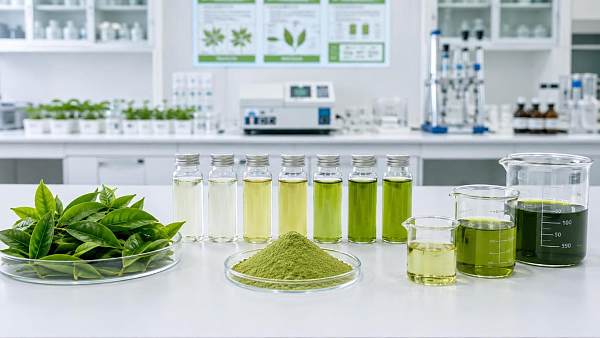
The extract format is often as important as the plant source. A botanical may be available as a dry powder, liquid extract, spray-dried material, oleoresin, water-soluble preparation, encapsulated ingredient, or carrier-supported blend. Each format brings different advantages and constraints.
Dry extracts can be practical for powders, tablets, bars, and certain dry-blend applications. However, their flow properties, dusting tendency, moisture sensitivity, and blend uniformity should be examined rather than assumed. Liquid extracts may be convenient for syrups, shots, and some beverage bases, but they can affect water activity, preservative strategy, sedimentation, and package compatibility.
For clear functional beverages, solubility is rarely a minor detail. A botanical powder that looks acceptable immediately after mixing may form haze, ring deposits, or visible sediment after several weeks. Acid level, mineral content, sweetener system, protein presence, and storage temperature can all change its behavior. If the final drink will be hot-filled, pasteurized, or exposed to light on retail shelves, the extract should be evaluated under those actual conditions—not only in a bench-top glass.
Encapsulation can offer a route for ingredients with strong aromas, oxidation sensitivity, poor water dispersibility, or unpleasant taste. Yet encapsulation is not automatically the best answer. The wall material, loading level, release profile, label implications, cost, and compatibility with the food matrix all need review. A delayed-release system designed for supplements may not make sense for a snack product where immediate flavor perception is part of the experience.
Processing questions worth asking before pilot trials
- Will the extract be exposed to heat, high shear, pressure, freezing, fermentation, or a low-pH environment?
- Does it dissolve, disperse, emulsify, or settle in the intended matrix?
- How does it behave alongside proteins, minerals, acids, sweeteners, hydrocolloids, fats, and preservatives?
- Does the extract change color over time, especially under light or oxygen exposure?
- Can the planned equipment dose and distribute it consistently at production scale?
- Will the ingredient introduce a noticeable odor, bitterness, astringency, or aftertaste at the target use level?
These questions may sound technical, but they protect the consumer promise. A functional food does not succeed merely because the label contains a botanical name. It needs to remain enjoyable, stable, and recognizable from the first batch to the last month of shelf life.
Standardization is about repeatability, not just a higher number
One of the most common misunderstandings in botanical sourcing is the assumption that a higher stated active content always indicates a better extract. In some situations, a standardized high-potency extract is exactly what a formulation needs. In others, it may create stronger sensory challenges, narrower processing tolerance, or a cost structure that does not fit the category.
Standardization should be considered in relation to the product objective. It provides a framework for controlling relevant marker compounds, reducing natural variation, and supporting more predictable dosing. But project managers should look beyond the headline percentage. They should ask which marker is being measured, which test method is used, whether the marker is genuinely relevant to the intended product positioning, and how much variation is permitted between batches.
Botanical raw materials naturally vary according to cultivar, growing region, harvest season, plant part, drying method, and extraction process. Responsible product development acknowledges this reality rather than treating all powders with the same botanical name as interchangeable. Two extracts from the same herb may differ in color, flavor, solubility, carrier content, polyphenol profile, or volatile components.
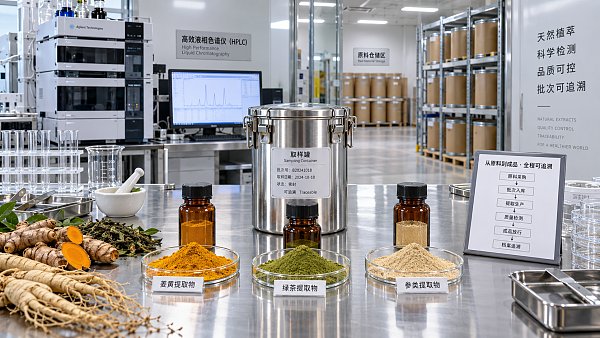
For a scalable functional food program, the specification should cover more than assay. Depending on the ingredient and destination market, it may include botanical identification, moisture, bulk density, particle size, microbiological limits, heavy metals, pesticide residues, mycotoxins, residual solvents, allergen status, and storage recommendations. The appropriate list will vary, but the principle is stable: the technical file should reflect the risks of the material and the needs of the finished product.
Sensory work should begin before the formula feels “finished”
Many herbal extracts bring a sensory signature that is appealing in small doses but difficult at levels needed for a functional concept. Bitter notes, grassy character, earthy undertones, medicinal associations, dryness, sulfur notes, or lingering heat can become more pronounced in a full product matrix. Delaying sensory evaluation until the end of development often creates a frustrating scenario: the active level is technically correct, but the product no longer tastes like something consumers want to buy again.
A better approach is to run early sensory screening using realistic prototype conditions. Taste the extract alone where appropriate, then in the base system, then in the near-final flavor direction. This reveals whether the project needs flavor pairing, sweetness adjustment, acid balancing, bitterness masking, encapsulation, lower use levels, or a different botanical form.
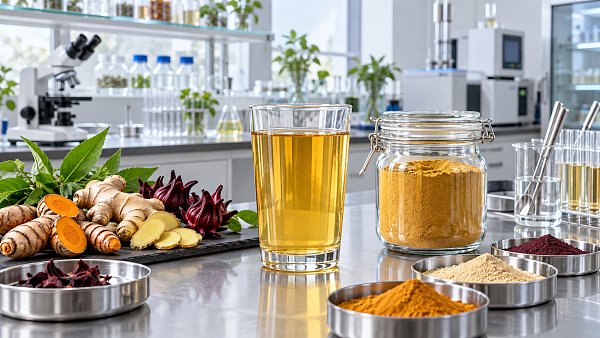
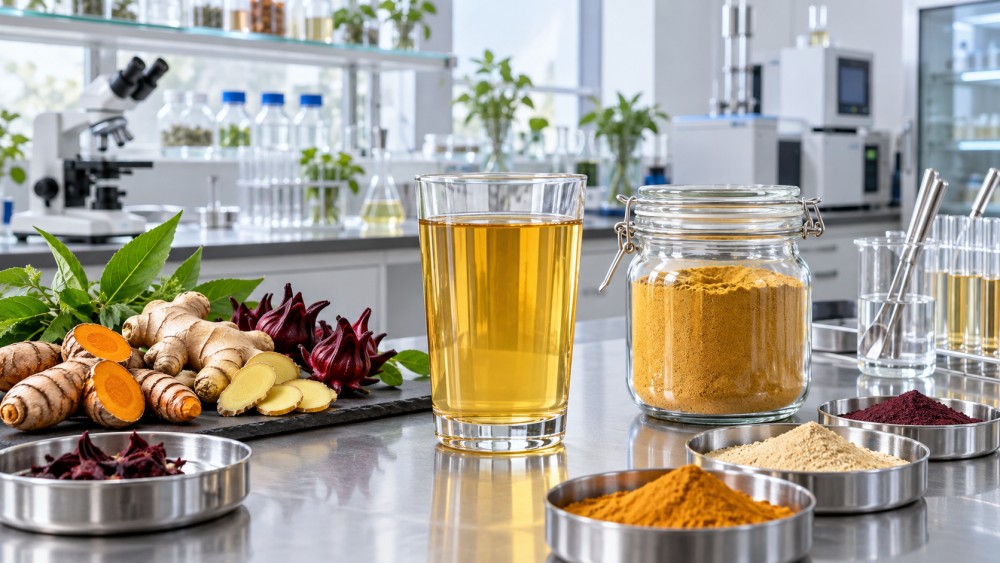
Some combinations work because they respect the natural profile of the ingredient. Ginger may sit comfortably with citrus or tropical flavors. Hibiscus can support berry or tea-style products. Roasted or cocoa notes may soften certain earthy botanicals in nutrition formats. The goal is not always to hide the extract completely. In many functional foods, a light botanical character can reinforce authenticity—provided it feels intentional rather than accidental.
Documentation belongs in the development timeline
For project leaders, documentation can feel less urgent than prototype performance. Yet missing or unclear records are a frequent reason that an otherwise promising ingredient cannot move forward smoothly. The required documentation varies by market and product category, but teams typically need a reliable package covering identity, composition, specification, safety-related information, manufacturing controls, country of origin, storage, shelf life, and relevant declarations.
Claims require special care. A botanical’s traditional use, consumer reputation, or online popularity does not automatically support a health claim on a food product. Claims frameworks differ across jurisdictions, and the acceptable language may depend on the category, dosage, evidence, and local rules. Product teams should therefore build the consumer message around what can be substantiated and communicated appropriately in the intended market.
This is also where coordination between R&D, regulatory, marketing, quality, and procurement pays off. If each department works from a different assumption about the extract’s role, the project can drift. A short cross-functional review at ingredient selection stage is usually more efficient than correcting label text, technical files, or sourcing decisions close to launch.
Supply reliability is a formulation variable
Herbal supply chains are shaped by agriculture, climate, harvest cycles, geographic concentration, processing capacity, and transport conditions. A formula that performs beautifully with one pilot sample can become vulnerable if the ingredient has limited sourcing options, a long lead time, or wide seasonal variation.
Project managers do not need to solve every procurement risk alone, but they should make supply questions visible early. Is the botanical widely cultivated or dependent on a narrow region? Is the extract produced from a defined plant part? Does the supplier offer consistent lot documentation? Can the same specification be maintained as volumes increase? What happens if the preferred grade is temporarily unavailable?
Where the botanical is central to the brand story, it may be sensible to qualify an alternative source or establish acceptable specification ranges before commercialization. This does not mean compromising quality; it means designing resilience into the project. In functional food development, a supply interruption can become a product interruption.
A practical stage-gate for selecting herbal extracts for functional foods
Rather than requesting dozens of samples and hoping one works, teams can use a staged evaluation. The first gate is strategic fit: consumer relevance, intended role, format, target market, and claim boundaries. The second is technical fit: solubility, processing stability, sensory effect, dosage, and interaction with the food matrix. The third is commercial fit: specification control, documentation readiness, supplier capacity, packaging, lead time, and total formulation cost.
Only extracts that pass each gate should move into extended shelf-life and scale-up trials. This approach reduces the temptation to choose an ingredient based on a compelling sample presentation or a single attractive assay result. It also gives project stakeholders a shared language for making trade-offs.
FCAS supports this kind of structured evaluation by organizing ingredient information around application performance, formulation considerations, safety expectations, documentation needs, and supply-chain context. For teams working across food ingredients, flavors, natural extracts, and specialty formulation materials, this application-based view can make early discussions more concrete and help prevent technical details from being separated from commercial reality.
The strongest botanical concepts are rarely built around a fashionable ingredient alone. They are built around a credible connection between plant source, extract quality, product format, sensory design, processing conditions, and market-ready documentation. When herbal extracts are selected with that full picture in mind, they become more than a label feature: they become a manageable, scalable part of functional food innovation.
Facing technical bottlenecks in manufacturing or looking for more efficient industrial solutions? Leave your details below and let the engineering experts at FCAS solve them for you.
We respect your privacy. Your information is strictly confidential.
Related News
 Antioxidants & Natural PreservativesHow Do Food Preservative Blends for Dairy Beverages Work?Food preservative blends for dairy beverages work differently across formulations. Discover how pH, processing and testing shape shelf-life performance.MORE+
 Antioxidants & Natural PreservativesIndexBox Forecasts Moderate BHT Market Growth Through 2035BHT market growth is forecast at 2.5% annually through 2035. Explore the demand drivers and what the outlook means for suppliers and buyers.MORE+
 Antioxidants & Natural PreservativesHow Do Food Preservation Ingredients Extend Shelf Life?Food Preservation Ingredients extend shelf life by slowing microbial growth and oxidation. Discover how to select and validate the right solution for your product.MORE+
 Antioxidants & Natural PreservativesWhat Drives Antioxidant Blends Bulk Price Changes?Discover what drives antioxidant blends bulk price changes, from ingredient costs to delivery terms, and learn how to compare quotes for better value.MORE+
 Antioxidants & Natural PreservativesWhat Affects Benzyl Alcohol Wholesale Pricing and Quality?Benzyl alcohol wholesale prices vary by purity, packaging, and delivery terms. Learn how to compare quality and total costs before you buy.MORE+
 Antioxidants & Natural PreservativesHow Preservative Blends Help Control Spoilage in FoodsPreservative Blends can help control food spoilage and support shelf life. Discover how to select and validate the right system for your product.MORE+
 Antioxidants & Natural PreservativesWhat Affects the Bulk Price of Food Preservation Ingredients?Explore what drives the food preservation ingredients bulk price, from specifications and order volume to freight, compliance, and supplier reliability.MORE+
 Antioxidants & Natural PreservativesHow to Choose Tocopherols for Food Oxidation ControlDiscover how to choose Tocopherols for food oxidation control. Compare profiles, dosage, formulation compatibility, and shelf-life testing.MORE+
 Antioxidants & Natural PreservativesHow Does pH Affect the Performance of Antimicrobial Preservatives?Antimicrobial Preservatives perform differently as pH shifts. Learn how to select effective systems, avoid formulation pitfalls, and validate lasting product protection.MORE+
 Antioxidants & Natural PreservativesHow to Select Natural Food Preservatives for Chilled Ready MealsSelect natural food preservatives for ready meals with confidence. Compare options, assess pH and packaging, and validate shelf life while protecting taste. Explore the guide.MORE+
 Antioxidants & Natural PreservativesWhat Affects the Bulk Price of Antioxidant Blends for Food Use?Compare antioxidant blends bulk price factors, from active concentration to dosage and delivery costs. Learn how to assess quotes and choose better value for food applications.MORE+
 Antioxidants & Natural PreservativesHow Do Propionates Prevent Mold Without Slowing Yeast in Bread?Propionates help delay mold in bread while allowing effective proofing. Discover how pH, dosage, and process control balance longer shelf life with yeast performance.MORE+
 Antioxidants & Natural PreservativesWhat Makes Stable Synthetic Aroma Chemicals Resist Degradation?Learn why stable synthetic aroma chemicals resist degradation, how formulation and packaging affect performance, and what to test when choosing ingredients for lasting fragrance quality.MORE+
 Antioxidants & Natural PreservativesHow Do You Choose a Natural Food Preservatives Supplier You Can Trust?Choose a natural food preservatives supplier you can trust. Learn how to verify compliance, validate performance, and assess supply reliability before you buy.MORE+
 Antioxidants & Natural PreservativesWhat Determines TBHQ Bulk Price and How Can You Compare Quotes?Compare tbhq bulk price with confidence. Discover key cost drivers, specification checks, and landed-cost essentials to evaluate supplier quotes and avoid hidden costs.MORE+
 Antioxidants & Natural PreservativesHow to Choose Food Preservation Ingredients for Beverages That LastChoose food preservation ingredients for beverages with confidence. Explore pH, microbial control, compliance, and testing to protect flavor and achieve reliable shelf life.MORE+
 Antioxidants & Natural PreservativesWhat Purity Tests Are Needed for Cosmetic Grade Butylparaben?Cosmetic grade butylparaben needs more than a high assay. Discover essential purity tests, impurity controls, and supplier checks to make confident sourcing decisions.MORE+
 Antioxidants & Natural PreservativesTBHQ Antioxidant Performance, Limits, and Food Safety ComplianceTBHQ antioxidant performance, legal limits, and food safety compliance explained. Learn practical controls for oils, frying, packaging, shelf life, and documentation.MORE+
 Antioxidants & Natural PreservativesNatural Food Preservatives for Sauces That Protect Shelf LifeNatural food preservatives for sauces: discover practical strategies for safer shelf life, clean-label formulation, pH control, packaging, and validation.MORE+
 Antioxidants & Natural PreservativesHow Herbal Extracts for Functional Foods Support Product DevelopmentHerbal extracts for functional foods: explore smarter selection, sensory balance, processing stability, documentation, and scalable supply for successful product development.MORE+
 Antioxidants & Natural PreservativesWhat Quality Checks Matter When Sourcing Butylparaben for Personal CareButylparaben for personal care sourcing guide: compare assay, impurities, physical performance, documentation, traceability, and supplier quality to reduce formulation risk.MORE+
 Antioxidants & Natural PreservativesWhen Propyl Gallate Antioxidant Is the Right Choice for Oil StabilityPropyl gallate antioxidant: learn when it is the right choice for oil stability, shelf-life protection, processing compatibility, and smarter formulation decisions.MORE+
 Antioxidants & Natural PreservativesHow Potassium Sorbate Extends Shelf Life in Food and Beverage ProductsPotassium Sorbate helps food and beverage brands control yeast and mold spoilage. Explore pH, dosage, processing, and packaging strategies for reliable shelf life.MORE+
 Antioxidants & Natural PreservativesHow to Source Bulk Herbal Extracts With Reliable Quality ControlBulk herbal extracts sourcing guide: compare suppliers, verify traceability, review CoAs, and build reliable quality controls for safer, consistent purchasing.MORE+
 Antioxidants & Natural PreservativesWhat to Check Before Sourcing Butylparaben for Personal Care FormulasButylparaben for personal care sourcing guide: check market eligibility, purity, supplier controls, formula compatibility, packaging, and total risk before buying.MORE+
 Antioxidants & Natural PreservativesNatural Food Antioxidants That Help Extend Shelf Life in Clean LabelsNatural Food Antioxidants: learn how tocopherols, rosemary extracts, and ascorbic systems help protect flavor, color, and shelf life in clean-label foods.MORE+
 Antioxidants & Natural PreservativesWhat to Check Before Choosing a Butylparaben Wholesale SupplierButylparaben wholesale buyers: learn how to assess quality, documentation, market fit, packaging, supply reliability, and total landed cost before choosing a supplier.MORE+
 Antioxidants & Natural PreservativesWhat to Check Before Choosing a Synthetic Food Preservatives SupplierSynthetic food preservatives supplier selection: check regulatory fit, batch consistency, documentation, logistics, and support to reduce risks and hidden costs.MORE+
 Antioxidants & Natural PreservativesWhat to Verify Before Choosing a Synthetic Food Preservatives FactorySynthetic food preservatives factory checklist: verify food-grade quality, impurity control, traceability, packaging, and regulatory fit before supplier approval.MORE+
 Antioxidants & Natural PreservativesHow to Compare Food Preservative Blends Wholesale QuotesFood preservative blends wholesale: compare quotes by true cost, dosage, compliance, quality consistency, and supply reliability to choose the best-value solution.MORE+
 Antioxidants & Natural PreservativesHow Natural Food Preservatives Keep Sauces Fresh Without Sacrificing FlavorNatural food preservatives for sauces help balance microbial control, shelf life, and authentic flavor. Explore practical formulation, processing, and packaging strategies.MORE+
 Antioxidants & Natural PreservativesHow Propionates Extend Shelf Life While Meeting Food Safety RequirementsPropionates extend shelf life by controlling mold in bakery and moisture-sensitive foods. Explore smart dosage, compliance, supplier quality, and safer distribution strategies.MORE+
 Antioxidants & Natural PreservativesHow Oxidation Resistant Flavor Encapsulates Protect Taste During ProcessingOxidation resistant flavor encapsulates help protect delicate taste through heat, oxygen, and storage. Discover how to improve flavor retention, release, and processing consistency.MORE+
 Antioxidants & Natural PreservativesHow to Choose Green Tea Extract for Stable, Consistent FormulationsGreen Tea Extract selection guide for stable, consistent formulations—compare standardization, solubility, carriers, stability, and batch quality with confidence.MORE+
 Antioxidants & Natural PreservativesIs TBHQ for Shortening Safe and Effective for Longer Shelf Life?TBHQ for shortening: discover how safe, compliant antioxidant use can reduce rancidity, protect quality, and support longer shelf life through validated controls.MORE+
 Antioxidants & Natural PreservativesWhy Ferulic Acid Matters in Modern Antioxidant FormulationsFerulic Acid helps modern formulations enhance oxidative stability, protect sensitive ingredients, and support differentiated product performance across key applications.MORE+
 Antioxidants & Natural PreservativesHow Natural Food Preservatives Extend Shelf Life Without CompromiseNatural Food Preservatives extend shelf life through smart hurdle systems, balancing safety, clean-label appeal, sensory quality, and regulatory compliance.MORE+
 Antioxidants & Natural PreservativesHow to Choose a Food Preservation Ingredients Manufacturer with ConfidenceFood preservation ingredients manufacturer selection starts with risk control. Learn how to compare quality, documentation, supply stability, and technical support with confidence.MORE+
 Antioxidants & Natural PreservativesIs Cosmetic Grade Butylparaben Still a Smart Choice for FormulatorsCosmetic grade butylparaben remains a key consideration for formulators. Explore when it still makes sense, when to replace it, and how to balance performance, compliance, and market demands.MORE+
 Antioxidants & Natural PreservativesHow to Choose a Reliable Gum Arabic Powder Supplier for Consistent QualityGum arabic powder supplier selection starts with quality, traceability, and supply stability. Learn how to compare specs, compliance, and continuity to reduce sourcing risk.MORE+