What Affects the Bulk Price of Antioxidant Blends for Food Use?
Two food-grade antioxidant blends can carry very different bulk quotes because the buyer may be purchasing different active concentrations, delivery systems, and levels of application support. A lower price per kilogram can still produce a higher treatment cost if the blend requires a larger dose, introduces processing difficulties, or fails to protect the food through its intended shelf life.
For procurement teams comparing antioxidant blends, bulk price becomes meaningful when the offers cover the same application, performance target, and delivery basis. The strongest comparison starts with cost at a validated use rate, then accounts for formulation compatibility, regulatory suitability, and the cost of receiving and holding stock. Those conditions explain much of the price difference that a quotation sheet alone cannot resolve.
What is actually inside the quoted kilogram?
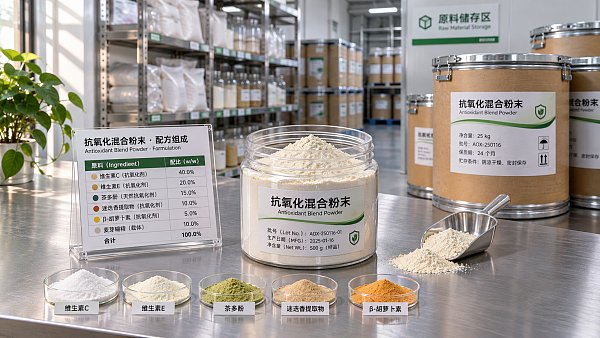
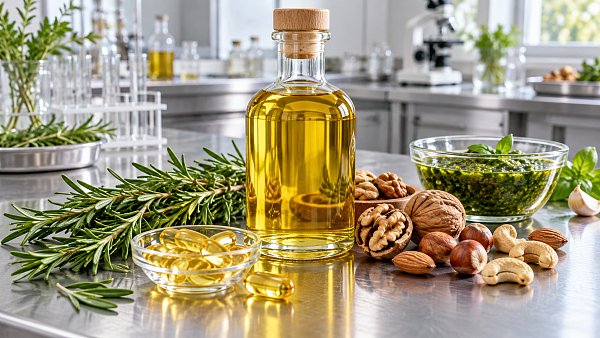
An antioxidant blend may contain several antioxidant ingredients, carriers, and supporting components. Depending on the application, these can include tocopherols, rosemary-derived antioxidant ingredients, ascorbyl palmitate, or permitted synthetic antioxidants. The formulation may also incorporate components that support dispersion or help manage oxidation through complementary mechanisms. Each component affects cost, but its contribution to performance depends on the food and processing conditions.
Active ingredient concentration is an obvious starting point. A diluted blend can have an attractive purchase price while requiring more material per batch. A concentrated product may reduce dosing volume, warehouse demand, or packaging waste. Yet concentration alone does not establish value: two blends with the same declared antioxidant content can behave differently because their active ingredients, composition, and delivery systems differ.
Ask suppliers to identify what their concentration claim measures. Total extract content, total tocopherols, and the concentration of a specified antioxidant constituent describe different things. A percentage without a defined analytical basis leaves room for misleading comparisons. Where the complete formulation is proprietary, procurement still needs an agreed specification, meaningful markers of consistency, and sufficient composition information for technical and regulatory assessment.
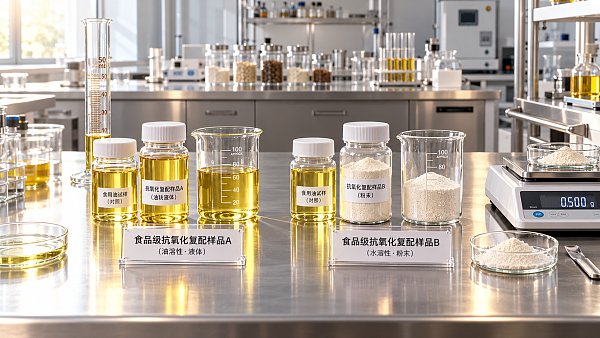
Carrier composition deserves similar attention. An oil-based blend may fit directly into a fat addition step, while a powder may suit dry blending. A formulation intended for an aqueous system may need a suitable dispersion system. Carriers and formulation aids add material and processing costs, but they can also make accurate, uniform dosing possible.
The cheapest carrier option can create costs elsewhere. Consider whether it changes the ingredient declaration, introduces an allergen concern, affects flavor, or requires additional mixing time. For a powdered blend, flow behavior and segregation can influence dosing consistency. For a liquid, viscosity and behavior at the plant’s handling temperature can determine whether the existing pump is suitable.
Origin and purchasing specifications also affect the quote. Requirements for a particular botanical source, identity preservation, or specific certification can narrow the available supply. These requirements may be commercially necessary, but they should be stated before comparing offers. “Natural” by itself provides too little information to establish either equivalent performance or an equivalent purchasing specification.
The useful comparison is cost at the required performance
The most practical starting calculation is straightforward:
Ingredient treatment cost per tonne of food = delivered blend price per kilogram × validated blend dose in kilograms per tonne of food.
This calculation links purchasing price to production use. A more expensive blend can have a lower treatment cost if it achieves the required result at a sufficiently lower dose. Conversely, a concentrated blend offers little economic benefit if its ingredients are poorly suited to the food matrix or if the dose needed for acceptable protection remains high.
The word “validated” matters. A supplier’s suggested dosage is a starting point for evaluation. It does not establish shelf life in every recipe, process, or package. Before comparing treatment costs, confirm whether the quoted use rate refers to the finished food, its fat content, or another basis. Confusing these bases can distort both the cost calculation and the intended addition level.
Antioxidant performance depends on where oxidation occurs and whether the protective ingredients reach that location. An edible oil, a fat-containing powder, and an emulsion present different formulation conditions. Processing heat, oxygen exposure, trace metals, and the point of addition can also influence the outcome. A blend that performs well in one application may offer poor value in another despite an identical purchase price.
Packaging belongs in this assessment because it changes the protection required from the antioxidant system. Oxygen exposure during filling, package barrier properties, and storage conditions can affect shelf-life results. When these conditions differ between a supplier’s demonstration and the buyer’s product, the demonstration provides limited evidence for the buyer’s cost model.
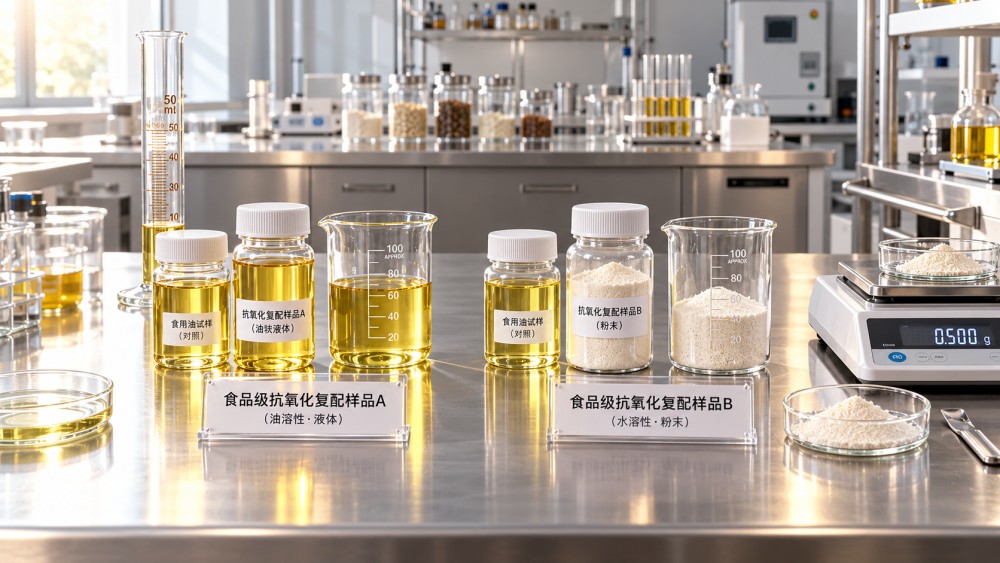
A useful comparison holds the recipe, production conditions, packaging, and storage protocol as consistent as practical. Evaluate each candidate at technically appropriate doses against a defined acceptance point. Depending on the food, that assessment may combine sensory evaluation with suitable oxidation measurements. A single analytical result may not capture the flavor deterioration that determines commercial acceptance.
Accelerated testing can help screen candidates, but its relevance to actual storage needs to be established. Procurement should ask what the available test evidence supports: an initial ranking, a dose recommendation, or a shelf-life claim under defined conditions. Paying a premium for application data is easier to justify when those data reduce uncertainty in the buyer’s own product.
Once acceptable performance is established, add handling costs that differ materially between candidates. These may include premixing, extra labor, dosing equipment, process losses, or additional quality checks. Avoid loading the comparison with speculative savings. Include costs the plant can identify and explain, particularly when a formulation requires a change to the existing process.
Why raw materials, specifications, and compliance change the quote
The ingredient basket behind a blend influences its price exposure. Botanical ingredients can be affected by crop conditions, extraction yields, and the availability of material meeting the required composition. Other antioxidant ingredients may be sensitive to feedstock costs, manufacturing capacity, or production interruptions. The commercial effect depends on the blend’s composition and the supplier’s sourcing arrangements.
A broad statement that “raw materials have increased” is therefore insufficient for evaluating a substantial price adjustment. Buyers can ask which cost component changed, how much of the formulation it affects, and whether the change applies to new production or existing inventory. Suppliers may protect confidential formulation details while still explaining the commercial basis of a revision.
Specifications can create legitimate price differences even where product descriptions appear similar. Tighter controls on active content, sensory characteristics, contaminants, or physical properties may require different sourcing, processing, or testing. The procurement question is whether those controls support a defined product requirement. Paying for an unnecessarily narrow specification adds cost; relaxing an essential one can transfer risk into production.
Batch consistency also has an economic value. A blend whose relevant properties vary can require repeated dose adjustments or additional technical review. An agreed specification and appropriate certificate of analysis help establish what the supplier is committing to deliver. For a proprietary blend, change notification is especially important because a change in source, carrier, or composition may affect previously approved performance.
Regulatory suitability must be assessed for the destination market and food category. A food-grade description does not establish that every component is permitted for every intended use. Applicable conditions may concern ingredient identity, use level, food category, or labeling. Antioxidant constituents and other components of the blend both need consideration.
Documentation can therefore influence the effective cost of an offer. Depending on the application, buyers may need composition information for regulatory review, allergen statements, traceability records, relevant certification, and supporting specifications. A safety data sheet serves a different purpose and does not, by itself, establish food-use suitability.
These requirements should be included in the initial request for quotation. Discovering a documentation gap after a successful plant trial can delay approval and leave the buyer repeating technical work with another source. A higher quote may include useful documentation and technical support, but buyers should establish what will actually be supplied rather than assuming that price indicates service quality.
Bulk discounts only help when the order fits consumption
Order volume can reduce the supplier’s cost per kilogram by spreading production setup, testing, and packing costs across a larger quantity. However, the relevant volume may be the size of each manufacturing batch or shipment, rather than the buyer’s annual forecast. A large annual requirement delivered in many small releases may carry a different cost structure from a single bulk shipment.
Ask suppliers to separate minimum order quantity, price-break quantity, and annual commitment. Also clarify whether the price depends on a firm purchase obligation, a forecast, or a delivery schedule. This makes it easier to compare an immediate bulk discount with an agreement that allows stock to arrive closer to use.
Remaining shelf life at receipt can determine whether a discount is worthwhile. If the buyer cannot consume the material within its usable period, the purchase creates exposure to write-offs and additional testing. Storage conditions matter as well: a blend requiring handling that the site cannot reliably provide may lose its commercial advantage before it reaches production.
Pack size should match the dosing pattern. Large containers can reduce packaging cost per kilogram, but repeated opening may complicate handling and protection of the remaining material. Smaller packs can simplify batch allocation and stock control at a higher unit price. Compare the amount likely to be used from each opened container and the supplier’s instructions for storage after opening.
Normalize logistics before judging the quoted price. Freight, import charges where applicable, insurance, clearance costs, and local transport can change the ranking between offers. Delivery terms establish which costs and responsibilities sit with each party. Currency, payment terms, lead time, and quote validity also affect whether two prices are commercially comparable.
A practical request for quotation can keep the decision focused by asking each supplier for:
- The proposed grade, relevant composition specifications, carrier, and physical form.
- The recommended dose, its calculation basis, and supporting evidence for the intended application.
- Documentation covering the specified food category, destination market, and labeling requirements.
- Price breaks, pack sizes, minimum orders, lead time, and remaining shelf life at delivery.
- Delivery terms, payment terms, quotation validity, and arrangements for product changes or price reviews.
Use the responses to distinguish price differences caused by product composition from those caused by service, delivery, or commercial commitments. An unexplained gap is a reason to investigate the specification and cost basis before negotiating a discount.
A supplier shortlist becomes defensible when each offer has an acceptable application result, a usable regulatory package, and a comparable delivered treatment cost. From there, negotiations can address the variables the buyer can actually change: order size, delivery frequency, pack format, specification requirements, and contract duration. The lowest quoted kilogram earns the purchase only when it also fits the food, the plant, and the rate at which the business will use it.
Facing technical bottlenecks in manufacturing or looking for more efficient industrial solutions? Leave your details below and let the engineering experts at FCAS solve them for you.
We respect your privacy. Your information is strictly confidential.
Related News
 Antioxidants & Natural PreservativesHow Do Food Preservative Blends for Dairy Beverages Work?Food preservative blends for dairy beverages work differently across formulations. Discover how pH, processing and testing shape shelf-life performance.MORE+
 Antioxidants & Natural PreservativesIndexBox Forecasts Moderate BHT Market Growth Through 2035BHT market growth is forecast at 2.5% annually through 2035. Explore the demand drivers and what the outlook means for suppliers and buyers.MORE+
 Antioxidants & Natural PreservativesHow Do Food Preservation Ingredients Extend Shelf Life?Food Preservation Ingredients extend shelf life by slowing microbial growth and oxidation. Discover how to select and validate the right solution for your product.MORE+
 Antioxidants & Natural PreservativesWhat Drives Antioxidant Blends Bulk Price Changes?Discover what drives antioxidant blends bulk price changes, from ingredient costs to delivery terms, and learn how to compare quotes for better value.MORE+
 Antioxidants & Natural PreservativesWhat Affects Benzyl Alcohol Wholesale Pricing and Quality?Benzyl alcohol wholesale prices vary by purity, packaging, and delivery terms. Learn how to compare quality and total costs before you buy.MORE+
 Antioxidants & Natural PreservativesHow Preservative Blends Help Control Spoilage in FoodsPreservative Blends can help control food spoilage and support shelf life. Discover how to select and validate the right system for your product.MORE+
 Antioxidants & Natural PreservativesWhat Affects the Bulk Price of Food Preservation Ingredients?Explore what drives the food preservation ingredients bulk price, from specifications and order volume to freight, compliance, and supplier reliability.MORE+
 Antioxidants & Natural PreservativesHow to Choose Tocopherols for Food Oxidation ControlDiscover how to choose Tocopherols for food oxidation control. Compare profiles, dosage, formulation compatibility, and shelf-life testing.MORE+
 Antioxidants & Natural PreservativesHow Does pH Affect the Performance of Antimicrobial Preservatives?Antimicrobial Preservatives perform differently as pH shifts. Learn how to select effective systems, avoid formulation pitfalls, and validate lasting product protection.MORE+
 Antioxidants & Natural PreservativesHow to Select Natural Food Preservatives for Chilled Ready MealsSelect natural food preservatives for ready meals with confidence. Compare options, assess pH and packaging, and validate shelf life while protecting taste. Explore the guide.MORE+
 Antioxidants & Natural PreservativesWhat Affects the Bulk Price of Antioxidant Blends for Food Use?Compare antioxidant blends bulk price factors, from active concentration to dosage and delivery costs. Learn how to assess quotes and choose better value for food applications.MORE+
 Antioxidants & Natural PreservativesHow Do Propionates Prevent Mold Without Slowing Yeast in Bread?Propionates help delay mold in bread while allowing effective proofing. Discover how pH, dosage, and process control balance longer shelf life with yeast performance.MORE+
 Antioxidants & Natural PreservativesWhat Makes Stable Synthetic Aroma Chemicals Resist Degradation?Learn why stable synthetic aroma chemicals resist degradation, how formulation and packaging affect performance, and what to test when choosing ingredients for lasting fragrance quality.MORE+
 Antioxidants & Natural PreservativesHow Do You Choose a Natural Food Preservatives Supplier You Can Trust?Choose a natural food preservatives supplier you can trust. Learn how to verify compliance, validate performance, and assess supply reliability before you buy.MORE+
 Antioxidants & Natural PreservativesWhat Determines TBHQ Bulk Price and How Can You Compare Quotes?Compare tbhq bulk price with confidence. Discover key cost drivers, specification checks, and landed-cost essentials to evaluate supplier quotes and avoid hidden costs.MORE+
 Antioxidants & Natural PreservativesHow to Choose Food Preservation Ingredients for Beverages That LastChoose food preservation ingredients for beverages with confidence. Explore pH, microbial control, compliance, and testing to protect flavor and achieve reliable shelf life.MORE+
 Antioxidants & Natural PreservativesWhat Purity Tests Are Needed for Cosmetic Grade Butylparaben?Cosmetic grade butylparaben needs more than a high assay. Discover essential purity tests, impurity controls, and supplier checks to make confident sourcing decisions.MORE+
 Antioxidants & Natural PreservativesTBHQ Antioxidant Performance, Limits, and Food Safety ComplianceTBHQ antioxidant performance, legal limits, and food safety compliance explained. Learn practical controls for oils, frying, packaging, shelf life, and documentation.MORE+
 Antioxidants & Natural PreservativesNatural Food Preservatives for Sauces That Protect Shelf LifeNatural food preservatives for sauces: discover practical strategies for safer shelf life, clean-label formulation, pH control, packaging, and validation.MORE+
 Antioxidants & Natural PreservativesHow Herbal Extracts for Functional Foods Support Product DevelopmentHerbal extracts for functional foods: explore smarter selection, sensory balance, processing stability, documentation, and scalable supply for successful product development.MORE+
 Antioxidants & Natural PreservativesWhat Quality Checks Matter When Sourcing Butylparaben for Personal CareButylparaben for personal care sourcing guide: compare assay, impurities, physical performance, documentation, traceability, and supplier quality to reduce formulation risk.MORE+
 Antioxidants & Natural PreservativesWhen Propyl Gallate Antioxidant Is the Right Choice for Oil StabilityPropyl gallate antioxidant: learn when it is the right choice for oil stability, shelf-life protection, processing compatibility, and smarter formulation decisions.MORE+
 Antioxidants & Natural PreservativesHow Potassium Sorbate Extends Shelf Life in Food and Beverage ProductsPotassium Sorbate helps food and beverage brands control yeast and mold spoilage. Explore pH, dosage, processing, and packaging strategies for reliable shelf life.MORE+
 Antioxidants & Natural PreservativesHow to Source Bulk Herbal Extracts With Reliable Quality ControlBulk herbal extracts sourcing guide: compare suppliers, verify traceability, review CoAs, and build reliable quality controls for safer, consistent purchasing.MORE+
 Antioxidants & Natural PreservativesWhat to Check Before Sourcing Butylparaben for Personal Care FormulasButylparaben for personal care sourcing guide: check market eligibility, purity, supplier controls, formula compatibility, packaging, and total risk before buying.MORE+
 Antioxidants & Natural PreservativesNatural Food Antioxidants That Help Extend Shelf Life in Clean LabelsNatural Food Antioxidants: learn how tocopherols, rosemary extracts, and ascorbic systems help protect flavor, color, and shelf life in clean-label foods.MORE+
 Antioxidants & Natural PreservativesWhat to Check Before Choosing a Butylparaben Wholesale SupplierButylparaben wholesale buyers: learn how to assess quality, documentation, market fit, packaging, supply reliability, and total landed cost before choosing a supplier.MORE+
 Antioxidants & Natural PreservativesWhat to Check Before Choosing a Synthetic Food Preservatives SupplierSynthetic food preservatives supplier selection: check regulatory fit, batch consistency, documentation, logistics, and support to reduce risks and hidden costs.MORE+
 Antioxidants & Natural PreservativesWhat to Verify Before Choosing a Synthetic Food Preservatives FactorySynthetic food preservatives factory checklist: verify food-grade quality, impurity control, traceability, packaging, and regulatory fit before supplier approval.MORE+
 Antioxidants & Natural PreservativesHow to Compare Food Preservative Blends Wholesale QuotesFood preservative blends wholesale: compare quotes by true cost, dosage, compliance, quality consistency, and supply reliability to choose the best-value solution.MORE+
 Antioxidants & Natural PreservativesHow Natural Food Preservatives Keep Sauces Fresh Without Sacrificing FlavorNatural food preservatives for sauces help balance microbial control, shelf life, and authentic flavor. Explore practical formulation, processing, and packaging strategies.MORE+
 Antioxidants & Natural PreservativesHow Propionates Extend Shelf Life While Meeting Food Safety RequirementsPropionates extend shelf life by controlling mold in bakery and moisture-sensitive foods. Explore smart dosage, compliance, supplier quality, and safer distribution strategies.MORE+
 Antioxidants & Natural PreservativesHow Oxidation Resistant Flavor Encapsulates Protect Taste During ProcessingOxidation resistant flavor encapsulates help protect delicate taste through heat, oxygen, and storage. Discover how to improve flavor retention, release, and processing consistency.MORE+
 Antioxidants & Natural PreservativesHow to Choose Green Tea Extract for Stable, Consistent FormulationsGreen Tea Extract selection guide for stable, consistent formulations—compare standardization, solubility, carriers, stability, and batch quality with confidence.MORE+
 Antioxidants & Natural PreservativesIs TBHQ for Shortening Safe and Effective for Longer Shelf Life?TBHQ for shortening: discover how safe, compliant antioxidant use can reduce rancidity, protect quality, and support longer shelf life through validated controls.MORE+
 Antioxidants & Natural PreservativesWhy Ferulic Acid Matters in Modern Antioxidant FormulationsFerulic Acid helps modern formulations enhance oxidative stability, protect sensitive ingredients, and support differentiated product performance across key applications.MORE+
 Antioxidants & Natural PreservativesHow Natural Food Preservatives Extend Shelf Life Without CompromiseNatural Food Preservatives extend shelf life through smart hurdle systems, balancing safety, clean-label appeal, sensory quality, and regulatory compliance.MORE+
 Antioxidants & Natural PreservativesHow to Choose a Food Preservation Ingredients Manufacturer with ConfidenceFood preservation ingredients manufacturer selection starts with risk control. Learn how to compare quality, documentation, supply stability, and technical support with confidence.MORE+
 Antioxidants & Natural PreservativesIs Cosmetic Grade Butylparaben Still a Smart Choice for FormulatorsCosmetic grade butylparaben remains a key consideration for formulators. Explore when it still makes sense, when to replace it, and how to balance performance, compliance, and market demands.MORE+
 Antioxidants & Natural PreservativesHow to Choose a Reliable Gum Arabic Powder Supplier for Consistent QualityGum arabic powder supplier selection starts with quality, traceability, and supply stability. Learn how to compare specs, compliance, and continuity to reduce sourcing risk.MORE+