How Do You Choose a Natural Food Preservatives Supplier You Can Trust?
A trustworthy natural food preservatives supplier must demonstrate three things: the ingredient is legally suitable for its intended use, it works in your actual food system, and commercial deliveries match the material you approved. A competitive quotation, a “clean-label” claim, or a food safety certificate cannot establish all three.
The strongest selection process treats these as separate approval requirements. Regulatory evidence establishes whether you can use the product; application testing establishes whether it performs; manufacturing and supply-chain controls establish whether that performance can be repeated. A weakness in any one area can outweigh an attractive price.
Define the preservation problem before comparing suppliers
“Natural preservative” is not a sufficiently precise purchasing specification. It can describe fermentation-derived ingredients, protective cultures, botanical extracts, antimicrobial compounds, or antioxidants. These materials address different deterioration mechanisms and are not interchangeable.
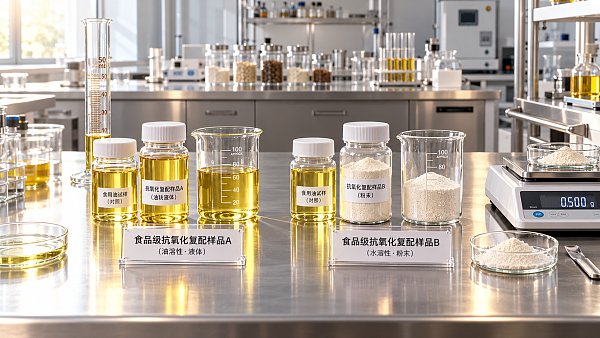
An antioxidant that delays rancidity does not necessarily control microbial growth. An antimicrobial effective against certain bacteria may offer inadequate protection against yeasts or molds. Even within one ingredient category, concentration, carrier composition, production method, and delivery form can change performance.
A useful supplier brief should identify:
- The food category, formulation, pH range, water activity, and relevant fat, protein, salt, and sugar levels.
- The problem to control: specific spoilage organisms, a defined food safety hazard, oxidation, or a combination.
- Processing conditions, including heat treatment, fermentation, mixing sequence, and the point of ingredient addition.
- Packaging, storage temperature, distribution conditions, and the required shelf life.
- Destination markets, labeling restrictions, sensory limits, and any certification requirements.
These details make quotations comparable. Without them, one supplier may quote a concentrated ingredient while another quotes a diluted blend, with neither necessarily suited to the application. A credible supplier should ask for missing information rather than promise a universal solution.
Separate “natural” positioning from legal suitability
Natural origin does not automatically authorize an ingredient for food use, and a recognizable ingredient name does not settle its regulatory classification. The exact composition, manufacturing process, intended function, food category, and use level all matter. Acceptance in one destination does not establish acceptance elsewhere.
Request a written regulatory statement covering the precise commercial grade and intended application. It should identify the relevant legal basis, applicable restrictions, proposed declaration, and any conditions attached to use. A broad statement such as “compliant in Europe and America” is not enough.
For the United States, a claim involving generally recognized as safe status needs a basis relevant to the intended conditions of use. An FDA response to a GRAS notice is not blanket approval for every application. In the European Union, an ingredient functioning as a food additive must meet the applicable authorization and conditions of use; natural sourcing does not create an exemption.
Fermentation-derived products deserve particular attention when their commercial identity differs from the substances responsible for preservation. Ask how the proposed ingredient declaration relates to composition and technological function. Do not assume that describing a material as “cultured,” “fermented,” or “plant-based” resolves its classification.
Keep consumer-facing claims separate from ingredient legality. Organic, non-GMO, allergen-related, halal, kosher, and “natural” claims require their own supporting evidence where applicable. “Clean label” is a market description, not a substitute for a destination-specific regulatory assessment.
Ask for specifications that explain performance
A specification sheet becomes useful when its limits correspond to identity, functionality, safety, and storage stability. Appearance, moisture, and a general purity figure may be insufficient for a complex extract or fermentation product.
For botanical ingredients, the relevant controls may include source species, plant part, extraction method, chemical markers, and residual solvents. Fermentation-derived products may require controls on organic acid profiles, active constituents, residual substrates, and carriers. Where potency is expressed through an activity assay, ask which method is used and how results are reported.
The supplier need not disclose every proprietary process detail. However, it should provide enough information—under confidentiality arrangements if necessary—to support legal review, allergen assessment, specification setting, and safe use.
Distinguish numerical test results from a simple “passes” statement. Not every attribute must be tested on every batch, but the supplier should explain its release-testing program, periodic verification, and reliance on upstream information. Unexplained gaps are more concerning than a transparent, risk-based testing schedule.
Require evidence from the food—not only the laboratory medium
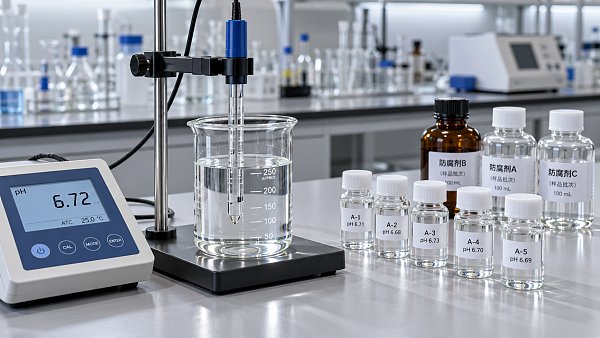
Laboratory antimicrobial data can identify promising candidates, but it cannot establish finished-product shelf life. Fat and protein can affect the availability of certain antimicrobial compounds. Acidity can influence organic acid performance. Heat, packaging atmosphere, and ingredient interactions can change the outcome further.
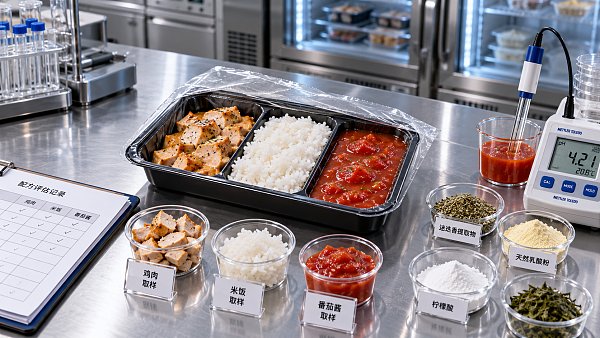
Ask for application data that disclose the food matrix, dose, process, target organisms, storage conditions, controls, and acceptance criteria. A claim such as “extends shelf life” has little decision value without those conditions. Supplier studies are supporting evidence, not a replacement for validation in your own formulation.
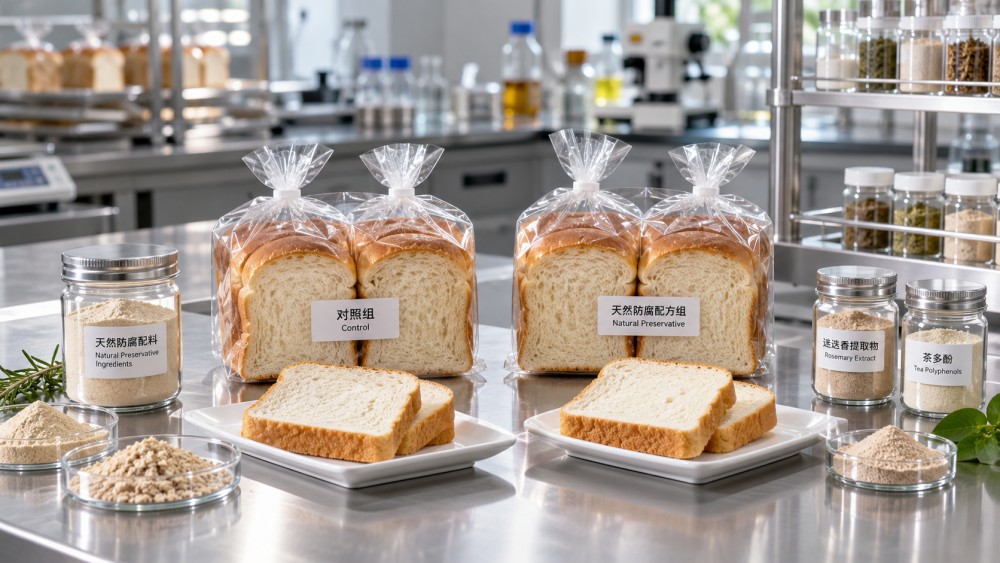
Use a staged trial: bench screening to eliminate unsuitable candidates, pilot production to assess processing effects, and commercial-scale verification before routine adoption. Include untreated or existing-system controls where appropriate. Assess sensory changes alongside microbiological or oxidative stability; an effective dose may still be unacceptable if it introduces bitterness, aroma, discoloration, or texture changes.
When pathogen control is involved, challenge testing should be designed and conducted by qualified specialists under appropriate containment. Spoilage results do not establish pathogen control, and an ingredient should not be treated as a substitute for validated hygiene, processing, temperature control, or packaging measures.
Clarify dosage calculations before testing. Compare products on an as-supplied basis and, where meaningful, on active content or standardized activity. Different analytical methods may make apparent potency figures non-comparable. A good supplier explains these limits rather than translating laboratory numbers directly into a guaranteed shelf life.
Verify the organization behind the product
The company issuing the quotation may be a manufacturer, distributor, agent, or private-label seller. None of these models is inherently unacceptable. The risk arises when the manufacturing source, quality responsibilities, or route for resolving problems is unclear.
Identify the actual production site and establish who controls specifications, batch release, storage, repacking, and complaint investigation. If a distributor supplies material, confirm how lot numbers connect to the original manufacturer and whether technical questions can reach the responsible production or quality team.
Review food safety certification for the named site, product scope, validity, and issuing body. A certificate is evidence of an assessed management system within its scope; it does not prove efficacy, authorize an ingredient, or guarantee every shipment. ISO 9001 alone does not establish food safety suitability.
Audit attention should follow the ingredient’s risks. Botanical extracts warrant attention to raw-material identification, agricultural contaminants, extraction controls, and adulteration prevention. Fermentation-derived products warrant attention to process consistency, contamination controls, downstream handling, and standardization.
Traceability should be demonstrable. Request evidence of a traceability exercise or mock recall showing how incoming materials, production records, released lots, and customers are connected. Where repacking occurs, check that the original batch identity remains recoverable.
Test supply continuity beyond the promised lead time
A supplier can provide excellent samples and still be unsuitable for recurring supply. Ask whether samples came from routine commercial production, which site will fulfill orders, and whether the quoted lead time includes manufacturing, release testing, export preparation, and transport.
For ingredients dependent on agricultural feedstocks, establish how harvest variability and raw-material substitutions are controlled. For fermentation products, clarify how production capacity and access to critical inputs affect availability. The important question is whether those dependencies can change the approved product or interrupt deliveries.
Storage and transit requirements also need evidence. Confirm packaging barriers, temperature or humidity restrictions, remaining shelf life on arrival, and handling after opening. If transport conditions can affect potency or flowability, agree how excursions will be assessed and who decides whether the material remains usable.
Put change notification in writing. Changes to manufacturing site, feedstock, carrier, process, test method, packaging, or specification may require review or revalidation. “Equivalent material” should not be an automatic substitution right. Where a second source is needed, qualify it separately: a shared ingredient name does not establish identical composition or performance.
Compare cost at the validated use level
Price per kilogram can reward the wrong offer. A lower-priced blend may require a higher inclusion rate, create additional mixing work, or reduce formulation flexibility. A more concentrated ingredient may cost more per kilogram but less per batch of finished food.
Use the validated dose to calculate ingredient cost per unit of saleable product. Then include freight, duties, release testing, storage, minimum-order exposure, and any additional processing costs. Include sensory adjustments or packaging changes only when trials show they are necessary.
Claims about reduced waste or longer shelf life should enter the calculation only when supported by relevant evidence. Do not credit an unverified benefit simply because it appears in a sales presentation. Equally, assess the financial effect of stock expiring before use: a volume discount can disappear if the order quantity exceeds realistic consumption.
Make approval conditional on evidence and enforceable commitments
Keep non-negotiable requirements separate from commercial preferences. Unresolved legal suitability, failed application validation, unacceptable safety controls, or missing traceability should prevent approval rather than be offset by a favorable price or short lead time.
Once those requirements are satisfied, compare supply flexibility, technical responsiveness, commercial terms, and total cost. Record remaining uncertainties and assign responsibility for closing them. A trial order can confirm documentation, packaging, delivery, and incoming inspection performance, but it should not bypass unresolved food safety or regulatory questions.
The final agreement should connect the approved grade to its specification, manufacturing source, documentation package, minimum remaining shelf life, change-notification obligations, complaint process, and arrangements for nonconforming deliveries. Retained samples and access to investigation findings can help resolve disputes over a particular batch.
The most credible supplier is not the one offering the broadest promise. It is the one that defines where its ingredient works, discloses the limits of its evidence, and accepts clear responsibility for delivering the approved material consistently.
Facing technical bottlenecks in manufacturing or looking for more efficient industrial solutions? Leave your details below and let the engineering experts at FCAS solve them for you.
We respect your privacy. Your information is strictly confidential.
Related News
 Antioxidants & Natural PreservativesHow Do Food Preservative Blends for Dairy Beverages Work?Food preservative blends for dairy beverages work differently across formulations. Discover how pH, processing and testing shape shelf-life performance.MORE+
 Antioxidants & Natural PreservativesIndexBox Forecasts Moderate BHT Market Growth Through 2035BHT market growth is forecast at 2.5% annually through 2035. Explore the demand drivers and what the outlook means for suppliers and buyers.MORE+
 Antioxidants & Natural PreservativesHow Do Food Preservation Ingredients Extend Shelf Life?Food Preservation Ingredients extend shelf life by slowing microbial growth and oxidation. Discover how to select and validate the right solution for your product.MORE+
 Antioxidants & Natural PreservativesWhat Drives Antioxidant Blends Bulk Price Changes?Discover what drives antioxidant blends bulk price changes, from ingredient costs to delivery terms, and learn how to compare quotes for better value.MORE+
 Antioxidants & Natural PreservativesWhat Affects Benzyl Alcohol Wholesale Pricing and Quality?Benzyl alcohol wholesale prices vary by purity, packaging, and delivery terms. Learn how to compare quality and total costs before you buy.MORE+
 Antioxidants & Natural PreservativesHow Preservative Blends Help Control Spoilage in FoodsPreservative Blends can help control food spoilage and support shelf life. Discover how to select and validate the right system for your product.MORE+
 Antioxidants & Natural PreservativesWhat Affects the Bulk Price of Food Preservation Ingredients?Explore what drives the food preservation ingredients bulk price, from specifications and order volume to freight, compliance, and supplier reliability.MORE+
 Antioxidants & Natural PreservativesHow to Choose Tocopherols for Food Oxidation ControlDiscover how to choose Tocopherols for food oxidation control. Compare profiles, dosage, formulation compatibility, and shelf-life testing.MORE+
 Antioxidants & Natural PreservativesHow Does pH Affect the Performance of Antimicrobial Preservatives?Antimicrobial Preservatives perform differently as pH shifts. Learn how to select effective systems, avoid formulation pitfalls, and validate lasting product protection.MORE+
 Antioxidants & Natural PreservativesHow to Select Natural Food Preservatives for Chilled Ready MealsSelect natural food preservatives for ready meals with confidence. Compare options, assess pH and packaging, and validate shelf life while protecting taste. Explore the guide.MORE+
 Antioxidants & Natural PreservativesWhat Affects the Bulk Price of Antioxidant Blends for Food Use?Compare antioxidant blends bulk price factors, from active concentration to dosage and delivery costs. Learn how to assess quotes and choose better value for food applications.MORE+
 Antioxidants & Natural PreservativesHow Do Propionates Prevent Mold Without Slowing Yeast in Bread?Propionates help delay mold in bread while allowing effective proofing. Discover how pH, dosage, and process control balance longer shelf life with yeast performance.MORE+
 Antioxidants & Natural PreservativesWhat Makes Stable Synthetic Aroma Chemicals Resist Degradation?Learn why stable synthetic aroma chemicals resist degradation, how formulation and packaging affect performance, and what to test when choosing ingredients for lasting fragrance quality.MORE+
 Antioxidants & Natural PreservativesHow Do You Choose a Natural Food Preservatives Supplier You Can Trust?Choose a natural food preservatives supplier you can trust. Learn how to verify compliance, validate performance, and assess supply reliability before you buy.MORE+
 Antioxidants & Natural PreservativesWhat Determines TBHQ Bulk Price and How Can You Compare Quotes?Compare tbhq bulk price with confidence. Discover key cost drivers, specification checks, and landed-cost essentials to evaluate supplier quotes and avoid hidden costs.MORE+
 Antioxidants & Natural PreservativesHow to Choose Food Preservation Ingredients for Beverages That LastChoose food preservation ingredients for beverages with confidence. Explore pH, microbial control, compliance, and testing to protect flavor and achieve reliable shelf life.MORE+
 Antioxidants & Natural PreservativesWhat Purity Tests Are Needed for Cosmetic Grade Butylparaben?Cosmetic grade butylparaben needs more than a high assay. Discover essential purity tests, impurity controls, and supplier checks to make confident sourcing decisions.MORE+
 Antioxidants & Natural PreservativesTBHQ Antioxidant Performance, Limits, and Food Safety ComplianceTBHQ antioxidant performance, legal limits, and food safety compliance explained. Learn practical controls for oils, frying, packaging, shelf life, and documentation.MORE+
 Antioxidants & Natural PreservativesNatural Food Preservatives for Sauces That Protect Shelf LifeNatural food preservatives for sauces: discover practical strategies for safer shelf life, clean-label formulation, pH control, packaging, and validation.MORE+
 Antioxidants & Natural PreservativesHow Herbal Extracts for Functional Foods Support Product DevelopmentHerbal extracts for functional foods: explore smarter selection, sensory balance, processing stability, documentation, and scalable supply for successful product development.MORE+
 Antioxidants & Natural PreservativesWhat Quality Checks Matter When Sourcing Butylparaben for Personal CareButylparaben for personal care sourcing guide: compare assay, impurities, physical performance, documentation, traceability, and supplier quality to reduce formulation risk.MORE+
 Antioxidants & Natural PreservativesWhen Propyl Gallate Antioxidant Is the Right Choice for Oil StabilityPropyl gallate antioxidant: learn when it is the right choice for oil stability, shelf-life protection, processing compatibility, and smarter formulation decisions.MORE+
 Antioxidants & Natural PreservativesHow Potassium Sorbate Extends Shelf Life in Food and Beverage ProductsPotassium Sorbate helps food and beverage brands control yeast and mold spoilage. Explore pH, dosage, processing, and packaging strategies for reliable shelf life.MORE+
 Antioxidants & Natural PreservativesHow to Source Bulk Herbal Extracts With Reliable Quality ControlBulk herbal extracts sourcing guide: compare suppliers, verify traceability, review CoAs, and build reliable quality controls for safer, consistent purchasing.MORE+
 Antioxidants & Natural PreservativesWhat to Check Before Sourcing Butylparaben for Personal Care FormulasButylparaben for personal care sourcing guide: check market eligibility, purity, supplier controls, formula compatibility, packaging, and total risk before buying.MORE+
 Antioxidants & Natural PreservativesNatural Food Antioxidants That Help Extend Shelf Life in Clean LabelsNatural Food Antioxidants: learn how tocopherols, rosemary extracts, and ascorbic systems help protect flavor, color, and shelf life in clean-label foods.MORE+
 Antioxidants & Natural PreservativesWhat to Check Before Choosing a Butylparaben Wholesale SupplierButylparaben wholesale buyers: learn how to assess quality, documentation, market fit, packaging, supply reliability, and total landed cost before choosing a supplier.MORE+
 Antioxidants & Natural PreservativesWhat to Check Before Choosing a Synthetic Food Preservatives SupplierSynthetic food preservatives supplier selection: check regulatory fit, batch consistency, documentation, logistics, and support to reduce risks and hidden costs.MORE+
 Antioxidants & Natural PreservativesWhat to Verify Before Choosing a Synthetic Food Preservatives FactorySynthetic food preservatives factory checklist: verify food-grade quality, impurity control, traceability, packaging, and regulatory fit before supplier approval.MORE+
 Antioxidants & Natural PreservativesHow to Compare Food Preservative Blends Wholesale QuotesFood preservative blends wholesale: compare quotes by true cost, dosage, compliance, quality consistency, and supply reliability to choose the best-value solution.MORE+
 Antioxidants & Natural PreservativesHow Natural Food Preservatives Keep Sauces Fresh Without Sacrificing FlavorNatural food preservatives for sauces help balance microbial control, shelf life, and authentic flavor. Explore practical formulation, processing, and packaging strategies.MORE+
 Antioxidants & Natural PreservativesHow Propionates Extend Shelf Life While Meeting Food Safety RequirementsPropionates extend shelf life by controlling mold in bakery and moisture-sensitive foods. Explore smart dosage, compliance, supplier quality, and safer distribution strategies.MORE+
 Antioxidants & Natural PreservativesHow Oxidation Resistant Flavor Encapsulates Protect Taste During ProcessingOxidation resistant flavor encapsulates help protect delicate taste through heat, oxygen, and storage. Discover how to improve flavor retention, release, and processing consistency.MORE+
 Antioxidants & Natural PreservativesHow to Choose Green Tea Extract for Stable, Consistent FormulationsGreen Tea Extract selection guide for stable, consistent formulations—compare standardization, solubility, carriers, stability, and batch quality with confidence.MORE+
 Antioxidants & Natural PreservativesIs TBHQ for Shortening Safe and Effective for Longer Shelf Life?TBHQ for shortening: discover how safe, compliant antioxidant use can reduce rancidity, protect quality, and support longer shelf life through validated controls.MORE+
 Antioxidants & Natural PreservativesWhy Ferulic Acid Matters in Modern Antioxidant FormulationsFerulic Acid helps modern formulations enhance oxidative stability, protect sensitive ingredients, and support differentiated product performance across key applications.MORE+
 Antioxidants & Natural PreservativesHow Natural Food Preservatives Extend Shelf Life Without CompromiseNatural Food Preservatives extend shelf life through smart hurdle systems, balancing safety, clean-label appeal, sensory quality, and regulatory compliance.MORE+
 Antioxidants & Natural PreservativesHow to Choose a Food Preservation Ingredients Manufacturer with ConfidenceFood preservation ingredients manufacturer selection starts with risk control. Learn how to compare quality, documentation, supply stability, and technical support with confidence.MORE+
 Antioxidants & Natural PreservativesIs Cosmetic Grade Butylparaben Still a Smart Choice for FormulatorsCosmetic grade butylparaben remains a key consideration for formulators. Explore when it still makes sense, when to replace it, and how to balance performance, compliance, and market demands.MORE+
 Antioxidants & Natural PreservativesHow to Choose a Reliable Gum Arabic Powder Supplier for Consistent QualityGum arabic powder supplier selection starts with quality, traceability, and supply stability. Learn how to compare specs, compliance, and continuity to reduce sourcing risk.MORE+