How to Source Bulk Herbal Extracts With Reliable Quality Control
A purchase order for herbal extracts can look straightforward: a botanical name, an extract ratio, a target marker, a quantity, and a quoted price. In practice, the risk sits behind those few lines. Two lots described as the same extract may differ in plant identity, harvest conditions, solvent residues, active-compound levels, microbiological status, color, odor, or processing behavior. Those differences can disrupt a finished supplement, beverage, cosmetic, feed, or food formulation long after the material has arrived at the warehouse.
For procurement teams, sourcing bulk herbal extracts is therefore not only a price exercise. It is a quality-control decision that affects production continuity, regulatory readiness, brand credibility, and total landed cost. The most dependable buying process connects commercial requirements with technical specifications, supplier verification, and a realistic plan for incoming inspection.
This guide explains how buyers can evaluate bulk botanical extract suppliers, compare quotations properly, and build quality controls that remain useful when volumes increase or market conditions become less predictable.
Start with the material you actually need—not the name on the quotation
Botanical names are essential, but they do not define the full purchasing requirement. “Ginseng extract,” “green tea extract,” or “turmeric extract” may refer to very different commercial materials. The plant part may change; the extraction solvent may differ; the marker compound may be measured by a different method; and the carrier system may alter both concentration and handling.
Before requesting quotations, procurement should work with R&D, quality assurance, regulatory, and production teams to create a material brief. A useful brief normally states:
- Botanical identity, including Latin binomial, plant part, and any accepted synonym;
- Required extract type, such as water extract, hydroalcoholic extract, solvent extract, or powdered extract;
- Target active or marker compounds, acceptable assay range, and preferred analytical method;
- Physical form, mesh size, bulk density, solubility, moisture limit, color expectations, and sensory requirements where relevant;
- Permitted or prohibited carriers, processing aids, allergens, and solvents;
- Microbiological limits, heavy-metal limits, pesticide-residue expectations, and any market-specific contaminant requirements;
- Packaging format, shelf-life requirement, storage conditions, and forecasted annual volume.
This level of detail may feel demanding at the beginning, but it prevents a common sourcing mistake: comparing prices for materials that are not technically equivalent. A lower quote is not necessarily a lower-cost option if it contains more carrier, uses a less suitable solvent system, or produces inconsistent performance in the final formulation.
Standardization is useful only when it is meaningful
Many buyers use standardized extracts as a shortcut for quality. Standardization can be valuable, especially when a product requires a defined level of curcuminoids, polyphenols, saponins, catechins, or another marker. Yet a marker assay alone does not prove that the extract is authentic, safe, or fit for purpose.
A supplier may report the same marker percentage across different lots while the broader phytochemical profile changes substantially. This can happen when raw materials vary by origin or season, when blending is used to meet an assay target, or when a marker is present but the expected botanical fingerprint is weak. For a formulation where color, taste, solubility, sensory profile, or functional activity matters, these variations can become visible quickly.
Ask suppliers how the standardization is achieved. Is it based on naturally variable extract concentration, blending of compatible lots, addition of a declared carrier, or enrichment with a purified fraction? None of these approaches is automatically unacceptable. The key is transparency and suitability for the intended product claim, label, regulatory position, and manufacturing process.
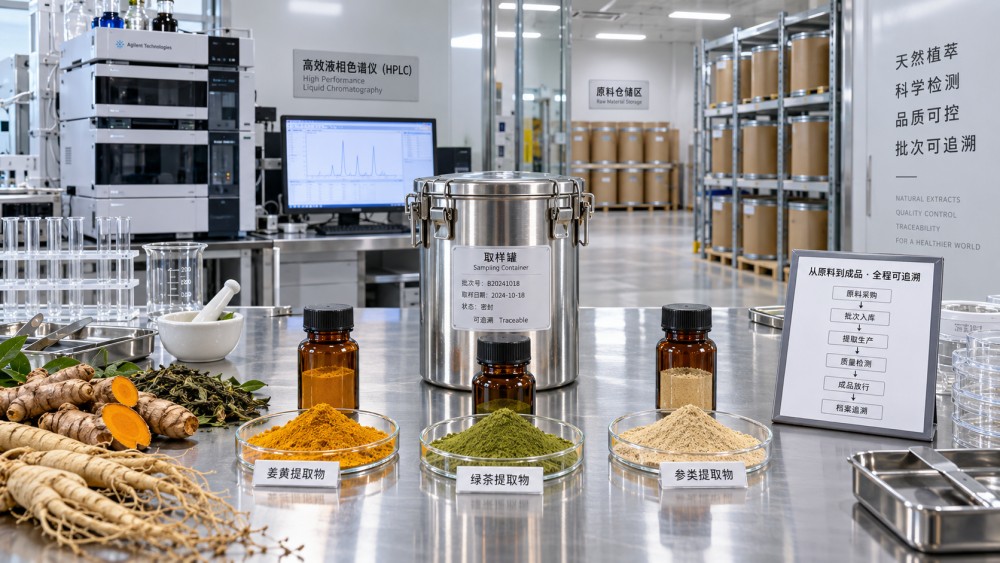
For higher-risk materials, request chromatographic fingerprints in addition to the certificate of analysis (CoA). HPLC, HPTLC, GC, or other suitable methods can help confirm identity and reveal whether the lot aligns with the approved reference profile. The best method depends on the herb and the target compounds; procurement does not need to become an analytical laboratory, but it should ensure that QA can review evidence that goes beyond a single number.
Traceability begins at the farm, forest, or collection point
Herbal supply chains can be long. A raw botanical may pass through growers, collectors, local consolidators, drying facilities, traders, extraction plants, and distributors before it reaches a buyer. Each handoff can weaken visibility unless the supplier has clear control of sourcing and records.
When evaluating bulk herbal extracts, ask where the botanical is grown or collected, whether it is cultivated or wild-harvested, and how the plant material is identified before processing. Origin matters because climate, soil, harvest maturity, and post-harvest drying all influence composition. Wild-harvested materials deserve additional attention: they can offer a valuable profile, but botanical misidentification, variable supply, and sustainability concerns may be greater.
A credible supplier should be able to explain the path from incoming herb to finished extract. Useful records include raw material batch numbers, supplier approvals, collection or harvest information where available, incoming inspection results, production batch records, and links between finished lots and original raw material lots. Full farm-level data may not be practical for every commodity, particularly in fragmented supply regions. Still, the supplier should show that traceability is a working system rather than a statement printed on a brochure.
For buyers with recurring demand, traceability also supports better forecasting. If a herb is seasonal, affected by regional weather, or dependent on a limited growing area, early visibility allows purchasing teams to plan safety stock, qualification of a second source, or contract timing before availability becomes a crisis.
Build a contaminant-control plan around the botanical’s real risks
Testing should not be a generic checklist applied identically to every extract. Different botanicals and supply chains carry different risk profiles. Roots and rhizomes may require close attention to soil-derived heavy metals. Leaf materials may face higher pesticide exposure. Water-rich processing steps can raise microbiological concerns. Some botanicals are vulnerable to adulteration because demand is high and visual identification becomes difficult after milling or extraction.
A practical quality plan usually addresses the following areas:
Do not simply ask whether a supplier “tests for everything.” Ask for current specifications and representative CoAs. Review whether the units, methods, detection limits, and acceptance criteria make sense. A CoA with numerous passing results is reassuring only if the tests are relevant and the documentation is internally consistent.
Read the CoA like a purchasing document, not a formality
The certificate of analysis is often the first quality document received by a buyer, but it should not be treated as the last word. Look for the connection between the CoA, the purchase specification, and the physical lot being shipped. The product name, lot number, manufacturing date, retest date, packaging date, and net weight should be traceable and consistent.
Pay attention to unusually broad specifications. A marker range that allows major variation may be acceptable for a low-risk ingredient, but it may create production instability in a tightly controlled formula. Similarly, a result reported as “conforms” can be less useful than a numerical result when your internal team needs to trend quality across deliveries.
Request the test methods used for key parameters. Two laboratories may produce different results if methods, sample preparation, standards, or calculation bases differ. This is especially important when changing suppliers or comparing materials marketed under the same standardized assay. If the material is strategic, retain samples from approved lots and establish periodic third-party verification. Independent testing is not a sign of distrust; it is a normal control where product risk and purchase volume justify it.
Supplier capability shows up in the details
A capable extract producer can explain how it manages variability rather than promising that variability does not exist. During supplier qualification, ask about raw-material acceptance criteria, segregation controls, cleaning practices, solvent recovery, in-process controls, blending procedures, retained samples, deviation handling, and change-notification procedures.
For example, a supplier should notify buyers if it changes the botanical origin, plant part, extraction solvent, carrier percentage, processing site, test method, packaging material, or specification. These changes may not always affect compliance, but they can affect dissolution, flavor, color, stability, or customer declarations. Without notification, a production team may be left troubleshooting a problem that began upstream.
Documentation capability deserves the same attention as manufacturing capability. Depending on the intended market and application, procurement may need technical data sheets, safety data sheets, allergen statements, GMO statements, solvent declarations, microbiological statements, pesticide-residue summaries, country-of-origin information, and regulatory support documents. A supplier that repeatedly delays or contradicts its own documentation can create avoidable risk even when the extract itself appears acceptable.
Compare total cost, not just price per kilogram
Bulk purchasing often creates pressure to secure the lowest unit price. However, the actual cost of an herbal extract includes more than the invoice. A cheaper material may need a higher inclusion rate because its marker content is lower. It may produce more rejection risk, require additional incoming testing, arrive in packaging that is difficult to handle, or create delays because documents are incomplete.
When comparing offers, normalize the quotation. Calculate the cost per kilogram of active marker where appropriate, but do not let that calculation replace application testing. Consider freight, duties, payment terms, minimum order quantities, lead time, shelf life at delivery, storage needs, sample approval cost, and the financial impact of holding extra safety stock. For extracts used at low dosage, the technical consequences of inconsistency may outweigh modest price differences.
It is also wise to separate a trial order from full approval. A commercial sample can look excellent while a later production lot behaves differently. Move through a staged process: document review, laboratory evaluation, pilot or application trial, initial commercial lot, then routine supplier status. This creates evidence before a supplier becomes deeply embedded in the supply base.
Use contracts to protect quality continuity
A purchase specification should be attached to, or clearly referenced in, the commercial agreement. It should define accepted quality parameters, packaging, labeling, documentation, shipment conditions, sampling responsibilities, and the process for nonconforming material. Terms should also cover change notification, complaint handling, replacement or credit procedures, and the retention of production records.
For recurring purchases, establish a quality agreement that clarifies who approves specification changes and how quickly the supplier must communicate deviations. It is much easier to resolve a disagreement when acceptance criteria were agreed before the container was dispatched.
Supply continuity should be discussed with equal honesty. Ask whether the supplier maintains qualified raw-material sources, what happens during poor harvests, whether alternative origins are available, and how inventory is allocated during shortages. Dual sourcing can reduce dependency, but only if both sources are qualified against the same meaningful standard. A second supplier with different test methods or a different carrier system is not automatically interchangeable.
A practical approval mindset for procurement teams
The strongest sourcing decisions balance evidence with commercial reality. Not every bulk herbal extract requires the same depth of audit, testing, or contractual control. A low-volume, low-risk material may be managed through document review and periodic verification. A high-volume extract used in a consumer-facing product deserves a more rigorous program, including technical assessment, lot trending, retained samples, and closer supplier communication.
FCAS follows the wider specialty chemical and ingredient supply chain with this same application-focused perspective: materials should be assessed not only by what they are called, but by how they are produced, documented, transported, formulated, and used. For buyers, that perspective turns quality control from a final inspection task into part of the sourcing strategy.
Reliable bulk herbal extracts are rarely identified by a single certificate or a single attractive quote. They come from a disciplined chain of decisions: define the right material, verify the source, test the relevant risks, understand the supplier’s process, and protect the agreement with clear specifications. When those controls are in place, procurement can negotiate with confidence without sacrificing the consistency that downstream production depends on.
Related News
 Supercritical CO2 Essential OilsHow Are Food Grade Essential Oil Extracts Made with CO2?Discover how food grade essential oil extracts are made with CO2, what shapes their flavor, and how to assess safety and suitability for food applications.MORE+
 Ultra-pure Semiconductor CleanersHow to Choose Electronic Cleaning Chemicals for Corrosion ProtectionElectronic cleaning chemicals corrosion protection starts with the right selection. Discover how to assess compatibility, residues, drying, and safety.MORE+
 Microencapsulated FragrancesHow Can Microencapsulation Help Essential Oil Blends Last Longer?Essential Oil Blends can retain their aroma longer with the right microencapsulation strategy. Explore carrier choices, release mechanisms, and stability testing.MORE+
 Synthesis CAPEX & Yield ROIWhat Affects the Triple Superphosphate Bulk Price?Explore what affects triple superphosphate bulk price, from raw materials and freight to quality and demand, and learn how to compare offers with confidence.MORE+
 Antioxidants & Natural PreservativesHow Do Food Preservation Ingredients Extend Shelf Life?Food Preservation Ingredients extend shelf life by slowing microbial growth and oxidation. Discover how to select and validate the right solution for your product.MORE+
 EPA FIFRA & FDA GRAS RegsEPA Issues Cancellation Order Affecting Certain Pesticide RegistrationsEPA pesticide registration cancellations may affect select products and supply chains. Learn what businesses should verify before making purchasing decisions.MORE+
 Chelated Trace Element FertilizersHow to Apply Single Superphosphate for Sulfur Deficient SoilLearn how to apply single superphosphate for sulfur deficient soil, calculate the right rate, and balance phosphorus needs for healthier crops.MORE+
 Heavy-duty Industrial DegreasersHow to Choose Parts Wash Cleaners for Spray WashersChoose parts wash cleaners for spray washers with confidence. Compare cleaning power, material compatibility, foam control, safety, and supplier support.MORE+
 Polymer-Coated Water Soluble NPKHow to Use Calcium Nitrate Fertilizer in Drip IrrigationCalcium Nitrate Fertilizer in drip irrigation: learn how to calculate doses, mix stock solutions, prevent clogged emitters, and support healthy crops.MORE+
 Micelle Fluidics & ChelationHow Venturi Fertigation Systems Control Fertilizer InjectionDiscover how venturi fertigation systems control fertilizer injection, and learn how pressure, sizing, and calibration affect dosing accuracy.MORE+
 Nano-microcapsule FormulationsHow to Choose a Capsule Suspension Pesticides SupplierChoose a capsule suspension pesticides supplier with confidence. Compare formulation quality, regulatory documentation, delivery reliability and total costs.MORE+
 Polymer-Coated Water Soluble NPK2026 Fertilizer Price Swings Shape 2027 Planting Decisions2026 fertilizer price swings are shaping 2027 planting decisions. Explore nutrient cost pressures and practical strategies for planning purchases.MORE+
 EPA FIFRA & FDA GRAS RegsEPA Reviews Glyphosate Safety, With Decision Expected in Early 2027EPA glyphosate safety review: Discover what the decision expected in early 2027 could mean for health, the environment, and businesses.MORE+
 Targeted Bio-pesticides & APIsHow Are Fungicide APIs Used in Crop Protection Products?Fungicide APIs for crop protection power disease control products. Discover how formulation, application and resistance management affect results.MORE+
 Ultra-pure Semiconductor CleanersWhat Affects the Bulk Price of Semiconductor Process Cleaners?Semiconductor process cleaners bulk price depends on purity, packaging, logistics, and more. Discover how to compare quotes and control costs.MORE+
 Microencapsulated FragrancesHow to Choose a Fragrance Capsules Manufacturer for Your ProductChoose the right fragrance capsules manufacturer with practical tips on formulation testing, quality specifications, compliance, and supply reliability.MORE+
 Targeted Bio-pesticides & APIsHow to Evaluate Quality Control at a Botanical Insecticides FactoryEvaluate a botanical insecticides factory with practical checks for sourcing, testing, batch traceability and stability. Learn how to identify quality risks before choosing a supplier.MORE+
 Herbicides & Plant Growth RegulatorsHow Do Herbicide Intermediates Affect Production Yield?Discover how Herbicide Intermediates influence production yield, from impurity control to product recovery, and learn how to evaluate suppliers with confidence.MORE+
 EPA FIFRA & FDA GRAS RegsEPA Seeks Comment on Voluntary Pesticide Registration CancellationsEPA pesticide registration cancellations are open for public comment. Discover what the proposed changes could mean for product uses, compliance and supply.MORE+
 Polymer-Coated Water Soluble NPKRecord Fertilizer Prices Could Shape 2027 US Corn and Soybean Planting DecisionsRecord fertilizer prices could influence 2027 US corn and soybean planting decisions. Explore the potential impact on farm budgets and acreage.MORE+
 Non-ionic Surfactants & DefoamersChoosing Low Residue Surfactants for Hard Surface CleaningLow residue surfactants for hard surface cleaning: discover how to compare cleaning performance, rinseability, residue testing, and total cost.MORE+
 Ultra-pure Semiconductor CleanersHow to Evaluate Low Ionic Electronic Grade Cleaners for ChipmakingDiscover how to evaluate low ionic electronic grade cleaners for chipmaking, from surface residue and material compatibility to supplier qualification.MORE+
 Zero-Calorie Sweeteners & AcidulantsHow to Use High Sweetness Sucralose in Reduced-Sugar DrinksDiscover how to use high sweetness sucralose in reduced-sugar drinks, with practical tips for balancing taste, mouthfeel, stability, and compliance.MORE+
 Herbicides & Plant Growth RegulatorsHow to Choose Crop Protection Chemicals for Effective Weed ControlChoose Crop Protection Chemicals with confidence. Discover how to match herbicides to weeds, crop stages, field conditions, and resistance risks for effective control.MORE+
 Hydrocolloids & EmulsifiersHow Do Hydrocolloid Gums Improve Texture and Stability in Foods?Discover how hydrocolloid gums improve food texture and stability, and learn how to choose the right gum for your formulation.MORE+
 Polymer-Coated Water Soluble NPKUSDA Announces $1.34 Billion Investment to Expand Domestic Fertilizer SupplyUSDA’s $1.34 billion fertilizer investment targets eight domestic projects. Discover what the plans could mean for suppliers, buyers and future sourcing.MORE+
 Non-ionic Surfactants & DefoamersEPA Adopts Human Airway Tissue Method for Surfactant Inhalation Risk AssessmentEPA surfactant inhalation risk assessment may use human airway tissue. Explore potential impacts for industrial cleaners and the details still to verify.MORE+
 Polymer-Coated Water Soluble NPKHow to Choose a Potassium Sulfate Fertilizer SupplierChoose a potassium sulfate fertilizer supplier with confidence. Compare product quality, delivered costs, reliability, and contract terms before you buy.MORE+
 Micelle Fluidics & ChelationHow to Use Cocamidopropyl Betaine for Hand Soap FormulasDiscover how to use cocamidopropyl betaine for hand soap, balance surfactants, adjust pH and viscosity, and troubleshoot common formulation issues.MORE+
 Antioxidants & Natural PreservativesWhat Drives Antioxidant Blends Bulk Price Changes?Discover what drives antioxidant blends bulk price changes, from ingredient costs to delivery terms, and learn how to compare quotes for better value.MORE+
 Non-ionic Surfactants & DefoamersWhy Do Low Foam Linear Alcohol Ethoxylates Still Cause Foam?Why do low foam linear alcohol ethoxylates still foam? Discover common causes and practical troubleshooting tips to restore consistent performance.MORE+
 Maillard Reaction Savory FlavorsHow Does an Ethyl Maltol Factory Control Product Quality?How does an ethyl maltol factory ensure consistent quality? Explore testing, contamination controls, traceability, and key questions to ask suppliers.MORE+
 Herbicides & Plant Growth RegulatorsBayer Launches First Group 12 Pre-Emergence Herbicide Convintro in the USBayer's Convintro brings a Group 12 pre-emergence herbicide option to US corn and soybean growers. Explore its potential role and key purchasing considerations.MORE+
 Herbicides & Plant Growth RegulatorsCalifornia Report Shows Continued Decline in High-Risk Pesticide UseCalifornia pesticide use reportedly declined 28% for carcinogen-classified products. Explore what this could mean for suppliers, buyers and market access.MORE+
 Controlled-Release ThermodynamicsHow to Select a Microcrystalline Cellulose Excipient for TabletsChoose the right microcrystalline cellulose excipient for tablets. Compare MCC grades, processing properties, and supplier documentation with this practical guide.MORE+
 Targeted Bio-pesticides & APIsHow Microbial Insecticides for Public Health Control MosquitoesDiscover how microbial insecticides for public health control mosquito larvae, and learn how to choose formulations and improve field results.MORE+
 Non-ionic Surfactants & DefoamersHow to Measure Foam Control Efficiency in Cleaning DefoamersMeasure cleaning defoamers foam control efficiency with practical tests, dose-response analysis, and plant trials to find the right solution for your process.MORE+
 Hydrocolloids & EmulsifiersHow to Use Hydrocolloid Stabilizer Blends for SaucesDiscover how to use hydrocolloid stabilizer blends for sauces to improve texture, prevent separation, and achieve consistent results from trial to production.MORE+
 Maillard Reaction Savory FlavorsHow Spray Dried Flavors Retain Flavor in Dry Food MixesDiscover how Spray Dried Flavors preserve aroma in dry food mixes, and learn how formulation, storage and packaging influence flavor quality.MORE+
 Micelle Fluidics & ChelationHow to Evaluate an Industrial Dispersants ManufacturerEvaluate an industrial dispersants manufacturer with confidence. Learn how to assess formulation performance, batch consistency, quality controls and supply risk.MORE+