
Is TBHQ for Shortening Safe and Effective for Longer Shelf Life?
For quality control and food safety teams, evaluating TBHQ for shortening requires more than confirming its antioxidant function. Its effectiveness depends on dosage, fat composition, processing conditions, storage exposure, and applicable regulatory limits.
TBHQ can be a safe and effective antioxidant for shortening when it is used within permitted limits, supported by supplier documentation, and verified through product-specific shelf-life testing.
Its primary value is slowing oxidative rancidity in fats, helping manufacturers preserve sensory quality, processing consistency, and finished-product stability during storage, distribution, and normal temperature fluctuations.
However, TBHQ is not a universal shelf-life solution. It cannot correct poor raw material quality, uncontrolled oxygen exposure, inadequate packaging, contamination, or unsuitable warehouse conditions.
For safety managers, the practical question is whether TBHQ use is legally compliant, technically justified, consistently controlled, and appropriate for the specific shortening formulation and intended food application.
What Quality and Safety Teams Need to Verify First
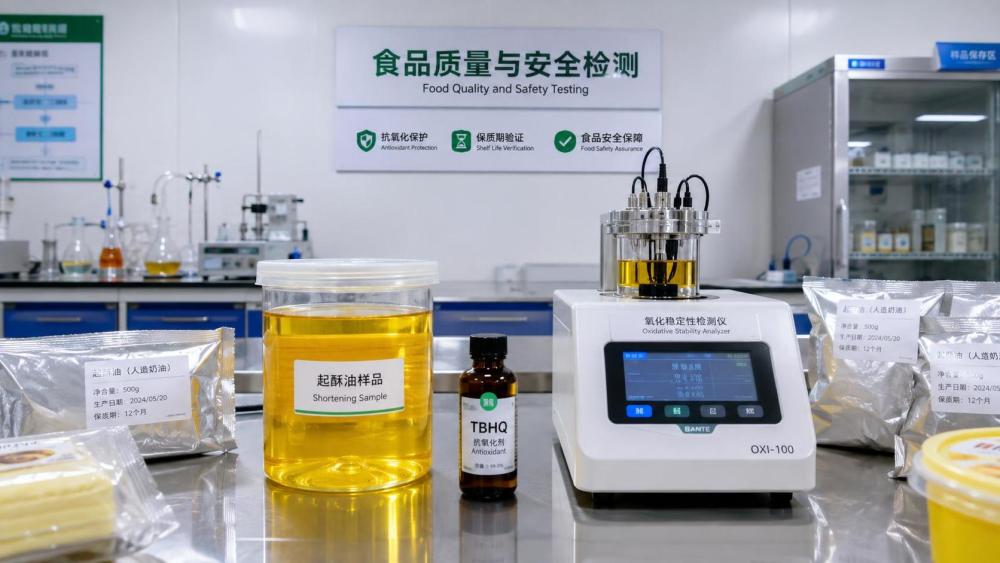
When assessing TBHQ for shortening, teams should first confirm the product category, target market, maximum permitted level, labeling status, and relevant customer specifications.
TBHQ, or tertiary butylhydroquinone, is a synthetic antioxidant commonly used to protect edible oils and fat-based products from oxidation during processing and storage.
Oxidation occurs when unsaturated fatty acids react with oxygen. The reaction creates peroxides, aldehydes, ketones, and other compounds associated with rancid odors and off-flavors.
Shortening may appear physically stable while oxidative deterioration progresses. This makes analytical monitoring important, particularly where sensory changes develop after extended storage or transport.
Quality teams should avoid relying only on a supplier statement that TBHQ is included. The finished shortening needs a documented antioxidant specification and a controlled addition process.
A useful approval file normally includes the specification, certificate of analysis, safety data sheet, food-grade declaration, allergen statement, origin information, and regulatory compliance declaration.
For imported materials, food safety personnel should also verify whether the documentation specifically covers the destination market rather than making assumptions based on another jurisdiction.
Different countries may permit TBHQ in different food categories, impose different concentration limits, or require specific labeling statements. Regulatory review must therefore precede commercial release.
How TBHQ Extends the Shelf Life of Shortening
TBHQ works by interrupting oxidation chain reactions. It donates hydrogen to reactive free radicals, reducing the speed at which those radicals attack fatty acids.
This mechanism is especially relevant for shortenings containing oils with meaningful unsaturated fat content, including soybean, sunflower, canola, palm olein, or blended vegetable oils.
Shortening stability depends heavily on its fatty acid profile. More unsaturated components generally provide functional benefits but can require stronger oxidative protection than saturated fats.
The antioxidant can help maintain a neutral odor, clean flavor profile, and acceptable color. These attributes are important because shortening defects often transfer into bakery products.
In bakery operations, oxidized shortening may contribute stale, paint-like, cardboard-like, or fatty off-notes. Such defects can become more obvious after baking or during product storage.
TBHQ may also support more consistent shortening performance by limiting oxidation-related changes during inventory holding. Yet it does not replace control of melting behavior or crystallization properties.
Its effectiveness is influenced by the point of addition. Uniform dispersion into the fat phase is necessary to prevent uneven protection across batches.
Manufacturers should validate the addition method, mixing time, temperature, and dosage accuracy. A technically correct target level provides little value if batching control is inconsistent.
TBHQ is generally more effective when combined with an integrated stabilization strategy. This may include low-oxygen handling, suitable packaging, metal control, appropriate storage temperatures, and clean processing equipment.
Is TBHQ for Shortening Safe at Approved Use Levels?
Safety should be evaluated through authorized use conditions, exposure assessment, product controls, and regulatory compliance, rather than through broad statements that an ingredient is simply safe or unsafe.
Food authorities evaluate antioxidants using toxicological data and establish conditions under which they may be used. Manufacturers must follow the rules applicable to each sale destination.
For most food businesses, the critical operational requirement is to ensure that the TBHQ concentration in shortening does not exceed the permitted limit for the relevant category.
The allowable amount may be expressed on a fat or oil basis, in the finished product, or under a combined antioxidant limit. Teams must interpret regulations carefully.
Where shortening is supplied as an ingredient, responsibility can extend beyond the shortening producer. Downstream food manufacturers need to understand how the ingredient is used in finished foods.
A customer may apply additional restrictions based on retailer policies, clean-label programs, export requirements, or internal prohibited-substance lists. Regulatory permissibility does not guarantee customer acceptance.
Food safety managers should establish a formal change-control process. Any reformulation, new source, revised dosage, or destination-market expansion should trigger a renewed compliance review.
Routine laboratory verification is also valuable. Depending on the risk assessment, this can include testing incoming material, periodic retained samples, or finished shortening batches for antioxidant content.
Clear records protect both compliance and traceability. Batch records should identify the TBHQ supplier, lot number, quantity added, operator, equipment, date, and final concentration calculation.
What Dosage Delivers Useful Protection Without Creating Compliance Risk?
There is no single optimal dosage for every shortening. The appropriate level depends on formulation composition, expected shelf life, antioxidant system, packaging, production conditions, and legal maximums.
Using more TBHQ does not automatically deliver proportionally better stability. Excessive addition can create regulatory noncompliance, unnecessary cost, and customer approval concerns.
Dosage selection should begin with the legal limit and customer specification. Technical trials should then identify the lowest effective concentration that protects the intended product lifecycle.
Accelerated oxidation tests can help compare formulations quickly. Common approaches include peroxide value monitoring, anisidine value, Rancimat testing, oven storage studies, and sensory evaluation.
Accelerated results are useful screening tools, but they should not replace real-time shelf-life studies. Actual warehouse conditions, temperature cycles, and package oxygen exposure may change outcomes.
Peroxide value measures primary oxidation products. A low result alone does not always mean the shortening remains acceptable because peroxides can later decompose into secondary odor-active compounds.
Combining peroxide value with anisidine value, sensory review, and visual checks provides a more balanced assessment. The testing plan should reflect the product's failure mode.
For a frying shortening, repeated heating stability may matter more than unopened storage. For bakery shortening, performance after baking and consumer storage may be the more relevant endpoint.
QC teams should document acceptance criteria before trials begin. This reduces the risk of selecting a formulation based only on favorable data generated after the fact.
Which Shortening Formulations Benefit Most from TBHQ?
TBHQ for shortening is often considered where oxidative stability is a limiting factor, especially in formulations using more oxidation-sensitive vegetable oil fractions or long distribution chains.
Liquid or semi-solid blended shortenings may require particular attention because their oil phase can contain unsaturated components that respond strongly to heat, light, and oxygen.
Bakery shortenings used in cookies, cakes, fillings, icings, and laminated products may benefit when manufacturers need stable flavor and consistent performance over extended inventory periods.
Deep-frying shortenings present a different challenge. High temperatures, moisture, food residues, and repeated exposure to air can accelerate degradation beyond ordinary storage oxidation.
In these systems, TBHQ may be part of the solution, but frying-life evaluation should include total polar compounds, free fatty acids, color development, foaming, and sensory performance.
Shortenings with higher levels of naturally stable saturated fats may need less antioxidant support. Still, trace metals, residual oxygen, and poor storage can create avoidable quality problems.
Blended fats should be assessed as complete systems. A stable base fat can become less stable when combined with more unsaturated fractions, flavors, colors, emulsifiers, or other ingredients.
Product developers should also check compatibility with other approved antioxidants. Synergistic systems may offer better protection, but combined use must remain within applicable legal requirements.
The best decision is based on the actual formulation and use case, not on whether TBHQ is generally recognized as effective in another fat product.
How Processing and Packaging Affect TBHQ Performance
Antioxidant performance can be reduced when manufacturing conditions expose shortening to excessive heat, oxygen, light, water, or catalytic metals before packaging is complete.
Heat exposure during refining, deodorization, blending, and filling should be controlled. Higher temperatures can accelerate oxidation and may reduce the practical protection available during later storage.
Oxygen management is equally important. Nitrogen blanketing, minimized headspace oxygen, closed transfer systems, and prompt filling can substantially support the performance of TBHQ.
Metal contamination is often underestimated. Iron and copper can catalyze oxidation, making fats deteriorate faster even when an antioxidant has been correctly added.
Equipment maintenance, filtration, and cleaning validation therefore influence shortening shelf life. A compliant antioxidant program cannot fully compensate for poor process hygiene or metal carryover.
Packaging should protect against oxygen ingress and light exposure. The right container depends on product format, fill temperature, storage duration, transport route, and customer handling practices.
Retained samples should be stored under both normal and reasonably challenging conditions. This provides evidence that the product remains within specification through its stated shelf life.
Distribution data can reveal issues not visible in internal testing. Temperature logger records, customer complaints, and returned-product investigations should feed back into shelf-life validation.
What Documentation Should Be Required From a TBHQ Supplier?
Supplier qualification should address more than price and certificate values. Food safety teams need assurance that the material is consistently manufactured, controlled, packaged, and traceable.
At minimum, request a current specification showing identity, purity, relevant impurity limits, appearance, assay method, storage requirements, shelf life, and packaging configuration.
A certificate of analysis should be reviewed against the approved specification for every received lot or at a frequency defined by the supplier risk assessment.
Compliance declarations should identify the food-contact and food-additive regulations addressed. Generic statements without named jurisdictions or product-category context may be insufficient for approval decisions.
Audits or supplier questionnaires can help assess manufacturing controls, allergen cross-contact management, foreign-material prevention, change notification practices, and traceability system maturity.
Storage and transport requirements deserve attention because antioxidant quality can be affected by unsuitable environmental conditions, damaged packages, extended storage, or incorrect warehouse handling.
Internal receiving controls should check packaging integrity, label accuracy, lot consistency, expiry status, and segregation from non-food chemicals or incompatible materials.
When a supplier changes manufacturing location, synthesis route, impurity profile, or packaging, the change should be evaluated before use. Equivalent assay results may not prove equivalent performance.
How to Build a Practical Validation Plan for TBHQ-Treated Shortening
A practical validation plan starts by defining the intended shelf life, distribution environment, customer use conditions, target sensory profile, and relevant legal markets.
Next, establish a control formulation and one or more TBHQ-treated formulations. Keep other variables stable so the trial measures antioxidant performance rather than unrelated formulation changes.
Include multiple production-scale batches whenever feasible. Pilot results are useful, but plant-scale production can introduce different oxygen exposure, mixing efficiency, and thermal history.
Test at release and throughout storage. Typical intervals may include initial production, early storage, mid-shelf-life, end-of-shelf-life, and a period beyond the stated expiry date.
Assess analytical results alongside sensory observations. A shortening can remain within a numerical oxidation limit while becoming unsuitable for its intended product due to odor or flavor changes.
For bakery applications, evaluate baked finished goods made with aged shortening. This confirms whether the ingredient remains fit for purpose rather than merely acceptable in a laboratory container.
Document deviations and investigate unexpected results. Temperature excursions, delayed filling, packaging defects, and raw oil variation can all explain instability that might otherwise be blamed on TBHQ.
Approval should result in a clear operating standard: authorized dosage range, addition procedure, critical process controls, release tests, retention requirements, and revalidation triggers.
When TBHQ May Not Be the Best Choice
TBHQ may not be the preferred option when a customer requires a clean-label positioning, prohibits synthetic antioxidants, or sells into markets with different additive expectations.
In these cases, alternative approaches may include naturally derived antioxidants, more stable fat selection, improved refining control, lower oxygen packaging, or shorter distribution windows.
Natural alternatives should not be assumed to provide identical protection. Their effectiveness, flavor impact, heat stability, regulatory status, and supply consistency require separate validation.
A reformulation decision should consider the total cost of quality. Ingredient cost, shelf-life failure risk, packaging changes, waste, returns, customer requirements, and analytical burden all matter.
TBHQ is most useful when it solves a demonstrated oxidation risk within a compliant, documented, and commercially acceptable formulation strategy.
Conclusion: A Controlled Tool, Not a Standalone Guarantee
TBHQ for shortening can safely and effectively support longer shelf life when used within approved limits and integrated into a well-controlled fat quality system.
Its strongest benefit is reducing oxidative rancidity, which helps protect odor, flavor, color, and functional consistency throughout storage and distribution.
Quality control teams should base approval on formulation-specific trials, relevant legal limits, supplier qualification, accurate dosing, process control, packaging suitability, and real-world shelf-life evidence.
Food safety managers should also verify destination-market compliance and customer requirements before release. A technically effective antioxidant only adds value when documentation and labeling are equally reliable.
The most defensible conclusion is practical: TBHQ is not a substitute for good manufacturing practice, but it can be an important and effective component of a validated shortening stability program.
Related News
 Antioxidants & Natural PreservativesWhat Quality Checks Matter When Sourcing Butylparaben for Personal CareButylparaben for personal care sourcing guide: compare assay, impurities, physical performance, documentation, traceability, and supplier quality to reduce formulation risk.MORE+
 Nano-microcapsule FormulationsHow Encapsulated Flavors Protect Taste During Processing and StorageEncapsulated Flavors protect taste from heat, oxygen, moisture, and storage loss. Explore smarter release, carrier selection, and processing strategies.MORE+
 Chelated Trace Element FertilizersHow Greenhouse Fertigation Systems Reduce Water and Fertilizer WasteGreenhouse fertigation systems reduce water and fertilizer waste with precise dosing, uniform irrigation, drainage monitoring, and smarter crop-zone control. Learn practical strategies.MORE+
 Supercritical CO2 Essential OilsHow Natural Essential Oil Blends Improve Consistent Product FragranceNatural essential oil blends help brands achieve consistent, appealing fragrance across batches. Explore smart blend design, stability testing, and product compatibility strategies.MORE+
 Non-ionic Surfactants & DefoamersHow to Choose Non Ionic Low Foaming Surfactants for CIP CleaningNon ionic low foaming surfactants for CIP cleaning: learn how to balance wetting, foam control, compatibility, and rinseability for reliable cleaning performance.MORE+
 Nano-microcapsule FormulationsHow Food Grade Cyclodextrin Complexes Protect Sensitive FlavorsFood grade cyclodextrin inclusion complexes help protect sensitive flavors from oxidation, evaporation, and processing loss while supporting controlled release and consistent sensory quality.MORE+
 Polymer-Coated Water Soluble NPKHow Fertilizer Coating Polymers Improve NPK Granule ReleaseFertilizer coating polymers for NPK granules improve controlled nutrient release, reduce loss risks, and enhance product consistency. Discover key selection and process insights.MORE+
 Chelated Trace Element FertilizersWhat Diammonium Phosphate Means for Crop Nutrition PlanningDiammonium Phosphate: learn how DAP supports early phosphorus access, nitrogen budgeting, smart placement, and balanced crop nutrition planning.MORE+
 Maillard Reaction Savory FlavorsHow to Assess a Flavor Bases Supplier List for Reliable SourcingGlobal Fine Chemicals & Agrochemical Intelligence Network flavor bases supplier list: assess specs, samples, supply risk, and true cost to source with confidence.MORE+
 Hydrocolloids & EmulsifiersHow Konjac Gum Powder Improves Texture in Low-Calorie FoodsKonjac gum powder improves body, stability, and mouthfeel in low-calorie foods. Discover practical tips for smoother sauces, beverages, and reduced-fat formulations.MORE+
 Supercritical CO2 Essential OilsWhat to Check Before Choosing a Botanical Essential Oils ManufacturerChoose a botanical essential oils manufacturer with confidence. Explore key checks for purity, traceability, compliance, batch consistency, and reliable supply.MORE+
 Microencapsulated FragrancesHow Fragrance Carriers for Detergents Improve Scent PerformanceFragrance carriers for detergents improve stability, fabric deposition, and long-lasting scent. Explore practical solutions for better wash-to-wear fragrance performance.MORE+
 Antioxidants & Natural PreservativesWhen Propyl Gallate Antioxidant Is the Right Choice for Oil StabilityPropyl gallate antioxidant: learn when it is the right choice for oil stability, shelf-life protection, processing compatibility, and smarter formulation decisions.MORE+
 Antioxidants & Natural PreservativesHow Potassium Sorbate Extends Shelf Life in Food and Beverage ProductsPotassium Sorbate helps food and beverage brands control yeast and mold spoilage. Explore pH, dosage, processing, and packaging strategies for reliable shelf life.MORE+
 Antioxidants & Natural PreservativesHow to Source Bulk Herbal Extracts With Reliable Quality ControlBulk herbal extracts sourcing guide: compare suppliers, verify traceability, review CoAs, and build reliable quality controls for safer, consistent purchasing.MORE+
 Antioxidants & Natural PreservativesWhat to Check Before Sourcing Butylparaben for Personal Care FormulasButylparaben for personal care sourcing guide: check market eligibility, purity, supplier controls, formula compatibility, packaging, and total risk before buying.MORE+
 Targeted Bio-pesticides & APIsChoosing Microbial Fungicides for Foliar Diseases in Integrated Crop ProgramsMicrobial fungicides for foliar diseases: learn how to match biology, formulation, tank compatibility, and timing for stronger integrated crop protection.MORE+
 Targeted Bio-pesticides & APIsHow Microbial Insecticides Control Caterpillars With Lower Crop Residue RiskMicrobial insecticides for caterpillars help protect crops with targeted early-larval control and lower residue-management pressure. Learn timing, coverage, compliance, and scouting essentials.MORE+
 Microencapsulated FragrancesHow to Add Encapsulated Laundry Fragrances Without Weakening Wash ResultsEncapsulated laundry fragrances: learn how to boost long-lasting scent while protecting cleaning power, stability, foam control, and fabric care.MORE+
 Supercritical CO2 Essential OilsHow Aroma Ingredients Shape Lasting and Skin-Safe Personal Care ProductsAroma ingredients for personal care: discover how to achieve lasting scent, formulation stability, skin safety, and confident product performance.MORE+
 Targeted Bio-pesticides & APIsInsecticides Explained Through Labels, Active Ingredients, and SafetyInsecticides explained through labels, active ingredients, formulations, and safety. Learn how to compare products, manage risk, and make informed crop protection decisions.MORE+
 Heavy-duty Industrial DegreasersHow to Select Parts Wash Cleaners for Automotive ComponentsParts wash cleaners for automotive components: learn how to match chemistry, materials, rinsing, safety, and waste controls for reliable cleaning results.MORE+
 Chelated Trace Element FertilizersHow Precision Fertigation Systems Improve Water and Nutrient ControlPrecision fertigation systems improve water and nutrient control with accurate dosing, uniform irrigation, smart monitoring, and reduced waste. Discover how to optimize crop performance.MORE+
 Hydrocolloids & EmulsifiersHow Bulk Price Factors Affect Hydrocolloid Stabilizer Blend SourcingHydrocolloid stabilizer blends bulk price: compare dosage efficiency, quality consistency, logistics, and documentation to reduce total sourcing costs.MORE+
 Zero-Calorie Sweeteners & AcidulantsHow to Choose a Natural Sweeteners Supplier for Clean-Label ProductsNatural sweeteners supplier selection guide for clean-label products: compare formulation fit, traceability, documentation, and supply reliability.MORE+
 Non-ionic Surfactants & DefoamersWhat Cationic Surfactants Do and Where They Are UsedCationic Surfactants deliver antimicrobial action, conditioning, antistatic control, and surface treatment benefits. Explore key uses, compatibility, and safe selection tips.MORE+
 Targeted Bio-pesticides & APIsHow to Evaluate Pesticide Suspension Concentrates for Field StabilityPesticide Suspension Concentrates: learn how to evaluate field stability, redispersibility, dilution, tank-mix compatibility, and spray safety for reliable performance.MORE+
 Hydrocolloids & EmulsifiersHow Hydrocolloid Systems for Meat Products Improve Texture and YieldHydrocolloid systems for meat products improve yield, texture, water retention, and slicing quality. Explore practical formulation strategies for stable, high-performing meat products.MORE+
 Microencapsulated FragrancesHow Laundry Fragrances for Liquid Detergents Improve Scent LongevityLaundry fragrances for liquid detergents: discover how fragrance design, deposition, and encapsulation create lasting fabric freshness and stronger product appeal.MORE+
 Nano-microcapsule FormulationsChoosing Fragrance Preparations That Perform Well in Personal WashFragrance preparations for personal wash: learn how to select options that protect clarity, stability, foam, scent performance, and packaging compatibility.MORE+
 Controlled-Release ThermodynamicsModified Cyclodextrins Explained for Controlled Fragrance ReleaseModified cyclodextrins enable controlled fragrance release, odor control, and volatile-note protection. Explore how they optimize performance in detergents, fabric care, and more.MORE+
 Microencapsulated FragrancesHow Fragrance Delivery Systems Improve Fabric Softener LongevityFragrance delivery systems for fabric softeners improve scent longevity through smart protection, reliable deposition, and controlled release for lasting freshness.MORE+
 Supercritical CO2 Essential OilsHow to Evaluate a Natural Cardamom Oil Supplier for Reliable SupplyNatural cardamom oil supplier evaluation guide: verify botanical origin, purity, batch consistency, documentation, packaging, and delivery reliability for confident sourcing.MORE+
 Maillard Reaction Savory FlavorsHow Ethyl Maltol Purity Testing Supports Flavor Safety ComplianceEthyl Maltol purity testing strengthens flavor safety compliance through identity checks, impurity profiling, supplier verification, and audit-ready documentation.MORE+
 Microencapsulated FragrancesEssential Oil Extracts Compared for Fragrance and Wellness UsesEssential Oil Extracts compared for fragrance and wellness: explore scent profiles, extraction methods, stability, safety, and sourcing insights for smarter formulation choices.MORE+
 Zero-Calorie Sweeteners & AcidulantsWhat Drives Zero Calorie Sweeteners Bulk Price in 2026Zero calorie sweeteners bulk price in 2026: compare specifications, dosage, quality, freight, and supply risk to make smarter sourcing decisions.MORE+
 EPA FIFRA & FDA GRAS RegsSynthetic Food Preservatives Rules That Support Safer FormulasSynthetic Food Preservatives: learn the rules for safer formulas, compliant use levels, validated shelf life, labeling, and reliable microbial control.MORE+
 Micelle Fluidics & ChelationHow Anionic Industrial Dispersants Improve Coating StabilityAnionic industrial dispersants improve coating stability, pigment wetting, viscosity control, gloss, and storage performance. Learn how to select and test the right solution.MORE+
 Supercritical CO2 Essential OilsHow to Choose Eucalyptus Oil Grades for Clean, Consistent ProductsChoose the right Eucalyptus Oil grade with confidence. Compare cineole content, purity, origin, processing, documentation, and application fit for consistent products.MORE+
 Micelle Fluidics & ChelationWhat Are Cationic Surfactants and Where Are They Commonly Used?Cationic Surfactants deliver powerful surface affinity for disinfection, fabric softening, hair conditioning, antistatic control, and industrial treatments. Explore key uses and selection factors.MORE+







































