What Affects Benzyl Alcohol Wholesale Pricing and Quality?
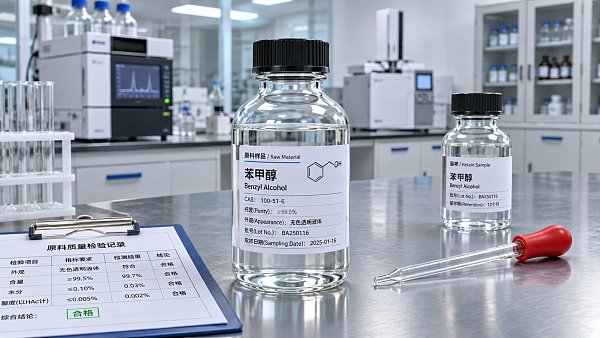
The lowest quoted price for benzyl alcohol is not necessarily the lowest purchasing cost. A favorable offer can become expensive if the material needs extra testing, arrives in unsuitable packaging, fails an odor assessment, or cannot be supported by the documents required for its intended use. For procurement teams, the best comparison starts with a defined specification and ends with the cost of usable material at the receiving site.
Benzyl alcohol wholesale pricing is shaped by feedstock and processing costs, the quality controls included in the specification, order size, packaging, and delivery terms. The importance of each factor depends on the application. An industrial solvent buyer may have more flexibility on odor than a fragrance formulator, while a pharmaceutical manufacturer may need a documented grade and supply arrangement that a basic industrial quotation does not cover.
Why Two Quotes for Benzyl Alcohol Can Differ
Suppliers may use different production routes and sources of raw materials. Changes in feedstock costs, energy, plant utilization, and manufacturing yield can affect the price at which they are willing to sell. Additional purification, testing, and quality oversight can also add cost. Buyers rarely have enough visibility to calculate a supplier’s production cost, but they can ask which commercial conditions are driving a quotation and how long the offer remains valid.
More importantly, offers that carry the same product name may not cover the same material or service. One quotation may include tighter impurity limits, a more extensive certificate of analysis, dedicated packaging, or testing against an agreed method. Another may cover a basic industrial specification with documentation supplied only for selected batches. Neither offer is automatically better; they answer different purchasing requirements.
Before comparing prices, put the following on a common basis:
- Product specification: Assay, relevant impurities, water content, appearance, and any application-specific limits.
- Quantity and delivery: Order volume, shipment schedule, delivery location, and applicable Incoterms.
- Packaging: Container type, net weight, return or disposal arrangements, and any special handling requirements.
- Quality services: Batch testing, certificates, samples, change notification, and any additional documentation.
- Commercial terms: Currency, payment terms, offer validity, and the treatment of freight, duties, and taxes.
A volume discount deserves the same scrutiny. Larger orders can reduce unit packaging and transport costs, but they also tie up working capital and increase the amount held in storage. If consumption is uneven or the approved storage period is short, a smaller scheduled delivery may be more economical even at a higher price per kilogram.
Purity Is a Starting Point, Not a Complete Quality Specification
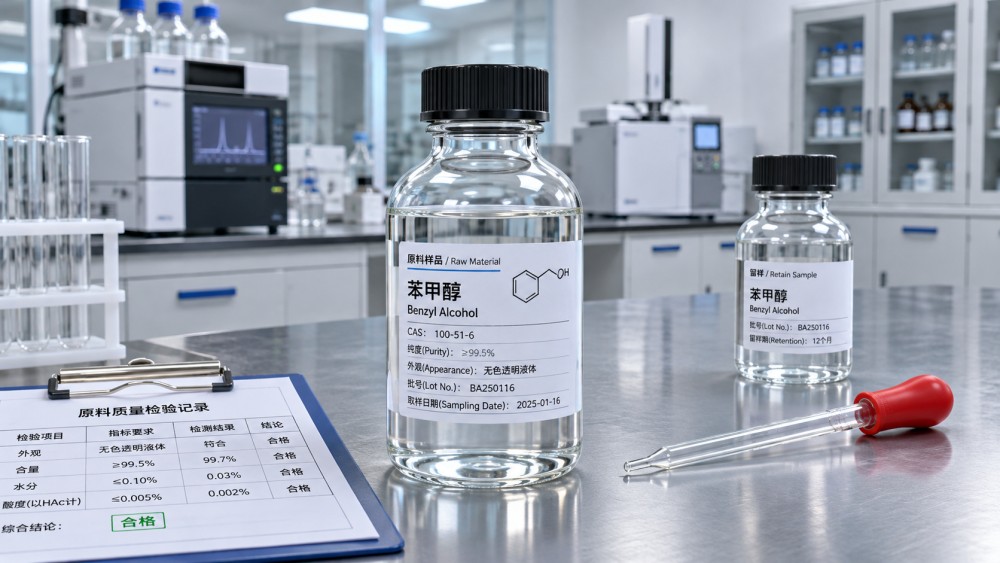
Assay is an essential comparison point, but two batches with similar stated purity can behave differently. The remaining material may contain impurities that matter to a particular formulation, and a single assay figure does not describe their identity or individual concentrations. The analytical method and reporting basis also matter when comparing results.
For an odor-sensitive fragrance or personal care formulation, an unwanted odor may be commercially significant even when the assay meets the agreed limit. For a moisture-sensitive process, water content may be more consequential than a small difference in assay. In a solvent application, color, clarity, and compatibility with the rest of the formulation may deserve attention. The buyer’s specification should reflect these use conditions rather than relying on the broad label “high purity.”
Benzyl alcohol can oxidize during exposure to air, potentially affecting odor and impurity profile. How much that matters depends on packaging, storage, time, and the application. Where odor or oxidation-related impurities are critical, agree on the relevant limits and test methods with the supplier, and assess representative material in the intended formulation. A certificate showing conformity at shipment does not replace a storage and handling plan at the receiving site.
Specifications should also distinguish between a value measured on each batch and a property stated in a general product sheet. A product sheet helps with initial screening; the batch certificate should show the agreed release tests and results for the material delivered. If a critical characteristic is not listed, ask whether it is tested routinely, tested only on request, or controlled through another documented measure.
Match the Grade to the Intended Use
Terms such as “industrial,” “cosmetic,” “food,” and “pharmaceutical” can help identify a supplier’s intended market, but the label alone does not establish suitability. Requirements depend on the finished product, its use, destination, applicable rules, and the buyer’s quality system.
A food or pharmaceutical buyer should establish the applicable specification and documentation requirements before requesting prices. Depending on the use, that may include conformity to a relevant compendial standard, traceability, change control, or a supplier quality agreement. Compliance with a named standard should be supported by the supplier’s documentation and assessed for the intended application; a general statement that material is “suitable” may not be enough.
For industrial formulations, the purchasing team may be able to accept a narrower document package, provided the material consistently meets the process requirements. Paying for controls that have no bearing on the application can add cost, but removing an important impurity or consistency limit can create a much larger production risk.
Calculate the Cost of Material You Can Use
A useful comparison begins with the delivered price and then adds costs that differ between offers. These can include freight, insurance where applicable, import charges, local transport, container handling, incoming testing, storage, and financing. The agreed Incoterms determine which transport obligations and risks sit with each party; they do not eliminate the need to identify all costs through to the receiving site.
Quality-related costs are less visible but can change the result. A lower-priced source may require additional incoming tests until it is qualified. An unsuitable batch may lead to rework, delayed production, disposal, or a rejected finished product. Those outcomes should not be assumed for any supplier, but the buyer should consider how easily a problem could be detected and what it would cost to resolve.
A practical comparison can use this approach:
- Calculate the price per kilogram delivered to the same site, using the same currency and quantity basis.
- Add supplier-specific costs for testing, handling, storage, and any required documentation.
- Check whether the price depends on a minimum order, a full container, or a delivery schedule that the business can realistically use.
- Assess the consequences of a quality failure or late delivery separately from the quoted price.
Do not treat an estimated risk allowance as a precise prediction. Its purpose is to make differences visible for discussion. If two offers are close after freight and testing, a supplier with a clearer change-control process or a more dependable delivery arrangement may justify the modest premium. Conversely, a higher price should not be accepted solely because the supplier uses a more attractive grade name.
Packaging and Delivery Can Change Both Price and Quality
Benzyl alcohol may be offered in drums, intermediate bulk containers, or other formats depending on the supplier and shipment. Larger packs can reduce packaging and handling costs per unit, but only if the receiving site has suitable unloading, transfer, storage, and dispensing equipment. A lower pack cost is of limited value if the material must be decanted repeatedly or if a large opened container remains in use for an extended period.
Ask about container material, cleanliness, closure, seals, fill size, and whether packaging is new or reused under a documented procedure. For sensitive uses, discuss measures that limit contamination and unnecessary exposure to air during filling, transport, and dispensing. The appropriate controls depend on the product specification and storage period; there is no single packaging format that is best for every buyer.
Delivery terms also affect supply continuity. A distant source may offer an attractive factory price but require a longer replenishment cycle, larger safety stock, or more complex import arrangements. A local distributor may cost more per kilogram while offering smaller deliveries and shorter replenishment times. Compare those models against actual consumption, available storage, and the business impact of a production interruption.
Qualify the Supply, Not Just the Sample
A sample can establish whether a material is a candidate for use, but one satisfactory sample does not demonstrate batch-to-batch consistency. Qualification should connect the approved sample, the agreed specification, and the material supplied commercially. Where the application warrants it, review results from multiple representative batches and agree on how changes to the production site, process, raw materials, specification, or test methods will be communicated.
The depth of review should reflect the consequences of failure. A formulation with tight odor requirements or a regulated end use may require more extensive assessment than a less sensitive industrial application. Procurement and technical teams should agree in advance on acceptance criteria, sampling plans, and the process for handling out-of-specification or disputed results.
Documentation is part of that assessment. Request a current safety data sheet appropriate for the destination, a representative certificate of analysis, the product specification, and information on recommended storage and handling. Where regulatory or customer obligations apply, obtain the specific statements and traceability records needed for the intended market. A supplier’s ability to provide a document should be checked before the first commercial order, particularly when release of the finished product depends on it.
Finally, establish how long the quotation is valid and what can trigger a price revision. A fixed-price agreement may improve budget certainty, while a shorter commitment may be appropriate when quantities or requirements are unsettled. Either way, the purchase decision is strongest when price, specification, packaging, and delivery obligations are agreed together: changing any one of them can change the value of the offer.
Facing technical bottlenecks in manufacturing or looking for more efficient industrial solutions? Leave your details below and let the engineering experts at FCAS solve them for you.
We respect your privacy. Your information is strictly confidential.
Related News
 Antioxidants & Natural PreservativesHow Do Food Preservative Blends for Dairy Beverages Work?Food preservative blends for dairy beverages work differently across formulations. Discover how pH, processing and testing shape shelf-life performance.MORE+
 Antioxidants & Natural PreservativesIndexBox Forecasts Moderate BHT Market Growth Through 2035BHT market growth is forecast at 2.5% annually through 2035. Explore the demand drivers and what the outlook means for suppliers and buyers.MORE+
 Antioxidants & Natural PreservativesHow Do Food Preservation Ingredients Extend Shelf Life?Food Preservation Ingredients extend shelf life by slowing microbial growth and oxidation. Discover how to select and validate the right solution for your product.MORE+
 Antioxidants & Natural PreservativesWhat Drives Antioxidant Blends Bulk Price Changes?Discover what drives antioxidant blends bulk price changes, from ingredient costs to delivery terms, and learn how to compare quotes for better value.MORE+
 Antioxidants & Natural PreservativesWhat Affects Benzyl Alcohol Wholesale Pricing and Quality?Benzyl alcohol wholesale prices vary by purity, packaging, and delivery terms. Learn how to compare quality and total costs before you buy.MORE+
 Antioxidants & Natural PreservativesHow Preservative Blends Help Control Spoilage in FoodsPreservative Blends can help control food spoilage and support shelf life. Discover how to select and validate the right system for your product.MORE+
 Antioxidants & Natural PreservativesWhat Affects the Bulk Price of Food Preservation Ingredients?Explore what drives the food preservation ingredients bulk price, from specifications and order volume to freight, compliance, and supplier reliability.MORE+
 Antioxidants & Natural PreservativesHow to Choose Tocopherols for Food Oxidation ControlDiscover how to choose Tocopherols for food oxidation control. Compare profiles, dosage, formulation compatibility, and shelf-life testing.MORE+
 Antioxidants & Natural PreservativesHow Does pH Affect the Performance of Antimicrobial Preservatives?Antimicrobial Preservatives perform differently as pH shifts. Learn how to select effective systems, avoid formulation pitfalls, and validate lasting product protection.MORE+
 Antioxidants & Natural PreservativesHow to Select Natural Food Preservatives for Chilled Ready MealsSelect natural food preservatives for ready meals with confidence. Compare options, assess pH and packaging, and validate shelf life while protecting taste. Explore the guide.MORE+
 Antioxidants & Natural PreservativesWhat Affects the Bulk Price of Antioxidant Blends for Food Use?Compare antioxidant blends bulk price factors, from active concentration to dosage and delivery costs. Learn how to assess quotes and choose better value for food applications.MORE+
 Antioxidants & Natural PreservativesHow Do Propionates Prevent Mold Without Slowing Yeast in Bread?Propionates help delay mold in bread while allowing effective proofing. Discover how pH, dosage, and process control balance longer shelf life with yeast performance.MORE+
 Antioxidants & Natural PreservativesWhat Makes Stable Synthetic Aroma Chemicals Resist Degradation?Learn why stable synthetic aroma chemicals resist degradation, how formulation and packaging affect performance, and what to test when choosing ingredients for lasting fragrance quality.MORE+
 Antioxidants & Natural PreservativesHow Do You Choose a Natural Food Preservatives Supplier You Can Trust?Choose a natural food preservatives supplier you can trust. Learn how to verify compliance, validate performance, and assess supply reliability before you buy.MORE+
 Antioxidants & Natural PreservativesWhat Determines TBHQ Bulk Price and How Can You Compare Quotes?Compare tbhq bulk price with confidence. Discover key cost drivers, specification checks, and landed-cost essentials to evaluate supplier quotes and avoid hidden costs.MORE+
 Antioxidants & Natural PreservativesHow to Choose Food Preservation Ingredients for Beverages That LastChoose food preservation ingredients for beverages with confidence. Explore pH, microbial control, compliance, and testing to protect flavor and achieve reliable shelf life.MORE+
 Antioxidants & Natural PreservativesWhat Purity Tests Are Needed for Cosmetic Grade Butylparaben?Cosmetic grade butylparaben needs more than a high assay. Discover essential purity tests, impurity controls, and supplier checks to make confident sourcing decisions.MORE+
 Antioxidants & Natural PreservativesTBHQ Antioxidant Performance, Limits, and Food Safety ComplianceTBHQ antioxidant performance, legal limits, and food safety compliance explained. Learn practical controls for oils, frying, packaging, shelf life, and documentation.MORE+
 Antioxidants & Natural PreservativesNatural Food Preservatives for Sauces That Protect Shelf LifeNatural food preservatives for sauces: discover practical strategies for safer shelf life, clean-label formulation, pH control, packaging, and validation.MORE+
 Antioxidants & Natural PreservativesHow Herbal Extracts for Functional Foods Support Product DevelopmentHerbal extracts for functional foods: explore smarter selection, sensory balance, processing stability, documentation, and scalable supply for successful product development.MORE+
 Antioxidants & Natural PreservativesWhat Quality Checks Matter When Sourcing Butylparaben for Personal CareButylparaben for personal care sourcing guide: compare assay, impurities, physical performance, documentation, traceability, and supplier quality to reduce formulation risk.MORE+
 Antioxidants & Natural PreservativesWhen Propyl Gallate Antioxidant Is the Right Choice for Oil StabilityPropyl gallate antioxidant: learn when it is the right choice for oil stability, shelf-life protection, processing compatibility, and smarter formulation decisions.MORE+
 Antioxidants & Natural PreservativesHow Potassium Sorbate Extends Shelf Life in Food and Beverage ProductsPotassium Sorbate helps food and beverage brands control yeast and mold spoilage. Explore pH, dosage, processing, and packaging strategies for reliable shelf life.MORE+
 Antioxidants & Natural PreservativesHow to Source Bulk Herbal Extracts With Reliable Quality ControlBulk herbal extracts sourcing guide: compare suppliers, verify traceability, review CoAs, and build reliable quality controls for safer, consistent purchasing.MORE+
 Antioxidants & Natural PreservativesWhat to Check Before Sourcing Butylparaben for Personal Care FormulasButylparaben for personal care sourcing guide: check market eligibility, purity, supplier controls, formula compatibility, packaging, and total risk before buying.MORE+
 Antioxidants & Natural PreservativesNatural Food Antioxidants That Help Extend Shelf Life in Clean LabelsNatural Food Antioxidants: learn how tocopherols, rosemary extracts, and ascorbic systems help protect flavor, color, and shelf life in clean-label foods.MORE+
 Antioxidants & Natural PreservativesWhat to Check Before Choosing a Butylparaben Wholesale SupplierButylparaben wholesale buyers: learn how to assess quality, documentation, market fit, packaging, supply reliability, and total landed cost before choosing a supplier.MORE+
 Antioxidants & Natural PreservativesWhat to Check Before Choosing a Synthetic Food Preservatives SupplierSynthetic food preservatives supplier selection: check regulatory fit, batch consistency, documentation, logistics, and support to reduce risks and hidden costs.MORE+
 Antioxidants & Natural PreservativesWhat to Verify Before Choosing a Synthetic Food Preservatives FactorySynthetic food preservatives factory checklist: verify food-grade quality, impurity control, traceability, packaging, and regulatory fit before supplier approval.MORE+
 Antioxidants & Natural PreservativesHow to Compare Food Preservative Blends Wholesale QuotesFood preservative blends wholesale: compare quotes by true cost, dosage, compliance, quality consistency, and supply reliability to choose the best-value solution.MORE+
 Antioxidants & Natural PreservativesHow Natural Food Preservatives Keep Sauces Fresh Without Sacrificing FlavorNatural food preservatives for sauces help balance microbial control, shelf life, and authentic flavor. Explore practical formulation, processing, and packaging strategies.MORE+
 Antioxidants & Natural PreservativesHow Propionates Extend Shelf Life While Meeting Food Safety RequirementsPropionates extend shelf life by controlling mold in bakery and moisture-sensitive foods. Explore smart dosage, compliance, supplier quality, and safer distribution strategies.MORE+
 Antioxidants & Natural PreservativesHow Oxidation Resistant Flavor Encapsulates Protect Taste During ProcessingOxidation resistant flavor encapsulates help protect delicate taste through heat, oxygen, and storage. Discover how to improve flavor retention, release, and processing consistency.MORE+
 Antioxidants & Natural PreservativesHow to Choose Green Tea Extract for Stable, Consistent FormulationsGreen Tea Extract selection guide for stable, consistent formulations—compare standardization, solubility, carriers, stability, and batch quality with confidence.MORE+
 Antioxidants & Natural PreservativesIs TBHQ for Shortening Safe and Effective for Longer Shelf Life?TBHQ for shortening: discover how safe, compliant antioxidant use can reduce rancidity, protect quality, and support longer shelf life through validated controls.MORE+
 Antioxidants & Natural PreservativesWhy Ferulic Acid Matters in Modern Antioxidant FormulationsFerulic Acid helps modern formulations enhance oxidative stability, protect sensitive ingredients, and support differentiated product performance across key applications.MORE+
 Antioxidants & Natural PreservativesHow Natural Food Preservatives Extend Shelf Life Without CompromiseNatural Food Preservatives extend shelf life through smart hurdle systems, balancing safety, clean-label appeal, sensory quality, and regulatory compliance.MORE+
 Antioxidants & Natural PreservativesHow to Choose a Food Preservation Ingredients Manufacturer with ConfidenceFood preservation ingredients manufacturer selection starts with risk control. Learn how to compare quality, documentation, supply stability, and technical support with confidence.MORE+
 Antioxidants & Natural PreservativesIs Cosmetic Grade Butylparaben Still a Smart Choice for FormulatorsCosmetic grade butylparaben remains a key consideration for formulators. Explore when it still makes sense, when to replace it, and how to balance performance, compliance, and market demands.MORE+
 Antioxidants & Natural PreservativesHow to Choose a Reliable Gum Arabic Powder Supplier for Consistent QualityGum arabic powder supplier selection starts with quality, traceability, and supply stability. Learn how to compare specs, compliance, and continuity to reduce sourcing risk.MORE+