What Makes Stable Synthetic Aroma Chemicals Resist Degradation?
Stable synthetic aroma chemicals resist degradation because their molecular structures are relatively unreactive under the conditions in which they are used. That resistance depends on the reaction involved: a material that tolerates oxygen may still break down in an alkaline detergent, while one that survives heating may change under light. Useful stability therefore means preserving chemical identity and the intended odor profile in a specific formulation, package, and storage environment.
Synthetic origin alone does not establish stability. Controlled manufacturing can improve purity and consistency, but the molecule still follows the same chemistry. Assessing durability requires connecting molecular structure with likely degradation pathways, then checking whether the finished product creates conditions that activate those pathways.
Molecular structure determines where degradation can begin
Degradation usually starts at a susceptible part of the molecule. Carbon–carbon double bonds, certain carbon–hydrogen bonds, and functional groups such as esters or aldehydes can provide reaction sites. Their surroundings matter as much as their presence: neighboring atoms, molecular geometry, and accessibility can make similar functional groups behave differently.
Oxidation resistance often depends on how easily a molecule enters a chain reaction with oxygen. Hydrogen atoms next to certain double bonds can be more readily removed, creating reactive intermediates. Oxygen then participates in reactions that may produce hydroperoxides and, subsequently, smaller oxygen-containing compounds. These products can introduce sharp, stale, or otherwise unwanted notes.
This helps explain why some unsaturated fragrance materials need careful oxygen management. However, counting double bonds is insufficient. Their positions, surrounding structure, and the presence of oxidation initiators affect the outcome. An aromatic ring also behaves differently from an isolated carbon–carbon double bond, so treating all unsaturation as equivalent gives misleading predictions.
Hydrolysis resistance concerns reactions with water. Esters, including cyclic esters known as lactones, can undergo hydrolysis under suitable conditions. Acids or bases may accelerate the reaction, changing the original ingredient into compounds with different odor and solubility characteristics. Acetals can be useful fragrance materials but may be vulnerable in acidic aqueous systems.
Bulky groups near a reactive site can sometimes hinder access and slow a reaction. This effect, called steric hindrance, is one reason closely related aroma chemicals may have different stability profiles. It does not make a molecule universally resistant, and greater molecular weight does not automatically mean greater chemical stability.
Functional groups are therefore useful screening clues, not final verdicts. Some ethers or ketones may perform well in applications where particular esters or aldehydes struggle, but each candidate still needs assessment under the intended conditions.
The main degradation routes require different controls
Heat frequently accelerates several of these pathways simultaneously. A heated sample that changes odor has not necessarily undergone direct thermal decomposition. Faster oxidation, hydrolysis, evaporation, or reactions with the base may explain the result. Identifying the mechanism matters because each explanation calls for a different correction.
Light exposure adds another complication. An aroma chemical may absorb light directly, or a dye or another ingredient may absorb it and initiate secondary reactions. Stability in a dark storage cabinet therefore does not establish stability in a transparent retail bottle.
Formulation compatibility can outweigh raw-material stability
A fragrance ingredient supplied as a neat liquid encounters a different environment after incorporation into a product. Water content, pH, surfactants, solvents, and other ingredients influence where the molecule resides and what it can react with.
In an alkaline cleaner, an ester-containing ingredient may face hydrolysis conditions absent from its original container. In an acidic aqueous product, an acid-sensitive material may deteriorate despite an acceptable raw-material shelf life. In an oxidizing cleaner, ordinary fragrance stability data may have limited relevance because the base deliberately contains reactive chemistry.
Surfactant systems also affect exposure. Aroma molecules can distribute between water, oil droplets, and micelles—the small aggregates formed by surfactants. This distribution influences contact with reactive species and the amount of fragrance reaching the headspace above the product. A change in perceived strength may result from altered partitioning without substantial chemical degradation.
Other fragrance ingredients can participate in reactions. Certain aldehydes can react with primary amines when conditions permit. Oxidation products from one component may also affect the wider blend. Testing each ingredient separately cannot fully predict the stability of the finished fragrance compound.
Application-specific stability is the relevant purchasing claim. Evidence from an alcoholic fragrance does not automatically support use in a water-based detergent, and performance in a neutral emulsion does not establish suitability for a strongly acidic cleaner.
Purity, stabilizers, and packaging influence the result
A high assay is useful, but it does not describe every stability risk. Small quantities of transition metals, residual acids or bases, peroxides, or reactive synthesis by-products can affect degradation disproportionately. Two batches with similar main-component content may therefore age differently.
The practical question is which impurities are controlled and why. For an oxidation-sensitive ingredient, peroxide formation and catalytic metal contamination may deserve attention. For a hydrolysis-sensitive material, residual acidity and moisture may be more relevant. Specifications should reflect plausible failure mechanisms rather than rely solely on a broad purity percentage.
Antioxidants can slow some oxidative reactions, but they do not prevent hydrolysis or solve every compatibility problem. Their effectiveness depends on their chemistry, concentration, distribution within the formulation, and depletion during storage. A stabilizer that protects a bulk ingredient may not provide equivalent protection after dilution.
Packaging controls the environment surrounding the material. Container permeability, closure integrity, light transmission, and headspace oxygen can influence stability. Repeated opening introduces fresh air, while water ingress may create additional problems for moisture-sensitive materials. Packaging components may also absorb fragrance ingredients or release substances that affect the formulation.
A candidate supplied with an antioxidant should be evaluated as that supplied grade. Substituting an unstabilized version, or changing the stabilizer system, can alter the meaning of earlier stability results even when the principal aroma molecule remains the same.
Separate chemical degradation from fragrance loss
A weaker smell is not sufficient evidence that an ingredient has decomposed. Volatile material may escape through a closure, move into packaging, or become less available to the headspace because the formulation has changed. Conversely, a sample may retain much of its original ingredient yet develop an objectionable odor from small amounts of potent degradation products.
Chemical stability, physical stability, and sensory performance need separate observations. Chemical stability concerns composition. Physical stability includes separation, precipitation, or clouding. Sensory performance concerns odor character, intensity, and release under defined conditions. These properties interact, but one measurement cannot represent all three.
For example, precipitation may reduce fragrance delivery without breaking chemical bonds. A change in surfactant structure may alter fragrance release while the ingredient remains chemically intact. Oxidation may create an off-note before a large reduction in the parent compound becomes apparent.
Low volatility should therefore not be used as a substitute for degradation resistance. A persistent base note may evaporate slowly yet remain vulnerable to oxidation or light. Likewise, a chemically stable top note may disappear rapidly from an inadequately sealed product.
Build a stability study around the expected failure
A useful study starts with the intended application, manufacturing process, distribution conditions, and package. Testing should answer a decision: whether a candidate suits the base, whether packaging provides enough protection, or whether a formulation change improves retention.
- Define the starting condition. Record ingredient identity, supplied grade, stabilizer status, relevant impurity data, formulation composition, pH where applicable, and packaging.
- Use informative comparisons. Compare the finished product with its unfragranced base and, where useful, the fragrance concentrate or individual ingredient. These comparisons help locate the source of change.
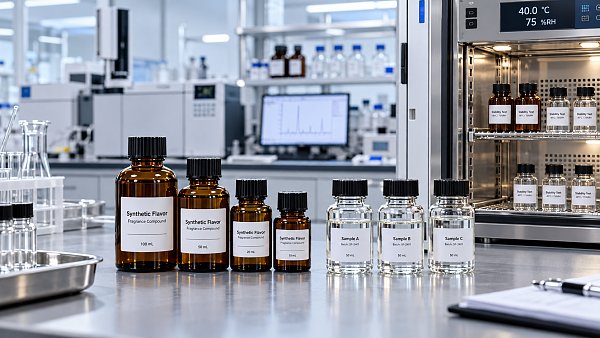
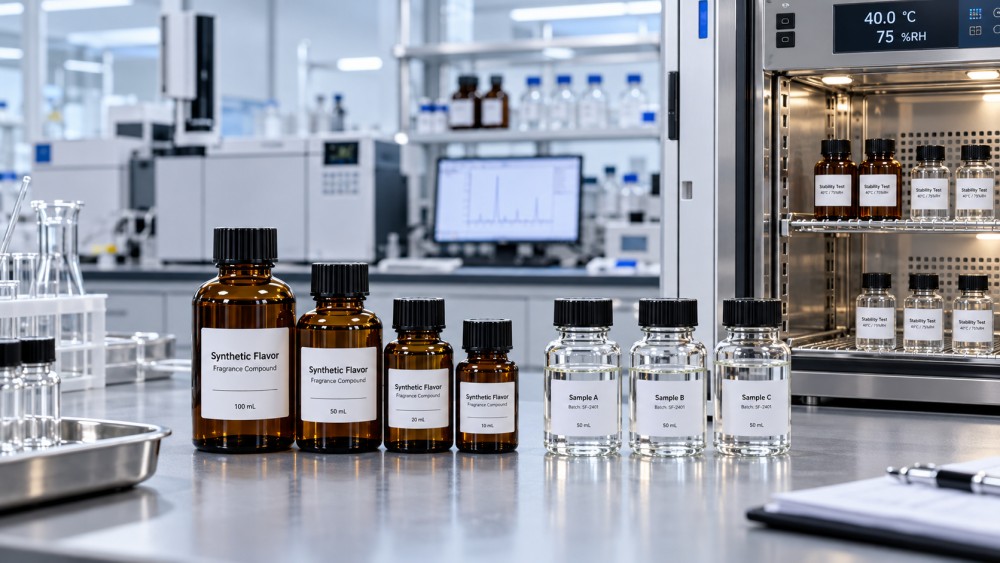
- Apply relevant stresses. Select heat, light, oxygen exposure, or temperature cycling according to credible storage and use conditions. Include samples in the intended package.
- Track more than appearance. Follow chemical composition, odor, physical condition, and relevant formulation properties over time.
- Relate accelerated findings to normal storage. Use elevated-stress studies to identify vulnerabilities and compare candidates, while retaining real-time samples to assess actual aging.
Gas chromatography can track the parent ingredient and emerging volatile components; coupling it with mass spectrometry can help investigate their identities. The analytical method must distinguish meaningful degradation products from normal formulation components. A relative peak-area result alone may be misleading if evaporation or matrix changes alter the sample composition.
Sensory assessment remains necessary because chemical abundance does not directly predict odor impact. Samples should be assessed at consistent dilution, temperature, and presentation conditions. For products such as detergents, evaluation may need to include the intended use stage, since odor in the bottle does not fully describe odor after washing or drying.
Accelerated testing has limits. Excessive heat can trigger reactions, phase changes, or packaging behavior that do not dominate during ordinary storage. Extrapolating shelf life assumes that the relevant degradation mechanism remains comparable. A severe stress result can reveal a weakness without establishing a precise commercial shelf life.
What constitutes convincing stability evidence?
There is no universal pass criterion that makes an aroma chemical stable across applications. A useful specification states the test conditions and defines acceptable changes in composition, odor, appearance, and product performance. Acceptance limits should connect to the finished product’s requirements and the capability of the measurement method.
Supplier documentation should distinguish neat-material storage stability from compatibility in a finished formulation. A certificate of analysis describes specified batch properties at release; a safety data sheet supports hazard communication. Neither, by itself, demonstrates long-term fragrance performance in a particular product.
When comparing candidates, prioritize evidence that identifies the tested grade, formulation conditions, packaging, exposure period, analytical approach, and sensory criteria. A statement such as “heat stable” has limited decision value without those conditions. Results from a closely matched application are more informative than a broad stability label.
Before approving a material, define its most likely failure route and the observation that would reveal it. Then test the supplied ingredient in the complete product and intended package. That sequence turns structural expectations into evidence that supports a practical formulation decision.
Facing technical bottlenecks in manufacturing or looking for more efficient industrial solutions? Leave your details below and let the engineering experts at FCAS solve them for you.
We respect your privacy. Your information is strictly confidential.
Related News
 Antioxidants & Natural PreservativesHow Do Food Preservative Blends for Dairy Beverages Work?Food preservative blends for dairy beverages work differently across formulations. Discover how pH, processing and testing shape shelf-life performance.MORE+
 Antioxidants & Natural PreservativesIndexBox Forecasts Moderate BHT Market Growth Through 2035BHT market growth is forecast at 2.5% annually through 2035. Explore the demand drivers and what the outlook means for suppliers and buyers.MORE+
 Antioxidants & Natural PreservativesHow Do Food Preservation Ingredients Extend Shelf Life?Food Preservation Ingredients extend shelf life by slowing microbial growth and oxidation. Discover how to select and validate the right solution for your product.MORE+
 Antioxidants & Natural PreservativesWhat Drives Antioxidant Blends Bulk Price Changes?Discover what drives antioxidant blends bulk price changes, from ingredient costs to delivery terms, and learn how to compare quotes for better value.MORE+
 Antioxidants & Natural PreservativesWhat Affects Benzyl Alcohol Wholesale Pricing and Quality?Benzyl alcohol wholesale prices vary by purity, packaging, and delivery terms. Learn how to compare quality and total costs before you buy.MORE+
 Antioxidants & Natural PreservativesHow Preservative Blends Help Control Spoilage in FoodsPreservative Blends can help control food spoilage and support shelf life. Discover how to select and validate the right system for your product.MORE+
 Antioxidants & Natural PreservativesWhat Affects the Bulk Price of Food Preservation Ingredients?Explore what drives the food preservation ingredients bulk price, from specifications and order volume to freight, compliance, and supplier reliability.MORE+
 Antioxidants & Natural PreservativesHow to Choose Tocopherols for Food Oxidation ControlDiscover how to choose Tocopherols for food oxidation control. Compare profiles, dosage, formulation compatibility, and shelf-life testing.MORE+
 Antioxidants & Natural PreservativesHow Does pH Affect the Performance of Antimicrobial Preservatives?Antimicrobial Preservatives perform differently as pH shifts. Learn how to select effective systems, avoid formulation pitfalls, and validate lasting product protection.MORE+
 Antioxidants & Natural PreservativesHow to Select Natural Food Preservatives for Chilled Ready MealsSelect natural food preservatives for ready meals with confidence. Compare options, assess pH and packaging, and validate shelf life while protecting taste. Explore the guide.MORE+
 Antioxidants & Natural PreservativesWhat Affects the Bulk Price of Antioxidant Blends for Food Use?Compare antioxidant blends bulk price factors, from active concentration to dosage and delivery costs. Learn how to assess quotes and choose better value for food applications.MORE+
 Antioxidants & Natural PreservativesHow Do Propionates Prevent Mold Without Slowing Yeast in Bread?Propionates help delay mold in bread while allowing effective proofing. Discover how pH, dosage, and process control balance longer shelf life with yeast performance.MORE+
 Antioxidants & Natural PreservativesWhat Makes Stable Synthetic Aroma Chemicals Resist Degradation?Learn why stable synthetic aroma chemicals resist degradation, how formulation and packaging affect performance, and what to test when choosing ingredients for lasting fragrance quality.MORE+
 Antioxidants & Natural PreservativesHow Do You Choose a Natural Food Preservatives Supplier You Can Trust?Choose a natural food preservatives supplier you can trust. Learn how to verify compliance, validate performance, and assess supply reliability before you buy.MORE+
 Antioxidants & Natural PreservativesWhat Determines TBHQ Bulk Price and How Can You Compare Quotes?Compare tbhq bulk price with confidence. Discover key cost drivers, specification checks, and landed-cost essentials to evaluate supplier quotes and avoid hidden costs.MORE+
 Antioxidants & Natural PreservativesHow to Choose Food Preservation Ingredients for Beverages That LastChoose food preservation ingredients for beverages with confidence. Explore pH, microbial control, compliance, and testing to protect flavor and achieve reliable shelf life.MORE+
 Antioxidants & Natural PreservativesWhat Purity Tests Are Needed for Cosmetic Grade Butylparaben?Cosmetic grade butylparaben needs more than a high assay. Discover essential purity tests, impurity controls, and supplier checks to make confident sourcing decisions.MORE+
 Antioxidants & Natural PreservativesTBHQ Antioxidant Performance, Limits, and Food Safety ComplianceTBHQ antioxidant performance, legal limits, and food safety compliance explained. Learn practical controls for oils, frying, packaging, shelf life, and documentation.MORE+
 Antioxidants & Natural PreservativesNatural Food Preservatives for Sauces That Protect Shelf LifeNatural food preservatives for sauces: discover practical strategies for safer shelf life, clean-label formulation, pH control, packaging, and validation.MORE+
 Antioxidants & Natural PreservativesHow Herbal Extracts for Functional Foods Support Product DevelopmentHerbal extracts for functional foods: explore smarter selection, sensory balance, processing stability, documentation, and scalable supply for successful product development.MORE+
 Antioxidants & Natural PreservativesWhat Quality Checks Matter When Sourcing Butylparaben for Personal CareButylparaben for personal care sourcing guide: compare assay, impurities, physical performance, documentation, traceability, and supplier quality to reduce formulation risk.MORE+
 Antioxidants & Natural PreservativesWhen Propyl Gallate Antioxidant Is the Right Choice for Oil StabilityPropyl gallate antioxidant: learn when it is the right choice for oil stability, shelf-life protection, processing compatibility, and smarter formulation decisions.MORE+
 Antioxidants & Natural PreservativesHow Potassium Sorbate Extends Shelf Life in Food and Beverage ProductsPotassium Sorbate helps food and beverage brands control yeast and mold spoilage. Explore pH, dosage, processing, and packaging strategies for reliable shelf life.MORE+
 Antioxidants & Natural PreservativesHow to Source Bulk Herbal Extracts With Reliable Quality ControlBulk herbal extracts sourcing guide: compare suppliers, verify traceability, review CoAs, and build reliable quality controls for safer, consistent purchasing.MORE+
 Antioxidants & Natural PreservativesWhat to Check Before Sourcing Butylparaben for Personal Care FormulasButylparaben for personal care sourcing guide: check market eligibility, purity, supplier controls, formula compatibility, packaging, and total risk before buying.MORE+
 Antioxidants & Natural PreservativesNatural Food Antioxidants That Help Extend Shelf Life in Clean LabelsNatural Food Antioxidants: learn how tocopherols, rosemary extracts, and ascorbic systems help protect flavor, color, and shelf life in clean-label foods.MORE+
 Antioxidants & Natural PreservativesWhat to Check Before Choosing a Butylparaben Wholesale SupplierButylparaben wholesale buyers: learn how to assess quality, documentation, market fit, packaging, supply reliability, and total landed cost before choosing a supplier.MORE+
 Antioxidants & Natural PreservativesWhat to Check Before Choosing a Synthetic Food Preservatives SupplierSynthetic food preservatives supplier selection: check regulatory fit, batch consistency, documentation, logistics, and support to reduce risks and hidden costs.MORE+
 Antioxidants & Natural PreservativesWhat to Verify Before Choosing a Synthetic Food Preservatives FactorySynthetic food preservatives factory checklist: verify food-grade quality, impurity control, traceability, packaging, and regulatory fit before supplier approval.MORE+
 Antioxidants & Natural PreservativesHow to Compare Food Preservative Blends Wholesale QuotesFood preservative blends wholesale: compare quotes by true cost, dosage, compliance, quality consistency, and supply reliability to choose the best-value solution.MORE+
 Antioxidants & Natural PreservativesHow Natural Food Preservatives Keep Sauces Fresh Without Sacrificing FlavorNatural food preservatives for sauces help balance microbial control, shelf life, and authentic flavor. Explore practical formulation, processing, and packaging strategies.MORE+
 Antioxidants & Natural PreservativesHow Propionates Extend Shelf Life While Meeting Food Safety RequirementsPropionates extend shelf life by controlling mold in bakery and moisture-sensitive foods. Explore smart dosage, compliance, supplier quality, and safer distribution strategies.MORE+
 Antioxidants & Natural PreservativesHow Oxidation Resistant Flavor Encapsulates Protect Taste During ProcessingOxidation resistant flavor encapsulates help protect delicate taste through heat, oxygen, and storage. Discover how to improve flavor retention, release, and processing consistency.MORE+
 Antioxidants & Natural PreservativesHow to Choose Green Tea Extract for Stable, Consistent FormulationsGreen Tea Extract selection guide for stable, consistent formulations—compare standardization, solubility, carriers, stability, and batch quality with confidence.MORE+
 Antioxidants & Natural PreservativesIs TBHQ for Shortening Safe and Effective for Longer Shelf Life?TBHQ for shortening: discover how safe, compliant antioxidant use can reduce rancidity, protect quality, and support longer shelf life through validated controls.MORE+
 Antioxidants & Natural PreservativesWhy Ferulic Acid Matters in Modern Antioxidant FormulationsFerulic Acid helps modern formulations enhance oxidative stability, protect sensitive ingredients, and support differentiated product performance across key applications.MORE+
 Antioxidants & Natural PreservativesHow Natural Food Preservatives Extend Shelf Life Without CompromiseNatural Food Preservatives extend shelf life through smart hurdle systems, balancing safety, clean-label appeal, sensory quality, and regulatory compliance.MORE+
 Antioxidants & Natural PreservativesHow to Choose a Food Preservation Ingredients Manufacturer with ConfidenceFood preservation ingredients manufacturer selection starts with risk control. Learn how to compare quality, documentation, supply stability, and technical support with confidence.MORE+
 Antioxidants & Natural PreservativesIs Cosmetic Grade Butylparaben Still a Smart Choice for FormulatorsCosmetic grade butylparaben remains a key consideration for formulators. Explore when it still makes sense, when to replace it, and how to balance performance, compliance, and market demands.MORE+
 Antioxidants & Natural PreservativesHow to Choose a Reliable Gum Arabic Powder Supplier for Consistent QualityGum arabic powder supplier selection starts with quality, traceability, and supply stability. Learn how to compare specs, compliance, and continuity to reduce sourcing risk.MORE+