How Do Propionates Prevent Mold Without Slowing Yeast in Bread?
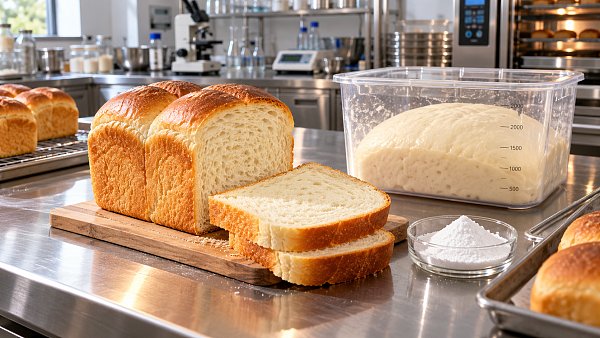
Propionates prevent mold in bread through a useful difference in microbial sensitivity—not because they leave yeast completely unaffected. At an appropriate concentration and pH, they can delay mold growth while allowing baker’s yeast to generate enough carbon dioxide for normal proofing. Raise the preservative concentration or increase acidity too far, and that operating window can narrow enough to slow fermentation.
The practical objective is therefore not maximum antimicrobial activity. It is sufficient protection in the finished bread without an unacceptable change in proof time, loaf volume, flavor, or crumb structure. That balance depends on how much propionic acid is available, when yeast encounters it, and the contamination and storage conditions after baking.
The active mechanism depends on acid–base chemistry
Calcium propionate and sodium propionate dissolve to supply propionate ions. In an aqueous environment, propionate exists in equilibrium with undissociated propionic acid:
Propionic acid ⇌ hydrogen ion + propionate ion
The undissociated acid is particularly important because it can cross microbial cell membranes more readily than the charged propionate ion. Once inside a cell with a higher internal pH, some of that acid dissociates. The resulting acid stress and accumulation of propionate disturb cellular homeostasis. Maintaining internal pH and managing these effects consumes energy and can interfere with growth and metabolism.
This is not simply a matter of “acid killing mold.” Propionates are primarily used to inhibit growth under defined conditions, rather than to sterilize bread. Their performance depends on the microorganism, its physiological condition, the surrounding food matrix, and the amount of active acid present.
Propionic acid has a pKa of approximately 4.87 in dilute aqueous conditions. The Henderson–Hasselbalch relationship gives an approximate indication of the fraction present as undissociated acid:
Undissociated fraction = 1 ÷ [1 + 10(pH − pKa)]
These values describe acid–base equilibrium, not guaranteed mold inhibition. Dough and bread are heterogeneous, buffered systems; water availability, ingredient distribution, and local conditions also matter. Nevertheless, the relationship explains why an unchanged propionate dose can perform differently after a change in acidulant, fermentation process, or flour blend.
Why baker’s yeast can remain active
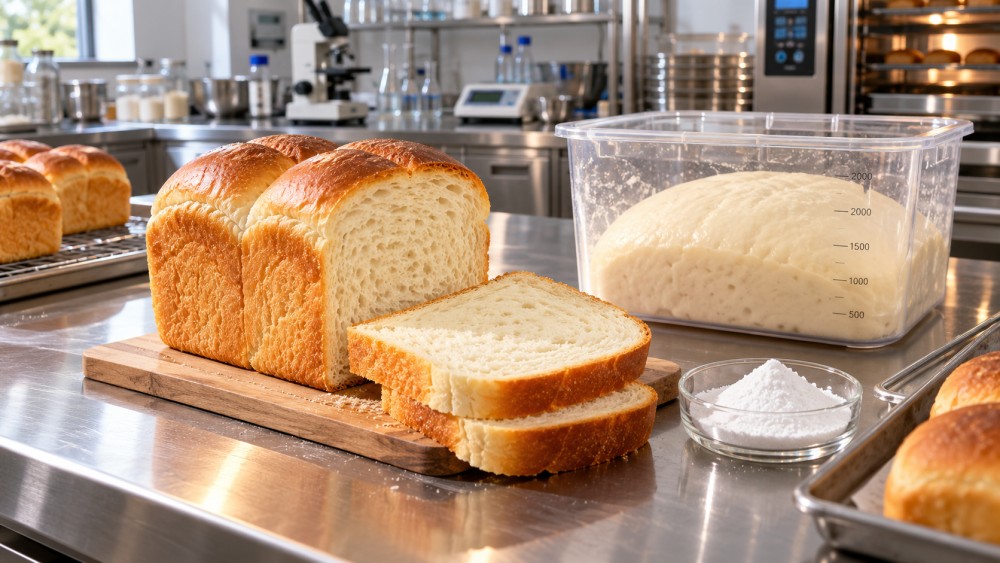
Baker’s yeast, typically Saccharomyces cerevisiae, can tolerate useful concentrations of propionate in bread formulations. Its response to weak-acid stress includes maintaining intracellular pH and activating protective cellular processes. That tolerance is relative, however: it varies with strain, physiological condition, and the other stresses already present in the dough.
The useful separation between yeast activity and mold inhibition also comes from how bread is produced. Yeast is deliberately added at a substantial population and is expected to ferment over a comparatively short processing period. Mold contamination of baked bread generally occurs after the oven, and the preservative must delay spore germination and subsequent growth over a much longer storage period.
These are different biological tasks under different conditions. A formulation can permit adequate gas production during proofing yet substantially delay mold development during storage. That does not mean the preservative has no effect on yeast; a small reduction in fermentation rate may simply remain within the process tolerance.
Excessive weak-acid stress can push the dough beyond that tolerance. A longer proof time, lower gas production, or reduced loaf volume can then appear. Increasing the yeast dose may compensate for part of the effect, but it does not establish that the preservative system is properly balanced, and it can change cost and flavor development.
Dough pH and finished-bread pH answer different questions
Yeast experiences the preservative during mixing, fermentation, and proofing. Mold encounters the preservative in baked bread, especially at exposed surfaces and sliced faces. Consequently, one pH measurement cannot fully describe both fermentation compatibility and shelf-life protection.
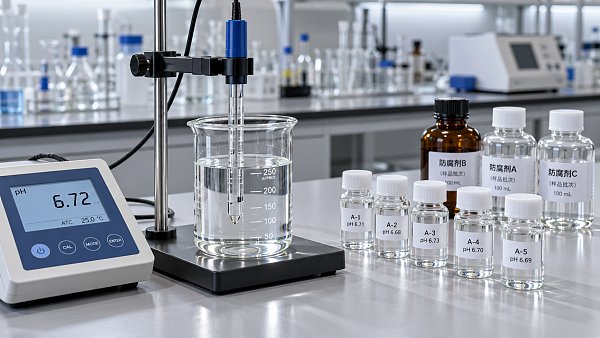
A useful assessment records dough pH at defined processing stages and finished-bread pH using a consistent method. The sampling location, bread-to-water ratio when preparing a slurry, temperature, and elapsed time should remain controlled. Otherwise, apparent differences between trials may reflect measurement technique rather than formulation.
Lowering pH increases the undissociated fraction of propionic acid, which can improve mold inhibition at a given total concentration. The same change can also intensify stress on yeast. Added vinegar, fermented ingredients, sourdough, or another acidifying component therefore changes the effective preservative system even if the calcium propionate addition remains constant.
Titratable acidity provides complementary information about the acid reserve and buffering of the formulation, but it does not replace pH in estimating acid dissociation. Two doughs with similar titratable acidity can have different pH values and different propionic-acid availability. Conversely, similar pH values do not guarantee identical fermentation behavior or sensory properties.
Salt selection and dosage basis can obscure the comparison
Calcium propionate and sodium propionate share the same preservative acid chemistry, but equal masses do not deliver equal amounts of propionate. Assuming pure anhydrous materials, calcium propionate contains approximately 79.6% propionic-acid equivalent by mass, while sodium propionate contains approximately 77.1%.
This difference is modest, but relevant when comparing formulations or supplier recommendations. Commercial assay, moisture content, and any carrier in a blended preparation must also be included. The calcium or sodium contribution may matter for nutritional targets and formulation compatibility, although the counter-ion does not create an absolute distinction between “yeast-safe” and “yeast-inhibiting” performance.
More consequential errors can arise from the dosage denominator. A percentage based on flour weight is not equivalent to the same percentage based on total dough or finished bread. Water addition and baking loss change those relationships.
For example, an illustrative addition of 0.20% on flour weight means 2 g of ingredient per kilogram of flour. It does not mean 2 g per kilogram of finished bread, and it is not a universal recommended or legally permitted use level. Any comparison should identify the ingredient form, active content, dosage basis, and whether the reported amount is expressed as the salt or as propionic-acid equivalent.
Particle size and dissolution also deserve attention. Poor distribution can produce local differences in preservative exposure and protection. Mixing order and dispersion should therefore be standardized before attributing a fermentation difference to preservative chemistry alone.
A proofing delay is not always direct yeast inhibition
Proof height reflects both gas generation and the dough’s ability to retain that gas. If a propionate-containing dough rises more slowly, direct inhibition of yeast is one explanation, but altered dough structure, temperature, mixing, or ingredient interactions may also contribute.
A fermentation assessment is stronger when it separates carbon dioxide production from dough expansion. Gas-production measurements, proof-time records, dough-temperature checks, and baked-loaf measurements help distinguish the causes. Normal gas production accompanied by reduced expansion points toward gas retention or dough handling rather than primarily toward yeast metabolism.
Other fermentation stresses should remain fixed during comparison. High sugar concentration, salt, yeast condition, water temperature, and fermentation time can all alter the available margin. A preservative level tolerated in a lean dough cannot automatically be transferred to a sweet or otherwise highly stressed formulation.
The acceptance criterion should match the production constraint. A small increase in proof time may be manageable in one process but unacceptable on a line with a fixed proofer residence time. Testing only to a fixed final height can conceal a throughput penalty; testing only for a fixed duration can conceal whether the dough would eventually reach the required volume.
Mold protection must be established in the packaged bread
An inhibitory concentration measured in laboratory broth does not translate directly into a bread shelf-life claim. Bread composition, water activity, surface conditions, packaging, and the spoilage organisms present all influence the outcome.
Mold species and strains differ in their sensitivity to propionate. A result obtained against one laboratory organism should not be treated as proof of protection against all bakery contaminants. Relevant organisms and realistic storage conditions are necessary when establishing the formulation’s performance boundary.
Post-bake contamination is especially important. Bread exposed to a greater mold-spore load during cooling, slicing, or packaging can develop visible spoilage sooner despite an unchanged preservative concentration. Increasing propionate to compensate for a hygiene problem may slow fermentation without reliably restoring the intended shelf life.
Cooling and packaging conditions can likewise alter performance. Condensation creates locally favorable conditions for growth, while package integrity and storage temperature affect the environment surrounding the loaf. Preservative validation should use the intended packaging and a storage profile representative of distribution, including foreseeable temperature variation.
The endpoint must also be explicit. “Days without visible mold” is a useful commercial measure, but it is not evidence of sterility or a general food-safety guarantee. Artificially inoculated challenge studies belong in suitably controlled laboratory conditions, with those samples excluded from sensory assessment and consumption.
Define the operating window with paired fermentation and shelf-life trials
The most informative development work evaluates preservation and fermentation together. Selecting a dose solely because it gives the longest mold-free storage can produce a formulation that is difficult to manufacture; selecting it solely because proofing remains unchanged can leave inadequate protection after packing.
A controlled comparison can include an untreated reference and several propionate concentrations, with a limited pH comparison where acid adjustment is genuinely under consideration. Flour, yeast lot, dough temperature, mixing energy, proof conditions, loaf size, cooling, slicing, and packaging should remain consistent.
The measurements should connect the two sides of the trade-off:
- During processing: dough pH, dough temperature, gas production where available, and time to the specified proof endpoint.
- After baking: loaf volume, crumb structure, finished-bread pH, and water activity.
- During storage: time to visible mold under defined conditions, variation between loaves, and sensory acceptability using appropriate uninoculated samples.
Independent batches are needed to distinguish a robust formulation from a favorable single trial. The selected condition should retain acceptable performance across normal variation in acidity, processing, and storage—not merely pass at the nominal settings.
Legal eligibility remains a separate boundary. Permission and maximum levels depend on the destination market, food category, and applicable expression basis. Calcium propionate and sodium propionate are identified in European additive nomenclature as E282 and E281 respectively, but those identifiers alone do not establish authorization for a particular product. Ingredient specifications and use conditions must both meet the applicable requirements.
The defensible formulation is the lowest effective preservative system that meets the validated shelf-life target while preserving the required fermentation performance. Propionates can achieve that balance because mold inhibition and yeast fermentation have different sensitivity and exposure requirements—not because yeast is immune to propionic acid.
Facing technical bottlenecks in manufacturing or looking for more efficient industrial solutions? Leave your details below and let the engineering experts at FCAS solve them for you.
We respect your privacy. Your information is strictly confidential.
Related News
 Antioxidants & Natural PreservativesHow Do Food Preservative Blends for Dairy Beverages Work?Food preservative blends for dairy beverages work differently across formulations. Discover how pH, processing and testing shape shelf-life performance.MORE+
 Antioxidants & Natural PreservativesIndexBox Forecasts Moderate BHT Market Growth Through 2035BHT market growth is forecast at 2.5% annually through 2035. Explore the demand drivers and what the outlook means for suppliers and buyers.MORE+
 Antioxidants & Natural PreservativesHow Do Food Preservation Ingredients Extend Shelf Life?Food Preservation Ingredients extend shelf life by slowing microbial growth and oxidation. Discover how to select and validate the right solution for your product.MORE+
 Antioxidants & Natural PreservativesWhat Drives Antioxidant Blends Bulk Price Changes?Discover what drives antioxidant blends bulk price changes, from ingredient costs to delivery terms, and learn how to compare quotes for better value.MORE+
 Antioxidants & Natural PreservativesWhat Affects Benzyl Alcohol Wholesale Pricing and Quality?Benzyl alcohol wholesale prices vary by purity, packaging, and delivery terms. Learn how to compare quality and total costs before you buy.MORE+
 Antioxidants & Natural PreservativesHow Preservative Blends Help Control Spoilage in FoodsPreservative Blends can help control food spoilage and support shelf life. Discover how to select and validate the right system for your product.MORE+
 Antioxidants & Natural PreservativesWhat Affects the Bulk Price of Food Preservation Ingredients?Explore what drives the food preservation ingredients bulk price, from specifications and order volume to freight, compliance, and supplier reliability.MORE+
 Antioxidants & Natural PreservativesHow to Choose Tocopherols for Food Oxidation ControlDiscover how to choose Tocopherols for food oxidation control. Compare profiles, dosage, formulation compatibility, and shelf-life testing.MORE+
 Antioxidants & Natural PreservativesHow Does pH Affect the Performance of Antimicrobial Preservatives?Antimicrobial Preservatives perform differently as pH shifts. Learn how to select effective systems, avoid formulation pitfalls, and validate lasting product protection.MORE+
 Antioxidants & Natural PreservativesHow to Select Natural Food Preservatives for Chilled Ready MealsSelect natural food preservatives for ready meals with confidence. Compare options, assess pH and packaging, and validate shelf life while protecting taste. Explore the guide.MORE+
 Antioxidants & Natural PreservativesWhat Affects the Bulk Price of Antioxidant Blends for Food Use?Compare antioxidant blends bulk price factors, from active concentration to dosage and delivery costs. Learn how to assess quotes and choose better value for food applications.MORE+
 Antioxidants & Natural PreservativesHow Do Propionates Prevent Mold Without Slowing Yeast in Bread?Propionates help delay mold in bread while allowing effective proofing. Discover how pH, dosage, and process control balance longer shelf life with yeast performance.MORE+
 Antioxidants & Natural PreservativesWhat Makes Stable Synthetic Aroma Chemicals Resist Degradation?Learn why stable synthetic aroma chemicals resist degradation, how formulation and packaging affect performance, and what to test when choosing ingredients for lasting fragrance quality.MORE+
 Antioxidants & Natural PreservativesHow Do You Choose a Natural Food Preservatives Supplier You Can Trust?Choose a natural food preservatives supplier you can trust. Learn how to verify compliance, validate performance, and assess supply reliability before you buy.MORE+
 Antioxidants & Natural PreservativesWhat Determines TBHQ Bulk Price and How Can You Compare Quotes?Compare tbhq bulk price with confidence. Discover key cost drivers, specification checks, and landed-cost essentials to evaluate supplier quotes and avoid hidden costs.MORE+
 Antioxidants & Natural PreservativesHow to Choose Food Preservation Ingredients for Beverages That LastChoose food preservation ingredients for beverages with confidence. Explore pH, microbial control, compliance, and testing to protect flavor and achieve reliable shelf life.MORE+
 Antioxidants & Natural PreservativesWhat Purity Tests Are Needed for Cosmetic Grade Butylparaben?Cosmetic grade butylparaben needs more than a high assay. Discover essential purity tests, impurity controls, and supplier checks to make confident sourcing decisions.MORE+
 Antioxidants & Natural PreservativesTBHQ Antioxidant Performance, Limits, and Food Safety ComplianceTBHQ antioxidant performance, legal limits, and food safety compliance explained. Learn practical controls for oils, frying, packaging, shelf life, and documentation.MORE+
 Antioxidants & Natural PreservativesNatural Food Preservatives for Sauces That Protect Shelf LifeNatural food preservatives for sauces: discover practical strategies for safer shelf life, clean-label formulation, pH control, packaging, and validation.MORE+
 Antioxidants & Natural PreservativesHow Herbal Extracts for Functional Foods Support Product DevelopmentHerbal extracts for functional foods: explore smarter selection, sensory balance, processing stability, documentation, and scalable supply for successful product development.MORE+
 Antioxidants & Natural PreservativesWhat Quality Checks Matter When Sourcing Butylparaben for Personal CareButylparaben for personal care sourcing guide: compare assay, impurities, physical performance, documentation, traceability, and supplier quality to reduce formulation risk.MORE+
 Antioxidants & Natural PreservativesWhen Propyl Gallate Antioxidant Is the Right Choice for Oil StabilityPropyl gallate antioxidant: learn when it is the right choice for oil stability, shelf-life protection, processing compatibility, and smarter formulation decisions.MORE+
 Antioxidants & Natural PreservativesHow Potassium Sorbate Extends Shelf Life in Food and Beverage ProductsPotassium Sorbate helps food and beverage brands control yeast and mold spoilage. Explore pH, dosage, processing, and packaging strategies for reliable shelf life.MORE+
 Antioxidants & Natural PreservativesHow to Source Bulk Herbal Extracts With Reliable Quality ControlBulk herbal extracts sourcing guide: compare suppliers, verify traceability, review CoAs, and build reliable quality controls for safer, consistent purchasing.MORE+
 Antioxidants & Natural PreservativesWhat to Check Before Sourcing Butylparaben for Personal Care FormulasButylparaben for personal care sourcing guide: check market eligibility, purity, supplier controls, formula compatibility, packaging, and total risk before buying.MORE+
 Antioxidants & Natural PreservativesNatural Food Antioxidants That Help Extend Shelf Life in Clean LabelsNatural Food Antioxidants: learn how tocopherols, rosemary extracts, and ascorbic systems help protect flavor, color, and shelf life in clean-label foods.MORE+
 Antioxidants & Natural PreservativesWhat to Check Before Choosing a Butylparaben Wholesale SupplierButylparaben wholesale buyers: learn how to assess quality, documentation, market fit, packaging, supply reliability, and total landed cost before choosing a supplier.MORE+
 Antioxidants & Natural PreservativesWhat to Check Before Choosing a Synthetic Food Preservatives SupplierSynthetic food preservatives supplier selection: check regulatory fit, batch consistency, documentation, logistics, and support to reduce risks and hidden costs.MORE+
 Antioxidants & Natural PreservativesWhat to Verify Before Choosing a Synthetic Food Preservatives FactorySynthetic food preservatives factory checklist: verify food-grade quality, impurity control, traceability, packaging, and regulatory fit before supplier approval.MORE+
 Antioxidants & Natural PreservativesHow to Compare Food Preservative Blends Wholesale QuotesFood preservative blends wholesale: compare quotes by true cost, dosage, compliance, quality consistency, and supply reliability to choose the best-value solution.MORE+
 Antioxidants & Natural PreservativesHow Natural Food Preservatives Keep Sauces Fresh Without Sacrificing FlavorNatural food preservatives for sauces help balance microbial control, shelf life, and authentic flavor. Explore practical formulation, processing, and packaging strategies.MORE+
 Antioxidants & Natural PreservativesHow Propionates Extend Shelf Life While Meeting Food Safety RequirementsPropionates extend shelf life by controlling mold in bakery and moisture-sensitive foods. Explore smart dosage, compliance, supplier quality, and safer distribution strategies.MORE+
 Antioxidants & Natural PreservativesHow Oxidation Resistant Flavor Encapsulates Protect Taste During ProcessingOxidation resistant flavor encapsulates help protect delicate taste through heat, oxygen, and storage. Discover how to improve flavor retention, release, and processing consistency.MORE+
 Antioxidants & Natural PreservativesHow to Choose Green Tea Extract for Stable, Consistent FormulationsGreen Tea Extract selection guide for stable, consistent formulations—compare standardization, solubility, carriers, stability, and batch quality with confidence.MORE+
 Antioxidants & Natural PreservativesIs TBHQ for Shortening Safe and Effective for Longer Shelf Life?TBHQ for shortening: discover how safe, compliant antioxidant use can reduce rancidity, protect quality, and support longer shelf life through validated controls.MORE+
 Antioxidants & Natural PreservativesWhy Ferulic Acid Matters in Modern Antioxidant FormulationsFerulic Acid helps modern formulations enhance oxidative stability, protect sensitive ingredients, and support differentiated product performance across key applications.MORE+
 Antioxidants & Natural PreservativesHow Natural Food Preservatives Extend Shelf Life Without CompromiseNatural Food Preservatives extend shelf life through smart hurdle systems, balancing safety, clean-label appeal, sensory quality, and regulatory compliance.MORE+
 Antioxidants & Natural PreservativesHow to Choose a Food Preservation Ingredients Manufacturer with ConfidenceFood preservation ingredients manufacturer selection starts with risk control. Learn how to compare quality, documentation, supply stability, and technical support with confidence.MORE+
 Antioxidants & Natural PreservativesIs Cosmetic Grade Butylparaben Still a Smart Choice for FormulatorsCosmetic grade butylparaben remains a key consideration for formulators. Explore when it still makes sense, when to replace it, and how to balance performance, compliance, and market demands.MORE+
 Antioxidants & Natural PreservativesHow to Choose a Reliable Gum Arabic Powder Supplier for Consistent QualityGum arabic powder supplier selection starts with quality, traceability, and supply stability. Learn how to compare specs, compliance, and continuity to reduce sourcing risk.MORE+