What Purity Tests Are Needed for Cosmetic Grade Butylparaben?
What Purity Tests Are Needed for Cosmetic Grade Butylparaben?
A high assay result alone does not establish whether cosmetic grade butylparaben meets your quality and safety requirements. A reliable assessment combines identity verification and quantitative assay with checks for related substances, residual solvents, moisture, and contaminants identified through a risk-based specification. The practical question is which tests belong in routine batch release and which need deeper investigation during supplier qualification.
There is no single, globally harmonized “cosmetic grade” test package. Acceptance criteria must come from an applicable standard, an agreed purchasing specification, and the safety requirements of the intended application. A supplier’s grade description is a starting point—not evidence that the material is suitable for every cosmetic market or formulation.
Establish the specification before choosing the tests
Butylparaben is the n-butyl ester of p-hydroxybenzoic acid, commonly identified by CAS number 94-26-8. Confirm that identity in the purchasing specification. Isobutylparaben is a different substance; a similar name or a broadly matching spectrum is not enough to treat the two as interchangeable.
Where a supplier claims compliance with a pharmacopoeial monograph, ask for the exact compendium, edition, and applicable requirements. “Pharmaceutical quality” without that information is difficult to audit. A compendial specification can provide a useful analytical baseline, but it does not independently establish permission to use the ingredient in cosmetics.
For EU-bound products, check the current consolidated Cosmetics Regulation, including the relevant Annex V entry and associated restrictions. Other markets may differ. Keep this regulatory assessment separate from analytical release: a chemically conforming batch can still be unsuitable for a particular product category, concentration, or destination market.
Identity and assay: essential, but not interchangeable
Verify the molecule, not just the label
Infrared spectroscopy against a qualified reference material is a practical identity test. Chromatographic retention time can provide supporting evidence, especially when the method distinguishes butylparaben from related parabens and relevant isomers. Retention time alone is less convincing if potential look-alike compounds have not been assessed.
Melting behavior and appearance can help detect gross differences or contamination, but neither should replace a specific identity method. A white crystalline powder may look entirely acceptable while containing a chemically important impurity. An unexpected melting range should trigger investigation, not an automatic conclusion about its cause.
Ask what the assay actually measures
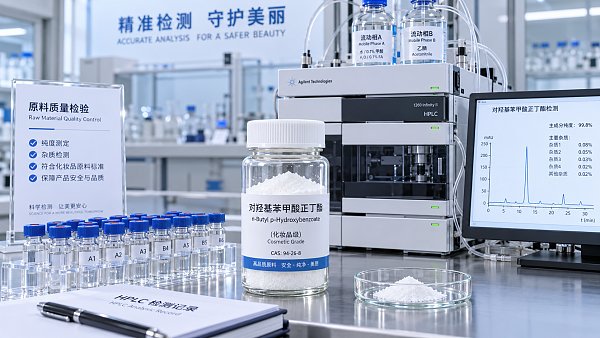
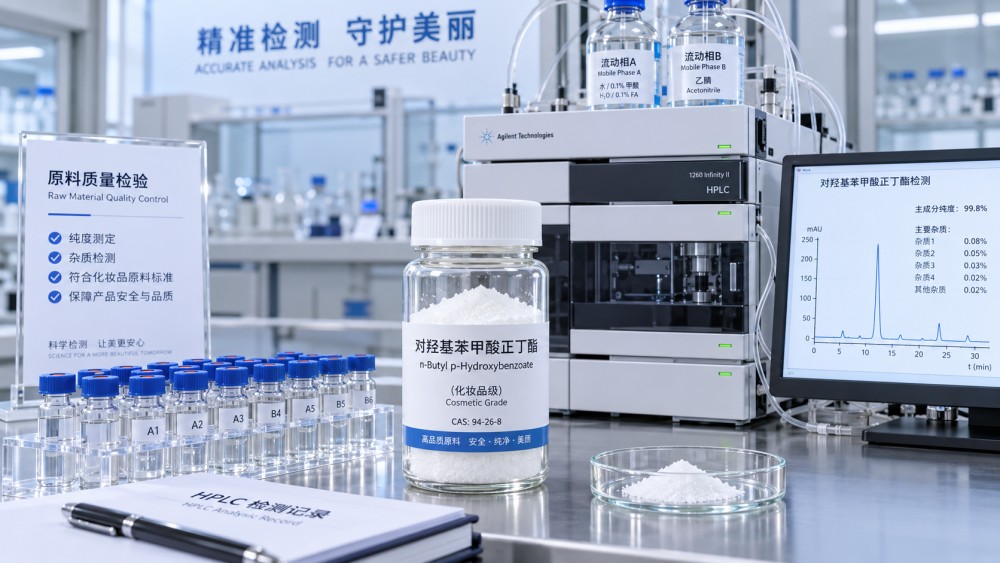
A validated HPLC assay using an appropriately characterized reference standard is a strong option for quantitative content determination. A compendial titration may also be appropriate where specified, but its selectivity must be understood. Some methods measure chemical functionality without distinguishing every related compound.
One common purchasing mistake is accepting chromatographic area percentage as though it were a mass-based assay. Area normalization depends on detector response and what the method detects. Water, inorganic residues, and some solvents may not appear in the chromatogram. A dominant butylparaben peak therefore does not, by itself, establish total material purity.
Check whether the reported assay is on an as-received, dried, or anhydrous basis. This affects how results are compared and how the preservative is weighed into a formulation. Two certificates can show similar assay values while describing different amounts of active material per kilogram delivered.
Related substances deserve their own test
An impurity method should cover plausible synthesis by-products, starting materials, degradation products, and cross-contamination. Depending on the manufacturing route, these may include p-hydroxybenzoic acid, other paraben esters, or additional route-specific substances. The supplier’s process information should guide the panel; a generic list may miss the most relevant risk.
HPLC with UV detection is commonly useful for aromatic related substances. However, the method needs adequate separation, sensitivity, and appropriate response factors where necessary. Reporting only “total impurities” can conceal a rising individual impurity that warrants a separate limit.
During supplier qualification, request representative chromatograms and the treatment of unidentified peaks. Ask how reporting thresholds were established and what happens when a new peak appears. An unfamiliar peak should be evaluated according to its level, likely identity, and toxicological relevance—not dismissed simply because the assay passes.
The assay and impurity tests can sometimes use the same chromatographic platform. That does not automatically make one validated procedure suitable for both purposes: measuring the main component and quantifying trace impurities require different demonstrations of performance.
Residual solvents, water, and inorganic contamination
Residual solvent testing should follow the actual synthesis, crystallization, washing, and drying process. Headspace gas chromatography is often suitable for volatile residues, including residual butanol when relevant. The method must demonstrate acceptable recovery from the butylparaben matrix and sensitivity at the agreed limits.
A statement that production uses “only low-risk solvents” does not replace process disclosure or supporting results. ICH Q3C can inform solvent risk assessment, but it is a pharmaceutical guideline, not a universal cosmetic raw-material specification. Any adopted limits need a documented rationale consistent with applicable cosmetic requirements and exposure.
For moisture, distinguish Karl Fischer water determination from loss on drying. Karl Fischer is more water-specific when the procedure is suitable for the matrix. Loss on drying can include water and other volatile material. If a certificate reports only drying loss, do not assume it has separately controlled residual solvent content.
Residue on ignition or sulfated ash, where required, can flag inorganic contamination. It cannot identify individual metals. Targeted elemental testing by ICP-MS or ICP-OES may be needed where catalysts, equipment, feedstocks, or shared production introduce credible risks. The element panel and limits should follow that assessment rather than an arbitrary standard package.
Be particularly cautious with a certificate stating only “heavy metals: passes.” Without the method, analytes, and limits, that result provides little clarity about what was actually excluded.
Which tests should run on every batch?
The testing frequency should reflect both the hazard and confidence in process control. The following is a planning framework, not a substitute for a binding specification.
Reduced testing requires evidence. It should be supported by supplier qualification, consistent historical results, change notification, and scheduled verification. A series of passing certificates without access to methods or manufacturing controls is a weak basis for removing tests.
Microbiological quality is a separate question
Butylparaben is a preservative, but that does not establish that the supplied powder is sterile or microbiologically acceptable. Assess contamination risks from manufacture, drying, repacking, storage, and sampling. Microbial limits may be appropriate where the handling history or intended application justifies them.
The test itself needs suitability checks. Preservative carried into the test preparation can suppress microbial recovery and produce misleadingly low counts. Suitable neutralization, dilution, or another validated approach is therefore essential.
Raw-material testing also cannot replace finished-product preservation testing. ISO 11930 provides a framework for evaluating antimicrobial protection of cosmetic products. A satisfactory ingredient assay does not prove that the preservative remains effective after partitioning into oil phases, interaction with other ingredients, or changes in product pH.
Read the certificate as evidence, not a release stamp
A useful certificate of analysis identifies the batch, specification revision, test methods, acceptance limits, and actual results where appropriate. Review numerical results rather than relying entirely on “conforms.” For trace contaminants, “not detected” is meaningful only when the detection or reporting limit is known.
During qualification, compare supplier results with independent testing of representative batches. Differences may arise from sample preparation, reference-standard assignment, assay basis, or impurity integration—not necessarily from poor material. Resolve those differences before routine deliveries make them a production problem.
This application-led approach is consistent with the fine-chemical supply-chain topics covered by Global Fine Chemicals & Agrochemical Intelligence Network (FCAS): specifications, manufacturing consistency, documentation, and formulation compatibility need to be considered together.
For cosmetic grade butylparaben, release should rest on verified identity, a meaningful assay, a controlled impurity profile, and justified contaminant limits. Before approving the next supplier certificate, confirm three things: what each test measures, whether its sensitivity supports the limit, and whether the tested specification matches the cosmetic application. A high purity number cannot answer those questions on its own.
Facing technical bottlenecks in manufacturing or looking for more efficient industrial solutions? Leave your details below and let the engineering experts at FCAS solve them for you.
We respect your privacy. Your information is strictly confidential.
Related News
 Antioxidants & Natural PreservativesHow Do Food Preservative Blends for Dairy Beverages Work?Food preservative blends for dairy beverages work differently across formulations. Discover how pH, processing and testing shape shelf-life performance.MORE+
 Antioxidants & Natural PreservativesIndexBox Forecasts Moderate BHT Market Growth Through 2035BHT market growth is forecast at 2.5% annually through 2035. Explore the demand drivers and what the outlook means for suppliers and buyers.MORE+
 Antioxidants & Natural PreservativesHow Do Food Preservation Ingredients Extend Shelf Life?Food Preservation Ingredients extend shelf life by slowing microbial growth and oxidation. Discover how to select and validate the right solution for your product.MORE+
 Antioxidants & Natural PreservativesWhat Drives Antioxidant Blends Bulk Price Changes?Discover what drives antioxidant blends bulk price changes, from ingredient costs to delivery terms, and learn how to compare quotes for better value.MORE+
 Antioxidants & Natural PreservativesWhat Affects Benzyl Alcohol Wholesale Pricing and Quality?Benzyl alcohol wholesale prices vary by purity, packaging, and delivery terms. Learn how to compare quality and total costs before you buy.MORE+
 Antioxidants & Natural PreservativesHow Preservative Blends Help Control Spoilage in FoodsPreservative Blends can help control food spoilage and support shelf life. Discover how to select and validate the right system for your product.MORE+
 Antioxidants & Natural PreservativesWhat Affects the Bulk Price of Food Preservation Ingredients?Explore what drives the food preservation ingredients bulk price, from specifications and order volume to freight, compliance, and supplier reliability.MORE+
 Antioxidants & Natural PreservativesHow to Choose Tocopherols for Food Oxidation ControlDiscover how to choose Tocopherols for food oxidation control. Compare profiles, dosage, formulation compatibility, and shelf-life testing.MORE+
 Antioxidants & Natural PreservativesHow Does pH Affect the Performance of Antimicrobial Preservatives?Antimicrobial Preservatives perform differently as pH shifts. Learn how to select effective systems, avoid formulation pitfalls, and validate lasting product protection.MORE+
 Antioxidants & Natural PreservativesHow to Select Natural Food Preservatives for Chilled Ready MealsSelect natural food preservatives for ready meals with confidence. Compare options, assess pH and packaging, and validate shelf life while protecting taste. Explore the guide.MORE+
 Antioxidants & Natural PreservativesWhat Affects the Bulk Price of Antioxidant Blends for Food Use?Compare antioxidant blends bulk price factors, from active concentration to dosage and delivery costs. Learn how to assess quotes and choose better value for food applications.MORE+
 Antioxidants & Natural PreservativesHow Do Propionates Prevent Mold Without Slowing Yeast in Bread?Propionates help delay mold in bread while allowing effective proofing. Discover how pH, dosage, and process control balance longer shelf life with yeast performance.MORE+
 Antioxidants & Natural PreservativesWhat Makes Stable Synthetic Aroma Chemicals Resist Degradation?Learn why stable synthetic aroma chemicals resist degradation, how formulation and packaging affect performance, and what to test when choosing ingredients for lasting fragrance quality.MORE+
 Antioxidants & Natural PreservativesHow Do You Choose a Natural Food Preservatives Supplier You Can Trust?Choose a natural food preservatives supplier you can trust. Learn how to verify compliance, validate performance, and assess supply reliability before you buy.MORE+
 Antioxidants & Natural PreservativesWhat Determines TBHQ Bulk Price and How Can You Compare Quotes?Compare tbhq bulk price with confidence. Discover key cost drivers, specification checks, and landed-cost essentials to evaluate supplier quotes and avoid hidden costs.MORE+
 Antioxidants & Natural PreservativesHow to Choose Food Preservation Ingredients for Beverages That LastChoose food preservation ingredients for beverages with confidence. Explore pH, microbial control, compliance, and testing to protect flavor and achieve reliable shelf life.MORE+
 Antioxidants & Natural PreservativesWhat Purity Tests Are Needed for Cosmetic Grade Butylparaben?Cosmetic grade butylparaben needs more than a high assay. Discover essential purity tests, impurity controls, and supplier checks to make confident sourcing decisions.MORE+
 Antioxidants & Natural PreservativesTBHQ Antioxidant Performance, Limits, and Food Safety ComplianceTBHQ antioxidant performance, legal limits, and food safety compliance explained. Learn practical controls for oils, frying, packaging, shelf life, and documentation.MORE+
 Antioxidants & Natural PreservativesNatural Food Preservatives for Sauces That Protect Shelf LifeNatural food preservatives for sauces: discover practical strategies for safer shelf life, clean-label formulation, pH control, packaging, and validation.MORE+
 Antioxidants & Natural PreservativesHow Herbal Extracts for Functional Foods Support Product DevelopmentHerbal extracts for functional foods: explore smarter selection, sensory balance, processing stability, documentation, and scalable supply for successful product development.MORE+
 Antioxidants & Natural PreservativesWhat Quality Checks Matter When Sourcing Butylparaben for Personal CareButylparaben for personal care sourcing guide: compare assay, impurities, physical performance, documentation, traceability, and supplier quality to reduce formulation risk.MORE+
 Antioxidants & Natural PreservativesWhen Propyl Gallate Antioxidant Is the Right Choice for Oil StabilityPropyl gallate antioxidant: learn when it is the right choice for oil stability, shelf-life protection, processing compatibility, and smarter formulation decisions.MORE+
 Antioxidants & Natural PreservativesHow Potassium Sorbate Extends Shelf Life in Food and Beverage ProductsPotassium Sorbate helps food and beverage brands control yeast and mold spoilage. Explore pH, dosage, processing, and packaging strategies for reliable shelf life.MORE+
 Antioxidants & Natural PreservativesHow to Source Bulk Herbal Extracts With Reliable Quality ControlBulk herbal extracts sourcing guide: compare suppliers, verify traceability, review CoAs, and build reliable quality controls for safer, consistent purchasing.MORE+
 Antioxidants & Natural PreservativesWhat to Check Before Sourcing Butylparaben for Personal Care FormulasButylparaben for personal care sourcing guide: check market eligibility, purity, supplier controls, formula compatibility, packaging, and total risk before buying.MORE+
 Antioxidants & Natural PreservativesNatural Food Antioxidants That Help Extend Shelf Life in Clean LabelsNatural Food Antioxidants: learn how tocopherols, rosemary extracts, and ascorbic systems help protect flavor, color, and shelf life in clean-label foods.MORE+
 Antioxidants & Natural PreservativesWhat to Check Before Choosing a Butylparaben Wholesale SupplierButylparaben wholesale buyers: learn how to assess quality, documentation, market fit, packaging, supply reliability, and total landed cost before choosing a supplier.MORE+
 Antioxidants & Natural PreservativesWhat to Check Before Choosing a Synthetic Food Preservatives SupplierSynthetic food preservatives supplier selection: check regulatory fit, batch consistency, documentation, logistics, and support to reduce risks and hidden costs.MORE+
 Antioxidants & Natural PreservativesWhat to Verify Before Choosing a Synthetic Food Preservatives FactorySynthetic food preservatives factory checklist: verify food-grade quality, impurity control, traceability, packaging, and regulatory fit before supplier approval.MORE+
 Antioxidants & Natural PreservativesHow to Compare Food Preservative Blends Wholesale QuotesFood preservative blends wholesale: compare quotes by true cost, dosage, compliance, quality consistency, and supply reliability to choose the best-value solution.MORE+
 Antioxidants & Natural PreservativesHow Natural Food Preservatives Keep Sauces Fresh Without Sacrificing FlavorNatural food preservatives for sauces help balance microbial control, shelf life, and authentic flavor. Explore practical formulation, processing, and packaging strategies.MORE+
 Antioxidants & Natural PreservativesHow Propionates Extend Shelf Life While Meeting Food Safety RequirementsPropionates extend shelf life by controlling mold in bakery and moisture-sensitive foods. Explore smart dosage, compliance, supplier quality, and safer distribution strategies.MORE+
 Antioxidants & Natural PreservativesHow Oxidation Resistant Flavor Encapsulates Protect Taste During ProcessingOxidation resistant flavor encapsulates help protect delicate taste through heat, oxygen, and storage. Discover how to improve flavor retention, release, and processing consistency.MORE+
 Antioxidants & Natural PreservativesHow to Choose Green Tea Extract for Stable, Consistent FormulationsGreen Tea Extract selection guide for stable, consistent formulations—compare standardization, solubility, carriers, stability, and batch quality with confidence.MORE+
 Antioxidants & Natural PreservativesIs TBHQ for Shortening Safe and Effective for Longer Shelf Life?TBHQ for shortening: discover how safe, compliant antioxidant use can reduce rancidity, protect quality, and support longer shelf life through validated controls.MORE+
 Antioxidants & Natural PreservativesWhy Ferulic Acid Matters in Modern Antioxidant FormulationsFerulic Acid helps modern formulations enhance oxidative stability, protect sensitive ingredients, and support differentiated product performance across key applications.MORE+
 Antioxidants & Natural PreservativesHow Natural Food Preservatives Extend Shelf Life Without CompromiseNatural Food Preservatives extend shelf life through smart hurdle systems, balancing safety, clean-label appeal, sensory quality, and regulatory compliance.MORE+
 Antioxidants & Natural PreservativesHow to Choose a Food Preservation Ingredients Manufacturer with ConfidenceFood preservation ingredients manufacturer selection starts with risk control. Learn how to compare quality, documentation, supply stability, and technical support with confidence.MORE+
 Antioxidants & Natural PreservativesIs Cosmetic Grade Butylparaben Still a Smart Choice for FormulatorsCosmetic grade butylparaben remains a key consideration for formulators. Explore when it still makes sense, when to replace it, and how to balance performance, compliance, and market demands.MORE+
 Antioxidants & Natural PreservativesHow to Choose a Reliable Gum Arabic Powder Supplier for Consistent QualityGum arabic powder supplier selection starts with quality, traceability, and supply stability. Learn how to compare specs, compliance, and continuity to reduce sourcing risk.MORE+