How Anionic Industrial Dispersants Improve Coating Stability
For technical evaluators, coating stability is rarely solved by pigment selection alone. The decisive factor is whether particles remain uniformly separated throughout manufacturing, storage, transport, and application.
Anionic industrial dispersants provide charge-based stabilization that can reduce agglomeration, improve pigment wetting, control viscosity, and protect visual consistency. Their value depends on chemistry, dosage, water quality, and system compatibility.
When correctly selected, these materials can improve color development, gloss, hiding power, millbase efficiency, and storage stability. When mismatched, they may cause flocculation, foam, viscosity drift, or water sensitivity.
Technical evaluation should therefore focus on measurable formulation outcomes rather than treating dispersant selection as a simple additive substitution. The best product supports both processing efficiency and long-term coating performance.
Why Coating Stability Depends on Particle Control
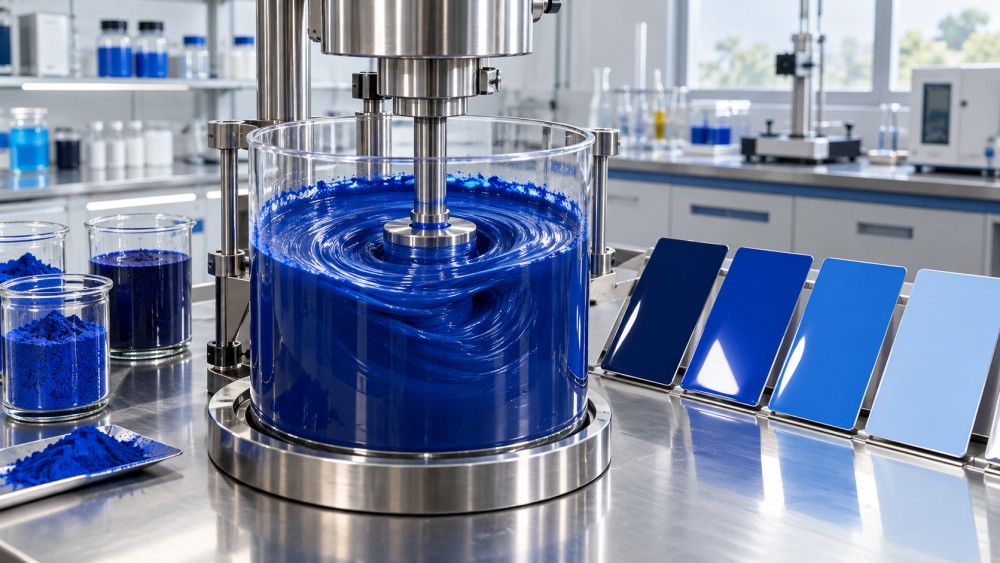
Coatings contain pigments, extenders, binders, solvents, additives, and sometimes functional particles. These components must remain adequately distributed to deliver predictable appearance, protection, application behavior, and final film properties.
Pigment particles naturally attract one another because of surface energy and intermolecular forces. Without sufficient stabilization, they form larger structures that settle, increase viscosity, reduce gloss, and create uneven color.
A stable coating does not necessarily mean that particles never move. It means the formulation resists irreversible aggregation and maintains a particle distribution that remains suitable for use after storage.
For waterborne coatings especially, changes in pH, electrolyte concentration, temperature, and microbial contamination can alter interparticle interactions. These changes may expose weaknesses that remain invisible in freshly prepared laboratory batches.
Technical evaluators should distinguish between settling and hard settling. Soft settling may be redispersed with modest agitation, while hard settling can indicate inadequate dispersion, binder interaction, or insufficient stabilization.
Flocculation also differs from aggregation. Flocculated particles may form loose networks that alter rheology and color strength, whereas aggregated particles are more strongly bound and often require substantial milling energy.
Understanding this distinction helps teams choose relevant test methods. A formulation that passes an initial viscosity check may still fail storage, freeze-thaw, tint strength, rub-up, gloss, or spray performance testing.
The practical objective is not simply the smallest possible particle size. It is a controlled and reproducible particle distribution that supports pigment efficiency, acceptable flow, application uniformity, and coating durability.
Anionic industrial dispersants are particularly relevant where inorganic pigments, mineral extenders, carbon black, or selected organic pigments require strong wetting and electrostatic separation in aqueous or polar systems.
How Anionic Industrial Dispersants Stabilize Pigment Particles
Anionic industrial dispersants typically contain negatively charged functional groups, such as carboxylates, sulfonates, phosphates, or related structures. These groups adsorb onto pigment surfaces and influence particle-to-particle interactions.
During dispersion, the additive first helps the liquid phase penetrate pigment agglomerates. Effective wetting replaces trapped air and enables mechanical energy to break larger clusters into smaller, more usable particles.
After adsorption, the anionic groups create negative charges around dispersed particles. Particles carrying similar charges repel each other, reducing the tendency for close contact and limiting renewed agglomeration.
This mechanism is commonly described as electrostatic stabilization. Its effectiveness depends on surface adsorption, charge density, ionic conditions, particle concentration, and the ability of the surrounding medium to maintain separation.
Some polymeric anionic dispersants provide electrosteric stabilization rather than purely electrostatic repulsion. Their molecular chains extend into the liquid phase, creating an additional physical barrier against particle contact.
Electrosteric effects can improve tolerance to moderate formulation changes, but they do not eliminate compatibility concerns. Binder chemistry, co-solvents, neutralizing agents, and added salts still require careful review.
The dispersant must anchor strongly enough to remain associated with the pigment surface. Weak adsorption can lead to competitive displacement by binders, surfactants, defoamers, or other additives during production or storage.
Different pigment chemistries require different adsorption behavior. Titanium dioxide, iron oxides, calcium carbonate, talc, carbon black, and organic pigments can respond very differently to the same dispersant structure.
For this reason, evaluating a dispersant only in a simplified water-pigment mixture is insufficient. The final resin package and all relevant additives should be included before selecting a commercial formulation.
Where the Performance Gains Become Visible
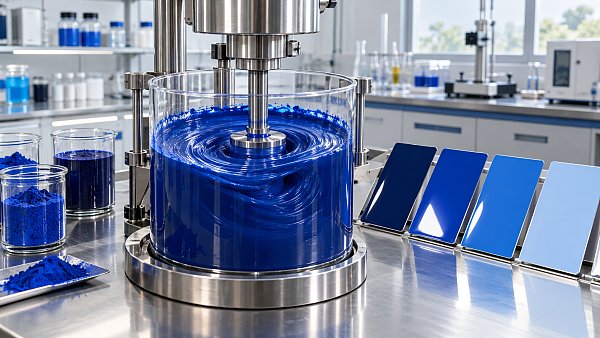
The first measurable benefit is often reduced grinding viscosity. Better wetting and particle separation can allow higher pigment loading, lower milling energy, shorter processing time, or improved equipment throughput.
Lower millbase viscosity does not automatically prove superior dispersion. However, when combined with stable particle size, improved color strength, and reliable storage results, it is a meaningful processing indicator.
Color development improves when pigment particles are distributed uniformly and available surface area is effectively utilized. Poorly dispersed pigments may appear weaker, duller, less saturated, or inconsistent after tinting.
Gloss can also improve because a more uniform pigment distribution supports smoother film formation. Large agglomerates disrupt surface leveling, scatter light, and create microscopic roughness in dried coatings.
Hiding power may benefit when titanium dioxide and extenders are efficiently separated. Flocculated particles can behave as larger optical units, reducing the scattering efficiency needed for effective opacity.
Storage stability is often the commercial value most appreciated by manufacturers and distributors. A formulation that retains viscosity, color, and redispersibility reduces complaints, rework, scrap, and field uncertainty.
Application consistency matters across brush, roller, spray, curtain coating, dip coating, and industrial application systems. Dispersion instability can cause color variation, nozzle blockage, film defects, or uneven coverage.
In high-pigment-volume-concentration systems, proper dispersant selection may improve packing efficiency and rheological control. This can help formulators balance sag resistance, flow, leveling, and application solids.
These benefits should be viewed as formulation-level gains. Anionic industrial dispersants create value when their use improves the total coating system, rather than simply delivering an attractive laboratory viscosity number.
Which Formulation Factors Can Limit Anionic Dispersant Performance
pH is one of the most important variables because many anionic functional groups require neutralization to develop sufficient charge. A pH shift can reduce solubility, alter adsorption, or trigger instability.
Water hardness can be equally significant. Calcium and magnesium ions may interact with anionic groups, reduce electrostatic repulsion, form insoluble complexes, or cause viscosity changes in sensitive systems.
Formulators should test dispersant performance using actual process water where possible. Laboratory deionized water may conceal stability problems that appear later when plant water quality varies by location or season.
Electrolytes introduced through pigments, fillers, preservatives, neutralizers, or active ingredients can compress the electrical double layer around particles. This weakens repulsion and can increase flocculation risk.
High levels of water-soluble salts deserve particular attention in coatings containing mineral fillers, functional additives, corrosion inhibitors, or materials sourced from variable industrial supply chains.
Binder compatibility must also be assessed early. Some acrylic, styrene-acrylic, vinyl acetate, polyurethane, epoxy, and hybrid systems may interact differently with anionic dispersant chemistries and neutralization states.
Incompatible combinations can produce depletion flocculation, unexpected thickening, color float, flooding, poor water resistance, or defects after film formation. These outcomes may emerge only after aging tests.
Excessive dispersant dosage can create problems as well. Free dispersant remaining in the liquid phase may increase water sensitivity, interfere with film formation, promote foam, or destabilize other ingredients.
Insufficient dosage is also risky because bare pigment surfaces can reconnect after milling. The correct amount is usually identified through a dosage curve, not through a single trial point.
How Technical Evaluators Should Compare Candidate Dispersants
A useful evaluation begins by defining the coating target: waterborne or solventborne system, pigment package, resin type, required solids, application method, storage period, environmental conditions, and regulatory constraints.
Candidate anionic industrial dispersants should then be screened at several dosage levels. Testing only a supplier-recommended level may miss the true optimum or hide an over-dispersed formulation condition.
Start with millbase viscosity at a controlled shear rate and temperature. Record milling time, energy demand, fineness of grind, pigment loading, and any evidence of foam or poor wetting.
Particle-size analysis can provide additional evidence, especially for demanding coatings. Laser diffraction, grind gauges, microscopy, and drawdown inspection can reveal different aspects of dispersion quality.
Color strength should be compared through standardized tinting procedures. Rub-up testing is especially useful because it can reveal pigment separation, flooding, or flocculation that is not obvious in static drawdowns.
Gloss, haze, opacity, and film appearance should be evaluated after complete curing. A dispersant that improves millbase behavior but harms final film quality should not be considered successful.
Accelerated stability testing should include elevated temperature storage, room-temperature aging, and where relevant, freeze-thaw cycling. Results should include viscosity, sedimentation, redispersibility, color, and odor observations.
For industrial buyers, documentation should be part of technical comparison. Review safety data, technical data, composition information where available, regulatory status, recommended storage conditions, and batch consistency expectations.
A weighted scorecard helps avoid subjective decisions. Useful categories include dispersion efficiency, storage stability, film performance, compatibility, processing impact, supply reliability, compliance support, and total formulation cost.
Dosage, Addition Order, and Process Conditions Matter
Even a suitable dispersant can fail when introduced incorrectly. In many waterborne systems, the dispersant is first dissolved or diluted in the aqueous phase before pigment addition begins.
This approach allows the additive to contact new pigment surface as agglomerates break apart. Adding the dispersant after milling may provide incomplete adsorption and weaker long-term stabilization.
Neutralization sequence requires attention for pH-sensitive materials. Depending on chemistry, the dispersant may need partial or full neutralization before pigment addition to develop effective solubility and charge.
High-shear mixing should be sufficient to deagglomerate pigments, but excessive energy can introduce heat, foam, or air entrainment. Process conditions should reflect actual production equipment whenever possible.
Temperature control is important because viscosity, adsorption kinetics, and foam behavior can change during grinding. A lab trial that ignores temperature may not predict production-scale milling performance.
Defoamers should be selected carefully because some can displace dispersants from pigment surfaces or alter dynamic surface behavior. Evaluate the complete additive package rather than optimizing each ingredient separately.
Late-stage viscosity adjustment can also affect stability. Thickener type, pH response, and ionic sensitivity may change the apparent rheology of a well-dispersed system without improving particle stabilization.
Scale-up trials should verify mixing order, residence time, pump shear, filtration behavior, and tank circulation. These operational factors can influence dispersion quality as much as the nominal additive specification.
Clear production instructions are therefore part of dispersant qualification. The selected chemistry must work consistently under realistic manufacturing conditions, not only under controlled laboratory procedures.
Common Failure Modes and What They Usually Indicate
Rapid viscosity increase after pigment addition may indicate inadequate wetting, insufficient dispersant, poor pH control, electrolyte sensitivity, or strong interactions between the pigment surface and binder system.
Viscosity reduction followed by instability during storage may suggest over-dispersion, weak adsorption, excess free dispersant, or a formulation that relies too heavily on initial electrostatic repulsion.
Color float and flooding often point to unequal stabilization among pigments. Multi-pigment formulations may need a dispersant strategy that accounts for different surface chemistries and adsorption preferences.
Hard sediment can indicate particle aggregation, inadequate low-shear rheology, incompatible extenders, or insufficient stabilization during storage. It should be investigated alongside redispersibility and particle-size changes.
Foam during grinding can result from dispersant surface activity, mixing conditions, pigment entrainment, or incompatibility with the defoamer. Treating foam separately may fail to address the root cause.
Poor water resistance after curing may indicate excessive hydrophilic material remaining in the coating film. This risk should be checked through immersion, humidity, blistering, and adhesion testing where relevant.
Batch-to-batch variation can arise from pigment source changes, water quality shifts, resin lot differences, or inconsistent neutralization. A robust dispersant selection should tolerate reasonable raw-material variation.
When a failure occurs, avoid changing several variables simultaneously. A structured investigation using controlled dosage, pH, water hardness, and additive-order changes produces more reliable conclusions.
Technical teams should document failed conditions as carefully as successful ones. This creates practical formulation knowledge and reduces repeated troubleshooting when materials, sites, or production scales change.
What Buyers Should Ask Suppliers Before Qualification
Suppliers should provide a clear description of the dispersant chemistry, recommended application range, compatible coating systems, active content, carrier medium, ionic character, pH range, and storage requirements.
Ask which pigments and extenders have been tested, but treat generic performance claims cautiously. Supplier data is useful only when the tested system resembles the intended formulation and process conditions.
Request guidance on dosage calculation, including whether recommendations are based on total formula weight, pigment weight, inorganic surface area, or active dispersant content. These methods are not interchangeable.
For global sourcing, assess documentation readiness and supply continuity. Technical qualification can be undermined by inconsistent production, unclear change-control practices, inadequate packaging, or uncertain lead times.
Regulatory and safety review should include intended market requirements, labeling obligations, restricted-substance concerns, worker exposure considerations, and waste-handling implications for the finished coating process.
It is also reasonable to ask about alternative grades or backup manufacturing sites. A technically superior dispersant with limited availability may create unnecessary production risk for high-volume coating programs.
Commercial comparison should use total formulation economics. A higher-priced dispersant may lower pigment demand, shorten milling, reduce rejects, improve stability, or prevent costly field failures.
FCAS-style technical intelligence is most useful when product information is linked to application context. Evaluators need to compare not only specifications, but also formulation fit, processing conditions, compliance, and supply-chain resilience.
A disciplined supplier discussion should end with a defined trial plan, success criteria, sample identification, test methods, data ownership, and a decision timeline for qualification or reformulation.
Conclusion: Select for Stable Performance, Not Just Initial Viscosity
Anionic industrial dispersants improve coating stability by wetting pigment surfaces, reducing particle attraction, supporting controlled rheology, and helping formulations retain consistent appearance through storage and application.
The strongest technical choice is not necessarily the dispersant that gives the lowest initial viscosity. It is the one that maintains dispersion quality within the complete coating system over time.
Evaluate candidates through dosage curves, realistic water conditions, complete additive packages, accelerated aging, film-performance tests, and production-relevant processing. This approach turns dispersant selection into a defensible technical decision.
Related News
 Microencapsulated FragrancesEssential Oil Extracts Compared for Fragrance and Wellness UsesEssential Oil Extracts compared for fragrance and wellness: explore scent profiles, extraction methods, stability, safety, and sourcing insights for smarter formulation choices.MORE+
 Zero-Calorie Sweeteners & AcidulantsWhat Drives Zero Calorie Sweeteners Bulk Price in 2026Zero calorie sweeteners bulk price in 2026: compare specifications, dosage, quality, freight, and supply risk to make smarter sourcing decisions.MORE+
 EPA FIFRA & FDA GRAS RegsSynthetic Food Preservatives Rules That Support Safer FormulasSynthetic Food Preservatives: learn the rules for safer formulas, compliant use levels, validated shelf life, labeling, and reliable microbial control.MORE+
 Micelle Fluidics & ChelationHow Anionic Industrial Dispersants Improve Coating StabilityAnionic industrial dispersants improve coating stability, pigment wetting, viscosity control, gloss, and storage performance. Learn how to select and test the right solution.MORE+
 Supercritical CO2 Essential OilsHow to Choose Eucalyptus Oil Grades for Clean, Consistent ProductsChoose the right Eucalyptus Oil grade with confidence. Compare cineole content, purity, origin, processing, documentation, and application fit for consistent products.MORE+
 Micelle Fluidics & ChelationWhat Are Cationic Surfactants and Where Are They Commonly Used?Cationic Surfactants deliver powerful surface affinity for disinfection, fabric softening, hair conditioning, antistatic control, and industrial treatments. Explore key uses and selection factors.MORE+
 Antioxidants & Natural PreservativesNatural Food Antioxidants That Help Extend Shelf Life in Clean LabelsNatural Food Antioxidants: learn how tocopherols, rosemary extracts, and ascorbic systems help protect flavor, color, and shelf life in clean-label foods.MORE+
 Non-ionic Surfactants & DefoamersChoosing Defoamers for Agrochemical Formulations Without Reducing EfficacyDefoamers for agrochemical formulations: learn how to control foam while protecting stability, spray performance, and active ingredient efficacy.MORE+
 Supercritical CO2 Essential OilsHow Food Grade Citrus Oils Improve Flavor in Beverage FormulationsFood grade citrus oils help beverage formulators create brighter, more authentic flavor. Learn how to select, stabilize, dose, and protect citrus oils for lasting appeal.MORE+
 Maillard Reaction Savory FlavorsHow to Evaluate an Ethyl Maltol Supplier for Reliable Flavor QualityChoose an ethyl maltol supplier with confidence. Learn how to assess sensory consistency, purity, documentation, compliance, and supply reliability for dependable flavor quality.MORE+
 Heavy-duty Industrial DegreasersHow to Qualify a Solvent Degreasers Manufacturer for Industrial CleaningQualify a solvent degreasers manufacturer with proven batch control, safety documentation, compatibility testing, and process-specific cleaning performance.MORE+
 Antioxidants & Natural PreservativesWhat to Check Before Choosing a Butylparaben Wholesale SupplierButylparaben wholesale buyers: learn how to assess quality, documentation, market fit, packaging, supply reliability, and total landed cost before choosing a supplier.MORE+
 Non-ionic Surfactants & DefoamersWhy Mild Cocamidopropyl Betaine Matters in Gentle Cleansing FormulasMild cocamidopropyl betaine helps create gentler cleansers with creamy foam, balanced viscosity, and improved surfactant compatibility. Explore its formulation benefits.MORE+
 Hydrocolloids & EmulsifiersHow Locust Bean Gum Thickener Improves Texture and StabilityLocust bean gum thickener improves texture, water retention, suspension, and stability. Learn practical hydration and blending tips for better product performance.MORE+
 Non-ionic Surfactants & DefoamersHow to Compare Alkyl Polyglucosides for High-Performance CleanersAlkyl Polyglucosides guide: compare APG grades for wetting, grease removal, foam control, stability, and substrate safety in high-performance cleaners.MORE+
 Ultra-pure Semiconductor CleanersA Practical Guide to Semiconductor Process Cleaner Purity RequirementsSemiconductor process cleaners purity requirements explained: assess metals, particles, ions, residues, packaging, and batch consistency to protect yield and process reliability.MORE+
 Maillard Reaction Savory FlavorsHow Aroma Ingredients for Baked Goods Shape Fresh-Baked AppealAroma ingredients for baked goods help create authentic fresh-baked appeal. Explore heat stability, sensory balance, sourcing, and formulation tips for better bakery products.MORE+
 Supercritical CO2 Essential OilsWhy Citrus Terpene Fragrances Are Growing in Home Care ProductsCitrus terpene fragrances are transforming home care products with fresh, trusted cleaning cues. Explore performance, stability, compliance, sourcing, and cost factors for smarter fragrance selection.MORE+
 Non-ionic Surfactants & DefoamersHow Low Residue Wet Cleaning Agents Improve Precision Cleaning ResultsLow residue wet cleaning agents improve precision cleaning with better wetting, efficient rinsing, reduced films, and reliable results for sensitive surfaces.MORE+
 Maillard Reaction Savory FlavorsHow to Select Liquid Flavorings for Consistent Beverage ProfilesLiquid Flavorings guide for consistent beverage profiles—compare stability, dosage, carriers, processing performance, and supplier reliability for better product results.MORE+
 Maillard Reaction Savory FlavorsHow Flavoring Preparations for Confectionery Stay Stable in ProductionFlavoring preparations for confectionery: learn how to protect aroma, ensure even dispersion, control heat exposure, and achieve consistent production quality.MORE+
 Hydrocolloids & EmulsifiersChoosing Maltodextrin for Flavor Carriers in Dry Food BlendsMaltodextrin for flavor carriers: discover how to optimize aroma protection, powder flow, moisture control, compliance, and supply reliability in dry food blends.MORE+
 Heavy-duty Industrial DegreasersHow Zeolite Detergent Builders Improve Cleaning at Lower DosageZeolite detergent builders help improve hardness control, protect surfactant efficiency, and support effective cleaning at lower detergent dosage. Explore key formulation factors and testing insights.MORE+
 Non-ionic Surfactants & DefoamersHow to Compare Degreasing Surfactants Bulk Price and PerformanceCompare degreasing surfactants bulk price beyond cost per kg. Evaluate dosage, foam, rinse quality, compatibility, and supplier reliability to choose the best-value cleaner.MORE+
 Heavy-duty Industrial DegreasersHow Fast Drying Degreasing Solvents Reduce Cleaning Cycle TimesFast drying degreasing solvents cut cleaning cycle times by improving evaporation, reducing residue risks, and enabling faster production handoffs. Learn how to choose the right solution.MORE+
 Chelated Trace Element FertilizersHow Fertigation Fertilizer Improves Nutrient Delivery in IrrigationFertigation Fertilizer improves nutrient delivery with precise, water-based feeding. Learn how to prevent clogging, optimize timing, and support healthier crop growth.MORE+
 Herbicides & Plant Growth RegulatorsWhat to Verify Before Choosing a Suspoemulsion Pesticides SupplierChoose a reliable suspoemulsion pesticides supplier with confidence. Verify formulation stability, dilution performance, documentation, packaging, batch control, and supply reliability.MORE+
 Ultra-pure Semiconductor CleanersHow to Select Semiconductor Process Cleaners for Fab UseSemiconductor process cleaners for fab use: learn how to match chemistry, material compatibility, particle control, rinse performance, and tool requirements to protect yield.MORE+
 Hydrocolloids & EmulsifiersHow Guar Gum Derivatives Solve Texture and Stability IssuesGuar Gum Derivatives help solve texture, settling, separation, and viscosity loss. Discover practical formulation strategies for stable, high-performing products.MORE+
 Microencapsulated FragrancesHow Aroma Chemicals Shape Lasting Fine Fragrance PerformanceAroma chemicals for fine fragrance enhance longevity, diffusion, and signature retention. Discover how smart material selection creates stable, premium scent performance.MORE+
 Ultra-pure Semiconductor CleanersHow Precision Cleaning Agents Protect Semiconductor Yield and ReliabilityPrecision cleaning agents for semiconductors protect yield and reliability by removing trace contaminants, safeguarding sensitive materials, and improving rinse performance.MORE+
 Antioxidants & Natural PreservativesWhat to Check Before Choosing a Synthetic Food Preservatives SupplierSynthetic food preservatives supplier selection: check regulatory fit, batch consistency, documentation, logistics, and support to reduce risks and hidden costs.MORE+
 Hydrocolloids & EmulsifiersHow Non-GMO Food Emulsifiers Improve Label-Friendly FormulationsNon-GMO food emulsifiers help create stable, label-friendly sauces, beverages, bakery products, and frozen foods. Explore sourcing, processing, and formulation insights.MORE+
 Heavy-duty Industrial DegreasersSelecting Degreasing Surfactants for Hard Surface CleanersDegreasing surfactants for hard surface cleaners: learn how to match soil, foam, rinseability, and material compatibility for reliable cleaning performance.MORE+
 Controlled-Release ThermodynamicsHow Cyclodextrin Inclusion Complexes Stabilize Fragrance ReleaseCyclodextrin inclusion complexes for fragrances help control volatile aroma release, protect key notes, and support longer-lasting sensory performance across formulations.MORE+
 Hydrocolloids & EmulsifiersWhat to Evaluate When Choosing a Hydrocolloid Systems ManufacturerHydrocolloid systems manufacturer selection made easier: evaluate performance, documentation, supply reliability, and total cost for dependable results.MORE+
 Microencapsulated FragrancesHow Encapsulated Laundry Fragrances Improve Scent LongevityEncapsulated laundry fragrances deliver controlled scent release for longer-lasting freshness on fabrics. Discover how they improve deposition, durability, and re-bloom.MORE+
 Zero-Calorie Sweeteners & AcidulantsHow to Choose Zero Calorie Sweeteners for Sugar Free ProductsZero calorie sweeteners for sugar free products: compare taste, stability, labeling, and cost to choose the right system for beverages, bakery, and functional foods.MORE+
 Non-ionic Surfactants & DefoamersWhy Silicone Cleaning Defoamers Prevent Foam-Related Production DelaysSilicone cleaning defoamers prevent foam-related production delays by stabilizing cleaning systems, improving pump performance, and protecting process efficiency.MORE+
 Herbicides & Plant Growth RegulatorsHow to Assess Quality Risks at a Pesticide Formulation Intermediates FactoryPesticide formulation intermediates factory assessment guide: identify quality risks in raw materials, processes, testing, traceability, and storage.MORE+