How to Choose Eucalyptus Oil Grades for Clean, Consistent Products
A drum of Eucalyptus Oil may look like a straightforward commodity purchase: a familiar botanical name, a clean medicinal-fresh odor, and a specification sheet with a few percentages. In practice, it is rarely that simple. Two oils sold under the same general name can behave very differently in a fragrance accord, a household cleaner, a personal care base, or a food-related flavor system. One may deliver the crisp eucalyptus lift a formulator expects; another may introduce a harsher profile, poor solubility, unexpected color, or a batch-to-batch variation that becomes visible only after production has started.
For procurement teams, choosing the right Eucalyptus Oil grade is therefore not only an aroma decision or a price comparison. It is a controlled sourcing decision involving botanical identity, cineole content, processing route, purity, sensory profile, origin, documentation, regulatory suitability, and supplier discipline. A well-defined buying standard protects product consistency long after the first sample has been approved.
Start with the finished product, not the oil name
“Eucalyptus Oil” is a commercial umbrella term rather than a complete purchasing specification. Essential oils may be obtained from different eucalyptus species, cultivated in different regions, distilled under different conditions, and standardized to different chemical profiles. Before comparing quotations, buyers should clarify what role the oil must play in the final formulation.
In a cough-and-cold inspired home fragrance or a bathroom cleaner, the desired effect may be a strong, penetrating, camphoraceous freshness. In a detergent fragrance, the priority may shift toward stability in surfactant-rich systems and controlled odor performance after storage. Personal care developers may be more concerned with skin-contact considerations, oxidation control, and a smoother sensory profile. For flavor or food-adjacent applications, the question becomes even more exacting: is the material specifically suitable for the intended regulatory framework, purity expectation, and application dose?
This distinction matters because a high cineole result alone does not automatically make one grade the right grade. Chemical strength, odor character, trace components, and application compatibility need to align with the formula’s purpose.
Know what “grade” should mean in an Eucalyptus Oil purchase
Suppliers may use labels such as pharmaceutical, fragrance, industrial, food, natural, rectified, or high-cineole grade. These descriptions can be useful, but they are not universal standards on their own. A procurement specification should translate a grade name into measurable and reviewable requirements.
For many commercial applications, the following elements form the practical definition of an Eucalyptus Oil grade:
- Botanical source: The declared species should be clear. Eucalyptus globulus and Eucalyptus radiata, for example, can present different sensory and compositional characteristics. A generic botanical statement creates avoidable ambiguity.
- Key constituent range: 1,8-cineole, also called eucalyptol, is often the central marker. The required range should be tied to the application, rather than copied blindly from a market listing.
- Full compositional fingerprint: Minor constituents influence odor, authenticity, stability, and formulation behavior. A GC profile gives a more complete picture than one headline percentage.
- Physical parameters: Relative density, refractive index, optical rotation, appearance, and odor description can support identity and batch control.
- Processing status: Buyers should know whether the oil is directly distilled, redistilled, rectified, fractionated, blended, or standardized.
- Quality limits: Moisture, insoluble matter, residues, heavy metals, allergens where relevant, microbial status where relevant, and oxidation indicators should be addressed according to end use.
A supplier’s “premium grade” wording may be commercially meaningful, but it should never replace an agreed technical specification. Procurement teams need a grade definition that quality control, regulatory colleagues, and formulation staff can all interpret in the same way.
Cineole content: essential, but not the entire decision
High-cineole Eucalyptus Oil is widely sought because 1,8-cineole contributes much of the recognizable fresh, cooling, medicinal-eucalyptus character. It can be particularly relevant in air care, household cleaning, oral-care-adjacent fragrance concepts, and industrial cleaning products where a sharp clean impression supports product positioning.
Yet buying solely on cineole content can lead to an expensive misunderstanding. Two lots with similar cineole levels may still smell different because of variations in alpha-pinene, limonene, terpinenes, aromadendrene, globulol, or other naturally occurring compounds. Those differences may be subtle in a neat sample but more pronounced in a finished product, especially after exposure to heat, alkaline pH, oxidizing environments, or fragrance masking ingredients.
Ask the supplier for a current chromatogram or representative GC analysis, not only a certificate stating that cineole is “within specification.” Then ask a more commercial question: how is the range controlled across harvests and production lots? The answer reveals whether the supplier manages a reliable quality system or simply trades available material.

Natural variation is expected; unmanaged variation is the risk
Essential oils are agricultural materials. Weather, soil, harvest timing, leaf maturity, post-harvest handling, and distillation conditions all affect yield and composition. Variation is not automatically evidence of poor quality. It becomes a procurement problem when it is undocumented, poorly controlled, or discovered only after the oil has entered production.
A practical supplier evaluation should explore the origin story behind the material. Is the oil sourced from a defined producing region or assembled from multiple origins? Is the botanical material cultivated, wild harvested, or purchased through decentralized collection networks? Is distillation conducted close to harvest, and are lots segregated by origin or season? These questions are not meant to burden a supplier. They help determine how likely the material is to remain consistent at commercial scale.
For a brand using Eucalyptus Oil as a signature sensory note, a retained reference sample and formal odor comparison should be part of incoming quality control. A purchasing team that approves only against numerical limits can miss a shift that consumers will notice immediately.
Compare extraction and processing methods before approving samples
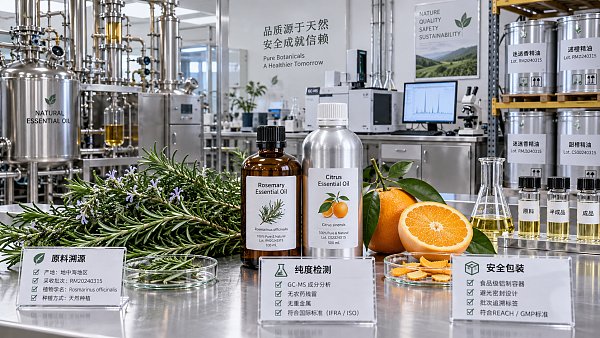
Most commercial Eucalyptus Oil is produced by steam distillation of leaves and twigs. The details of that process matter. Distillation temperature, duration, plant condition, water quality, equipment cleanliness, and storage of the crude oil can all affect the resulting profile. Redistillation or rectification may increase the concentration of selected volatile components and create a cleaner, more standardized material, but it may also reduce some of the fuller botanical character present in a less-processed oil.
Neither approach is universally better. A fine fragrance developer may value a more nuanced natural profile, while a household cleaner manufacturer may prefer a technically standardized high-cineole fraction for predictable performance. The right question is: Does this processing route support the sensory and functional target of our product?
Buyers should also request an explicit declaration if the material is blended, extended, reconstituted, or modified. A blend may be appropriate when it is intentionally designed and transparently specified. It is unsuitable when a buyer believes they are purchasing a single-origin, pure essential oil and receives an undisclosed commercial composition instead.
Use a specification package, not a single COA
A certificate of analysis is necessary, but it is only one document in a sound Eucalyptus Oil qualification process. It normally confirms results for a particular lot; it does not by itself demonstrate traceability, regulatory status, handling quality, or long-term supply capability.
For recurring purchases, request a documentation package proportionate to the intended market and application. This may include a technical data sheet, safety data sheet, certificate of analysis, GC profile, botanical declaration, country-of-origin information, manufacturing statement, allergen declaration where applicable, residual solvent statement if relevant, pesticide-residue information where required, and packaging details. For regulated consumer or food-related uses, the regulatory affairs team should review applicable local requirements before the purchase order is released.
It is wise to distinguish between “documentation available” and “documentation current.” An outdated safety data sheet, a generic chromatogram, or a statement that does not identify the supplied grade can create avoidable problems during audits, customer reviews, or export registration. Procurement should establish document revision expectations and require that each commercial lot is traceable to its own production and quality records.
Application fit changes the buying criteria
Home care, detergents, and industrial cleaning
Here, the oil often supports a clean odor identity as much as functional perception. Assess compatibility with non-ionic or amphoteric surfactants, solvents, alkaline builders, and fragrance solubilization systems. A clear neat oil can still haze, separate, or lose its top note in a water-based cleaner. Small-scale stability testing under heat and cold cycling is more useful than judging the oil from a blotter alone.
Personal care and cosmetic formulations
Skin-contact products require a stricter review of intended use level, fragrance safety considerations, oxidation management, and potential sensitization concerns. Freshly distilled material and material stored for extended periods can behave differently, particularly when oxygen exposure has increased peroxide formation. Consider nitrogen headspace, antioxidant strategy where appropriate, light protection, and a defined retest period.
Fragrance and air care
Odor consistency is often the decisive factor. A purchaser should involve the perfumer or sensory evaluator early, establish an approved reference, and define what level of normal botanical variation is acceptable. The most chemically concentrated grade may not be the most elegant grade in the final accord.
Food-related or flavor applications
Do not assume that an essential oil suitable for fragrance or cleaning use is automatically appropriate for ingestion-related applications. Grade selection must be supported by the relevant food-contact, flavor, purity, labeling, and regulatory assessment for the target country. The supplier should be able to provide application-specific documentation rather than relying on a broad “natural” claim.
Packaging and transport can quietly change oil quality
Even a well-qualified Eucalyptus Oil grade can lose value through poor packaging. Volatile oils are sensitive to heat, light, oxygen, and contamination. The preferred package depends on volume and supply-chain design, but the material should be held in compatible, well-sealed containers with clear lot identification. Buyers should confirm whether drums are internally coated where necessary, whether tamper evidence is used, and how partial containers are managed after opening.
Long transit routes deserve attention. If material will move through hot ports, warehouses, or seasonal temperature extremes, ask how the supplier protects product integrity and whether release testing occurs before shipment. Storage instructions should be realistic for the distributor and manufacturing site, not merely copied from a generic template.
A practical way to compare suppliers
When several suppliers appear to offer the same Eucalyptus Oil grade, build a comparison matrix that gives equal weight to technical and commercial risk. Price per kilogram remains important, but it should sit beside botanical identity, cineole range, GC consistency, odor approval, documentation completeness, origin transparency, lead time, minimum order quantity, packaging, complaint handling, and change-notification practice.
Pay particular attention to change control. Suppliers should notify customers if the botanical source, production location, distillation method, origin mix, specification range, packaging, or testing method changes. Without that discipline, a buyer can unknowingly approve a different material under the same product code.
For strategic programs, begin with a laboratory sample, then a pilot-scale trial, followed by a commercial-lot confirmation. The sequence may feel slower than selecting the lowest-priced offer, but it is usually far less costly than reformulating after a fragrance shift, batch haze, or documentation issue reaches the market.
The purchasing decision should be written before it is negotiated
The strongest Eucalyptus Oil sourcing decisions are made when procurement, quality, formulation, and regulatory teams agree on what “acceptable” means before supplier negotiations begin. A concise internal specification should state the intended application, botanical requirement, chemical limits, sensory standard, documentation package, packaging format, storage conditions, testing responsibilities, and procedure for approving deviations.
FCAS follows the practical factors behind specialty chemical and natural ingredient selection: not just what a material is called, but how it performs, how consistently it can be supplied, and what evidence supports its use. For Eucalyptus Oil buyers, that perspective turns a familiar essential oil into a better-controlled sourcing category.
The right grade is ultimately the one that gives your product the intended character without creating hidden formulation, regulatory, or supply-chain uncertainty. When cineole content, full composition, origin, processing, documentation, and real-use testing are considered together, procurement teams can choose Eucalyptus Oil with greater confidence—and keep that confidence from one production batch to the next.
Related News
 Antioxidants & Natural PreservativesWhat Quality Checks Matter When Sourcing Butylparaben for Personal CareButylparaben for personal care sourcing guide: compare assay, impurities, physical performance, documentation, traceability, and supplier quality to reduce formulation risk.MORE+
 Nano-microcapsule FormulationsHow Encapsulated Flavors Protect Taste During Processing and StorageEncapsulated Flavors protect taste from heat, oxygen, moisture, and storage loss. Explore smarter release, carrier selection, and processing strategies.MORE+
 Chelated Trace Element FertilizersHow Greenhouse Fertigation Systems Reduce Water and Fertilizer WasteGreenhouse fertigation systems reduce water and fertilizer waste with precise dosing, uniform irrigation, drainage monitoring, and smarter crop-zone control. Learn practical strategies.MORE+
 Supercritical CO2 Essential OilsHow Natural Essential Oil Blends Improve Consistent Product FragranceNatural essential oil blends help brands achieve consistent, appealing fragrance across batches. Explore smart blend design, stability testing, and product compatibility strategies.MORE+
 Non-ionic Surfactants & DefoamersHow to Choose Non Ionic Low Foaming Surfactants for CIP CleaningNon ionic low foaming surfactants for CIP cleaning: learn how to balance wetting, foam control, compatibility, and rinseability for reliable cleaning performance.MORE+
 Nano-microcapsule FormulationsHow Food Grade Cyclodextrin Complexes Protect Sensitive FlavorsFood grade cyclodextrin inclusion complexes help protect sensitive flavors from oxidation, evaporation, and processing loss while supporting controlled release and consistent sensory quality.MORE+
 Polymer-Coated Water Soluble NPKHow Fertilizer Coating Polymers Improve NPK Granule ReleaseFertilizer coating polymers for NPK granules improve controlled nutrient release, reduce loss risks, and enhance product consistency. Discover key selection and process insights.MORE+
 Chelated Trace Element FertilizersWhat Diammonium Phosphate Means for Crop Nutrition PlanningDiammonium Phosphate: learn how DAP supports early phosphorus access, nitrogen budgeting, smart placement, and balanced crop nutrition planning.MORE+
 Maillard Reaction Savory FlavorsHow to Assess a Flavor Bases Supplier List for Reliable SourcingGlobal Fine Chemicals & Agrochemical Intelligence Network flavor bases supplier list: assess specs, samples, supply risk, and true cost to source with confidence.MORE+
 Hydrocolloids & EmulsifiersHow Konjac Gum Powder Improves Texture in Low-Calorie FoodsKonjac gum powder improves body, stability, and mouthfeel in low-calorie foods. Discover practical tips for smoother sauces, beverages, and reduced-fat formulations.MORE+
 Supercritical CO2 Essential OilsWhat to Check Before Choosing a Botanical Essential Oils ManufacturerChoose a botanical essential oils manufacturer with confidence. Explore key checks for purity, traceability, compliance, batch consistency, and reliable supply.MORE+
 Microencapsulated FragrancesHow Fragrance Carriers for Detergents Improve Scent PerformanceFragrance carriers for detergents improve stability, fabric deposition, and long-lasting scent. Explore practical solutions for better wash-to-wear fragrance performance.MORE+
 Antioxidants & Natural PreservativesWhen Propyl Gallate Antioxidant Is the Right Choice for Oil StabilityPropyl gallate antioxidant: learn when it is the right choice for oil stability, shelf-life protection, processing compatibility, and smarter formulation decisions.MORE+
 Antioxidants & Natural PreservativesHow Potassium Sorbate Extends Shelf Life in Food and Beverage ProductsPotassium Sorbate helps food and beverage brands control yeast and mold spoilage. Explore pH, dosage, processing, and packaging strategies for reliable shelf life.MORE+
 Antioxidants & Natural PreservativesHow to Source Bulk Herbal Extracts With Reliable Quality ControlBulk herbal extracts sourcing guide: compare suppliers, verify traceability, review CoAs, and build reliable quality controls for safer, consistent purchasing.MORE+
 Antioxidants & Natural PreservativesWhat to Check Before Sourcing Butylparaben for Personal Care FormulasButylparaben for personal care sourcing guide: check market eligibility, purity, supplier controls, formula compatibility, packaging, and total risk before buying.MORE+
 Targeted Bio-pesticides & APIsChoosing Microbial Fungicides for Foliar Diseases in Integrated Crop ProgramsMicrobial fungicides for foliar diseases: learn how to match biology, formulation, tank compatibility, and timing for stronger integrated crop protection.MORE+
 Targeted Bio-pesticides & APIsHow Microbial Insecticides Control Caterpillars With Lower Crop Residue RiskMicrobial insecticides for caterpillars help protect crops with targeted early-larval control and lower residue-management pressure. Learn timing, coverage, compliance, and scouting essentials.MORE+
 Microencapsulated FragrancesHow to Add Encapsulated Laundry Fragrances Without Weakening Wash ResultsEncapsulated laundry fragrances: learn how to boost long-lasting scent while protecting cleaning power, stability, foam control, and fabric care.MORE+
 Supercritical CO2 Essential OilsHow Aroma Ingredients Shape Lasting and Skin-Safe Personal Care ProductsAroma ingredients for personal care: discover how to achieve lasting scent, formulation stability, skin safety, and confident product performance.MORE+
 Targeted Bio-pesticides & APIsInsecticides Explained Through Labels, Active Ingredients, and SafetyInsecticides explained through labels, active ingredients, formulations, and safety. Learn how to compare products, manage risk, and make informed crop protection decisions.MORE+
 Heavy-duty Industrial DegreasersHow to Select Parts Wash Cleaners for Automotive ComponentsParts wash cleaners for automotive components: learn how to match chemistry, materials, rinsing, safety, and waste controls for reliable cleaning results.MORE+
 Chelated Trace Element FertilizersHow Precision Fertigation Systems Improve Water and Nutrient ControlPrecision fertigation systems improve water and nutrient control with accurate dosing, uniform irrigation, smart monitoring, and reduced waste. Discover how to optimize crop performance.MORE+
 Hydrocolloids & EmulsifiersHow Bulk Price Factors Affect Hydrocolloid Stabilizer Blend SourcingHydrocolloid stabilizer blends bulk price: compare dosage efficiency, quality consistency, logistics, and documentation to reduce total sourcing costs.MORE+
 Zero-Calorie Sweeteners & AcidulantsHow to Choose a Natural Sweeteners Supplier for Clean-Label ProductsNatural sweeteners supplier selection guide for clean-label products: compare formulation fit, traceability, documentation, and supply reliability.MORE+
 Non-ionic Surfactants & DefoamersWhat Cationic Surfactants Do and Where They Are UsedCationic Surfactants deliver antimicrobial action, conditioning, antistatic control, and surface treatment benefits. Explore key uses, compatibility, and safe selection tips.MORE+
 Targeted Bio-pesticides & APIsHow to Evaluate Pesticide Suspension Concentrates for Field StabilityPesticide Suspension Concentrates: learn how to evaluate field stability, redispersibility, dilution, tank-mix compatibility, and spray safety for reliable performance.MORE+
 Hydrocolloids & EmulsifiersHow Hydrocolloid Systems for Meat Products Improve Texture and YieldHydrocolloid systems for meat products improve yield, texture, water retention, and slicing quality. Explore practical formulation strategies for stable, high-performing meat products.MORE+
 Microencapsulated FragrancesHow Laundry Fragrances for Liquid Detergents Improve Scent LongevityLaundry fragrances for liquid detergents: discover how fragrance design, deposition, and encapsulation create lasting fabric freshness and stronger product appeal.MORE+
 Nano-microcapsule FormulationsChoosing Fragrance Preparations That Perform Well in Personal WashFragrance preparations for personal wash: learn how to select options that protect clarity, stability, foam, scent performance, and packaging compatibility.MORE+
 Controlled-Release ThermodynamicsModified Cyclodextrins Explained for Controlled Fragrance ReleaseModified cyclodextrins enable controlled fragrance release, odor control, and volatile-note protection. Explore how they optimize performance in detergents, fabric care, and more.MORE+
 Microencapsulated FragrancesHow Fragrance Delivery Systems Improve Fabric Softener LongevityFragrance delivery systems for fabric softeners improve scent longevity through smart protection, reliable deposition, and controlled release for lasting freshness.MORE+
 Supercritical CO2 Essential OilsHow to Evaluate a Natural Cardamom Oil Supplier for Reliable SupplyNatural cardamom oil supplier evaluation guide: verify botanical origin, purity, batch consistency, documentation, packaging, and delivery reliability for confident sourcing.MORE+
 Maillard Reaction Savory FlavorsHow Ethyl Maltol Purity Testing Supports Flavor Safety ComplianceEthyl Maltol purity testing strengthens flavor safety compliance through identity checks, impurity profiling, supplier verification, and audit-ready documentation.MORE+
 Microencapsulated FragrancesEssential Oil Extracts Compared for Fragrance and Wellness UsesEssential Oil Extracts compared for fragrance and wellness: explore scent profiles, extraction methods, stability, safety, and sourcing insights for smarter formulation choices.MORE+
 Zero-Calorie Sweeteners & AcidulantsWhat Drives Zero Calorie Sweeteners Bulk Price in 2026Zero calorie sweeteners bulk price in 2026: compare specifications, dosage, quality, freight, and supply risk to make smarter sourcing decisions.MORE+
 EPA FIFRA & FDA GRAS RegsSynthetic Food Preservatives Rules That Support Safer FormulasSynthetic Food Preservatives: learn the rules for safer formulas, compliant use levels, validated shelf life, labeling, and reliable microbial control.MORE+
 Micelle Fluidics & ChelationHow Anionic Industrial Dispersants Improve Coating StabilityAnionic industrial dispersants improve coating stability, pigment wetting, viscosity control, gloss, and storage performance. Learn how to select and test the right solution.MORE+
 Supercritical CO2 Essential OilsHow to Choose Eucalyptus Oil Grades for Clean, Consistent ProductsChoose the right Eucalyptus Oil grade with confidence. Compare cineole content, purity, origin, processing, documentation, and application fit for consistent products.MORE+
 Micelle Fluidics & ChelationWhat Are Cationic Surfactants and Where Are They Commonly Used?Cationic Surfactants deliver powerful surface affinity for disinfection, fabric softening, hair conditioning, antistatic control, and industrial treatments. Explore key uses and selection factors.MORE+