
How Locust Bean Gum Thickener Improves Texture and Stability
A sauce that looks smooth in the kettle can become thin, grainy, or visibly separated after filling. A dairy-style dessert may set unevenly, while a frozen product develops an icy, weak body after storage. In these situations, the thickener is often blamed first, but the real issue may be hydration, ingredient order, temperature exposure, or an unsuitable hydrocolloid combination.
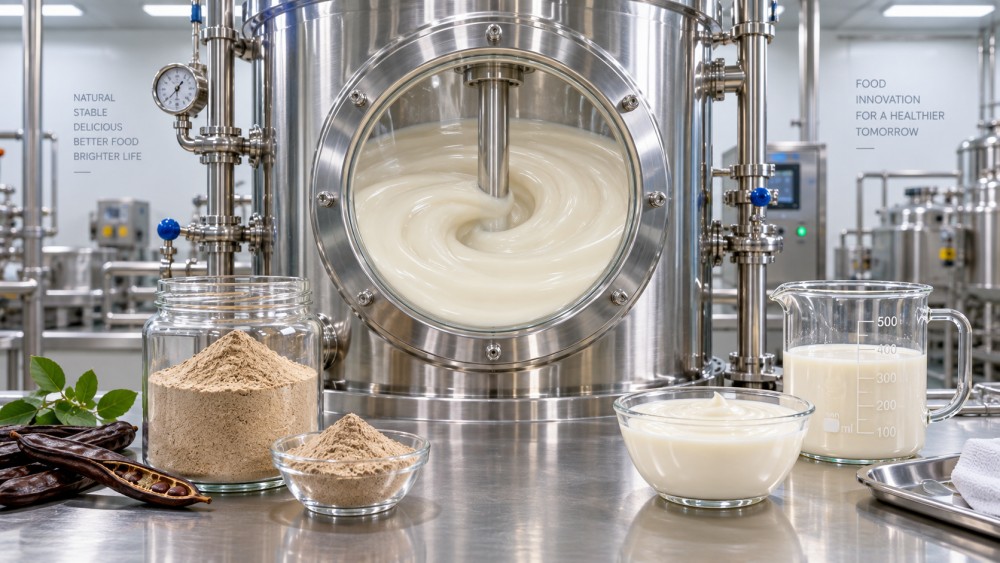
A locust bean gum thickener improves texture and stability mainly by binding water and building viscosity in the continuous phase of a formulation. It is particularly useful where a fuller mouthfeel, reduced serum separation, better suspension, or improved freeze-thaw behavior is needed. Its strongest performance usually comes from correct dispersion and complete hydration, often together with a compatible gum such as xanthan gum or carrageenan rather than from simply adding more powder.
Where texture and stability begin to fail
Locust bean gum, also called carob bean gum, is a galactomannan hydrocolloid obtained from the seed endosperm of the carob tree. In practical processing, it does not behave like an instant thickener that reaches its final viscosity as soon as it contacts water. It needs proper wetting and sufficient heat exposure to hydrate effectively. When this condition is missed, the batch can appear acceptable during mixing but lose viscosity later, show undissolved particles, or have inconsistent texture from one production run to the next.
The material is commonly selected for foods that need body without an overly sticky or sharply elastic texture. It can support sauces, dressings, dairy systems, plant-based products, desserts, bakery fillings, frozen foods, and certain beverage or nutritional formulations. The desired result is not always a visibly thick product. In many applications, the goal is a cleaner spoon feel, better water retention, slower settling, or a more stable texture through processing and storage.
The first practical question is therefore not “How much gum should be added?” but “What failure mode needs to be controlled?” A formulation with whey-off needs a different approach from a formulation with poor suspension. A product that becomes thin after reheating may have a hydration or shear issue, while a frozen dessert with large ice crystals may need better water management and a revised stabilizer system.
What locust bean gum changes inside a formulation
Once hydrated, locust bean gum increases the viscosity of the water phase and limits the mobility of free water. This can slow the movement of dispersed particles, droplets, and dissolved components. In a sauce, that may reduce the tendency of spices or vegetable particles to settle. In a dairy or plant-based dessert, it can help control separation and create a more rounded body. In frozen systems, its water-binding contribution can help moderate texture changes associated with ice formation and temperature fluctuation.
Its effect is not limited to thickness. A well-chosen hydrocolloid system can influence several connected properties:
- Perceived creaminess and body without relying only on higher fat or solids levels
- Resistance to water separation during storage
- Suspension of cocoa, fibers, fruit particles, or mineral ingredients
- Consistency between warm processing, cooled filling, and final consumption
- Texture retention after freezing, thawing, or reheating, depending on the full formulation
These benefits depend on the rest of the recipe. Acidity, salt content, protein type, sugar level, fat level, particulate load, processing time, and packaging conditions can all change the final result. Locust bean gum is not a universal repair for a weak formulation; it is a tool that works best when the source of instability has been identified.
Hydration is usually the deciding step
The most frequent operational mistake is treating locust bean gum as though it hydrates fully in cool water. It can disperse in a cold phase, but full functionality normally requires a suitable heating stage. The exact temperature and holding conditions depend on the gum grade, particle size, formulation composition, and supplier guidance. A process that does not provide enough thermal energy may produce a batch with incomplete viscosity development.
Dry clumps are another common problem. When gum powder hits water too quickly, the outside of each particle can hydrate first and form a gel-like shell. Water then has difficulty reaching the dry powder trapped inside. These “fish eyes” may remain visible, or they may break into small particles that create a rough texture later.
Build a dispersion step before full hydration
A reliable process separates dispersion from hydration. The gum should be introduced in a way that spreads particles through the liquid before they begin to swell. In many operations, this means preblending the gum with compatible dry ingredients such as sugar, starch, salt, or another powdered component before adding it slowly to a well-agitated liquid. The appropriate carrier depends on the formula; the aim is to separate gum particles rather than create a fixed recipe rule.
Where a dry premix is not suitable, controlled powder induction and adequate agitation become more important. Adding the entire gum charge at once into a low-movement vessel is likely to create lumps. High shear can help break agglomerates during incorporation, but excessive shear later in the process may alter the texture of a completed system, especially when other hydrocolloids, proteins, or emulsified fat structures are involved.
- Review the gum grade and the hydration conditions stated for that material.
- Decide whether the gum will be dry blended, pre-dispersed, or inducted directly into the liquid phase.
- Establish sufficient agitation before powder addition begins.
- Add gradually, keeping the powder stream manageable rather than allowing a large surface raft to form.
- Heat and hold the batch under the conditions needed for hydration.
- Evaluate viscosity after the product has cooled to its relevant filling or use temperature.
Testing only the hot batch can lead to incorrect conclusions. Some formulations change significantly as they cool, particularly where starch, protein, carrageenan, or other gums are present. The final assessment should match the actual product condition: chilled, ambient, frozen, reheated, or diluted by end use.
Using synergy instead of forcing viscosity with a higher dose
Locust bean gum is often combined with other hydrocolloids because it can create useful synergistic effects. This is especially relevant when the product needs structure, not simply a thicker liquid. A blend may provide better stability at a lower overall gum load than locust bean gum alone, while also giving a more suitable mouthfeel.
Synergy is useful, but it also means that small formulation changes can become more noticeable. A blend that performs well in a neutral dairy base may behave differently in an acidic fruit preparation. A formula that holds particles well may become too elastic or difficult to pump after a gum ratio changes. For this reason, trials should compare the full stabilizer system, not just one ingredient at a time.
Match the gum system to the product problem
When a sauce separates after filling
First confirm whether the separation is water release, oil separation, or settling of solids. Locust bean gum can support the aqueous phase and improve body, but it does not replace a properly designed emulsifier system where oil-water emulsion stability is the main issue. Examine the order of oil addition, emulsification energy, particle size, salt level, and cooling rate alongside gum hydration.
If the product is a particulate sauce, the target may be suspension rather than maximum viscosity. An excessively thick base can still allow larger particles to settle if the flow behavior is not appropriate. A combined gum system may provide better low-shear support while keeping the product manageable during pumping and filling.
When a dairy or plant-based product releases water
Water separation can result from a weak protein network, insufficient total solids, pH movement, temperature cycling, or an incompatible stabilizer blend. Locust bean gum can contribute water binding and a fuller texture, but the process should be reviewed from mixing through cooling. In protein-containing products, adding the gum at the wrong point or applying an unsuitable heat treatment can create instability that cannot be corrected by a later viscosity adjustment.
Plant-based systems deserve separate attention because proteins, fibers, oils, and minerals vary widely by raw material source. A stabilizer that works in one base may show sedimentation, creaming, or weak mouthfeel in another. Bench trials should include the intended heat process and realistic storage conditions, not only a freshly prepared sample.
When a frozen product becomes coarse or weak
In frozen desserts and similar products, locust bean gum is valued for its contribution to body and water control. Yet the final texture also depends on solids balance, fat structure, overrun where relevant, freezing rate, and storage temperature stability. A gum adjustment may improve resistance to coarse texture, but it cannot fully compensate for repeated temperature abuse or a poorly balanced frozen matrix.
Signs that the process needs adjustment
Operators can often narrow down the source of a problem by observing when it appears. A grainy appearance immediately after mixing suggests poor dispersion. Viscosity that remains low after the heating stage points toward incomplete hydration, incorrect addition sequence, or a gum grade mismatch. A product that thickens more than expected after cooling may indicate interaction with other gums, starches, or proteins. A batch that looks uniform at filling but separates later needs a broader stability review rather than a simple dose increase.
- Visible specks or gel particles: inspect powder induction, agitation pattern, and dry preblend quality.
- Low body after heating: verify time-temperature exposure and whether the gum was fully dispersed before hydration.
- Overly heavy or gummy mouthfeel: review total hydrocolloid load and interactions with starch or xanthan gum.
- Variable batch texture: check weighing accuracy, raw material consistency, mixing order, and actual vessel temperature.
- Settling despite high viscosity: assess particle size, density difference, and the need for a different flow profile.
Trial work should reflect the real production route
A useful trial plan starts with a control batch and changes one meaningful variable at a time. That variable may be gum level, blend ratio, addition method, hydration temperature, holding time, or the point at which acids, salts, proteins, or flavors are added. Changing several factors together can produce a better sample but make it impossible to know why it improved.
Evaluate more than thickness. Record mixing behavior, foam generation, heat response, pumpability, filling appearance, cooled texture, and storage observations. For products that are reheated, frozen, or exposed to temperature cycling, include those conditions before choosing a final formula. The best result is not necessarily the sample with the highest apparent viscosity; it is the one that remains stable while delivering the intended eating, pouring, or processing behavior.
Specification review also matters. Different locust bean gum grades can vary in particle size, hydration characteristics, microbiological requirements, and suitability for particular processing conditions. Before transferring a formulation to larger equipment, confirm the material documentation, storage conditions, and handling instructions for the grade being used. This reduces the risk of treating a raw-material difference as a processing mystery.
Used with a controlled dispersion and heating step, locust bean gum can be a practical way to improve body, water management, and texture consistency. The most dependable results come from matching it to the actual instability mechanism, then testing the complete formulation under the same conditions it will face after production.
Related News
 Antioxidants & Natural PreservativesWhat Quality Checks Matter When Sourcing Butylparaben for Personal CareButylparaben for personal care sourcing guide: compare assay, impurities, physical performance, documentation, traceability, and supplier quality to reduce formulation risk.MORE+
 Nano-microcapsule FormulationsHow Encapsulated Flavors Protect Taste During Processing and StorageEncapsulated Flavors protect taste from heat, oxygen, moisture, and storage loss. Explore smarter release, carrier selection, and processing strategies.MORE+
 Chelated Trace Element FertilizersHow Greenhouse Fertigation Systems Reduce Water and Fertilizer WasteGreenhouse fertigation systems reduce water and fertilizer waste with precise dosing, uniform irrigation, drainage monitoring, and smarter crop-zone control. Learn practical strategies.MORE+
 Supercritical CO2 Essential OilsHow Natural Essential Oil Blends Improve Consistent Product FragranceNatural essential oil blends help brands achieve consistent, appealing fragrance across batches. Explore smart blend design, stability testing, and product compatibility strategies.MORE+
 Non-ionic Surfactants & DefoamersHow to Choose Non Ionic Low Foaming Surfactants for CIP CleaningNon ionic low foaming surfactants for CIP cleaning: learn how to balance wetting, foam control, compatibility, and rinseability for reliable cleaning performance.MORE+
 Nano-microcapsule FormulationsHow Food Grade Cyclodextrin Complexes Protect Sensitive FlavorsFood grade cyclodextrin inclusion complexes help protect sensitive flavors from oxidation, evaporation, and processing loss while supporting controlled release and consistent sensory quality.MORE+
 Polymer-Coated Water Soluble NPKHow Fertilizer Coating Polymers Improve NPK Granule ReleaseFertilizer coating polymers for NPK granules improve controlled nutrient release, reduce loss risks, and enhance product consistency. Discover key selection and process insights.MORE+
 Chelated Trace Element FertilizersWhat Diammonium Phosphate Means for Crop Nutrition PlanningDiammonium Phosphate: learn how DAP supports early phosphorus access, nitrogen budgeting, smart placement, and balanced crop nutrition planning.MORE+
 Maillard Reaction Savory FlavorsHow to Assess a Flavor Bases Supplier List for Reliable SourcingGlobal Fine Chemicals & Agrochemical Intelligence Network flavor bases supplier list: assess specs, samples, supply risk, and true cost to source with confidence.MORE+
 Hydrocolloids & EmulsifiersHow Konjac Gum Powder Improves Texture in Low-Calorie FoodsKonjac gum powder improves body, stability, and mouthfeel in low-calorie foods. Discover practical tips for smoother sauces, beverages, and reduced-fat formulations.MORE+
 Supercritical CO2 Essential OilsWhat to Check Before Choosing a Botanical Essential Oils ManufacturerChoose a botanical essential oils manufacturer with confidence. Explore key checks for purity, traceability, compliance, batch consistency, and reliable supply.MORE+
 Microencapsulated FragrancesHow Fragrance Carriers for Detergents Improve Scent PerformanceFragrance carriers for detergents improve stability, fabric deposition, and long-lasting scent. Explore practical solutions for better wash-to-wear fragrance performance.MORE+
 Antioxidants & Natural PreservativesWhen Propyl Gallate Antioxidant Is the Right Choice for Oil StabilityPropyl gallate antioxidant: learn when it is the right choice for oil stability, shelf-life protection, processing compatibility, and smarter formulation decisions.MORE+
 Antioxidants & Natural PreservativesHow Potassium Sorbate Extends Shelf Life in Food and Beverage ProductsPotassium Sorbate helps food and beverage brands control yeast and mold spoilage. Explore pH, dosage, processing, and packaging strategies for reliable shelf life.MORE+
 Antioxidants & Natural PreservativesHow to Source Bulk Herbal Extracts With Reliable Quality ControlBulk herbal extracts sourcing guide: compare suppliers, verify traceability, review CoAs, and build reliable quality controls for safer, consistent purchasing.MORE+
 Antioxidants & Natural PreservativesWhat to Check Before Sourcing Butylparaben for Personal Care FormulasButylparaben for personal care sourcing guide: check market eligibility, purity, supplier controls, formula compatibility, packaging, and total risk before buying.MORE+
 Targeted Bio-pesticides & APIsChoosing Microbial Fungicides for Foliar Diseases in Integrated Crop ProgramsMicrobial fungicides for foliar diseases: learn how to match biology, formulation, tank compatibility, and timing for stronger integrated crop protection.MORE+
 Targeted Bio-pesticides & APIsHow Microbial Insecticides Control Caterpillars With Lower Crop Residue RiskMicrobial insecticides for caterpillars help protect crops with targeted early-larval control and lower residue-management pressure. Learn timing, coverage, compliance, and scouting essentials.MORE+
 Microencapsulated FragrancesHow to Add Encapsulated Laundry Fragrances Without Weakening Wash ResultsEncapsulated laundry fragrances: learn how to boost long-lasting scent while protecting cleaning power, stability, foam control, and fabric care.MORE+
 Supercritical CO2 Essential OilsHow Aroma Ingredients Shape Lasting and Skin-Safe Personal Care ProductsAroma ingredients for personal care: discover how to achieve lasting scent, formulation stability, skin safety, and confident product performance.MORE+
 Targeted Bio-pesticides & APIsInsecticides Explained Through Labels, Active Ingredients, and SafetyInsecticides explained through labels, active ingredients, formulations, and safety. Learn how to compare products, manage risk, and make informed crop protection decisions.MORE+
 Heavy-duty Industrial DegreasersHow to Select Parts Wash Cleaners for Automotive ComponentsParts wash cleaners for automotive components: learn how to match chemistry, materials, rinsing, safety, and waste controls for reliable cleaning results.MORE+
 Chelated Trace Element FertilizersHow Precision Fertigation Systems Improve Water and Nutrient ControlPrecision fertigation systems improve water and nutrient control with accurate dosing, uniform irrigation, smart monitoring, and reduced waste. Discover how to optimize crop performance.MORE+
 Hydrocolloids & EmulsifiersHow Bulk Price Factors Affect Hydrocolloid Stabilizer Blend SourcingHydrocolloid stabilizer blends bulk price: compare dosage efficiency, quality consistency, logistics, and documentation to reduce total sourcing costs.MORE+
 Zero-Calorie Sweeteners & AcidulantsHow to Choose a Natural Sweeteners Supplier for Clean-Label ProductsNatural sweeteners supplier selection guide for clean-label products: compare formulation fit, traceability, documentation, and supply reliability.MORE+
 Non-ionic Surfactants & DefoamersWhat Cationic Surfactants Do and Where They Are UsedCationic Surfactants deliver antimicrobial action, conditioning, antistatic control, and surface treatment benefits. Explore key uses, compatibility, and safe selection tips.MORE+
 Targeted Bio-pesticides & APIsHow to Evaluate Pesticide Suspension Concentrates for Field StabilityPesticide Suspension Concentrates: learn how to evaluate field stability, redispersibility, dilution, tank-mix compatibility, and spray safety for reliable performance.MORE+
 Hydrocolloids & EmulsifiersHow Hydrocolloid Systems for Meat Products Improve Texture and YieldHydrocolloid systems for meat products improve yield, texture, water retention, and slicing quality. Explore practical formulation strategies for stable, high-performing meat products.MORE+
 Microencapsulated FragrancesHow Laundry Fragrances for Liquid Detergents Improve Scent LongevityLaundry fragrances for liquid detergents: discover how fragrance design, deposition, and encapsulation create lasting fabric freshness and stronger product appeal.MORE+
 Nano-microcapsule FormulationsChoosing Fragrance Preparations That Perform Well in Personal WashFragrance preparations for personal wash: learn how to select options that protect clarity, stability, foam, scent performance, and packaging compatibility.MORE+
 Controlled-Release ThermodynamicsModified Cyclodextrins Explained for Controlled Fragrance ReleaseModified cyclodextrins enable controlled fragrance release, odor control, and volatile-note protection. Explore how they optimize performance in detergents, fabric care, and more.MORE+
 Microencapsulated FragrancesHow Fragrance Delivery Systems Improve Fabric Softener LongevityFragrance delivery systems for fabric softeners improve scent longevity through smart protection, reliable deposition, and controlled release for lasting freshness.MORE+
 Supercritical CO2 Essential OilsHow to Evaluate a Natural Cardamom Oil Supplier for Reliable SupplyNatural cardamom oil supplier evaluation guide: verify botanical origin, purity, batch consistency, documentation, packaging, and delivery reliability for confident sourcing.MORE+
 Maillard Reaction Savory FlavorsHow Ethyl Maltol Purity Testing Supports Flavor Safety ComplianceEthyl Maltol purity testing strengthens flavor safety compliance through identity checks, impurity profiling, supplier verification, and audit-ready documentation.MORE+
 Microencapsulated FragrancesEssential Oil Extracts Compared for Fragrance and Wellness UsesEssential Oil Extracts compared for fragrance and wellness: explore scent profiles, extraction methods, stability, safety, and sourcing insights for smarter formulation choices.MORE+
 Zero-Calorie Sweeteners & AcidulantsWhat Drives Zero Calorie Sweeteners Bulk Price in 2026Zero calorie sweeteners bulk price in 2026: compare specifications, dosage, quality, freight, and supply risk to make smarter sourcing decisions.MORE+
 EPA FIFRA & FDA GRAS RegsSynthetic Food Preservatives Rules That Support Safer FormulasSynthetic Food Preservatives: learn the rules for safer formulas, compliant use levels, validated shelf life, labeling, and reliable microbial control.MORE+
 Micelle Fluidics & ChelationHow Anionic Industrial Dispersants Improve Coating StabilityAnionic industrial dispersants improve coating stability, pigment wetting, viscosity control, gloss, and storage performance. Learn how to select and test the right solution.MORE+
 Supercritical CO2 Essential OilsHow to Choose Eucalyptus Oil Grades for Clean, Consistent ProductsChoose the right Eucalyptus Oil grade with confidence. Compare cineole content, purity, origin, processing, documentation, and application fit for consistent products.MORE+
 Micelle Fluidics & ChelationWhat Are Cationic Surfactants and Where Are They Commonly Used?Cationic Surfactants deliver powerful surface affinity for disinfection, fabric softening, hair conditioning, antistatic control, and industrial treatments. Explore key uses and selection factors.MORE+







































