How Does Food Grade Gum Arabic Stabilize Beverages?
Food grade gum arabic helps stabilize beverages by forming a protective layer around dispersed oil droplets, reducing their tendency to merge and separate.
Its performance depends on factors such as ingredient quality, emulsion processing, acidity, and storage conditions. These interactions matter when assessing flavor emulsions, appearance, and shelf-life stability.
For technical evaluators, gum arabic is most useful when an oil-containing beverage needs a stable emulsion without a substantial increase in viscosity.
However, its presence alone does not guarantee stability. A suitable grade, effective homogenization, and testing in the finished beverage are all essential.
How Does Gum Arabic Keep Beverage Emulsions Stable?
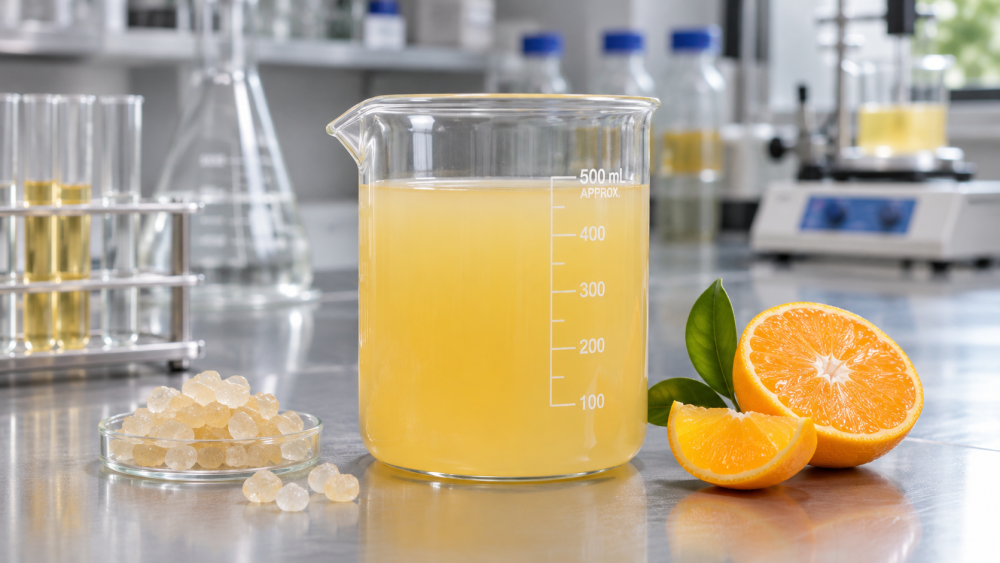
Many beverage flavors contain citrus oils or other hydrophobic ingredients that do not dissolve readily in water. Without an effective emulsion, they can separate during storage.
Gum arabic is a complex mixture of polysaccharides and glycoproteins obtained from acacia trees. Its emulsifying activity is associated particularly with its protein-containing components.
During homogenization, these components adsorb at the oil–water interface. They help reduce interfacial tension and form a protective layer around newly created oil droplets.
The layer creates a physical barrier that makes droplets less likely to merge when they collide. Electrostatic repulsion can also contribute, depending on formulation conditions.
By limiting droplet coalescence, gum arabic helps preserve the distribution of flavor oil and supports a more consistent appearance throughout the intended shelf life.
It does not necessarily prevent every form of separation. Droplets can still move upward under gravity, particularly when their density differs substantially from the surrounding liquid.
Which Beverage Problems Can Gum Arabic Help Control?
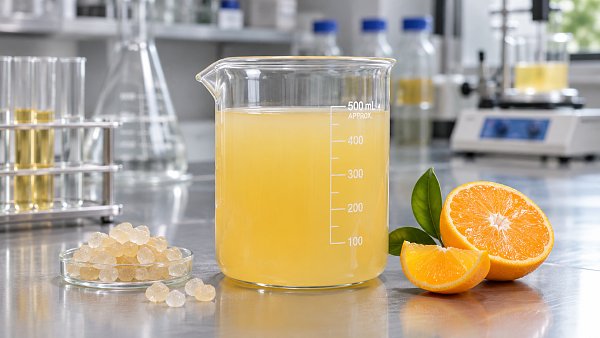
In citrus-flavored soft drinks, gum arabic can stabilize an oil-in-water flavor emulsion that is diluted into the finished product during manufacturing.
In cloudy beverages, it can help maintain a stable emulsion-based cloud. The desired result may be persistent turbidity rather than a visually clear drink.
In flavored waters, performance must be judged against the target appearance. An emulsion that remains stable may still produce more haze than the product concept allows.
Gum arabic can also carry emulsified flavor oils in some beverage bases. Its suitability depends on the complete formulation, including other stabilizers and processing conditions.
Its relatively low viscosity at useful solids levels is valuable when formulators need a drinkable texture and want to avoid the thickness associated with some hydrocolloids.
These benefits relate primarily to physical stability. Gum arabic should not be treated as a substitute for microbial control, flavor oxidation management, or appropriate packaging.
What Determines Whether an Emulsion Stays Stable?
Emulsion stability depends on the properties of the gum, oil phase, water phase, and manufacturing process. Evaluating any one factor in isolation can be misleading.
Gum quality and emulsifying capacity
Gum arabic is a natural material, so composition can vary with botanical source, growing conditions, processing, and batch. Food-grade status alone does not establish emulsifying performance.
The amount and behavior of protein-containing fractions influence interfacial performance. Total protein can be a useful comparison point, but it does not independently predict stability.
Ask suppliers how a grade is intended to perform in beverage emulsions and whether its specifications include functional testing or controls relevant to that application.
Droplet size and distribution
Homogenization breaks the oil phase into droplets. A suitably fine, consistent distribution generally slows creaming and can improve the physical stability of the finished beverage.
Smaller droplets also create more total surface area. If insufficient gum is available to cover that surface, newly formed droplets may merge during or after processing.
Therefore, increasing homogenization pressure is not automatically beneficial. The appropriate setting depends on gum concentration, oil loading, equipment, temperature, and the desired droplet distribution.
Acidity, minerals, and other ingredients
Acidic beverages are common applications for gum arabic, but pH can affect interfacial behavior and interactions with other components. Test the actual acid system and range.
Mineral content and ionic strength may influence droplet interactions or compatibility with other ingredients. Evaluate these effects when using fortified waters, electrolytes, or mineral-rich water.
Colorants, sweeteners, preservatives, proteins, and other hydrocolloids can change the formulation environment. Add them during validation rather than assuming the flavor emulsion will behave unchanged.
Temperature and storage
Heat treatment, cold storage, freezing, and temperature fluctuations can change emulsion behavior. The relevant challenges depend on the production process and distribution route.
Light and oxygen exposure may also affect flavor quality. Physical separation and chemical flavor deterioration should be assessed separately because they have different causes and controls.
How Should Technical Teams Evaluate a Gum Arabic Grade?
Begin with the product brief: define the oil or flavor system, target appearance, processing conditions, packaging, intended markets, and required shelf life.
Then compare candidate grades using the same formulation and process. A meaningful comparison controls variables that might otherwise hide differences in ingredient performance.
Request a current specification, certificate of analysis, food safety documentation, storage guidance, and information about botanical source and intended beverage applications.
Review moisture, microbiological limits, relevant contaminant limits, solubility, and any functional parameters specified by the supplier. Confirm that limits match internal requirements and destination markets.
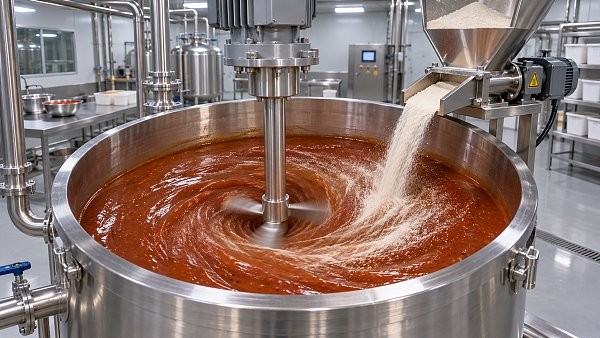
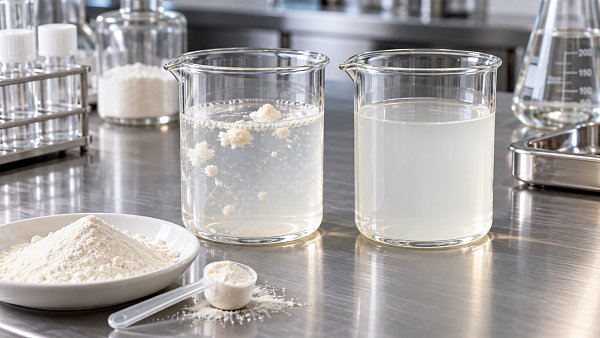
Inspect the material during hydration as well. Slow wetting, persistent lumps, excessive foam, or variable dissolution can affect batch preparation and production consistency.
For each candidate, prepare replicate emulsions with documented gum concentration, oil composition, mixing sequence, homogenization settings, and processing temperature.
Compare initial droplet size distribution, appearance, viscosity, and pH. Retain samples for storage testing, because a good initial result does not establish shelf-life performance.
Where possible, include a qualified reference grade or current commercial emulsion. A control makes changes easier to interpret than an isolated pass-or-fail result.
How Much Gum Arabic Is Needed in a Beverage Emulsion?
There is no universal dosage. The required amount depends on oil loading, oil composition, gum functionality, droplet size target, processing equipment, and stability requirements.
Evaluate concentration in the emulsion concentrate separately from concentration in the finished beverage. Confusing these two values can lead to incorrect comparisons and scale-up calculations.
Start with the supplier’s recommended range for the specific grade and application, then test several gum-to-oil ratios around that recommendation.
At each ratio, measure both initial performance and changes during storage. The lowest-cost formula is useful only if it meets the required stability and sensory targets.
Excess gum may increase solids, preparation time, and ingredient cost without delivering a proportional benefit. Insufficient gum may leave droplets inadequately protected.
When comparing alternatives, calculate cost per acceptable finished beverage, including use level, yield, processing requirements, and losses associated with failed batches.
What Should a Practical Stability Test Include?
A useful program examines both the concentrated emulsion and the finished beverage. Dilution can change droplet interactions, acidity, mineral exposure, and visible appearance.
Store representative samples under expected warehouse and distribution conditions. Add elevated-temperature or temperature-cycling tests where relevant, while recognizing that accelerated tests may change failure mechanisms.
Define inspection intervals and acceptance limits before testing. Where shelf life is critical, support accelerated results with real-time storage data in representative packaging.
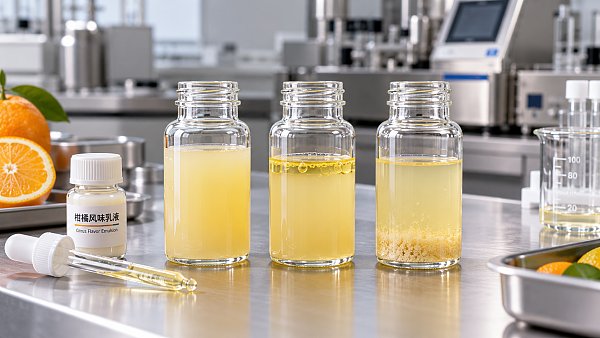
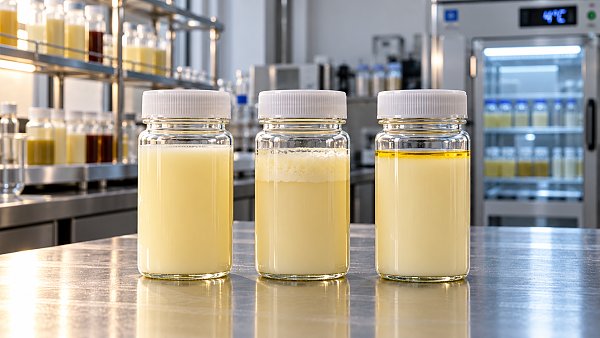
Use a consistent visual method to check for a surface ring, oil layer, sediment, cloud changes, or visible flocculation. Record the extent and timing.
Measure droplet size distribution over time where equipment is available. An increase can indicate aggregation or coalescence, although additional analysis may be needed to distinguish them.
Track turbidity or cloud, pH, and viscosity when they relate to product requirements. Assess flavor and aroma using an appropriate sensory method and panel.
Check microbiological quality under the product’s established food safety program. A physically stable beverage can still fail microbiological or chemical quality requirements.
Test final packaging and headspace conditions where possible. Interaction with packaging, oxygen exposure, and light transmission can affect the product during its intended shelf life.
How Can Teams Troubleshoot Common Stability Failures?
Creaming or a visible surface ring
A surface ring may reflect upward movement of droplets rather than immediate oil separation. Examine droplet size and the density difference between phases.
Review homogenization efficiency, oil composition, and whether an appropriately sized droplet distribution is achieved. In some systems, a permitted weighting agent may help reduce density differences.
Confirm that any weighting agent is authorized for the intended beverage and market, and assess its effect on flavor, labeling, and processing.
Oil separation or rising droplet size
Oil separation may indicate coalescence caused by inadequate interfacial coverage, unsuitable processing, or ingredient incompatibility. Compare the initial emulsion with stored samples.
Check gum hydration and gum-to-oil ratio first, then investigate mixing order, homogenization conditions, and changes introduced by acids, minerals, or other ingredients.
Unexpected haze or cloud loss
If a clear-looking drink becomes hazy, determine whether the haze comes from emulsion droplets, precipitated ingredients, or another source before changing the gum level.
If a cloudy drink loses opacity, examine droplet movement and changes in particle distribution. A visually stable concentrate can behave differently after beverage dilution.
Batch-to-batch variation
Investigate raw material lots alongside water quality, hydration time, mixing energy, temperature, and homogenizer condition. Record each variable in a structured production history.
If the gum is implicated, compare retained samples against agreed specifications and functional tests. Work with the supplier to identify the source of variation.
What Are the Regulatory and Sourcing Considerations?
Gum arabic is also known as acacia gum and is identified as E414 in the European Union. Naming and labeling requirements vary by jurisdiction.
Confirm the applicable identity specification, permitted use, labeling rules, and any use conditions for the particular beverage category and destination market.
Do not assume that a supplier’s general food-grade claim establishes compliance everywhere. Obtain documentation relevant to each market and review it with regulatory specialists.
For supply qualification, consider traceability, lot consistency, packaging integrity, storage conditions, lead times, and the supplier’s ability to investigate technical complaints.
A second source can reduce supply risk, but alternative grades should be qualified through the same formulation and shelf-life tests before substitution.
When Is Gum Arabic a Good Choice?
Food grade gum arabic is a strong candidate for oil-containing beverage emulsions when low viscosity, flavor dispersion, and a stable cloud are important.
Its value depends on the complete system: a suitable grade must work with the oil phase, process, beverage ingredients, packaging, and distribution conditions.
Technical teams can make a sound selection by comparing grades at realistic use levels, measuring changes during storage, and checking regulatory and supply documentation.
The most reliable decision is based on performance in the finished beverage over its intended shelf life, supported by repeatable manufacturing and clear acceptance criteria.
Facing technical bottlenecks in manufacturing or looking for more efficient industrial solutions? Leave your details below and let the engineering experts at FCAS solve them for you.
We respect your privacy. Your information is strictly confidential.
Related News
 Hydrocolloids & EmulsifiersHow Does Food Grade Gum Arabic Stabilize Beverages?Discover how food grade gum arabic stabilizes beverage emulsions, supports consistent appearance, and helps formulators select the right grade for reliable shelf life.MORE+
 Hydrocolloids & EmulsifiersHow Does Agar Work as a Gelling Agent in Food?Discover how agar transforms liquids into firm gels, what affects texture and setting, and how to troubleshoot common problems in food formulations.MORE+
 Hydrocolloids & EmulsifiersHow Do Hydrocolloid Gums Improve Texture and Stability in Foods?Discover how hydrocolloid gums improve food texture and stability, and learn how to choose the right gum for your formulation.MORE+
 Hydrocolloids & EmulsifiersHow to Use Hydrocolloid Stabilizer Blends for SaucesDiscover how to use hydrocolloid stabilizer blends for sauces to improve texture, prevent separation, and achieve consistent results from trial to production.MORE+
 Hydrocolloids & EmulsifiersWhat to Look for in a Konjac Gum ManufacturerChoosing a konjac gum manufacturer? Learn how to assess quality, consistency, food safety, pricing, and supply reliability before you buy.MORE+
 Hydrocolloids & EmulsifiersHow to Choose Flavor Carriers for Spray Dried FlavorsChoose flavor carriers for spray dried flavors with confidence. Compare maltodextrin, gum arabic and modified starch for retention, stability and release.MORE+
 Hydrocolloids & EmulsifiersHow to Use Tara Gum for Dessert Toppings With Better StabilityDiscover how to use tara gum for dessert toppings to improve texture and stability, with practical hydration, formulation, and testing tips.MORE+
 Hydrocolloids & EmulsifiersHow Seaweed Extract Hydrocolloids Improve Food TextureSeaweed Extract Hydrocolloids improve food texture and stability. Discover how alginate, carrageenan, and agar perform in real formulations.MORE+
 Hydrocolloids & EmulsifiersWhat to Check Before Buying Carboxymethyl Cellulose WholesaleBuying carboxymethyl cellulose wholesale? Learn how to compare grades, supplier documents, performance and delivered costs before placing your order.MORE+
 Hydrocolloids & EmulsifiersHow Cocamidopropyl Betaine Improves Foam in Bath ProductsDiscover how cocamidopropyl betaine for bath products can enhance foam, support a creamy lather, and help formulators improve bath and shower products.MORE+
 Hydrocolloids & EmulsifiersHow Does Low DE Maltodextrin Affect Texture in Powdered Drinks?Discover how low de maltodextrin adds body to powdered drinks with minimal sweetness. Learn how to select grades, improve mixing, and fine-tune texture for a better drinking experience.MORE+
 Hydrocolloids & EmulsifiersHow Do You Choose Flavor Emulsions for Beverages With Low Sugar?Choose flavor emulsions for beverages with low sugar. Learn how to balance taste, validate stability, compare cost per dose, and meet labeling requirements for a confident selection.MORE+
 Hydrocolloids & EmulsifiersNutrition Experts Urge White House to Define Ultra-Processed FoodsUltra-processed foods face a push for an official White House definition. Explore what the proposed criteria could mean for ingredient suppliers and food product development.MORE+
 Hydrocolloids & EmulsifiersHow Can Flavor Emulsions for Beverages Stay Stable During Storage?Keep flavor emulsions for beverages stable during storage. Discover practical ways to control droplet size, prevent oil rings, protect aroma, and validate shelf life.MORE+
 Hydrocolloids & EmulsifiersHow Does Locust Bean Gum Compare With Guar Gum as a Thickener?Compare locust bean gum thickener with guar gum for hydration, texture, stability, and cost. Discover which option fits your process and delivers better product performance.MORE+
 Hydrocolloids & EmulsifiersHow Can You Verify Quality at a Microcrystalline Cellulose Factory?Verify quality at a microcrystalline cellulose factory with practical audit tips on traceability, testing, and batch consistency. Explore the guide to make confident sourcing decisions.MORE+
 Hydrocolloids & EmulsifiersHow Do Clean Label Stabilizer Blends Prevent Separation in Drinks?Discover how clean label stabilizer blends help reduce drink separation while preserving texture. Learn how to choose and validate the right blend for your beverage.MORE+
 Hydrocolloids & EmulsifiersHow to Choose Food Thickeners That Keep Sauces Stable After FreezingChoose Food Thickeners that keep frozen sauces smooth and stable. Compare starches, gums, and freeze–thaw tests to reduce water separation and find the right fit for your formulation.MORE+
 Hydrocolloids & EmulsifiersHow to Prevent Lumps When Mixing Powder Hydrocolloid Stabilizer BlendsPrevent lumps in powder hydrocolloid stabilizer blends with practical tips on feeding, dispersion, temperature, and hydration. Learn how to achieve smoother, more consistent batches.MORE+
 Hydrocolloids & EmulsifiersHow Can You Use Carboxymethyl Cellulose for Food Thickening Without Clumps?Use carboxymethyl cellulose for food thickening without clumps. Discover practical dispersion, mixing, and hydration tips for smoother textures and fewer wasted batches.MORE+
 Hydrocolloids & EmulsifiersWhich Encapsulation Wall Materials for Flavors Work Best in Baking?Compare encapsulation wall materials for flavors in baking. Explore starch, gum arabic, protein and lipid options to improve aroma retention and find the right fit for your products.MORE+
 Hydrocolloids & EmulsifiersHow Locust Bean Gum Improves Texture and Stability in Dairy ProductsLocust bean gum for dairy products improves creaminess, reduces whey separation, and supports stable yogurt, ice cream, spreads, and dairy drinks.MORE+
 Hydrocolloids & EmulsifiersWhy Clean Label Food Emulsifiers Matter in Modern FormulationClean label food emulsifiers shape stability, texture, processing, and shelf life. Explore practical formulation insights for beverages, sauces, bakery, and more.MORE+
 Hydrocolloids & EmulsifiersHow Natural Food Emulsifiers Improve Plant-Based Product TextureNatural food emulsifiers for plant based products improve creaminess, stability, and texture. Explore practical formulation strategies for beverages, dressings, desserts, and more.MORE+
 Hydrocolloids & EmulsifiersHow Konjac Gum Powder Improves Texture in Low-Calorie FoodsKonjac gum powder improves body, stability, and mouthfeel in low-calorie foods. Discover practical tips for smoother sauces, beverages, and reduced-fat formulations.MORE+
 Hydrocolloids & EmulsifiersHow Bulk Price Factors Affect Hydrocolloid Stabilizer Blend SourcingHydrocolloid stabilizer blends bulk price: compare dosage efficiency, quality consistency, logistics, and documentation to reduce total sourcing costs.MORE+
 Hydrocolloids & EmulsifiersHow Hydrocolloid Systems for Meat Products Improve Texture and YieldHydrocolloid systems for meat products improve yield, texture, water retention, and slicing quality. Explore practical formulation strategies for stable, high-performing meat products.MORE+
 Hydrocolloids & EmulsifiersHow Locust Bean Gum Thickener Improves Texture and StabilityLocust bean gum thickener improves texture, water retention, suspension, and stability. Learn practical hydration and blending tips for better product performance.MORE+
 Hydrocolloids & EmulsifiersChoosing Maltodextrin for Flavor Carriers in Dry Food BlendsMaltodextrin for flavor carriers: discover how to optimize aroma protection, powder flow, moisture control, compliance, and supply reliability in dry food blends.MORE+
 Hydrocolloids & EmulsifiersHow Guar Gum Derivatives Solve Texture and Stability IssuesGuar Gum Derivatives help solve texture, settling, separation, and viscosity loss. Discover practical formulation strategies for stable, high-performing products.MORE+
 Hydrocolloids & EmulsifiersHow Non-GMO Food Emulsifiers Improve Label-Friendly FormulationsNon-GMO food emulsifiers help create stable, label-friendly sauces, beverages, bakery products, and frozen foods. Explore sourcing, processing, and formulation insights.MORE+
 Hydrocolloids & EmulsifiersWhat to Evaluate When Choosing a Hydrocolloid Systems ManufacturerHydrocolloid systems manufacturer selection made easier: evaluate performance, documentation, supply reliability, and total cost for dependable results.MORE+
 Hydrocolloids & EmulsifiersWhat to Check Before Buying Natural Food Emulsifiers WholesaleNatural food emulsifiers wholesale: learn how to evaluate label fit, formula performance, documentation, supplier reliability, and total landed cost before buying.MORE+
 Hydrocolloids & EmulsifiersPreventing Melt-Down With Ice Cream Stabilizer Blend SelectionHydrocolloid stabilizer blends for ice cream: diagnose melt-down, improve creamy melt quality, and select formulas for stable texture and cold-chain resilience.MORE+
 Hydrocolloids & EmulsifiersWhen Cold Soluble Tara Gum Is the Right Choice for Beverage FormulasCold soluble tara gum helps beverage formulators achieve rapid hydration, smooth texture, and reliable stability. Explore when it delivers the right processing advantage.MORE+
 Hydrocolloids & EmulsifiersHow High Viscosity Locust Bean Gum Improves Texture StabilityHigh viscosity locust bean gum improves texture stability, water control, and mouthfeel in dairy, sauces, fillings, and frozen foods. Explore practical selection insights.MORE+
 Hydrocolloids & EmulsifiersFood Texturants: How to Match Hydrocolloids to Beverage and Sauce SystemsFood texturants guide: match hydrocolloids to beverage and sauce systems for stable texture, smooth processing, and better sensory performance.MORE+
 Hydrocolloids & EmulsifiersChoosing Cold Soluble Hydrocolloid Systems for Instant Beverage TextureCold soluble hydrocolloid systems for instant beverages: compare dispersion, texture, stability, process fit, and cost to select the right solution for scalable production.MORE+
 Hydrocolloids & EmulsifiersWhy Spray Dried Gum Arabic Is Used to Improve Powder StabilitySpray dried gum arabic improves powder stability by protecting sensitive ingredients, supporting flow, and enhancing water dispersibility. Discover its key benefits.MORE+
 Hydrocolloids & EmulsifiersHow to Select Flavor Emulsions That Keep Juice Drinks Smooth and StableFlavor emulsions for juice drinks: learn how to select stable systems that prevent oil rings, maintain cloud, protect aroma, and support smooth shelf-life performance.MORE+