How Can Flavor Emulsions for Beverages Stay Stable During Storage?
How Can Flavor Emulsions for Beverages Stay Stable During Storage?
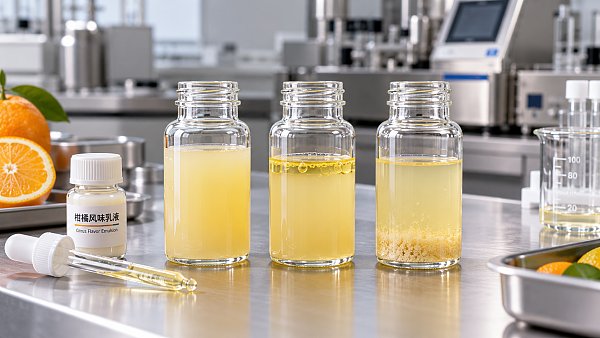
Creaming, oil rings, and aroma loss can turn a promising beverage formulation into a shelf-life problem. Keeping flavor emulsions for beverages stable during storage requires more than selecting an emulsifier: droplet size distribution, interfacial protection, oil-phase composition, and beverage conditions all influence performance.
The practical answer is to control droplet movement and growth, protect flavor compounds against chemical deterioration, and verify performance in the finished beverage—not only in the concentrated emulsion. A concentrate that looks uniform in a supplier’s sample bottle may behave differently after dilution, acidification, thermal processing, or contact with packaging.
Identify the failure before changing the formula
“Unstable” is not a useful diagnosis on its own. Several mechanisms can produce similar-looking defects, but they require different corrections.
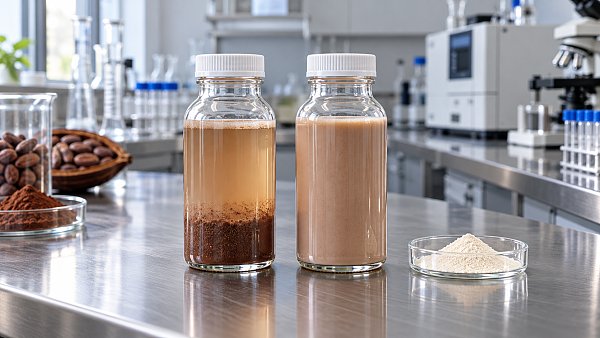
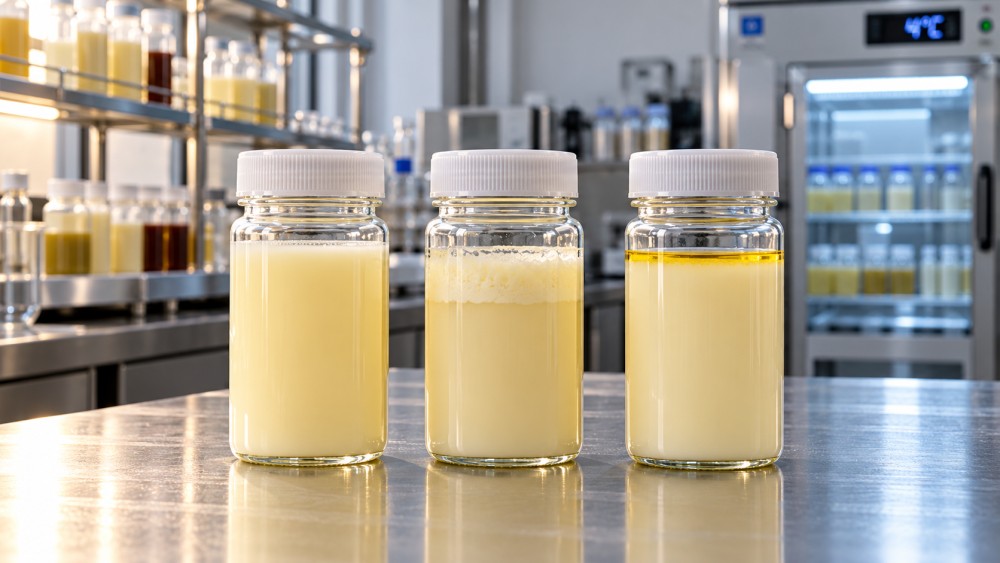
Creaming occurs when droplets rise because they are less dense than the surrounding liquid. The droplets may remain intact. A concentrated layer that redistributes with gentle mixing suggests creaming, although this observation alone does not establish the mechanism. Reducing droplet size, limiting aggregation, or adjusting the density difference may help.
Flocculation means droplets cluster without merging. These clusters can move upward faster than individual droplets. Coalescence is different: droplets merge into larger ones, potentially producing free oil. Once coalescence has occurred, shaking the bottle does not restore the original droplet distribution.
Another mechanism, Ostwald ripening, involves oil components transferring through the aqueous phase from smaller droplets to larger ones. This can matter in flavor systems containing components with appreciable water solubility. Stronger interfacial protection alone may not solve it.
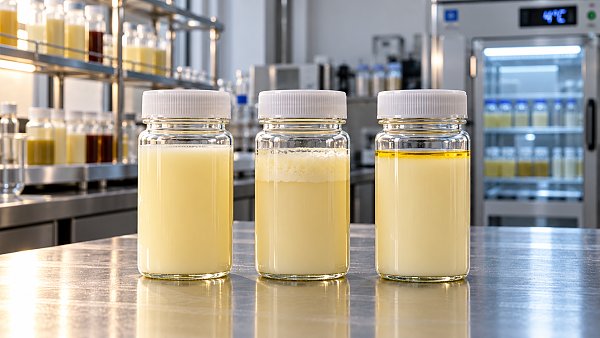
An oil ring at the bottle neck therefore deserves investigation rather than an automatic increase in stabilizer dosage. Compare droplet distributions before and after storage, examine samples microscopically, and assess whether gentle redispersion changes the appearance. Also check whether the apparent “ring” contains deposited flavor material or other beverage ingredients.
Control the large-droplet tail, not just the average
Smaller droplets generally cream more slowly. Under simplified Stokes-law conditions, creaming velocity increases with the square of droplet radius. Real beverages are more complicated, but the relationship explains why a small population of large droplets can undermine an otherwise acceptable batch.
A supplier’s single average droplet-size value can hide that population. Request the measurement method, distribution basis, and distribution width. Results from different techniques are not automatically interchangeable, particularly when samples require dilution or contain flocs.
High-pressure homogenization is useful, but “more pressure” is not a complete process specification. The outcome also depends on pre-emulsion quality, oil loading, emulsifier availability, number of passes, and temperature. Creating new interface faster than the emulsifier can protect it can allow droplets to recoalesce during processing.
Record inlet and outlet temperatures alongside pressure and pass count. Excessive heating can alter sensitive flavor components and affect interfacial ingredients. Scale-up should reproduce the relevant processing conditions, not simply copy a laboratory pressure setting.
There is also a commercial trade-off: smaller droplets can change light scattering and perceived cloudiness. The best specification is not necessarily the smallest achievable size; it is a reproducible distribution that supports the intended appearance, flavor delivery, and shelf life.
Match interfacial protection to the beverage environment
Gum arabic, beverage-grade modified starches, and other permitted emulsifying systems can provide interfacial protection, but they are not interchangeable. Their performance depends on grade, hydration, oil-to-emulsifier ratio, and the surrounding formulation. A material sold as a thickener may contribute little useful protection at the oil–water interface.
This distinction matters when troubleshooting. Increasing continuous-phase viscosity may slow creaming without correcting coalescence. Conversely, improving interfacial coverage may prevent merging while leaving a density-driven separation problem unresolved.
Evaluate the emulsifier under the actual beverage conditions:
- Acidity: Final pH can change ingredient charge and solubility. Protein-based systems require particular attention near their isoelectric region.
- Minerals: Electrolytes can weaken electrostatic repulsion, while multivalent ions may interact with certain polymers. Production water should be part of the assessment.
- Other ingredients: Juice solids, proteins, polyphenols, preservatives, and sweetener systems may alter aggregation or interfacial behavior.
- Processing sequence: Hydration time and the order of acid, mineral, and emulsion addition can influence local conditions during mixing.
For example, an emulsion may tolerate the final drink’s acidity but still be damaged by direct contact with concentrated acid during batching. Diluting the acid or changing the addition point can be worth testing before reformulating the entire system.
Oil-phase composition sets limits on stability
Flavor oil is rarely a single substance. Citrus oils and compounded flavors contain components with different solubilities, volatilities, and oxidation sensitivities. Changing the flavor blend can therefore change emulsion behavior even when oil loading and homogenization conditions remain constant.
Where Ostwald ripening is a concern, incorporating a suitable, less water-soluble oil component may reduce droplet growth. That choice needs sensory and regulatory review: a physically effective oil-phase adjustment is not useful if it changes aroma release, creates an unwanted mouthfeel, or conflicts with the intended label.
Density adjustment is another option for reducing creaming. However, weighting agents are not universally permitted, and their conditions of use vary by jurisdiction and beverage category. Confirm current local requirements and calculate any applicable limit in the finished drink rather than relying on a concentrate specification.
Keep flavor reformulation under change control. Substituting an essential-oil source or carrier may preserve an initial sensory profile while changing storage performance. Supplier approval should cover relevant composition and application behavior, not just the ingredient name.
A physically stable drink can still lose its flavor
Uniform appearance does not prove flavor stability. Oxidation can create off-notes without visible separation, while volatile compounds can partition into headspace or be absorbed by packaging. These losses need a different response from creaming.
Check dissolved oxygen introduced during mixing, oxygen exposure during transfer, headspace conditions, and the package’s oxygen and light protection. Trace metals can promote oxidation in susceptible systems. Antioxidants or permitted metal-control strategies may help, but effectiveness depends on ingredient location and the complete formulation; adding an antioxidant is not a substitute for controlling oxygen pickup.
Run sensory assessment alongside physical measurements. Where appropriate, targeted chemical analysis can help distinguish oxidation from volatile loss or packaging interactions. A laboratory glass bottle is a useful control, not a substitute for the intended commercial package.
Microbiological stability is a separate requirement. Emulsifiers do not establish preservation, and a low-pH beverage still needs an appropriate, validated safety and preservation strategy.
Build storage trials around the actual route to market
Test both the concentrate and the finished drink. Concentrate testing informs ingredient handling and storage limits; finished-beverage testing establishes whether the complete application works. Include the intended dosage, production water, processing sequence, thermal treatment where relevant, and final packaging.
A useful trial combines real-time storage under intended conditions with selected stress conditions representing plausible distribution exposure. Elevated-temperature testing can reveal weaknesses, but it does not automatically predict ambient shelf life. Heat may change oxidation rates, ingredient interactions, and separation mechanisms differently.
Likewise, centrifugation is useful for comparative screening, not as a stand-alone shelf-life claim. Freeze–thaw testing is relevant where accidental freezing is credible; it should not become a universal pass requirement for products whose distribution conditions exclude freezing.
Set acceptance criteria before reviewing results. Otherwise, a visible ring can become “acceptable” simply because every trial produced one. The criteria should reflect consumer expectations and product positioning:
- Define acceptable separation, neck-ring formation, and sediment in an undisturbed package.
- Track droplet-distribution changes using a consistent sampling and measurement procedure.
- Assess cloud appearance, color, and sensory quality against suitable controls.
- Record pH and relevant chemical or microbiological indicators where the formulation requires them.
- Repeat promising conditions across independent batches, including relevant raw-material variation.
Inspect containers before shaking. Sampling only from a mixed bottle can conceal the separation consumers would see on a shelf. Photographs under consistent lighting are useful for documenting progression, especially when comparing packaging formats.
Make supplier evidence application-specific
When comparing flavor emulsions for beverages, ask what “stable” meant in the supplier’s trial. Was it the concentrate or a diluted drink? Which pH, water composition, processing conditions, package, storage temperature, and observation period were used? Without those details, two stability claims may describe very different achievements.
Request recommended operating ranges, handling instructions, batch-consistency information, and market-specific documentation. A useful technical discussion also covers known incompatibilities and what must be revalidated after a flavor, emulsifier, or process change.
This application-first approach reflects the focus of the Global Fine Chemicals & Agrochemical Intelligence Network (FCAS): connecting ingredient properties, formulation performance, documentation, and supply consistency rather than treating a chemical name as proof of suitability.
Before increasing emulsifier dosage or purchasing a replacement system, establish whether the failure is droplet migration, aggregation, growth, oxidation, or packaging-related flavor loss. Then change the variable most likely to address that mechanism and verify it in the finished beverage. That is a more reliable route to storage stability than repeatedly adjusting a formula until the latest sample happens to look clear of defects.
Facing technical bottlenecks in manufacturing or looking for more efficient industrial solutions? Leave your details below and let the engineering experts at FCAS solve them for you.
We respect your privacy. Your information is strictly confidential.
Related News
 Hydrocolloids & EmulsifiersHow Does Agar Work as a Gelling Agent in Food?Discover how agar transforms liquids into firm gels, what affects texture and setting, and how to troubleshoot common problems in food formulations.MORE+
 Hydrocolloids & EmulsifiersHow Do Hydrocolloid Gums Improve Texture and Stability in Foods?Discover how hydrocolloid gums improve food texture and stability, and learn how to choose the right gum for your formulation.MORE+
 Hydrocolloids & EmulsifiersHow to Use Hydrocolloid Stabilizer Blends for SaucesDiscover how to use hydrocolloid stabilizer blends for sauces to improve texture, prevent separation, and achieve consistent results from trial to production.MORE+
 Hydrocolloids & EmulsifiersWhat to Look for in a Konjac Gum ManufacturerChoosing a konjac gum manufacturer? Learn how to assess quality, consistency, food safety, pricing, and supply reliability before you buy.MORE+
 Hydrocolloids & EmulsifiersHow to Choose Flavor Carriers for Spray Dried FlavorsChoose flavor carriers for spray dried flavors with confidence. Compare maltodextrin, gum arabic and modified starch for retention, stability and release.MORE+
 Hydrocolloids & EmulsifiersHow to Use Tara Gum for Dessert Toppings With Better StabilityDiscover how to use tara gum for dessert toppings to improve texture and stability, with practical hydration, formulation, and testing tips.MORE+
 Hydrocolloids & EmulsifiersHow Seaweed Extract Hydrocolloids Improve Food TextureSeaweed Extract Hydrocolloids improve food texture and stability. Discover how alginate, carrageenan, and agar perform in real formulations.MORE+
 Hydrocolloids & EmulsifiersWhat to Check Before Buying Carboxymethyl Cellulose WholesaleBuying carboxymethyl cellulose wholesale? Learn how to compare grades, supplier documents, performance and delivered costs before placing your order.MORE+
 Hydrocolloids & EmulsifiersHow Cocamidopropyl Betaine Improves Foam in Bath ProductsDiscover how cocamidopropyl betaine for bath products can enhance foam, support a creamy lather, and help formulators improve bath and shower products.MORE+
 Hydrocolloids & EmulsifiersHow Does Low DE Maltodextrin Affect Texture in Powdered Drinks?Discover how low de maltodextrin adds body to powdered drinks with minimal sweetness. Learn how to select grades, improve mixing, and fine-tune texture for a better drinking experience.MORE+
 Hydrocolloids & EmulsifiersHow Do You Choose Flavor Emulsions for Beverages With Low Sugar?Choose flavor emulsions for beverages with low sugar. Learn how to balance taste, validate stability, compare cost per dose, and meet labeling requirements for a confident selection.MORE+
 Hydrocolloids & EmulsifiersNutrition Experts Urge White House to Define Ultra-Processed FoodsUltra-processed foods face a push for an official White House definition. Explore what the proposed criteria could mean for ingredient suppliers and food product development.MORE+
 Hydrocolloids & EmulsifiersHow Can Flavor Emulsions for Beverages Stay Stable During Storage?Keep flavor emulsions for beverages stable during storage. Discover practical ways to control droplet size, prevent oil rings, protect aroma, and validate shelf life.MORE+
 Hydrocolloids & EmulsifiersHow Does Locust Bean Gum Compare With Guar Gum as a Thickener?Compare locust bean gum thickener with guar gum for hydration, texture, stability, and cost. Discover which option fits your process and delivers better product performance.MORE+
 Hydrocolloids & EmulsifiersHow Can You Verify Quality at a Microcrystalline Cellulose Factory?Verify quality at a microcrystalline cellulose factory with practical audit tips on traceability, testing, and batch consistency. Explore the guide to make confident sourcing decisions.MORE+
 Hydrocolloids & EmulsifiersHow Do Clean Label Stabilizer Blends Prevent Separation in Drinks?Discover how clean label stabilizer blends help reduce drink separation while preserving texture. Learn how to choose and validate the right blend for your beverage.MORE+
 Hydrocolloids & EmulsifiersHow to Choose Food Thickeners That Keep Sauces Stable After FreezingChoose Food Thickeners that keep frozen sauces smooth and stable. Compare starches, gums, and freeze–thaw tests to reduce water separation and find the right fit for your formulation.MORE+
 Hydrocolloids & EmulsifiersHow to Prevent Lumps When Mixing Powder Hydrocolloid Stabilizer BlendsPrevent lumps in powder hydrocolloid stabilizer blends with practical tips on feeding, dispersion, temperature, and hydration. Learn how to achieve smoother, more consistent batches.MORE+
 Hydrocolloids & EmulsifiersHow Can You Use Carboxymethyl Cellulose for Food Thickening Without Clumps?Use carboxymethyl cellulose for food thickening without clumps. Discover practical dispersion, mixing, and hydration tips for smoother textures and fewer wasted batches.MORE+
 Hydrocolloids & EmulsifiersWhich Encapsulation Wall Materials for Flavors Work Best in Baking?Compare encapsulation wall materials for flavors in baking. Explore starch, gum arabic, protein and lipid options to improve aroma retention and find the right fit for your products.MORE+
 Hydrocolloids & EmulsifiersHow Locust Bean Gum Improves Texture and Stability in Dairy ProductsLocust bean gum for dairy products improves creaminess, reduces whey separation, and supports stable yogurt, ice cream, spreads, and dairy drinks.MORE+
 Hydrocolloids & EmulsifiersWhy Clean Label Food Emulsifiers Matter in Modern FormulationClean label food emulsifiers shape stability, texture, processing, and shelf life. Explore practical formulation insights for beverages, sauces, bakery, and more.MORE+
 Hydrocolloids & EmulsifiersHow Natural Food Emulsifiers Improve Plant-Based Product TextureNatural food emulsifiers for plant based products improve creaminess, stability, and texture. Explore practical formulation strategies for beverages, dressings, desserts, and more.MORE+
 Hydrocolloids & EmulsifiersHow Konjac Gum Powder Improves Texture in Low-Calorie FoodsKonjac gum powder improves body, stability, and mouthfeel in low-calorie foods. Discover practical tips for smoother sauces, beverages, and reduced-fat formulations.MORE+
 Hydrocolloids & EmulsifiersHow Bulk Price Factors Affect Hydrocolloid Stabilizer Blend SourcingHydrocolloid stabilizer blends bulk price: compare dosage efficiency, quality consistency, logistics, and documentation to reduce total sourcing costs.MORE+
 Hydrocolloids & EmulsifiersHow Hydrocolloid Systems for Meat Products Improve Texture and YieldHydrocolloid systems for meat products improve yield, texture, water retention, and slicing quality. Explore practical formulation strategies for stable, high-performing meat products.MORE+
 Hydrocolloids & EmulsifiersHow Locust Bean Gum Thickener Improves Texture and StabilityLocust bean gum thickener improves texture, water retention, suspension, and stability. Learn practical hydration and blending tips for better product performance.MORE+
 Hydrocolloids & EmulsifiersChoosing Maltodextrin for Flavor Carriers in Dry Food BlendsMaltodextrin for flavor carriers: discover how to optimize aroma protection, powder flow, moisture control, compliance, and supply reliability in dry food blends.MORE+
 Hydrocolloids & EmulsifiersHow Guar Gum Derivatives Solve Texture and Stability IssuesGuar Gum Derivatives help solve texture, settling, separation, and viscosity loss. Discover practical formulation strategies for stable, high-performing products.MORE+
 Hydrocolloids & EmulsifiersHow Non-GMO Food Emulsifiers Improve Label-Friendly FormulationsNon-GMO food emulsifiers help create stable, label-friendly sauces, beverages, bakery products, and frozen foods. Explore sourcing, processing, and formulation insights.MORE+
 Hydrocolloids & EmulsifiersWhat to Evaluate When Choosing a Hydrocolloid Systems ManufacturerHydrocolloid systems manufacturer selection made easier: evaluate performance, documentation, supply reliability, and total cost for dependable results.MORE+
 Hydrocolloids & EmulsifiersWhat to Check Before Buying Natural Food Emulsifiers WholesaleNatural food emulsifiers wholesale: learn how to evaluate label fit, formula performance, documentation, supplier reliability, and total landed cost before buying.MORE+
 Hydrocolloids & EmulsifiersPreventing Melt-Down With Ice Cream Stabilizer Blend SelectionHydrocolloid stabilizer blends for ice cream: diagnose melt-down, improve creamy melt quality, and select formulas for stable texture and cold-chain resilience.MORE+
 Hydrocolloids & EmulsifiersWhen Cold Soluble Tara Gum Is the Right Choice for Beverage FormulasCold soluble tara gum helps beverage formulators achieve rapid hydration, smooth texture, and reliable stability. Explore when it delivers the right processing advantage.MORE+
 Hydrocolloids & EmulsifiersHow High Viscosity Locust Bean Gum Improves Texture StabilityHigh viscosity locust bean gum improves texture stability, water control, and mouthfeel in dairy, sauces, fillings, and frozen foods. Explore practical selection insights.MORE+
 Hydrocolloids & EmulsifiersFood Texturants: How to Match Hydrocolloids to Beverage and Sauce SystemsFood texturants guide: match hydrocolloids to beverage and sauce systems for stable texture, smooth processing, and better sensory performance.MORE+
 Hydrocolloids & EmulsifiersChoosing Cold Soluble Hydrocolloid Systems for Instant Beverage TextureCold soluble hydrocolloid systems for instant beverages: compare dispersion, texture, stability, process fit, and cost to select the right solution for scalable production.MORE+
 Hydrocolloids & EmulsifiersWhy Spray Dried Gum Arabic Is Used to Improve Powder StabilitySpray dried gum arabic improves powder stability by protecting sensitive ingredients, supporting flow, and enhancing water dispersibility. Discover its key benefits.MORE+
 Hydrocolloids & EmulsifiersHow to Select Flavor Emulsions That Keep Juice Drinks Smooth and StableFlavor emulsions for juice drinks: learn how to select stable systems that prevent oil rings, maintain cloud, protect aroma, and support smooth shelf-life performance.MORE+
 Hydrocolloids & EmulsifiersWhy Gellan Gum Is Used to Control Texture in Modern FoodsGellan Gum gives modern foods precise texture control, from light beverage suspension to clean gels and creamy body. Explore uses, processing factors, and formulation tips.MORE+