How to Prevent Lumps When Mixing Powder Hydrocolloid Stabilizer Blends
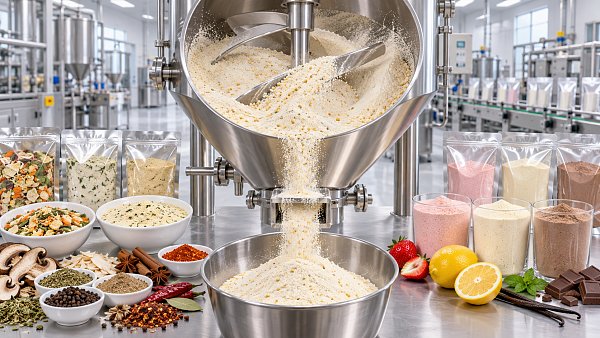
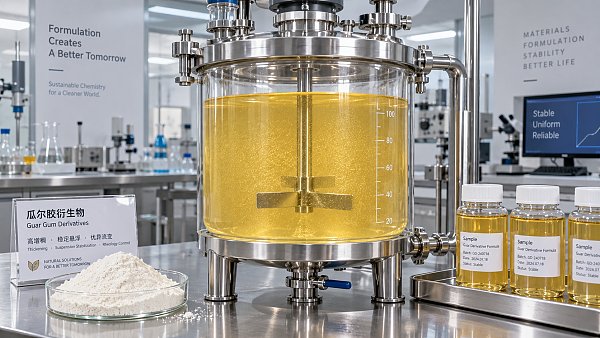
The most effective way to prevent lumps in powder hydrocolloid stabilizer blends is to separate and wet the particles before they develop a hydrated outer layer. That requires a controlled powder feed, effective liquid circulation, and a temperature and ingredient sequence suited to the specific blend. Increasing mixer speed alone will not correct powder entering the liquid faster than it can disperse.
A smooth-looking batch is not necessarily fully hydrated. Some blends disperse in cold water but need heating to develop their intended functionality; others begin thickening immediately and can restrict circulation before powder addition is complete. Treat dispersion and hydration as separate process requirements, even when they happen in the same vessel.
Identify what kind of lump is forming
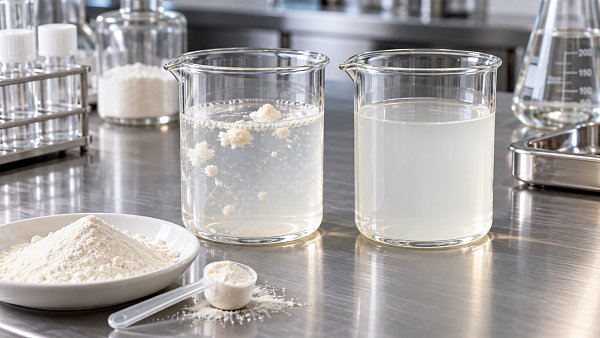
A typical “fish eye” has a swollen, slippery exterior surrounding a dry or partly wetted powder core. The outside hydrates first, creating a viscous barrier that slows water penetration. Once this shell forms, continued stirring may move the lump around without opening it.
Not every visible particle has that origin. Moisture-damaged powder can enter the vessel as compacted agglomerates. A calcium-sensitive gum can form localized gel particles when it contacts available calcium. Material deposited above the liquid line can later fall back into the batch as partially wetted clumps.
These differences matter because the corrective actions are different. Inspect a representative sample using approved sampling procedures, and examine suspect particles outside the vessel. A dry center points toward poor initial dispersion; uniformly rubbery particles suggest gelation or another compatibility problem that needs formulation review.
Establish circulation before powder reaches the liquid
Charge enough liquid to operate the mixer within its specified working range. Confirm that the batch circulates through the vessel rather than rotating as one mass. A strong surface vortex can look impressive while leaving poorly mixed regions near the walls or bottom.
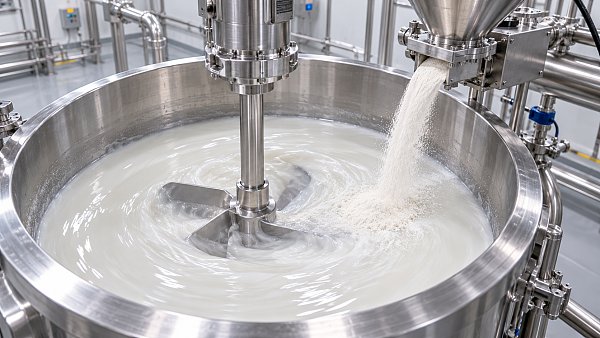
Introduce powder at a location where moving liquid will carry it into the mixing zone promptly. Do not dump it onto a quiet surface, an exposed shaft, or a wet vessel wall. Equally, avoid assuming the deepest part of an air-drawing vortex is the best addition point: it can entrain air and carry powder into foam instead of liquid.
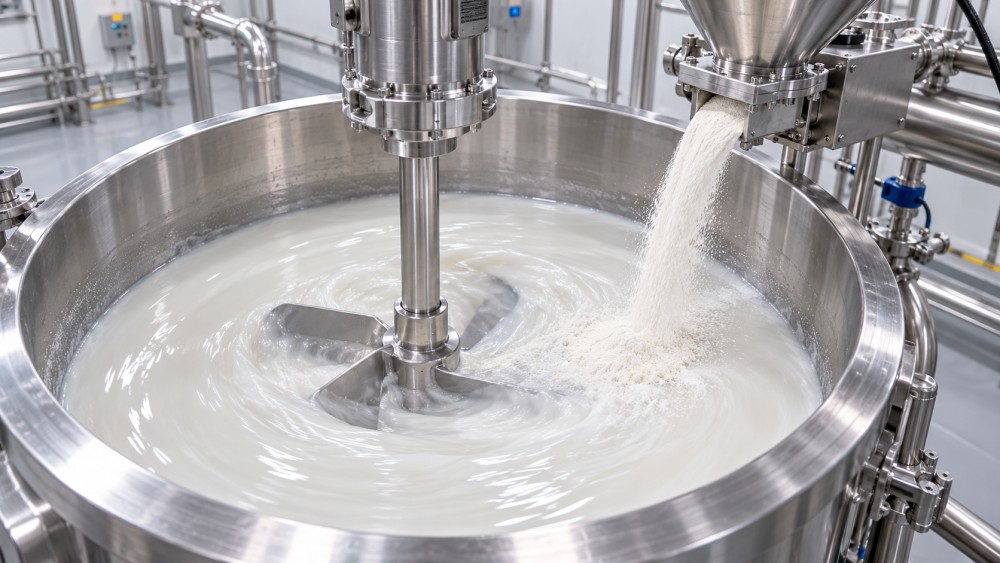
Feed powder as a steady, controlled stream. The relevant limit is how quickly the equipment can wet and distribute it, not how quickly a bag can be emptied. If powder accumulates on the surface or forms visible islands, pause the feed and restore dispersion before adding more.
As viscosity rises, the same mixer setting may no longer provide adequate turnover. A batch that accepts powder cleanly at the beginning can start forming lumps near the end. Watch the liquid movement throughout addition rather than treating the initial mixer speed as a complete process setting.
Choose a pre-dispersion method that fits the formula
Dry blending with a compatible carrier
Premixing the stabilizer with a free-flowing dry ingredient can physically separate gum particles before they reach water. Sugar is a practical carrier in suitable food formulations, but it must be available in sufficient quantity and be compatible with the blend and finished product.
A token quantity of carrier may leave gum-rich pockets that behave much like undiluted powder. The required carrier-to-stabilizer ratio depends on the blend, particle characteristics, and mixing system; use the supplier’s application guidance and verify the result in the actual formulation rather than applying one universal ratio.
Prepare a uniform dry premix, keep it dry, and minimize handling that could segregate particles of different sizes or densities. The premix still needs controlled addition to moving liquid. Dry dilution reduces particle contact; it does not compensate for poor tank circulation.
Slurrying in oil or another approved non-aqueous liquid
Where the recipe permits, dispersing powder in oil can separate particles without starting water hydration. Add the resulting slurry to the aqueous phase under effective mixing. Use enough carrier to make the slurry transferable and uniformly dispersed, following blend-specific guidance.
The carrier must be suitable for the product, and the slurry must not introduce an unacceptable fat level, sensory change, or emulsification burden. Keep it uniform during transfer because settling can create a concentrated gum deposit. Some polyols can also serve as carriers, but their water content and compatibility need checking: a carrier that initiates partial hydration can create the very agglomerates it is meant to prevent.
Direct powder induction
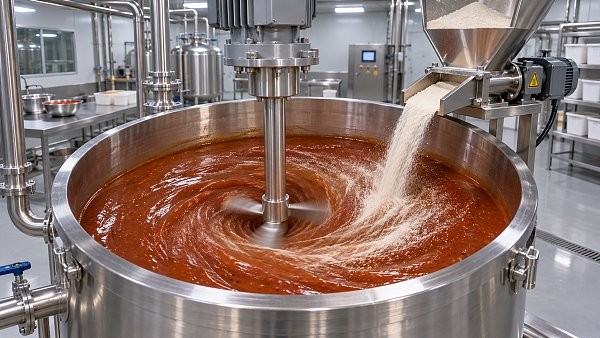
An appropriately selected powder-induction system brings powder into a controlled liquid stream rather than relying on surface wetting. It can improve dispersion, particularly when manual addition cannot maintain a stable feed.
Its capacity still depends on liquid flow, viscosity, powder behavior, and equipment design. Restricted circulation, hopper bridging, or excessive powder feed can overload the wetting zone. Confirm the operating limits for the stabilizer blend, and check that the recirculation loop exchanges material with the whole vessel rather than repeatedly processing only a small region.
Set temperature for the blend, not for hydrocolloids in general
Hotter water is not a universal solution. It can accelerate surface hydration of cold-soluble gums, shortening the time available to separate particles. Some systems benefit from cool-water dispersion followed by a controlled heating stage; others require a different sequence.
The blend composition provides essential clues:
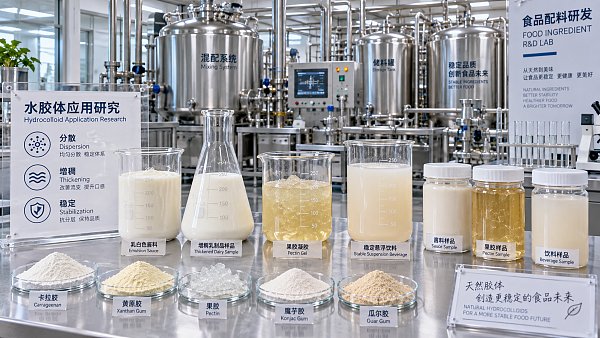
- Xanthan and many guar grades can build viscosity during cold-water hydration. Addition rate and circulation become important as thickening progresses.
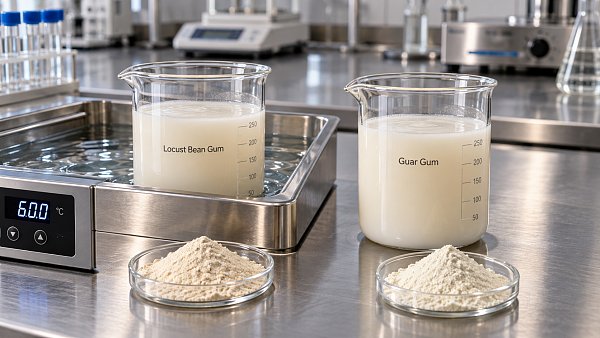
- Conventional locust bean gum and many carrageenan systems require heating for adequate hydration or dissolution. Cold dispersion alone does not demonstrate full functionality.
- Methylcellulose and HPMC grades can require a specific hot-dispersion/cold-hydration procedure or another supplier-defined method. A generic “heat to dissolve” instruction can be inappropriate.
- Alginate, gellan, and pectin systems require attention to ions, pH, and gelation conditions as well as temperature.
These distinctions are directional, not batch instructions. Modified, instantized, or surface-treated grades can behave differently from conventional grades carrying the same gum name. In a multi-component blend, one component may thicken while another still needs heating.
Use the blend’s technical instructions to establish the charging temperature, heating profile, hold time, and cooling conditions. Measure the product temperature rather than relying only on jacket settings. Do not start the hydration hold simply because powder addition has finished if the required product temperature has not yet been reached.
Control what is already in the water
Good powder dispersion can still fail when the aqueous phase restricts hydration or triggers gelation. Dissolved sugar, salts, acids, proteins, and minerals can change the conditions experienced by the gum.
A concentrated sugar solution can slow hydration by reducing water availability. This does not contradict using dry sugar as a dispersing carrier: dry separation of particles and hydration in a high-solids liquid are different effects. Where the formulation permits, disperse and hydrate the stabilizer in a less concentrated aqueous phase before adding the remaining soluble solids.
Calcium needs particular attention with calcium-reactive hydrocolloids. Water hardness, mineral ingredients, and the food matrix can all contribute available calcium. Adding such a gum directly into a calcium-rich phase may produce local gel particles rather than uniform hydration. Do not add a sequestrant or change mineral levels as an improvised correction; those changes affect formulation performance and require approval.
Acid addition is also blend-dependent. Some systems hydrate more effectively before acidification, while others are designed for a specific acidic process. Prolonged heating at low pH can damage certain hydrocolloids. Follow the validated sequence for acids, salts, and heat rather than treating ingredient order as interchangeable.
Use shear where it helps—and recognize its limits
High shear is useful during wetting and early dispersion because it can separate agglomerates before strong hydrated shells form. It is less effective as a substitute for correct powder feeding, and a small high-shear head cannot compensate for inadequate movement through a large vessel.
Extended high-shear treatment can introduce air, increase temperature, and alter shear-sensitive structures. It may also change other parts of the formulation, including emulsions. Once the powder is dispersed, use the agitation needed to maintain uniformity and complete hydration under the approved process conditions.
During scale-up, matching revolutions per minute does not reproduce the same mixing conditions. Impeller geometry, batch depth, power input, circulation time, and powder feed location all matter. Transfer a verified dispersion process—not just a speed setting and mixing time—from a small vessel to production.
Confirm hydration before deciding the batch is ready
Surface appearance alone is a weak acceptance check. Take representative samples through approved sampling points and inspect for particles using a method appropriate to the product. Where useful, spread a thin sample on a contrasting surface or use a specified screen to reveal agglomerates.
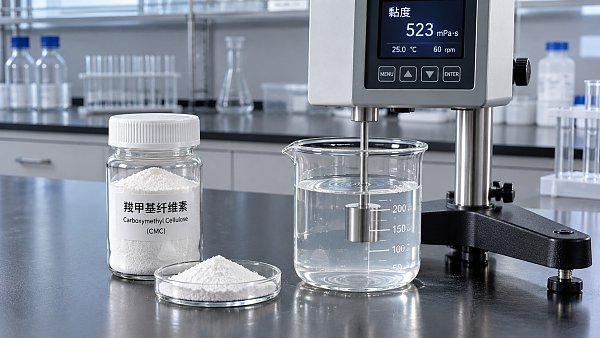
Measure viscosity at a defined temperature, elapsed time, and test method. Comparing a hot, recently mixed sample with a cooled reference can suggest a hydration problem where none exists. Conversely, an apparently acceptable viscosity does not prove that every component in a stabilizer blend has hydrated.
For gel-forming products, the relevant check may include a controlled cooling or setting test. Compare results with the approved process endpoint, not merely with an expectation that the liquid should “look thick.” Record addition time, temperature history, and any interruption in circulation so an abnormal result can be traced to an actionable variable.
If lumps have already formed
Stop further powder addition and determine whether the particles contain dry cores, represent gelation, or entered as caked powder. Do not immediately add more stabilizer to compensate for low viscosity: delayed hydration of the original dose can leave the finished product over-thickened.
Early, weak agglomerates may respond to controlled recirculation through suitable dispersing equipment. Mature fish eyes or gel particles may require a different approved rework route, and some batches will not be recoverable within product specifications. Avoid reaching into operating equipment or opening systems outside established safety procedures.
Screening can remove visible lumps, but it also removes an unknown quantity of stabilizer. A screened batch therefore needs quality review and confirmation of functionality; visual smoothness alone is not sufficient for release. Any rework must also remain within permitted holding times and food-safety controls.
For subsequent batches, correct the variable indicated by the evidence: feed rate for surface accumulation, dispersion method for dry-centered fish eyes, circulation for late-stage failures, or chemistry and sequencing for gel particles. The dependable operating window is the one in which powder enters no faster than it can disperse, then receives the specific conditions needed to hydrate fully.
Facing technical bottlenecks in manufacturing or looking for more efficient industrial solutions? Leave your details below and let the engineering experts at FCAS solve them for you.
We respect your privacy. Your information is strictly confidential.
Related News
 Hydrocolloids & EmulsifiersHow Does Agar Work as a Gelling Agent in Food?Discover how agar transforms liquids into firm gels, what affects texture and setting, and how to troubleshoot common problems in food formulations.MORE+
 Hydrocolloids & EmulsifiersHow Do Hydrocolloid Gums Improve Texture and Stability in Foods?Discover how hydrocolloid gums improve food texture and stability, and learn how to choose the right gum for your formulation.MORE+
 Hydrocolloids & EmulsifiersHow to Use Hydrocolloid Stabilizer Blends for SaucesDiscover how to use hydrocolloid stabilizer blends for sauces to improve texture, prevent separation, and achieve consistent results from trial to production.MORE+
 Hydrocolloids & EmulsifiersWhat to Look for in a Konjac Gum ManufacturerChoosing a konjac gum manufacturer? Learn how to assess quality, consistency, food safety, pricing, and supply reliability before you buy.MORE+
 Hydrocolloids & EmulsifiersHow to Choose Flavor Carriers for Spray Dried FlavorsChoose flavor carriers for spray dried flavors with confidence. Compare maltodextrin, gum arabic and modified starch for retention, stability and release.MORE+
 Hydrocolloids & EmulsifiersHow to Use Tara Gum for Dessert Toppings With Better StabilityDiscover how to use tara gum for dessert toppings to improve texture and stability, with practical hydration, formulation, and testing tips.MORE+
 Hydrocolloids & EmulsifiersHow Seaweed Extract Hydrocolloids Improve Food TextureSeaweed Extract Hydrocolloids improve food texture and stability. Discover how alginate, carrageenan, and agar perform in real formulations.MORE+
 Hydrocolloids & EmulsifiersWhat to Check Before Buying Carboxymethyl Cellulose WholesaleBuying carboxymethyl cellulose wholesale? Learn how to compare grades, supplier documents, performance and delivered costs before placing your order.MORE+
 Hydrocolloids & EmulsifiersHow Cocamidopropyl Betaine Improves Foam in Bath ProductsDiscover how cocamidopropyl betaine for bath products can enhance foam, support a creamy lather, and help formulators improve bath and shower products.MORE+
 Hydrocolloids & EmulsifiersHow Does Low DE Maltodextrin Affect Texture in Powdered Drinks?Discover how low de maltodextrin adds body to powdered drinks with minimal sweetness. Learn how to select grades, improve mixing, and fine-tune texture for a better drinking experience.MORE+
 Hydrocolloids & EmulsifiersHow Do You Choose Flavor Emulsions for Beverages With Low Sugar?Choose flavor emulsions for beverages with low sugar. Learn how to balance taste, validate stability, compare cost per dose, and meet labeling requirements for a confident selection.MORE+
 Hydrocolloids & EmulsifiersNutrition Experts Urge White House to Define Ultra-Processed FoodsUltra-processed foods face a push for an official White House definition. Explore what the proposed criteria could mean for ingredient suppliers and food product development.MORE+
 Hydrocolloids & EmulsifiersHow Can Flavor Emulsions for Beverages Stay Stable During Storage?Keep flavor emulsions for beverages stable during storage. Discover practical ways to control droplet size, prevent oil rings, protect aroma, and validate shelf life.MORE+
 Hydrocolloids & EmulsifiersHow Does Locust Bean Gum Compare With Guar Gum as a Thickener?Compare locust bean gum thickener with guar gum for hydration, texture, stability, and cost. Discover which option fits your process and delivers better product performance.MORE+
 Hydrocolloids & EmulsifiersHow Can You Verify Quality at a Microcrystalline Cellulose Factory?Verify quality at a microcrystalline cellulose factory with practical audit tips on traceability, testing, and batch consistency. Explore the guide to make confident sourcing decisions.MORE+
 Hydrocolloids & EmulsifiersHow Do Clean Label Stabilizer Blends Prevent Separation in Drinks?Discover how clean label stabilizer blends help reduce drink separation while preserving texture. Learn how to choose and validate the right blend for your beverage.MORE+
 Hydrocolloids & EmulsifiersHow to Choose Food Thickeners That Keep Sauces Stable After FreezingChoose Food Thickeners that keep frozen sauces smooth and stable. Compare starches, gums, and freeze–thaw tests to reduce water separation and find the right fit for your formulation.MORE+
 Hydrocolloids & EmulsifiersHow to Prevent Lumps When Mixing Powder Hydrocolloid Stabilizer BlendsPrevent lumps in powder hydrocolloid stabilizer blends with practical tips on feeding, dispersion, temperature, and hydration. Learn how to achieve smoother, more consistent batches.MORE+
 Hydrocolloids & EmulsifiersHow Can You Use Carboxymethyl Cellulose for Food Thickening Without Clumps?Use carboxymethyl cellulose for food thickening without clumps. Discover practical dispersion, mixing, and hydration tips for smoother textures and fewer wasted batches.MORE+
 Hydrocolloids & EmulsifiersWhich Encapsulation Wall Materials for Flavors Work Best in Baking?Compare encapsulation wall materials for flavors in baking. Explore starch, gum arabic, protein and lipid options to improve aroma retention and find the right fit for your products.MORE+
 Hydrocolloids & EmulsifiersHow Locust Bean Gum Improves Texture and Stability in Dairy ProductsLocust bean gum for dairy products improves creaminess, reduces whey separation, and supports stable yogurt, ice cream, spreads, and dairy drinks.MORE+
 Hydrocolloids & EmulsifiersWhy Clean Label Food Emulsifiers Matter in Modern FormulationClean label food emulsifiers shape stability, texture, processing, and shelf life. Explore practical formulation insights for beverages, sauces, bakery, and more.MORE+
 Hydrocolloids & EmulsifiersHow Natural Food Emulsifiers Improve Plant-Based Product TextureNatural food emulsifiers for plant based products improve creaminess, stability, and texture. Explore practical formulation strategies for beverages, dressings, desserts, and more.MORE+
 Hydrocolloids & EmulsifiersHow Konjac Gum Powder Improves Texture in Low-Calorie FoodsKonjac gum powder improves body, stability, and mouthfeel in low-calorie foods. Discover practical tips for smoother sauces, beverages, and reduced-fat formulations.MORE+
 Hydrocolloids & EmulsifiersHow Bulk Price Factors Affect Hydrocolloid Stabilizer Blend SourcingHydrocolloid stabilizer blends bulk price: compare dosage efficiency, quality consistency, logistics, and documentation to reduce total sourcing costs.MORE+
 Hydrocolloids & EmulsifiersHow Hydrocolloid Systems for Meat Products Improve Texture and YieldHydrocolloid systems for meat products improve yield, texture, water retention, and slicing quality. Explore practical formulation strategies for stable, high-performing meat products.MORE+
 Hydrocolloids & EmulsifiersHow Locust Bean Gum Thickener Improves Texture and StabilityLocust bean gum thickener improves texture, water retention, suspension, and stability. Learn practical hydration and blending tips for better product performance.MORE+
 Hydrocolloids & EmulsifiersChoosing Maltodextrin for Flavor Carriers in Dry Food BlendsMaltodextrin for flavor carriers: discover how to optimize aroma protection, powder flow, moisture control, compliance, and supply reliability in dry food blends.MORE+
 Hydrocolloids & EmulsifiersHow Guar Gum Derivatives Solve Texture and Stability IssuesGuar Gum Derivatives help solve texture, settling, separation, and viscosity loss. Discover practical formulation strategies for stable, high-performing products.MORE+
 Hydrocolloids & EmulsifiersHow Non-GMO Food Emulsifiers Improve Label-Friendly FormulationsNon-GMO food emulsifiers help create stable, label-friendly sauces, beverages, bakery products, and frozen foods. Explore sourcing, processing, and formulation insights.MORE+
 Hydrocolloids & EmulsifiersWhat to Evaluate When Choosing a Hydrocolloid Systems ManufacturerHydrocolloid systems manufacturer selection made easier: evaluate performance, documentation, supply reliability, and total cost for dependable results.MORE+
 Hydrocolloids & EmulsifiersWhat to Check Before Buying Natural Food Emulsifiers WholesaleNatural food emulsifiers wholesale: learn how to evaluate label fit, formula performance, documentation, supplier reliability, and total landed cost before buying.MORE+
 Hydrocolloids & EmulsifiersPreventing Melt-Down With Ice Cream Stabilizer Blend SelectionHydrocolloid stabilizer blends for ice cream: diagnose melt-down, improve creamy melt quality, and select formulas for stable texture and cold-chain resilience.MORE+
 Hydrocolloids & EmulsifiersWhen Cold Soluble Tara Gum Is the Right Choice for Beverage FormulasCold soluble tara gum helps beverage formulators achieve rapid hydration, smooth texture, and reliable stability. Explore when it delivers the right processing advantage.MORE+
 Hydrocolloids & EmulsifiersHow High Viscosity Locust Bean Gum Improves Texture StabilityHigh viscosity locust bean gum improves texture stability, water control, and mouthfeel in dairy, sauces, fillings, and frozen foods. Explore practical selection insights.MORE+
 Hydrocolloids & EmulsifiersFood Texturants: How to Match Hydrocolloids to Beverage and Sauce SystemsFood texturants guide: match hydrocolloids to beverage and sauce systems for stable texture, smooth processing, and better sensory performance.MORE+
 Hydrocolloids & EmulsifiersChoosing Cold Soluble Hydrocolloid Systems for Instant Beverage TextureCold soluble hydrocolloid systems for instant beverages: compare dispersion, texture, stability, process fit, and cost to select the right solution for scalable production.MORE+
 Hydrocolloids & EmulsifiersWhy Spray Dried Gum Arabic Is Used to Improve Powder StabilitySpray dried gum arabic improves powder stability by protecting sensitive ingredients, supporting flow, and enhancing water dispersibility. Discover its key benefits.MORE+
 Hydrocolloids & EmulsifiersHow to Select Flavor Emulsions That Keep Juice Drinks Smooth and StableFlavor emulsions for juice drinks: learn how to select stable systems that prevent oil rings, maintain cloud, protect aroma, and support smooth shelf-life performance.MORE+
 Hydrocolloids & EmulsifiersWhy Gellan Gum Is Used to Control Texture in Modern FoodsGellan Gum gives modern foods precise texture control, from light beverage suspension to clean gels and creamy body. Explore uses, processing factors, and formulation tips.MORE+