How Natural Food Emulsifiers Improve Plant-Based Product Texture
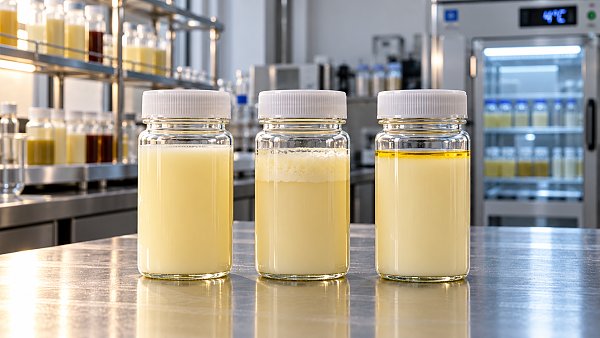
Plant-based foods are often judged in the first few seconds of eating. A beverage that separates in coffee, a dressing that releases oil on the plate, or a meat alternative that feels dry and crumbly can undermine an otherwise strong formulation. This is why natural food emulsifiers for plant based products are not simply minor label ingredients. They help production teams manage the relationship between oil, water, protein, air, heat, and shear so that the finished product remains smooth, stable, and appealing through processing, filling, storage, and use.
For operators, the practical question is rarely “Which emulsifier is best?” More often, it is: which emulsifier system can deliver the required texture without creating problems in hydration, homogenization, heat treatment, flavor release, or shelf-life testing? The answer depends on the product format and process conditions. A natural emulsifier that performs well in a high-fat oat beverage may not provide enough structure in a low-fat vegan mayonnaise, while a system designed for bakery aeration may behave poorly in an acidic sauce.
Why plant-based products are especially sensitive to emulsion failure
Traditional dairy and egg-based products benefit from naturally functional proteins and phospholipids. Milk proteins can help stabilize fat droplets, while egg yolk provides emulsifying components that support sauces, dressings, and baked goods. When these materials are removed, formulators need to rebuild some of that functionality using plant proteins, fibers, hydrocolloids, oils, starches, and emulsifiers.
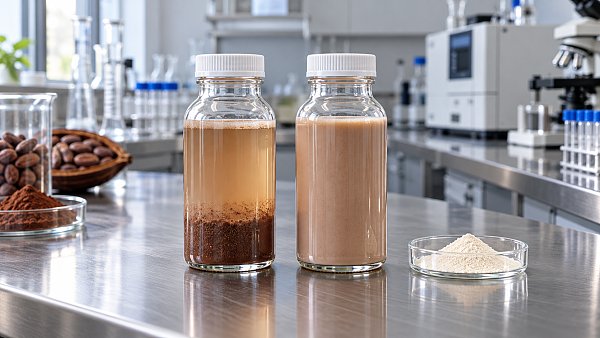
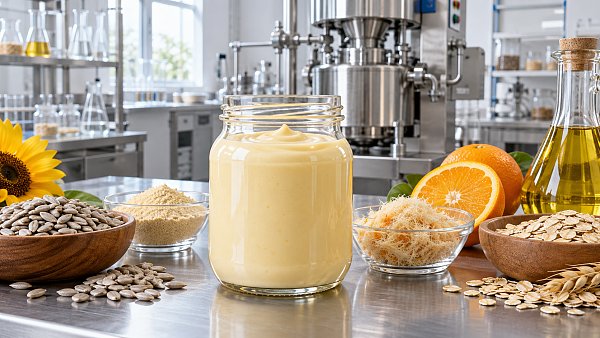
The challenge is that plant ingredients bring their own variability. Protein source, extraction method, particle size, mineral content, pH, and thermal history can all affect solubility and interfacial performance. Pea protein may offer useful emulsification but can contribute sediment or a pronounced flavor if processing is not well controlled. Oat systems may provide body through beta-glucans, yet still need help preventing oil separation. Nut and seed bases can contain their own oil phase, making homogenization and oxidation management more demanding.
An emulsifier works at the boundary between oil and water. Its structure contains regions with affinity for both phases, allowing it to reduce interfacial tension and help form smaller, more stable oil droplets. That basic function affects visible separation, but it also influences creaminess, lubricity, foam behavior, flavor perception, and the way a product breaks down in the mouth.
In practice, a stable emulsion is never created by one ingredient alone. Droplet size, protein coverage, viscosity of the continuous phase, processing temperature, order of addition, and packaging conditions all matter. Treating the emulsifier as a stand-alone fix is one of the most common formulation mistakes.
Natural emulsifier options and what they actually do
“Natural” is not a single technical category. It may refer to an ingredient’s source, processing route, labeling position, or consumer perception, and the acceptable claim can vary by target market and product standard. Operations and regulatory teams should therefore review the ingredient specification, origin statement, processing aids where relevant, and local labeling expectations before relying on a clean-label claim.
Within that context, several ingredient groups are commonly evaluated for plant-based applications:
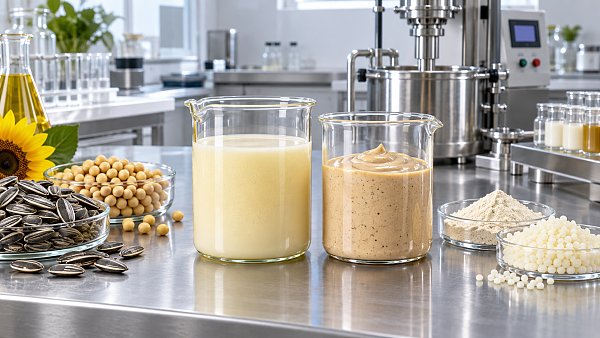
- Lecithins, often sourced from sunflower or soy, can support oil-in-water emulsification, improve powder wettability, and assist processability. Their performance can vary with phospholipid composition, physical form, and dosage.
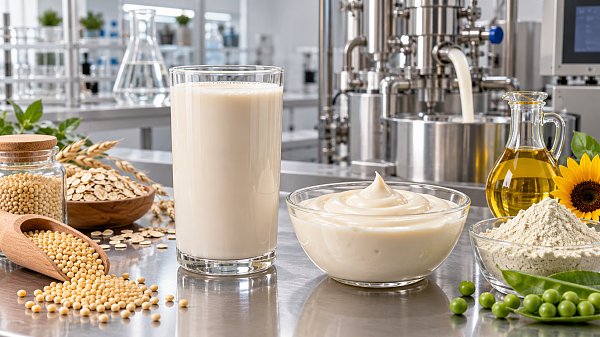
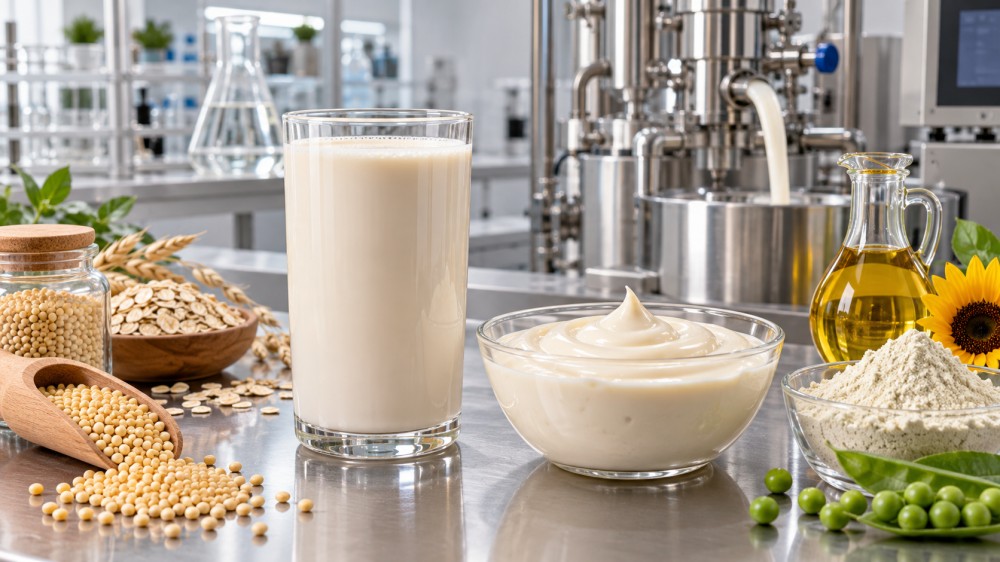
- Plant proteins from pea, faba bean, potato, chickpea, soy, or other sources can contribute both emulsification and body. They are especially relevant where protein content is part of the product’s nutritional proposition.
- Acacia gum is valued in some beverage and flavor-emulsion systems for its ability to help stabilize dispersed oil phases with relatively modest viscosity contribution.
- Quillaja extracts may be considered in selected beverage or foam-sensitive systems because of their surface-active saponins. Their sensory impact and permitted use conditions need careful review.
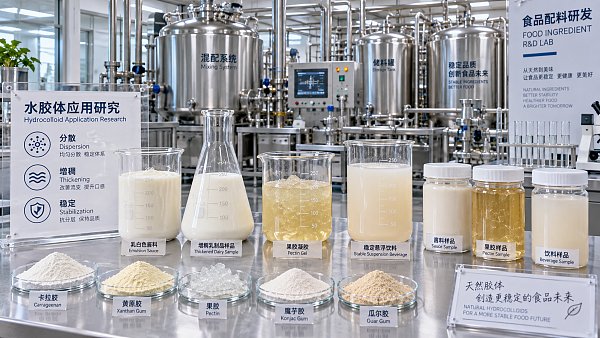
- Oat-derived materials, citrus fibers, and other plant fibers generally contribute more to viscosity, water management, and physical suspension than to primary emulsification. They can still be important parts of the overall stabilization system.
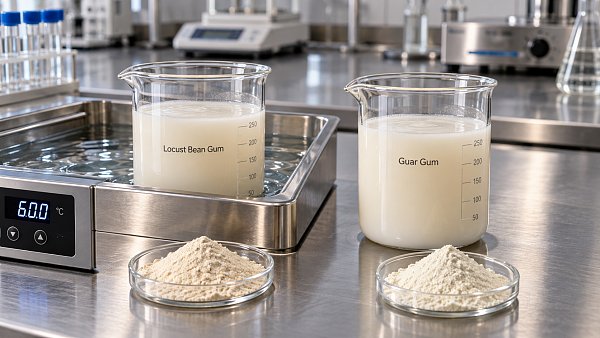
The distinction between an emulsifier and a stabilizer matters on the factory floor. An emulsifier helps create and protect the oil-water interface. A stabilizer or hydrocolloid can slow droplet movement by increasing viscosity or forming a weak network in the water phase. In many plant-based products, the most reliable texture comes from combining these functions rather than expecting either one to do all the work.
Texture is built during processing, not added at the end
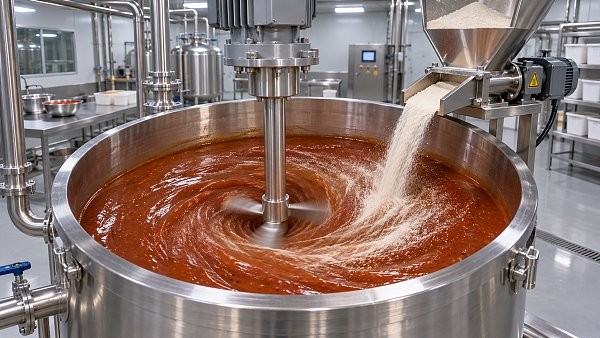
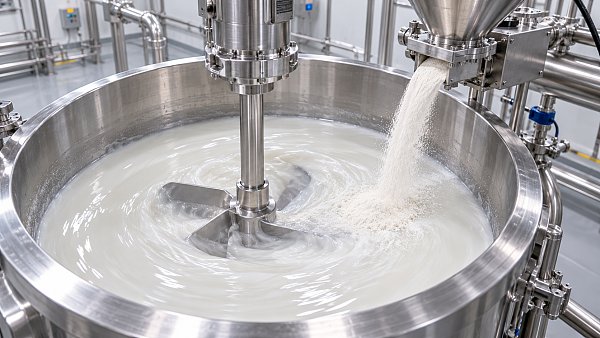
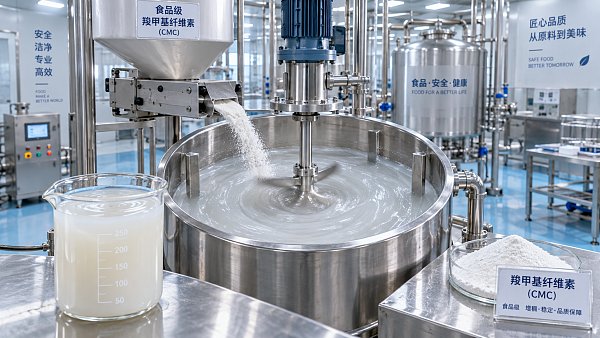
An emulsifier can only perform properly if it is dispersed and hydrated under suitable conditions. For liquid products, teams commonly begin by preparing separate aqueous and oil phases, ensuring powders are fully wetted before high shear is applied. Adding an emulsifier to an already unstable bulk mix may improve appearance temporarily without resolving the underlying droplet-size problem.
Homogenization is often a decisive step. If oil droplets remain too large, creaming and separation become more likely. If shear is excessive for a particular protein system, the formulation may develop viscosity loss, foaming, or protein aggregation. The appropriate balance depends on the equipment, batch size, temperature, fat level, and the ingredients’ tolerance to mechanical stress. Production teams should not assume that a laboratory high-shear result will transfer directly to a continuous industrial line.
Heat treatment adds another layer of complexity. Some plant proteins become more functional after controlled heating; others may aggregate, settle, or produce a gritty mouthfeel when combined with minerals or acidic components. A product may appear stable immediately after manufacture but show instability after thermal treatment, storage, or temperature cycling. That is why visual inspection at filling is not enough. Holding samples under conditions relevant to the intended supply chain gives a more meaningful indication of formulation robustness.
Different product formats need different texture strategies
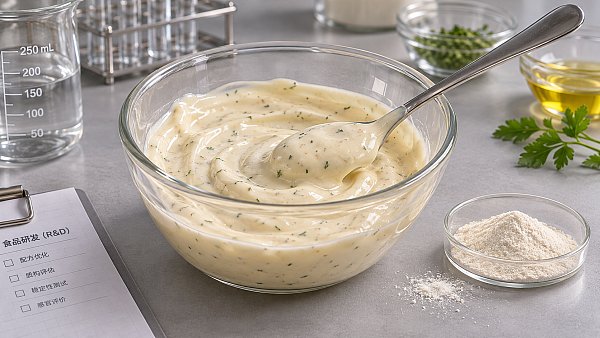
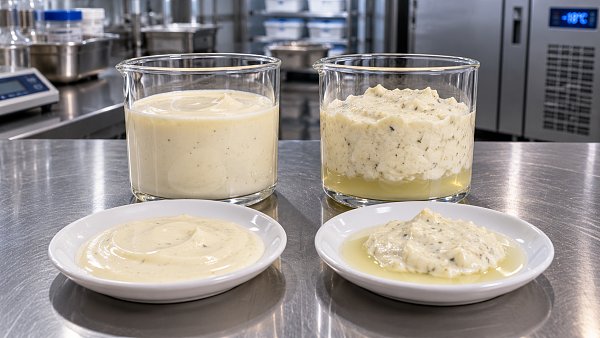
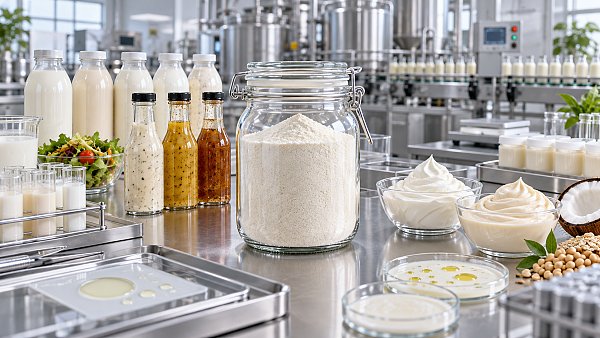
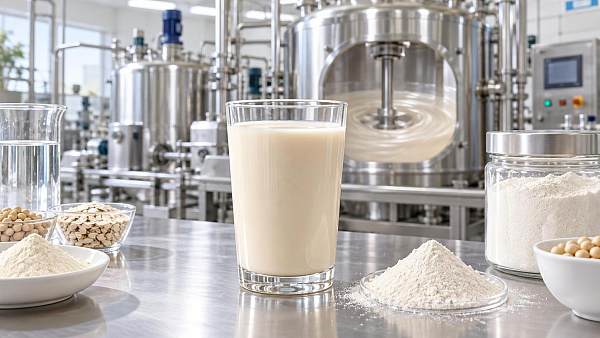
For a barista-style beverage, the priority may be stable dispersion during steaming and a balanced interaction with coffee acidity. A simple beverage that performs well in a refrigerated carton may still split when exposed to hot coffee. In dressings, the objective is often a high internal oil phase and a creamy spoonable texture, so the emulsifier must work alongside thickening agents and acidulants. In meat alternatives, fat delivery is closely tied to sensory quality: oil needs to remain distributed through mixing and forming, then contribute lubrication after cooking rather than escaping into the package or pan.
How to screen a natural emulsifier system before scale-up
A disciplined screening process is more useful than selecting an ingredient based solely on a familiar label name. Start with the product’s failure mode. Is the problem a top oil layer, sediment at the bottom, a thin mouthfeel, poor foam, grittiness, or loss of viscosity after heat treatment? These are different problems and may require different interventions.
Then evaluate the system under realistic conditions. A useful pilot review usually includes the intended oil type and level, pH, salt and mineral content, protein source, thermal profile, target viscosity, filling method, and expected storage environment. Where the product will be exported or sold across multiple regions, documentation and labeling requirements should be reviewed early rather than after the formula has been finalized.
Operators should also pay attention to handling. Some powdered emulsifier systems require pre-blending with other dry ingredients to avoid lumping. Others disperse more effectively in oil before introduction to the water phase. Viscosity builders can hydrate slowly and may need separate preparation. Small deviations in addition order can change the result enough to create avoidable batch-to-batch variation.
Questions worth asking suppliers and internal technical teams
- What is the ingredient’s source, composition range, physical form, and recommended storage condition?
- Has its performance been assessed in a system with comparable pH, fat content, protein type, and heat process?
- Does it require a particular order of addition, hydration time, or mixing intensity?
- What documentation is available for the destination market, including allergen and labeling information where applicable?
- How is batch consistency monitored, and what attributes should receiving teams check before use?
The last point is sometimes underestimated. An emulsifier system that performs well in development can become difficult to manage if its physical characteristics vary between lots. Moisture, particle size, dispersibility, odor, color, and microbial specifications may be relevant depending on the format. Procurement, quality, and operations teams need the same technical language when evaluating alternatives.
Common mistakes that weaken texture and stability
One mistake is increasing emulsifier dosage to solve every stability issue. Beyond a certain point, a higher level may affect flavor, foam, cost, or interfacial behavior without addressing the real cause of separation. If the continuous phase is too thin, if protein hydration is incomplete, or if homogenization is inadequate, the formulation may remain unstable regardless of added emulsifier.
Another is treating viscosity as proof of emulsion stability. A thick sauce can still release oil over time. Conversely, a relatively low-viscosity beverage can be stable if droplets are sufficiently fine and the interface is well protected. The correct evaluation combines appearance, particle or droplet observations where available, viscosity, sensory assessment, and storage performance.
Teams also need to consider oxidation. A stable oil dispersion does not automatically mean stable flavor. Oils rich in unsaturated fatty acids can develop off-notes if oxygen exposure, light, trace metals, or processing conditions are not controlled. Antioxidant strategy, packaging selection, and headspace management may need to be considered alongside the emulsifier system.
A more practical way to make formulation decisions
The most effective approach is to define texture as a measurable product outcome rather than a vague sensory target. “Creamier” might mean less perceived chalkiness, slower separation, greater viscosity at serving temperature, improved oil retention, or smoother breakdown in the mouth. Once the target is specific, the formulation team can decide whether the priority is interfacial stabilization, water binding, protein functionality, fat structuring, or a combination of these effects.
This application-led perspective is central to food ingredient evaluation. FCAS follows emulsifiers, stabilizers, hydrocolloids, preservatives, antioxidants, flavors, and other food ingredients through practical processing and performance questions rather than chemical names alone. For plant-based developers and production teams, this makes it easier to compare materials in the context that matters: how they behave in a real formulation, on real equipment, and within the documentation requirements of the intended market.
Natural food emulsifiers for plant based products can make a substantial difference to texture, but only when the ingredient choice fits the full system. Before moving to commercial production, confirm the product’s failure mode, run trials using representative process conditions, review the ingredient documentation, and test shelf-life behavior rather than relying on a fresh-batch appearance. That work is usually less costly than troubleshooting separation, texture drift, or inconsistent performance after launch.
Facing technical bottlenecks in manufacturing or looking for more efficient industrial solutions? Leave your details below and let the engineering experts at FCAS solve them for you.
We respect your privacy. Your information is strictly confidential.
Related News
 Hydrocolloids & EmulsifiersHow Does Agar Work as a Gelling Agent in Food?Discover how agar transforms liquids into firm gels, what affects texture and setting, and how to troubleshoot common problems in food formulations.MORE+
 Hydrocolloids & EmulsifiersHow Do Hydrocolloid Gums Improve Texture and Stability in Foods?Discover how hydrocolloid gums improve food texture and stability, and learn how to choose the right gum for your formulation.MORE+
 Hydrocolloids & EmulsifiersHow to Use Hydrocolloid Stabilizer Blends for SaucesDiscover how to use hydrocolloid stabilizer blends for sauces to improve texture, prevent separation, and achieve consistent results from trial to production.MORE+
 Hydrocolloids & EmulsifiersWhat to Look for in a Konjac Gum ManufacturerChoosing a konjac gum manufacturer? Learn how to assess quality, consistency, food safety, pricing, and supply reliability before you buy.MORE+
 Hydrocolloids & EmulsifiersHow to Choose Flavor Carriers for Spray Dried FlavorsChoose flavor carriers for spray dried flavors with confidence. Compare maltodextrin, gum arabic and modified starch for retention, stability and release.MORE+
 Hydrocolloids & EmulsifiersHow to Use Tara Gum for Dessert Toppings With Better StabilityDiscover how to use tara gum for dessert toppings to improve texture and stability, with practical hydration, formulation, and testing tips.MORE+
 Hydrocolloids & EmulsifiersHow Seaweed Extract Hydrocolloids Improve Food TextureSeaweed Extract Hydrocolloids improve food texture and stability. Discover how alginate, carrageenan, and agar perform in real formulations.MORE+
 Hydrocolloids & EmulsifiersWhat to Check Before Buying Carboxymethyl Cellulose WholesaleBuying carboxymethyl cellulose wholesale? Learn how to compare grades, supplier documents, performance and delivered costs before placing your order.MORE+
 Hydrocolloids & EmulsifiersHow Cocamidopropyl Betaine Improves Foam in Bath ProductsDiscover how cocamidopropyl betaine for bath products can enhance foam, support a creamy lather, and help formulators improve bath and shower products.MORE+
 Hydrocolloids & EmulsifiersHow Does Low DE Maltodextrin Affect Texture in Powdered Drinks?Discover how low de maltodextrin adds body to powdered drinks with minimal sweetness. Learn how to select grades, improve mixing, and fine-tune texture for a better drinking experience.MORE+
 Hydrocolloids & EmulsifiersHow Do You Choose Flavor Emulsions for Beverages With Low Sugar?Choose flavor emulsions for beverages with low sugar. Learn how to balance taste, validate stability, compare cost per dose, and meet labeling requirements for a confident selection.MORE+
 Hydrocolloids & EmulsifiersNutrition Experts Urge White House to Define Ultra-Processed FoodsUltra-processed foods face a push for an official White House definition. Explore what the proposed criteria could mean for ingredient suppliers and food product development.MORE+
 Hydrocolloids & EmulsifiersHow Can Flavor Emulsions for Beverages Stay Stable During Storage?Keep flavor emulsions for beverages stable during storage. Discover practical ways to control droplet size, prevent oil rings, protect aroma, and validate shelf life.MORE+
 Hydrocolloids & EmulsifiersHow Does Locust Bean Gum Compare With Guar Gum as a Thickener?Compare locust bean gum thickener with guar gum for hydration, texture, stability, and cost. Discover which option fits your process and delivers better product performance.MORE+
 Hydrocolloids & EmulsifiersHow Can You Verify Quality at a Microcrystalline Cellulose Factory?Verify quality at a microcrystalline cellulose factory with practical audit tips on traceability, testing, and batch consistency. Explore the guide to make confident sourcing decisions.MORE+
 Hydrocolloids & EmulsifiersHow Do Clean Label Stabilizer Blends Prevent Separation in Drinks?Discover how clean label stabilizer blends help reduce drink separation while preserving texture. Learn how to choose and validate the right blend for your beverage.MORE+
 Hydrocolloids & EmulsifiersHow to Choose Food Thickeners That Keep Sauces Stable After FreezingChoose Food Thickeners that keep frozen sauces smooth and stable. Compare starches, gums, and freeze–thaw tests to reduce water separation and find the right fit for your formulation.MORE+
 Hydrocolloids & EmulsifiersHow to Prevent Lumps When Mixing Powder Hydrocolloid Stabilizer BlendsPrevent lumps in powder hydrocolloid stabilizer blends with practical tips on feeding, dispersion, temperature, and hydration. Learn how to achieve smoother, more consistent batches.MORE+
 Hydrocolloids & EmulsifiersHow Can You Use Carboxymethyl Cellulose for Food Thickening Without Clumps?Use carboxymethyl cellulose for food thickening without clumps. Discover practical dispersion, mixing, and hydration tips for smoother textures and fewer wasted batches.MORE+
 Hydrocolloids & EmulsifiersWhich Encapsulation Wall Materials for Flavors Work Best in Baking?Compare encapsulation wall materials for flavors in baking. Explore starch, gum arabic, protein and lipid options to improve aroma retention and find the right fit for your products.MORE+
 Hydrocolloids & EmulsifiersHow Locust Bean Gum Improves Texture and Stability in Dairy ProductsLocust bean gum for dairy products improves creaminess, reduces whey separation, and supports stable yogurt, ice cream, spreads, and dairy drinks.MORE+
 Hydrocolloids & EmulsifiersWhy Clean Label Food Emulsifiers Matter in Modern FormulationClean label food emulsifiers shape stability, texture, processing, and shelf life. Explore practical formulation insights for beverages, sauces, bakery, and more.MORE+
 Hydrocolloids & EmulsifiersHow Natural Food Emulsifiers Improve Plant-Based Product TextureNatural food emulsifiers for plant based products improve creaminess, stability, and texture. Explore practical formulation strategies for beverages, dressings, desserts, and more.MORE+
 Hydrocolloids & EmulsifiersHow Konjac Gum Powder Improves Texture in Low-Calorie FoodsKonjac gum powder improves body, stability, and mouthfeel in low-calorie foods. Discover practical tips for smoother sauces, beverages, and reduced-fat formulations.MORE+
 Hydrocolloids & EmulsifiersHow Bulk Price Factors Affect Hydrocolloid Stabilizer Blend SourcingHydrocolloid stabilizer blends bulk price: compare dosage efficiency, quality consistency, logistics, and documentation to reduce total sourcing costs.MORE+
 Hydrocolloids & EmulsifiersHow Hydrocolloid Systems for Meat Products Improve Texture and YieldHydrocolloid systems for meat products improve yield, texture, water retention, and slicing quality. Explore practical formulation strategies for stable, high-performing meat products.MORE+
 Hydrocolloids & EmulsifiersHow Locust Bean Gum Thickener Improves Texture and StabilityLocust bean gum thickener improves texture, water retention, suspension, and stability. Learn practical hydration and blending tips for better product performance.MORE+
 Hydrocolloids & EmulsifiersChoosing Maltodextrin for Flavor Carriers in Dry Food BlendsMaltodextrin for flavor carriers: discover how to optimize aroma protection, powder flow, moisture control, compliance, and supply reliability in dry food blends.MORE+
 Hydrocolloids & EmulsifiersHow Guar Gum Derivatives Solve Texture and Stability IssuesGuar Gum Derivatives help solve texture, settling, separation, and viscosity loss. Discover practical formulation strategies for stable, high-performing products.MORE+
 Hydrocolloids & EmulsifiersHow Non-GMO Food Emulsifiers Improve Label-Friendly FormulationsNon-GMO food emulsifiers help create stable, label-friendly sauces, beverages, bakery products, and frozen foods. Explore sourcing, processing, and formulation insights.MORE+
 Hydrocolloids & EmulsifiersWhat to Evaluate When Choosing a Hydrocolloid Systems ManufacturerHydrocolloid systems manufacturer selection made easier: evaluate performance, documentation, supply reliability, and total cost for dependable results.MORE+
 Hydrocolloids & EmulsifiersWhat to Check Before Buying Natural Food Emulsifiers WholesaleNatural food emulsifiers wholesale: learn how to evaluate label fit, formula performance, documentation, supplier reliability, and total landed cost before buying.MORE+
 Hydrocolloids & EmulsifiersPreventing Melt-Down With Ice Cream Stabilizer Blend SelectionHydrocolloid stabilizer blends for ice cream: diagnose melt-down, improve creamy melt quality, and select formulas for stable texture and cold-chain resilience.MORE+
 Hydrocolloids & EmulsifiersWhen Cold Soluble Tara Gum Is the Right Choice for Beverage FormulasCold soluble tara gum helps beverage formulators achieve rapid hydration, smooth texture, and reliable stability. Explore when it delivers the right processing advantage.MORE+
 Hydrocolloids & EmulsifiersHow High Viscosity Locust Bean Gum Improves Texture StabilityHigh viscosity locust bean gum improves texture stability, water control, and mouthfeel in dairy, sauces, fillings, and frozen foods. Explore practical selection insights.MORE+
 Hydrocolloids & EmulsifiersFood Texturants: How to Match Hydrocolloids to Beverage and Sauce SystemsFood texturants guide: match hydrocolloids to beverage and sauce systems for stable texture, smooth processing, and better sensory performance.MORE+
 Hydrocolloids & EmulsifiersChoosing Cold Soluble Hydrocolloid Systems for Instant Beverage TextureCold soluble hydrocolloid systems for instant beverages: compare dispersion, texture, stability, process fit, and cost to select the right solution for scalable production.MORE+
 Hydrocolloids & EmulsifiersWhy Spray Dried Gum Arabic Is Used to Improve Powder StabilitySpray dried gum arabic improves powder stability by protecting sensitive ingredients, supporting flow, and enhancing water dispersibility. Discover its key benefits.MORE+
 Hydrocolloids & EmulsifiersHow to Select Flavor Emulsions That Keep Juice Drinks Smooth and StableFlavor emulsions for juice drinks: learn how to select stable systems that prevent oil rings, maintain cloud, protect aroma, and support smooth shelf-life performance.MORE+
 Hydrocolloids & EmulsifiersWhy Gellan Gum Is Used to Control Texture in Modern FoodsGellan Gum gives modern foods precise texture control, from light beverage suspension to clean gels and creamy body. Explore uses, processing factors, and formulation tips.MORE+