How Locust Bean Gum Improves Texture and Stability in Dairy Products
How Locust Bean Gum Improves Texture and Stability in Dairy Products
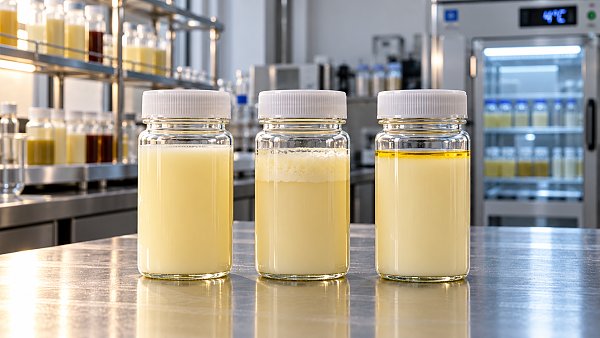
In dairy processing, texture, viscosity, and shelf-life stability directly affect product quality and consumer acceptance. A yogurt that releases whey, an ice cream that develops coarse ice crystals, or a dairy drink with visible settling can quickly be judged as poorly made—even when its flavor is acceptable. Locust bean gum for dairy products is widely used to improve creaminess, reduce serum separation, support suspension, and strengthen stability during chilled or frozen storage.
For operators, the practical question is rarely whether a hydrocolloid can thicken a product. The more useful question is whether it can create the desired body without causing processing difficulties, excessive viscosity, graininess, weak flavor release, or inconsistency from batch to batch. Locust bean gum, often abbreviated as LBG, is valued because it can contribute a smooth, full-bodied texture while working effectively with other stabilizers in many dairy systems.
Why Dairy Products Need More Than Basic Viscosity
Dairy products are complex dispersions. They contain water, fat, milk proteins, minerals, sugars, air in frozen products, and sometimes fruit preparations, cocoa, coffee extracts, or added proteins. Each component reacts differently to heat treatment, homogenization, acidification, storage temperature, and mechanical shear. A formula may look stable immediately after processing but begin separating after several days in distribution.
This is why texture control should not be treated as a single-ingredient issue. In fermented milk, protein network formation during acidification is central to final body and whey retention. In ice cream, the challenge includes water management, air incorporation, fat destabilization, and resistance to temperature fluctuation. In dairy beverages, the priority may be keeping cocoa, minerals, or protein particles uniformly suspended without producing an unnaturally heavy mouthfeel.
Locust bean gum does not replace the need for sound formulation or disciplined process control. It helps create a more forgiving and stable system when the gum grade, hydration method, companion ingredients, and product conditions are properly matched.
What Makes Locust Bean Gum Different
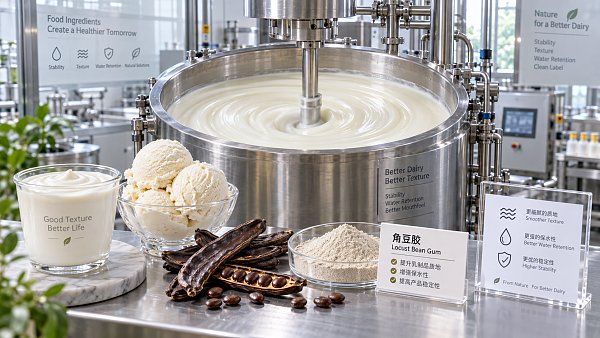
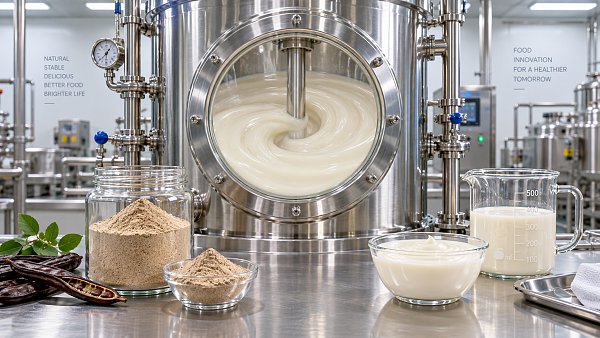
Locust bean gum is a galactomannan obtained from the seeds of the carob tree. In water, it contributes viscosity and water-binding capacity, but its value in dairy is not limited to thickening. Its molecular structure allows it to interact beneficially with selected hydrocolloids, especially xanthan gum and certain carrageenan systems. These combinations can deliver texture and stability that would be difficult to achieve with either ingredient alone.
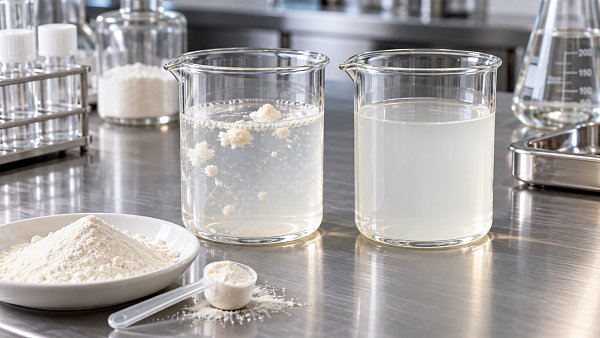
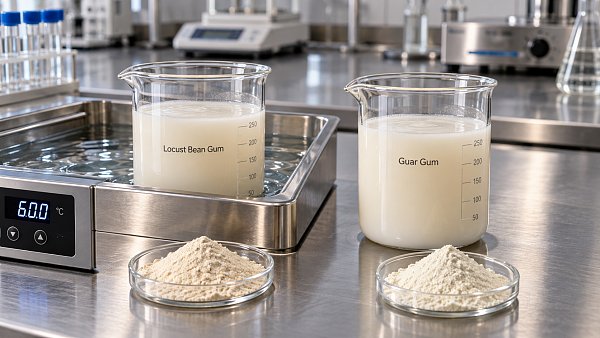
A useful operational distinction is that LBG generally requires sufficient heat for full hydration. If it is added under conditions that do not allow proper dispersion and hydration, the plant may see undissolved particles, uneven viscosity, or soft gel-like fragments in the finished product. These defects are often blamed on raw-material quality when the more immediate issue is the addition sequence, water temperature, mixing energy, or hold time.
Compared with gums that create strong viscosity at low temperature, locust bean gum is often selected when formulators want a rounder, less sharply elastic texture. It can support a creamy perception rather than simply making a product feel thick. That difference matters in dairy applications where a heavy or slimy mouthfeel may be rejected by consumers.
How It Works in Key Dairy Applications
Stirred and set yogurt
In yogurt, the main concern is often syneresis: the release of whey from the protein gel. This can occur because of insufficient total solids, weak fermentation control, mechanical stress after incubation, or an unstable stabilizer system. Locust bean gum can improve water retention and help produce a smoother body, particularly in reduced-fat or reduced-solids formulas where the natural richness of milk fat and milk proteins is lower.
Its role must be considered alongside culture selection, homogenization, heat treatment, target pH, and the degree of stirring after fermentation. Excessive shear can damage the gel structure, while poor gum hydration can leave the system unable to retain serum effectively. For fruit-on-the-bottom or fruit-blended products, compatibility with the fruit preparation and its acidity also needs review.
Ice cream and frozen dairy desserts
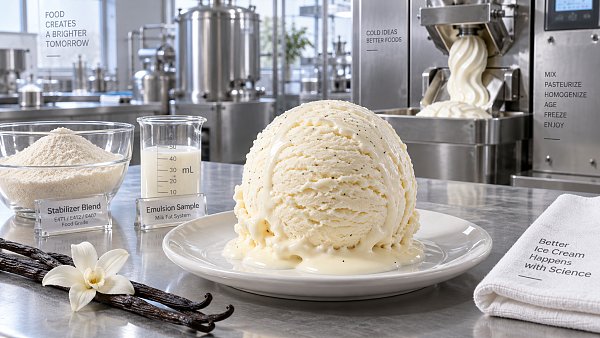
In frozen dairy systems, locust bean gum is frequently used as part of a stabilizer blend. It helps manage the unfrozen water phase, supports a smoother texture, and can reduce the perception of iciness during storage. Its contribution becomes especially relevant when products face temperature cycling in cold-chain distribution, where partial melting and refreezing can encourage ice crystal growth.
LBG is commonly paired with guar gum, carrageenan, or other hydrocolloids depending on the desired scoopability, meltdown behavior, and overrun. A stabilizer blend that performs well in a premium high-fat ice cream may not behave the same way in a low-fat frozen dessert or a plant-dairy hybrid product. Sugar profile, protein source, emulsifier selection, and freezer conditions all influence the final result.
Cream cheese, processed cheese, and dairy spreads
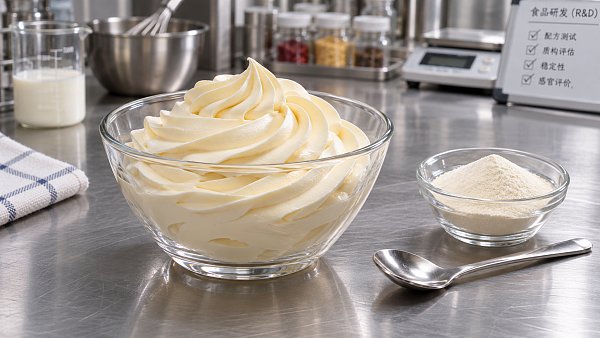
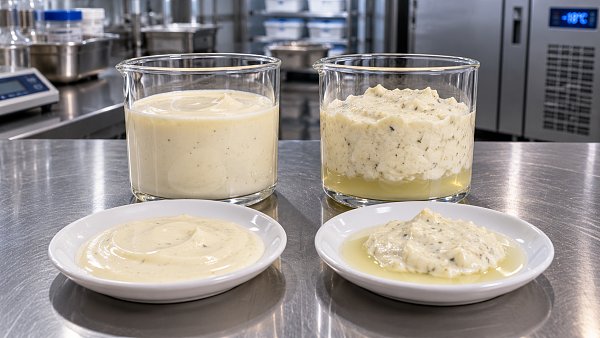
Spreadable dairy products need to balance firmness with easy application. If the matrix is too weak, the product may release moisture or lose shape. If it is too firm, consumers may experience tearing, poor spreading, or a pasty texture. Locust bean gum can help retain moisture and support body, particularly where fat reduction or process variation makes texture harder to control.
In cheese-related applications, operators should not assume that a gum behaves independently from emulsifying salts, protein condition, fat level, and heating profile. A stable formulation is built from the whole system. Small changes in the cheese base or water phase can alter the effect of the same LBG grade.
Dairy beverages and flavored milk
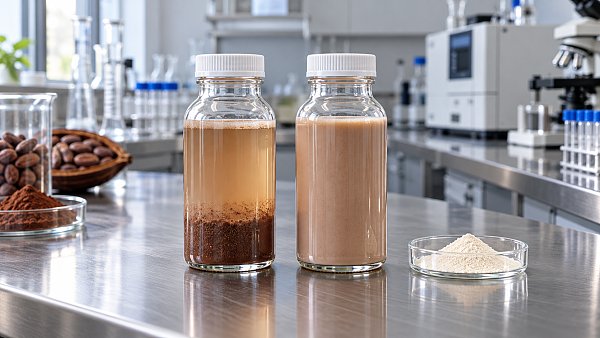
For flavored milk, protein drinks, drinking yogurt, and similar products, the target is often suspension rather than a spoonable texture. The formulation must remain homogeneous while still pouring cleanly. Locust bean gum may contribute to body and stability, but it should be used carefully when a light drinking texture is required.
Sedimentation in these systems may come from cocoa, mineral fortification, insoluble flavors, protein aggregation, or inadequate homogenization. Adding more gum can sometimes mask the symptom without resolving the cause. Reviewing particle size, pH, thermal treatment, and the order in which powders are dispersed is usually more productive than adjusting only the stabilizer level.
The Importance of Synergy with Other Hydrocolloids
One reason locust bean gum for dairy products is rarely assessed in isolation is its ability to create synergistic effects with other gums. With xanthan gum, LBG can form a more structured network than either ingredient produces separately. This can be useful when a manufacturer wants viscosity and suspension with a controlled, less stringy mouthfeel than xanthan alone may provide.
With carrageenan, LBG may be used in selected dairy formulations where protein interaction and serum control are important. However, the behavior of carrageenan-containing systems depends on milk protein content, ionic balance, processing temperature, and the specific carrageenan type. These are not “drop-in” combinations. A blend should be validated in the actual recipe and on the actual production line.
Processing Mistakes That Limit Performance
The most frequent operational mistake is adding locust bean gum directly into water without controlling dispersion. Hydrocolloid powders can hydrate on the outside of a particle before the interior is wetted, creating lumps that are difficult to break later. Preblending the gum with other dry ingredients, using appropriate agitation, and following the supplier’s recommended addition method can reduce this risk.
Another common issue is insufficient heating. Because LBG typically needs heat for complete hydration, a process designed around low-temperature mixing may not produce the intended viscosity or stabilizing effect. Conversely, a well-hydrated gum can still perform poorly if it is exposed to unsuitable pH conditions, excessive mechanical stress, or an incompatible ingredient combination.
Operators should also avoid judging performance only from viscosity measured immediately after manufacture. Texture can change after cooling, fermentation, ageing, freezing, or storage. A practical evaluation should include the product’s expected shelf-life conditions, handling during distribution, and consumer-use behavior. For ice cream, for example, a mix that appears acceptable before freezing says little about final meltdown and resistance to heat shock.
Selecting an LBG Grade for a Dairy Formula
Selecting locust bean gum is not simply a matter of requesting “food grade” material. The formulation team should confirm the intended application, required hydration conditions, particle-size characteristics, microbiological expectations, odor and color limits, and compatibility with the rest of the stabilizer system. Specifications should be evaluated against the finished product, not only against a generic ingredient description.
For procurement and quality teams, documentation is part of the decision. The relevant food-contact, labeling, allergen, origin, transport, and market-access requirements vary by destination and product category. It is prudent to verify current local requirements rather than assume that a document package accepted in one market will be sufficient in another.
Consistency matters as much as the initial sample result. A gum that changes in hydration behavior or viscosity from one supply batch to another can create downstream variation in mixing time, filling behavior, fermentation texture, and finished-product appearance. Supplier evaluation should therefore include batch-control practices, packaging protection against moisture, storage guidance, and the ability to provide relevant technical information when the formula changes.
A Better Way to Troubleshoot Dairy Texture
When a dairy product becomes watery, grainy, overly thick, or unstable, changing the gum level should not be the first response. Start by defining the defect precisely: Does whey appear after filling, after fermentation, after transport, or only after the consumer opens the product? Is the problem linked to a particular milk base, fruit preparation, season, or production line? Does it occur in every batch or only at a specific processing rate?
This approach turns a vague texture complaint into a process investigation. The formulation can then be assessed together with thermal profile, homogenization pressure, solids content, pH development, stabilizer hydration, and storage exposure. In many cases, the right answer is a modest adjustment to the complete system rather than a large increase in one ingredient.
FCAS follows food hydrocolloids, stabilizers, emulsifiers, preservatives, and related formulation materials through real application questions rather than chemical names alone. For dairy teams, that means connecting ingredient selection with processing conditions, shelf-life behavior, documentation readiness, and supply-chain consistency. Before finalizing an LBG-based system, it is worth confirming the product format, process temperatures, companion hydrocolloids, target sensory profile, and requirements of the intended market. Those details determine whether locust bean gum becomes a reliable texture tool or an avoidable source of production variability.
Facing technical bottlenecks in manufacturing or looking for more efficient industrial solutions? Leave your details below and let the engineering experts at FCAS solve them for you.
We respect your privacy. Your information is strictly confidential.
Related News
 Hydrocolloids & EmulsifiersHow Does Agar Work as a Gelling Agent in Food?Discover how agar transforms liquids into firm gels, what affects texture and setting, and how to troubleshoot common problems in food formulations.MORE+
 Hydrocolloids & EmulsifiersHow Do Hydrocolloid Gums Improve Texture and Stability in Foods?Discover how hydrocolloid gums improve food texture and stability, and learn how to choose the right gum for your formulation.MORE+
 Hydrocolloids & EmulsifiersHow to Use Hydrocolloid Stabilizer Blends for SaucesDiscover how to use hydrocolloid stabilizer blends for sauces to improve texture, prevent separation, and achieve consistent results from trial to production.MORE+
 Hydrocolloids & EmulsifiersWhat to Look for in a Konjac Gum ManufacturerChoosing a konjac gum manufacturer? Learn how to assess quality, consistency, food safety, pricing, and supply reliability before you buy.MORE+
 Hydrocolloids & EmulsifiersHow to Choose Flavor Carriers for Spray Dried FlavorsChoose flavor carriers for spray dried flavors with confidence. Compare maltodextrin, gum arabic and modified starch for retention, stability and release.MORE+
 Hydrocolloids & EmulsifiersHow to Use Tara Gum for Dessert Toppings With Better StabilityDiscover how to use tara gum for dessert toppings to improve texture and stability, with practical hydration, formulation, and testing tips.MORE+
 Hydrocolloids & EmulsifiersHow Seaweed Extract Hydrocolloids Improve Food TextureSeaweed Extract Hydrocolloids improve food texture and stability. Discover how alginate, carrageenan, and agar perform in real formulations.MORE+
 Hydrocolloids & EmulsifiersWhat to Check Before Buying Carboxymethyl Cellulose WholesaleBuying carboxymethyl cellulose wholesale? Learn how to compare grades, supplier documents, performance and delivered costs before placing your order.MORE+
 Hydrocolloids & EmulsifiersHow Cocamidopropyl Betaine Improves Foam in Bath ProductsDiscover how cocamidopropyl betaine for bath products can enhance foam, support a creamy lather, and help formulators improve bath and shower products.MORE+
 Hydrocolloids & EmulsifiersHow Does Low DE Maltodextrin Affect Texture in Powdered Drinks?Discover how low de maltodextrin adds body to powdered drinks with minimal sweetness. Learn how to select grades, improve mixing, and fine-tune texture for a better drinking experience.MORE+
 Hydrocolloids & EmulsifiersHow Do You Choose Flavor Emulsions for Beverages With Low Sugar?Choose flavor emulsions for beverages with low sugar. Learn how to balance taste, validate stability, compare cost per dose, and meet labeling requirements for a confident selection.MORE+
 Hydrocolloids & EmulsifiersNutrition Experts Urge White House to Define Ultra-Processed FoodsUltra-processed foods face a push for an official White House definition. Explore what the proposed criteria could mean for ingredient suppliers and food product development.MORE+
 Hydrocolloids & EmulsifiersHow Can Flavor Emulsions for Beverages Stay Stable During Storage?Keep flavor emulsions for beverages stable during storage. Discover practical ways to control droplet size, prevent oil rings, protect aroma, and validate shelf life.MORE+
 Hydrocolloids & EmulsifiersHow Does Locust Bean Gum Compare With Guar Gum as a Thickener?Compare locust bean gum thickener with guar gum for hydration, texture, stability, and cost. Discover which option fits your process and delivers better product performance.MORE+
 Hydrocolloids & EmulsifiersHow Can You Verify Quality at a Microcrystalline Cellulose Factory?Verify quality at a microcrystalline cellulose factory with practical audit tips on traceability, testing, and batch consistency. Explore the guide to make confident sourcing decisions.MORE+
 Hydrocolloids & EmulsifiersHow Do Clean Label Stabilizer Blends Prevent Separation in Drinks?Discover how clean label stabilizer blends help reduce drink separation while preserving texture. Learn how to choose and validate the right blend for your beverage.MORE+
 Hydrocolloids & EmulsifiersHow to Choose Food Thickeners That Keep Sauces Stable After FreezingChoose Food Thickeners that keep frozen sauces smooth and stable. Compare starches, gums, and freeze–thaw tests to reduce water separation and find the right fit for your formulation.MORE+
 Hydrocolloids & EmulsifiersHow to Prevent Lumps When Mixing Powder Hydrocolloid Stabilizer BlendsPrevent lumps in powder hydrocolloid stabilizer blends with practical tips on feeding, dispersion, temperature, and hydration. Learn how to achieve smoother, more consistent batches.MORE+
 Hydrocolloids & EmulsifiersHow Can You Use Carboxymethyl Cellulose for Food Thickening Without Clumps?Use carboxymethyl cellulose for food thickening without clumps. Discover practical dispersion, mixing, and hydration tips for smoother textures and fewer wasted batches.MORE+
 Hydrocolloids & EmulsifiersWhich Encapsulation Wall Materials for Flavors Work Best in Baking?Compare encapsulation wall materials for flavors in baking. Explore starch, gum arabic, protein and lipid options to improve aroma retention and find the right fit for your products.MORE+
 Hydrocolloids & EmulsifiersHow Locust Bean Gum Improves Texture and Stability in Dairy ProductsLocust bean gum for dairy products improves creaminess, reduces whey separation, and supports stable yogurt, ice cream, spreads, and dairy drinks.MORE+
 Hydrocolloids & EmulsifiersWhy Clean Label Food Emulsifiers Matter in Modern FormulationClean label food emulsifiers shape stability, texture, processing, and shelf life. Explore practical formulation insights for beverages, sauces, bakery, and more.MORE+
 Hydrocolloids & EmulsifiersHow Natural Food Emulsifiers Improve Plant-Based Product TextureNatural food emulsifiers for plant based products improve creaminess, stability, and texture. Explore practical formulation strategies for beverages, dressings, desserts, and more.MORE+
 Hydrocolloids & EmulsifiersHow Konjac Gum Powder Improves Texture in Low-Calorie FoodsKonjac gum powder improves body, stability, and mouthfeel in low-calorie foods. Discover practical tips for smoother sauces, beverages, and reduced-fat formulations.MORE+
 Hydrocolloids & EmulsifiersHow Bulk Price Factors Affect Hydrocolloid Stabilizer Blend SourcingHydrocolloid stabilizer blends bulk price: compare dosage efficiency, quality consistency, logistics, and documentation to reduce total sourcing costs.MORE+
 Hydrocolloids & EmulsifiersHow Hydrocolloid Systems for Meat Products Improve Texture and YieldHydrocolloid systems for meat products improve yield, texture, water retention, and slicing quality. Explore practical formulation strategies for stable, high-performing meat products.MORE+
 Hydrocolloids & EmulsifiersHow Locust Bean Gum Thickener Improves Texture and StabilityLocust bean gum thickener improves texture, water retention, suspension, and stability. Learn practical hydration and blending tips for better product performance.MORE+
 Hydrocolloids & EmulsifiersChoosing Maltodextrin for Flavor Carriers in Dry Food BlendsMaltodextrin for flavor carriers: discover how to optimize aroma protection, powder flow, moisture control, compliance, and supply reliability in dry food blends.MORE+
 Hydrocolloids & EmulsifiersHow Guar Gum Derivatives Solve Texture and Stability IssuesGuar Gum Derivatives help solve texture, settling, separation, and viscosity loss. Discover practical formulation strategies for stable, high-performing products.MORE+
 Hydrocolloids & EmulsifiersHow Non-GMO Food Emulsifiers Improve Label-Friendly FormulationsNon-GMO food emulsifiers help create stable, label-friendly sauces, beverages, bakery products, and frozen foods. Explore sourcing, processing, and formulation insights.MORE+
 Hydrocolloids & EmulsifiersWhat to Evaluate When Choosing a Hydrocolloid Systems ManufacturerHydrocolloid systems manufacturer selection made easier: evaluate performance, documentation, supply reliability, and total cost for dependable results.MORE+
 Hydrocolloids & EmulsifiersWhat to Check Before Buying Natural Food Emulsifiers WholesaleNatural food emulsifiers wholesale: learn how to evaluate label fit, formula performance, documentation, supplier reliability, and total landed cost before buying.MORE+
 Hydrocolloids & EmulsifiersPreventing Melt-Down With Ice Cream Stabilizer Blend SelectionHydrocolloid stabilizer blends for ice cream: diagnose melt-down, improve creamy melt quality, and select formulas for stable texture and cold-chain resilience.MORE+
 Hydrocolloids & EmulsifiersWhen Cold Soluble Tara Gum Is the Right Choice for Beverage FormulasCold soluble tara gum helps beverage formulators achieve rapid hydration, smooth texture, and reliable stability. Explore when it delivers the right processing advantage.MORE+
 Hydrocolloids & EmulsifiersHow High Viscosity Locust Bean Gum Improves Texture StabilityHigh viscosity locust bean gum improves texture stability, water control, and mouthfeel in dairy, sauces, fillings, and frozen foods. Explore practical selection insights.MORE+
 Hydrocolloids & EmulsifiersFood Texturants: How to Match Hydrocolloids to Beverage and Sauce SystemsFood texturants guide: match hydrocolloids to beverage and sauce systems for stable texture, smooth processing, and better sensory performance.MORE+
 Hydrocolloids & EmulsifiersChoosing Cold Soluble Hydrocolloid Systems for Instant Beverage TextureCold soluble hydrocolloid systems for instant beverages: compare dispersion, texture, stability, process fit, and cost to select the right solution for scalable production.MORE+
 Hydrocolloids & EmulsifiersWhy Spray Dried Gum Arabic Is Used to Improve Powder StabilitySpray dried gum arabic improves powder stability by protecting sensitive ingredients, supporting flow, and enhancing water dispersibility. Discover its key benefits.MORE+
 Hydrocolloids & EmulsifiersHow to Select Flavor Emulsions That Keep Juice Drinks Smooth and StableFlavor emulsions for juice drinks: learn how to select stable systems that prevent oil rings, maintain cloud, protect aroma, and support smooth shelf-life performance.MORE+
 Hydrocolloids & EmulsifiersWhy Gellan Gum Is Used to Control Texture in Modern FoodsGellan Gum gives modern foods precise texture control, from light beverage suspension to clean gels and creamy body. Explore uses, processing factors, and formulation tips.MORE+