Which Encapsulation Wall Materials for Flavors Work Best in Baking?
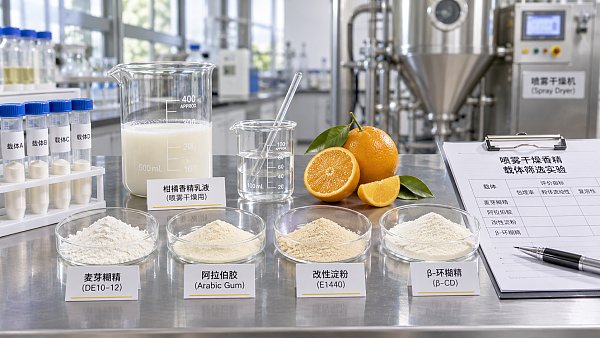
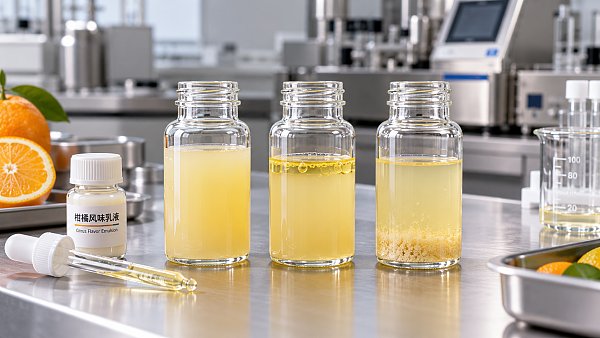
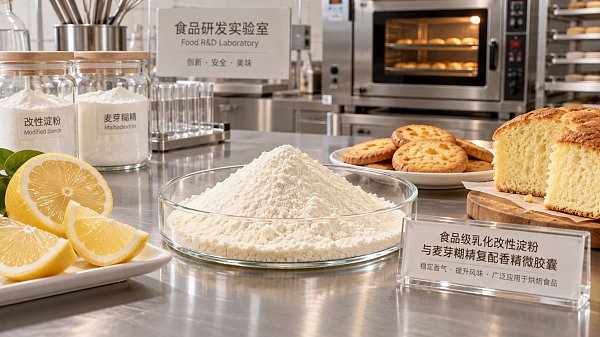
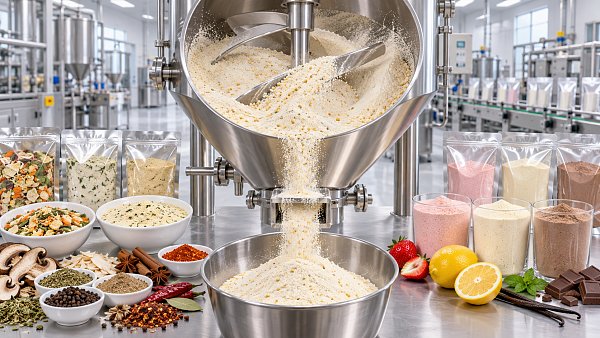
A citrus cookie can smell strong during mixing yet taste flat after baking; a vanilla cake may lose its top notes before packaging. For these problems, food-grade emulsifying modified starch blended with maltodextrin is a practical starting point for oil-soluble flavors. Gum arabic blends are another strong candidate when emulsion stability is important. Neither is automatically best: performance depends on when the wall hydrates, how the flavor moves through the dough, and whether enough aroma remains available during eating.
Choosing encapsulation wall materials for flavors therefore requires more than comparing nominal heat resistance. Protein-based walls can provide useful emulsification and dry-state protection, while lipid coatings can delay moisture contact. However, hydrated proteins behave differently from dry powders, and many lipid coatings melt before baking is complete. The selection target should be retention through processing followed by acceptable sensory release, not simply the strongest barrier.
Start with the dough environment, not the oven setting
An oven temperature does not describe the temperature experienced by every encapsulated particle. Moist crumb, drying surfaces, and thin biscuit edges follow different temperature and moisture histories. Evaporation limits temperature rise in wet regions, while a dry crust can become substantially hotter. Bake duration, piece thickness, airflow, and particle location all influence exposure.
Water can defeat protection before heat does. A spray-dried carbohydrate wall may dissolve or become plasticized during mixing or dough resting, releasing flavor into the surrounding matrix. That flavor can then evaporate, partition into fat, or undergo chemical changes during baking. A powder that performs well in dry storage is not necessarily a delayed-release ingredient in wet batter.
Define the intended release point before requesting samples:
- During mixing: encapsulation mainly supports storage, handling, and dispersion; the bakery matrix must provide much of the subsequent retention.
- During baking: release may support aroma development, but exposed volatile notes can escape with steam.
- During chewing: the system must retain flavor through production yet release it through saliva, warming, or mechanical breakdown.
For a lemon muffin, rapid hydration may be acceptable if the fat phase retains enough aroma. For a crisp biscuit intended to deliver a distinct citrus note on chewing, protection against premature release may matter more. These are different formulation targets even when the same flavor oil is used.
Which wall materials deserve a place on the shortlist?
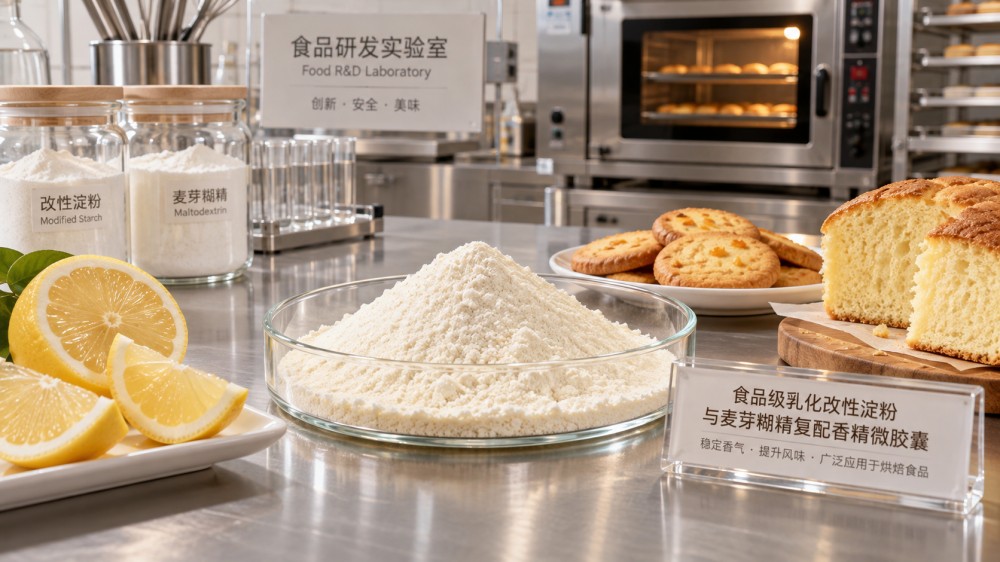
Modified starch and maltodextrin: a practical baseline
Emulsifying modified starches, including food-grade octenyl succinic anhydride-modified starch where permitted, can stabilize oil droplets before spray drying. Maltodextrin contributes matrix solids and helps adjust feed viscosity and powder properties. Their roles are complementary: adding more carrier does not compensate for a poorly stabilized emulsion.
This combination is worth screening for citrus oils, spice oils, and other hydrophobic flavor preparations. Ask which starch grade is used; “modified starch” alone does not establish emulsifying functionality. Also request flavor loading and surface-oil information. Oil exposed at the particle surface is more vulnerable to oxidation and evaporation than oil effectively enclosed within the matrix.
Maltodextrin grade affects hygroscopicity and glass-transition behavior. Moisture can soften an initially glassy wall and increase molecular mobility. Dextrose equivalent is useful background information, but it does not independently predict bakery performance. The complete formulation, residual moisture, and storage humidity determine whether the powder remains stable and free-flowing.
Gum arabic: useful emulsification, not a universal heat shield
Gum arabic can stabilize flavor-oil emulsions and form dried matrices without the high feed viscosity associated with some other hydrocolloids. Blending it with maltodextrin can balance emulsification, matrix formation, and material cost. It is a reasonable comparison candidate when volatile oils or emulsion instability are central concerns.
Its limitation is not simply temperature tolerance. Gum arabic is water-soluble, so a stable dry powder may release flavor quickly in batter. Grade consistency and formulation details also matter. Compare candidates at equivalent delivered flavor levels, and do not assume that increasing gum content will improve retention after hydration.
Proteins: strong interfaces with formulation constraints
Whey protein, caseinate, gelatin, and suitable plant proteins can act as wall components through emulsification or film formation. Some dry protein matrices provide useful oxygen protection, but this advantage depends on moisture and structure. Heating may alter the protein network without guaranteeing that volatile flavor remains enclosed.
Protein systems need screening against dough pH, salt concentration, hydration sequence, and mixing conditions. Aggregation or poor solubility can produce uneven flavor distribution. Dairy proteins introduce milk-allergen considerations; plant proteins may contribute their own taste or color. Gelatin also requires checking against dietary and ingredient-positioning requirements.
Lipid coatings: moisture control with a melting constraint
Lipid coatings can reduce direct water contact before baking and may be useful when a carbohydrate powder releases too early. Their behavior depends on the lipid composition, coating continuity, and melting range. A coating that melts during mixing or early heating no longer provides the same physical barrier.
Selecting a higher-melting lipid is not automatically the answer. It may create waxy mouthfeel or suppress flavor release during eating. Layered systems, such as a dried flavor matrix with an outer lipid coating, can separate storage protection from moisture resistance, but add processing complexity. They deserve evaluation when simpler powders fail a clearly defined release requirement.
Match the candidate to the product’s failure mode
Wet cakes and muffins: begin with an emulsifying starch–maltodextrin system and a gum arabic blend as comparators. Test whether the powder retains an advantage after the actual batter hold. When both dissolve rapidly, flavor composition and partitioning into the batter’s fat phase may influence retention more than the original dry wall.
Cookies, crackers, and low-moisture biscuits: dry-matrix protection may remain relevant longer, but short dough is not water-free. Local wetting during ingredient addition can damage particles. Compare mixing sequence and particle distribution, then assess aroma after complete cooling; hot headspace aroma can overstate what remains for consumption.
Long dough rests or frozen dough: investigate premature hydration, migration, and storage stability before changing the wall for supposed heat resistance. The useful formulation must survive the entire schedule, including holding, freezing, thawing, and baking where applicable.
Oxidation-sensitive flavors: prioritize low surface oil, suitable barrier properties under expected humidity, and protective packaging. Loss of fresh aroma accompanied by stale or oxidized notes indicates a different problem from simple evaporation. A wall that reduces volatile escape may still offer inadequate oxidation protection.
Run a comparison that separates wall performance from flavor dosage
Comparing equal weights of commercial powders can be misleading because their flavor loads differ. Establish the amount of actual flavor delivered by each candidate. When preparations contain different carriers or solvents, document those differences rather than treating the samples as interchangeable.
- Set a relevant baseline. Include the existing formulation or an unencapsulated version of the same flavor where feasible. Keep added carrier solids comparable so texture changes do not masquerade as wall-material effects.
- Reproduce the process. Use representative mixing order, shear, dough temperature, hold time, product dimensions, and bake endpoint. Include cooling and packaging, not just oven exposure.
- Track flavor through the stages. Compare the powder, mixed dough, held dough, cooled product, and stored product. This helps distinguish damage during hydration from losses during baking or storage.
- Measure sensory delivery and chemical retention. Use blinded sensory assessment for aroma intensity, profile, off-notes, and release during chewing. Appropriate analytical methods can track selected flavor markers, but one marker cannot represent an entire flavor.
- Confirm process robustness. Repeat promising candidates across independent preparations and realistic process variation. A small improvement under one ideal condition may not justify production adoption.
Define retention calculations carefully. Baking removes water, so concentration per gram of finished product can rise even while the total amount of flavor decreases. Use a consistent basis, account for product mass changes, and verify analytical recovery from the bakery matrix. Headspace measurements reflect aroma availability under the measurement conditions, not necessarily total retained flavor.
Particle size also deserves attention. Coarse particles may create uneven flavor bursts or visible specks; very fine powder can present dusting and handling difficulties. Check whether mixing breaks coated particles and whether the powder disperses evenly without changing crumb structure, dough consistency, or mouthfeel.
Specifications that can change the final decision
A supplier’s statement that a powder is “heat stable” is insufficient without test conditions. Request the wall composition, encapsulation method, flavor loading, residual moisture, particle-size distribution, and available surface-oil data. Ask whether release behavior was assessed in water, a model food, or an actual baked product. Those tests answer different questions.
Confirm food-use suitability for the intended market and application. Modified starch identity, protein allergens, lipid source, processing aids, and required ingredient declarations can affect acceptance. Claims such as “natural” or “clean label” should not be inferred from the wall material’s name; they require checking the complete formulation and applicable rules.
Evaluate cost at the level of the finished bakery product. A cheaper powder may need a higher dose to achieve the same post-bake sensory effect. Conversely, greater analytical retention has limited value if aroma release is weak or the flavor profile becomes unbalanced. Include handling losses, storage requirements, and any process changes in the comparison.
The final choice should address the observed failure. If flavor disappears during batter holding, investigate hydration resistance or addition timing. If it survives mixing but is lost during baking, examine release timing, flavor volatility, and matrix interactions. If the cooled product tastes acceptable but deteriorates in storage, focus on oxygen exposure, moisture transfer, and packaging. These distinctions determine whether a different wall material will solve the problem—or merely move the loss to another stage.
Facing technical bottlenecks in manufacturing or looking for more efficient industrial solutions? Leave your details below and let the engineering experts at FCAS solve them for you.
We respect your privacy. Your information is strictly confidential.
Related News
 Hydrocolloids & EmulsifiersHow Does Agar Work as a Gelling Agent in Food?Discover how agar transforms liquids into firm gels, what affects texture and setting, and how to troubleshoot common problems in food formulations.MORE+
 Hydrocolloids & EmulsifiersHow Do Hydrocolloid Gums Improve Texture and Stability in Foods?Discover how hydrocolloid gums improve food texture and stability, and learn how to choose the right gum for your formulation.MORE+
 Hydrocolloids & EmulsifiersHow to Use Hydrocolloid Stabilizer Blends for SaucesDiscover how to use hydrocolloid stabilizer blends for sauces to improve texture, prevent separation, and achieve consistent results from trial to production.MORE+
 Hydrocolloids & EmulsifiersWhat to Look for in a Konjac Gum ManufacturerChoosing a konjac gum manufacturer? Learn how to assess quality, consistency, food safety, pricing, and supply reliability before you buy.MORE+
 Hydrocolloids & EmulsifiersHow to Choose Flavor Carriers for Spray Dried FlavorsChoose flavor carriers for spray dried flavors with confidence. Compare maltodextrin, gum arabic and modified starch for retention, stability and release.MORE+
 Hydrocolloids & EmulsifiersHow to Use Tara Gum for Dessert Toppings With Better StabilityDiscover how to use tara gum for dessert toppings to improve texture and stability, with practical hydration, formulation, and testing tips.MORE+
 Hydrocolloids & EmulsifiersHow Seaweed Extract Hydrocolloids Improve Food TextureSeaweed Extract Hydrocolloids improve food texture and stability. Discover how alginate, carrageenan, and agar perform in real formulations.MORE+
 Hydrocolloids & EmulsifiersWhat to Check Before Buying Carboxymethyl Cellulose WholesaleBuying carboxymethyl cellulose wholesale? Learn how to compare grades, supplier documents, performance and delivered costs before placing your order.MORE+
 Hydrocolloids & EmulsifiersHow Cocamidopropyl Betaine Improves Foam in Bath ProductsDiscover how cocamidopropyl betaine for bath products can enhance foam, support a creamy lather, and help formulators improve bath and shower products.MORE+
 Hydrocolloids & EmulsifiersHow Does Low DE Maltodextrin Affect Texture in Powdered Drinks?Discover how low de maltodextrin adds body to powdered drinks with minimal sweetness. Learn how to select grades, improve mixing, and fine-tune texture for a better drinking experience.MORE+
 Hydrocolloids & EmulsifiersHow Do You Choose Flavor Emulsions for Beverages With Low Sugar?Choose flavor emulsions for beverages with low sugar. Learn how to balance taste, validate stability, compare cost per dose, and meet labeling requirements for a confident selection.MORE+
 Hydrocolloids & EmulsifiersNutrition Experts Urge White House to Define Ultra-Processed FoodsUltra-processed foods face a push for an official White House definition. Explore what the proposed criteria could mean for ingredient suppliers and food product development.MORE+
 Hydrocolloids & EmulsifiersHow Can Flavor Emulsions for Beverages Stay Stable During Storage?Keep flavor emulsions for beverages stable during storage. Discover practical ways to control droplet size, prevent oil rings, protect aroma, and validate shelf life.MORE+
 Hydrocolloids & EmulsifiersHow Does Locust Bean Gum Compare With Guar Gum as a Thickener?Compare locust bean gum thickener with guar gum for hydration, texture, stability, and cost. Discover which option fits your process and delivers better product performance.MORE+
 Hydrocolloids & EmulsifiersHow Can You Verify Quality at a Microcrystalline Cellulose Factory?Verify quality at a microcrystalline cellulose factory with practical audit tips on traceability, testing, and batch consistency. Explore the guide to make confident sourcing decisions.MORE+
 Hydrocolloids & EmulsifiersHow Do Clean Label Stabilizer Blends Prevent Separation in Drinks?Discover how clean label stabilizer blends help reduce drink separation while preserving texture. Learn how to choose and validate the right blend for your beverage.MORE+
 Hydrocolloids & EmulsifiersHow to Choose Food Thickeners That Keep Sauces Stable After FreezingChoose Food Thickeners that keep frozen sauces smooth and stable. Compare starches, gums, and freeze–thaw tests to reduce water separation and find the right fit for your formulation.MORE+
 Hydrocolloids & EmulsifiersHow to Prevent Lumps When Mixing Powder Hydrocolloid Stabilizer BlendsPrevent lumps in powder hydrocolloid stabilizer blends with practical tips on feeding, dispersion, temperature, and hydration. Learn how to achieve smoother, more consistent batches.MORE+
 Hydrocolloids & EmulsifiersHow Can You Use Carboxymethyl Cellulose for Food Thickening Without Clumps?Use carboxymethyl cellulose for food thickening without clumps. Discover practical dispersion, mixing, and hydration tips for smoother textures and fewer wasted batches.MORE+
 Hydrocolloids & EmulsifiersWhich Encapsulation Wall Materials for Flavors Work Best in Baking?Compare encapsulation wall materials for flavors in baking. Explore starch, gum arabic, protein and lipid options to improve aroma retention and find the right fit for your products.MORE+
 Hydrocolloids & EmulsifiersHow Locust Bean Gum Improves Texture and Stability in Dairy ProductsLocust bean gum for dairy products improves creaminess, reduces whey separation, and supports stable yogurt, ice cream, spreads, and dairy drinks.MORE+
 Hydrocolloids & EmulsifiersWhy Clean Label Food Emulsifiers Matter in Modern FormulationClean label food emulsifiers shape stability, texture, processing, and shelf life. Explore practical formulation insights for beverages, sauces, bakery, and more.MORE+
 Hydrocolloids & EmulsifiersHow Natural Food Emulsifiers Improve Plant-Based Product TextureNatural food emulsifiers for plant based products improve creaminess, stability, and texture. Explore practical formulation strategies for beverages, dressings, desserts, and more.MORE+
 Hydrocolloids & EmulsifiersHow Konjac Gum Powder Improves Texture in Low-Calorie FoodsKonjac gum powder improves body, stability, and mouthfeel in low-calorie foods. Discover practical tips for smoother sauces, beverages, and reduced-fat formulations.MORE+
 Hydrocolloids & EmulsifiersHow Bulk Price Factors Affect Hydrocolloid Stabilizer Blend SourcingHydrocolloid stabilizer blends bulk price: compare dosage efficiency, quality consistency, logistics, and documentation to reduce total sourcing costs.MORE+
 Hydrocolloids & EmulsifiersHow Hydrocolloid Systems for Meat Products Improve Texture and YieldHydrocolloid systems for meat products improve yield, texture, water retention, and slicing quality. Explore practical formulation strategies for stable, high-performing meat products.MORE+
 Hydrocolloids & EmulsifiersHow Locust Bean Gum Thickener Improves Texture and StabilityLocust bean gum thickener improves texture, water retention, suspension, and stability. Learn practical hydration and blending tips for better product performance.MORE+
 Hydrocolloids & EmulsifiersChoosing Maltodextrin for Flavor Carriers in Dry Food BlendsMaltodextrin for flavor carriers: discover how to optimize aroma protection, powder flow, moisture control, compliance, and supply reliability in dry food blends.MORE+
 Hydrocolloids & EmulsifiersHow Guar Gum Derivatives Solve Texture and Stability IssuesGuar Gum Derivatives help solve texture, settling, separation, and viscosity loss. Discover practical formulation strategies for stable, high-performing products.MORE+
 Hydrocolloids & EmulsifiersHow Non-GMO Food Emulsifiers Improve Label-Friendly FormulationsNon-GMO food emulsifiers help create stable, label-friendly sauces, beverages, bakery products, and frozen foods. Explore sourcing, processing, and formulation insights.MORE+
 Hydrocolloids & EmulsifiersWhat to Evaluate When Choosing a Hydrocolloid Systems ManufacturerHydrocolloid systems manufacturer selection made easier: evaluate performance, documentation, supply reliability, and total cost for dependable results.MORE+
 Hydrocolloids & EmulsifiersWhat to Check Before Buying Natural Food Emulsifiers WholesaleNatural food emulsifiers wholesale: learn how to evaluate label fit, formula performance, documentation, supplier reliability, and total landed cost before buying.MORE+
 Hydrocolloids & EmulsifiersPreventing Melt-Down With Ice Cream Stabilizer Blend SelectionHydrocolloid stabilizer blends for ice cream: diagnose melt-down, improve creamy melt quality, and select formulas for stable texture and cold-chain resilience.MORE+
 Hydrocolloids & EmulsifiersWhen Cold Soluble Tara Gum Is the Right Choice for Beverage FormulasCold soluble tara gum helps beverage formulators achieve rapid hydration, smooth texture, and reliable stability. Explore when it delivers the right processing advantage.MORE+
 Hydrocolloids & EmulsifiersHow High Viscosity Locust Bean Gum Improves Texture StabilityHigh viscosity locust bean gum improves texture stability, water control, and mouthfeel in dairy, sauces, fillings, and frozen foods. Explore practical selection insights.MORE+
 Hydrocolloids & EmulsifiersFood Texturants: How to Match Hydrocolloids to Beverage and Sauce SystemsFood texturants guide: match hydrocolloids to beverage and sauce systems for stable texture, smooth processing, and better sensory performance.MORE+
 Hydrocolloids & EmulsifiersChoosing Cold Soluble Hydrocolloid Systems for Instant Beverage TextureCold soluble hydrocolloid systems for instant beverages: compare dispersion, texture, stability, process fit, and cost to select the right solution for scalable production.MORE+
 Hydrocolloids & EmulsifiersWhy Spray Dried Gum Arabic Is Used to Improve Powder StabilitySpray dried gum arabic improves powder stability by protecting sensitive ingredients, supporting flow, and enhancing water dispersibility. Discover its key benefits.MORE+
 Hydrocolloids & EmulsifiersHow to Select Flavor Emulsions That Keep Juice Drinks Smooth and StableFlavor emulsions for juice drinks: learn how to select stable systems that prevent oil rings, maintain cloud, protect aroma, and support smooth shelf-life performance.MORE+
 Hydrocolloids & EmulsifiersWhy Gellan Gum Is Used to Control Texture in Modern FoodsGellan Gum gives modern foods precise texture control, from light beverage suspension to clean gels and creamy body. Explore uses, processing factors, and formulation tips.MORE+