How High Performance Industrial Dispersants Prevent Settling
How High Performance Industrial Dispersants Prevent Settling
Settling can compromise product consistency, processing efficiency, and storage stability in coatings, industrial cleaning formulations, and other particle-based systems. High performance industrial dispersants help limit particle aggregation by stabilizing solid particles within a liquid medium. Their effectiveness, however, depends on particle surface chemistry, dispersant dosage, and formulation conditions. For technical evaluators, the question is not simply whether a product slows separation, but whether it delivers acceptable suspension stability, redispersibility, and compatibility under real operating conditions.
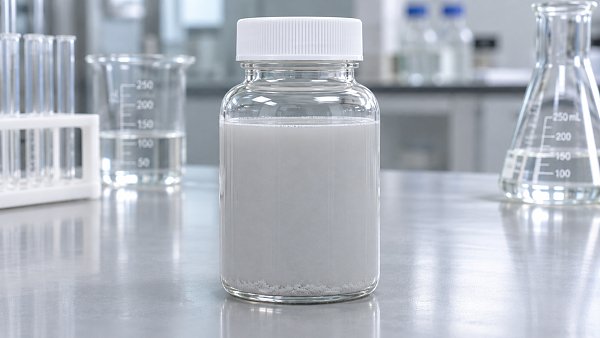
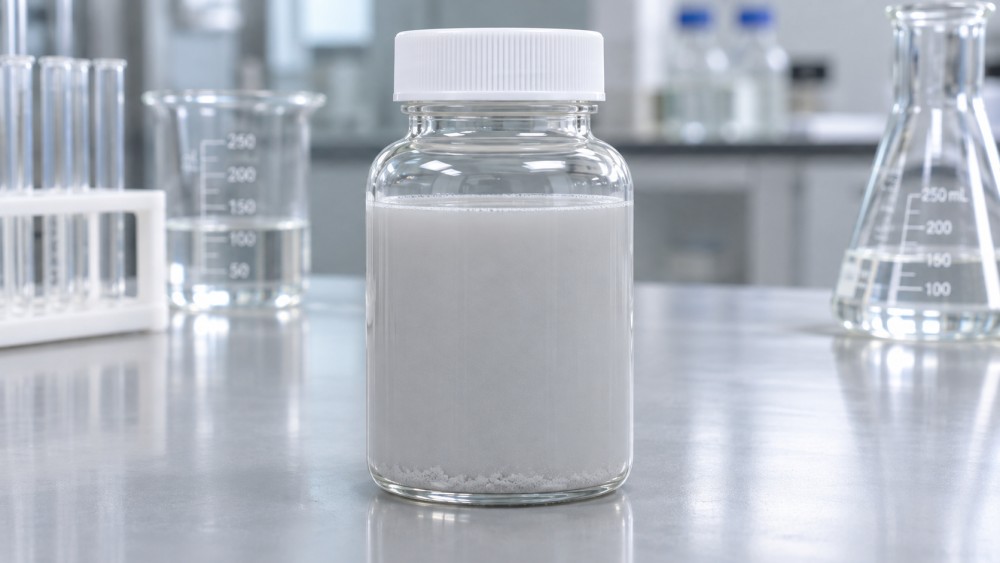
That distinction matters because some sedimentation is expected in many suspensions. A formulation can remain commercially usable even when a soft sediment forms, provided it can be redistributed reliably before use. Conversely, a product that looks uniform after manufacturing may develop a compact sediment during storage that ordinary mixing cannot recover.
What a Dispersant Can—and Cannot—Do
Particles settle when gravity acts on a density difference between the solid and the surrounding liquid. For isolated spherical particles in a dilute, low-flow system, Stokes’ law provides a useful starting point: settling velocity increases with the square of particle diameter and with the density difference, and decreases as liquid viscosity rises. Real formulations can depart substantially from that model because particles are irregular, concentrated, flocculated, or suspended in non-Newtonian liquids.
A dispersant does not eliminate gravity or make a dense particle weightless. It helps prevent particles from joining into larger structures and can alter the character of any sediment that forms. Smaller, well-separated particles often settle more slowly than large aggregates. But a highly deflocculated system can also produce a dense, difficult-to-redisperse sediment if particles eventually pack tightly. The objective is therefore application-specific: slow settling, manageable sediment, or a balance of both.
Viscosity modifiers address a different part of the problem. They can slow particle movement and, in suitable systems, create a yield stress that supports particles at rest. Too much structure, however, can interfere with pumping, pouring, spraying, or leveling. A dispersant and a rheology modifier should be evaluated together rather than treated as interchangeable additives.
How Particle Stabilization Works
Dispersants generally work by adsorbing onto particle surfaces. Their anchoring groups interact with the solid, while other parts of the molecule extend into the liquid. The resulting barrier makes it less favorable for particles to approach and remain attached. Three mechanisms are particularly relevant when comparing candidates:
- Electrostatic stabilization: charged surfaces repel one another. Performance can be sensitive to pH and dissolved salts, which change surface charge or screen repulsion.
- Steric stabilization: adsorbed polymer chains create a physical and energetic barrier between particles. The chains must remain sufficiently compatible with the surrounding liquid to extend and function.
- Electrosteric stabilization: charged polymeric dispersants combine both effects. They may offer useful formulation flexibility, although their response to salts, solvents, and temperature still needs testing.
Strong adsorption is not automatically enough. A polymer that attaches at several points may bridge particles if surface coverage is incomplete, increasing flocculation rather than reducing it. Other ingredients can compete for the same surface. Binders, surfactants, salts, and changes in the particle supplier’s surface treatment can all alter the balance established during initial screening.
Match the Chemistry to the Particle and the Medium
A dispersant suitable for an inorganic pigment in water is not necessarily suitable for an organic crop-protection active ingredient or a mineral slurry in a solvent-rich coating. Surface polarity, charge, treatment, and specific surface area determine how much additive can adsorb and how effectively it anchors. Particle size distribution matters too: finer material exposes more surface per unit mass and may require a different dosage.
In waterborne systems, pH and conductivity deserve attention from the start. An acidic or alkaline shift may change both particle charge and dispersant ionization. Calcium and magnesium ions can interfere with some anionic chemistries, so a suspension made with deionized water should not be assumed stable after dilution with hard process water. In nonaqueous systems, solvent composition influences polymer solubility and the shape of the stabilizing layer; a solvent blend change can destabilize a previously acceptable dispersion.
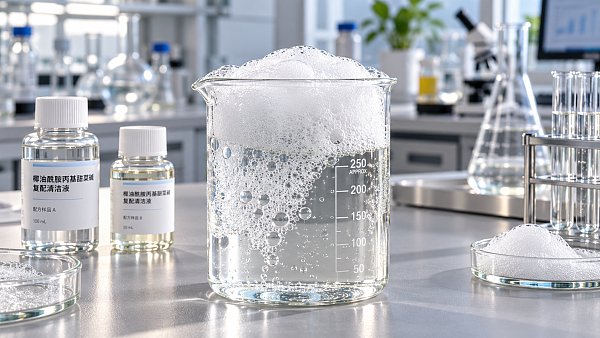
The right dosage is rarely established by one trial. Too little dispersant can leave exposed surface and encourage bridging. Too much can increase free additive in the liquid and, depending on the chemistry, affect foam, viscosity, water sensitivity, or other properties. Compare dosage on an active-material basis as well as on product supplied, and state whether it is calculated against total formulation or solid mass. Otherwise, two apparently similar screening results may not be comparable.
Build a Test That Represents the Actual Formulation
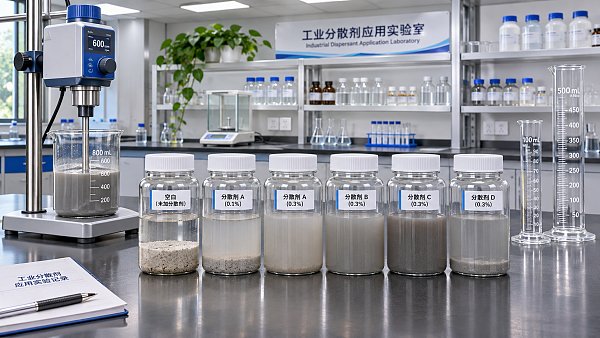
A clear supernatant or a sediment line is useful evidence, but neither tells the whole story. A practical evaluation begins with a control formulation and a series of dispersant concentrations, prepared using the same raw-material lots, mixing sequence, energy input, and solids loading. Where milling is involved, record the equipment, processing time, temperature, and endpoint. A better initial dispersion may reflect more effective milling rather than better long-term stabilization.
Measure particle size distribution at preparation and after storage, using an appropriate method and sample preparation procedure. Look beyond the average: a growing coarse fraction may reveal aggregation that an average value obscures. Dilution for measurement can itself change the dispersion, so the medium and dilution procedure should be reported and kept consistent.
A useful test plan also records:
- Storage conditions: container geometry, fill level, orientation, temperature, duration, and any temperature cycling relevant to distribution.
- Separation and sediment: the height or volume of the separated layer, sediment appearance, and whether a hard layer forms at the bottom.
- Redispersibility: the defined shaking or mixing procedure and whether visible sediment remains; use the same container and procedure for each candidate.
- Rheology: viscosity or flow behavior at relevant shear conditions, including changes after storage and remixing.
- Use performance: properties such as coating appearance, sprayability, cleaning residue, or filtration behavior, as appropriate to the application.
Accelerated storage and centrifugation can help distinguish candidates quickly, but they are screening tools, not automatic predictions of shelf life. Heat may change adsorption or chemistry, while centrifugal force can produce sediment structures unlike those formed under normal storage. Confirm promising results under representative conditions and agree on acceptance criteria before comparing samples.
Application Changes the Definition of Failure
In a pigmented coating, a stable dispersion must also support the final film. Check for changes in gloss, color development, viscosity, water sensitivity, and compatibility with the binder and defoamer. A dispersant that keeps pigment separated in a mill base may behave differently after letdown, when binder concentration, pH, and solvent composition change.
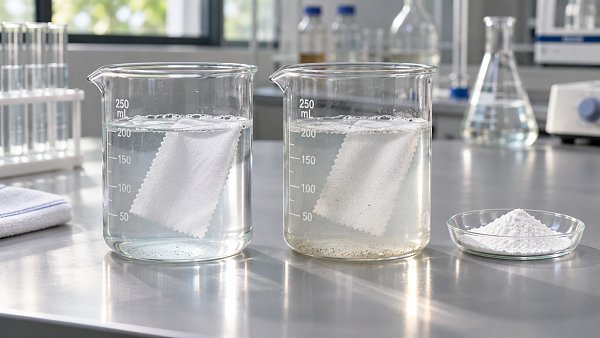
For an industrial cleaning concentrate containing suspended abrasives or other solids, the evaluation may extend to alkaline stability, foam, substrate compatibility, and rinse residue. If the formulation is diluted before use, both concentrate storage and diluted-use conditions matter. Hard water or dissolved soils can change performance in ways that a clean laboratory preparation does not reveal.
In an agrochemical suspension concentrate, redispersibility and dilution behavior are particularly relevant to maintaining a consistent dose and avoiding application problems. The complete formulation—including wetting agents, antifreeze components, preservatives, and rheology modifiers—needs evaluation. Where relevant, use applicable CIPAC methods and product specifications for properties such as suspensibility, wet-sieve residue, or storage stability. Confirm the current method, its applicability, and the acceptance criteria for the particular product; a test method alone does not establish that every formulation passes.
Food-contact or high-purity applications add another constraint: a technically effective industrial additive is not automatically appropriate for the intended use. Composition, impurities, residuals, and the applicable jurisdictional requirements must be checked against the actual exposure and process conditions.
When Good Laboratory Results Do Not Survive Scale-Up
Addition order can determine whether the dispersant reaches the particle surface before competing ingredients do. At scale, powder incorporation, local concentration, shear history, and temperature can differ from a small beaker trial. These differences may produce larger agglomerates or inconsistent adsorption even when the recipe is unchanged.
Investigate the process before increasing dosage. Check powder wetting, milling efficiency, dispersant dissolution, and the point at which salts or binders are introduced. If only some batches fail, compare particle size and surface treatment of incoming solids alongside the additive’s active content and production records. More dispersant may conceal a processing problem while creating a separate issue in the finished product.
Documents That Make a Comparison Credible
A technical data sheet is a starting point, not proof that a dispersant will work in a specific formulation. Request the information needed to interpret trials: chemical family where disclosed, supplied form, active content or an equivalent basis for dosage calculations, recommended use conditions, storage guidance, and relevant safety information. For sensitive applications, discuss impurity controls and the documentation appropriate to the intended market.
Also establish how changes are communicated. A substitution in solvent carrier, active content, or manufacturing process may matter even when the product name remains unchanged. Batch-to-batch checks should focus on the properties that affect the formulation, not solely on a generic specification.
The Global Fine Chemicals & Agrochemical Intelligence Network (FCAS) places these questions in the wider context of specialty chemical applications, formulation compatibility, and supply-chain documentation. For the next evaluation, define the acceptable sediment and remixing procedure first, then test candidate dispersants in the complete formulation across the conditions it will actually encounter. That produces a more useful decision than selecting the sample with the lowest initial viscosity or the clearest laboratory result.
Facing technical bottlenecks in manufacturing or looking for more efficient industrial solutions? Leave your details below and let the engineering experts at FCAS solve them for you.
We respect your privacy. Your information is strictly confidential.
Related News
 Micelle Fluidics & ChelationHow High Performance Industrial Dispersants Prevent SettlingHigh performance industrial dispersants can limit settling and improve redispersibility. Discover how to select and test the right chemistry for your formulation.MORE+
 Micelle Fluidics & ChelationHow to Choose a Detergent Builders ManufacturerChoose a detergent builders manufacturer with confidence. Compare quality, formulation fit, total costs, and supply reliability before you buy.MORE+
 Micelle Fluidics & ChelationHow Venturi Fertigation Systems Control Fertilizer InjectionDiscover how venturi fertigation systems control fertilizer injection, and learn how pressure, sizing, and calibration affect dosing accuracy.MORE+
 Micelle Fluidics & ChelationHow to Use Cocamidopropyl Betaine for Hand Soap FormulasDiscover how to use cocamidopropyl betaine for hand soap, balance surfactants, adjust pH and viscosity, and troubleshoot common formulation issues.MORE+
 Micelle Fluidics & ChelationHow to Evaluate an Industrial Dispersants ManufacturerEvaluate an industrial dispersants manufacturer with confidence. Learn how to assess formulation performance, batch consistency, quality controls and supply risk.MORE+
 Micelle Fluidics & ChelationHow Cationic Surfactants Affect Emulsion StabilityCationic Surfactants can improve emulsion stability—but formulation matters. Discover key risks, compatibility checks, and practical troubleshooting tips.MORE+
 Micelle Fluidics & ChelationHow Eco Friendly Detergent Builders Perform in Hard WaterExplore how eco friendly detergent builders tackle hard water, compare citrate, zeolite and chelants, and find the right approach for cleaner results.MORE+
 Micelle Fluidics & ChelationHow Does Cocamidopropyl Betaine Affect Foam and Skin Mildness?Discover how Cocamidopropyl Betaine can enhance foam and support skin mildness. Explore formulation tips, impurity controls, and testing strategies for better cleansers.MORE+
 Micelle Fluidics & ChelationWhich Detergent Builders for Hard Water Prevent Mineral Buildup?Compare detergent builders for hard water, including MGDA, GLDA, citrate and zeolites. Discover how to prevent mineral buildup, reduce residue and choose the right formulation.MORE+
 Micelle Fluidics & ChelationHow Anionic Industrial Dispersants Improve Coating StabilityAnionic industrial dispersants improve coating stability, pigment wetting, viscosity control, gloss, and storage performance. Learn how to select and test the right solution.MORE+
 Micelle Fluidics & ChelationWhat Are Cationic Surfactants and Where Are They Commonly Used?Cationic Surfactants deliver powerful surface affinity for disinfection, fabric softening, hair conditioning, antistatic control, and industrial treatments. Explore key uses and selection factors.MORE+
 Micelle Fluidics & ChelationHow Cationic Surfactants Improve Formulation Performance and StabilityCationic Surfactants improve deposition, conditioning, anti-static control, and formulation stability. Explore compatibility, dispersion, and selection insights for better-performing products.MORE+
 Micelle Fluidics & ChelationIndustrial Dispersants for Pigments and Fillers: How to Improve Stability and FlowIndustrial Dispersants help improve pigment and filler stability, boost flow, and reduce defects in production. Discover how the right choice can cut rework and improve results.MORE+