How to Evaluate an Aroma Ingredients Manufacturer for Food Use
How to Evaluate an Aroma Ingredients Manufacturer for Food Use
A compelling aroma profile does not prove an ingredient is suitable for food use. For quality control and safety teams, evaluating an aroma ingredients manufacturer means checking food-use authorization in the intended market, impurity controls, allergen management, traceability, and batch consistency—not simply reviewing a purity specification. Missing documentation or uncontrolled process changes can create risks that sensory testing alone cannot detect.
The practical goal is to establish whether a specific material, from a specific production site, can be used reliably in your food or beverage application. Supplier reputation, a pleasant sample, and a competitive quotation are useful inputs, but none replaces that assessment.
Start with the intended use, not the supplier’s catalog
Before requesting samples, define the ingredient’s identity, destination markets, food category, proposed use level, processing conditions, and labeling requirements. A single aroma chemical, an essential oil, and a compounded flavor need different supporting information. A CAS number can help identify a substance, but it does not establish food suitability, composition, or permitted use.
Ask whether the quoted grade is manufactured and released specifically for food applications. Some producers supply related materials to both flavor and fragrance markets. Shared chemistry does not mean interchangeable grades: impurity limits, carriers, equipment controls, and documentation may differ. “Food grade” should therefore lead to a documented specification and regulatory rationale, not end the discussion.
Also identify the actual manufacturer. If the seller is a distributor, establish which site produces the material, where repacking occurs, and who can answer technical questions. An undisclosed production source leaves a significant gap in supplier qualification.
Verify the regulatory basis for your market
Request a written food-use statement covering the exact product and destination market, including applicable restrictions. A generic declaration that an ingredient “complies internationally” is too broad to support approval. Regulatory status can depend on substance identity, production route, composition, food category, and conditions of use.
For the United States, establish the applicable legal basis for the intended use, such as an applicable food additive regulation or a substantiated generally recognized as safe (GRAS) conclusion. A FEMA GRAS reference may be relevant to flavor use, but it is not the same as FDA approval. Check that the cited evaluation matches the supplied substance and intended conditions.
For the European Union, review the applicable requirements under Regulation (EC) No 1334/2008, including Union List status where relevant and any specifications or restrictions. Do not assume that an isolated flavoring substance and a botanical flavoring preparation follow identical requirements. Other destination markets require their own review.
Treat “natural” claims separately. Their acceptability can depend on source material, processing method, composition, and local labeling rules. Obtain the supporting manufacturing declaration before approving the claim. A safety data sheet supports handling decisions; it does not establish food-use compliance.
Read the specification beyond the headline purity
A high assay result can hide the wrong questions. Gas chromatography area percentage, for example, is not automatically equivalent to mass purity. Depending on the method, water, nonvolatile residues, and some contaminants may not be represented adequately. Ask what the reported result measures, how it is calculated, and which hazards need separate testing.
The specification should reflect the production route and raw materials. For a synthetic aroma chemical, relevant concerns may include residual solvents, reaction by-products, catalyst residues, or isomer distribution. For botanical extracts and essential oils, the assessment may need to address pesticide residues, adulteration, variable composition, and source-dependent contaminants. Microbiological requirements should follow the material’s characteristics and intended use rather than a universal checklist.
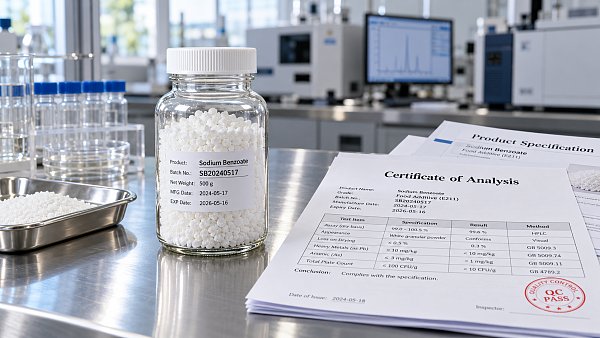
Use the following questions to distinguish a release document from meaningful evidence of control:
Not every hazard requires testing on every lot. However, reduced-frequency testing should have a defensible basis, supported by process knowledge and historical data. “Not detected” is meaningful only when the method and detection or quantification limit are known.
Audit contamination prevention and change control
A food safety certificate can support qualification, but check its validity, site address, scope, and relevance to the supplied product. It cannot replace review of the controls that matter for your material.
In a multipurpose facility, investigate how food-use materials are separated from non-food chemicals. Review production scheduling, cleaning validation or verification, transfer equipment, storage segregation, and rework practices. Strong-smelling residues may create sensory carryover at low concentrations, while other contaminants may have no obvious odor.
Allergen declarations should cover raw materials, carriers, processing aids, and cross-contact risks against the destination market’s requirements. A statement based only on the main aroma molecule is incomplete. Where allergen-containing materials share equipment, ask how cleaning effectiveness and production sequencing are assessed.
Follow one lot through the system: incoming feedstock, processing, laboratory release, packaging, and dispatch. Then examine how an affected raw-material lot would be traced into finished deliveries. This exercise reveals more than a traceability procedure viewed in isolation.
The quality agreement should define notification requirements for changes to feedstock origin, synthesis or extraction route, manufacturing site, carriers, analytical methods, specifications, and packaging. Agree which changes require customer approval before shipment. A material can remain within a broad assay limit while its impurity profile or sensory character changes substantially.
Test production lots in the actual food matrix
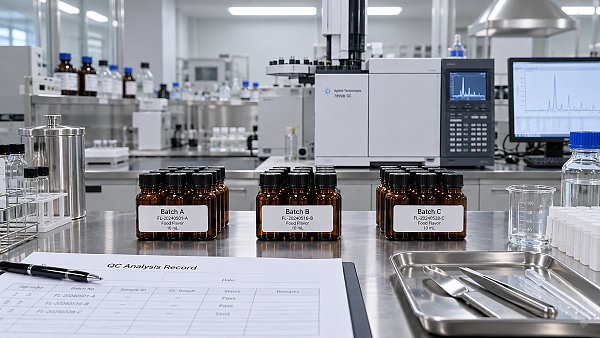
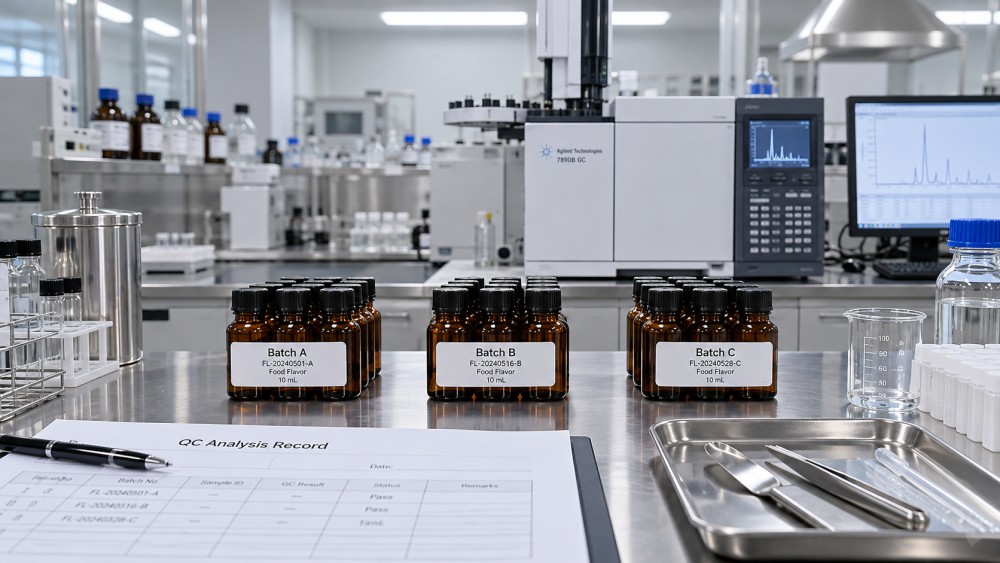
A retained reference and several independently produced lots provide a stronger basis for assessment than one development sample. Confirm that samples represent the commercial grade and intended manufacturing site. Compare analytical results alongside sensory performance using controlled dilution, preparation, and evaluation conditions.
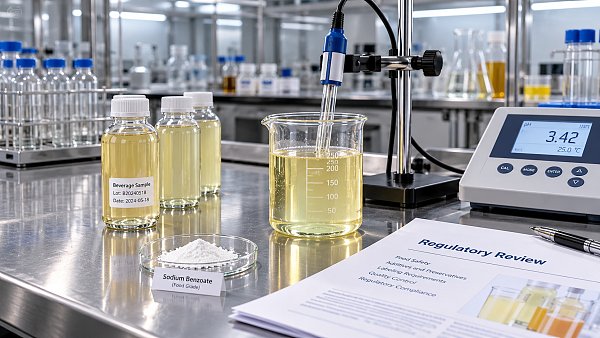
Neat-material smelling is not enough. In an acidic beverage, assess solubility, haze, separation, packaging interaction, and aroma retention after processing and storage. In bakery applications, heat exposure and loss of volatile components may matter more. Fat-rich dairy systems can change aroma partitioning and perceived intensity. These are application questions that a purity certificate cannot answer.
Set acceptance criteria before reviewing results. Include relevant off-notes, appearance changes, dosage tolerance, and shelf-life performance. Accelerated testing can help compare candidates, but should not be treated as a complete substitute for real-time evidence unless the relationship is justified.
When results differ, investigate rather than simply increasing the dose. The cause may be oxidation, carrier differences, isomer balance, storage history, or interaction with other ingredients. A supplier’s ability to investigate that discrepancy is itself useful qualification evidence.
Check whether delivery preserves the approved quality
Packaging and logistics belong in the technical assessment. Ask for the basis of shelf-life claims, recommended storage conditions, packaging compatibility, and guidance after opening. Oxygen, light, moisture, or elevated temperature can affect some aroma ingredients; controls should be material-specific rather than assumed.
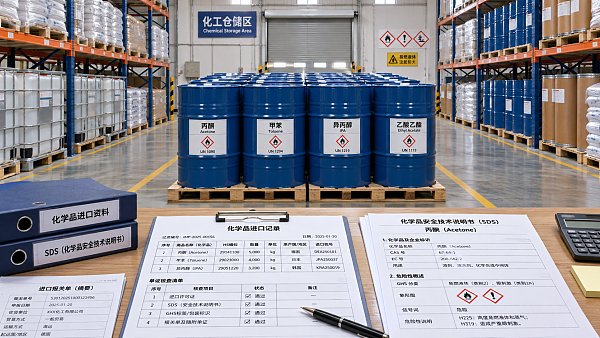
Confirm container and closure suitability, seal integrity, lot labeling, and any substantiated need for inert-gas protection or temperature management. Review transport hazards separately from food suitability: a food-use ingredient may still require flammable-liquid precautions or other handling controls.
Commercial continuity also matters. Establish normal lead times, minimum order quantities, remaining shelf life on delivery, and arrangements for shortages. An alternative production site should not become an automatic substitute merely because it supplies the same product name. It may require separate qualification.
Turn the evidence into an approval decision
Use mandatory requirements before weighted scoring. Unresolved food-use status, inadequate traceability, or an uncontrolled critical contamination risk should not be offset by a lower price or better sensory performance. Once those requirements are met, compare consistency, application fit, technical responsiveness, logistics, and total delivered cost.
- Approve: Required evidence is complete, relevant trials pass, and ongoing controls are agreed.
- Approve with conditions: Remaining gaps are noncritical, with documented restrictions, owners, and completion dates.
- Hold or reject: Legal suitability, safety controls, identity, or traceability remains unresolved.
Record approval against the exact product code, grade, site, specification revision, and intended application. Establish incoming verification and review frequency according to risk and supplier performance. Approval is not permanent permission to accept undocumented changes.
Global Fine Chemicals & Agrochemical Intelligence Network (FCAS) connects food ingredient and flavor knowledge with practical questions about manufacturing consistency, formulation performance, safety documentation, and supply chains. That cross-sector perspective is useful when structuring supplier comparisons, although the final decision still depends on product-specific evidence.
Before approving an aroma ingredients manufacturer, request a coherent qualification package—not a collection of unrelated certificates. Regulatory justification, specifications, lot data, manufacturing controls, application results, and change commitments should describe the same material from the same source. Any mismatch deserves resolution before routine purchasing begins.
Facing technical bottlenecks in manufacturing or looking for more efficient industrial solutions? Leave your details below and let the engineering experts at FCAS solve them for you.
We respect your privacy. Your information is strictly confidential.
Related News
 EPA FIFRA & FDA GRAS RegsEPA Updates Aquatic Life Benchmarks for Pesticide Registration ReviewEPA aquatic life benchmarks add pesticide toxicity endpoints for registration review. See how they could shape risk assessments and future use restrictions.MORE+
 EPA FIFRA & FDA GRAS RegsEPA Cancels Pesticide Registrations Over Unpaid Maintenance FeesEPA pesticide registration cancellations over unpaid maintenance fees may affect procurement. Learn what buyers and suppliers should verify before the stated effective date.MORE+
 EPA FIFRA & FDA GRAS RegsEPA Issues Cancellation Order Affecting Certain Pesticide RegistrationsEPA pesticide registration cancellations may affect select products and supply chains. Learn what businesses should verify before making purchasing decisions.MORE+
 EPA FIFRA & FDA GRAS RegsEPA Reviews Glyphosate Safety, With Decision Expected in Early 2027EPA glyphosate safety review: Discover what the decision expected in early 2027 could mean for health, the environment, and businesses.MORE+
 EPA FIFRA & FDA GRAS RegsEPA Seeks Comment on Voluntary Pesticide Registration CancellationsEPA pesticide registration cancellations are open for public comment. Discover what the proposed changes could mean for product uses, compliance and supply.MORE+
 EPA FIFRA & FDA GRAS RegsEPA Lists Six Voluntary Paraquat Registration Cancellations for CommentEPA lists six voluntary paraquat registration cancellation requests for comment. Explore the potential supply impact and key deadline for buyers and suppliers.MORE+
 EPA FIFRA & FDA GRAS RegsEPA Settles with Colgate-Palmolive Over Chemical Import ReportingEPA's Colgate-Palmolive settlement highlights chemical import reporting obligations. Explore the CDR compliance lessons for importers and supply-chain teams.MORE+
 EPA FIFRA & FDA GRAS RegsEPA Exempts DMSO in Pesticide Formulations From Residue Tolerance RequirementsEPA exempts DMSO from pesticide residue tolerance requirements for specified uses. Explore the rule’s scope and what it means for formulators.MORE+
 EPA FIFRA & FDA GRAS RegsHow Do FDA Rules Affect Synthetic Food Preservatives for Beverages?Synthetic food preservatives for beverages face specific FDA requirements. Explore permitted uses, dosage, labeling, and safety validation to make smarter compliance decisions.MORE+
 EPA FIFRA & FDA GRAS RegsWhat FDA Compliance Records Should a Synthetic Food Preservatives Supplier Provide?Choosing a synthetic food preservatives supplier? Discover key FDA compliance records, batch certificates, and traceability checks to approve suppliers with confidence.MORE+
 EPA FIFRA & FDA GRAS RegsU.S. Health Aide’s Exit Raises Deregulation Hopes for Korean Food ExportersKorean food exporters eye U.S. deregulation after a health aide’s exit. Explore what uncertain ultra-processed food rules and additive policies mean for export planning.MORE+
 EPA FIFRA & FDA GRAS RegsTrump Administration Grants 202 Facilities Waivers From EPA Air Pollution RulesTrump administration EPA air pollution waivers cover 202 facilities. Explore what the Clean Air Act exemptions mean for industrial emissions and potential public health risks.MORE+
 EPA FIFRA & FDA GRAS RegsHow to Evaluate an Aroma Ingredients Manufacturer for Food UseEvaluate an aroma ingredients manufacturer for food use with practical checks on compliance, impurity controls, traceability, and batch consistency. Make confident sourcing decisions.MORE+
 EPA FIFRA & FDA GRAS RegsWhat Food Safety Documents Should an Ethyl Maltol Manufacturer Provide?Choosing an ethyl maltol manufacturer? Discover the COA, food-use compliance statements, and traceability records to request for safer sourcing and confident supplier approval.MORE+
 EPA FIFRA & FDA GRAS RegsSynthetic Food Preservatives Rules That Support Safer FormulasSynthetic Food Preservatives: learn the rules for safer formulas, compliant use levels, validated shelf life, labeling, and reliable microbial control.MORE+
 EPA FIFRA & FDA GRAS RegsButylparaben for Wet Wipes and Key Safety Compliance ConsiderationsButylparaben for wet wipes: explore regulatory compliance, preservative efficacy, skin safety, packaging risks, and supplier controls for confident product development.MORE+
 EPA FIFRA & FDA GRAS RegsWhat to Check When Using Synthetic Food Preservatives SafelySynthetic Food Preservatives: learn the essential checks for safe, compliant use—from dosage and pH to supplier control, labeling, and shelf-life validation.MORE+
 EPA FIFRA & FDA GRAS RegsWhat Certifications Do Flavor Bases Need for Food Export?What certifications do flavor bases need for food export? Explore food safety standards, market compliance, allergen documents, and export-ready paperwork.MORE+
 EPA FIFRA & FDA GRAS RegsHow Food Grade CO2 Extracts Meet Safety and Labeling RequirementsFood grade CO2 extracts: learn how source control, targeted testing, traceability, and accurate labeling support food safety compliance and confident product launches.MORE+
 EPA FIFRA & FDA GRAS RegsHow High Intensity Sweeteners for Tabletop Use Meet Labeling StandardsHigh intensity sweeteners for tabletop use: discover how accurate labeling, serving claims, ingredient lists, nutrition data, and regional rules support compliant market entry.MORE+
 EPA FIFRA & FDA GRAS RegsWhat to Check Before Choosing a Sucralose Supplier for Food ProductionChoose a reliable sucralose supplier with confidence. Explore essential checks for quality, compliance, batch consistency, traceability, packaging, and supply reliability.MORE+