What Should You Check Before Choosing an Acidulants Supplier?
The lowest quoted price is useful only when the acidulant meets the agreed specification, performs consistently in production, and arrives ready for use. Choosing an acidulants supplier therefore starts with a precise definition of the material and ends with a comparison of its delivered, usable cost. A cheaper shipment loses its advantage when it requires extra testing, dose adjustment, repacking, or replacement.
For citric, malic, or lactic acid, the main questions concern grade, concentration, impurity limits, formulation performance, and supply reliability. Before comparing offers, establish which requirements are mandatory and which differences are acceptable. This prevents an attractive quotation from concealing a different chemical form, weaker concentration, unsuitable particle size, or incomplete documentation.
Define the material closely enough to compare quotations
A product name and a headline purity value do not fully describe an acidulant. The purchase specification should identify the chemical form, intended use, assay basis, physical characteristics, packaging, and acceptance limits. Where relevant, distinguish anhydrous material from a hydrated form, a solid from an aqueous solution, and a single acid from a formulated blend.
These distinctions affect dosing and cost. Water of crystallization contributes to shipment weight without supplying the same acid equivalent as an equal mass of the anhydrous form. Likewise, a solution priced per kilogram includes water. Compare equivalent usable acid quantities before deciding which quotation is cheaper, then account for any handling or processing advantage that the supplied form offers.
Clarify whether assay is reported on an as-received or dry basis. A high dry-basis assay does not establish the amount of active material delivered when moisture varies. For liquid grades, define concentration and the measurement basis explicitly. Density alone is an unreliable substitute for concentration unless the relationship is established for that material at a stated temperature.
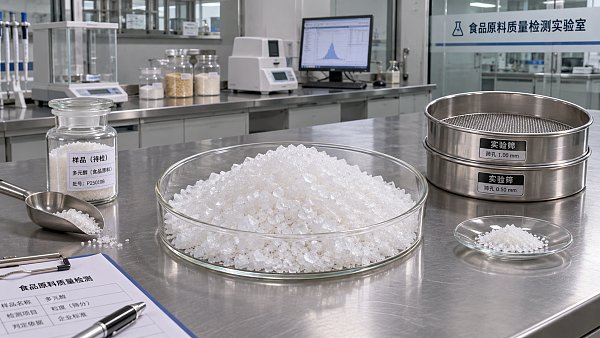
Application requirements should determine the remaining limits. Dissolution speed matters when mixing time is short. Particle size and bulk density influence powder feeding. Color, odor, and insoluble matter deserve tighter attention in clear or lightly flavored products than in applications where those characteristics have little effect.
Read specifications and batch results together
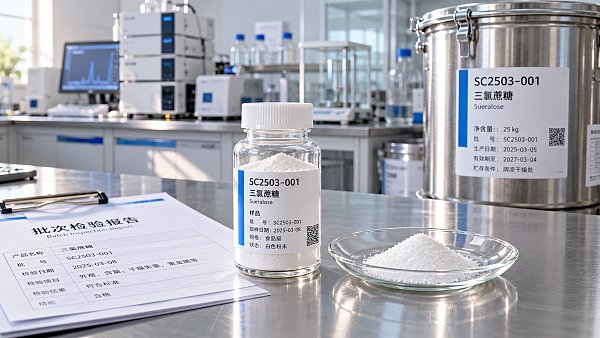
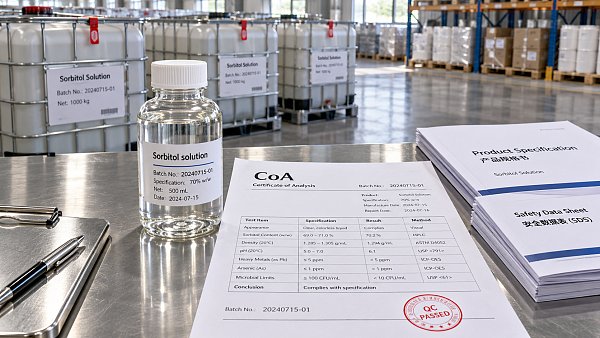
A specification describes what the supplier agrees to deliver. A certificate of analysis records results for a particular lot. Request both, and confirm that the certificate identifies the product, manufacturing site or traceable source, lot number, test methods, and relevant dates. A generic certificate without a lot reference provides little evidence about a shipment.
Review several recent commercial batches rather than relying on one selected sample. Results consistently close to a specification limit leave less room for measurement variation or storage effects. Repeated identical values also deserve clarification: determine whether they are actual measurements, rounded results, or statements of conformity.
Impurity testing should follow the manufacturing route and application. Fermentation-derived materials warrant questions about purification and relevant residuals; materials made through other routes need controls suited to those processes. A blanket statement that a product is “high purity” cannot replace defined limits and suitable analytical methods.
Independent verification is especially useful during initial qualification, after a source change, or when supplier results conflict with incoming inspection. Agree how samples will be taken and which method will resolve disputes before a rejected delivery creates a production delay.
Confirm performance under actual processing conditions
Two lots can meet the same chemical specification and behave differently during mixing. Fine particles dissolve quickly but create more dust and may flow poorly. Larger particles can feed more cleanly while requiring longer dissolution. Caking can result from moisture exposure, storage pressure, or packaging failure even when the original assay remains acceptable.
Use a representative commercial sample in the intended formulation and process. Record water quality, temperature, addition order, mixing time, and dosage. A result from warm laboratory water does not establish dissolution performance in a cold, concentrated production mixture.
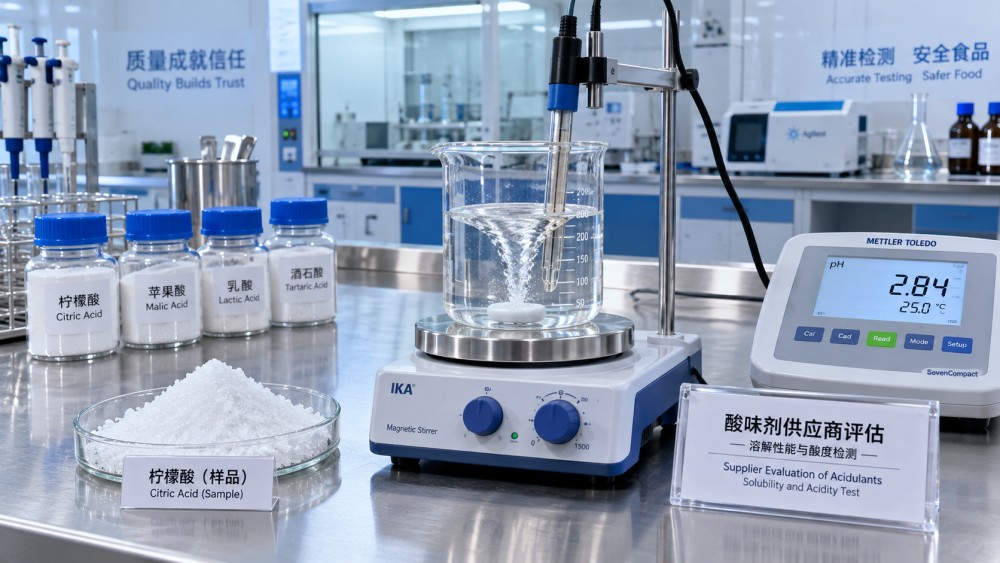
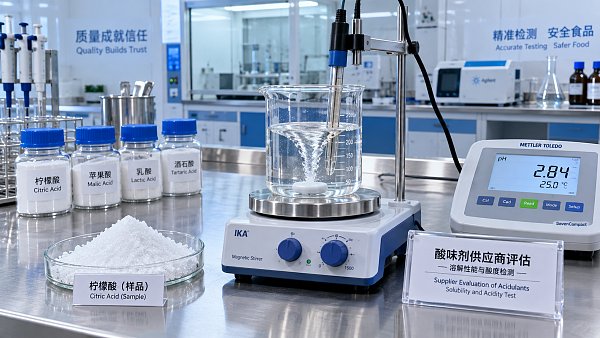
Measure pH and titratable acidity where both influence the product. pH reflects acidity under the measurement conditions, while titratable acidity measures the amount neutralized to a defined endpoint. Similar pH values do not establish equivalent sourness, buffering behavior, or acid demand. State the measurement temperature and titration endpoint so comparisons remain meaningful.
In protein-containing systems, local acid concentration during addition can cause precipitation before the mixture reaches its final pH. In mineral-rich formulations, interactions with dissolved ions can affect clarity or stability. These failures should be investigated against addition conditions and formulation composition before attributing them entirely to supplier quality.
If acidification supports preservation, confirm the finished formulation through appropriate validation. Reaching a target pH alone does not establish shelf life or microbiological safety. For other applications, evaluate the relevant outcome, such as material compatibility, residue behavior, or stability after storage.
Establish whether the documentation matches the destination and use
A “food grade” label is a starting claim, not a complete acceptance package. Regulatory suitability depends on the substance, intended application, applicable conditions of use, and destination market. Obtain a product specification and supporting compliance declarations that identify the material and scope clearly. A declaration covering a different grade or production site should not be treated as interchangeable.
Documentation needs vary by application. They can include information about manufacturing origin, allergens, genetically modified source materials, dietary suitability, or other customer requirements. Request these only where they affect acceptance, labeling, or contractual obligations, and distinguish verified information from broad marketing statements.
The safety data sheet serves a different purpose from a food compliance statement or certificate of analysis. It should describe hazards and handling for the supplied form and concentration. Transport classification must likewise match the actual shipment; it should not be inferred from the product family alone.
Document control matters after qualification. Establish who provides updated documents and how changes to specifications, raw materials, manufacturing sites, or processing methods will be communicated. Advance notification creates time to assess whether repeat testing or regulatory review is necessary.
Find out who controls the product and its traceability
Determine whether the quoted supply comes directly from production, through a distributor, or through a trader sourcing from several plants. Each arrangement can be workable, but the responsibilities differ. The commercial seller should be able to identify the approved source and explain who handles technical questions, quality investigations, and replacement shipments.
Traceability should connect the delivered lot to its manufacturing records. If material is repacked, the new label and certificate must preserve that connection. Ask how mixed lots, damaged bags, returned stock, and repacking are controlled. A warehouse lot number without a link to the original production lot makes an investigation harder.
A quality-system certificate provides evidence about a management system within its stated scope. It does not establish that every offered grade meets an application requirement. Confirm the site and activities covered, then assess the actual product controls, release process, and complaint handling.
For recurring supply, agree that an approved source will not be substituted without notice and acceptance. An alternative plant may meet the same headline assay while producing different particle characteristics or impurity patterns.
Treat packaging and delivery terms as part of material quality
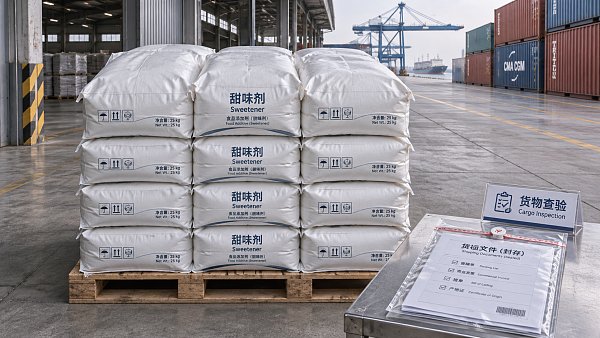
Packaging should protect the acidulant through the actual transport route and storage period. For moisture-sensitive powders, examine the liner, closure, seal integrity, and resistance to handling damage. For liquids, confirm container compatibility, closure performance, and arrangements for unloading without contamination.
Assess the pack size against consumption and handling. Larger containers reduce packaging per kilogram but may increase exposure after opening, complicate dosing, or leave material unused. Smaller packs can simplify inventory rotation while increasing handling effort. Request the storage conditions and any requirements after opening, including resealing instructions.
Separate production lead time from dispatch time and transit time. Stock described as “available” could still require testing, repacking, or export documentation. Confirm where it is held, whether it is already released, and how much shelf life or retest period will remain on arrival.
Delivery reliability needs evidence from the proposed supply arrangement. Discuss order cutoffs, minimum quantities, seasonal demand constraints, and recovery arrangements after disruption. An alternative route or reserve stock is useful only if the material remains approved and accessible within the required timeframe.
Compare usable cost and put acceptance terms in writing
Calculate delivered cost using the same scope for every offer: material, freight, duties where applicable, insurance, packaging charges, and required incoming testing. Then account for concentration, moisture, expected handling losses, and any additional processing. Avoid attaching arbitrary savings to unverified claims about easier dissolution or lower dosage.
For a solution, a useful first comparison is delivered cost divided by the agreed active-acid mass fraction. For solid forms, use the appropriate chemical equivalence when hydration or composition differs. These calculations normalize content; they do not prove that different acids or grades are functionally interchangeable.
Before placing a recurring order, document the approved specification, source, packaging, sampling method, and release criteria. Commercial terms should also address:
- How an out-of-specification shipment will be quarantined, investigated, and replaced, including responsibility for return freight.
- The required notice for changes affecting the material or its documentation.
- Minimum remaining shelf life or retest period on receipt, with a clear distinction between those two dates.
- Technical response arrangements when a lot passes chemical testing but causes a reproducible processing problem.
Use the first commercial delivery to confirm that qualification results transfer to ordinary supply. Match labels to documents, inspect packaging, and evaluate the lot against the agreed acceptance criteria before expanding order volumes. Keep the approved sample results and purchase specification together so later changes are judged against a clear baseline.
Facing technical bottlenecks in manufacturing or looking for more efficient industrial solutions? Leave your details below and let the engineering experts at FCAS solve them for you.
We respect your privacy. Your information is strictly confidential.
Related News
 Zero-Calorie Sweeteners & AcidulantsHow to Choose Plant Based Natural Sweeteners for BeveragesChoose plant based natural sweeteners for beverages with confidence. Compare stevia, monk fruit and blends for taste, processing, labeling and cost.MORE+
 Zero-Calorie Sweeteners & AcidulantsChina’s New Food Labeling Standard to Prohibit “Zero Addition” ClaimsChina’s new food labeling standard targets “zero addition” and “no added” claims. Discover what the change means for food brands and ingredient suppliers.MORE+
 Zero-Calorie Sweeteners & AcidulantsHow to Use High Sweetness Sucralose in Reduced-Sugar DrinksDiscover how to use high sweetness sucralose in reduced-sugar drinks, with practical tips for balancing taste, mouthfeel, stability, and compliance.MORE+
 Zero-Calorie Sweeteners & AcidulantsChoosing High Intensity Sweeteners for Tabletop UseHigh intensity sweeteners for tabletop use: compare taste, formats, stability and compliance to create a consistent product consumers will enjoy.MORE+
 Zero-Calorie Sweeteners & AcidulantsHow to Evaluate a Maltitol Manufacturer for Consistent QualityEvaluate a maltitol manufacturer with confidence. Discover how to assess batch consistency, food safety, traceability, and trial performance before you buy.MORE+
 Zero-Calorie Sweeteners & AcidulantsChattogram Customs Seizes 4.2 Tonnes of Banned SweetenerChattogram Customs seized 4.2 tonnes of banned sodium cyclamate. Explore what the seizure means for sweetener sourcing and food compliance in Bangladesh.MORE+
 Zero-Calorie Sweeteners & AcidulantsHow to Evaluate a Crystalline Polyols ManufacturerChoosing a crystalline polyols manufacturer? Learn how to compare quality, production performance, documentation, and delivered costs with confidence.MORE+
 Zero-Calorie Sweeteners & AcidulantsHow to Evaluate a Sucralose Supplier Before Placing a Bulk OrderEvaluate a sucralose supplier with confidence. Learn how to verify quality, compliance, traceability, delivery reliability, and total costs before placing a bulk order.MORE+
 Zero-Calorie Sweeteners & AcidulantsHow to Choose Low Calorie Bulk Sweeteners for Reduced-Sugar FoodsChoose low calorie bulk sweeteners with confidence. Compare options for taste, texture, shelf life, and compliance to create better reduced-sugar foods.MORE+
 Zero-Calorie Sweeteners & AcidulantsWhich Quality Documents Should a Liquid Sorbitol Supplier Provide?Choosing a liquid sorbitol supplier? Learn which quality documents to request, how to verify CoAs and traceability, and what gaps should block release before you buy.MORE+
 Zero-Calorie Sweeteners & AcidulantsWhat Should You Check Before Choosing an Acidulants Supplier?Choosing an acidulants supplier? Learn how to verify specifications, batch quality, compliance, and delivery reliability to reduce risks and compare true usable costs.MORE+
 Zero-Calorie Sweeteners & AcidulantsHow Can You Reduce Bitterness When Using Natural Stevia Powder?Reduce bitterness in natural stevia sweetener powder with smarter dosing, glycoside selection, and sweetener blends. Discover practical tips for cleaner sweetness and a better finish.MORE+
 Zero-Calorie Sweeteners & AcidulantsHow Food Grade Stevia Sweetener Affects Taste and Label ClaimsFood grade stevia sweetener: learn how glycoside profiles, taste control, processing stability, and label claims shape successful lower-sugar products.MORE+
 Zero-Calorie Sweeteners & AcidulantsHow to Choose a Natural Sweeteners Supplier for Clean-Label ProductsNatural sweeteners supplier selection guide for clean-label products: compare formulation fit, traceability, documentation, and supply reliability.MORE+
 Zero-Calorie Sweeteners & AcidulantsWhat Drives Zero Calorie Sweeteners Bulk Price in 2026Zero calorie sweeteners bulk price in 2026: compare specifications, dosage, quality, freight, and supply risk to make smarter sourcing decisions.MORE+
 Zero-Calorie Sweeteners & AcidulantsHow to Choose Zero Calorie Sweeteners for Sugar Free ProductsZero calorie sweeteners for sugar free products: compare taste, stability, labeling, and cost to choose the right system for beverages, bakery, and functional foods.MORE+
 Zero-Calorie Sweeteners & AcidulantsChoosing Sucralose for Dairy Products Without Compromising TasteSucralose for dairy products: learn how to protect clean sweetness, optimize sensory performance, verify quality, and source reliably for reduced-sugar dairy.MORE+
 Zero-Calorie Sweeteners & AcidulantsHow to Choose Artificial Sweeteners for Beverages That Taste BetterArtificial sweeteners for beverages: learn how to choose solutions with better taste, stability, labeling fit, and cost efficiency for successful reduced-sugar drinks.MORE+
 Zero-Calorie Sweeteners & AcidulantsHow Acidity Regulators Improve Beverage Flavor and Shelf LifeAcidity Regulators help beverage brands balance flavor, pH control, microbial stability, and shelf life. Explore practical formulation insights for safer, more consistent drinks.MORE+
 Zero-Calorie Sweeteners & AcidulantsKey Quality Checks for High Purity Aspartame in Food FormulationHigh purity aspartame quality checks for food formulation: evaluate assay, impurities, particle consistency, stability, documentation, and total cost.MORE+
 Zero-Calorie Sweeteners & AcidulantsHow Liquid Flavors for Soft Drinks Improve Taste Consistency at ScaleLiquid flavors for soft drinks help manufacturers achieve reliable taste consistency at scale through accurate dosing, controlled mixing, stability management, and sensory quality control.MORE+
 Zero-Calorie Sweeteners & AcidulantsWhat to Check When Choosing a Saccharin Sodium Supplier for Global OrdersChoose a reliable saccharin sodium supplier for global orders. Learn how to assess quality, documentation, packaging, export readiness, and total landed reliability.MORE+
 Zero-Calorie Sweeteners & AcidulantsAre High Intensity Sweeteners for Tabletop Use Right for Your ProductExplore high intensity sweeteners for tabletop use: compare taste, carriers, serving cost, stability, packaging, and compliance to build a successful product.MORE+
 Zero-Calorie Sweeteners & AcidulantsSaccharin Sodium Selection Factors for Zero-Calorie FormulasSaccharin Sodium selection factors for zero-calorie formulas: optimize taste, purity, solubility, compliance, and batch consistency for reliable production.MORE+
 Zero-Calorie Sweeteners & AcidulantsHow High Purity Aspartame Supports Consistent Zero-Calorie FormulasHigh purity aspartame supports consistent zero-calorie formulas with reliable sweetness, process stability, traceability, and quality control across every batch.MORE+
 Zero-Calorie Sweeteners & AcidulantsHow Acesulfame Potassium for Soft Drinks Affects Taste and CostAcesulfame potassium for soft drinks can improve sweetness efficiency and lower formulation cost, but only with the right blend, taste control, and sourcing strategy. Learn what drives the best ROI.MORE+