
How Liquid Flavors for Soft Drinks Improve Taste Consistency at Scale
How Liquid Flavors for Soft Drinks Improve Taste Consistency at Scale
A soft drink can pass every routine production check and still disappoint consumers if its flavor shifts from one bottle to the next. In high-volume beverage operations, small differences in aroma intensity, sweetness perception, acidity balance, or finish become noticeable surprisingly quickly. A citrus drink that tastes bright on Monday but slightly dull by the end of the week is not merely a sensory issue; it can create complaints, rework, rejected batches, and uncertainty on the filling line.
Liquid flavors for soft drinks are widely used because they can be measured, transferred, dispersed, and adjusted more reliably than many dry flavor systems. But liquid format alone does not guarantee consistency. The real advantage comes when the flavor system, dosing equipment, syrup process, water quality, carbonation conditions, and quality-control routine are treated as one connected operation.
For operators, the practical question is not simply whether a flavor is liquid. It is whether that flavor remains stable in the production environment, enters the batch at the right point, mixes completely, and delivers the intended sensory profile after dilution, carbonation, filling, and storage.
Why Taste Variation Becomes More Visible at Scale
At laboratory scale, a beverage developer can often correct a flavor imbalance with a pipette and a short mixing cycle. In a plant, the same adjustment may involve a bulk flavor tote, automated dosing skid, syrup tank, transfer line, and hundreds or thousands of finished units. The operational challenge is not only to achieve the right taste once. It is to repeat it through different shifts, production speeds, raw-material deliveries, and packaging runs.
Flavor perception is especially sensitive in soft drinks because the final profile depends on more than the flavor concentrate. Sugar or sweetener systems affect body and aroma release. Acidity regulators influence the perceived sharpness of fruit notes. Carbon dioxide can make a beverage feel brighter while also changing how aroma is experienced. Preservatives, minerals in process water, and even a minor change in the base syrup can alter the final impression.
This is why experienced beverage teams avoid judging flavor quality only from the concentrate drum. A flavor may smell excellent in a sample bottle but behave differently after it is blended into an acidic carbonated beverage. The useful assessment point is the finished drink under realistic processing and storage conditions.
Liquid flavor systems help reduce handling variability because they are already in a form suited to controlled addition. When their carrier and solubility profile match the beverage formulation, they can disperse more predictably than a powder that may require separate pre-dissolution, agitation, or filtration management. That simplification matters on lines where a few minutes of extra mixing or a missed pre-blend step can affect a full production batch.
Accurate Dosing Is the First Control Point
Most batch-to-batch flavor variation begins before the main mixer. Manual addition is still common in smaller or flexible beverage operations, but it depends heavily on weighing discipline, container identification, transfer losses, and operator timing. A partially emptied container, an unreadable label, or a small calculation error can create a flavor deviation that is hard to correct once the syrup has been diluted.
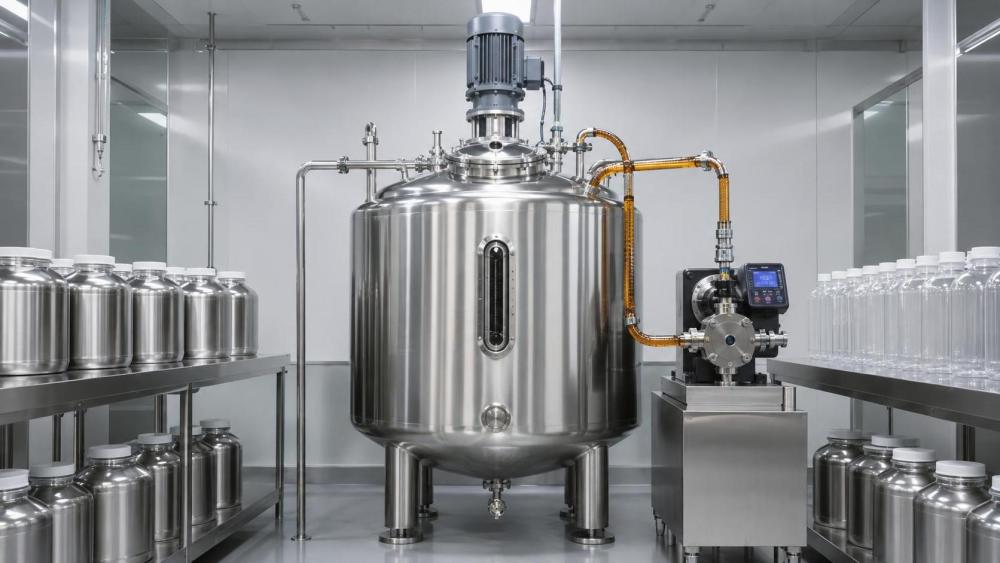
Liquid flavors for soft drinks can be integrated into gravimetric or volumetric dosing systems, provided the equipment is suitable for the flavor’s viscosity and carrier. This point is often underestimated. A low-viscosity aqueous flavor, an oil-based citrus flavor, and a flavor carried in a solvent system may not flow through the same pump or line at the same accuracy. A dosing system should be evaluated with the actual material, not only with water.
For high-output plants, mass-based dosing is often easier to verify because the delivered quantity can be checked against a batch target. Volumetric dosing can also work well, but it is more sensitive to pump calibration, temperature-related viscosity changes, trapped air, and wear in seals or tubing. There is no single universal setup; the appropriate choice depends on batch size, flavor concentration, process automation, cleaning requirements, and the degree of formulation changeover.
A useful operator habit is to record both the target amount and the actual addition for each batch, along with the flavor lot number and production time. This may sound basic, but these records become essential when sensory staff identify a subtle drift several days later. Without traceability, teams often spend too much time questioning the wrong part of the process.
The Mixing Step Determines Whether the Dose Becomes a Uniform Flavor
Correct dosing does not automatically mean uniform distribution. Flavor compounds can behave differently depending on their polarity, carrier, concentration, and interaction with other beverage ingredients. Some systems disperse readily in water. Others need sufficient agitation, a suitable addition point, or an emulsification strategy to prevent local concentration differences.
Citrus, cola, botanical, cream, and certain natural extract profiles deserve particular attention because they may contain less water-compatible aromatic fractions. If these materials are added directly into a low-agitation tank, operators may see surface rings, haze variation, oiling-out, or inconsistent aroma between early and late fills. The issue may appear as a flavor problem when it is actually a distribution problem.
The addition sequence is therefore part of flavor control. In many syrup-room processes, flavor is added where there is enough circulation to disperse it efficiently, rather than at a stagnant point near the tank wall. The exact sequence should follow the formulation and equipment design, but it should be deliberately defined. “Add flavor during mixing” is not a sufficiently clear instruction for a production SOP.
Operators should know the expected mixing time, agitator setting, recirculation condition, and sampling point. Sampling immediately after addition may be misleading if the tank has not reached uniformity. Conversely, excessive agitation can introduce foam or air, complicating downstream filling and sensory evaluation. The target is not maximum agitation; it is verified homogeneity with manageable foam and stable process behavior.
A practical check before full-scale production
When a new flavor or supplier lot is introduced, it is sensible to take samples from more than one point in the prepared batch, where the system allows it. Compare appearance, aroma, and taste after the normal mixing cycle rather than assuming the blend is uniform. If the samples differ, increasing the flavor dose is rarely the right first response. The team should first review dispersion, tank circulation, formulation compatibility, and sampling practice.
Flavor Stability Depends on the Whole Beverage System
A liquid flavor can be chemically stable in its original packaging yet lose impact after exposure to heat, oxygen, light, acidity, or incompatible ingredients in the finished beverage. Delicate top notes are often the first to fade. This is especially relevant for fruit-forward drinks, tea beverages, botanical refreshment products, and reduced-sugar formulations where there is less sweetness to mask changes in aroma balance.
The carrier used in a liquid flavor matters because it influences solubility, handling, and compatibility. A flavor supplier should be able to provide information relevant to the intended application, including recommended storage conditions, physical appearance, solubility expectations, and any known formulation limitations. Beverage teams should also confirm whether the flavor is appropriate for the product’s acidity, processing temperature, packaging format, and intended shelf-life conditions.
Water quality deserves the same attention. Variations in mineral content, residual treatment chemicals, or off-odor can interfere with a clean flavor profile. In a lightly flavored soda, a small water-related note may be more obvious than it would be in a strongly flavored cola. If flavor variation appears at one manufacturing location but not another, comparing water treatment and syrup preparation conditions is often more productive than immediately changing the flavor formula.
Packaging also enters the equation. Headspace, oxygen exposure, light transmission, closure performance, and storage temperature can all affect flavor retention over time. A formulation that performs well in an opaque container may require further validation in a clear package exposed to retail lighting. These are not details to leave until the end of development, particularly when the product depends on fresh top notes.
Sensory Control Needs a Reference, Not Just a Pass-or-Fail Taste Test
In routine production, flavor consistency is easier to manage when sensory checks are connected to a defined reference. Operators and quality teams should not be asked only whether a beverage “tastes normal.” That instruction produces inconsistent decisions because one person may focus on sweetness while another notices aroma intensity or acid bite.
A more useful approach is to maintain an approved reference sample or a documented sensory description that identifies the key attributes: opening aroma, main flavor character, sweetness balance, acidity, mouthfeel, and aftertaste. The reference should reflect the beverage after normal processing, not merely the flavor concentrate. For products with frequent production, the reference process needs sensible review so that an old sample does not become an unreliable benchmark.
Sensory findings should be interpreted alongside process records. If a beverage seems weak, check flavor addition, syrup ratio, Brix or other applicable control data, acid addition, carbonation, and water treatment history before concluding that the flavor itself is faulty. A weak flavor perception may result from over-dilution or a shift in sweetener balance. A harsh profile may be linked to acidity rather than excess flavor. This cross-check prevents unnecessary material holds and avoids repeating the same troubleshooting cycle.
Common Operating Mistakes That Create Avoidable Variation
Some flavor problems are caused by the way materials are handled between receiving and batching. Repeated opening of containers, poor resealing, prolonged exposure to warm storage areas, or failure to homogenize a material when the supplier recommends it can affect consistency. Operators should follow the material-specific handling instructions rather than applying one generic rule to every flavor.
Another common issue is line carryover. A small residue from a strong previous flavor can distort the next product, particularly when changing from mint, citrus, energy-drink, or highly aromatic profiles into a lighter beverage. Cleaning procedures need to address not only visible residue but also odor retention in hoses, gaskets, dead legs, and transfer equipment. A line may appear clean and still carry a noticeable aromatic trace.
It is also risky to substitute a flavor lot or supplier material without a controlled comparison. Even where documentation shows the material meets specification, sensory character can be affected by raw-material variability, natural extract differences, or subtle changes in concentration. This does not mean every new lot is problematic. It means incoming review, retained samples, and a practical finished-beverage check are valuable safeguards for products with tight sensory expectations.
Choosing a Liquid Flavor System for Production Reality
When evaluating liquid flavors for soft drinks, purchasing teams should look beyond the aroma profile and price per kilogram. A less expensive flavor that requires additional handling, creates haze instability, needs unusually long mixing, or causes frequent line cleaning may carry a higher operational cost than expected. The better question is whether the flavor is suitable for the actual beverage process and can be supplied with stable documentation and batch consistency.
Useful discussion points with suppliers include the flavor’s recommended dosage range for the intended beverage base, solubility behavior, heat and acid tolerance, storage guidance, lot-to-lot control approach, packaging options, allergen or labeling information where relevant, and compatibility with the sweetener and preservative system. Local regulatory requirements and finished-product labeling obligations should be confirmed separately for the target market rather than assumed from a general product description.
This broader application view is why ingredient information platforms such as the Global Fine Chemicals & Agrochemical Intelligence Network (FCAS) are useful to beverage professionals. Flavor compounds, carriers, emulsifiers, stabilizers, acidity regulators, preservatives, and packaging considerations are not isolated purchasing categories. They interact in the finished drink, and decisions are stronger when technical, operational, safety, and supply-chain questions are reviewed together.
Consistency Comes From a Controlled Process, Not a Single Ingredient
Liquid flavor formats give beverage plants a practical foundation for repeatable dosing and efficient blending. Their value is most visible when operators have clear addition instructions, calibrated equipment, verified mixing conditions, reliable sanitation, and a finished-product sensory reference. If any one of those controls is weak, flavor variation can still reach the market.
Before changing a flavor formula to solve a taste complaint, review the production record from receiving through filling. Check how the material was stored, what was actually dosed, where it entered the process, whether the batch was fully mixed, and whether water, acid, sweetener, carbonation, or cleaning conditions changed. In many cases, the fastest route back to a consistent soft drink is not a new flavor—it is a better-controlled version of the process already in place.
Related News
 Antioxidants & Natural PreservativesWhat Quality Checks Matter When Sourcing Butylparaben for Personal CareButylparaben for personal care sourcing guide: compare assay, impurities, physical performance, documentation, traceability, and supplier quality to reduce formulation risk.MORE+
 Nano-microcapsule FormulationsHow Encapsulated Flavors Protect Taste During Processing and StorageEncapsulated Flavors protect taste from heat, oxygen, moisture, and storage loss. Explore smarter release, carrier selection, and processing strategies.MORE+
 Chelated Trace Element FertilizersHow Greenhouse Fertigation Systems Reduce Water and Fertilizer WasteGreenhouse fertigation systems reduce water and fertilizer waste with precise dosing, uniform irrigation, drainage monitoring, and smarter crop-zone control. Learn practical strategies.MORE+
 Supercritical CO2 Essential OilsHow Natural Essential Oil Blends Improve Consistent Product FragranceNatural essential oil blends help brands achieve consistent, appealing fragrance across batches. Explore smart blend design, stability testing, and product compatibility strategies.MORE+
 Non-ionic Surfactants & DefoamersHow to Choose Non Ionic Low Foaming Surfactants for CIP CleaningNon ionic low foaming surfactants for CIP cleaning: learn how to balance wetting, foam control, compatibility, and rinseability for reliable cleaning performance.MORE+
 Nano-microcapsule FormulationsHow Food Grade Cyclodextrin Complexes Protect Sensitive FlavorsFood grade cyclodextrin inclusion complexes help protect sensitive flavors from oxidation, evaporation, and processing loss while supporting controlled release and consistent sensory quality.MORE+
 Polymer-Coated Water Soluble NPKHow Fertilizer Coating Polymers Improve NPK Granule ReleaseFertilizer coating polymers for NPK granules improve controlled nutrient release, reduce loss risks, and enhance product consistency. Discover key selection and process insights.MORE+
 Chelated Trace Element FertilizersWhat Diammonium Phosphate Means for Crop Nutrition PlanningDiammonium Phosphate: learn how DAP supports early phosphorus access, nitrogen budgeting, smart placement, and balanced crop nutrition planning.MORE+
 Maillard Reaction Savory FlavorsHow to Assess a Flavor Bases Supplier List for Reliable SourcingGlobal Fine Chemicals & Agrochemical Intelligence Network flavor bases supplier list: assess specs, samples, supply risk, and true cost to source with confidence.MORE+
 Hydrocolloids & EmulsifiersHow Konjac Gum Powder Improves Texture in Low-Calorie FoodsKonjac gum powder improves body, stability, and mouthfeel in low-calorie foods. Discover practical tips for smoother sauces, beverages, and reduced-fat formulations.MORE+
 Supercritical CO2 Essential OilsWhat to Check Before Choosing a Botanical Essential Oils ManufacturerChoose a botanical essential oils manufacturer with confidence. Explore key checks for purity, traceability, compliance, batch consistency, and reliable supply.MORE+
 Microencapsulated FragrancesHow Fragrance Carriers for Detergents Improve Scent PerformanceFragrance carriers for detergents improve stability, fabric deposition, and long-lasting scent. Explore practical solutions for better wash-to-wear fragrance performance.MORE+
 Antioxidants & Natural PreservativesWhen Propyl Gallate Antioxidant Is the Right Choice for Oil StabilityPropyl gallate antioxidant: learn when it is the right choice for oil stability, shelf-life protection, processing compatibility, and smarter formulation decisions.MORE+
 Antioxidants & Natural PreservativesHow Potassium Sorbate Extends Shelf Life in Food and Beverage ProductsPotassium Sorbate helps food and beverage brands control yeast and mold spoilage. Explore pH, dosage, processing, and packaging strategies for reliable shelf life.MORE+
 Antioxidants & Natural PreservativesHow to Source Bulk Herbal Extracts With Reliable Quality ControlBulk herbal extracts sourcing guide: compare suppliers, verify traceability, review CoAs, and build reliable quality controls for safer, consistent purchasing.MORE+
 Antioxidants & Natural PreservativesWhat to Check Before Sourcing Butylparaben for Personal Care FormulasButylparaben for personal care sourcing guide: check market eligibility, purity, supplier controls, formula compatibility, packaging, and total risk before buying.MORE+
 Targeted Bio-pesticides & APIsChoosing Microbial Fungicides for Foliar Diseases in Integrated Crop ProgramsMicrobial fungicides for foliar diseases: learn how to match biology, formulation, tank compatibility, and timing for stronger integrated crop protection.MORE+
 Targeted Bio-pesticides & APIsHow Microbial Insecticides Control Caterpillars With Lower Crop Residue RiskMicrobial insecticides for caterpillars help protect crops with targeted early-larval control and lower residue-management pressure. Learn timing, coverage, compliance, and scouting essentials.MORE+
 Microencapsulated FragrancesHow to Add Encapsulated Laundry Fragrances Without Weakening Wash ResultsEncapsulated laundry fragrances: learn how to boost long-lasting scent while protecting cleaning power, stability, foam control, and fabric care.MORE+
 Supercritical CO2 Essential OilsHow Aroma Ingredients Shape Lasting and Skin-Safe Personal Care ProductsAroma ingredients for personal care: discover how to achieve lasting scent, formulation stability, skin safety, and confident product performance.MORE+
 Targeted Bio-pesticides & APIsInsecticides Explained Through Labels, Active Ingredients, and SafetyInsecticides explained through labels, active ingredients, formulations, and safety. Learn how to compare products, manage risk, and make informed crop protection decisions.MORE+
 Heavy-duty Industrial DegreasersHow to Select Parts Wash Cleaners for Automotive ComponentsParts wash cleaners for automotive components: learn how to match chemistry, materials, rinsing, safety, and waste controls for reliable cleaning results.MORE+
 Chelated Trace Element FertilizersHow Precision Fertigation Systems Improve Water and Nutrient ControlPrecision fertigation systems improve water and nutrient control with accurate dosing, uniform irrigation, smart monitoring, and reduced waste. Discover how to optimize crop performance.MORE+
 Hydrocolloids & EmulsifiersHow Bulk Price Factors Affect Hydrocolloid Stabilizer Blend SourcingHydrocolloid stabilizer blends bulk price: compare dosage efficiency, quality consistency, logistics, and documentation to reduce total sourcing costs.MORE+
 Zero-Calorie Sweeteners & AcidulantsHow to Choose a Natural Sweeteners Supplier for Clean-Label ProductsNatural sweeteners supplier selection guide for clean-label products: compare formulation fit, traceability, documentation, and supply reliability.MORE+
 Non-ionic Surfactants & DefoamersWhat Cationic Surfactants Do and Where They Are UsedCationic Surfactants deliver antimicrobial action, conditioning, antistatic control, and surface treatment benefits. Explore key uses, compatibility, and safe selection tips.MORE+
 Targeted Bio-pesticides & APIsHow to Evaluate Pesticide Suspension Concentrates for Field StabilityPesticide Suspension Concentrates: learn how to evaluate field stability, redispersibility, dilution, tank-mix compatibility, and spray safety for reliable performance.MORE+
 Hydrocolloids & EmulsifiersHow Hydrocolloid Systems for Meat Products Improve Texture and YieldHydrocolloid systems for meat products improve yield, texture, water retention, and slicing quality. Explore practical formulation strategies for stable, high-performing meat products.MORE+
 Microencapsulated FragrancesHow Laundry Fragrances for Liquid Detergents Improve Scent LongevityLaundry fragrances for liquid detergents: discover how fragrance design, deposition, and encapsulation create lasting fabric freshness and stronger product appeal.MORE+
 Nano-microcapsule FormulationsChoosing Fragrance Preparations That Perform Well in Personal WashFragrance preparations for personal wash: learn how to select options that protect clarity, stability, foam, scent performance, and packaging compatibility.MORE+
 Controlled-Release ThermodynamicsModified Cyclodextrins Explained for Controlled Fragrance ReleaseModified cyclodextrins enable controlled fragrance release, odor control, and volatile-note protection. Explore how they optimize performance in detergents, fabric care, and more.MORE+
 Microencapsulated FragrancesHow Fragrance Delivery Systems Improve Fabric Softener LongevityFragrance delivery systems for fabric softeners improve scent longevity through smart protection, reliable deposition, and controlled release for lasting freshness.MORE+
 Supercritical CO2 Essential OilsHow to Evaluate a Natural Cardamom Oil Supplier for Reliable SupplyNatural cardamom oil supplier evaluation guide: verify botanical origin, purity, batch consistency, documentation, packaging, and delivery reliability for confident sourcing.MORE+
 Maillard Reaction Savory FlavorsHow Ethyl Maltol Purity Testing Supports Flavor Safety ComplianceEthyl Maltol purity testing strengthens flavor safety compliance through identity checks, impurity profiling, supplier verification, and audit-ready documentation.MORE+
 Microencapsulated FragrancesEssential Oil Extracts Compared for Fragrance and Wellness UsesEssential Oil Extracts compared for fragrance and wellness: explore scent profiles, extraction methods, stability, safety, and sourcing insights for smarter formulation choices.MORE+
 Zero-Calorie Sweeteners & AcidulantsWhat Drives Zero Calorie Sweeteners Bulk Price in 2026Zero calorie sweeteners bulk price in 2026: compare specifications, dosage, quality, freight, and supply risk to make smarter sourcing decisions.MORE+
 EPA FIFRA & FDA GRAS RegsSynthetic Food Preservatives Rules That Support Safer FormulasSynthetic Food Preservatives: learn the rules for safer formulas, compliant use levels, validated shelf life, labeling, and reliable microbial control.MORE+
 Micelle Fluidics & ChelationHow Anionic Industrial Dispersants Improve Coating StabilityAnionic industrial dispersants improve coating stability, pigment wetting, viscosity control, gloss, and storage performance. Learn how to select and test the right solution.MORE+
 Supercritical CO2 Essential OilsHow to Choose Eucalyptus Oil Grades for Clean, Consistent ProductsChoose the right Eucalyptus Oil grade with confidence. Compare cineole content, purity, origin, processing, documentation, and application fit for consistent products.MORE+
 Micelle Fluidics & ChelationWhat Are Cationic Surfactants and Where Are They Commonly Used?Cationic Surfactants deliver powerful surface affinity for disinfection, fabric softening, hair conditioning, antistatic control, and industrial treatments. Explore key uses and selection factors.MORE+







































