How to Evaluate a Natural Aroma Chemicals Supplier for Quality
A low quotation can become the most expensive option when a natural aroma chemical changes character between batches, arrives with incomplete origin records, or performs differently after dilution. Quality evaluation should begin with the material’s intended use: a floral note in fine fragrance, a citrus accent in a beverage flavor, a woody modifier in soap, or a natural character note in a personal-care base each places different demands on purity, odor profile, solubility, stability, and documentation.
The first comparison should therefore be between fit-for-use specifications, not between catalog descriptions. “Natural” describes a sourcing and production claim, but it does not automatically define odor quality, traceability depth, contaminant control, or performance in a finished formula. A credible natural aroma chemicals supplier should be able to connect its commercial specification to a clear identity, a defined production route, and test methods that are relevant to the intended application.
Start with the material definition
Ask for the full product identity before reviewing price. The name used in sales material may cover different realities: an isolated constituent from a botanical source, a fraction produced through physical processing, a distillate, an extract, or a blend standardized to an odor target. These materials can share a familiar sensory description while differing substantially in composition and behavior.
A useful specification package identifies the botanical or feedstock source where relevant, plant part or starting material, processing route, declared carrier or diluent, physical form, and storage conditions. For an isolated natural constituent, the supplier should explain what makes the material natural within the applicable claim framework rather than relying on a generic statement. For extracts and fractions, composition ranges deserve special attention because seasonal variation and feedstock geography can shift minor components that affect odor and color.
Do not treat a high assay result as a complete quality verdict. A material with a narrow main-component assay can still contain trace constituents that create harshness, discoloration, instability, or an off-note after aging. Conversely, a more compositionally complex natural fraction may be appropriate when that complexity is part of the desired sensory effect. The correct question is whether the declared composition matches the required olfactive and functional purpose.
Read the certificate of analysis as a control document
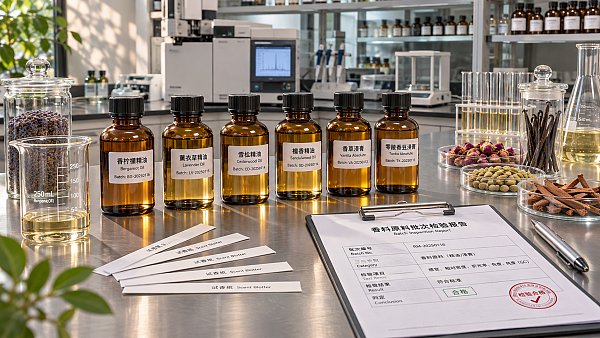
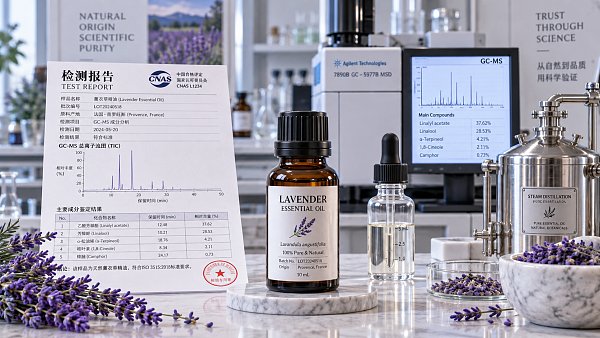
A certificate of analysis should show more than a single purity number. Review whether the reported tests match the material’s known quality risks. Depending on the chemistry, relevant controls may include appearance, color, refractive index, density, optical rotation, moisture, acid value, peroxide value, residual solvents, chromatographic profile, and identified impurities. A document that repeats identical values across many lots may indicate rounded reporting or a limited test scope; it should prompt discussion about the actual release criteria and measurement method.
Methods matter because results from different methods are not always interchangeable. A chromatographic area percentage is not automatically a mass-basis assay, and an odor evaluation cannot be replaced by instrumental data. Request the method name, version or internal procedure reference, acceptance range, and sample preparation conditions for values that drive product acceptance. This is especially important when comparing suppliers whose specifications use the same parameter name but different analytical techniques.

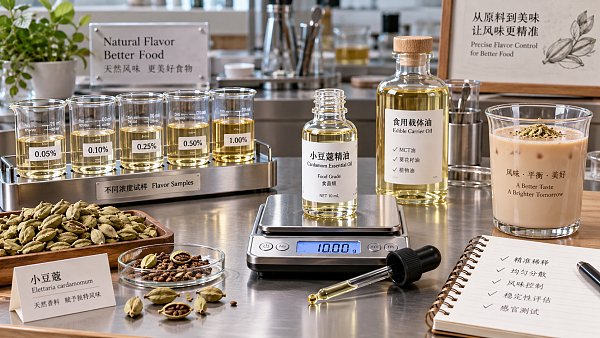
For natural aromatic materials, sensory review remains a separate quality gate. The retained sample should be evaluated neat only when that reflects normal practice. Many materials reveal their real character more clearly at a controlled dilution in a suitable solvent or carrier. A bright top note can appear acceptable in a fresh sample but expose metallic, phenolic, fatty, smoky, or solvent-like notes after dilution. Record the dilution ratio, medium, resting time, evaluation surface, and temperature. Without these conditions, sensory comparisons become difficult to repeat.
Traceability must reach beyond a country of origin
Country of origin is useful context, but it is rarely enough to establish material traceability. A dependable record links the delivered lot to the upstream feedstock, processing site, production date or period, and relevant intermediate lots. The depth of evidence should reflect the claim being made and the sensitivity of the application. A fragrance material used at a low level in a robust detergent base faces a different review threshold from a food-related flavor ingredient or a high-value fine-fragrance component.
Natural feedstocks are exposed to variation from harvest conditions, post-harvest drying, storage time, extraction efficiency, and blending practices. Variation is not automatically a defect. The problem is unmanaged variation that reaches the customer without notice. Ask how incoming botanical material is qualified, how identity is verified, whether lots are segregated before blending, and what triggers investigation when the composition shifts. A supplier that can explain its control points is more informative than one that only supplies a polished origin statement.
Traceability should also cover dilution and standardization. When a natural aroma chemical is adjusted to meet a target strength, the identity and quality status of the carrier are part of the finished material. An unreported solvent, antioxidant, or stabilizer can alter solubility, labeling assessment, odor release, and compatibility with the final formula. The product specification and safety documentation should agree on these additions.
Assess odor consistency at the use level
Batch consistency is often misunderstood as chemical sameness. Natural materials seldom behave like fully uniform synthetic reference materials, and forcing an overly narrow analytical profile may remove desirable character or create unnecessary cost. The practical requirement is controlled variation within an agreed sensory and technical envelope.
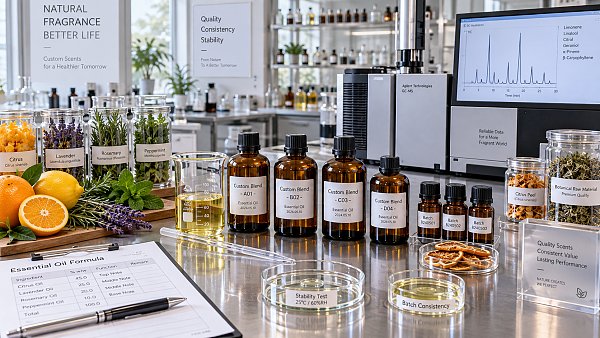
Ask for representative retained samples from several production lots, preferably covering different production periods. Evaluate them against an approved reference under the same dilution and aging conditions. The review should consider opening impact, body, dry-down, persistence, and off-note development rather than relying on a quick first impression. For flavor applications, assess the material in the intended product matrix because sugar, acids, proteins, fats, heat treatment, and packaging can change perception. For home care or personal care, test in the actual surfactant, emulsion, or solvent system; a material that smells clean on a blotter may flatten, separate, or develop an unwanted note in the base.
Set a practical approval rule before sampling begins. If the product is purchased against a reference standard, define who owns and renews that reference, how it is stored, and when replacement is allowed. An old or poorly stored reference can make a conforming fresh lot appear wrong. Conversely, changing the reference without a documented comparison can conceal gradual quality drift.
Look for impurities that affect the finished product
Impurity control should focus on credible routes of failure rather than an indiscriminate request for every possible test. Oxidizable terpene-derived materials deserve review for peroxide formation and odor deterioration. Materials exposed to acidic or alkaline conditions in downstream formulation may need hydrolytic stability information. Darkening can result from oxidation, trace metals, heat exposure, or interactions with the packaging closure; the cause matters because the corrective action differs.
Residual processing solvents, pesticide residues in botanical feedstock, heavy metals, and microbiological quality may be relevant depending on the source material and intended end use. The evaluation should distinguish between a risk that is controlled in the upstream raw material and a risk that is tested in every finished lot. Either approach can be valid when supported by a clear control plan, but vague assurances leave a gap in the approval record.
Packaging compatibility deserves the same attention as the laboratory report. Reactive or volatile aroma materials can be affected by headspace oxygen, light exposure, repeated opening, and contact with unsuitable liners. Confirm container material, closure type, inert gas use where relevant, tamper evidence, fill level, and recommended storage temperature. A strong shelf-life statement has limited value if the shipment route regularly exposes the material to excessive heat or long customs delays.
Compare total delivered cost, not unit price alone
Quoted price should be normalized before it becomes a ranking factor. Compare concentration, carrier content, pack size, minimum order quantity, lead time, freight terms, expected shelf life on arrival, and the cost of incoming testing. A lower-priced diluted material can consume more storage volume, require reformulation, or deliver less usable aromatic content. A less expensive lot with a short remaining shelf life may create avoidable write-off risk for slower-moving formulas.
Cost comparisons are most reliable when the same acceptance criteria apply to every candidate. Relaxing sensory or documentation requirements for a low-priced option produces a misleading saving because the cost of later deviation handling is excluded from the decision.
Test technical support through a real question
Technical support is best evaluated through the quality of a specific response, not through a broad promise of service. Ask about a realistic problem: haze after dilution, a color shift during storage, loss of top note after hot processing, separation in a surfactant base, or an unexpected change in odor after shipment. A capable response identifies the information needed to diagnose the issue, such as formula pH, solvent system, processing temperature, order of addition, packaging, and sample history.
Be cautious when every performance issue is attributed to the finished formula without review of the supplied lot, or when a suggested fix is offered without asking for formulation conditions. Aroma behavior is strongly affected by the surrounding matrix. The supplier does not need to guarantee success in an unknown formula, but should be able to distinguish between material quality questions and compatibility questions.
Review change control before the first commercial order
Many quality failures arise after initial approval, when an upstream feedstock, extraction location, stabilizer, analytical method, production site, package, or specification range changes. A robust supplier relationship includes written notification expectations for changes that could affect composition, odor, regulatory status, packaging, or performance. The notification period should leave enough time for sample evaluation where the material is used in established formulas.
Clarify how deviations are handled as well. The process should identify the affected lot, preserve traceability, define sample retention, and provide a route for investigation. Fast replacement is useful, but it does not replace root-cause information when the same issue could recur. For materials with variable natural profiles, agree in advance which variation is acceptable and which variation requires notification or pre-approval.
Supplier qualification becomes more reliable when documentation, analytical data, sensory evidence, packaging controls, and response quality tell the same story. A natural aroma chemicals supplier does not need to offer identical chemistry in every lot. It needs to show that variation is understood, measured, communicated, and kept within the limits that the finished application can tolerate.
Facing technical bottlenecks in manufacturing or looking for more efficient industrial solutions? Leave your details below and let the engineering experts at FCAS solve them for you.
We respect your privacy. Your information is strictly confidential.
Related News
 Supercritical CO2 Essential OilsWhat Should You Check When Choosing a CO2 Essential Oils Supplier?Choosing a CO2 essential oils supplier? Learn how to assess sourcing, batch testing, documentation, and delivery to secure quality and reliable supply.MORE+
 Supercritical CO2 Essential OilsWhat Affects the Botanical Oleoresins Bulk Price?Botanical oleoresins bulk price depends on sourcing, strength, extraction and freight. Learn how to compare supplier quotes and reduce total costs.MORE+
 Supercritical CO2 Essential OilsHow Are Food Grade Essential Oil Extracts Made with CO2?Discover how food grade essential oil extracts are made with CO2, what shapes their flavor, and how to assess safety and suitability for food applications.MORE+
 Supercritical CO2 Essential OilsWhat to Check When Buying Aroma Ingredients WholesaleBuying aroma ingredients wholesale? Discover how to assess quality, supplier reliability, documentation and landed cost before placing your order.MORE+
 Supercritical CO2 Essential OilsHow to Choose Citrus Oils for Beverages Without CloudingChoose citrus oils for beverages with confidence. Compare delivery systems and stability tests to prevent clouding while preserving fresh citrus flavor.MORE+
 Supercritical CO2 Essential OilsWhat to Check When Choosing a CO2 Botanical Extracts ManufacturerChoosing a CO2 botanical extracts manufacturer? Discover how to assess quality, traceability, compliance and true costs before you commit.MORE+
 Supercritical CO2 Essential OilsHow Can You Verify Quality Controls at a CO2 Extracts Factory?Evaluate a co2 extracts factory with confidence. Learn how to verify batch testing, traceability, and quality controls to reduce sourcing risks and choose a reliable supplier.MORE+
 Supercritical CO2 Essential OilsWhat Determines Essential Oil Blend Bulk Prices Beyond Order Size?Explore essential oil blends bulk price factors beyond volume, from botanical quality to testing and freight. Learn how to compare suppliers and uncover the true cost before buying.MORE+
 Supercritical CO2 Essential OilsHow Do Extraction Methods and Grades Affect Oleoresin Bulk Prices?Compare oleoresins bulk price by extraction method, grade, and potency. Discover how to evaluate supplier quotes, verify quality, and lower costs at the right application dose.MORE+
 Supercritical CO2 Essential OilsWhat Should You Ask a Citrus Oils Supplier About CO2 Extraction?Choosing a citrus oils supplier? Discover what to ask about CO2 extraction, purity, testing, and cost to verify quality, avoid costly mistakes, and buy with confidence.MORE+
 Supercritical CO2 Essential OilsWhat Determines the Bulk Price of CO2 Botanical Extracts Before Shipping?Compare co2 botanical extracts bulk price drivers before shipping, from yield and potency to testing and packaging. Learn how to assess supplier quotes and buy with confidence.MORE+
 Supercritical CO2 Essential OilsHow to Verify the Purity of High Cineole Eucalyptus Oil With GC-MSVerify high cineole eucalyptus oil with GC-MS. Learn how to confirm identity, measure cineole accurately, and spot quality risks before approving your next batch.MORE+
 Supercritical CO2 Essential OilsHow Does Supercritical CO2 Extraction Affect Bulk Tea Tree Oil?Discover how supercritical CO2 extraction affects bulk tea tree oil composition, stability, and formulation performance—and what to check before approving a bulk replacement.MORE+
 Supercritical CO2 Essential OilsHow Do CO2 Botanical Extract Certifications Affect Sourcing Costs?CO2 botanical extracts supplier certifications can raise prices but lower sourcing costs. Learn how to verify coverage, compare total costs, and pay only for credentials that add value.MORE+
 Supercritical CO2 Essential OilsHow to Evaluate a Natural Aroma Chemicals Supplier for QualityNatural aroma chemicals supplier evaluation made practical: assess quality, traceability, odor consistency, documentation, packaging, and total delivered cost before you buy.MORE+
 Supercritical CO2 Essential OilsHow to Verify CO2 Botanical Extract Supplier CertificationsCO2 botanical extracts supplier certifications: learn how to verify certificates, site scope, batch traceability, and process controls before approving suppliers.MORE+
 Supercritical CO2 Essential OilsHow Oleoresins Bulk Price Changes with Crop Quality and SupplyOleoresins bulk price insights: learn how crop quality, extraction yield, grade availability and supply risks shape costs—compare supplier offers with confidence.MORE+
 Supercritical CO2 Essential OilsHow Natural Essential Oil Blends Improve Consistent Product FragranceNatural essential oil blends help brands achieve consistent, appealing fragrance across batches. Explore smart blend design, stability testing, and product compatibility strategies.MORE+
 Supercritical CO2 Essential OilsWhat to Check Before Choosing a Botanical Essential Oils ManufacturerChoose a botanical essential oils manufacturer with confidence. Explore key checks for purity, traceability, compliance, batch consistency, and reliable supply.MORE+
 Supercritical CO2 Essential OilsHow Aroma Ingredients Shape Lasting and Skin-Safe Personal Care ProductsAroma ingredients for personal care: discover how to achieve lasting scent, formulation stability, skin safety, and confident product performance.MORE+
 Supercritical CO2 Essential OilsHow to Evaluate a Natural Cardamom Oil Supplier for Reliable SupplyNatural cardamom oil supplier evaluation guide: verify botanical origin, purity, batch consistency, documentation, packaging, and delivery reliability for confident sourcing.MORE+
 Supercritical CO2 Essential OilsHow to Choose Eucalyptus Oil Grades for Clean, Consistent ProductsChoose the right Eucalyptus Oil grade with confidence. Compare cineole content, purity, origin, processing, documentation, and application fit for consistent products.MORE+
 Supercritical CO2 Essential OilsHow Food Grade Citrus Oils Improve Flavor in Beverage FormulationsFood grade citrus oils help beverage formulators create brighter, more authentic flavor. Learn how to select, stabilize, dose, and protect citrus oils for lasting appeal.MORE+
 Supercritical CO2 Essential OilsWhy Citrus Terpene Fragrances Are Growing in Home Care ProductsCitrus terpene fragrances are transforming home care products with fresh, trusted cleaning cues. Explore performance, stability, compliance, sourcing, and cost factors for smarter fragrance selection.MORE+
 Supercritical CO2 Essential OilsHow to Choose Ginger Oil for Beverages With a Clean Flavor ProfileGinger oil for beverages: learn how to select a clean, bright, stable profile that performs through processing, shelf life, and every sip.MORE+
 Supercritical CO2 Essential OilsCO2 Essential Oil Extracts for Functional Foods and Clean LabelsDiscover CO2 essential oil extracts for functional foods: clean-label potential, botanical flavor innovation, formulation insights, and smarter sourcing strategies.MORE+
 Supercritical CO2 Essential OilsHow to Use Cardamom Oil for Flavoring Without Overpowering FoodsCardamom oil for flavoring: learn dilution, dispersion, blending, and process tips to create balanced beverages, bakery, and desserts without overpowering taste.MORE+
 Supercritical CO2 Essential OilsWhat to Evaluate When Sourcing Custom Essential Oil BlendsCustom essential oil blends: discover how to evaluate formulation fit, quality consistency, compliance, total cost, and supply reliability for confident sourcing decisions.MORE+
 Supercritical CO2 Essential OilsHow to Verify Purity and Sourcing of Cosmetic Grade Lavender OilCosmetic grade lavender oil: learn how to verify botanical origin, batch-specific purity, GC-MS reports, sourcing, storage, and safe cosmetic use before you buy.MORE+
 Supercritical CO2 Essential OilsWhat to Evaluate Before Choosing an Aromatic Extracts FactoryChoose the right aromatic extracts factory with expert guidance on traceability, extraction methods, batch consistency, documentation, and reliable supply.MORE+
 Supercritical CO2 Essential OilsAre CO2 Botanical Extracts More Stable Than Solvent Extracts?Are CO2 botanical extracts more stable than solvent extracts? Compare oxidation risk, packaging, and formulation factors to make smarter sourcing decisions.MORE+
 Supercritical CO2 Essential OilsWhy High Terpinen Tea Tree Oil Quality Depends on Chemotype and TestingHigh terpinen tea tree oil quality starts with verified chemotype, full GC/MS testing, oxidation control, and traceable storage—learn how to choose reliable oil.MORE+
 Supercritical CO2 Essential OilsHow Mint Oils for Oral Care Improve Flavor and Fresh BreathMint oils for oral care create cooling flavor, lasting freshness, and a better daily brushing experience. Explore peppermint, spearmint, and smart product choices.MORE+
 Supercritical CO2 Essential OilsWhat to Evaluate Before Choosing an Essential Oil Blends ManufacturerEssential oil blends manufacturer selection guide: evaluate quality, traceability, compliance, formula performance, and supply reliability to source with confidence.MORE+
 Supercritical CO2 Essential OilsHow to Evaluate a Natural Aroma Chemicals Manufacturer for Reliable SupplyNatural aroma chemicals manufacturer evaluation guide: verify traceability, batch consistency, compliance, application support, capacity, and total cost to secure reliable supply.MORE+
 Supercritical CO2 Essential OilsWhat Should You Know About Natural Aroma Chemicals and Their UsesNatural Aroma Chemicals: explore how to select, test, and formulate natural aroma ingredients for fragrances, food, personal care, and home care products.MORE+
 Supercritical CO2 Essential OilsWhen Oil Soluble Essential Oil Extracts Work Best in FormulationsOil soluble essential oil extracts work best in anhydrous beauty, fragrance, food, and cleaning formulas. Explore compatibility, stability, and application tips.MORE+
 Supercritical CO2 Essential OilsWhy Solvent Free Aromatic Extracts Matter for Clean Label Fragrance FormulasSolvent free aromatic extracts are reshaping clean label fragrance formulas by improving transparency, sensory appeal, and sourcing credibility. Learn why they matter now.MORE+
 Supercritical CO2 Essential OilsWhy Citrus Oils Matter in Clean Label Food and Wellness TrendsCitrus Oils drive clean label food and wellness innovation with fresh flavor, natural appeal, and versatile formulation value. Explore why buyers and brands are paying closer attention.MORE+
 Supercritical CO2 Essential OilsWhy Steam Distilled Clove Oil Is Gaining Ground in Natural FormulationsSteam distilled clove oil is gaining attention for its natural appeal, eugenol profile, and formulation versatility. Discover why buyers value it across personal care, fragrance, and home care.MORE+