How Oleoresins Bulk Price Changes with Crop Quality and Supply
Why bulk oleoresin prices can move before demand changes
Bulk oleoresin pricing is often discussed as if it follows a simple commodity pattern: a stronger harvest lowers costs, a smaller crop raises them. That relationship exists, but it is incomplete. For paprika, chilli, black pepper, turmeric, ginger and other botanical oleoresins, the usable value of the crop can change far more sharply than the harvested volume.
A large crop with weak color, low pungency, poor aroma retention or elevated contamination risk may not produce much additional extractable material that meets a food manufacturer's specification. Conversely, a smaller crop with strong active content and clean handling can support stable production economics. For business evaluation teams, the relevant question is therefore not only whether raw material is available, but how much specification-compliant oleoresin that raw material can yield.
This is why an oleoresins bulk price can diverge from the visible price of dried spices. A procurement team comparing supplier offers should treat the quotation as the outcome of crop quality, extraction yield, grade requirements, inventory position and delivery risk, rather than as a standalone number.
Crop quality changes the cost base before extraction begins
Oleoresins concentrate the commercially useful components of a botanical raw material: color compounds, pungent fractions, volatile aroma constituents, or combinations of these. The crop's condition therefore affects both the amount of extract obtained and the extent to which the extract can be standardized into a saleable grade.
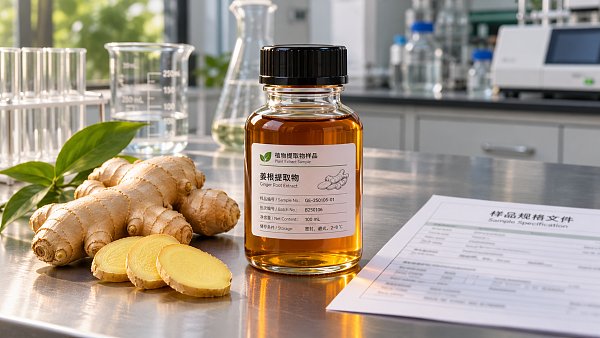
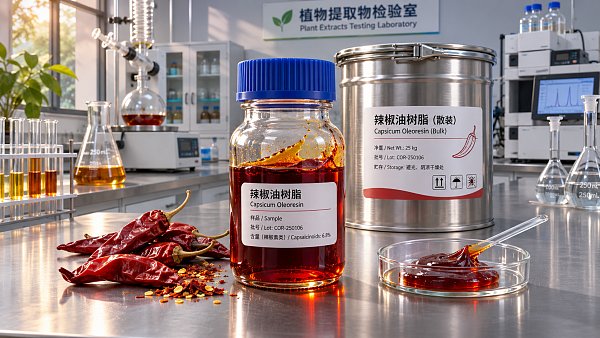
For a color-driven paprika oleoresin, the commercial value may be closely tied to pigment strength and color stability. A raw-material market can look well supplied while processors still compete for lots with the color characteristics needed for higher-strength grades. In chilli oleoresin, capsaicinoid level influences how much raw material and processing is required to achieve a target pungency. In black pepper and ginger products, the balance of volatile and non-volatile components can affect aroma profile, sensory consistency and the suitability of the material for different formulations.
Quality is also broader than active content. Crop maturity, drying practices, storage humidity, foreign matter, microbial condition, pesticide-residue compliance and physical damage can all affect whether material is suitable for a particular customer segment. A processor may be able to buy lower-priced feedstock, but additional sorting, testing, blending, processing loss or rejection risk can remove the apparent saving.
That produces a common misunderstanding in bulk buying: lower raw-spice prices do not automatically translate into lower oleoresin costs. The relationship is strongest when crop quality is uniform and specifications are relatively broad. It becomes weaker for grades that need defined color values, controlled pungency, consistent sensory performance, low residue exposure, or tightly managed impurity profiles.
For commercial assessment, it helps to separate three questions that are often merged into one:
- How much raw crop is physically available?
- What share of that crop is suitable for the required oleoresin grade?
- What processing and quality-control effort is needed to turn it into a consistent delivered product?
A supplier quotation that addresses only the first question gives an incomplete view of price sustainability.
Yield matters as much as the crop price
Extraction yield is the bridge between agricultural supply and the finished bulk product. When the raw material contains a stronger concentration of the target compounds, a processor can generally obtain more commercially useful output from a given quantity of botanical input. When those compounds are diluted, degraded or inconsistent, the processor may need more feedstock, more blending, or greater downstream adjustment to reach the same sales specification.
This does not mean buyers need to calculate a processor's plant economics from first principles. It does mean that a price movement should be tested against the claimed reason. If a supplier cites a poor season, ask which quality variable has changed: crop availability, extractable color, pungency, volatile retention, defect rate, or the proportion of lots that pass the intended compliance screen. Those explanations imply different durations and different risks.
For example, a temporary shortage of clean, high-color paprika may pressure premium color grades while leaving lower-strength or less tightly specified material more available. A decline in capsaicinoid strength can affect standardised chilli oleoresin even if dried chilli volume remains adequate. Storage problems after harvest may create a different pattern again: nominal supply is present, but processors may be selective because aging and handling have reduced extract quality.
Yield-related pressure can be hidden by standardisation. A supplier may still offer the same nominal grade by using more raw material, adjusting blends, or drawing from earlier inventory. The delivered product may remain compliant, but the cost to maintain that consistency rises. This is one reason a stable quoted price in the months after harvest does not always indicate a stable cost base.
Supply availability is regional, seasonal and grade-specific
Oleoresin supply chains are exposed to the agricultural calendar, but harvest timing alone is not enough for planning. Regions can differ in crop conditions, post-harvest handling, extraction capacity, export logistics and the types of grades they typically support. An apparent global surplus may offer little protection to a buyer whose formulation depends on a narrow sensory, color or pungency range.
Regional concentration adds another layer. When a material is heavily associated with a limited number of growing or processing areas, adverse weather, disease pressure, labor constraints, local trade friction or freight disruption can narrow supplier options quickly. The commercial impact is often felt first in grades that cannot be substituted without reformulation work.
Inventory behavior also affects the timing of price changes. Processors with raw-material coverage and finished-goods stocks may hold quotations steady during the first part of a tighter season. Others may buy more actively after harvest when they expect quality to deteriorate or availability to tighten. These decisions can make market signals appear uneven: one supplier offers a competitive price while another has already raised levels or shortened validity.
Neither quote should be judged solely by the number on the offer sheet. The more useful comparison is whether the supplier is quoting from available stock, expected production, or future raw-material purchases. Delivery lead time, quotation validity, batch-release process and the ability to maintain the stated specification across repeat orders are part of the price assessment.
Price softness can carry its own risk
A falling bulk price is not always a straightforward buying opportunity. It may reflect healthy crop availability and improved processing economics. It may also reflect a change in the grade being offered, pressure to clear aging inventory, weaker raw-material quality, or an offer structured around a broader specification than the buyer normally uses.
Evaluation teams should be particularly careful where offers are compared using only concentration or headline active-content figures. Two products with similar declared strength may perform differently if their color tone, volatile profile, carrier system, solubility behavior or batch variability differs. This is especially relevant where the oleoresin is used in beverages, sauces, seasonings, snack systems, processed meat, nutraceutical preparations, fragrances or other applications in which sensory consistency matters.
The commercial comparison should therefore be made on a delivered, application-relevant basis. A lower cost per kilogram can become a higher cost per unit of finished production if dosage changes, color correction is required, flavor balance shifts, or internal quality-release work increases.
How to compare supplier offers when the market is moving
When crop quality and supply conditions are changing, the goal is not to predict an exact future price. It is to identify what the quoted price assumes and how exposed the buyer is if those assumptions fail. A practical review can focus on a limited set of points.
These questions are more useful when raised before price negotiation, not after a supplier has already reduced a quotation. A supplier that can explain its raw-material position, grade controls and delivery basis gives the buyer a clearer foundation for assessing continuity. The objective is not to demand confidential procurement information; it is to establish whether the proposed price has a credible operational basis.
Use a range-based view of procurement exposure
For oleoresins with material formulation impact, a single annual price assumption can create a false sense of control. A more realistic approach is to identify an expected buying range, define the specification that must remain protected, and decide where flexibility exists. Some buyers can qualify more than one origin, adjust a color strength range, or hold a modest safety stock. Others have customer-approved formulations that leave little room to change material or supplier.
The latter group should place greater value on continuity, batch consistency and technical support during qualification. A lower spot offer may be commercially attractive but provide limited protection if the next shipment cannot match the approved profile. Buyers with broader formulation flexibility may be better positioned to use alternatives, provided that sensory, labeling and regulatory requirements remain aligned with their target markets.
Contracts can also be structured around what is actually controllable. Rather than treating a fixed price as the only measure of security, teams can discuss call-off schedules, agreed specification ranges, notification of crop-related changes, volume bands, replacement arrangements for non-conforming material and review points after major harvest periods. The appropriate structure depends on usage volume and business criticality, but it should reflect the fact that botanical extracts are agricultural inputs processed into technical ingredients.
What to monitor after a purchase decision
The most useful market watchlist is often narrower than a broad commodity-news feed. Follow crop-condition signals in relevant origins, but also track indications that affect the usable portion of supply: reported quality dispersion, delayed harvesting or drying, storage concerns, processor purchasing activity, changes in quotation validity and widening differences between suppliers for the same nominal grade.
Internal signals matter as well. More frequent requests for batch approval, unexpected variation in dosage, changing color adjustment needs, or longer lead times can indicate that supply conditions are shifting before a formal price increase appears. Those observations should feed back into commercial planning, especially for ingredients that are difficult to replace in an established formulation.
Bulk oleoresin prices are best read as a quality-adjusted supply signal. Crop size sets part of the direction, but extractable value, grade availability and the cost of maintaining consistency determine what a buyer can reliably procure. Teams that compare offers through that lens are better able to distinguish a genuinely favorable market from a low price carrying hidden formulation or continuity risk.
Facing technical bottlenecks in manufacturing or looking for more efficient industrial solutions? Leave your details below and let the engineering experts at FCAS solve them for you.
We respect your privacy. Your information is strictly confidential.
Related News
 Supercritical CO2 Essential OilsWhat Should You Check When Choosing a CO2 Essential Oils Supplier?Choosing a CO2 essential oils supplier? Learn how to assess sourcing, batch testing, documentation, and delivery to secure quality and reliable supply.MORE+
 Supercritical CO2 Essential OilsWhat Affects the Botanical Oleoresins Bulk Price?Botanical oleoresins bulk price depends on sourcing, strength, extraction and freight. Learn how to compare supplier quotes and reduce total costs.MORE+
 Supercritical CO2 Essential OilsHow Are Food Grade Essential Oil Extracts Made with CO2?Discover how food grade essential oil extracts are made with CO2, what shapes their flavor, and how to assess safety and suitability for food applications.MORE+
 Supercritical CO2 Essential OilsWhat to Check When Buying Aroma Ingredients WholesaleBuying aroma ingredients wholesale? Discover how to assess quality, supplier reliability, documentation and landed cost before placing your order.MORE+
 Supercritical CO2 Essential OilsHow to Choose Citrus Oils for Beverages Without CloudingChoose citrus oils for beverages with confidence. Compare delivery systems and stability tests to prevent clouding while preserving fresh citrus flavor.MORE+
 Supercritical CO2 Essential OilsWhat to Check When Choosing a CO2 Botanical Extracts ManufacturerChoosing a CO2 botanical extracts manufacturer? Discover how to assess quality, traceability, compliance and true costs before you commit.MORE+
 Supercritical CO2 Essential OilsHow Can You Verify Quality Controls at a CO2 Extracts Factory?Evaluate a co2 extracts factory with confidence. Learn how to verify batch testing, traceability, and quality controls to reduce sourcing risks and choose a reliable supplier.MORE+
 Supercritical CO2 Essential OilsWhat Determines Essential Oil Blend Bulk Prices Beyond Order Size?Explore essential oil blends bulk price factors beyond volume, from botanical quality to testing and freight. Learn how to compare suppliers and uncover the true cost before buying.MORE+
 Supercritical CO2 Essential OilsHow Do Extraction Methods and Grades Affect Oleoresin Bulk Prices?Compare oleoresins bulk price by extraction method, grade, and potency. Discover how to evaluate supplier quotes, verify quality, and lower costs at the right application dose.MORE+
 Supercritical CO2 Essential OilsWhat Should You Ask a Citrus Oils Supplier About CO2 Extraction?Choosing a citrus oils supplier? Discover what to ask about CO2 extraction, purity, testing, and cost to verify quality, avoid costly mistakes, and buy with confidence.MORE+
 Supercritical CO2 Essential OilsWhat Determines the Bulk Price of CO2 Botanical Extracts Before Shipping?Compare co2 botanical extracts bulk price drivers before shipping, from yield and potency to testing and packaging. Learn how to assess supplier quotes and buy with confidence.MORE+
 Supercritical CO2 Essential OilsHow to Verify the Purity of High Cineole Eucalyptus Oil With GC-MSVerify high cineole eucalyptus oil with GC-MS. Learn how to confirm identity, measure cineole accurately, and spot quality risks before approving your next batch.MORE+
 Supercritical CO2 Essential OilsHow Does Supercritical CO2 Extraction Affect Bulk Tea Tree Oil?Discover how supercritical CO2 extraction affects bulk tea tree oil composition, stability, and formulation performance—and what to check before approving a bulk replacement.MORE+
 Supercritical CO2 Essential OilsHow Do CO2 Botanical Extract Certifications Affect Sourcing Costs?CO2 botanical extracts supplier certifications can raise prices but lower sourcing costs. Learn how to verify coverage, compare total costs, and pay only for credentials that add value.MORE+
 Supercritical CO2 Essential OilsHow to Evaluate a Natural Aroma Chemicals Supplier for QualityNatural aroma chemicals supplier evaluation made practical: assess quality, traceability, odor consistency, documentation, packaging, and total delivered cost before you buy.MORE+
 Supercritical CO2 Essential OilsHow to Verify CO2 Botanical Extract Supplier CertificationsCO2 botanical extracts supplier certifications: learn how to verify certificates, site scope, batch traceability, and process controls before approving suppliers.MORE+
 Supercritical CO2 Essential OilsHow Oleoresins Bulk Price Changes with Crop Quality and SupplyOleoresins bulk price insights: learn how crop quality, extraction yield, grade availability and supply risks shape costs—compare supplier offers with confidence.MORE+
 Supercritical CO2 Essential OilsHow Natural Essential Oil Blends Improve Consistent Product FragranceNatural essential oil blends help brands achieve consistent, appealing fragrance across batches. Explore smart blend design, stability testing, and product compatibility strategies.MORE+
 Supercritical CO2 Essential OilsWhat to Check Before Choosing a Botanical Essential Oils ManufacturerChoose a botanical essential oils manufacturer with confidence. Explore key checks for purity, traceability, compliance, batch consistency, and reliable supply.MORE+
 Supercritical CO2 Essential OilsHow Aroma Ingredients Shape Lasting and Skin-Safe Personal Care ProductsAroma ingredients for personal care: discover how to achieve lasting scent, formulation stability, skin safety, and confident product performance.MORE+
 Supercritical CO2 Essential OilsHow to Evaluate a Natural Cardamom Oil Supplier for Reliable SupplyNatural cardamom oil supplier evaluation guide: verify botanical origin, purity, batch consistency, documentation, packaging, and delivery reliability for confident sourcing.MORE+
 Supercritical CO2 Essential OilsHow to Choose Eucalyptus Oil Grades for Clean, Consistent ProductsChoose the right Eucalyptus Oil grade with confidence. Compare cineole content, purity, origin, processing, documentation, and application fit for consistent products.MORE+
 Supercritical CO2 Essential OilsHow Food Grade Citrus Oils Improve Flavor in Beverage FormulationsFood grade citrus oils help beverage formulators create brighter, more authentic flavor. Learn how to select, stabilize, dose, and protect citrus oils for lasting appeal.MORE+
 Supercritical CO2 Essential OilsWhy Citrus Terpene Fragrances Are Growing in Home Care ProductsCitrus terpene fragrances are transforming home care products with fresh, trusted cleaning cues. Explore performance, stability, compliance, sourcing, and cost factors for smarter fragrance selection.MORE+
 Supercritical CO2 Essential OilsHow to Choose Ginger Oil for Beverages With a Clean Flavor ProfileGinger oil for beverages: learn how to select a clean, bright, stable profile that performs through processing, shelf life, and every sip.MORE+
 Supercritical CO2 Essential OilsCO2 Essential Oil Extracts for Functional Foods and Clean LabelsDiscover CO2 essential oil extracts for functional foods: clean-label potential, botanical flavor innovation, formulation insights, and smarter sourcing strategies.MORE+
 Supercritical CO2 Essential OilsHow to Use Cardamom Oil for Flavoring Without Overpowering FoodsCardamom oil for flavoring: learn dilution, dispersion, blending, and process tips to create balanced beverages, bakery, and desserts without overpowering taste.MORE+
 Supercritical CO2 Essential OilsWhat to Evaluate When Sourcing Custom Essential Oil BlendsCustom essential oil blends: discover how to evaluate formulation fit, quality consistency, compliance, total cost, and supply reliability for confident sourcing decisions.MORE+
 Supercritical CO2 Essential OilsHow to Verify Purity and Sourcing of Cosmetic Grade Lavender OilCosmetic grade lavender oil: learn how to verify botanical origin, batch-specific purity, GC-MS reports, sourcing, storage, and safe cosmetic use before you buy.MORE+
 Supercritical CO2 Essential OilsWhat to Evaluate Before Choosing an Aromatic Extracts FactoryChoose the right aromatic extracts factory with expert guidance on traceability, extraction methods, batch consistency, documentation, and reliable supply.MORE+
 Supercritical CO2 Essential OilsAre CO2 Botanical Extracts More Stable Than Solvent Extracts?Are CO2 botanical extracts more stable than solvent extracts? Compare oxidation risk, packaging, and formulation factors to make smarter sourcing decisions.MORE+
 Supercritical CO2 Essential OilsWhy High Terpinen Tea Tree Oil Quality Depends on Chemotype and TestingHigh terpinen tea tree oil quality starts with verified chemotype, full GC/MS testing, oxidation control, and traceable storage—learn how to choose reliable oil.MORE+
 Supercritical CO2 Essential OilsHow Mint Oils for Oral Care Improve Flavor and Fresh BreathMint oils for oral care create cooling flavor, lasting freshness, and a better daily brushing experience. Explore peppermint, spearmint, and smart product choices.MORE+
 Supercritical CO2 Essential OilsWhat to Evaluate Before Choosing an Essential Oil Blends ManufacturerEssential oil blends manufacturer selection guide: evaluate quality, traceability, compliance, formula performance, and supply reliability to source with confidence.MORE+
 Supercritical CO2 Essential OilsHow to Evaluate a Natural Aroma Chemicals Manufacturer for Reliable SupplyNatural aroma chemicals manufacturer evaluation guide: verify traceability, batch consistency, compliance, application support, capacity, and total cost to secure reliable supply.MORE+
 Supercritical CO2 Essential OilsWhat Should You Know About Natural Aroma Chemicals and Their UsesNatural Aroma Chemicals: explore how to select, test, and formulate natural aroma ingredients for fragrances, food, personal care, and home care products.MORE+
 Supercritical CO2 Essential OilsWhen Oil Soluble Essential Oil Extracts Work Best in FormulationsOil soluble essential oil extracts work best in anhydrous beauty, fragrance, food, and cleaning formulas. Explore compatibility, stability, and application tips.MORE+
 Supercritical CO2 Essential OilsWhy Solvent Free Aromatic Extracts Matter for Clean Label Fragrance FormulasSolvent free aromatic extracts are reshaping clean label fragrance formulas by improving transparency, sensory appeal, and sourcing credibility. Learn why they matter now.MORE+
 Supercritical CO2 Essential OilsWhy Citrus Oils Matter in Clean Label Food and Wellness TrendsCitrus Oils drive clean label food and wellness innovation with fresh flavor, natural appeal, and versatile formulation value. Explore why buyers and brands are paying closer attention.MORE+
 Supercritical CO2 Essential OilsWhy Steam Distilled Clove Oil Is Gaining Ground in Natural FormulationsSteam distilled clove oil is gaining attention for its natural appeal, eugenol profile, and formulation versatility. Discover why buyers value it across personal care, fragrance, and home care.MORE+